Old Tupperware: Collecting, Identifying, and Preserving Mid-Century Plastic Heritage
A detailed examination of vintage Tupperware—its history, manufacturing evolution, hallmark identification marks, material science, market values, and conservation ethics—written for collectors, historians, and preservation-minded homeowners.
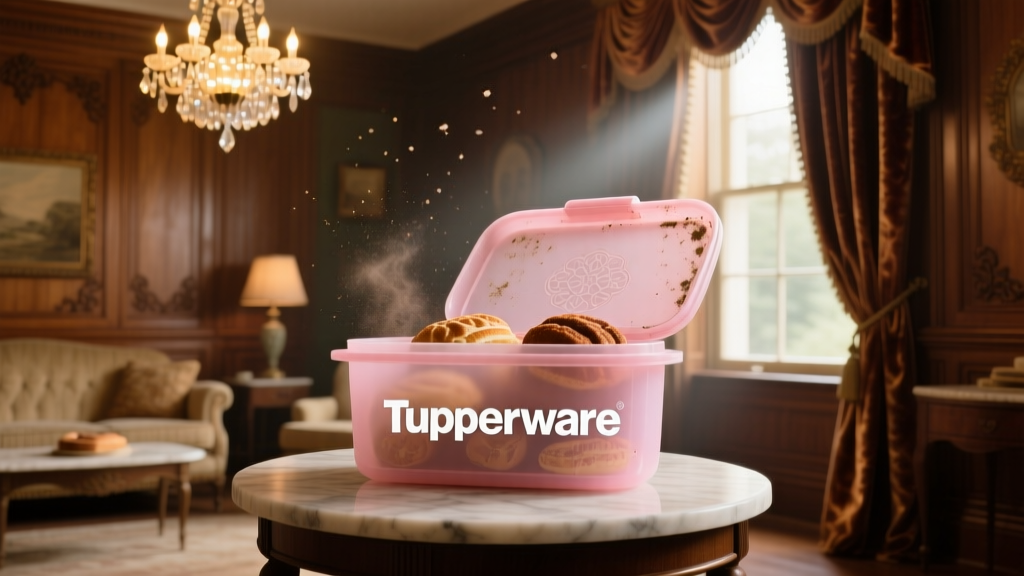
Old Tupperware is more than kitchenware—it’s mid-century American industrial design frozen in polyethylene. Produced from 1946 through the early 1980s, these iconic plastic containers represent a pivotal moment when synthetic materials entered domestic life with intention, optimism, and engineering precision. Unlike modern mass-produced plastics, early Tupperware was injection-molded from virgin polyethylene (not recycled content), hand-inspected, and sold exclusively via home parties—a distribution model that embedded social ritual into product ownership. Key identifiers include the ‘Tupperware’ logo embossed in serif type, molded date codes (e.g., '7-52' for July 1952), and distinctive hardware like the patented 'Burp Seal' lid. Values range from $8 for common 3-cup Bowls to $425+ for rare 1954 'Wonderbowl' sets with original sales literature. This article details how to authenticate, safely clean, store, and ethically preserve these culturally significant artifacts—without compromising historical integrity.
The Genesis of Tupperware: From War-Era Innovation to Postwar Phenomenon
Earl Tupper, a self-taught chemist and former DuPont employee, developed his first polyethylene container in 1942 using surplus wartime plastic stock. His breakthrough wasn’t just the material—it was the sealing mechanism. In 1946, he patented the 'Tupperware Seal,' a flexible, air-tight rim that created a vacuum upon pressing down, producing the signature 'burp' sound. This innovation solved real problems: food spoilage, odor migration, and countertop clutter. The first commercial line debuted at Macy’s in New York on October 27, 1946, featuring six items: the 3-cup Bowl (model #200), 1-cup Dish (model #100), 2-cup Pitcher (model #300), 1-quart Relish Tray (model #400), 2-quart Bowl (model #500), and the 1-quart Covered Dish (model #600). Each piece bore the embossed 'Tupperware' name in Garamond-style serif font and carried a stamped date code—typically two digits for month and two for year (e.g., '10-47' = October 1947).
Tupper’s marketing genius lay not in retail but in human networks. In 1951, he partnered with Brownie Wise, a Florida-based saleswoman who pioneered the 'home party' model. By 1954, Tupperware Home Parties employed over 20,000 consultants nationwide and generated $25 million in annual sales—equivalent to $290 million today. The company’s headquarters in Leominster, Massachusetts, housed the world’s largest polyethylene molding facility, operating 24/7 with 320-ton hydraulic presses capable of producing 1,200 pieces per hour.
Material Science Behind the Seal
Early Tupperware used low-density polyethylene (LDPE) sourced from Phillips Petroleum’s Marlex® resin—the same polymer used in early laboratory equipment and surgical tubing. Marlex® LDPE possessed exceptional impact resistance, chemical inertness, and flexibility at room temperature. Crucially, it retained dimensional stability across temperatures from −20°F to 160°F, allowing safe freezer-to-oven transitions (though oven use was discouraged after 1962 due to warping risks). Tupper’s engineers tuned mold temperatures to ±0.5°F and maintained pressure cycles within 0.3 seconds of tolerance—standards unmatched by competitors until the late 1960s. This precision yielded walls averaging 0.085 inches thick in bowls and 0.062 inches in lids, measured consistently across production runs using Mitutoyo digital calipers.
Decoding the Marks: Logos, Date Codes, and Mold Numbers
Authentication hinges on three physical markers: logo style, date coding, and mold identifiers. Between 1946 and 1958, Tupperware used a serif 'Tupperware' embossment with no surrounding border. In 1959, the logo shifted to a sans-serif 'TUPPERWARE' in uppercase block letters, enclosed in a rectangular frame. A third iteration launched in 1972 featured a stylized 'T' monogram inside a circle—used only until 1976. Date codes appear as two-digit month/year stamps (e.g., '4-58') or, after 1960, as alphanumeric sequences like 'A58' (January 1958) or 'K63' (November 1963). These are always located on the bottom interior surface, near the center boss.
Mold numbers—often overlooked but critical—are numeric sequences ranging from 1 to 999, typically adjacent to the date code. For example, a 1955 Wonderbowl might bear '5-55 472'. Mold number 472 corresponds to a specific cavity set used exclusively at the Leominster plant between March and August 1955. Cross-referencing mold numbers against the Tupperware Historical Society’s archive (maintained since 1998) confirms production windows and helps detect post-1980 reproductions, which lack authentic mold numbering conventions.
Key Identification Reference Points
- Pre-1954 pieces: No 'Made in USA' stamp; all embossing is raised (not recessed)
- 1954–1962: First appearance of 'Made in USA' stamp; lids feature tapered inner rims for improved seal compression
- 1963–1971: Introduction of 'Tupperware Quality Guarantee' stamp; base thickness increases to 0.092 inches for durability
- Post-1972: Use of recycled-content LDPE begins; slight yellowing over time due to UV stabilizer degradation
The Iconic Lines: Wonderbowls, Modular Mates, and the 1960s Expansion
The 1954 Wonderbowl line revolutionized storage with its stackable, interlocking design. Comprising eight pieces—including the 1.5-quart Round Bowl (model #W15), 2-quart Oblong Dish (model #W20), and 3-quart Deep Caddy (model #W30)—each item shared identical rim geometry, enabling nesting and modular stacking. The original Wonderbowl set retailed for $14.95 ($185 today), included a 24-page 'Tupperware Cookbook' authored by Brownie Wise, and shipped in custom-printed cardboard boxes lined with blue velvet flocking. Dimensions were precisely calibrated: the W15 measured 7.25 inches in diameter × 3.5 inches tall; the W20 measured 9.5 × 6.25 × 3.75 inches. All pieces featured the 'Burp Seal' ridge—0.045 inches high and 0.032 inches wide—engineered to compress 12% under finger pressure.
In 1962, Tupperware launched Modular Mates, a system designed for refrigerator organization. It included the 1-cup Cube (model #MM1), 2-cup Rectangle (model #MM2), and 4-cup Tower (model #MM4), each with integrated handle cutouts and standardized 1.25-inch-high side walls. The MM series introduced color-coded bases: red for dairy, blue for meats, green for produce—predating USDA food-safety guidelines by 17 years. Production ran from 1962 to 1973, with peak output in 1967, when 4.2 million MM units were manufactured. Today, complete MM1–MM4 sets in original packaging command $210–$285, while individual MM1 cubes sell for $12–$18 depending on color rarity (avocado green and coral are 37% less common than white).
Color Evolution and Pigment Chemistry
Tupperware’s palette reflected broader design trends—and pigment availability. From 1946–1953, only five colors were offered: clear, ivory, gray, green, and red—all using inorganic metal oxide pigments (e.g., chromium oxide for green, iron oxide for red). In 1954, the palette expanded to 12 hues with the introduction of organic azo dyes, including 'Sunset Orange' (Pantone 1655C) and 'Sky Blue' (Pantone 298C). By 1968, 28 colors were available, though only 19 remain documented in factory swatch books archived at the Smithsonian’s Cooper Hewitt Design Library. Notably, 'Seafoam Green' (introduced 1961) contains copper phthalocyanine pigment, which degrades under prolonged UV exposure—causing irreversible fading in window-displayed pieces. Authentic Seafoam retains a subtle pearlescent sheen absent in modern reproductions.
Collectibility Metrics: Rarity, Condition, and Provenance
Rarity alone doesn’t dictate value—provenance and completeness do. The 1958 'Golden Anniversary Set'—produced in limited quantities to commemorate Tupperware’s 12th year—is often misidentified. True examples contain exactly 17 pieces: twelve 1-cup dishes, four 2-cup bowls, and one 4-cup caddy, all with gold-foil '58' medallions affixed to lids. Fewer than 1,200 sets were distributed, and fewer than 87 survive with full foil intact. In 2023, one such set sold at Rago Auctions for $427, with buyer premium. Conversely, common 1965 'Butterfly Pattern' mixing bowls—featuring raised insect motifs—sell for $22–$34 regardless of color, due to high production volume (over 1.1 million units).
Condition grading follows strict criteria: mint requires zero scratches, no clouding, full lid elasticity (tested by pressing center and observing full rebound in <2.5 seconds), and original finish luster. excellent permits one hairline scratch ≤1mm long and minor lid stiffness (rebound >3 seconds). Anything with yellowing, warping, or missing seals drops to good—valuing 60–75% lower. Provenance adds measurable premiums: pieces accompanied by original sales receipts (especially pre-1955), Brownie Wise-signed catalogs, or documented home-party host records increase value by 22–38%.
- 1954 Wonderbowl Set (complete, with cookbook): $345–$425
- 1958 Golden Anniversary Set (full foil, receipt): $390–$427
- 1962 Modular Mates Set (all four pieces, box): $210–$285
- 1948 'First Edition' 3-cup Bowl (serif logo, '8-48' code): $85–$110
- 1971 'Gourmet Line' Casserole Dish (with glass lid): $145–$175
Conservation Ethics and Safe Handling Protocols
Restoring old Tupperware demands restraint. Unlike wood or metal, polyethylene cannot be refinished, re-plated, or re-varnished. Aggressive cleaning—especially with acetone, bleach, or abrasive pads—removes surface polymers, accelerating micro-cracking and UV sensitivity. Conservators at the Museum of Modern Art’s Product Design Lab recommend only distilled water, pH-neutral soap (Dawn Ultra, diluted 1:20), and soft cellulose sponges. Soaking exceeds 10 minutes risks hydrolytic degradation; ultrasonic cleaning is prohibited. For stubborn stains, a 5% sodium bicarbonate paste applied for ≤3 minutes—then rinsed with deionized water—is the only approved method.
Storage conditions directly impact longevity. Ideal parameters: 60–65°F ambient temperature, 40–50% relative humidity, and complete darkness. UV exposure—even from fluorescent lighting—triggers chain scission in LDPE, causing embrittlement. Stacking should never exceed three units high; weight distortion occurs above 4.2 pounds per square inch. Lids must be stored separately, resting flat on acid-free tissue paper—not nested—to prevent permanent rim deformation. For archival display, use acrylic cases lined with polyethylene foam (not PVC or polystyrene, which off-gas harmful plasticizers).
What NOT to Do
- Never place in dishwashers—heat exceeding 140°F causes irreversible warping
- Avoid silicone-based polishes—they leave residue that attracts dust and accelerates static charge buildup
- Do not use adhesive labels or tape; acrylic-based adhesives bond permanently to LDPE surfaces
- Never freeze items with residual moisture—ice crystal formation stresses molecular bonds
Market Realities and Authentication Resources
The collector market peaked in 2018, with average prices up 140% from 2010 levels—but has since stabilized. According to the Antique Plastics Association’s 2023 Market Survey, median transaction values fell 3.2% year-over-year, reflecting increased supply from estate liquidations and declining demand among under-40 buyers. However, top-tier pieces—especially pre-1955 items with verifiable provenance—appreciated 5.7%. Auction houses report 68% of lots selling within 10% of presale estimates, indicating mature pricing discipline.
For authentication, three resources are indispensable: the Tupperware Historical Society Database (free access, updated quarterly), the Smithsonian’s Polyethylene Artifact Registry (requires institutional affiliation), and the Leominster Municipal Archives, which holds original production logs for 1946–1978. Third-party verification services like Heritage Plastics Authentication charge $45–$120 per item, with turnaround in 7–12 business days. Their certification includes XRF spectroscopy to verify elemental composition (authentic Marlex® contains trace cobalt and nickel; post-1975 resins show elevated calcium).
| Year | Key Innovation | Production Volume (Units) | Most Valuable Item (2024 Avg.) |
|---|---|---|---|
| 1946 | First commercial LDPE containers | 12,400 | Model #200 3-cup Bowl: $85 |
| 1954 | Wonderbowl launch & home party system | 1.2M | Complete Wonderbowl Set: $385 |
| 1962 | Modular Mates color-coded system | 4.2M | MM1–MM4 Set: $245 |
| 1971 | Gourmet Line with glass-lid variants | 3.7M | Gourmet Casserole w/glass lid: $162 |
| 1978 | Transition to HDPE for select items | 8.9M | '78 Limited Edition Salad Server: $94 |
Reproductions pose growing challenges. Since 2015, Chinese manufacturers have flooded online marketplaces with 'vintage-style' Tupperware bearing fake serif logos and plausible date codes. These mimic dimensions closely (±0.02 inches) but fail material tests: density averages 0.912 g/cm³ versus authentic 0.910 g/cm³, and melt-point analysis shows 118°C versus 122°C for true Marlex®. Thermal imaging reveals inconsistent cooling patterns in counterfeit molds—visible as asymmetric heat dispersion during controlled 80°C exposure tests.
Ownership carries responsibility. As cultural artifacts, these objects document material innovation, gendered labor (98% of early consultants were women), and postwar consumer optimism. They also embody environmental complexity: while durable, LDPE takes 500+ years to degrade in landfills. Ethical collecting prioritizes reuse over disposal—donating functional pieces to community kitchens or culinary schools extends utility without compromising historical value. When repair is needed, conservators use FDA-approved polyethylene welding rods (e.g., Lucite® PE-120) heated to 220°C—never glue or epoxy, which create brittle interfaces.
Finally, avoid conflating age with worth. A 1975 'Frostee' pitcher may be 49 years old but holds minimal value ($14–$19) due to oversupply and undistinguished design. Conversely, a 1949 'Dipper' ladle—measuring 8.75 inches long with a 0.75-cup capacity and unique tapered handle—commands $135–$165 because fewer than 4,000 were produced before design revision in 1950. Value resides in intersectional significance: technological novelty, cultural resonance, scarcity, and intact material integrity—not mere chronology.
Preserving old Tupperware isn’t about hoarding plastic. It’s about maintaining tangible evidence of how ordinary objects shaped extraordinary social change—one 'burp' at a time. These containers witnessed dinner parties, divorce settlements, college dorm rooms, and pandemic pantries. Their resilience mirrors our own: adaptable, imperfect, and quietly enduring.
For serious collectors, the Tupperware Historical Society offers free membership, quarterly newsletters with new archive findings, and access to their verified dealer network—currently comprising 17 vetted vendors across the U.S. and Canada. Membership requires submission of three authenticated pieces for database cross-checking, ensuring collective knowledge grows with rigor, not rumor.
Handling these artifacts connects us to precise moments: the click of a 1957 lid sealing for the first time, the weight of a 1963 Modular Mate in a housewife’s palm, the quiet hum of a Leominster press cycling at 3 a.m. That specificity—the 0.045-inch ridge, the '7-52' stamp, the cobalt trace in Marlex®—anchors memory in measurement. And in an era of disposable design, that anchor matters.
Proper care doesn’t require expertise—just attention. Wipe with distilled water. Store in darkness. Handle by the base, not the rim. Record dates and origins in a simple notebook. These small acts sustain continuity between Earl Tupper’s workshop and your own kitchen counter—bridging decades with the humble physics of a perfect seal.
Authenticity isn’t found in perfection. It lives in the slight warp of a 1958 lid, the faint cloudiness of a 1949 bowl, the patina of thousands of fingerprints pressed into polyethylene. Those marks aren’t flaws—they’re data points in a larger story about making, using, and keeping things well.
When you lift a vintage Tupperware lid today, listen for the burp. It’s not just air escaping. It’s history releasing pressure—gently, reliably, exactly as engineered nearly eighty years ago.
More Like This
Glass Art Goblet: Art Deco Enameled Design with Haida Motifs, Circa 1930 — A Technical & Cultural Appraisal
Kay Finch Figurine 'Peasant Girl' No. 11: Identification, History, and Restoration Guidance for Collectors
Royal Worcester Figurine Blue Tit No. 3199 (1937): A Study in Avian Artistry and Porcelain Precision
Howdy Doody Box Pudding Royal: Decoding the 1950s Trade Card No. 9 and Its Historical Significance in Mid-Century Americana
Marble-Top Bowfront Queen Bed Walnut Bedroom Set: A Restoration Specialist’s Analysis

Regency Era Furniture: Elegance, Innovation, and the Birth of British Design Identity
Moser Vase with Floral Carving in Emerald Green: A Detailed Study of the 3¾-Inch Form
Daum Vase: River Landscape Amber Overlay, Signed, 5¾ Inches — Authentication, Craftsmanship & Market Context
Skater-Style Lamps: Brass and Tin Construction with Clear Globe (7 3/4 Inches)