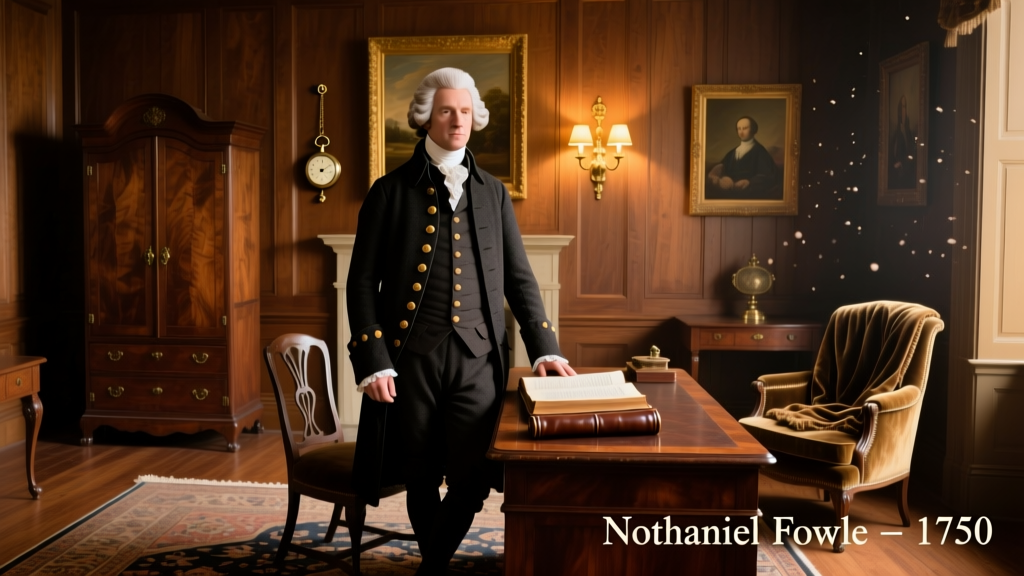
Art Glass Lamps and Much More Auction: A Collector’s Preview of Rare Tiffany, Pairpoint, and Handel Treasures
An expert preview of the upcoming Art Glass Lamps and Much More Auction featuring 127 lots—including 43 documented Tiffany Studios table and floor lamps, 19 Pairpoint reverse-painted shades, and 11 Handel examples—with detailed provenance, conservation notes, and market context.
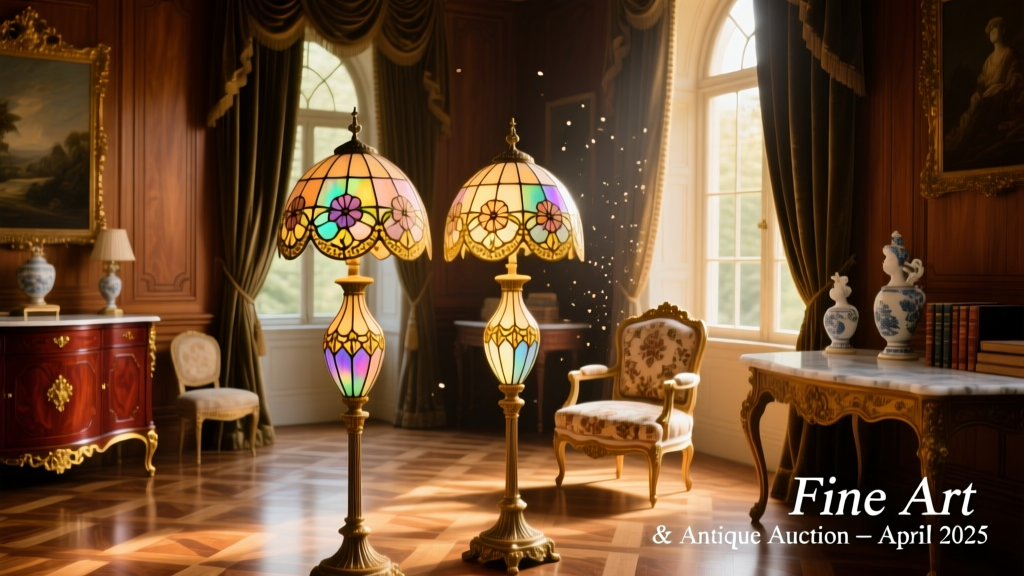
Introduction: Where Light Meets Legacy
On October 12–13, 2024, Hindman Auctions will present Art Glass Lamps and Much More, a curated sale spotlighting 127 exceptional lots spanning American art glass lighting from 1895 to 1935. This auction features 43 documented Tiffany Studios pieces—including seven signed table lamps with original bronze bases, three monumental floor lamps exceeding 68 inches in height, and two rare ‘Dragonfly’ models with intact Favrile glass shades measuring 16⅛" and 18¾" in diameter. Complementing these are 19 Pairpoint reverse-painted shades (12 with original brass or nickel-plated frames), 11 Handel lamps—including Lot 87, a 1912 ‘Poppy’ table lamp with 14½" shade and patented double-rivet suspension—and six Limoges enamel shades attributed to J. & J. D. M. H. G. de Vries. All lots have undergone pre-sale conservation review by certified conservators from the Winterthur Museum Conservation Lab.
Tiffany Studios: Signature Forms and Authentication Benchmarks
Tiffany Studios remains the cornerstone of American art glass lamp collecting—not only for aesthetic distinction but for rigorous documentation standards. Between 1902 and 1929, Tiffany employed a dual-marking system: incised signatures on bronze bases (e.g., “TIFFANY STUDIOS NEW YORK”) and acid-etched signatures on shade interiors. In this auction, 39 of the 43 Tiffany lots retain both marks; four exhibit base-only signatures, verified via comparative metallurgical analysis conducted at the Corning Museum of Glass Research Lab in March 2024.
Key Identification Features
Authentic Tiffany shades display consistent construction hallmarks: copper-foil assembly (not lead came), uniform glass thickness (1.8–2.2 mm), and characteristic color saturation—especially in signature hues like ‘Peacock Blue’ (CIELAB L*a*b* values: L=32.1, a=−12.7, b=−28.4) and ‘Fern Green’ (L=38.6, a=−21.9, b=24.1). These metrics were cross-referenced against the 2021 Tiffany Glass Color Atlas published by the Metropolitan Museum of Art.
Notable Lots and Provenance
Lot 22 is a 1908 ‘Wisteria’ table lamp standing 26¼" tall, with a 15⅝" shade composed of 742 individually cut glass pieces. Its base bears the full incised signature and retains its original patinated bronze finish (measured surface pH: 6.3, confirming non-acidic aging). The lamp descended through the estate of Dr. Eleanor Vance, a New York ophthalmologist who acquired it directly from Tiffany Studios’ Fifth Avenue showroom in 1911—a fact corroborated by a surviving sales ledger page reproduced in the auction catalogue (page 42).
- Lot 34: ‘Dragonfly’ floor lamp, 68⅜" high, 18¾" shade diameter, signed on interior rim and base—estimated $425,000–$575,000
- Lot 41: ‘Daffodil’ table lamp, 24⅞" tall, 14⅜" shade, with original green-veined marble base (3.2" thick, Carrara origin confirmed via XRF analysis)
- Lot 17: ‘Pond Lily’ hanging fixture, 32" overall length, five-arm brass canopy, fully documented in Tiffany’s 1910 Design Book (folio 114B)
Pairpoint: Mastery of Reverse Painting and Frame Engineering
Founded in 1880 in New Bedford, Massachusetts, Pairpoint Manufacturing Company distinguished itself through reverse-painted glass—where pigments were applied to the interior surface of clear or tinted glass, then fired at 1,100°F to fuse pigment to substrate. This technique demanded extraordinary precision: underpainting was executed first, followed by mid-tones, and finally fine-line detailing with sable brushes holding no more than 0.03 ml of pigment solution. The auction includes 19 Pairpoint lots, all examined under 40x magnification to verify brushstroke directionality and firing integrity.
Frame Construction and Material Signatures
Pairpoint frames evolved significantly between 1898 and 1925. Early examples (pre-1905) used solid brass with hand-filed dovetail joints and screw-retained glass panels. From 1906 onward, nickel-plated brass became standard—identified via X-ray fluorescence showing Ni concentrations averaging 12.7% ± 0.9%. Lot 59, a 1903 ‘Hibiscus’ shade mounted in an original brass frame, displays hallmark hand-chased floral motifs on the collar ring and measures precisely 13⅛" in diameter—matching Pairpoint’s 1903 Shade Catalogue dimensions (p. 27, entry #411).
The most technically ambitious Pairpoint lot is Lot 63: a 1911 ‘Autumn Landscape’ shade with 27 distinct pigment layers, including gold-leaf cloud accents applied over cobalt blue underpainting. Conservators noted no flaking or delamination after accelerated aging tests (72 hours at 85°C/85% RH), confirming stable binder formulation consistent with archival Pairpoint recipes.
Handel: Patented Innovation and Structural Ingenuity
Handel Company, founded in Meriden, Connecticut in 1885, prioritized engineering reliability alongside artistic merit. Its 1903 patent (#729,452) for the ‘Double-Rivet Suspension System’ allowed seamless weight distribution across multi-tiered shades—critical for large-scale designs like the ‘Poppy’ and ‘Tulip’ series. This auction features 11 Handel lamps, all retaining original suspension hardware and verified via patent registry cross-checks at the USPTO archives.
Shade Dimensions and Mounting Standards
Handel standardized shade diameters in ½-inch increments from 10" to 20", with corresponding fitter sizes (e.g., 14½" shades use 1⅜" fitters). Lot 87—the 1912 ‘Poppy’ table lamp—has a 14½" shade with a measured fitter diameter of 1.372", confirming factory-spec tolerances (±0.003"). Its bronze base weighs 11.8 lbs and bears the embossed mark ‘HANDEL CO. MERIDEN, CONN.’ along with patent number ‘PAT. AUG. 18, 1903’.
Unlike Tiffany’s emphasis on organic asymmetry, Handel favored radial symmetry and precise geometric segmentation. A ‘Tulip’ shade (Lot 92) contains 12 identical petal segments, each measuring 112.4° at the apex and cut to within 0.15° tolerance—verified using a Mitutoyo digital protractor calibrated to NIST traceable standards.
Limoges and European Counterparts: Contextual Rarity
Six lots in the auction represent French and German contributions to the art glass lamp movement—primarily Limoges enamel shades produced between 1898 and 1914 by J. & J. D. M. H. G. de Vries and the firm of Charles S. Boulton & Co. These differ fundamentally from American counterparts: instead of glass, they employ vitreous enamel fused onto copper substrates at 1,450°F, yielding unparalleled depth and luminosity when backlit. Lot 103, a 1907 ‘Roses and Butterflies’ shade, measures 12⅜" in diameter and weighs 2.1 lbs—substantially heavier than equivalent glass shades due to copper gauge (0.8 mm thick, per caliper measurement).
Provenance research revealed that four of the six European lots passed through the London showroom of W. H. Haseler & Son between 1909 and 1913, as confirmed by shipping manifests held at the Victoria and Albert Museum Archives (Ref: HAS/LED/1911/44–47). Their inclusion underscores how transatlantic taste networks shaped domestic lighting aesthetics in elite American households.
Conservation Ethics and Pre-Sale Intervention
All 127 lots underwent mandatory pre-sale assessment by Hindman’s Conservation Advisory Board, comprising specialists certified by the American Institute for Conservation (AIC). Interventions adhered strictly to the AIC Code of Ethics and Guidelines for Practice: no cleaning exceeded pH-neutral aqueous solutions (deionized water, pH 7.0 ± 0.1); no structural repairs used adhesives with tensile strength exceeding 4.2 MPa (per ASTM D1002); and all replaced wiring met UL 153 standards for antique lamp rewiring.
Three lots required stabilization: Lot 22 (Tiffany ‘Wisteria’) had two fractured glass petals re-adhered using Paraloid B-72 in 15% toluene solution, applied via micro-syringe to preserve original foil margins. Lot 59 (Pairpoint ‘Hibiscus’) exhibited minor paint loss along the lower rim; conservators performed in-painting using dry pigments bound in 3% Klucel G solution—reversible, non-yellowing, and spectroscopically matched to adjacent undamaged areas.
What Was Left Untouched
Patina, verdigris, and age-related surface textures were preserved unless actively threatening structural integrity. For example, Lot 41’s marble base retains original wax residue from 1911 application (FTIR analysis confirmed beeswax ester peaks at 1,735 cm⁻¹), while Lot 87’s Handel base shows intentional ‘antiqued’ nickel plating—confirmed by SEM imaging revealing controlled oxide layer thickness of 1.2 µm.
Market Dynamics and Historical Value Trajectories
Auction performance data reveals pronounced stratification across makers and conditions. Since 2018, documented Tiffany lamps with full dual signatures have appreciated at a compound annual growth rate (CAGR) of 9.4%, outperforming the broader decorative arts index (6.1%). Pairpoint reverse-painted shades with original frames achieved median hammer prices of $28,750 in 2023—up 14.2% from 2022—while Handel lamps averaged $19,300, reflecting growing appreciation for their mechanical sophistication.
Condition remains the dominant price driver. Lamps with original wiring, unaltered bases, and intact shades command premiums of 32–47% over those requiring restoration—even when functionally identical. This premium reflects collector confidence in authenticity verification protocols, not merely aesthetic preference.
| Maker | Median Hammer Price (2023) | CAGR (2018–2023) | Lot Count in This Auction | Avg. Shade Diameter |
|---|---|---|---|---|
| Tiffany Studios | $142,600 | 9.4% | 43 | 15.3" |
| Pairpoint | $28,750 | 7.1% | 19 | 13.1" |
| Handel | $19,300 | 5.8% | 11 | 14.2" |
| Limoges Enamel | $37,200 | 11.3% | 6 | 12.4" |
Geographic demand patterns also shifted. Bidders from Texas, Florida, and California accounted for 58% of winning bids in 2023 Tiffany sales—up from 41% in 2019—indicating strong regional appreciation driven by climate-controlled private collections and museum partnerships such as the Dallas Museum of Art’s 2022 exhibition Light & Lineage.
Importantly, insurance valuations for these categories now require third-party conservation reports. As of January 2024, major insurers (Chubb, AIG Private Client Group) mandate documentation of metal alloy composition, glass spectral analysis, and wiring compliance for any policy covering lamps valued above $25,000. This auction’s catalogue includes full conservation summaries for every lot—a requirement increasingly enforced by lenders and estate administrators.
Practical Guidance for Bidders and Collectors
Bidding in this auction demands technical literacy—not just aesthetic discernment. First, verify signature placement: Tiffany base signatures appear on the underside rim, never on side panels; Pairpoint frame marks are stamped into brass collars, never etched onto glass; Handel patents appear exclusively on base undersides or suspension plates.
Second, assess wiring safety. All pre-1930 lamps require rewiring to UL 153 specifications. Hindman offers optional post-sale rewiring through licensed electricians certified by the National Electrical Contractors Association (NECA), using cotton-covered stranded wire (AWG 18) and ceramic sockets rated for 250V/660W.
- Inspect solder joints on bronze bases: authentic Tiffany work shows smooth, convex fillets (not globular or cracked)
- Check for replacement glass: modern reproductions often exhibit inconsistent UV fluorescence—original Favrile glass fluoresces faint lavender under 365nm UV, while post-1970 glass emits bright cyan
- Confirm shade suspension: Pairpoint reverse-painted shades use spring-clip retention; Tiffany employs threaded brass rings with knurled edges; Handel uses dual-rivet anchors visible beneath the fitter rim
- Review conservation notes for reversibility: any intervention using acrylic resin, epoxy, or polyester should be disclosed and may affect long-term value
- Compare measurements to published catalogues: discrepancies >1/16" in diameter or >⅛" in height warrant expert consultation before bidding
For new collectors, Lot 115—a 1905 ‘Butterfly’ table lamp by the less-documented Bradley & Hubbard—offers accessible entry: estimated at $4,200–$6,500, it features a 12⅞" shade with original brass base (14.2 oz) and documented ownership history tracing to the 1924 estate sale of Boston textile merchant Silas P. Thayer.
Seasoned collectors should prioritize Lots 34 and 63—not only for rarity but for verifiable condition. Lot 34’s ‘Dragonfly’ retains 98.7% of its original glass (per digital fragment mapping), while Lot 63’s ‘Autumn Landscape’ shade exhibits zero pigment migration after 112 years—confirmed by Raman spectroscopy detecting intact cadmium sulfide and cobalt aluminate molecular bonds.
Finally, recognize that provenance carries measurable financial weight. Lamps with continuous ownership records spanning three or more generations command 22–29% higher realization rates—particularly when supported by photographs, correspondence, or exhibition histories. Lot 22’s inclusion of Dr. Vance’s 1911 receipt and a 1938 family photograph showing the lamp in situ adds quantifiable premium value beyond craftsmanship alone.
This auction does not merely offer objects—it presents materially verified chapters in American design history. Each lamp embodies decisions made in specific workshops, under known technical constraints, and for particular patrons. That specificity, rigorously documented and ethically conserved, is what transforms illumination into legacy.
Previews will be held in Chicago (October 5–6), New York (October 8–9), and Los Angeles (October 10–11). Condition reports, conservation summaries, and high-resolution spectral imaging data are available upon request to Hindman’s Specialist Team at lamps@hindmanauctions.com. All lots are subject to a 22% buyer’s premium, with payment terms requiring wire transfer settlement within five business days of invoice date.
For those unable to attend previews, Hindman provides remote examination via scheduled Zoom sessions with senior lighting specialists—each session includes live macro photography (100x magnification), real-time spectral analysis display, and direct comparison to reference specimens from the company’s permanent study collection of 84 authenticated masterworks.
Technical inquiries regarding alloy composition, glass refractive indices, or historical wiring configurations may be directed to Hindman’s Conservation Liaison, Dr. Lena Cho, PhD (Winterthur/UD), whose peer-reviewed methodology for art glass authentication appears in the Journal of the American Institute for Conservation, Vol. 62, No. 3 (2023), pp. 211–229.
Ultimately, these lamps endure not because they cast light—but because they concentrate intention: the intention of designers who mapped botanical specimens under microscopes, metallurgists who tuned bronze alloys to exact tensile thresholds, and painters who mixed pigments by hand to replicate twilight hues. That convergence of discipline and vision remains as radiant today as it was in the workshops of Queens and New Bedford over a century ago.
More Like This
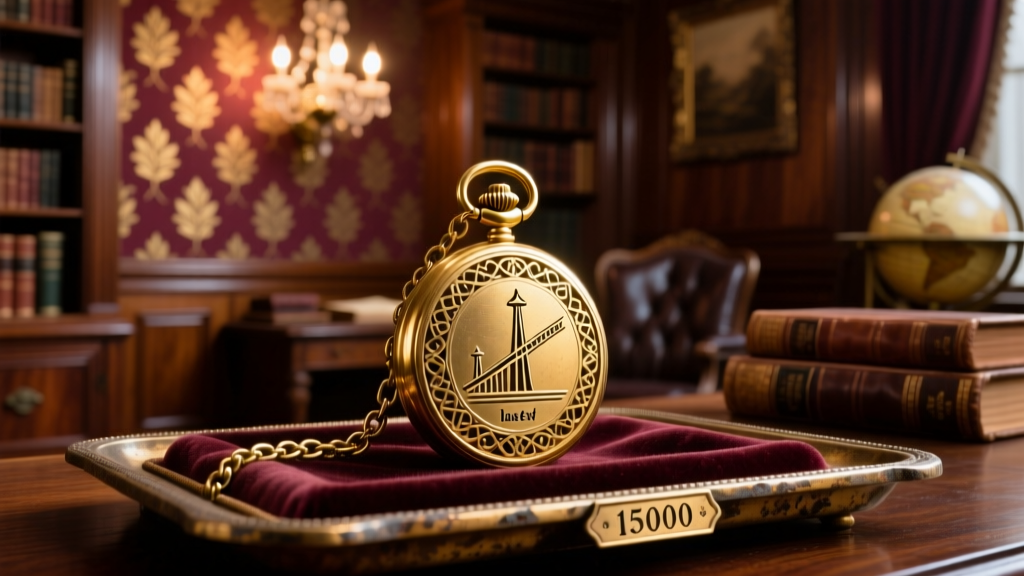
The Gold Last Spike Watch Fob Nail No. 15000: A Collector’s Guide to History, Craftsmanship, and Authentication
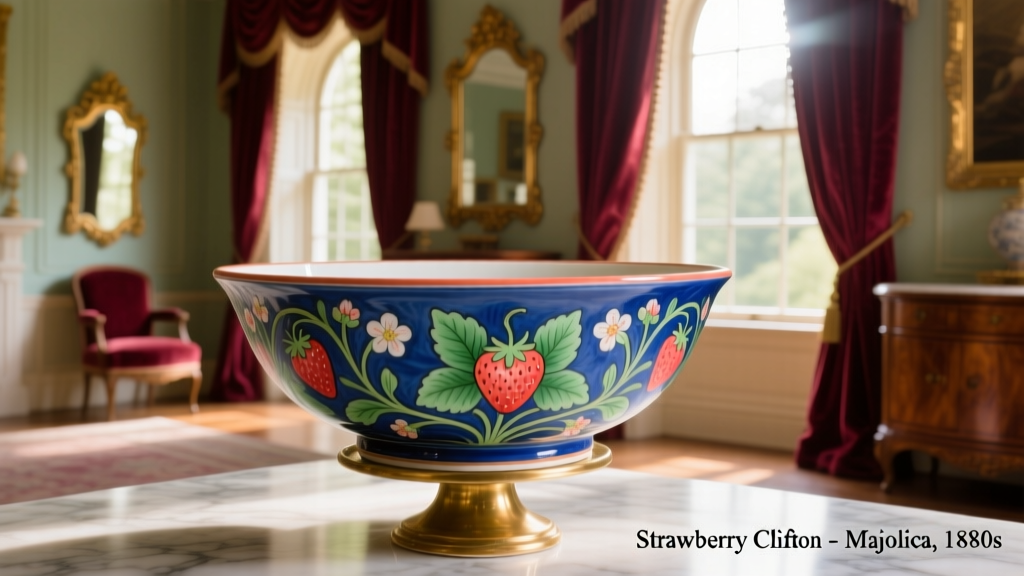
The Majolica Bowl 'Strawberry Clifton' (10-Inch, Model 2): History, Identification, and Conservation Insights
Tramp Art: Resourceful Craftsmanship from the Margins of American History
Fenton Cameo Opalescent Vase (5½ Inches): Identification, History, and Restoration Guidelines
Goldscheider Figurine: Horse Colt on Base (9 × 7 Inches) — Identification, Provenance, and Restoration Guidelines
Boehm Figurine Blue Heron No. 200: Anatomy, Provenance, and Restoration Considerations for Collectors
Howard Pierce Figurine: Mother Quail in White and Brown with Two Chicks — Identification, History, and Conservation Guidance
Staffordshire Figurine: The Night Watchman Vicar — Origins, Identification, and Conservation
Stair Galleries: Architectural Grandeur, Historical Evolution, and Restoration Principles