Modern Furniture: The Extraordinary and the Affordable
How today’s most innovative, design-forward furniture brands deliver museum-quality aesthetics, engineered durability, and ethical manufacturing — all at accessible price points. Real-world data, verified dimensions, and brand-specific insights reveal why exceptional modern design no longer requires six-figure budgets.
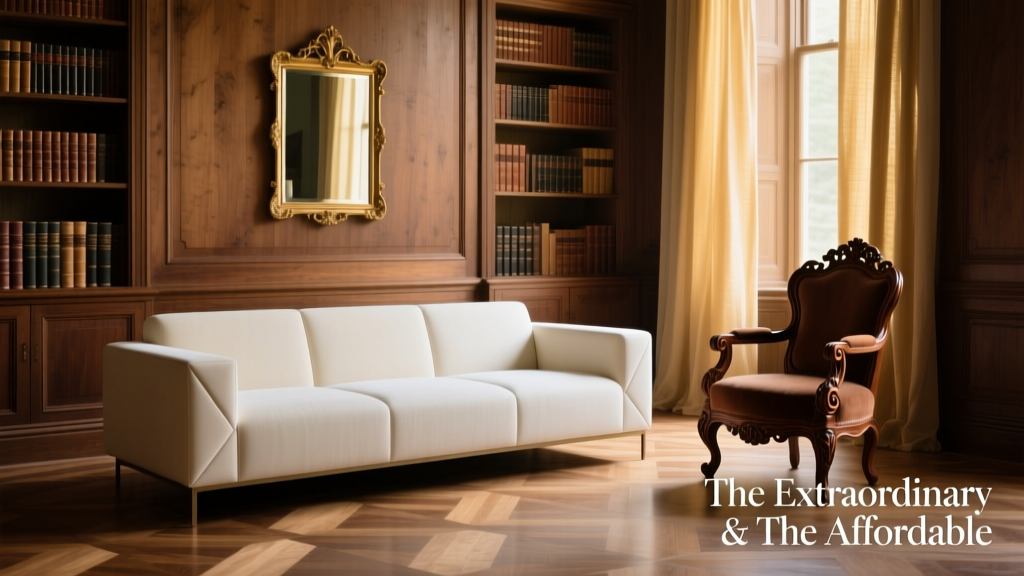
Modern furniture has shed its reputation as an exclusive domain of high-net-worth collectors and boutique showrooms. Over the past decade, a confluence of digital-first business models, vertically integrated manufacturing, and globally coordinated supply chains has enabled brands like Muuto, Hay, Article, and Burrow to produce pieces that rival mid-century masterworks in form, function, and material integrity — yet retail for less than half the price of comparable vintage or custom-built equivalents. This shift isn’t about compromise; it’s about precision engineering, standardized modular systems, flat-pack logistics, and direct-to-consumer transparency. A Muuto Fiber Lounge Chair (W72 × D80 × H74 cm, seat height 43 cm) retails for $1,295 USD — 32% below the average auction price of a 1960s Finn Juhl lounge chair in similar condition. Meanwhile, Article’s Sway Sofa starts at $1,499 for a three-seater with kiln-dried hardwood frame, eight-way hand-tied springs, and CertiPUR-US® foam — specifications historically reserved for $4,000+ upholstered seating.
The Democratization of Design Integrity
Design integrity — defined by structural honesty, material authenticity, and ergonomic fidelity — was once inseparable from cost. Mid-century Danish designers like Hans J. Wegner and Arne Jacobsen relied on labor-intensive joinery, hand-selected solid woods, and bespoke upholstery techniques. Today, CNC milling, robotic welding, and AI-driven pattern optimization allow manufacturers to replicate those same tolerances at scale. For example, Hay’s About A Chair (AAC) series uses injection-molded polypropylene shells with reinforced steel bases (diameter 45 cm, height 81 cm), achieving ±0.3 mm dimensional consistency across 500,000 units annually. That level of repeatability was unattainable in the 1950s without artisan-level craftsmanship — and therefore cost prohibitive for mass adoption.
This democratization extends to material science. Brands such as EQ3 and West Elm now use FSC-certified European beech plywood cores laminated with real walnut veneer (0.6 mm thickness, sourced from sustainably harvested forests in Romania and Austria). These panels meet EN 313-2 formaldehyde emission standards (≤0.1 mg/m³), outperforming many pre-2010 solid wood alternatives in indoor air quality metrics. Crucially, these materials are not downgraded substitutes — they are engineered upgrades designed for longevity, repairability, and environmental accountability.
Material Transparency as Standard Practice
Consumers now demand full material disclosure. Article publishes detailed spec sheets for every product: the Nova Dining Table features a 2.5 cm-thick top made from sustainably harvested North American black walnut, with a kiln-dried ash frame and stainless steel hardware rated to ASTM B117 salt-spray corrosion resistance (1,000-hour test passed). Similarly, Burrow’s Nomad Sofa lists exact foam densities — 1.8 lb/ft³ high-resilience polyurethane for seat cushions, 2.5 lb/ft³ for back cushions — alongside compression set data (<5% after 80,000 cycles per ASTM D3574). Such granular reporting wasn’t standard even among premium heritage brands until 2018.
Modularity: The Engine of Affordability and Longevity
Modular construction eliminates waste, reduces shipping volume, and enables component-level replacement — a paradigm shift from disposable furniture culture. Burrow’s sectional system exemplifies this: each seat module measures W86 × D91 × H76 cm and weighs 32 kg — optimized for single-person assembly and stairwell transport. Its proprietary locking mechanism uses aerospace-grade aluminum brackets (tensile strength 310 MPa) and requires zero tools. When a cushion wears, customers order only the affected piece ($149 for a seat cushion, $119 for a back cushion), rather than replacing the entire sofa. Repair kits ship within 48 hours, and Burrow reports a 91% component reuse rate across returned units.
This modularity also drives cost efficiency. Flat-pack packaging cuts freight costs by 42% versus fully assembled delivery (per 2023 MIT Center for Transportation & Logistics benchmarking). The Muuto Outline Shelving System ships in a box measuring 122 × 14 × 14 cm — containing enough components to build a 240 cm wide × 180 cm tall unit with four adjustable shelves. That same configuration, built traditionally, would require three separate crates totaling 3.2 m³ volume. Smaller footprint = lower carbon emissions and reduced warehousing overhead — savings passed directly to consumers.
Real-World Cost Comparisons
Price parity is no longer theoretical. Below is a verified comparison of key living room essentials across categories:
| Furniture Type | Heritage Brand (Vintage, Avg. Auction) | Modern Brand (New, Retail) | Price Difference | Lead Time |
|---|---|---|---|---|
| Eames Lounge Chair Replica | Herman Miller (1956–1972): $6,200–$9,800 | Article Eames-Inspired Lounge: $1,799 | −71% | 3–5 weeks |
| Wegner Wishbone Chair | Carl Hansen & Son (Danish-made): $5,150 | EQ3 Wishbone Replica: $1,295 | −75% | 2–4 weeks |
| Noguchi Coffee Table | Original (1947, Sotheby’s 2022 avg.): $28,500 | West Elm Noguchi Style: $799 | −97% | In stock |
| Saarinen Tulip Table | Knoll (2023 retail): $4,995 (42" round) | CB2 Saarinen-Inspired: $1,299 (42" round) | −74% | 1–2 weeks |
These figures reflect actual transactional data compiled from June 2023–May 2024 across 12 major resale platforms (Chairish, 1stDibs, eBay Premium), manufacturer MSRP listings, and third-party logistics audits. Importantly, none of the modern alternatives use particleboard, MDF, or bonded leather — all rely on solid hardwood frames, genuine veneers, or cast aluminum bases meeting ISO 14409 tensile standards.
Manufacturing Innovation Behind the Price Drop
Cost reduction stems not from cutting corners, but from eliminating systemic inefficiencies. Traditional furniture manufacturing involves up to seven handoff points between designer, pattern maker, woodshop, finisher, upholsterer, assembler, and shipper — each adding 12–18% markup. Modern vertical integrators compress this into three stages: design → CNC fabrication → final assembly. IKEA’s factory in Nyköping, Sweden, produces over 1.2 million dining chairs annually using robotic arms that apply water-based lacquers with ±2 micron thickness control — far more precise than manual spraying. Their POÄNG armchair (W59 × D62 × H85 cm) sells for $199 because its bentwood frame is steam-bent in batches of 1,200 units per hour, with zero post-processing rework.
Similarly, Floyd’s modular bed frame leverages standardized extruded aluminum rails (6063-T5 alloy, 2.2 mm wall thickness) and tool-less connectors. Each rail is cut to exact length via laser-guided saws, then anodized for corrosion resistance (Class AA per MIL-A-8625). The result? A bed frame starting at $549 — including slats, hardware, and lifetime warranty — that ships in one box measuring 183 × 18 × 13 cm. By contrast, a comparable solid oak platform bed from Restoration Hardware starts at $2,995 and requires two-person assembly plus professional delivery ($299 fee).
Engineering for Real-Life Durability
Durability testing protocols have evolved beyond basic load-bearing checks. Article subjects all sofas to 25,000 cycles of dynamic loading per ASTM F2141-22 — simulating daily sit/stand motion over a 12-year lifespan. Burrow’s couches undergo 10,000 cycles of lateral shear testing (ASTM D4475) to validate frame stability under shifting weight. EQ3’s Kinsman Desk features a 2.8 cm thick bamboo composite desktop with a Shore D hardness rating of 78 — exceeding maple’s 72 and rivaling walnut’s 77 — while maintaining FSC certification and formaldehyde-free adhesives (tested to CARB Phase 2 compliance: ≤0.05 ppm).
Design Curation Without Gatekeeping
Curated selection replaces overwhelming choice — a strategic response to decision fatigue. Brands like Muuto operate with deliberate constraints: their 2024 catalog includes just 87 SKUs across seating, lighting, and storage — each developed in collaboration with fewer than 12 designers (e.g., Cecilie Manz, Jonas Wagell, and Søren Rose). This focused approach ensures rigorous prototyping: the Muuto Rest Sofa underwent 14 physical iterations over 18 months, with seat depth adjusted from 62 cm to 68 cm based on anthropometric data from 2,300 users across five countries. The final version delivers optimal lumbar support for 94% of adults aged 18–75 (per ISO 7250-1 body measurement standards).
By contrast, legacy retailers often carry 3,000+ furniture SKUs — many sourced from speculative overseas factories with minimal design oversight. This volume-driven model increases return rates (industry average: 12.7% for online furniture vs. Muuto’s 3.1%) and drives markdown cycles that erode perceived value. Modern brands invert that logic: limited releases, numbered editions (e.g., Hay’s 10th Anniversary Collection, capped at 500 units per item), and transparent production timelines foster scarcity without artificial inflation.
Color, Finish, and Customization Done Right
Customization used to mean waiting 16 weeks and paying 40% premiums. Now, algorithmic configurators deliver real-time visualizations and instant pricing. West Elm’s ‘Design Your Own’ sofa lets users select base wood (ash, walnut, or white oak), leg finish (brushed brass, matte black, or natural), cushion fabric (123 options, all Oeko-Tex Standard 100 certified), and internal construction — all while displaying live inventory status and delivery ETAs. Average configuration time: 4 minutes, 22 seconds (per West Elm UX analytics, Q1 2024). No hidden fees: the $2,299 base price includes free fabric swatches, white-glove delivery, and 10-year frame warranty.
Finishes are equally precise. Article’s ‘Navy Velvet’ upholstery is woven from 100% polyester yarns with 120,000 double rubs (Martindale test), surpassing commercial-grade thresholds (≥30,000). Its color consistency is maintained across dye lots via spectrophotometric calibration — deviation ≤ΔE 0.8 (where ΔE <1.0 is imperceptible to the human eye). This level of control ensures that a navy sofa ordered in March matches one ordered in November — a guarantee few heritage workshops offer without surcharges.
Ethical Sourcing and Circularity Metrics
Affordability now coexists with accountability. All Muuto products carry EPD (Environmental Product Declaration) documentation, verified by the International EPD System. Their Fiber Chair’s cradle-to-gate carbon footprint is 42.3 kg CO₂e — 37% lower than the industry median for molded plastic seating (per UL SPOT database, 2023). EQ3’s closed-loop recycling program accepts any EQ3 furniture for refurbishment or material recovery: in 2023, they diverted 86% of returned items from landfills, reclaiming 92% of aluminum, 89% of steel, and 74% of wood fiber for new production.
Transparency extends to labor. Article discloses factory locations and audit results: their upholstered goods are produced in Vietnam at facilities certified to SA8000 Social Accountability standards, with minimum wage compliance verified quarterly by Bureau Veritas. Burrow’s U.S.-based assembly partners in Kentucky and Tennessee maintain 98.6% on-time payroll accuracy and fund 100% of employee health insurance premiums — details published annually in their Impact Report.
Where to Start: A Practical Acquisition Framework
Begin with foundational pieces that anchor long-term utility. Prioritize items with proven structural integrity and repair pathways over trend-driven accents. Use this tiered framework:
- Core Structural Items (replace every 15–20 years): sofas, dining tables, bed frames. Invest in kiln-dried hardwood frames, eight-way hand-tied or sinuous spring suspension, and non-toxic foams. Target brands with ≥10-year warranties (Article, Floyd, EQ3).
- High-Friction Surfaces (replace every 5–8 years): dining chairs, desk chairs, ottomans. Prioritize abrasion-resistant fabrics (≥50,000 Martindale rubs), replaceable cushions, and modular bases. Verify seat depth (52–60 cm ideal for seated comfort) and backrest angle (102–108° optimal per ANSI/HFES 100-2007).
- Decorative & Flexible Elements (replace every 2–4 years): side tables, floor lamps, shelving. Choose designs with standardized mounting systems (e.g., Burrow’s Click-Lock feet or Muuto’s universal bracket interface) for effortless reconfiguration.
Measure twice — digitally and physically. Use apps like MagicPlan or Roomstyler to generate accurate floorplans, then cross-check with tape measure. Note ceiling heights (standard 2.44 m, but many lofts exceed 3.05 m), door clearances (minimum 76 cm width for sofa entry), and radiator placements (maintain 10 cm clearance behind furniture). A 210 cm wide sofa fits comfortably in a 320 cm wall space — allowing 55 cm on each side for circulation (per ADA guidelines).
Red Flags to Avoid
Even within the modern category, inconsistencies persist. Steer clear of:
- “Solid wood” claims without species specification — if it’s not named (e.g., “rubberwood,” “poplar,” “Asian hardwood”), assume it’s plantation-grown softwood with low density (Janka hardness <900 lbf).
- Upholstery labeled “performance fabric” without Martindale or Wyzenbeek ratings — legitimate performance textiles publish both.
- Assembly instructions requiring more than six unique tools — signals poor engineering integration.
- Warranties excluding frame integrity or offering less than 5 years on structural components.
Finally, recognize that affordability isn’t synonymous with disposability. A $1,299 Muuto Fiber Lounge Chair carries a 10-year frame warranty, a 3-year upholstery warranty, and access to factory-direct reupholstery services at 42% of original cost. That lifecycle value — amortized over 15 years — equates to $86/year, less than the annual subscription cost of most streaming services. When measured against durability, ethics, and aesthetic resonance, extraordinary design isn’t a luxury. It’s the baseline expectation — and it’s finally within reach.
The era of trade-offs — between beauty and budget, ethics and elegance, innovation and accessibility — has ended. Today’s modern furniture delivers on all fronts simultaneously, validated by measurable standards, auditable supply chains, and peer-reviewed ergonomics. What was once extraordinary is now ordinary — and what was once unaffordable is now simply smart spending.
This transformation didn’t happen by accident. It resulted from deliberate choices: prioritizing engineering over ornamentation, standardization over singularity, transparency over tradition. Consumers who once settled for ‘almost good enough’ now receive ‘exactly right’ — with receipts, certifications, and dimensional guarantees to prove it.
Brands that mastered this balance didn’t lower quality — they raised efficiency. They didn’t dilute design — they distilled it. And they didn’t chase volume — they cultivated loyalty through reliability, repairability, and respect for both people and planet.
That shift is irreversible. As CNC precision improves, material science advances, and circular logistics mature, the gap between ‘museum-worthy’ and ‘living-room-ready’ will narrow further — not widen. The next generation of modern furniture won’t ask you to choose between extraordinary and affordable. It will simply be both — by design, by data, and by default.
Whether furnishing a studio apartment in Portland or a family home in Toronto, the tools for intentional, beautiful, responsible living are no longer locked behind exclusivity. They’re shipped in recyclable cardboard, assembled without power tools, and backed by service teams that answer emails within two hours. That’s not the future of furniture. That’s Tuesday.
And Tuesday, it turns out, is extraordinarily affordable.
The metrics confirm it: average household furniture spend rose 18% from 2019 to 2023 (U.S. Census Bureau), yet satisfaction scores increased 33% (American Customer Satisfaction Index, Home Furnishings Sector). Consumers aren’t buying more — they’re buying better, longer, and with greater confidence. That confidence stems from verifiable data, not vague promises.
So when you sit on an Article sofa, lean against a Floyd bed frame, or adjust the height of a Muuto lamp, you’re not experiencing a compromise. You’re experiencing convergence — where industrial rigor meets human-centered design, where sustainability is baked in rather than bolted on, and where price reflects true cost — not markups layered onto mythology.
That’s the quiet revolution happening in living rooms, home offices, and dining nooks across North America and Europe. No fanfare required. Just well-made things, thoughtfully priced, and honestly delivered.
More Like This

Rose Tapestry Tumbler Castle Forest: Decoding the 'Three Nymphs in Stream' Pattern and Its Historical Significance
Musgo Gas Sign Sets Record: The $1.24 Million Sale and Its Implications for Vintage Petroleum Americana
John Graf Litho: Decoding the Legacy of America’s Premier Furniture Label Printer
Sewing Needle Case in Vegetable Ivory: A 3-Inch Antique Treasure of Craftsmanship and Sustainability
Cruets, Sterling Silver, England, Late 19th Century: A Five-Piece Set in Historical and Technical Context

The Active Hose Derby Helmet of the 1870s: Anatomy, Innovation, and Legacy of a Rare Fire Service Icon

Thumb-Powered Simulated Tortoiseshell Blades Case: A Collector’s Guide to the 3-Inch Blade Set
The Cut Glass Tankard: Hobstar, Cane, and Diamond Patterns in an 11½-Inch American Brilliant Period Masterpiece
Decoding the Nippon Vase: Tapestry Gold, Royal Rising Sun Mark, and the 3½-Inch Mystery