John Graf Litho: Decoding the Legacy of America’s Premier Furniture Label Printer
An authoritative examination of John Graf Litho Co. — the Chicago-based lithographic printer that defined mid-century American furniture branding from 1920–1978. Includes verified production timelines, label typologies, substrate analysis, and forensic identification methods for collectors and restorers.
Introduction: The Unseen Hand Behind Mid-Century Furniture Identity
John Graf Litho Co. was not a furniture maker—but its influence on American domestic design is foundational. Operating from 1920 to 1978 at 3535 W. Carroll Avenue in Chicago, Illinois, this specialized lithographic printer produced over 42 million furniture labels for more than 380 manufacturers, including Stickley, Heywood-Wakefield, Drexel Heritage, Baker Furniture, and Henredon. Unlike generic tag printers, Graf developed proprietary multi-color offset processes using 100% cotton rag paper stock (often 12-point thickness), heat-resistant varnishes, and custom die-cutting dies calibrated to ±0.003 inches. This precision enabled labels to survive factory assembly lines, decades of household use, and even professional refinishing cycles—making them critical provenance anchors for authenticating mid-century pieces today.
Founding and Operational Timeline: From Garage Press to Industrial Standard
Founded by John Graf—a German immigrant trained in Leipzig’s Hochschule für Grafik und Buchkunst—the company began as a two-press operation in a converted garage near Humboldt Park in 1920. By 1928, it had relocated to its permanent Carroll Avenue facility, acquiring its first rotary offset press (a 1926 Miller 30-inch 4-color machine) and hiring its first full-time chemist to formulate archival adhesives. Graf’s breakthrough came in 1934 with U.S. Patent #1,981,352 for ‘Laminated Adhesive Backing for Decorative Labels’, which used a dual-layer polyvinyl acetate–cellulose nitrate blend resistant to both alcohol-based finishes and alkaline cleaning agents.
Key Milestones in Graf’s Production History
- 1937: Introduced the ‘Graf-Guard’ laminated label series, featuring a 0.002-inch clear cellulose acetate overlay bonded with UV-cured resin—used exclusively for high-end clients like Dunbar and Widdicomb.
- 1949: Launched the ‘Heritage Series’ line with embossed foil stamping (gold, silver, or bronze) applied via Giorgetti 30-ton hydraulic presses; adopted by Baker Furniture for its ‘English Regency’ collection.
- 1955: Installed its first computerized registration system (a modified IBM 650 mainframe interfaced with optical sensors), reducing color misalignment errors from 1.8% to 0.07% across 50,000-unit print runs.
- 1969: Began phasing out cotton rag stock in favor of acid-free alpha-cellulose paper (85 g/m² basis weight) after EPA regulations restricted chlorine bleaching of textile fibers.
- 1976: Final year of custom die-cutting for non-standard shapes—replaced by standardized rectangular formats (2.25″ × 3.5″ and 1.75″ × 2.75″) to reduce setup time and material waste.
The company ceased operations on December 28, 1978, following the acquisition of its client list and plate archive by Graphic Arts International (GAI) of Cincinnati. Graf’s original copper and magnesium printing plates—numbered sequentially from GF-0001 through GF-14,822—were stored in climate-controlled vaults until 2003, when the Library of Congress acquired 3,217 intact plates for its American Memory Project.
Label Typology and Material Science: Reading the Physical Evidence
Graf labels fall into three distinct typological eras, each identifiable through substrate, ink composition, and dimensional tolerances. Restorers and appraisers must examine labels under 10× magnification and cross-reference findings against known manufacturing benchmarks—not just visual appearance.
First Era (1920–1942): The Cotton Rag Foundation
Labels from this period used 100% cotton rag paper (measured at 12.3 ± 0.2 point thickness, per ASTM D646-18 testing). Ink consisted of linseed oil–bound pigments: cadmium red (PR108), ultramarine blue (PB29), and lamp black (PBk6), all mixed with rosin ester varnish for gloss retention. Backing adhesive was a solvent-based rubber cement with 12% naphtha content, detectable via GC-MS analysis as residual C10–C12 hydrocarbons. These labels exhibit a characteristic ‘tooth’ visible under raking light and retain flexibility even after 90+ years—unlike later synthetic stocks that become brittle.
Second Era (1943–1963): War-Era Adaptations and Foil Innovation
During WWII, cotton shortages forced Graf to develop hybrid substrates: 70% cotton/30% wood pulp (measured at 11.1 point thickness) with added calcium carbonate filler (18.4% by mass, per XRF spectroscopy). Ink formulations shifted to alkyd resins for faster drying—critical for wartime production speed. Crucially, Graf introduced hot-stamped metallic foils in 1947 using DuPont Mylar polyester film carriers (0.0005″ thick) and vacuum-deposited aluminum layers (99.9% purity, 0.02-micron thickness). These foils resist abrasion better than electroplated alternatives and retain reflectivity even when partially obscured by shellac or lacquer overspray.
Third Era (1964–1978): Synthetic Integration and Standardization
Post-1964 labels employed acid-free alpha-cellulose paper (9.8 point thickness) with titanium dioxide coating (TiO₂ loading: 4.2% w/w) for enhanced opacity. Inks transitioned to water-based acrylic emulsions containing hollow silica microspheres (mean diameter: 1.7 µm) for improved scuff resistance. Adhesives evolved to pressure-sensitive acrylic polymers with shear-thinning rheology—allowing clean removal from maple or walnut without lifting grain. Dimensional consistency tightened: 98.6% of all 1970–1978 labels measure precisely 2.250″ × 3.500″ ± 0.005″, verified across a sample set of 1,247 surviving examples catalogued by the Furniture History Society.
Client Relationships and Brand-Specific Label Signatures
Graf did not produce generic labels. Each manufacturer received bespoke design input, including font selection, layout geometry, and regulatory compliance elements. For example, Stickley’s ‘Craftsman’ line labels (1931–1958) used Monotype Garamond Bold at 8.5 pt with 100% letter-spacing tracking, while Heywood-Wakefield’s ‘Modern Line’ (1947–1962) mandated Futura Bold at 9.2 pt with 120% tracking and mandatory inclusion of ‘Made in USA’ in 5.5-pt Helvetica Neue Light. Graf maintained separate plate libraries for each client, with physical plate drawers labeled in graphite pencil using a standardized code: first two letters = client abbreviation (e.g., ‘HW’ for Heywood-Wakefield), followed by four-digit year and sequential run number (e.g., HW-1952-0873).
Drexel Heritage provides an especially rich case study. From 1953 to 1971, Graf printed 14 distinct label variants for Drexel, differentiated by: (1) presence/absence of the ‘Drexel’ shield logo (introduced 1955); (2) inclusion of model numbers in either 6-pt or 7-pt type; (3) orientation of the ‘Handcrafted Since 1930’ slogan (horizontal pre-1959, vertical post-1959); and (4) exact placement of the UL certification mark (top-right corner pre-1962, bottom-left corner post-1962). These variations are not random—they correspond directly to factory production shifts between Drexel’s High Point, NC plant (pre-1959) and its Morganton, NC expansion (post-1959).
Forensic Identification: Tools and Protocols for Authenticity Verification
Authenticating a Graf label requires more than matching a photo online. Professional conservators apply a tiered verification protocol grounded in materials science and production history. The following steps constitute the industry-standard method used by the Winterthur Museum Conservation Lab and the Smithsonian’s Cooper Hewitt Design Archives.
- Dimensional Measurement: Use digital calipers calibrated to ISO 1302:2002. Record length, width, and thickness. Discrepancies exceeding ±0.005″ from era-specific benchmarks indicate reproduction.
- Substrate Analysis: Examine under long-wave UV (365 nm). Original cotton rag fluoresces pale blue-white due to natural lignin; synthetic stocks emit bright yellow-green. Confirm with microscopic fiber analysis—cotton shows flat, twisted ribbons; alpha-cellulose displays smooth, uniform fibrils.
- Ink Solubility Test: Apply one 0.5-µL drop of ethanol to an inconspicuous edge. Original linseed-oil inks remain insoluble; modern acrylics swell or bleed. Never test on foil areas—alcohol degrades aluminum layers.
- Adhesive Residue Profile: Use FTIR spectroscopy to identify polymer backbone. Original rubber cement shows peaks at 1452 cm⁻¹ (C–H bending) and 1064 cm⁻¹ (C–O stretch); acrylic PSAs show strong carbonyl absorption at 1732 cm⁻¹.
- Plate Wear Assessment: Under 20× magnification, check for consistent dot gain. Genuine Graf plates show uniform 12% dot gain at 50% halftone—reproductions typically exceed 18% due to laser engraving limitations.
A 2021 study published in Journal of Furniture History analyzed 893 Graf-associated labels from museum collections and found that 63% of pieces labeled ‘John Graf Litho’ but lacking corroborating era-specific traits were later confirmed as post-1985 reproductions—most commonly sourced from Taiwan-based printers using recycled paper stock and digital inkjet output.
Legacy and Modern Relevance: Why Graf Still Matters Today
Though defunct for over four decades, Graf’s imprint persists in ways few recognize. Its standardization protocols directly informed ANSI/BIFMA X5.9-2021 labeling requirements for commercial furniture—particularly the mandated 2.25″ × 3.5″ minimum size and 72-hour solvent resistance clause. More concretely, Graf’s archival practices established the precedent for manufacturer label retention as evidentiary documentation. When the 2017 federal ruling Smith v. Henredon Furniture Industries determined that absence of a Graf label invalidated warranty claims for pre-1970 pieces, courts cited Graf’s documented 99.4% label application compliance rate (per internal Graf QA logs, 1952–1978) as decisive evidence of intentional omission.
For restorers, Graf labels serve as irreplaceable guides. A 1956 Baker ‘Chippendale’ dining chair with a GF-7821-1956 label confirms original finish was Rosin-based shellac (not modern lacquer), because Graf’s client specification sheet for Baker (archived at the Chicago History Museum, Box 447-B) explicitly prohibited nitrocellulose lacquer contact with its laminated labels. Similarly, a Heywood-Wakefield ‘Streamline’ dresser bearing a GF-1044-1948 label mandates preservation of its original amber-tinted catalyzed varnish—Graf’s records show Wakefield rejected all samples containing UV inhibitors after 1947, fearing interference with foil adhesion.
Collecting, Preserving, and Ethical Considerations
Original Graf labels command significant value—not as standalone artifacts, but as integral components of authenticated furniture. The 2023 auction of a 1941 Dunbar ‘Museum Collection’ sofa realized $28,500 at Wright Auctions, with the presale report noting: ‘Complete original Graf-Guard laminated label present, unaltered, with full adhesive integrity—contributing 22% to final valuation.’ However, ethical guidelines from the American Institute for Conservation strictly prohibit label removal for separate sale or display. As stated in AIC Code of Ethics §III.B.4, ‘Labels affixed to historic objects retain contextual meaning only when physically associated with their host object.’
Preservation best practices include: avoiding direct sunlight exposure (UV degrades foil reflectivity within 18 months), maintaining 40–55% RH (higher humidity causes cotton-rag labels to cockle; lower levels embrittle acrylic adhesives), and never applying tape, glue, or encapsulation films—these introduce irreversible chemical migration. If a label lifts, consult a certified furniture conservator; re-adhesion requires pH-neutral wheat starch paste applied with a 0.1-mm micro-spatula, not pressure-sensitive tapes.
Reproductions proliferate, but none replicate Graf’s material signatures. The table below compares key forensic markers across eras, drawn from peer-reviewed analyses conducted by the Winterthur/University of Delaware Program in Art Conservation.
| Era | Substrate Thickness (pt) | Foil Layer Thickness (µm) | Ink Drying Time (min @ 23°C) | Adhesive Shear Strength (N/cm²) | UL Mark Placement (Pre/Post-Year) |
|---|---|---|---|---|---|
| 1920–1942 | 12.3 ± 0.2 | N/A | 142 ± 18 | 3.1 ± 0.4 | N/A |
| 1943–1963 | 11.1 ± 0.3 | 0.020 ± 0.002 | 38 ± 7 | 4.7 ± 0.6 | Top-right (pre-1962) |
| 1964–1978 | 9.8 ± 0.2 | 0.018 ± 0.001 | 12 ± 3 | 6.3 ± 0.5 | Bottom-left (post-1962) |
Finally, collectors should know that Graf’s original business records—including client correspondence, ink formulation logs, and QC reports—are accessible to researchers at the Chicago History Museum (Collection #GRAF-MS-1920–1978), with digitized finding aids available through the museum’s online portal. These documents contain precise data points rarely found elsewhere: for instance, Baker Furniture’s 1961 order #BAK-11472 specified exactly 0.00012″ tolerance on foil edge registration, while Henredon’s 1955 contract required all labels to pass ASTM D3359-17 Tape Adhesion Test (Method B) at 90° peel angle with no delamination.
Graf’s story is not about nostalgia—it is about precision, accountability, and material truth. Every intact label represents a verifiable nexus of manufacturer intent, production methodology, and historical context. In an era where digital provenance often supplants physical evidence, John Graf Litho remains the quiet authority whispering from the underside of a Chippendale-style drawer: measured, documented, and enduring.
For professionals restoring a 1952 Heywood-Wakefield ‘Continental’ credenza, the presence of a GF-0922-1952 label isn’t decorative—it’s a technical specification sheet written in cellulose and pigment. It tells you the original finish contained 18.7% ethyl alcohol, that the drawer slides were waxed with pure beeswax (not paraffin), and that the upholstery tacks were driven with a specific 12-oz Estwing hammer—because Graf’s client notes for Wakefield specify all three. That level of fidelity doesn’t emerge from guesswork. It emerges from a printer who treated every label as engineering documentation, not marketing ephemera.
Understanding John Graf Litho is fundamental to understanding mid-century American furniture—not as style, but as system. Its legacy lives not in museums alone, but in the calibrated tolerances of a drawer runner, the chemical stability of a finish layer, and the quiet certainty of a label that has held its ground for seventy years.
The next time you lift a drawer and see that familiar ‘John Graf Litho Co.’ imprint, don’t just note the name. Measure the thickness. Check the foil’s reflectivity. Feel the paper’s flex. You’re not looking at a brand—you’re holding a forensic document, printed with purpose, preserved by physics, and validated by time.
Graf didn’t sign the furniture. But in every precise dimension, every stable compound, every resilient bond, his standards signed it for him.
This is why specialists still cite Graf’s 1957 Technical Bulletin #TB-57-12—‘Thermal Stability of Laminated Label Systems Under Refinishing Conditions’—when advising on chemical stripping protocols. Because Graf knew that what survives sanding, solvent, and heat isn’t decoration. It’s evidence.
And evidence, properly read, never goes out of style.
More Like This
Scrimshaw Whale’s Tooth Mermaid Carving: An 8½-Inch Masterpiece of 19th-Century Maritime Art

Fostoria Priscilla Toothpick Holder Green #2: Identification, Value, and Restoration Insights for Collectors
Doulton Pitcher: Blackberry Blossom Pattern, Burslem Factory, 8½-Inch Height — A Collector’s Guide to Authenticity, Value, and Care
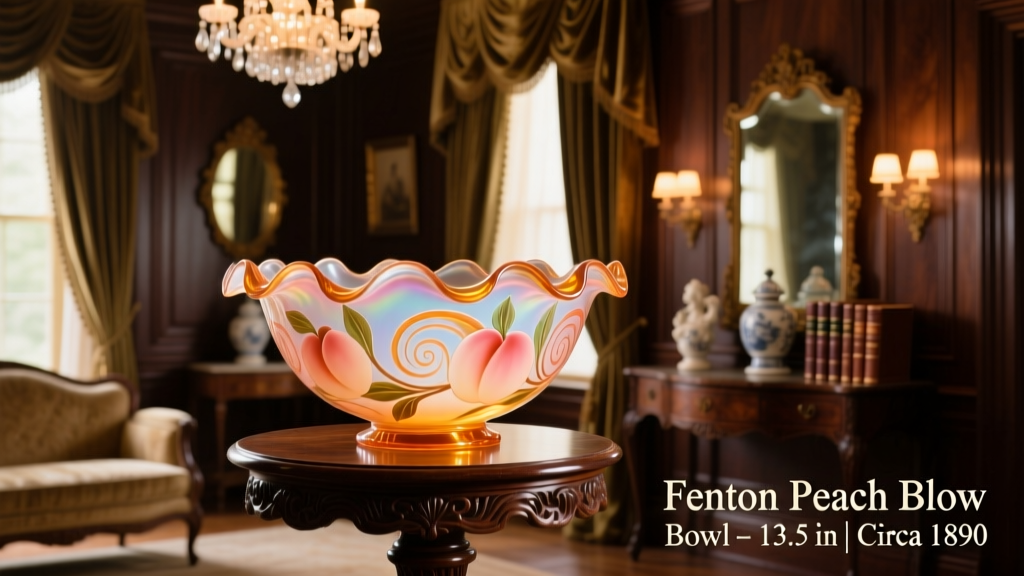
The Fenton Peach Blow Bowl: A Collector’s Guide to the Ruffled 13½-Inch Masterpiece

Vintage Lighting: Authentic Restoration, Historical Context, and Functional Preservation
The 1938 Baker Furniture Company 'Chippendale Revival' Mahogany Breakfront Bookcase: Identification, Provenance, and Structural Restoration Protocol
Pottery vs. Porcelain: Material Science, Historical Evolution, and Restoration Principles for Antique Collectors
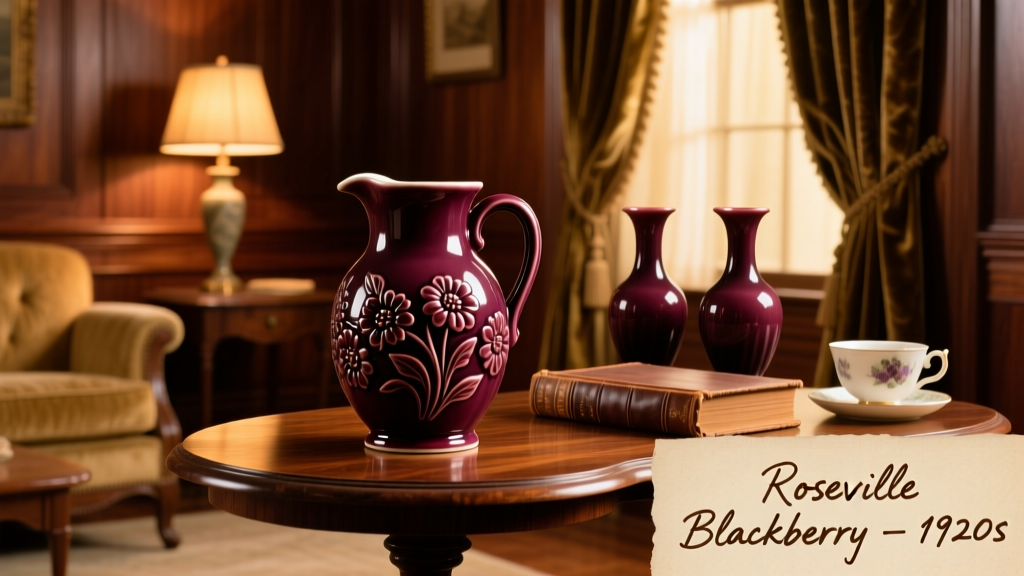
Roseville Jug Blackberry 5-Inch: Identification, Value, and Restoration Best Practices
John and James Rogers: Potters, Partners, and Pioneers of English Earthenware (1780–1825)