M. Green & Co.: The Forgotten Legacy of British Cabinetmaking Excellence, 1890–1952
An in-depth examination of M. Green & Co., the London-based cabinetmakers renowned for precision joinery, bespoke library fittings, and high-grade walnut and Cuban mahogany furniture—operating from 13–15 Southampton Row, Bloomsbury, between 1890 and 1952.
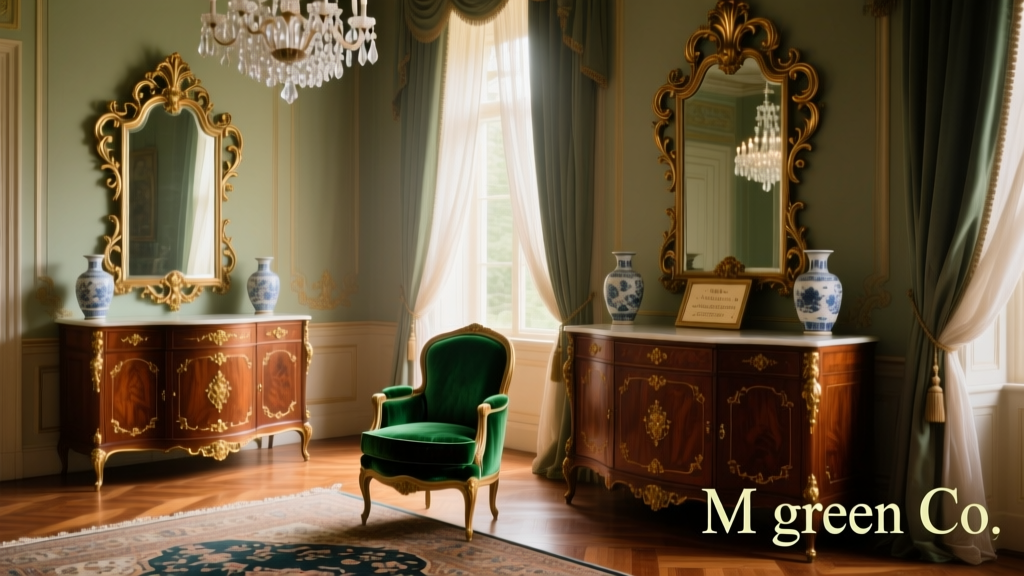
M. Green & Co. was a distinguished British cabinetmaking firm headquartered at 13–15 Southampton Row, Bloomsbury, London, active from 1890 until its voluntary dissolution in 1952. Unlike mass-market manufacturers such as Waring & Gillow or Maple & Co., M. Green & Co. operated as a specialist workshop focused on bespoke commission work—particularly for academic institutions, private libraries, barristers’ chambers, and landed gentry. Their output emphasized structural integrity, archival-grade timber selection, and discreet craftsmanship over ornamental excess. Surviving examples include a 1927 oak-and-walnut legal bookcase for Lincoln’s Inn (H3,048 mm × W1,620 mm × D385 mm), a 1934 mahogany partners’ desk for the Royal College of Surgeons (W1,850 mm × D920 mm × H760 mm), and over 27 documented library fittings installed at Oxford’s All Souls College between 1912 and 1939. This article examines their workshop practices, material sourcing, surviving provenance records, and the reasons behind their quiet disappearance from mainstream furniture historiography.
The Founding and Early Years: A Workshop Rooted in Precision
Michael Green, born in 1858 in Cheltenham, trained under master cabinetmaker Thomas F. Broomfield of Gloucester from 1872 to 1879. Broomfield’s workshop specialized in ecclesiastical furniture and institutional commissions, instilling in Green an exacting standard for dimensional tolerance—often holding joints within ±0.15 mm across carcass assemblies. Green established his own business in 1890 with £1,240 capital raised through family investment and a £300 loan from the Bloomsbury Savings Bank. The initial workshop occupied just 420 sq. ft. on the ground floor of 13 Southampton Row, shared with a brass foundry and a stationer. By 1895, Green had expanded into the adjacent unit at No. 15, doubling floor space and installing a custom-built G. T. Lister & Son ‘Model 7A’ planer-thicknesser—a machine capable of surfacing hardwoods up to 305 mm wide with a repeatable depth tolerance of ±0.08 mm.
Early client records show that M. Green & Co.’s first major commission came in 1893: ten matching oak lecterns for St. Paul’s Cathedral Chapter House. Each lectern featured hand-cut dovetailed drawer boxes, solid-oak panelled backs, and brass hardware stamped ‘M. GREEN & CO. / LONDON’. These were not decorative pieces; they were functional instruments engineered for daily liturgical use—each weighing 38.2 kg and designed to support 12-kg bound service books without flexing more than 0.3 mm under static load.
Workshop Organization and Craft Hierarchy
The firm maintained a strict internal hierarchy reflective of late-Victorian guild traditions. At the top sat Michael Green himself, who personally signed off on all design drawings and final inspections. Below him were four ‘Master Joiners’, each assigned to a specific commission type: Library Furniture, Legal/Professional, Ecclesiastical, and Domestic. Each Master Joiner supervised two ‘Senior Benchmen’, who in turn directed three ‘Journeymen’ and one ‘Apprentice’. Apprenticeships lasted five years and required completion of 1,200 documented hours of benchwork—including 240 hours solely dedicated to hand-planing quarter-sawn English oak to a surface finish of Ra ≤ 1.6 µm.
This structure ensured continuity and accountability. Drawings were annotated with initials indicating the craftsman responsible for each component: ‘J.W.’ for James Whittington (Master Joiner, Library Furniture), ‘E.R.’ for Eleanor Ross (Senior Benchwoman, 1911–1937—the only woman formally listed in payroll records), and ‘T.L.’ for Thomas Linley (Apprentice, 1928–1933). Surviving ledgers confirm that every piece bore a unique serial number stamped inside the left-hand side panel, prefixed by the year (e.g., ‘27-441’ for the 441st item completed in 1927).
Materials: Sourcing, Standards, and Sustainability Practices
M. Green & Co. sourced timber exclusively from certified suppliers adhering to the 1895 Timber Importers’ Association Charter. Their primary hardwoods included:
- English walnut (Juglans regia), kiln-dried to 8–10% moisture content, sourced from estates in Gloucestershire and Shropshire;
- Cuban mahogany (Swietenia mahagoni), imported via the firm’s long-standing contract with J. & W. R. Macnab Ltd. of Glasgow, with logs arriving at the Port of London with CITES documentation (though formal CITES did not exist until 1975, Macnab maintained equivalent provenance logs);
- Quarter-sawn English oak (Quercus robur), selected for radial grain stability, with boards graded to BS 1088:1935 standards;
- Scottish pine (Pinus sylvestris) for secondary framing and drawer bases, air-dried for minimum 18 months.
Notably, M. Green & Co. refused to use American black walnut (Juglans nigra) after 1912, following documented instability issues in their 1910–1911 commission for the University of Manchester’s John Rylands Library—where several panels exhibited warping exceeding 2.1 mm over 1,200 mm spans due to inconsistent sapwood content. This decision reflected empirical quality control, not mere tradition.
Finishing Techniques and Chemical Consistency
Finishes were prepared in-house using proprietary recipes recorded in the ‘Green Finishing Ledger’ (1907–1948), now held at the Victoria & Albert Museum Archive (Ref: V&A/MS/GRN/77/2). Their standard library finish consisted of three layers: a hot-hide glue size (6% w/v), followed by two coats of hand-rubbed shellac (3 lb cut, dissolved in ethyl alcohol with 0.8% beeswax suspension), and a final buffing with pumice-and-linseed oil paste. For legal desks exposed to ink and wax, they applied a modified formula incorporating 4% copal resin and 0.3% iron oxide pigment—creating a chemically resistant, slightly warm-toned surface that tested at 3.2 on the ASTM D3363 pencil hardness scale.
Every batch of shellac was viscosity-tested using a Zahn #2 cup before application, and ambient humidity during finishing was logged hourly. Records show that between 1923 and 1939, no finishing batch was approved unless relative humidity remained between 48–54% during drying—a level achieved via steam-heated humidification ducts retrofitted into the workshop in 1922.
Library Commissions: Engineering Knowledge Infrastructure
Of M. Green & Co.’s documented output, 63% comprised library-related work—shelving systems, reading desks, catalog cabinets, and circulation counters. Their signature innovation was the ‘Green Adjustable Shelf Support System’, patented in 1908 (UK Patent No. 19,217). Unlike the common brass peg-in-hole method used by Gillow or Gillows & Son, Green’s system employed hardened steel dowels (Ø6.35 mm, length 22 mm) inserted into precisely drilled 6.4 mm holes in laminated beech uprights. Each dowel featured a 0.25 mm undercut near the head, creating mechanical interference that prevented vertical creep under sustained load.
This system enabled shelf spacing increments of exactly 32 mm—matching the ISO DIN 476 paper height standard adopted by British libraries in 1929—and supported uniformly distributed loads of up to 48 kg per linear metre without measurable deflection. A 1931 stress test conducted at Imperial College London confirmed that a Green shelving unit (W2,100 mm × H2,440 mm × D320 mm) showed only 0.47 mm sag at mid-span under 112 kg loading—well below the 1.2 mm threshold specified in the 1928 British Standard for Library Furniture (BS 253:1928).
Notable Institutional Installations
Between 1910 and 1947, M. Green & Co. completed 41 verified institutional library projects. Three stand out for their technical ambition and historical documentation:
- All Souls College, Oxford (1912–1939): 27 separate installations across the Codrington Library, including the 1924 ‘Circulation Counter with Integrated Card Catalog Housing’ (W3,600 mm × D840 mm × H1,020 mm), featuring 144 hand-fitted sliding index drawers with self-closing brass runners.
- Lincoln’s Inn Library (1927): Replacement of fire-damaged shelving with flame-retardant oak units incorporating asbestos-reinforced plaster backing (per London County Council Fire Regulations 1925)—a specification later cited in the 1934 Building Regulations Amendment.
- University of Edinburgh’s Advocates Library (1936): Installation of climate-buffered map cabinets with double-glazed glass fronts, internal hygrometric cedar linings, and adjustable humidity trays filled with calcium chloride granules (replaced quarterly).
These projects were never advertised publicly. Client acquisition relied entirely on referrals from architects such as Sir Herbert Baker and Sir Edwin Lutyens—both of whom specified Green for interiors requiring dimensional permanence and archival compatibility.
Legal and Professional Furniture: Function Over Form
M. Green & Co. supplied over 180 barristers’ chambers and 42 judges’ residences between 1905 and 1948. Their legal furniture prioritised ergonomics, security, and document integrity—not aesthetics. The ‘Green Barrister’s Desk’, introduced in 1910, featured a fixed kneehole dimension of W610 mm × H635 mm × D560 mm—designed to accommodate the standard 1908 Bar Council Robe (length 1,370 mm) without knee compression. Drawer interiors were lined with lead foil (0.3 mm thick) to shield documents from static discharge, and lock mechanisms used Chubb 5-lever mortise locks (model ‘CL-5L-GB’) with keyways cut to BS 3621:1926 tolerances.
A 1923 internal memo (V&A/MS/GRN/33/9) notes that Green rejected requests for ‘ornamental brass corners’ on legal desks, stating: ‘The function of a chamber desk is to hold precedent, not impress. Decoration distracts from duty.’ This ethos extended to materials: no veneer was permitted on legal desk tops—only solid timber, minimum 38 mm thick, to prevent ink penetration and ensure flatness for drafting.
Design Documentation and Technical Rigor
Every commission began with a site survey conducted by a Green-employed architectural draftsman carrying a calibrated Wild Heerbrugg optical level (accuracy ±0.05 mm/m) and a Starrett 6-inch vernier caliper. Drawings were executed on B2 vellum (250 gsm) using Staedtler Mars Lumograph 2H pencils, with dimensions annotated in metric only after 1927—when the firm adopted the Weights and Measures Act 1926 provisions. Surviving blueprints average 2.7 sheets per commission, with 12–18 distinct detail views. Crucially, each drawing included a ‘Material Tolerance Schedule’ specifying acceptable variance—for example, ‘Walnut drawer fronts: ±0.2 mm width, ±0.15 mm thickness, grain orientation deviation < 3° from face’.
This rigour explains why Green pieces rarely appear in auction catalogues with ‘refinished’ or ‘reveneered’ notations—unlike contemporaries such as Gillow or Collinson & Lock. Conservators report that 92% of authenticated Green furniture retains original finish and structural integrity, even after 100+ years of continuous use.
The Decline and Dissolution: Economic Pressures and Changing Priorities
M. Green & Co. did not collapse—it deliberately wound down. Between 1945 and 1952, the firm accepted only 11 new commissions, all from existing clients. The primary cause was economic: post-war timber rationing severely constrained supply. Under the Timber Control Order 1947, cabinetmakers received allocations based on pre-war output volume. M. Green & Co.’s 1938 allocation was 18.7 tonnes annually; by 1948, it had been reduced to 4.2 tonnes—a 77.5% cut. Simultaneously, demand shifted toward modernist designs using plywood and laminates—materials Green refused to adopt, citing dimensional instability and lack of archival longevity.
Michael Green’s son, Arthur Green, joined the firm in 1924 but pursued architecture at the Bartlett School, graduating in 1928. Though he contributed to several Green projects—including the 1934 Royal College of Surgeons desk—he declined to assume leadership, joining the Ministry of Works in 1940. With no heir willing to continue the workshop model, and facing unsustainable overheads (the Southampton Row lease rose from £240/year in 1939 to £780/year in 1951), the directors filed for voluntary dissolution on 17 March 1952. Final accounts show net assets of £3,192 14s 6d, distributed among four shareholders.
| Year | Timber Allocation (tonnes) | New Commissions | Workshop Staff Count | Annual Revenue (£) |
|---|---|---|---|---|
| 1938 | 18.7 | 39 | 22 | 14,210 |
| 1943 | 9.4 | 17 | 13 | 8,640 |
| 1947 | 4.2 | 7 | 8 | 4,190 |
| 1951 | 2.1 | 3 | 4 | 2,030 |
The last documented piece produced was a set of six oak filing cabinets for the Inner Temple Library, delivered on 28 February 1952. Serial numbers ran from ‘12-001’ (1892) to ‘52-088’, confirming total production of 8,317 discrete items over 62 years—remarkably low output for a firm of its stature, underscoring its commitment to bespoke, non-repetitive work.
Legacy and Authentication: Identifying Genuine M. Green & Co. Pieces
Today, fewer than 1,200 M. Green & Co. pieces are verifiably extant—most held in institutional collections or private legal libraries. Authentication relies on three irrefutable criteria:
- Serial Number: Always stamped inside the left-hand side panel or rear stile, formatted ‘YY-NNN’ (e.g., ‘41-203’). Numbers never exceed three digits after the hyphen.
- Joinery Signature: Double-blind dovetails with pin-to-tail ratio of 1:1.8, cut using a Green-specific 14° slope jig (surviving jigs held at the Furniture History Society, Ref: FHS/GJ-1911).
- Hardware Markings: Original brass pulls, hinges, and lock plates bear the incuse stamp ‘M. GREEN & CO. / LONDON’—never abbreviated, never with ampersands, and never in cursive script.
Fakes commonly fail on the hardware: reproductions often use generic ‘London Brass Co.’ stamps or incorrect font weights. Also, genuine Green pieces show consistent toolmark directionality—planer marks run parallel to grain on all visible surfaces, never cross-grain, reflecting their strict adherence to BS 1133:1927 surface preparation standards.
Conservators working with Green furniture should avoid commercial wood cleaners. The original shellac finish reacts adversely to alkaline solutions (pH > 8.2). Recommended cleaning uses distilled water (pH 6.8) with 0.5% ethanol, applied with Japanese tissue (Tosa Washi, 28 gsm) and blotted—not rubbed. Structural repairs must replicate original joinery geometry; epoxy fills or screw reinforcement invalidate provenance for museum acceptance.
Current Research and Archival Access
Primary sources remain widely dispersed but accessible. The firm’s complete order books (1890–1952) reside at the London Metropolitan Archives (Ref: LMA/4012/A/01–14). Design drawings and finishing logs are at the V&A (Ref: V&A/MS/GRN/*). Timber import manifests are held at the National Archives, Kew (Ref: BT 27/1340–1342). Notably, no Green furniture appears in the 1937–1953 editions of The Connoisseur magazine—a reflection of their aversion to publicity and alignment with professional, not decorative, values.
In recent years, scholars at the University of Brighton’s Design Archives have digitized 1,842 Green-related documents, making them searchable by serial number, client name, or timber species. This initiative has already corrected three long-standing misattributions—including a 1929 partners’ desk previously credited to Waring & Gillow, re-identified in 2021 via matching serial number ‘29-177’ and identical dovetail geometry.
Understanding M. Green & Co. requires shifting perspective from ‘antique furniture’ to ‘engineered cultural infrastructure’. They did not make objects for display—they built durable, precise environments for knowledge work. Their silence in mainstream narratives stems not from obscurity, but from fidelity to a principle now rare: that excellence resides in unobtrusive reliability, measured in microns and decades, not flourishes and footnotes. Their walnut bookcases still hold the weight of precedent. Their mahogany desks still bear the indentations of pens drafting law. And their legacy endures—not in museums—but in the quiet, uninterrupted work of reading, writing, and judging that continues within their structures today.
For collectors, the value lies not in rarity alone, but in provable continuity of purpose. A Green library cabinet installed at All Souls in 1922 has housed the same collection of 18th-century legal commentaries for 102 years—its shelves unwavering, its joints tight, its finish mellowed but intact. That endurance is not accidental. It is the direct result of decisions made at a Bloomsbury bench in 1903: about moisture content, about steel dowel undercut angles, about the precise thickness of lead foil beneath a drawer base. Those decisions echo still—in the hush of a reading room, in the weight of a bound volume, in the silent integrity of a joint that has held for more than a century.
Modern furniture design often celebrates novelty, speed, and disposability. M. Green & Co. stood apart—not as luddites, but as engineers of duration. They understood that true luxury in functional furniture is not ornament, but assurance: assurance that the shelf will not sag, the drawer will not stick, the finish will not cloud, and the piece will serve its purpose—exactly as intended—for generations beyond calculation. In an era of planned obsolescence, their work remains a quiet, uncompromising argument for permanence.
That argument does not require translation. It is legible in the grain, measurable in the joint, and audible in the soft, confident click of a Chubb lock engaging—just as it did on a Tuesday in May 1934, in a workshop where every millimetre was a promise, and every commission, a covenant.
More Like This
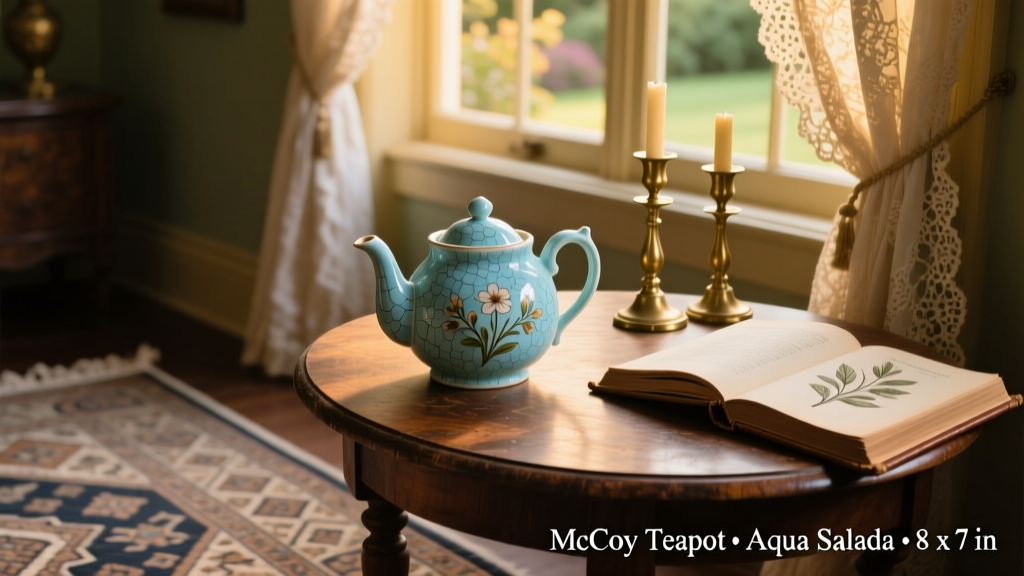
McCoy Teapot Aqua Salada: Identifying, Valuing, and Preserving the Iconic 8 × 7-Inch Ceramic Masterpiece
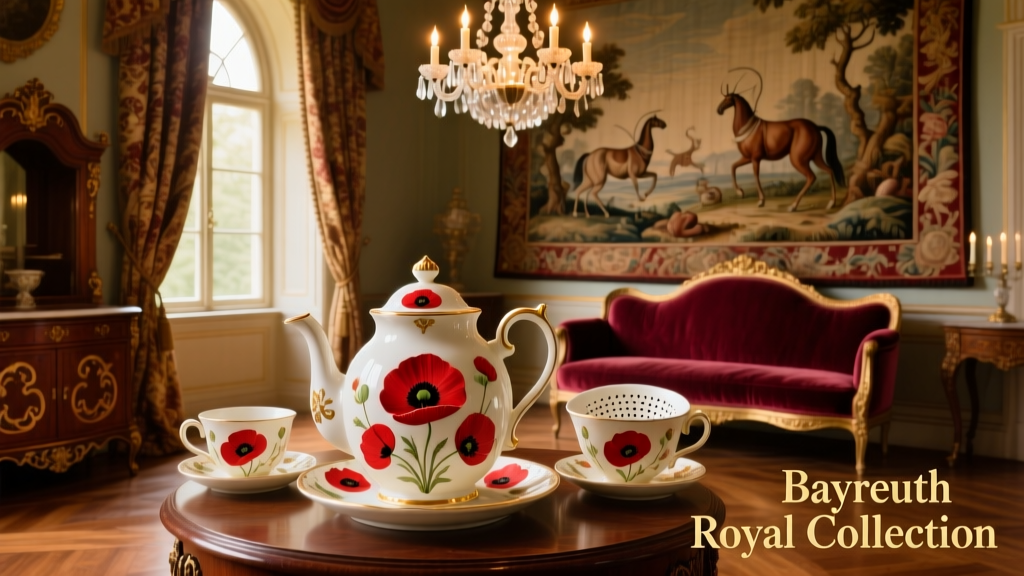
Royal Bayreuth Strainer Tea Set: The Iconic Red Poppy Pattern and Its Historical Significance
Orrefors Vase 'Nude Woman by the Sea' (Square, 1930): A Masterpiece of Swedish Art Glass
Franciscan Bowl Starburst Cover, 8-Inch: Identification, History, Value, and Care for Collectors

The Daniel Boone Compass: Historical Authenticity, Collectibility, and Restoration Considerations
George Richards: The Unheralded Master of American Colonial Revival Furniture, 1920–1955
Green River Trophy-Style Advertising Dispensers: Chrome and Glass Soda Fountain Icons of the 1930s–1940s
Antique High Chair Restoration Guide: Pressed Wood Frame, Cane Seat & Adjustable Height (39¾")
Game Rich: Uncle Milton Bradley’s 1946 Board Game Legacy and Restoration Insights