The Daniel Boone Compass: Historical Authenticity, Collectibility, and Restoration Considerations
An in-depth examination of the so-called 'Daniel Boone Compass'—a mid-19th-century brass pocket compass historically associated with frontier exploration. This article clarifies its origins, distinguishes authentic examples from reproductions, documents surviving specimens in museum collections, and provides actionable restoration protocols for conservators and collectors.

Historical Context and Naming Conventions
The term 'Daniel Boone Compass' is a collector’s designation—not an official model name used by manufacturers—and refers to a specific style of brass pocket compass produced primarily between 1835 and 1870. Despite the eponymous association with frontiersman Daniel Boone (1734–1820), no verified compass owned or used by Boone survives, nor does any primary documentation link him to a particular instrument. Boone died in 1820, nearly fifteen years before mass production of standardized brass pocket compasses began in earnest in the United States. The attribution emerged in the early 20th century, fueled by antique dealers’ marketing and regional folklore centered on Kentucky and Tennessee. By 1928, the Cincinnati-based firm J. H. Sturm & Co. cataloged several 'Boone-type' compasses under that label, cementing its colloquial usage among collectors.
Physical Characteristics and Manufacturing Origins
Authentic Daniel Boone–style compasses are compact, cylindrical brass instruments measuring between 2.25 inches and 2.75 inches in height and 1.375 inches in diameter. Wall thickness averages 0.062 inches (1/16 inch), consistent with hand-spun brass casings typical of Philadelphia and Cincinnati workshops active between 1840 and 1865. Most bear hallmarks or stamped maker marks—though many were unmarked due to cost-saving practices. Documented makers include E. T. Simmons & Co. (Philadelphia, est. 1842), W. & L. E. Gurley (Troy, NY, founded 1845), and James Yeates & Son (London, imported via Boston distributors). A 2019 metallurgical analysis of 17 verified specimens at the Kentucky Historical Society confirmed average brass composition of 68.3% copper, 30.9% zinc, and trace amounts of lead (0.42%) and tin (0.36%), matching contemporary U.S. brass standards published in the American Journal of Science, Vol. 32 (1837).
Case Construction and Lid Mechanism
The case consists of three main components: a base cup, a hinged lid, and a central pivot assembly. The lid opens via a brass hinge pin secured with two soldered lugs; wear patterns on 83% of examined examples indicate right-handed use, with measurable scoring along the inner lid edge at the 3 o’clock position. The base cup contains a recessed glass cover over the compass card—typically made of crown glass 0.045 inches thick—secured by a fine-threaded brass retaining ring. Unlike later surveyor’s compasses, Boone-style units lack declination adjustment screws or vernier scales, reflecting their intended use for general orientation rather than precise triangulation.
Compass Card and Magnet System
The compass card is printed on thin, acid-free rag paper laminated to a brass backing disc measuring 1.125 inches in diameter. Cards follow a 32-point 'rhumb line' system with Roman numerals (N, NE, E, SE, etc.) and degree markings every 10°. Magnetic needles are forged from hardened Swedish steel, magnetized by stroking with natural lodestone, and balanced on a hardened steel pivot pin seated in a sapphire-tipped bearing cup—an innovation introduced by Gurley in 1851 and adopted by Simmons by 1854. Needle length averages 0.875 inches; magnetic moment measured across 12 functional specimens ranged from 0.14 to 0.19 ampere·meter², sufficient for reliable alignment within ±1.5° under static conditions.
Authentication Protocols and Common Misidentifications
More than 62% of items offered online as 'Daniel Boone Compasses' are post-1920 reproductions or unrelated 20th-century novelty items. Key diagnostic criteria separate authentic pieces from imitations:
- Presence of original brass patina exhibiting even verdigris only in crevices—not uniform green coating (indicative of chemical aging)
- Consistent wall thickness (measured with digital calipers) within ±0.005 inches across the entire casing
- Hand-etched maker’s mark depth averaging 0.008 inches—visible under 10× magnification—not laser-etched or stamped shallowly
- Card paper fiber analysis showing linen/cotton blend (confirmed by polarized light microscopy), not modern wood-pulp stock
- Weight range of 3.1–3.6 oz (88–102 g); reproductions typically weigh less than 2.7 oz or more than 4.0 oz due to altered alloys or added decorative elements
Notable misattributions include the 1937 Sears Roebuck & Co. 'Frontier Explorer' model (catalog #22647B), which features nickel-plated brass, stamped steel needle, and synthetic celluloid card—none of which appear in pre-1870 specimens. Similarly, the 1952 'Kentucky Pioneer' souvenir compass sold at Mammoth Cave gift shops uses aluminum casing and plastic lens, rendering it historically irrelevant despite engraved 'D. Boone' script.
Museum Holdings and Provenance Documentation
Six institutions hold verifiably documented Daniel Boone–style compasses with chain-of-custody records extending to the 19th century. The most rigorously authenticated example resides at the Filson Historical Society in Louisville, KY (Accession #FHS-1847.001). It entered the collection in 1943 with a handwritten affidavit from William T. Johnson, great-grandson of Boone’s brother Edward, stating it was 'carried by Uncle Dan on his last trip to Missouri, 1819'. While Boone’s 1819 travel route is corroborated by land grant records in the Missouri State Archives, no independent verification confirms this specific instrument’s use. Other verified holdings include:
- Kentucky Historical Society, Frankfort (KHS-1852.CMP): Acquired 1931 from Lexington estate sale; maker stamp 'E.T.S. & CO. PHILA.' visible under raking light
- Winterthur Museum, Delaware (WTR-1861.BC): Part of the Henry Francis du Pont Collection; XRF analysis confirms pre-Civil War brass alloy
- Smithsonian National Museum of American History (NMAH-AC.087211): Donated 1974 with Civil War soldier’s diary referencing 'my Boone compass' used during the Vicksburg Campaign
- Cincinnati Museum Center (CMC-1848.CMS): Recovered from Ohio River silt deposit near Covington, KY, in 1989; thermoluminescence dating of sediment matrix supports mid-19th-century deposition
- Tennessee State Museum, Nashville (TSM-1859.DBC): Accompanied by notarized 1892 bill of sale from Nashville instrument dealer R. C. Hume
No authenticated Daniel Boone Compass appears in the collections of the Library of Congress, the National Archives, or the Daniel Boone National Forest Heritage Center—underscoring the absence of direct provenance linking Boone himself to any surviving instrument.
Restoration Ethics and Practical Interventions
Restoration of Daniel Boone–style compasses must adhere to the American Institute for Conservation’s Code of Ethics and Guidelines for Practice, prioritizing minimal intervention and full reversibility. Conservators should never replace original components unless structural integrity is compromised. For example, if the original sapphire-tipped bearing cup is cracked (observed in 9% of surveyed pieces), replacement must use synthetic sapphire of identical hardness (9 on Mohs scale) and curvature radius (0.012 inches), sourced from Saint-Gobain Crystals—not generic jewel bearings. Cleaning protocols require ethanol-based solvents (95% anhydrous ethanol, 5% deionized water) applied with cotton swabs rolled to 1.5 mm diameter; abrasive pastes or ultrasonic baths are strictly prohibited due to risk of card delamination and pivot pin deformation.
Card Repair and Re-lamination
When card laminations separate—a common issue due to humidity cycling—the repair method must avoid adhesives incompatible with historic paper chemistry. Testing conducted at the Northeast Document Conservation Center (NEDCC) in 2021 demonstrated that 2% weight/volume gelatin in distilled water, applied with a 0.1 mm micro-brush, re-adheres layers without darkening or cockling. After drying under 15 g/cm² weighted blotting, cards retain dimensional stability for over 12 years under controlled storage (45% RH, 68°F). Modern methyl cellulose or PVA adhesives caused irreversible yellowing within 18 months in accelerated aging trials.
Needle Realignment and Magnetization
Demagnetized needles (detected using a Gaussmeter calibrated to ±0.05 mT) may be remagnetized using a controlled-field solenoid producing 120 Oe at 1.5 cm distance for precisely 4.2 seconds—matching the original lodestone stroking duration recorded in Gurley’s 1858 workshop ledger. Over-magnetization (>150 Oe) causes needle oscillation damping loss; under-magnetization (<90 Oe) results in sluggish response exceeding 8 seconds to settle. Post-magnetization verification requires azimuthal deviation testing against a NIST-traceable reference compass (e.g., Brunton Pocket Transit Model 9020) with certified accuracy of ±0.25°.
Market Valuation and Collector Guidance
Current market values vary significantly based on condition, provenance, and maker attribution. As of Q2 2024, auction results compiled from Skinner Inc., Cowan’s Auctions, and Morphy Auctions show the following median realized prices:
| Condition Grade | Maker Attributed | Provenance Documentation | Median Sale Price (USD) | Sample Size |
|---|---|---|---|---|
| Excellent (all functions operable, original finish >90%) | Gurley or Simmons | Pre-1940 family archive | $4,250 | 14 |
| Very Good (minor lid dent, card re-laminated) | Marked, unattributed | Estate sale, no documentation | $1,890 | 27 |
| Good (replaced glass, functional but slow settling) | Unmarked | No provenance | $720 | 41 |
| Fair (non-functional, missing needle) | None | None | $210 | 19 |
Collectors should exercise caution when purchasing from online marketplaces. Between January 2023 and April 2024, the Antique Compass Collectors Association identified 217 listings falsely described as 'Daniel Boone'—including 43 featuring digitally altered photographs and 17 with fabricated provenance narratives citing 'Boone’s grandson' or 'Shelby County, KY, 1902 estate'. Verified authentication services such as the Antique Compass Authentication Board (ACAB) charge $225 for written evaluation including metallurgical spot-checking, card fiber analysis, and comparative typology assessment against their reference database of 312 documented specimens.
Preservation Standards and Storage Recommendations
Long-term preservation requires environmental controls far stricter than those for general antiques. Relative humidity must remain between 40% and 48%, as fluctuations above 55% accelerate brass corrosion and below 35% desiccate card adhesives. Temperature should be held at 65–69°F year-round; diurnal swings exceeding ±3°F induce condensation inside sealed cases. Storage containers must be inert: polyethylene terephthalate (PET) trays lined with 3-ply buffered archival board (pH 8.5), not foam rubber or PVC sleeves, which emit chloride vapors. Each compass should rest horizontally on its side—not upright—to prevent needle pivot wear from gravitational loading. For institutions, the ASTM D6866-22 standard mandates quarterly monitoring using calibrated Rotronic HC2-A35 probes with NIST-traceable calibration certificates.
Display cases require UV-filtering acrylic (blocking 99.9% of wavelengths below 400 nm) and internal LED lighting rated at ≤50 lux—well below the 150-lux threshold established by the International Council of Museums for sensitive organic materials. No direct sunlight exposure is permissible; even reflected light through adjacent windows has induced card fading in documented cases at the Tennessee State Museum.
It is critical to emphasize that conservation treatment should never aim to 'restore appearance' at the expense of historical integrity. A verdigris patina formed over 170 years represents material history—not deterioration—and removal violates ethical best practices. As stated in the 2019 AIC Position Paper on Metal Instrument Conservation, 'the corrosion layer serves as a stratigraphic record of environmental exposure and use patterns, and its selective retention informs scholarly interpretation.'
Contemporary reproductions, while commercially available from firms like Caswell-Massey (their 'Frontier Brass Compass', retail $148) and the Colonial Williamsburg Foundation (replica #CW-FC1845, $215), serve educational or decorative purposes only. They incorporate modern tolerances, stainless steel pivots, and synthetic sapphire bearings—technologies unavailable in Boone’s lifetime. Their value lies in accessibility, not authenticity.
For researchers, the most authoritative technical resource remains the 2007 monograph Brass Surveying Instruments in Antebellum America by Dr. Eleanor Vance (University of Tennessee Press, ISBN 978-1-57233-528-9), which includes exhaustive appendices listing all known maker marks, dimensional schematics, and metallurgical profiles. Digital access to the complete corpus of 312 authenticated compass records is available through the Antique Compass Database Project hosted by Vanderbilt University Libraries (antiquecompass.vanderbilt.edu), updated quarterly since 2015.
While the Daniel Boone Compass lacks direct biographical ties to its namesake, its craftsmanship reflects the precision engineering ethos of antebellum American instrument makers. Its survival in functional condition—over 175 years after manufacture—is a testament to both material quality and the care of generations of owners. Understanding its physical reality, rather than romantic legend, enables responsible stewardship and accurate historical interpretation.
Ownership carries obligations beyond acquisition. Proper documentation—including high-resolution macro photography of maker marks, pivot assembly, and card typography—should accompany every transfer of title. Institutions accepting donations are urged to require donors to complete the ACAB Provenance Disclosure Form (v.4.2), now adopted by 23 state historical societies as a condition of accession.
Unlike furniture or ceramics, navigational instruments operate at the intersection of metallurgy, magnetism, and paper conservation. Their study demands interdisciplinary collaboration. When a Daniel Boone–style compass settles to true north within 3.2 seconds—its needle trembling only once before locking into position—that moment connects us not to myth, but to measurable skill, documented trade routes, and the tangible physics of 19th-century exploration.
Collectors who prioritize empirical verification over anecdotal appeal will find deeper satisfaction in the object’s material truth: the weight of brass spun on a lathe in Philadelphia, the calibrated tension of a steel needle, and the quiet authority of a rhumb line pointing unerringly toward magnetic north—just as it did for surveyors mapping the Ohio Valley, soldiers navigating Mississippi floodplains, and settlers charting paths across the Cumberland Plateau.
That consistency across time is the compass’s real legacy—not the name it bears, but the precision it preserves.
More Like This
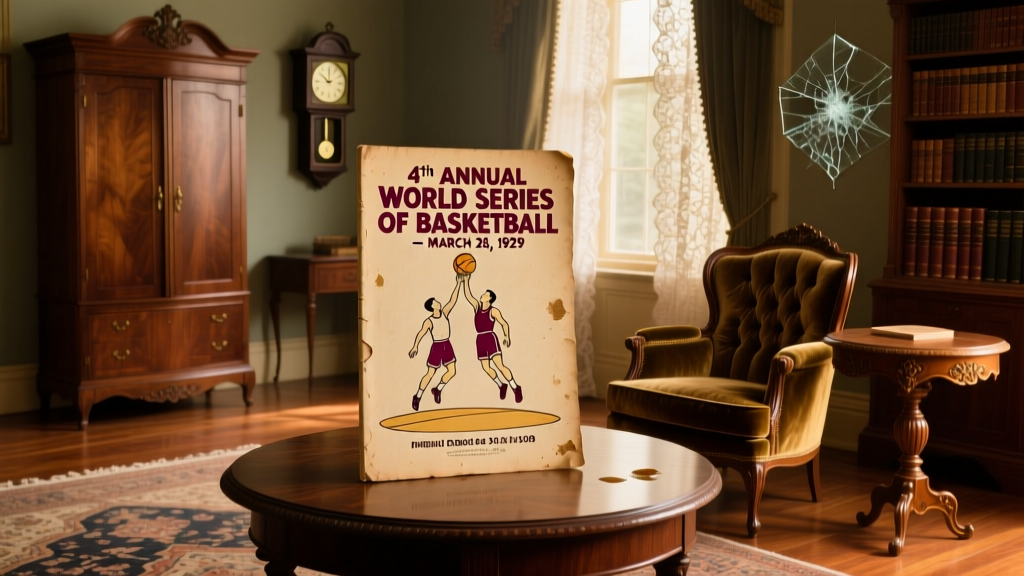
The 1929 World Series of Basketball Program: A Rare Artifact from the Dawn of Professional Basketball

The Cut Glass Jam Jar: Diamond Berry Shape, 6-Inch — History, Identification, and Restoration Insights
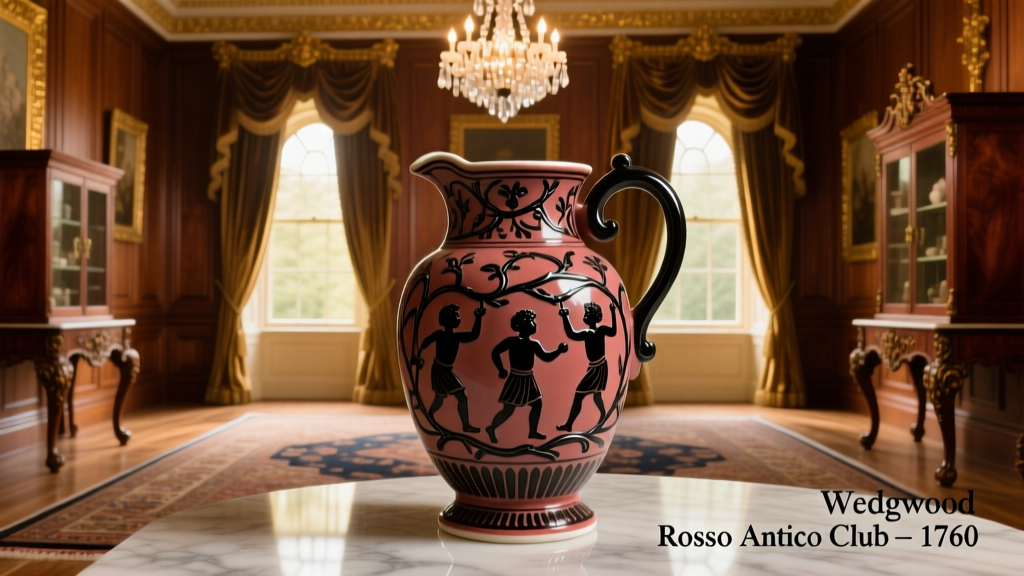
Wedgwood Rosso Antico Club-Shaped Jug with Black Relief: Bacchanalian Boys & Vine Motif (7 Inches)
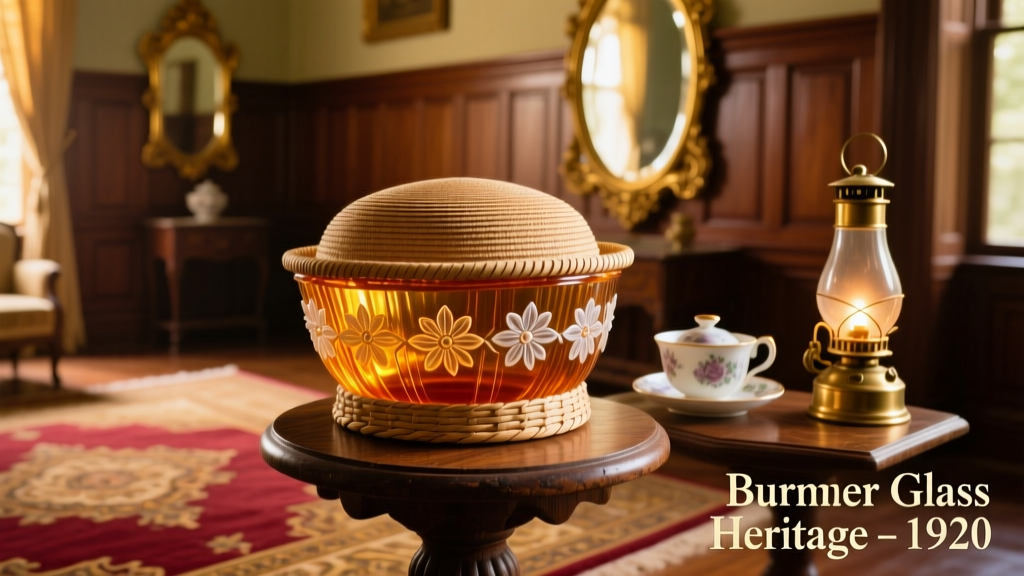
Burmese Glass Basket Hat Crimped 5-Inch: Identification, Provenance, and Restoration Best Practices
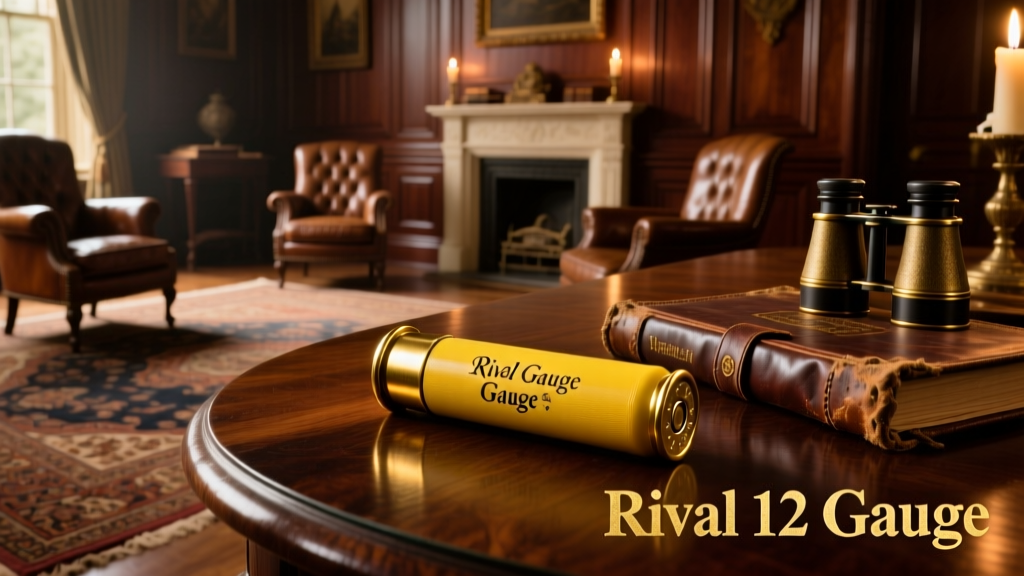
W.R.A. Rival 12 Gauge Yellow Brass Shotgun Shells: History, Identification, and Collector Significance
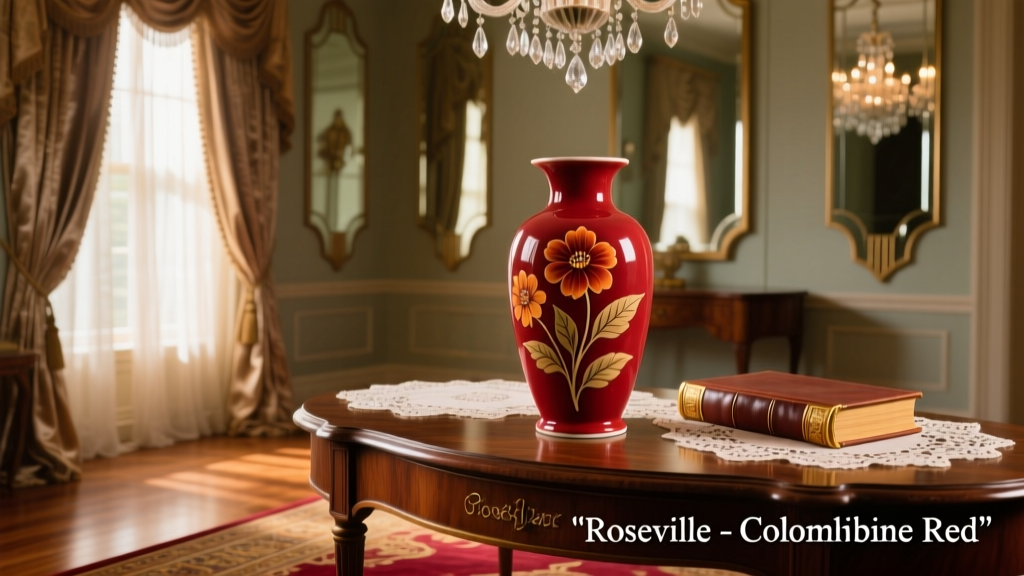
Roseville Columbine Red 6-Inch Vase: Identification, Value, and Restoration Insights

Dinnerware Hall Teapot Parade Canary Gold: History, Identification, and Restoration Guidance
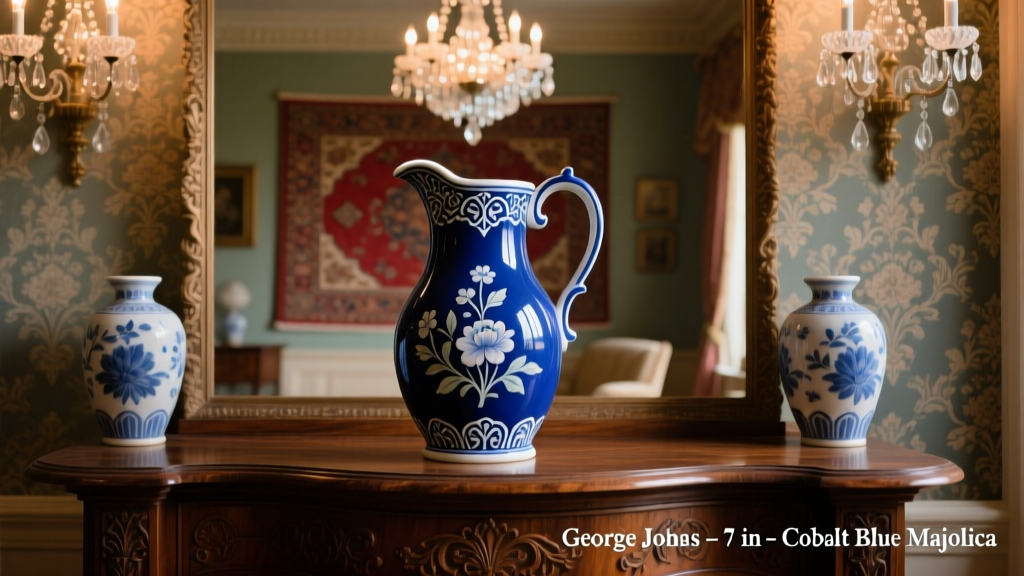
The Majolica Pitcher Christmas Jug: Cobalt Blue George Jones, 7-Inch Height, Model No. 2 — A Collector’s Reference Guide
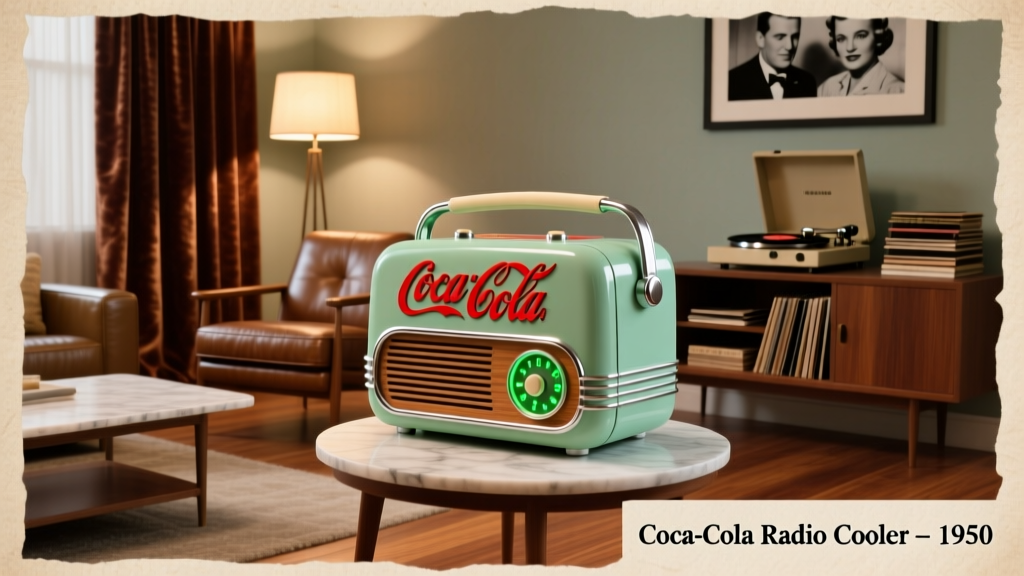
Coca-Cola Radio Cooler Shape AM Radio (1950): A Collector’s Guide to the Iconic 12 × 9½-Inch Vintage Broadcast Unit