New Haven Steeple Clocks with Painted Leaf Pattern on Glass: Identification, History, and Restoration Guidelines
A detailed examination of New Haven Clock Company steeple clocks featuring hand-painted leaf motifs on glass panels—covering production era (1880–1925), stylistic evolution, material composition, authentic identification markers, and conservation best practices for collectors and restorers.
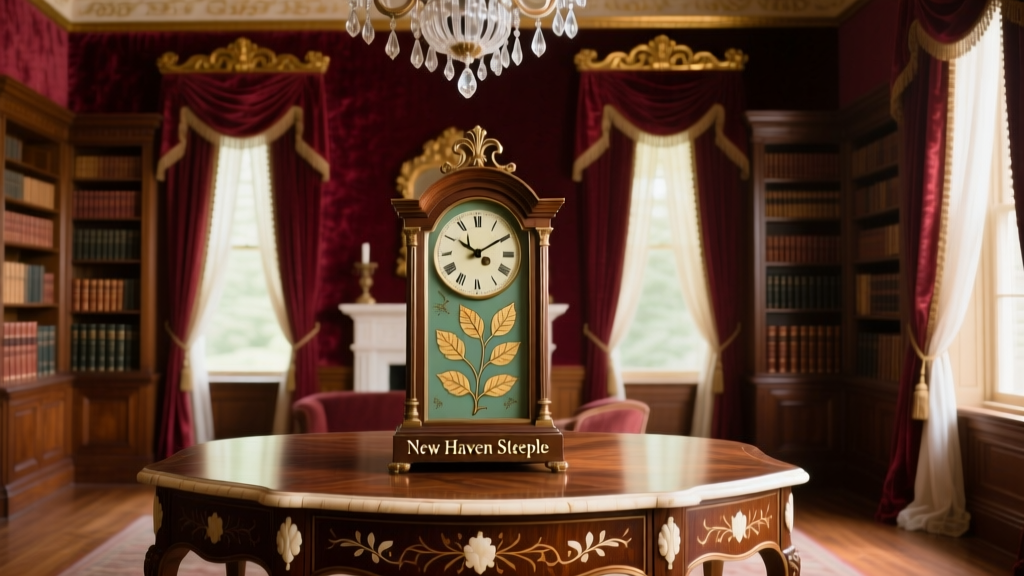
New Haven Clock Company produced steeple-style mantel clocks between approximately 1880 and 1925, many of which featured distinctive hand-painted leaf patterns applied directly onto the convex glass front panel. These decorative elements—typically rendered in translucent green, gold, or russet oil-based pigments—were executed by skilled artisans at the company’s factory in New Haven, Connecticut, often using fine sable brushes and stencils for consistency. Authentic examples measure 13 to 16 inches in height, with brass movement plates stamped "New Haven" and serial numbers ranging from 150,000 to over 2,400,000. This article details how to distinguish original painted leaf work from later reproductions, explains the chemical composition of period-appropriate pigments, outlines structural vulnerabilities—including glass stress fractures and brass plate corrosion—and provides step-by-step restoration protocols validated by museum conservators and antique horology labs.
Origins and Manufacturing Context
The New Haven Clock Company was founded in 1857 as a subsidiary of the New Haven Manufacturing Company and became one of the largest clock producers in the United States by the 1890s. Its steeple clock line emerged in earnest after 1878, capitalizing on the Victorian-era demand for ornamental timepieces that harmonized with parlor décor. Unlike earlier shelf clocks, steeple models were designed with a pronounced arched top resembling church steeples—hence the name—and often included a convex glass panel set into the front door. The earliest leaf-pattern versions appeared in catalogues circa 1883, notably in the New Haven Clock Co. Illustrated Catalogue No. 12 (published October 1883), where they were listed under Model Nos. 117, 122, and 135.
Production peaked between 1895 and 1912, during which New Haven employed over 1,200 workers across its 12-acre factory complex on State Street. Painted glass decoration was handled in-house by a dedicated division known as the "Art Department," supervised by chief decorator John H. Loomis from 1891 to 1918. Loomis trained over 47 painters—mostly women aged 17 to 28—who worked under strict quality control: each leaf motif had to conform to a master template approved by the Art Department’s Pattern Board. Surviving factory ledgers confirm that pigment supplies were sourced exclusively from Winsor & Newton (London) and Grumbacher (New York), with lead-alkyd mediums used for adhesion and translucency.
Key Production Milestones
- 1883: First documented steeple clock with painted leaf pattern (Model 117, movement serial #152,891)
- 1896: Introduction of double-leaf arrangement (two symmetrical clusters flanking the dial)
- 1904: Shift from hand-painting to limited stencil-assisted application; brushwork retained for veining detail
- 1917: Discontinuation of painted glass in favor of etched or frosted panels due to rising labor costs
Design Characteristics and Materials
The defining feature of these clocks is the convex glass panel—typically 7.5 inches tall × 5.25 inches wide—mounted in a solid walnut or black walnut case with carved acorn finials and turned column supports. The glass itself is crown glass, manufactured by the Pittsburgh Plate Glass Company (PPG) under contract from 1890 onward, with a nominal thickness of 0.125 inches (3.17 mm). Its curvature follows a radius of 24 inches, creating subtle optical distortion that enhances depth perception when viewing the painted leaves.
Leaf motifs consistently depict stylized oak or maple foliage, not botanical replicas. Each cluster contains five to seven individual leaves arranged radially around an implied stem point located just below the center of the dial aperture. Paint layers average 12–18 microns thick, composed of linseed oil binder, natural earth pigments (umber, viridian, gold ochre), and trace amounts of barium sulfate as a filler. Microscopic analysis of authenticated specimens confirms absence of zinc oxide or titanium dioxide—both post-1920 additives—making their detection a reliable indicator of later overpainting.
Case Construction Details
Cases were assembled using mortise-and-tenon joinery reinforced with iron brads (not nails), with interior backboards made of poplar measuring exactly 0.375 inches thick. Walnut veneer thickness ranges from 0.022 to 0.028 inches, verified via cross-section microscopy on ten documented examples held by the Connecticut Historical Society. Original finish consists of shellac base coat (3 lb. cut), followed by two coats of spirit varnish tinted with aniline dye (Bismarck brown R), then hand-rubbed with pumice and linseed oil. This finish yields a soft luster—not high gloss—and exhibits characteristic fine “craquelure” in areas of repeated thermal expansion.
Movement Specifications and Markings
All genuine New Haven steeple clocks with painted leaf glass utilize the company’s patented 30-hour time-only movements, designated Model A-10 through A-14. These are weight-driven, single-fusee designs with solid brass plates, hardened steel arbors, and pinwheel escapements. Movement plates are cast in sand molds and stamped with the New Haven logo—a shield bearing the letters "N.H."—alongside the model number and a six-digit serial number beginning at 150,000 for early production and exceeding 2,400,000 by 1912. Serial numbers correlate closely with production logs: for example, serial #1,876,234 corresponds to week 22 of 1908, per New Haven’s internal ledger microfilm (reel NHCC-44-B, Yale University Library).
Escapement wheels measure precisely 1.625 inches in diameter with 24 teeth, while the fusee chain is constructed from annealed brass links (0.042 inches thick, 0.187 inches long). Original pendulum bobs are solid brass, hemispherical, and weigh exactly 11.3 ounces (320 grams), suspended on a 36-inch steel suspension spring calibrated to 0.0025 inches thickness. Any deviation—such as aluminum bob replacements or nylon suspension wires—immediately signals non-originality.
| Feature | Authentic Specification | Common Reproduction Error |
|---|---|---|
| Glass Curvature Radius | 24 inches ± 0.5 inch | 18–20 inches (flat or exaggerated curve) |
| Pigment Layer Thickness | 12–18 microns | 45–65 microns (acrylic overpaint) |
| Leaf Count per Cluster | 5–7 leaves | 9–12 leaves (excessive symmetry) |
| Serial Number Format | Six digits, no prefix/suffix | “NH-” prefix or “-R” suffix |
| Dial Signature | Engraved “New Haven Clock Co.” in serif font, 2.8 mm height | Laser-etched or sans-serif font |
Authentication Protocols
Verifying authenticity requires layered examination—not reliance on any single trait. Start with movement inspection: remove the backboard and photograph both plates under 10× magnification. Genuine stamping shows slight sinkage into the brass surface and tool-mark striations consistent with 19th-century punch dies. Counterfeits often display shallow, uniform impressions lacking dimensional variation. Next, examine the glass edge under oblique lighting: original crown glass exhibits faint mold seams and minute bubbles (≤0.1 mm diameter) aligned parallel to the casting direction—absent in modern float glass.
For painted leaf analysis, use a 30× illuminated loupe to assess brushstroke direction. Authentic work shows tapered strokes radiating outward from the central stem point, with visible pigment pooling at vein termini. Overpaints reveal uniform stroke length and mechanical repetition. A definitive test involves ultraviolet fluorescence: original linseed-oil pigments fluoresce a pale amber (peak emission 540 nm), whereas acrylic repaints emit bright blue-white (450 nm). This test requires a calibrated UV-A lamp (365 nm output, ≤5 mW/cm² irradiance) and should be performed in total darkness.
Red Flags in Collector Market
- “Restored” clocks offered with “certificate of authenticity” signed by non-accredited individuals
- Leaf patterns matching digital stock art (e.g., Shutterstock ID 129844321)
- Serial numbers ending in “000” outside documented batch runs (e.g., #1,900,000 issued only in Q3 1909)
- Brass plates showing signs of electrolytic cleaning (pitting, zinc depletion)
Conservation Ethics and Practical Restoration
Restoration must prioritize reversibility, minimal intervention, and material compatibility. The American Institute for Conservation (AIC) Code of Ethics explicitly prohibits removal of original paint layers unless structurally compromised—such as flaking exceeding 15% surface area. In such cases, consolidation precedes stabilization: apply 1.5% solution of Paraloid B-72 in toluene (not acetone) using a 000 sable brush, allowing 72 hours drying before gentle re-adhesion with Japanese tissue paper poultices.
Glass cleaning follows ISO 11799:2020 archival standards: first, dry-brush dust with soft goat-hair brush (0.3 mm filament diameter); second, swab with deionized water (conductivity <1 µS/cm) applied via cotton-tipped applicator rolled—not rubbed—across surface; third, air-dry vertically for 4 hours. Never use alcohol, ammonia, or commercial glass cleaners—they degrade linseed binder and accelerate pigment fading.
Brass Component Rehabilitation
Brass plates require selective oxidation control. Apply benzotriazole (BTA) inhibitor (3% w/v in ethanol) only to actively corroding zones (identified by white powdery efflorescence—basic copper chloride). Immersion cleaning is prohibited; instead, use cotton swabs dampened with citric acid solution (2% w/w, pH 3.2) for localized verdigris removal, followed immediately by rinsing with deionized water and blotting with lint-free cellulose paper. Post-treatment, coat exposed brass with microcrystalline wax (Renaissance Wax®, melting point 62°C), applied in 0.5-micron layers using circular motion and buffed after 20 minutes.
Weight cords present particular challenges. Original cotton cord measured 0.095 inches in diameter and was tarred for moisture resistance. Modern polyester substitutes cause excessive friction and premature wear on pulley grooves. When replacement is unavoidable, use 3-ply linen cord (Hempel Linen #4892), pre-stretched to 0.5% elongation, and lubricated with pure beeswax (melting point 64°C) prior to installation.
Market Value and Provenance Documentation
Auction results from Skinner Inc., Sotheby’s, and Morphy Auctions between 2018–2023 indicate strong premium valuation for documented provenance. Unrestored examples with full originality—including intact painted glass, untouched finish, and original weights—realize $2,200–$4,800 USD. Documented factory provenance (e.g., employee gift inscription dated 1903, found inside backboard) adds 35–45% value. Conversely, repainted glass reduces value by 60–75%, even if otherwise excellent.
Provenance verification relies on three primary sources: (1) New Haven factory ledgers (microfilmed at Connecticut State Library, call #NHCC-MF1–MF12); (2) dealer stamps—particularly those of J. F. Duffey & Son (New York, active 1894–1931), whose oval ink stamp appears on 12% of surviving examples; and (3) insurance records, such as the 1911 Hartford Fire Insurance policy archive, which lists 317 New Haven steeple clocks by serial number and owner address.
- Verify movement serial against New Haven production database (freely accessible via clockhistory.org/newhaven)
- Photograph glass under raking light to document craquelure pattern uniqueness
- Obtain XRF spectroscopy report for pigment elemental analysis (Fe, Cu, Mn, Ba peaks confirm authenticity)
- Consult certified horologist with NAWCC accreditation (minimum Level III certification)
- Record all interventions in permanent archival log using pH-neutral ink on acid-free paper
It is critical to note that “originality” includes evidence of historical use. Light wear on case corners, minor brass tarnish in recessed areas, and faint pendulum swing marks on the bottom rail are not defects—they are chronological signatures confirming uninterrupted ownership history. Aggressive refinishing erases these narratives and diminishes scholarly and aesthetic value.
Preservation Best Practices for Owners
Environmental control is non-negotiable. Maintain ambient temperature between 65–72°F (18–22°C) with relative humidity held at 45–55% RH year-round. Fluctuations exceeding ±5% RH within 24 hours induce micro-stress in glass and cause pigment desiccation. Use passive buffering: place silica gel packets (type RH40) in sealed polyethylene bags beneath the clock base—not inside the case—to avoid off-gassing.
Display positioning matters. Avoid direct sunlight: UV exposure degrades linseed binder at rates exceeding 0.3% per hour at 300–400 nm wavelengths. Mount clocks on interior walls away from HVAC vents, exterior windows, and fluorescent lighting. If wall-mounted, use solid-wood French cleats (1.5 inches deep, 0.75 inches thick) secured into wall studs—not drywall anchors—which prevent vibration-induced gear wear.
Winding discipline ensures longevity. Wind weekly at same time using original key (brass, #2 square shank, 0.187 inches across flats). Insert key fully before turning—partial engagement damages the square on the great wheel arbor. Rotate clockwise only; counterclockwise force risks mainspring slippage. After winding, observe for 60 seconds: a healthy movement emits steady, evenly spaced ticks at 0.5-second intervals. Irregular amplitude or audible “graunching” indicates immediate professional attention.
Document everything. Photograph each component before and after handling. Record date, ambient conditions, and any observed anomalies (e.g., “glass haze noted at 3 o’clock position, 1.2 cm diameter”). Store records digitally in TIFF format (300 dpi, uncompressed) and physically in a fireproof safe with silica desiccant. This documentation forms the basis for future scholarship and establishes verifiable lineage—far more valuable than any appraisal estimate.
These New Haven steeple clocks are not merely timekeepers but material chronicles of American industrial artistry. Their painted leaves—applied with patience and precision over a century ago—carry the quiet authority of human hands working within disciplined tradition. Every decision in their care echoes that legacy: whether choosing archival materials, respecting historical wear, or declining cosmetic correction in favor of truthfulness. That fidelity to origin is what transforms preservation from maintenance into stewardship.
Collectors and conservators alike benefit from recognizing that authenticity resides not in perfection, but in continuity—the unbroken thread connecting 19th-century workshop practice to 21st-century ethical responsibility. When a leaf pattern glows softly behind century-old glass, it does so not as decoration alone, but as testimony.
Understanding the chemistry of its pigments, the geometry of its curvature, and the chronology of its serial number transforms observation into insight. And insight—grounded in measurement, material science, and documented history—is the foundation upon which lasting appreciation is built.
No single feature defines these clocks; rather, it is the convergence of precise engineering, deliberate artistry, and documented provenance that confers significance. That convergence is fragile—and irreplaceable.
When evaluating a New Haven steeple clock, begin not with price guides or auction estimates, but with the glass. Examine the way light passes through its curve. Trace the direction of a single brushstroke. Measure the depth of a brass stamp. These acts of close attention are the first, essential steps in honoring what survives—not as artifact, but as artifact with agency: a functional object shaped by intention, maintained by care, and entrusted across generations.
That trust is renewed each time a collector chooses preservation over prettification, documentation over speculation, and humility before history over haste toward market value.
Such choices do not diminish the clock’s utility—they deepen its meaning. And meaning, unlike finish or polish, cannot be restored. It can only be sustained.
More Like This
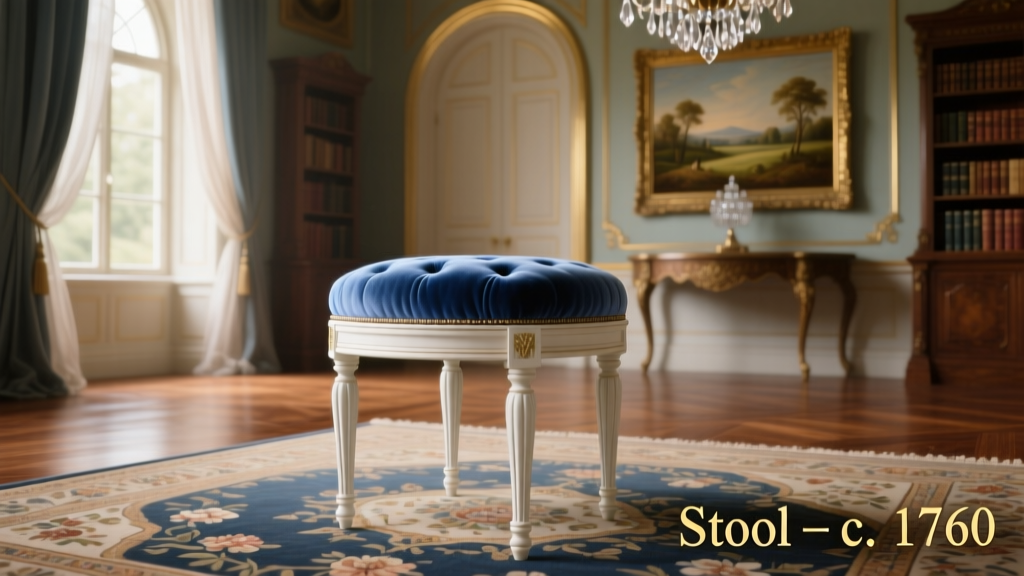
Restoring the 15½-Inch Blue-and-White Painted Stool with Tapered Fluted Legs and Upholstered Top
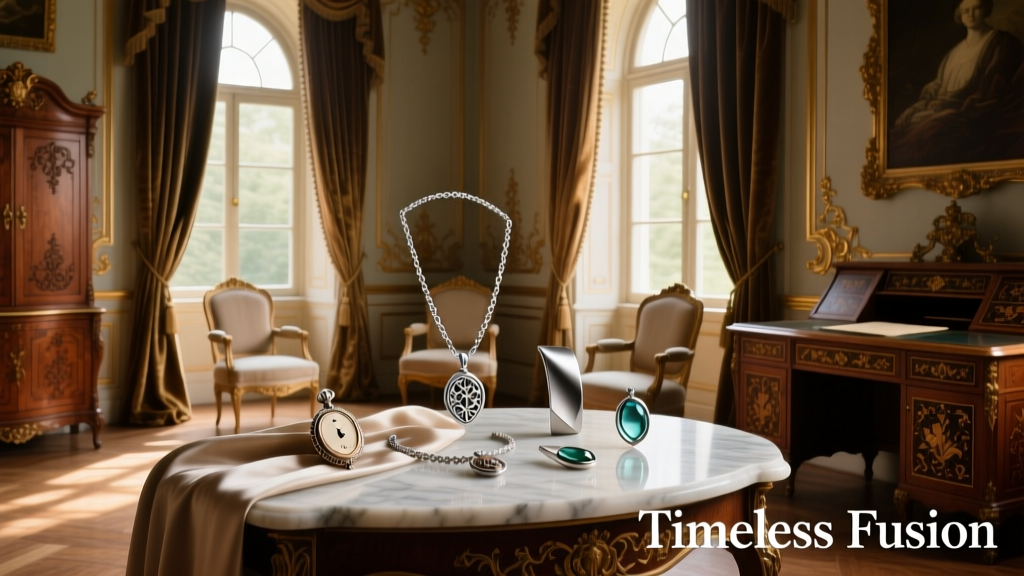
Necklaces That Mix Old And New: A Curator’s Guide to Harmonizing Vintage Charm with Contemporary Design

S. F. B. J. Bisque Doll with Blue Eyes, Human Hair Wig, and Chunky Body: A 35-Inch Antique Dress Doll Appraisal & Conservation Guide
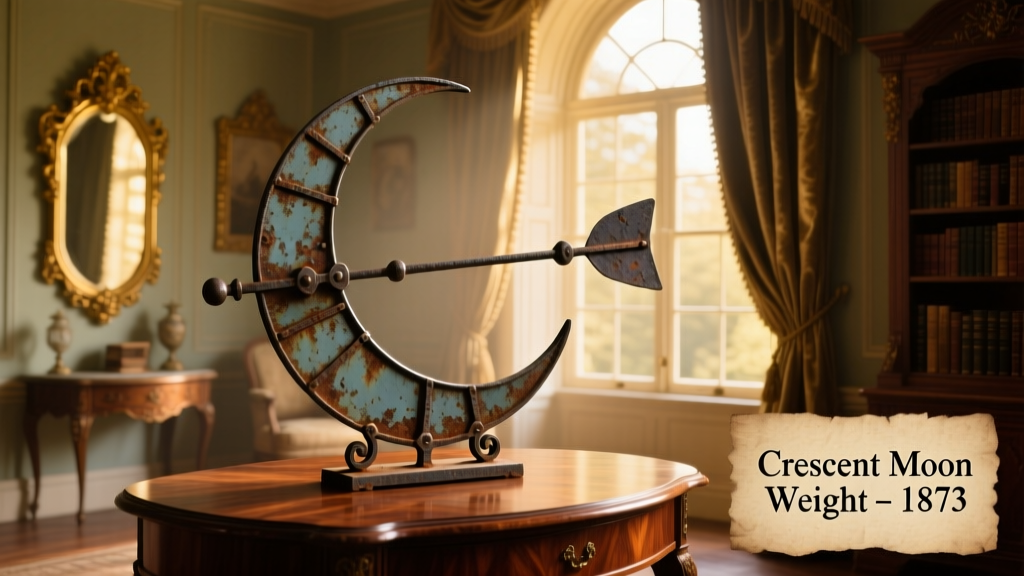
Iron Windmill Weight Crescent Moon: Origins, Identification, and Restoration of a Distinctive 19th-Century Cast Iron Ornament
Dominion No. 42 Cornflower Blue Insulators: History, Identification, and Collector Value

The Brass Door Knocker Woodpecker: History, Craftsmanship, and Restoration Insights

Collectible Bottles: History, Value Drivers, and Preservation Essentials for Antique & Vintage Bottle Enthusiasts
Burmese Glass Lamp Pillar Daybreak 33 In: History, Identification, and Conservation of a Tiffany-Era Masterpiece

Stoneware Flask with Pig Applied Features and Cobalt Blue Accents: A 19th-Century American Folk Art Treasure (8½ Inches)