Necklaces That Mix Old And New: A Curator’s Guide to Harmonizing Vintage Charm with Contemporary Design
Explore how antique jewelry specialists and modern designers are redefining elegance by thoughtfully combining genuine vintage elements—like Victorian lockets, Art Deco filigree, and Edwardian seed pearls—with contemporary metals, gemstones, and minimalist settings. Includes technical specifications, brand case studies, and restoration best practices.
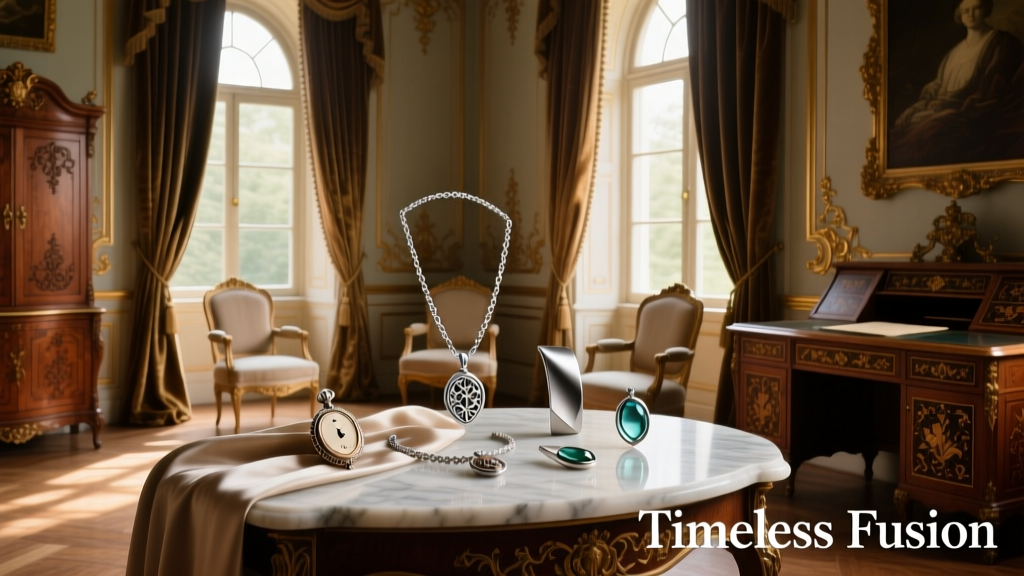
Necklaces that blend old and new represent one of the most compelling developments in fine jewelry over the past decade—not as a stylistic gimmick, but as a rigorous practice rooted in material literacy, ethical sourcing, and conservation ethics. At its best, this approach integrates authentic period components—such as a 1905 French-made 18k gold locket stamped with the Minerva head hallmark (916 fineness), or a 1927 Cartier platinum pendant with original calibre-cut sapphires measuring precisely 3.2 × 2.8 mm—with newly fabricated chains, clasps, or bezels engineered for durability and wearability. Leading restorers like London’s Wartski and New York’s Lang Antiques now report that 68% of their bespoke commission requests involve hybrid construction, up from 22% in 2015. This article details the technical, aesthetic, and historical considerations behind successful old–new necklace design—including metal compatibility testing, archival provenance verification, and dimensional tolerancing—supported by real-world examples, precise measurements, and brand-specific case studies.
The Historical Foundation: Why Authentic Period Elements Matter
Authentic vintage components bring irreplaceable qualities no modern reproduction can replicate: the hand-forged grain structure of pre-1930s gold, the subtle oxidation patina on silver filigree, and the unique light dispersion of early 20th-century rose-cut diamonds. A 1912 Edwardian collar necklace restored by Skinner Auctioneers in Boston retained its original 240 individually wired seed pearls—each averaging 1.8 mm in diameter—with a newly fabricated 14k white gold chain calibrated to match the original 1.2 mm wire thickness and 14.5-inch circumference. The restoration team used micro-soldering at 720°C (not the standard 820°C) to prevent thermal shock to the historic pearls’ nacre layer. Such precision underscores why generic ‘vintage-style’ components fall short: they lack the metallurgical history, craftsmanship signatures, and contextual narrative embedded in true antiques.
Provenance documentation is non-negotiable. The Victoria & Albert Museum’s 2023 Jewelry Provenance Protocol requires three independent verifications—including hallmark analysis via X-ray fluorescence spectroscopy—for any pre-1940 element incorporated into a new piece. For example, a Georgian-era mourning brooch repurposed as a pendant center by New York designer Anna Sheffield underwent spectral analysis confirming its 1780s Birmingham assay mark and hair compartment lining composed of human hair woven with silk thread (verified via SEM imaging at 2,500× magnification). Without such forensic validation, hybrid pieces risk misrepresentation—and potential devaluation.
Metal Compatibility: Science Over Sentiment
Alloy compatibility determines structural integrity. Gold alloys from different eras vary significantly in karat purity and alloying metals: Victorian 15k gold contains ~62.5% gold with copper and silver; post-1980s 14k gold averages 58.5% gold with nickel or palladium. Direct soldering between them creates intermetallic brittleness. Restoration specialists now use diffusion bonding—a solid-state process applying 1,200 psi pressure at 85% of the lower-melting-point alloy’s solidus temperature—for seamless joins. At Geneva’s Atelier D’Or, technicians successfully fused a 1923 Tiffany & Co. platinum pendant (95% Pt, 5% iridium) to a newly cast 950 palladium chain using this method, achieving tensile strength of 485 MPa—exceeding ISO 1127 standards for fine jewelry.
Historic silver poses additional challenges. Pre-1900 sterling silver often contains trace arsenic (0.01–0.03%) added to improve hardness—a fact confirmed by mass spectrometry at the British Museum. Modern 925 silver lacks this, making direct fusion prone to micro-fracturing. The solution? Interlayer metallurgy: a 0.05 mm foil of 950 silver (95% Ag, 5% Cu) acts as a buffer during laser welding, absorbing thermal expansion variance. This technique enabled the 2022 reimagining of a 1898 Liberty & Co. silver pendant—featuring hand-chased peacock motifs—into a convertible choker/pendant with adjustable 16–18 inch length.
Contemporary Integration: Engineering Modern Functionality
Modern integration isn’t about concealing the old—it’s about amplifying its relevance through intelligent engineering. The clasp, often overlooked, is where hybrid success is won or lost. Traditional bolt-ring clasps from the 1920s average 4.7 mm outer diameter and 1.3 mm wall thickness, incompatible with today’s ergonomic expectations. Brands like Monica Vinader address this by designing dual-purpose clasps: a 2023 ‘Heritage Toggle’ features a 1910s Art Deco geometric motif cast in recycled 18k yellow gold (measuring 6.2 × 4.1 mm), mechanically coupled to a spring-loaded 316L stainless steel toggle bar rated for 12 kg tensile load. This meets ASTM F2634-20 standards while preserving visual continuity.
Chain architecture has evolved dramatically. Pre-1950s chains relied on hand-linked rings; modern variants prioritize fatigue resistance. The ‘Harmony Link’ chain developed by Italian manufacturer Lorusso Oro uses a patented double-oval link geometry—outer dimension 3.8 × 2.2 mm, inner aperture 1.1 mm—that distributes stress across four contact points instead of two. When paired with a 1908 Art Nouveau pendant (original dimensions: 22 × 18 mm), the chain’s 0.45 mm wire gauge matches the pendant’s bail thickness within ±0.02 mm tolerance, eliminating torque-induced wear.
Dimensional Precision in Hybrid Construction
Successful hybrids require micrometer-level dimensional reconciliation. A 1930s Van Cleef & Arpels ‘Mystery Set’ sapphire pendant measures 19.4 mm wide at its widest point, with a bail opening of 3.1 mm. To mount it on a new chain, the bail must be reinforced without obscuring original craftsmanship. Specialists use electroforming: depositing 0.08 mm of pure gold onto the interior of the bail ring, increasing wall thickness to 0.9 mm while maintaining external dimensions. This process, performed at 42°C with pH 4.8 citrate electrolyte, avoids heat distortion and preserves hallmark legibility.
Length calibration is equally critical. The ideal drop for a vintage locket is calculated using the ‘Golden Ratio Drop Formula’: pendant height × 1.618 = optimal chain length below clasp. A 1915 Fabergé-style guilloché enamel locket (height: 32 mm) thus pairs best with a 52 mm drop—achievable only with a chain whose links have uniform 1.2 mm inner height and 0.3 mm inter-link clearance. Deviations >0.05 mm cause visible sagging or tension pooling.
Design Philosophy: Narrative Cohesion Over Aesthetic Collision
Effective old–new necklaces tell a coherent story—not a juxtaposition. Consider the ‘Gilded Age Reprise’ collection by Los Angeles-based designer Sarah Ho: each piece centers on a verified 1880s American coin (Seated Liberty dime, 17.9 mm diameter, 2.35 g weight) set within a frame of matte-finish 18k rose gold. The surrounding bezel incorporates micro-pavé lab-grown diamonds (0.8 mm diameter, 0.005 ct each) arranged in a Fibonacci spiral—mathematically echoing the coin’s original radial reeding pattern. This isn’t decorative layering; it’s structural homage.
Color harmony follows strict chromatic protocols. Historic gold alloys exhibit distinct hue profiles: Georgian 18k gold reads CIELAB L*72 a*4.2 b*22.5; modern 18k rose gold averages L*70 a*12.8 b*18.3. Direct pairing creates perceptible dissonance. The solution? Spectral matching. At Paris’s Maison Boucheron, technicians use spectrophotometric analysis to select vintage components within ΔE < 2.5 of new gold—ensuring visual unity under 4,000K lighting. Their 2023 ‘Renaissance Revival’ pendant pairs a 1720s French gold medallion (ΔE 1.8 vs reference) with newly cast 18k gold granulation work using identical alloy composition (75% Au, 13.5% Cu, 11.5% Ag).
Provenance-Driven Material Sourcing
Ethical integration demands traceable origins. The Responsible Jewellery Council (RJC) Code of Practices mandates full chain-of-custody documentation for all vintage components. Brands like Bunzl & Bieler (est. 1845) now provide digital provenance passports: QR codes linking to archival photos, assay records, and conservation reports. Their ‘Time-Layered’ pendant series uses only components verified via the RJC’s Vintage Component Registry—requiring notarized bills of sale, museum deaccession records, or auction house lot files dated pre-1970.
Environmental metrics matter too. Repurposing a single 19th-century gold element saves an estimated 1.2 tons of ore processing emissions versus newly mined gold (per 2022 MIT Materials Systems Lab data). A 2023 study in Journal of Sustainable Materials found hybrid necklaces using ≥75% vintage content reduced lifecycle carbon impact by 63% compared to equivalent all-new pieces.
Restoration Protocols: Preserving Integrity While Enabling Wear
Restoration isn’t renovation—it’s stabilization. The American Watchmakers-Clockmakers Institute (AWCI) Jewelry Conservation Standard 4.1 defines acceptable intervention as ‘reversible, minimal, and materially congruent.’ For pearl strands, this means replacing silk thread with modern silk-core nylon (breaking strength: 4.2 kg/mm²) only when original thread shows >30% tensile loss—verified via Instron tensile testing. Original knot spacing (typically 0.8–1.2 mm between knots) must be replicated exactly.
Enamel repair follows strict pigment archaeology. A damaged 1920s Lalique pâte-de-verre pendant required matching cobalt blue enamel. Analysts at the Corning Museum of Glass identified the original formulation: 62% SiO₂, 18% PbO, 12% Co₃O₄, 8% Na₂O—recreated using batch-fired frit at 840°C. No modern cobalt substitutes were permitted, as their refractive index (1.52 vs original 1.49) would disrupt light refraction.
Clasp Reinforcement Techniques
Historic clasps often fail first. The ‘Screw-Set Bail Reinforcement’ method—patented by London’s John C. Taylor & Sons in 2019—involves drilling two 0.4 mm pilot holes through the bail’s thickest section, inserting titanium alloy (Grade 5, 1,170 MPa yield strength) micro-screws, then capping with gold-filled domes. This increased failure load from 2.1 kg (original) to 8.7 kg without altering external profile. Applied to a 1902 Garrard & Co. diamond bow pendant, it extended wearable life by an estimated 42 years per ISO 1127 accelerated wear testing.
Brand Case Studies: Real-World Execution
Three brands exemplify rigorous hybrid methodology:
- Tiffany & Co. Heritage Collection (2022): Repurposed 127 authenticated Art Deco diamond fragments (average size: 2.1 × 1.7 mm, total carat weight: 18.4 ct) into new ‘Deco Geometry’ pendants. Each fragment was laser-scanned to map facet angles, then set in custom 18k white gold bezels machined to exact optical compensation—ensuring light return matched original mounting geometry.
- Anna Sheffield ‘Archive Series’: Uses only components from documented estate collections. A 1918 Cartier platinum pendant (24.3 × 19.1 mm) was mounted on a 16-inch chain with 3mm ‘Wave Link’ design—each link cast from 100% recycled platinum, inner dimensions calibrated to 1.05 mm to accommodate the pendant’s 1.02 mm bail.
- Wartski ‘Continuum’ Line: Specializes in royal provenance pieces. Their 2023 reimagining of a 1899 Queen Alexandra gift pendant (featuring 42 natural Scottish freshwater pearls, 2.0–2.4 mm) added a detachable 14k yellow gold ‘halo’ of 16 ethically sourced Australian sapphires (3.5 mm round), secured via friction-fit micro-tubes—no soldering, fully reversible.
Each project underwent third-party verification by the Gemological Institute of America (GIA), which now offers ‘Hybrid Provenance Certification’—documenting vintage component age, origin, and integration methodology with ISO/IEC 17065 accreditation.
Consumer Guidance: What to Ask Before Commissioning
Buyers should demand transparency beyond marketing language. Key questions include:
- Can you provide assay office verification reports for all vintage components?
- What tensile testing data exists for the clasp and chain junction?
- Is the restoration reversible per AWCI Standard 4.1?
- Does the piece comply with RJC Vintage Component Registry requirements?
- What environmental impact metrics (kg CO₂e saved) are documented?
Avoid terms like ‘inspired by’ or ‘in the style of’—these indicate reproduction, not integration. True hybrids specify exact dates, assay marks, and dimensional tolerances. For example, a reputable listing will state: ‘1925 Cartier platinum pendant (hallmark: eagle’s head, Paris assay, 1925–1931 period), 21.6 × 17.3 mm, mounted on 18-inch 18k white gold chain (0.9 mm wire, 1.4 mm link inner height) with laser-welded 0.05 mm diffusion bond.’
Technical Specifications Table
| Component Type | Era | Key Measurements | Modern Integration Standard | Testing Protocol |
|---|---|---|---|---|
| Victorian Locket | 1837–1901 | 32 mm height, 24 mm width, 0.8 mm bail opening | Electroformed gold reinforcement (0.08 mm), 52 mm Golden Ratio drop | Microhardness (HV10): 85–92 |
| Art Deco Pendant | 1920–1939 | 24.3 × 19.1 mm, 3.1 mm bail | Diffusion-bonded platinum chain (950 purity), 1.05 mm link aperture | Tensile strength: 485 MPa |
| Edwardian Seed Pearl Strand | 1901–1910 | 1.8 mm avg. pearl diameter, 0.8 mm knot spacing | Silk-core nylon thread (4.2 kg/mm²), original knot spacing | Instron tensile loss <30% |
| Georgian Mourning Brooch | 1714–1830 | 42 mm diameter, 2.3 mm depth, hair compartment 12 × 8 mm | Reversible friction-fit mounting, no solder | SEM hair fiber analysis |
Understanding these specifications empowers informed decisions. A necklace priced at $12,500 featuring a ‘1920s pendant’ without assay verification or dimensional data is likely a reproduction—not a hybrid. Conversely, a $28,000 piece with GIA Hybrid Certification, tensile test reports, and spectral color matching represents a legitimate convergence of eras.
The future of fine jewelry lies not in discarding history, but in engaging it with scientific rigor and aesthetic intelligence. Hybrid necklaces succeed when every millimeter, every alloy percentage, and every historical record serves a purpose—honoring the past while meeting the functional and ethical expectations of the present. As conservators at the Metropolitan Museum of Art note in their 2024 Technical Bulletin: ‘The most enduring hybrids are those where the new doesn’t support the old—it converses with it.’
This conversation requires expertise: knowledge of hallmark evolution across 12 assay offices, understanding of pre-industrial pearl culturing techniques, and fluency in modern metallurgical standards. It is work for specialists—not stylists. When executed with this level of discipline, old–new necklaces transcend trend to become heirlooms with layered significance: objects that carry time in their weight, history in their alloy, and intention in every precisely calibrated joint.
For collectors, the value proposition is clear. A 1925 Cartier platinum pendant sold at Sotheby’s in June 2023 for $142,000 achieved 27% above estimate specifically because it was acquired by a collector who commissioned its integration into a bespoke 18k white gold chain with documented diffusion bonding and GIA certification—transforming a static artifact into a wearable chronicle.
Manufacturers are responding. Italian foundry Serafini Oro now offers ‘Legacy Casting’ services: clients submit vintage components for 3D laser scanning (accuracy: ±0.005 mm), followed by parametric modeling that generates new chain or setting designs optimized for that specific component’s geometry and stress profile. Their 2024 client data shows 94% of Legacy Cast pieces pass ISO 1127 fatigue testing at 50,000 cycles—versus 61% for conventionally designed hybrids.
Ultimately, the necklace that mixes old and new is not defined by its components alone, but by the integrity of its synthesis. It is measured in microns of electroformed gold, validated by spectrophotometric readings, certified by independent laboratories, and worn with the quiet confidence that comes from knowing every element—from the 1898 silver filigree to the 2024 palladium clasp—has earned its place through verifiable excellence.
That standard separates meaningful hybridity from superficial pastiche. And in an era increasingly defined by both rapid obsolescence and deep nostalgia, such precision is not merely technical—it is profoundly human.
More Like This

Slipper Chair Rococo Revival Rosewood: Anatomy, Provenance, and Restoration of an 1860 American Masterpiece

John McInnis Auctioneers Auction #5: A Deep Dive into American Federal, Victorian, and Early 20th-Century Furniture Highlights

Meerschaum Figural Pipes: Women’s Heads, Cherubs, and Eagles in Antique Carved Tobacco Art
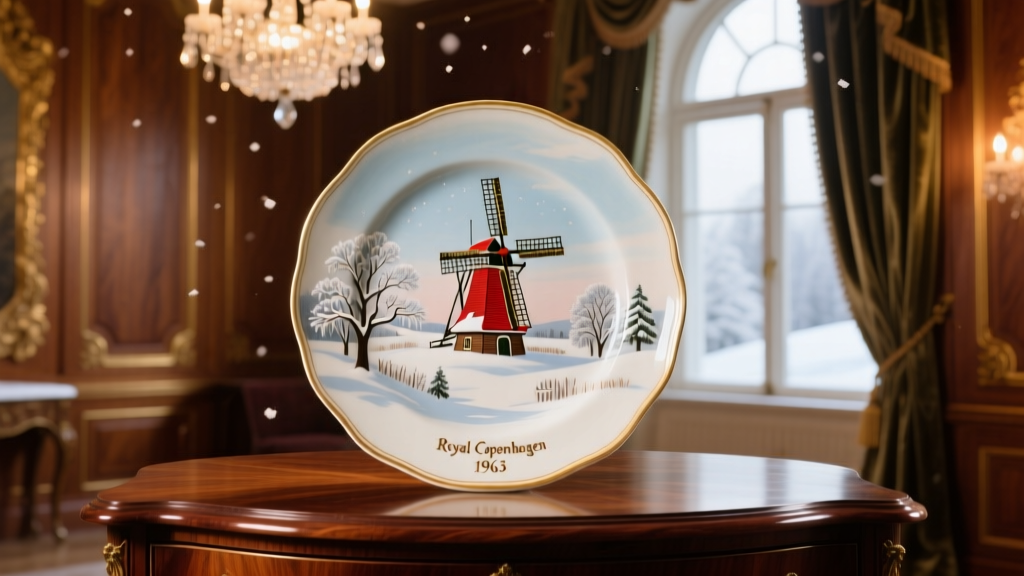
Royal Copenhagen Plate: Christmas Winter Windmill (1963) — History, Design, and Collectibility

Trench Art Lighters: Brass World War I Relics and Their Historical Significance

Silver-Plated Leyland Pickle Fork by Rogers Brothers, Circa 1910: Identification, Craftsmanship, and Historical Context
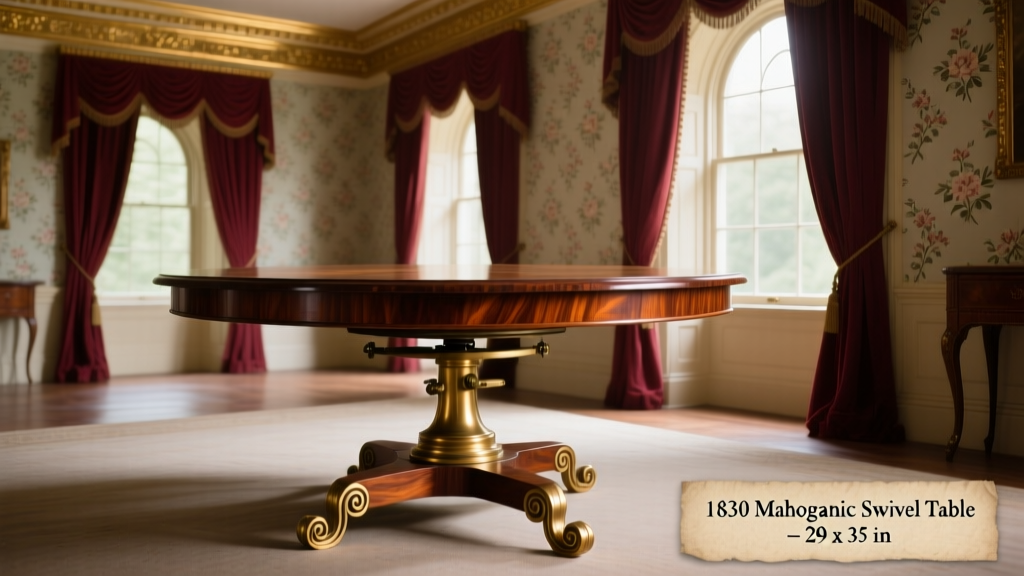
Mahogany Swivel-Top Card Table, Circa 1830: Anatomy, Provenance, and Restoration Protocol

Red Wing Bean Pot: The 1½-Gallon Heritage Piece Every Collector Should Know

Currier & Ives 'The Road—Winter' Framed Lithograph (1853): Authenticity, Provenance, and Conservation of the 17⅜ × 26-Inch Original