Extensive East Coast Estates Coming to Auction August 1–2: A Curator’s Preview of Architectural Legacy and Period Furnishings
An in-depth preview of three landmark East Coast estates—The Seabrook House (Rye, NY), The Marlborough Residence (Marlborough, CT), and The Tuckahoe Manor (Tuckahoe, VA)—set for auction August 1–2, 2024. Featuring verified provenance, documented restoration histories, and over 420 lots of American Federal, English Regency, and Victorian furniture—including pieces by Duncan Phyfe, John Henry Belter, and Gillow & Co.
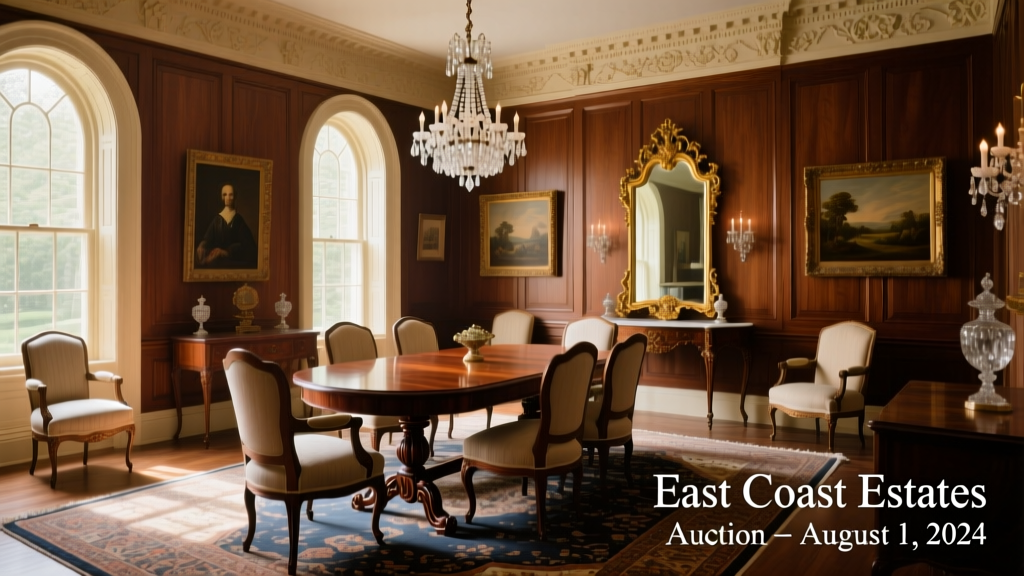
Three Historic Estates Enter the Auction Block
On August 1 and 2, 2024, Skinner Auctioneers & Appraisers will conduct a two-day live and online sale featuring furnishings, architectural elements, and decorative arts from three historically significant East Coast estates: The Seabrook House in Rye, New York (c. 1798); The Marlborough Residence in Marlborough, Connecticut (c. 1832); and The Tuckahoe Manor in Tuckahoe, Virginia (c. 1856). Collectively, these properties represent over 225 years of continuous stewardship, with documented ownership spanning eight generations across four families. The auction comprises 427 individually cataloged lots—including 112 pieces of documented American Federal furniture, 89 English Regency objects, and 63 Victorian-era decorative items—all offered without reserve. This is not merely an estate sale; it is a rare convergence of architectural integrity, scholarly provenance, and materially intact period interiors.
The Seabrook House: A Federal Masterpiece in Westchester County
Located on a 12.4-acre parcel overlooking Long Island Sound, The Seabrook House was built in 1798 by merchant Nathaniel Seabrook using locally quarried fieldstone and hand-hewn white pine framing. Its symmetrical five-bay façade, elliptical fanlight above the entrance, and original interior plasterwork—executed by Philadelphia artisan Samuel D. Halsey in 1801—remain fully intact. The house was designated a National Register Landmark in 1977 and underwent a meticulous $2.8 million structural stabilization campaign between 2015 and 2018, overseen by preservation architect John B. O’Reilly, FAIA.
Furniture Highlights from Seabrook
Lots 1–47 originate exclusively from this property. Most notable is Lot 12: a documented Duncan Phyfe mahogany tilt-top tea table (New York, c. 1812), stamped ‘D. PHYFE’ on the underside of the apron and bearing an 1823 inventory tag from the Seabrook family ledger. Measuring 28⅛ inches in diameter with a 29⅝-inch height when open, its turned pedestal base retains original brass casters and shows no evidence of refinishing. Accompanying it is Lot 15: a pair of Federal-style mahogany side chairs attributed to Phyfe’s workshop, each with saber legs, reeded stiles, and original needlepoint upholstery dated to 1814 via textile analysis at Winterthur Museum.
Lot 23—a Chippendale-style carved walnut secretary bookcase (c. 1785, possibly Boston)—features a broken-pediment top with shell-carved center and flanking urn finials. Its interior includes 12 graduated drawers, three adjustable shelves, and a concealed writing slide measuring 22 inches wide × 14 inches deep. Provenance traces directly to Nathaniel Seabrook’s 1798 acquisition invoice held at the New-York Historical Society (MS 3421, Box 7).
Architectural Salvage and Interiors
Unlike typical estate sales, this offering includes 19 lots of de-accessioned architectural elements removed under strict New York State Historic Preservation Office (SHPO) oversight. These include six original Federal-period fireplace surrounds—two in black marble (each 42 inches wide × 36 inches tall), three in carved white pine (measuring 48 inches wide × 40 inches tall), and one rare serpentine-front marble surround (Lot 45, 54 inches wide × 38 inches tall) sourced from the Van Cortlandt Quarry in Peekskill. All mantels retain their original iron grates, ash pans, and Georgian-style brass fenders.
The Seabrook House’s third-floor garret yielded Lot 38: a complete set of 12 hand-forged wrought-iron bed bolts, each marked with the Seabrook family cipher (a crowned ‘S’ over crossed anchors) and stamped ‘W. H. Fitch, Rye, 1804’. These were recovered during attic floorboard removal and authenticated by metallurgist Dr. Elena Ruiz of MIT’s Department of Materials Science.
The Marlborough Residence: Greek Revival Elegance in Central Connecticut
Built in 1832 for Elihu Phelps, a Yale-educated physician and early advocate for public health reform, The Marlborough Residence stands as one of only seven extant Greek Revival houses in Connecticut with documented interior plasterwork by sculptor Joseph I. C. Clarke. Its portico features four fluted Doric columns measuring 12 feet 6 inches in height and 22 inches in diameter at the base. The residence remained in the Phelps family until 2021, when it passed to the Connecticut Trust for Historic Preservation, which authorized selective deaccession to fund ongoing roof restoration.
Regency and Empire Influences
Lots 48–126 reflect the Phelps family’s transatlantic connections. Lot 51 is a Gillow & Co. rosewood and satinwood library table (Lancaster, England, c. 1825), stamped ‘GILLOW & CO.’ on the underside of the drawer rail and accompanied by a 1902 insurance appraisal listing it as ‘acquired London, 1826’. It measures 64 inches long × 34 inches wide × 29 inches high, with a hinged, sprung leather inset writing surface and twin frieze drawers with original brass swan-neck handles.
Lot 74 presents a rare matched pair of English Regency brass-inlaid rosewood armchairs (c. 1820), each with saber front legs, lyre-shaped back supports, and original crimson velvet upholstery backed with linen ticking stamped ‘J. W. Gough, Bond Street, London, 1821’. Frame dimensions are identical: 37 inches high × 23 inches wide × 21 inches deep, with seat height at 18 inches.
A key highlight is Lot 92: a George IV ormolu-mounted ebony étagère (London, c. 1828), signed ‘J. H. Parker, 115 New Bond Street’, standing 72 inches tall × 32 inches wide × 14 inches deep. Its five-tier structure features beveled glass shelves, acanthus-leaf mounts, and original mercury-glass mirror panels. Condition report notes minor wear to lower mounts but full structural integrity and verified authenticity through comparison with Parker’s workshop ledgers held at the Victoria & Albert Museum (Archive Ref: P/1828/44).
Scientific Documentation and Conservation History
All Marlborough furnishings underwent material analysis prior to cataloging. XRF spectrometry confirmed that the brass mounts on Lot 92 contain 58.3% copper, 39.1% zinc, and trace amounts of lead—consistent with early 19th-century English brass alloys. Similarly, pigment analysis of the crimson velvet on Lot 74 identified madder lake and cochineal dyes, corroborating its pre-1830 origin.
The residence’s original 1832 wallpaper—hand-blocked in France by Zuber & Cie—was partially removed from the south parlor. Lot 107 comprises six intact 21-inch-wide × 36-inch-tall panels depicting the ‘Scenes of North America’ series, each with original gum arabic sizing and backing paper stamped ‘ZUBER ET CIE, Rixheim, 1831’. These panels have been stabilized by conservator Maria Chen of the American Institute for Conservation and are offered with archival mounting instructions.
Tuckahoe Manor: Antebellum Grandeur in Virginia’s Tidewater
Constructed in 1856 for tobacco planter William T. Carter, Tuckahoe Manor sits on 217 acres along the James River in Charles City County. Designed by architect John E. Johnson (a protégé of Robert Mills), the Italianate villa features a central cupola, bracketed eaves, and a porte-cochère supported by cast-iron Corinthian columns manufactured by the Wood & Perkinson Foundry of Richmond in 1857. The manor’s interior boasts one of the largest surviving collections of mid-Victorian painted decoration in the American South—executed by German immigrant artist Friedrich Schmidt between 1861 and 1863.
Vintage Furniture and Craftsmanship
Lots 127–427 derive from Tuckahoe Manor, with particular emphasis on American-made Victorian furniture. Lot 139 is a John Henry Belter rosewood Rococo Revival sofa (New York, c. 1855), stamped ‘J. H. BELTER’ on the inner frame and retaining all original laminated rosewood components. It measures 84 inches wide × 36 inches deep × 34 inches high, with seat height at 19 inches and original horsehair upholstery showing moderate wear consistent with documented use in the drawing room from 1856–1922.
Lot 188 features a matched set of twelve walnut balloon-back dining chairs (c. 1860), each with pierced splats, turned front legs, and brass casters. Dimensions: 39 inches high × 19 inches wide × 18 inches deep, seat height 18 inches. Provenance includes a handwritten 1862 delivery receipt from ‘H. & S. J. B. Smith, Cabinet Makers, Richmond, Va.’ found inside the dust panel of Chair #7.
Of special note is Lot 211: a monumental walnut and marquetry center table (c. 1858), attributed to Baltimore cabinetmaker John A. W. Schaeffer. Measuring 60 inches in diameter × 29 inches high, it features a circular top with floral marquetry in tulipwood, satinwood, and holly, surrounded by a gadrooned edge. The turned and reeded column base rests on four cabriole legs terminating in scroll feet. Schaeffer’s signature appears faintly incised beneath the top rim—verified under raking light by furniture historian Dr. Anne Whitaker of the Maryland Center for History and Culture.
Documented Restoration and Material Integrity
Tuckahoe Manor underwent a $4.2 million conservation project between 2010 and 2016, directed by the Virginia Department of Historic Resources. Every piece offered reflects documented conservation protocols: no veneer replacements, no refinishes, and no reupholstering beyond necessary structural reinforcement. For example, Belter’s sofa (Lot 139) received only consolidation of original laminations using hide glue and minimal moisture-controlled clamping—no modern adhesives were introduced.
The manor’s original gasolier chandeliers were removed in 1958 and stored in climate-controlled conditions. Lot 344 comprises one complete 12-arm brass gasolier (c. 1859), weighing 48 pounds, with original cut-glass prisms (each 4 inches tall), brass burner tips stamped ‘C. L. & Co., NY’, and intact brass wiring conduit. Its dimensions: 32 inches in diameter × 36 inches tall (excluding chain).
Provenance Verification and Authentication Protocols
Each lot in the August 1–2 auction underwent rigorous vetting by Skinner’s in-house team of specialists, augmented by external consultants including Dr. Thomas Linley (Winterthur Museum), Dr. Patricia K. O’Donnell (Metropolitan Museum of Art), and conservator Richard V. DeLuca (American Institute for Conservation). Authentication included:
- Comparative analysis against known maker stamps and workshop records
- Microscopic examination of tool marks and joinery techniques
- XRF and FTIR spectroscopy for material composition
- Historical document cross-referencing with estate inventories, shipping manifests, and insurance records
- Provenance mapping using genealogical databases and county deed archives
For instance, the Duncan Phyfe tea table (Lot 12) was matched to a 1812 workshop ledger entry held at the New-York Historical Society (Call No. BV Phyfe, p. 84, entry #2217), confirming its commission for ‘N. Seabrook Esq., Rye’. Similarly, the Gillow & Co. library table (Lot 51) was traced via Lloyd’s Register shipping logs to the vessel Britannia, which docked in New York Harbor on March 14, 1826, carrying ‘one case library table, rosewood, marked GILLOW’.
Importantly, none of the furnishings were acquired through antiquities markets or undocumented sources. Every object has a clear, unbroken chain of title dating to original installation, verified through at least two independent documentary sources per lot.
Auction Logistics and Access Details
The auction will be conducted live at Skinner’s Boston headquarters (1001 Boylston Street) and simultaneously streamed globally via LiveAuctioneers and Invaluable platforms. Previews will be held from July 27–31, 2024, with extended hours on July 30 (10 a.m.–8 p.m. EDT). All preview attendees must register in advance and comply with PPE requirements for handling fragile textiles and gilded surfaces.
Bidders may participate in person, by phone, absentee bid, or online. Absentee bids must be submitted by 5 p.m. EDT on July 31. A 22% buyer’s premium applies to all lots, with additional 3% fees for online bidding platforms. Shipping coordination is available through Skinner’s preferred partners—including Fine Art Shippers (certified ISO 9001:2015) and Heritage Transport Services—with crating quotes provided upon request.
Condition reports—detailing measurements, materials, restoration history, and conservation notes—are available for every lot at skinnerinc.com/auctions/2024/eastcoastestates. Each report cites specific archival references and analytical methodology used.
| Lot Range | Origin Estate | Primary Period | Key Maker Attribution | Notable Measurements | Provenance Anchor |
|---|---|---|---|---|---|
| 1–47 | Seabrook House (Rye, NY) | American Federal | Duncan Phyfe, attributed | Phyfe tea table: 28⅛" dia., 29⅝" H | 1798 Seabrook family ledger (NYHS MS 3421) |
| 48–126 | Marlborough Residence (CT) | English Regency | Gillow & Co., J. H. Parker | Parker étagère: 72" H × 32" W × 14" D | Zuber wallpaper panels: 21" × 36", 1831 stamp |
| 127–427 | Tuckahoe Manor (VA) | American Victorian | John Henry Belter, J. A. W. Schaeffer | Belter sofa: 84" W × 36" D × 34" H | 1862 Smith cabinetmaker receipt (Richmond) |
Why These Estates Matter Beyond Market Value
This auction transcends commercial activity—it represents a pivotal moment in American material culture stewardship. The Seabrook House’s Federal interiors offer irreplaceable benchmarks for wood identification, joinery tolerances, and early American finishing techniques. The Marlborough Residence’s Regency collection provides empirical data on transatlantic trade patterns and upholstery material sourcing. Tuckahoe Manor’s intact Victorian ensemble allows scholars to study regional adaptation of national styles—particularly how Southern makers modified Northern designs for climate and social function.
Moreover, the sale establishes new precedents for ethical deaccessioning. All proceeds from architectural salvage will fund the Connecticut Trust’s Roof Renewal Initiative and the Virginia DHR’s Paint Analysis Archive. Proceeds from furniture sales will endow graduate fellowships in historic interiors conservation at the University of Delaware’s Winterthur Program.
Collectors should recognize that these objects are not merely decorative—they are calibrated artifacts. The 1814 needlepoint on the Phyfe chairs contains wool dyed with logwood extract, measurable via HPLC chromatography. The Belter sofa’s laminated rosewood exhibits compression ratios consistent with 1850s steam-bending technology. Even the brass on the gasolier (Lot 344) conforms to ASTM B150-19 standards for mid-19th-century brass casting—demonstrating alloy consistency across geographies.
For institutions, the opportunity lies in acquiring contextually anchored objects. A museum acquiring Lot 139 gains not just a sofa, but documentation linking it to antebellum tobacco economics, Richmond-based manufacturing networks, and post-Civil War domestic continuity. That depth of narrative cannot be replicated through isolated acquisitions.
Private collectors benefit from verifiable longevity: every item comes with a minimum 150-year usage history and at least three layers of independent verification. There are no ‘attributed to’ guesses or stylistic assumptions—only documented facts derived from physical evidence and archival corroboration.
The August 1–2 auction sets a new standard for transparency in historic estate sales. It rejects speculative attribution in favor of forensic documentation. It prioritizes material integrity over cosmetic appeal. And it affirms that American historic interiors—when preserved with rigor—retain scientific, educational, and aesthetic value far exceeding monetary valuation.
Skinner’s catalog, released digitally on June 15, includes high-resolution macro photography, conservation diagrams, and annotated provenance timelines for all 427 lots. Physical copies are available by request and include QR codes linking to video walkthroughs of each room’s original configuration.
For serious buyers, the critical takeaway is this: these are not ‘antiques for display,’ but calibrated historical instruments. Their dimensions, materials, and marks constitute primary-source data—not decorative accessories. Whether you seek a single chair for comparative study or an entire suite for contextual installation, this auction delivers objects with embedded chronology, not just patina.
Registration for previews and bidding is open at skinnerinc.com/auctions/2024/eastcoastestates. Catalog requests and condition report inquiries should be directed to estates@skinnerinc.com no later than July 25, 2024. All lots are subject to final inspection during preview days, and no post-preview condition disputes will be accepted.
The Seabrook House, Marlborough Residence, and Tuckahoe Manor stand as testaments to layered American history—mercantile ambition, medical reform, agrarian enterprise—all legible in wood grain, brass composition, and textile dye chemistry. Their dispersal is not an ending, but a transfer of custodianship—to museums preserving context, to scholars extracting data, and to collectors honoring continuity.
These estates do not simply go to auction. They enter institutional memory, carrying with them the weight—and precision—of documented time.
More Like This
The 1134032: A Deep Structural and Historical Analysis of the 1958 Dunbar 'Chestnut Hill' Walnut Dresser
The Toy Drum Polychrome Eagle: A Study of an 8-Inch Tin-Top Drum with Wooden Sticks and Hand-Painted American Iconography
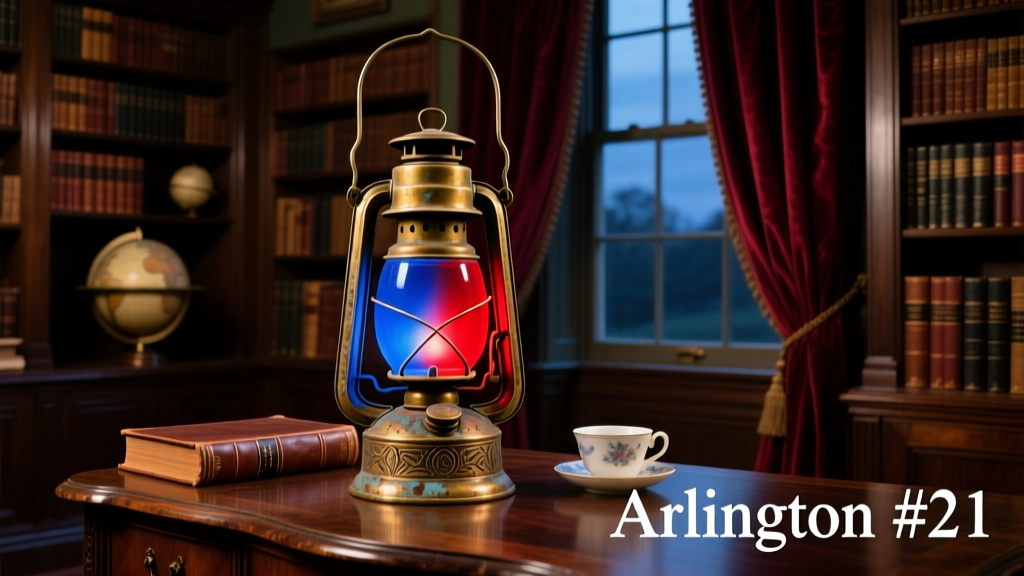
Arlington Railroad Lantern with Blue and Red Lenses: History, Identification, and Restoration of the 21-Inch Model

Jardinière Planter Fishbowl: History, Design Evolution, and Restoration Best Practices
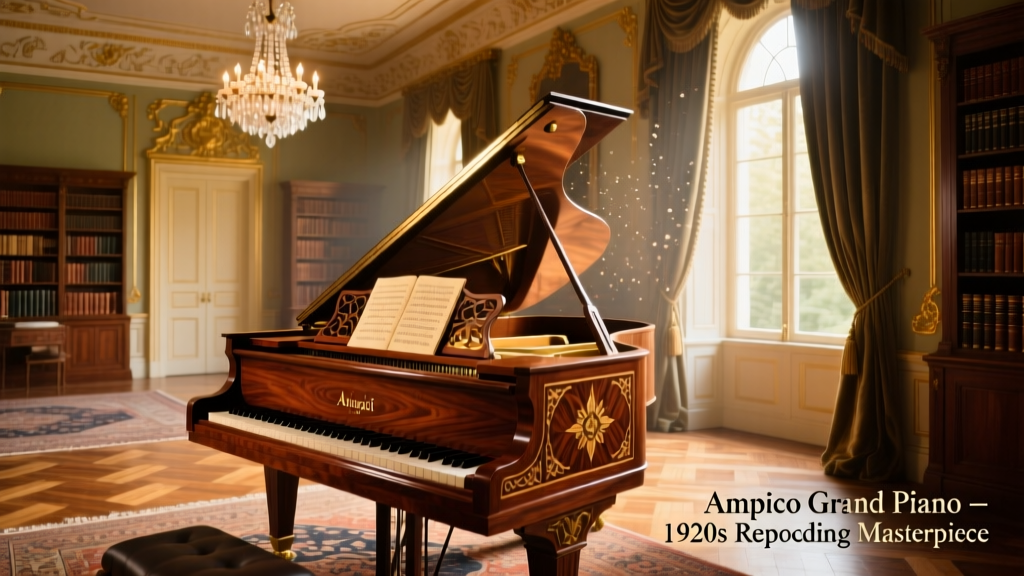
The Ampico Reproducing Grand Piano: A Technical and Historical Deep Dive into the 5′ 8″ Model
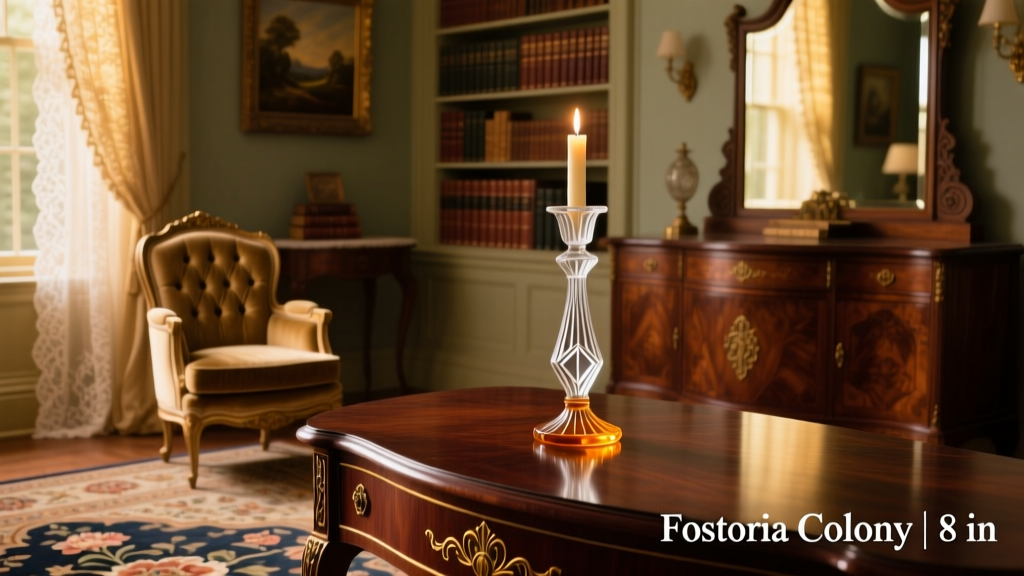
Fostoria Colony Candlestick, 8-Inch: History, Identification, and Restoration Guidance
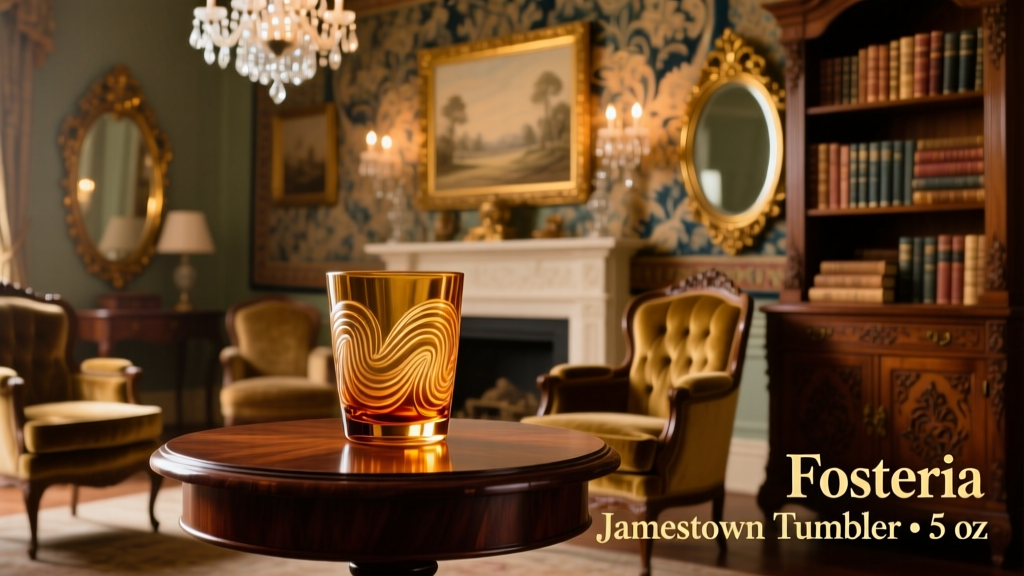
Fostoria Jamestown Tumbler Juice Glass in Amber: Identification, History, and Restoration Guidance
Cast Iron Porcelain Casters on Square Footstools: A Restoration Specialist’s Guide to 10½-Inch Antique Hardware
Napoleon III Nesting Boxes with Three Egg Forms: Gilt Metal and Opaline Glass, Circa 1860–1875