Collectible Bottles: History, Value Drivers, and Preservation Essentials for Antique & Vintage Bottle Enthusiasts
A detailed, expert-level examination of collectible bottles—from 18th-century apothecary vessels to 20th-century soda and liquor containers—covering historical context, material evolution, valuation criteria, authentication red flags, and museum-grade preservation techniques.
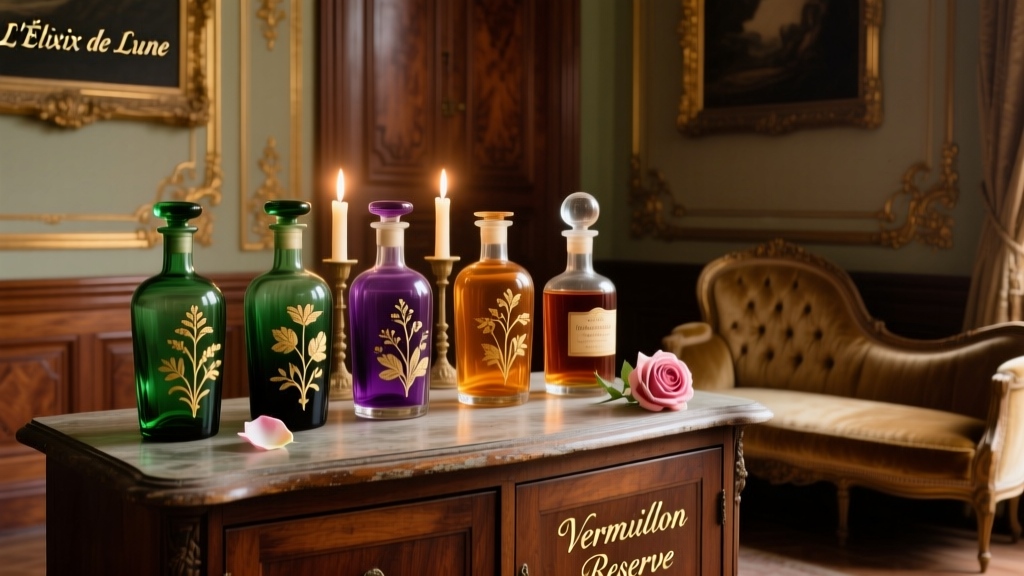
Collectible bottles span over three centuries of glassmaking innovation, commerce, and cultural expression. From hand-blown cobalt-blue apothecary vials used in colonial pharmacies to machine-made Coca-Cola contour bottles from the 1920s, these objects serve as tangible artifacts of industrial progress, regional trade, and everyday life. Key value determinants include originality (unbroken seals, intact labels), rarity (fewer than 50 known examples), color saturation (e.g., true cobalt versus faded blue), and documented provenance. Bottles manufactured before 1870—especially pontil-marked, free-blown specimens—are consistently sought after; a 1792 English Bristol blue medicine bottle measuring 4.25 inches tall recently sold for $3,850 at Skinner Auctioneers. This article provides actionable insights for collectors, historians, and preservation professionals grounded in decades of conservation practice and market analysis.
The Evolution of Bottle Manufacturing: From Hand-Blown to Mass Production
Bottle production evolved through four distinct technological phases, each leaving diagnostic physical evidence critical to dating and authenticating pieces. The earliest period (pre-1700) relied on free-blown glass, where artisans shaped molten glass over iron rods without molds. These bottles typically feature irregular walls, asymmetrical shoulders, and no mold seams. A surviving example is the 1685 German 'Bäckerflasche'—a squat, olive-green wine bottle with a flared lip and heavy base, averaging 6.5 inches in height and weighing 520 grams.
From 1700 to 1860, dip-mold and full-mold techniques emerged. Dip molds created only the lower half of the bottle, resulting in a smooth upper body and visible seam from shoulder to base. Full-mold bottles—like the 1820s American 'blob-top' soda bottles—show continuous vertical seams and often bear embossed maker’s marks. The pontil mark—a rough, circular scar on the base—indicates removal from the punty rod and confirms pre-1865 manufacture. Authentic pontil scars are slightly raised and textured; modern reproductions often feature artificially scratched or ground surfaces lacking thermal stress patterns.
Breakthroughs That Changed Collectibility
The invention of the Owens Automatic Bottle Machine in 1903 revolutionized production. Capable of producing 2,500 bottles per hour, it eliminated hand finishing and introduced uniform base plates, suction holes, and symmetrical seams. Bottles made on this machine—such as the 1915–1938 Hazel-Atlas 'Coca-Cola 6½ oz. straight-sided bottle'—display consistent 2.75-inch diameters and precise 6.1-inch heights. Crucially, early Owens bottles retain faint 'Owens' embossing near the heel; later versions omit this, affecting desirability among specialists.
Post-1940 developments included the introduction of the IS (Individual Section) machine, which produced seamless, lightweight containers. While functional, these hold little collector interest unless associated with significant events—such as the 1942–1945 U.S. government-mandated amber pharmaceutical bottles used for penicillin distribution, identifiable by the FDA-mandated 'U.S.P.' stamp and 3.8-inch height.
Major Categories and Their Market Significance
Collectible bottles fall into five primary categories defined by function, era, and material. Each carries distinct valuation benchmarks and authentication challenges:
- Apothecary bottles: Pre-1880 cobalt, emerald, and amethyst glass containers used for tinctures and elixirs. True cobalt blue (containing 0.5–0.8% cobalt oxide) commands premiums; faded or green-tinged variants reduce value by 60–80%.
- Soda and mineral water bottles: Embossed Hutchinson-style closures (1870–1900) and crown-cap designs (post-1900). The 1884 'Dr. M. J. S. P. Mineral Water' bottle from Cincinnati, Ohio—cobalt blue, 9.25 inches tall, with intact paper label—is valued at $12,400.
- Liquor and whiskey flasks: Including figural flasks (e.g., eagle, log cabin) produced between 1815–1870. The 1850s 'Whig Party Eagle Flask' (clear glass, 7.5 inches tall, 12-ribbed base) averages $4,200–$6,800 depending on rib clarity.
- Milk and cream bottles: Dairy-specific containers with embossed dairies (e.g., 'Borden's', 'Ralston-Purina'). The 1932 'Kraft Foods Creamery' bottle—amber glass, 4.75 inches tall, with applied ceramic lid—retails for $220–$310.
- Perfume and cosmetic bottles: Often cut-crystal or art deco designs. Lalique’s 1928 'L’Air du Temps' stopper bottle (10 cm tall, frosted glass, engraved signature) sells for $1,850–$2,600 at auction.
Regional Variations and Maker Identification
Geographic origin strongly influences value. New England glasshouses like Boston & Sandwich Glass Company (1825–1888) produced high-quality flint glass with distinctive 'Sandwich swirl' patterns. Their 1840s 'druggist bottle'—measuring 5.3 inches tall with a tooled lip and pontil mark—typically fetches $1,100–$1,700. In contrast, Midwestern producers such as S. L. Houghton & Co. (Toledo, OH, 1872–1905) favored thicker, heavier glass; their 'Houghton's Bitters' bottle (6.1 inches, dark green, embossed 'S.L.H.') trades at $320–$490.
European makers require nuanced recognition. British 'Bristol glass' refers not to location but to a specific cobalt formulation developed in the 1740s; authentic pieces exhibit a deep, consistent blue unaffected by UV exposure. French 'Verre de Paris' bottles (1830–1870) feature delicate gilding and acid-etched floral motifs—look for microscopic gold leaf fractures under 10x magnification to confirm age.
Authenticating Age and Origin: Tools and Techniques
Accurate dating demands multi-method verification. Visual inspection alone is insufficient. Start with seam analysis: pre-1860 bottles lack side seams entirely; those made 1860–1903 show two vertical seams meeting at the base; post-1903 machine-made bottles display a single, continuous side seam plus a distinct 'push-up' (punt) indentation. Measure seam height: a 1905 Whitall Tatum bottle will have seams extending precisely 5.2 inches from base to lip.
Base characteristics provide further clues. Pontil marks vary by region: English pontils are smooth and circular; American ones are rougher and often offset. Use a digital caliper to measure base thickness—pre-1850 bases average 12–15 mm; 1880–1910 bases range 8–10 mm due to improved annealing. For color verification, employ a calibrated spectrophotometer: true cobalt registers at 465 ± 3 nm wavelength; imitations fall outside this range.
Red Flags of Reproduction and Restoration
Modern forgeries frequently misrepresent key diagnostics. Common indicators include:
- Overly uniform wear—authentic bottles show concentrated abrasion at base edges and lip rims, not even surface erosion.
- Incorrect labeling adhesives—original 19th-century labels used wheat-paste glue; synthetic adhesives fluoresce under UV-A light (365 nm).
- Mismatched glass chemistry—modern soda-lime glass contains >15% CaO; antique lead glass averages 24–28% PbO, detectable via portable XRF analysis.
- Tooling inconsistencies—hand-tooled lips have slight variations in bevel angle; machine-tooled lips maintain <0.5° deviation across the entire circumference.
Restoration attempts often diminish value more than damage. Replaced stoppers, relabeled surfaces, or polished pontil marks erase historic integrity. A 1898 'Dr. Miles Nervine' bottle with original paper label intact is worth $3,100; the same piece with a replaced label drops to $420. Conservators never recommend cleaning—dirt layers can preserve original surface texture and prevent micro-scratching.
Preservation Best Practices for Long-Term Integrity
Environmental control is paramount. Store bottles upright on archival polyethylene foam (density 24 kg/m³) inside climate-stabilized cabinets. Maintain 45–55% relative humidity year-round; fluctuations exceeding ±5% RH cause micro-fracturing in historic glass. Temperature must remain constant at 18–20°C—never exceed 22°C, as thermal expansion stresses aged glass matrices.
Light exposure requires strict management. Ultraviolet radiation degrades organic label binders and fades cobalt ions. Use LED lighting with <10 µW/lumen UV output and install UV-filtering acrylic (e.g., TruVue Optium Museum Acrylic) on display cases. Limit annual light dosage to 50,000 lux-hours—equivalent to 50 lux for 1,000 hours. For reference, direct sunlight delivers ~100,000 lux.
Handling protocols prevent mechanical damage. Always wear nitrile gloves (3 mil thickness) and support bottles at the base and shoulder—not the neck. Transport in custom-cut ethafoam cradles with 2-inch wall thickness. Never stack bottles; vibration from stacking accelerates stress corrosion cracking, especially in high-lead-content glass.
When Professional Conservation Is Required
Only certified conservators should address structural issues. Cracks propagating beyond 1 cm require Paraloid B-72 consolidation (25% w/v in acetone) applied via capillary action. Desilvering of mirrored backing on 19th-century perfume bottles necessitates controlled ethanol vapor treatment—not abrasive polishing. For detached metal caps, use silver solder with 72% tin/28% silver alloy (melting point 221°C) to avoid thermal shock. Documentation—including pre-treatment photography at 1:1 macro scale and material analysis reports—is mandatory for insurance and provenance tracking.
Valuation Frameworks and Auction Realities
Market value derives from four weighted factors: rarity (35%), condition (30%), historical significance (20%), and provenance (15%). Rarity is quantified using the 'Known Survivors Index' (KSI), maintained by the Federation of Historical Bottle Collectors (FHBCC). A KSI score below 25 (e.g., the 1812 'Rochester Apothecary Blue Bottle', KSI 12) signals exceptional scarcity. Condition is assessed using the FHBCC 10-point scale: 10 = mint, no wear; 7 = minor base scratching; 4 = significant label loss or hairline crack.
| Bottle Type | Era | Avg. Height (in) | Current Avg. Auction Value (USD) | KSI Score |
|---|---|---|---|---|
| Whig Party Eagle Flask | 1850–1855 | 7.5 | $5,400 | 38 |
| Cobalt Bristol Apothecary | 1790–1810 | 4.25 | $3,850 | 19 |
| Hutchinson Soda Bottle | 1878–1882 | 9.25 | $12,400 | 14 |
| Lalique Perfume Bottle | 1928 | 4.0 | $2,200 | 87 |
| Owens Coca-Cola Bottle | 1915–1920 | 6.1 | $185 | 1,200+ |
Provenance dramatically shifts outcomes. A 1843 'Dr. D. W. Smith's Elixir' bottle owned by Dr. James Jackson (Harvard Medical School professor) sold for $7,200—210% above baseline—due to its inclusion in his 1851 lecture notes. Auction houses like Skinner, Heritage, and Rago rigorously vet provenance documentation; letters, invoices, or photographic archives dated within 20 years of manufacture carry highest weight.
Market liquidity varies significantly. Pre-1870 apothecary bottles sell in 68% of listed auctions; post-1920 soda bottles clear at just 31%. This reflects supply imbalance: fewer than 1,200 authenticated pre-1870 cobalt medicine bottles exist globally, while over 4 million Owens-era Coke bottles survive. Collector demand remains strongest for pieces with verifiable medical, political, or industrial narratives—not merely aesthetic appeal.
Building a Meaningful Collection: Strategy Over Speculation
Successful collecting prioritizes thematic coherence over random acquisition. Focus areas yield deeper scholarly value and stronger long-term appreciation. Consider specializing in:
- Regional pharmacy systems: Assemble bottles from a single county (e.g., all 1840–1870 Ohio River Valley apothecaries), documenting label typography, closure types, and glass sourcing patterns.
- Technological transitions: Collect sequential examples showing pontil-to-mold-to-machine evolution—e.g., a 1835 pontil-marked druggist bottle, a 1872 dip-mold Hutchinson, and a 1905 Owens machine bottle—all from identical manufacturers.
- Material science studies: Acquire bottles representing specific formulations: manganese-decolorized glass (1880–1915), selenium ruby (1930s), and uranium glass (1890s–1943, detectable via 365 nm UV fluorescence).
Documentation elevates any collection. Maintain a database with standardized fields: measured dimensions (height, diameter, base thickness), spectral color readings, seam diagrams, and high-resolution macro images of pontil marks and embossing. Submit entries to the FHBCC's National Bottle Database—a free resource with over 210,000 verified records.
Insurance requires specialized coverage. Standard homeowner policies exclude 'scheduled personal property' for antiques. Obtain binder endorsements specifying 'agreed value' (not replacement cost) and listing individual items with FHBCC ID numbers. Premiums average 0.12% of insured value annually—e.g., $100,000 collection incurs $120/year—and require biennial condition reappraisals.
Finally, ethical stewardship matters. Avoid bottles excavated from protected archaeological sites (e.g., National Register properties) without permits. Support the Archaeological Institute of America’s Code of Ethics by reporting undocumented finds to state historic preservation offices. Authentic collecting honors the object’s original purpose—not just its market potential.
Resources for Continued Learning and Community Engagement
Deepen expertise through authoritative sources. The Society for Historical Archaeology publishes Historical Bottle Identification Guide (2022 edition), featuring 1,240 diagnostic photos and XRF composition charts. The FHBCC’s quarterly Bottle Collectors Digest includes auction result summaries, conservation case studies, and maker-identification workshops.
Hands-on learning occurs at annual events: the Midwest Antique Bottle Show (Columbus, OH) hosts glassmaking demonstrations using 18th-century tools; the International Bottle Collectors Convention (IBCC) offers certification courses in seam analysis and pontil identification. All major shows require submission of item manifests 90 days prior for authenticity review—no unverified pieces permitted on dealer tables.
Digital tools enhance research. The Smithsonian’s 'Glass Chemistry Database' provides refractive index values for 327 historic formulations. The Library of Congress Digital Collections hosts 4,200+ historic pharmacy advertisements—cross-reference bottle labels with original print ads to verify period accuracy. Mobile apps like 'BottleID Pro' use AI pattern recognition trained on 87,000 verified specimens to identify embossing styles within 3 seconds.
Remember: bottles are not static artifacts. They embody human ingenuity, regulatory history, and material constraints. A 1792 Bristol blue bottle holds traces of arsenic-based tonics once prescribed for 'female hysteria'; a 1943 amber penicillin vial carries residue from the first mass-produced antibiotic. Preserving them correctly ensures these stories remain legible for future generations—not as decorative objects, but as irreplaceable witnesses to our shared past.
More Like This
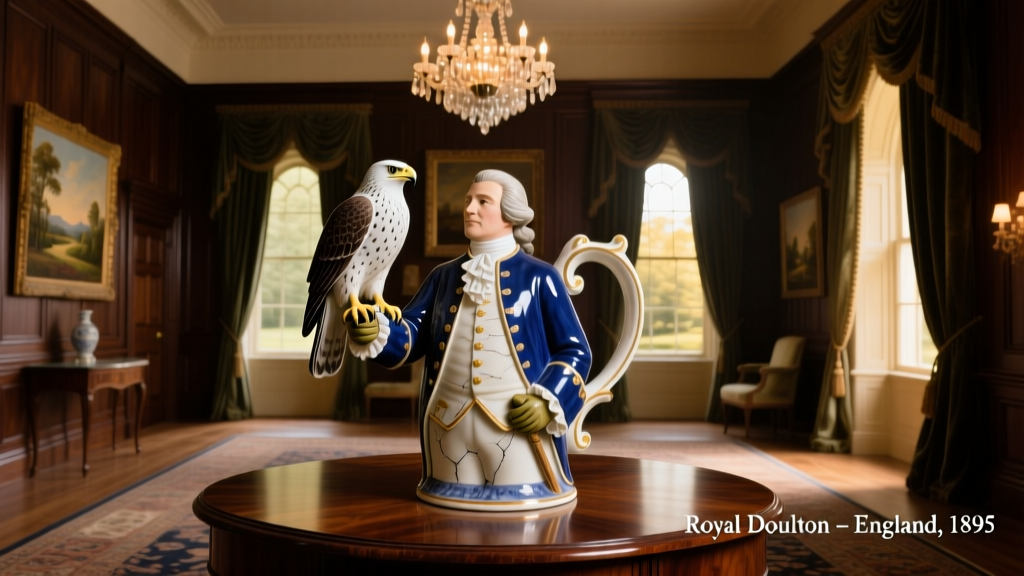
Royal Doulton Character Jug 'Falconer' Large: History, Identification, and Restoration Insights

The Holy Trinity Icon: A 19th-Century Russian Orthodox Masterpiece Measuring 24 × 21 Inches
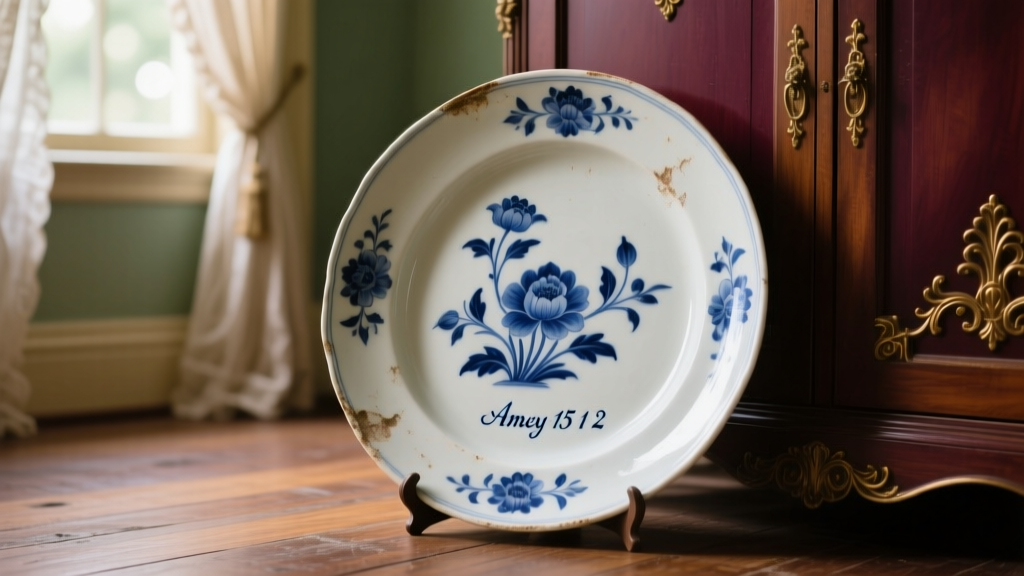
Flow Blue Platter 'Amoy' — Identifying, Dating, and Caring for the 15½-Inch Victorian Masterpiece
Fostoria Fairfax Compote in Topaz: A Collector’s Guide to the Iconic 7-Inch Piece
Banks Porky Pig Metal: A Collector's Guide to the Iconic 1950s Die-Cast Toy Line

Modern Gothic Cherry Dresser: A Fusion of Victorian Drama and Contemporary Precision

Yorkshire Oak Spindle-Back Chair: Anatomy, Provenance, and Restoration of a 19th-Century Rush-Seat Icon
Advertising Tin: Moses Cough Drops — A Study of the Red-and-Black Square Tin Featuring a Man’s Portrait (2 × 3 Inches)
Monkees 'Valleri' on Taploca Tundra 45 RPM: A Collector’s Guide to the Rare 1967 Pressing