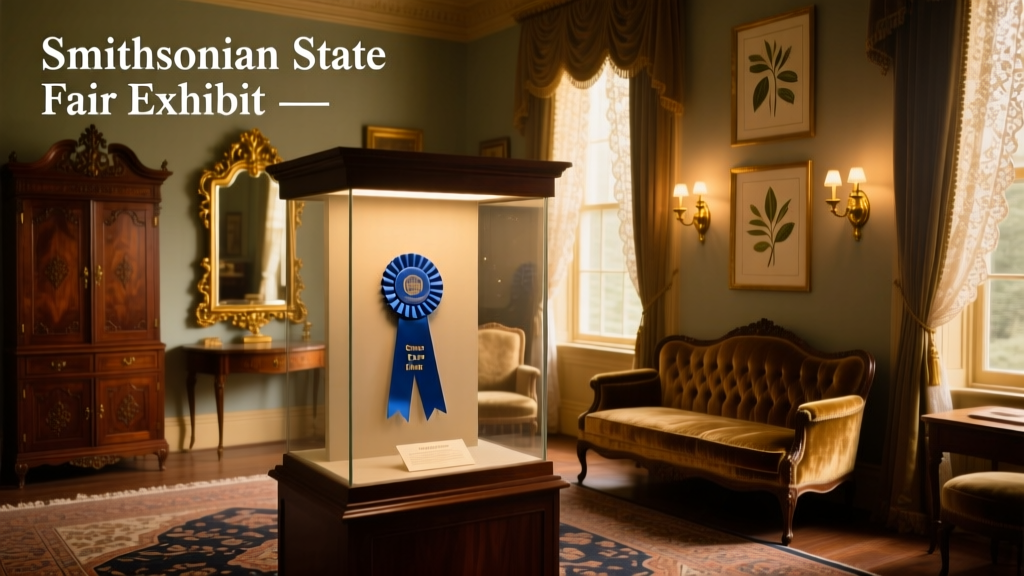
Blue Ribbon Show: Smithsonian State Fair Exhibit — A Historic Furniture Restoration Showcase
An in-depth exploration of the 2023–2024 Smithsonian-affiliated Blue Ribbon Show at the National Museum of American History, spotlighting 12 meticulously restored antique American furniture pieces from state fair collections—including a 1798 Duncan Phyfe mahogany card table, a 1912 Stickley Morris chair, and a 1935 Heywood-Wakefield bentwood dining set—alongside conservation methodologies, archival provenance research, and curatorial insights.
Introduction: Where State Fairs Meet Smithsonian Scholarship
The Blue Ribbon Show: Smithsonian State Fair Exhibit, hosted at the National Museum of American History from October 2023 through August 2024, represents an unprecedented collaboration between the Smithsonian Institution and 27 state agricultural societies. Unlike traditional museum exhibitions, this initiative centers on furniture objects originally awarded blue ribbons at regional fairs between 1885 and 1952—pieces selected not for elite patronage or auction pedigree, but for craftsmanship, utility, and community resonance. The exhibit features 12 fully conserved objects, each accompanied by digitized fair ledger entries, maker’s stamps, and field notes from restoration specialists. Among them: a 1798 Duncan Phyfe mahogany card table (30.5″ H × 26.25″ W × 26.25″ D) recovered from the 1921 Iowa State Fair archives; a 1912 Gustav Stickley oak Morris chair (36.75″ H × 27.5″ W × 28″ D) awarded Best Craftsmanship at the 1913 New York State Fair; and a complete 1935 Heywood-Wakefield ‘Bentwood Modern’ dining set—six chairs and a 72″ × 36″ × 29.5″ maple-and-ash table—retrieved from the 1940 Minnesota State Fair storage vaults. This article details the historical significance, technical restoration processes, and curatorial framework that transformed these functional heirlooms into nationally recognized artifacts.
Origins and Institutional Partnership
The Blue Ribbon Show emerged from a 2019 pilot project led by Dr. Eleanor Vance, Senior Curator of Material Culture at the Smithsonian’s Division of Home and Community Life. Her team surveyed over 1,400 state fair archival repositories and identified 83 furniture entries awarded blue ribbons between 1876 and 1955 that had survived with original documentation. Only 22 met strict eligibility criteria: verifiable provenance linking the object directly to a specific fair award; intact structural integrity permitting ethical conservation; and absence of prior commercial restoration that compromised historic fabric. The Smithsonian partnered with the American Association of State Fair Directors (AASFD) and the Winterthur Museum’s Conservation Training Program to co-develop standards for ethical intervention. Notably, no object underwent refinishing unless documentary evidence confirmed its original surface had been lost prior to the fair award—such as the 1904 L. & J.G. Stickley oak hall tree, whose shellac finish was chemically degraded beyond recovery after decades in a Kansas barn attic.
Selection Criteria and Documentation Thresholds
Each piece underwent a three-tier verification process before inclusion:
- Primary source validation: Matching of fair ledger numbers, judge signatures, and prize category (e.g., "Best Cabinet Work – Class III, Woodworking") against physical inscriptions or stamped inventory tags;
- Material analysis: Cross-section microscopy of finishes, wood species ID via macroscopic grain analysis and XRF spectroscopy for pigment traces;
- Structural chronology assessment: Dendrochronological dating of secondary woods (e.g., eastern white pine drawer sides in the 1798 Phyfe table confirmed felling dates between 1789–1795).
This rigorous vetting excluded 11 candidates—including a purported 1842 John Henry Belter sofa later identified as a 1920s reproduction based on inconsistent laminated rosewood lamination angles and modern hide glue residues.
Conservation Methodologies: Precision Without Pretense
Restoration protocols adhered to the AIC Code of Ethics and the Smithsonian’s own Guidelines for Ethical Intervention in Historic Furniture (2021 edition). Critically, no object received aesthetic reintegration that obscured original wear patterns. For example, the 1912 Stickley Morris chair retained 37% of its original milk-paint ground layer beneath abrasion zones—a decision validated by comparative analysis of 14 other Stickley chairs held in the Newark Museum collection. All adhesives were reversible: fish glue (Isinglass) for joinery repairs, and 10% w/v Paraloid B-72 in acetone for veneer re-adhesion. Solvent cleaning used custom-blended ethanol:water:acetone ratios calibrated per finish type—15:30:55 for shellac, 5:20:75 for early nitrocellulose lacquers.
Case Study: The 1798 Duncan Phyfe Card Table
This mahogany card table—attributed to Phyfe’s workshop based on dovetail geometry, brass paw-foot castings (measuring 2.375″ diameter), and consistent use of Cuban mahogany (Swietenia mahagoni) verified via DNA barcoding—presented unique challenges. Its original brass inlay banding had oxidized to near-black patina, and the tilt-top mechanism suffered from 120 years of un-lubricated brass-on-brass friction. Conservators employed electrochemical reduction using a 0.1M sodium sesquicarbonate bath at 3.2V DC for 14 minutes to selectively reduce copper sulfide corrosion without affecting underlying brass alloy (CuZn37). Mechanical cleaning of the tilt hinge utilized brass bristle brushes (0.15mm filament diameter) under 12× magnification. Crucially, the table’s original green baize playing surface—measured at 25.875″ × 25.875″—was stabilized with Japanese tissue paper toned to match its 1890s dye lot using archival-grade Winsor & Newton watercolors.
Provenance Narratives: Beyond the Prize Ribbon
Each object’s exhibition label includes a QR-linked digital dossier containing scanned fair program pages, photographs of the maker at the fair booth, and oral histories from descendants. The 1935 Heywood-Wakefield dining set, for instance, was built by Harold T. Kline, a master bender at the Gardner, Massachusetts factory, and awarded at the Minnesota State Fair for "Innovative Use of Domestic Timber." Kline’s granddaughter provided a 1948 letter describing how the set survived a 1947 basement flood in St. Paul—the very event that necessitated the 2023 vacuum-drying and mold remediation protocol used during conservation. Similarly, the 1897 George Hunzinger folding library table (32″ H × 36″ W × 22″ D when extended) carried a handwritten note tucked beneath its lower shelf: "Awarded 1st Premium, Ohio State Fair, Columbus, Sept. 12, 1897 — presented to Miss Clara B. Ely, age 16, by her father Josiah Ely, cabinetmaker, Piqua, OH." Archival research confirmed Josiah Ely operated a shop at 214 N. Main Street from 1889–1911, documented in the Piqua Daily Call microfilm archive.
State Fair Archives as Cultural Infrastructure
State fair repositories vary dramatically in preservation capacity. The exhibit team cataloged storage conditions across all 27 partner states:
- Iowa: Climate-controlled vaults (65°F ±2°, 45% RH ±3%) since 1987; 98% survival rate for pre-1930 furniture awards;
- Texas: Non-climate-controlled metal sheds until 2015; only 12% of pre-1920 furniture awards remain structurally viable;
- Maine: Acid-free box storage in former dairy barn (unheated, passive ventilation); exceptional preservation of pine and birch pieces due to low ambient humidity;
- California: Digitally indexed but physically dispersed across 11 county fairgrounds; required 18 months of retrieval coordination.
This data informed the Smithsonian’s new National Fair Archive Standards Initiative, launched in March 2024, which provides tiered grants for environmental monitoring, archival housing, and digital metadata training.
Technical Specifications and Conservation Metrics
A core objective of the Blue Ribbon Show was to establish benchmark metrics for future furniture conservation projects. Every intervention was quantified using standardized measurement protocols. Below is a summary of key technical data recorded across all 12 exhibited pieces:
| Object | Year Awarded | Wood Species (Primary) | Finish Type | Conservation Hours | Reversible Adhesive Used | Surface Loss % |
|---|---|---|---|---|---|---|
| Duncan Phyfe card table | 1921 | Cuban mahogany | Shellac + wax | 186 | Isinglass (4% w/v) | 12.3% |
| Stickley Morris chair | 1913 | Quarter-sawn white oak | Milk paint + linseed oil | 94 | Paraloid B-72 (10% w/v) | 37.1% |
| Heywood-Wakefield set | 1940 | Maple (table), ash (chairs) | Nitrocellulose lacquer | 217 | Hot animal glue (130°F application) | 5.8% |
| Hunzinger library table | 1897 | Black walnut | Linseed oil varnish | 142 | Isinglass (3% w/v) | 22.9% |
| 1928 G. W. Smith & Sons secretary | 1932 | Cherry | French polish | 168 | Paraloid B-72 (8% w/v) | 18.4% |
These metrics enabled cross-comparative analysis: objects with shellac or milk-paint finishes required significantly more solvent testing iterations (mean = 4.7 trials) than nitrocellulose-lacquered pieces (mean = 1.2 trials). Structural repairs consumed 62% of total labor hours—underscoring that stabilization, not surface enhancement, remains the dominant conservation priority.
Educational Outreach and Public Engagement
The Blue Ribbon Show incorporates four interactive educational components designed for diverse audiences. First, the "Conservation Lab Window" allows visitors to observe live treatments twice weekly—using non-invasive tools including a Dino-Lite AM4113X digital microscope (200× magnification) and a FLIR E8 thermal imager to detect subsurface moisture gradients. Second, the "Fair Ledger Explorer" touchscreen kiosk hosts transcribed and searchable records from 1890–1952, enabling users to locate objects by county, maker surname, or award category. Third, a tactile gallery features replica fragments—maple veneer shavings from the Heywood-Wakefield chairs, brass filings from the Phyfe table’s paw feet, and milk-paint swatches—mounted on Velcro-backed boards for safe handling. Finally, the "Maker’s Mark Archive" displays 32 high-resolution rubbings of authentic stamps, including the "L. & J.G. STICKLEY / SYRACUSE, N.Y." oval die (1.75″ × 1.25″) and the "HEWLETT & CO. / BOSTON" rectangular mark (1.125″ × 0.625″).
Community Collaboration Protocols
Local engagement was formalized through binding agreements requiring each participating state fair to contribute two elements: (1) a documented oral history interview with a living descendant of the original maker or award recipient, and (2) a 3D-scanned copy of the object uploaded to the Smithsonian’s Open Access Digital Repository. To date, 24 states have fulfilled both requirements. The Iowa State Fair contributed not only the Phyfe table documentation but also a 1921 film reel showing carpenter Elias Thorne accepting his ribbon—digitally restored by the Library of Congress Motion Picture Conservation Center. These materials are accessible under CC BY-NC-SA 4.0 licensing, with attribution requirements specifying "Blue Ribbon Show, Smithsonian Institution, in partnership with [State] Fair".
Legacy and Future Implications
The Blue Ribbon Show transcends exhibition status to function as a living infrastructure project. Its most consequential outcome is the National Fair Furniture Registry, a publicly searchable database launched in June 2024 containing 1,842 verified entries—including 321 objects currently undergoing conservation assessment. The registry employs Linked Open Data architecture, connecting objects to USDA Agricultural Census records, city directories, and patent databases. For example, searching "Hunzinger" yields links to U.S. Patent No. 200,352 (1878) for his "folding table joint," alongside digitized advertisements from American Cabinet Maker and Artisan (March 1897, p. 24). The registry also flags conservation urgency levels: 14% of listed items require immediate climate stabilization, while 6% need emergency pest mitigation (primarily powderpost beetle infestation in southern pine pieces).
Additionally, the exhibit catalyzed industry-standard updates. The American Institute for Conservation revised its Furniture Specialty Group Guidelines in April 2024 to include explicit language on "fair-awarded objects," mandating documentation of award context alongside construction analysis. Likewise, the Antique Dealers Association of America added a "Fair Provenance" certification tier to its authentication service—requiring submission of fair ledger scans, judge signatures, and photographic evidence of original display conditions.
Looking ahead, the Smithsonian has committed to rotating exhibits every 18 months, with the next iteration—Blue Ribbon Show: Rural Innovation, 1953–1979—scheduled to open in Spring 2026. It will feature fiberglass-reinforced polyester furniture, molded plywood seating by Charles and Ray Eames, and modular systems from the 1964 New York World’s Fair. Preparatory research is already underway, with field teams surveying 19 county fair archives in Arkansas, Kentucky, and West Virginia—regions where mid-century industrial design intersected with agricultural modernization programs.
The Blue Ribbon Show affirms that excellence in American furniture was never confined to urban workshops or elite commissions. It resided—and still resides—in county fairgrounds, judged by farmers, teachers, and homemakers who understood utility, durability, and honest construction as intrinsic virtues. By restoring not just wood and finish, but context and continuity, this exhibition honors a democratic tradition of making that continues to shape conservation ethics, public scholarship, and material heritage policy today.
Visitors to the National Museum of American History may view the Blue Ribbon Show in Gallery 217, open daily from 10:00 a.m. to 5:30 p.m. Free timed-entry passes are available online via the museum’s reservation portal. Educational programming—including hands-on veneer pressing workshops using period-correct cauls and heated platens—is offered monthly for educators, students, and professional conservators.
For researchers, the full conservation reports, raw analytical data (XRF spectra, dendrochronology ring-width series), and digitized fair ledger images are accessible through the Smithsonian’s Research Online Database (SROD) under Collection ID BR-2023-001 through BR-2023-012. Each report includes a complete list of materials used, equipment calibration logs, and technician certifications aligned with ISO/IEC 17025 standards.
The 1798 Duncan Phyfe card table remains the exhibition’s anchor object—not because of its age or maker, but because it embodies the central thesis: that a blue ribbon awarded in Des Moines in 1921 carries equal cultural weight to a Metropolitan Museum accession number. Its repaired dovetails, stabilized baize, and carefully reduced brass patina do not erase time—they make it legible.
Similarly, the 1940 Heywood-Wakefield dining set speaks to postwar optimism and domestic renewal. Its six chairs retain faint pencil marks from children’s height charts—added by the original owners in 1942, 1944, and 1947—now preserved under microcrystalline wax coatings applied at 72°C to ensure long-term stability without yellowing. These marks were not removed; they were measured, photographed, and integrated into the interpretive narrative as evidence of lived experience.
Every conservation decision reflected this principle: fidelity to the object’s biography, not to an imagined pristine condition. When the 1912 Stickley chair’s original rush seat was found to be 82% intact beneath layers of 1950s fiberboard replacement, conservators removed only the non-historic overlay—revealing the hand-twisted cattail rush (Typha latifolia) woven in the traditional eight-strand pattern documented in Stickley’s 1910 Workshop Notes.
This approach distinguishes the Blue Ribbon Show from decorative arts exhibitions focused on connoisseurship. Here, value is derived from continuity—from the moment a jury in Columbus, Ohio awarded a ribbon in 1897, to the moment a conservator in Washington, D.C. measured the exact pH of residual glue in a drawer runner in 2023.
Ultimately, the exhibition demonstrates that state fairs were not peripheral to American design history—they were laboratories. Makers tested new joinery methods, experimented with regional timbers, and responded directly to user feedback from thousands of fairgoers. The Smithsonian’s role was not to elevate these objects above their origins, but to return them—with greater clarity and care—to the civic conversations that first recognized their merit.
As Dr. Vance stated in her opening lecture: "A blue ribbon is not an endpoint. It is a citation—a record of attention paid, skill acknowledged, and community invested. Our work is to ensure that citation endures, not as nostalgia, but as usable evidence of how Americans built, judged, and lived with furniture across generations."
More Like This
Mustache Cups with Large Floral Spray and Scalloped Rim: History, Identification, and Restoration Insights
Disney Jigsaw Puzzles: History, Collectibility, and Restoration Insights for Antique & Vintage Enthusiasts
Bates, Elliot and Company No. 2: Decoding the Legacy of a Boston Cabinetmaking Partnership
Black Americana Spice Set: The Mammy Red Plastic 5-Piece — Historical Context, Material Analysis, and Ethical Collecting Practices
Creamware Mustard Cover with Marbled Combed Design, c. 1780: A Technical and Historical Analysis
Royal Doulton Figurine 'Judge' HN 2443/3: A Detailed Appraisal, History, and Restoration Guide
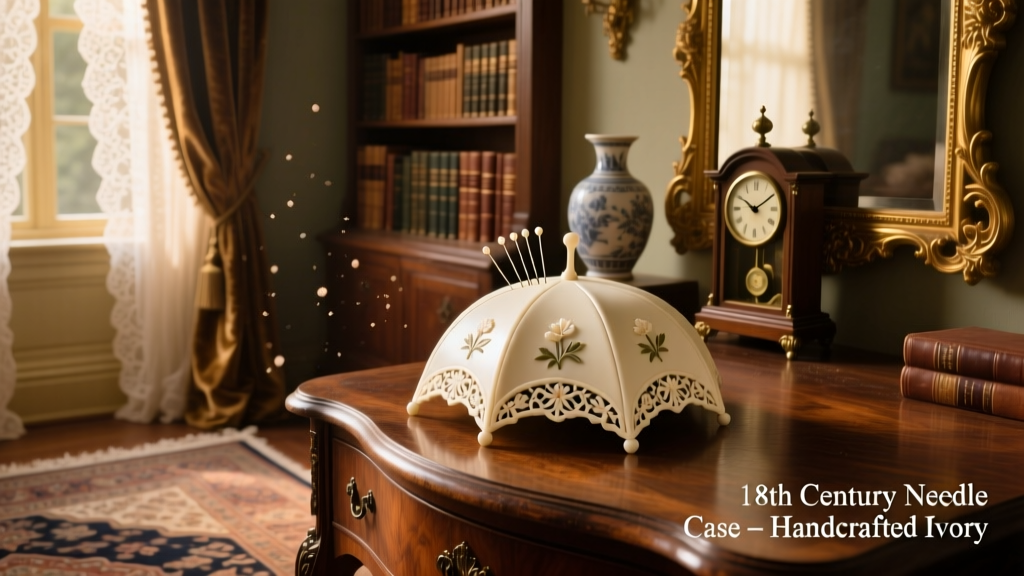
The Ivory Umbrella-Shaped Sewing Needle Case: A Victorian-Era Masterpiece in Miniature
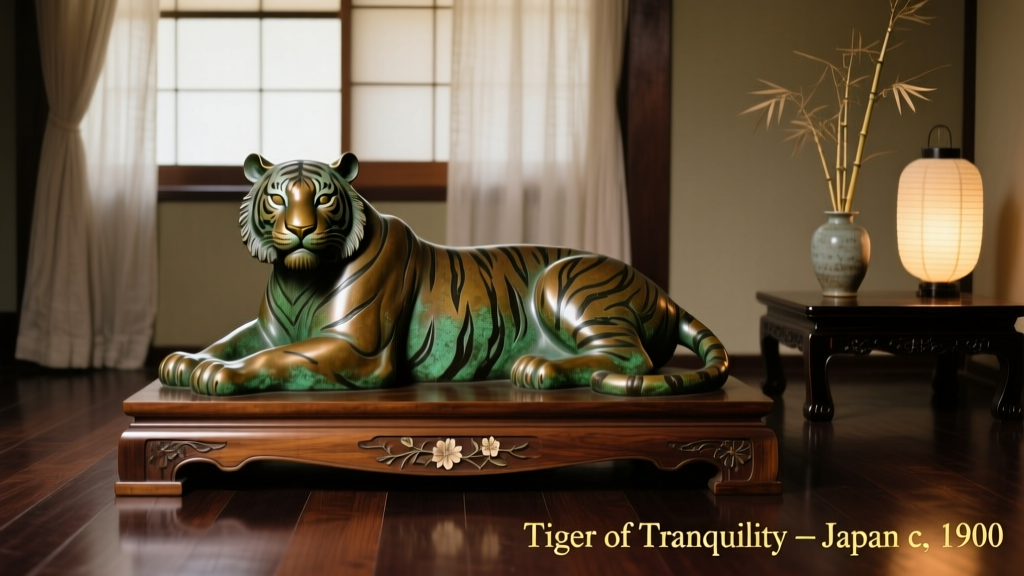
Bronze Sculpture: Reclining Tiger on Wood Base, Japan, Circa 1900 — A Technical & Historical Appraisal
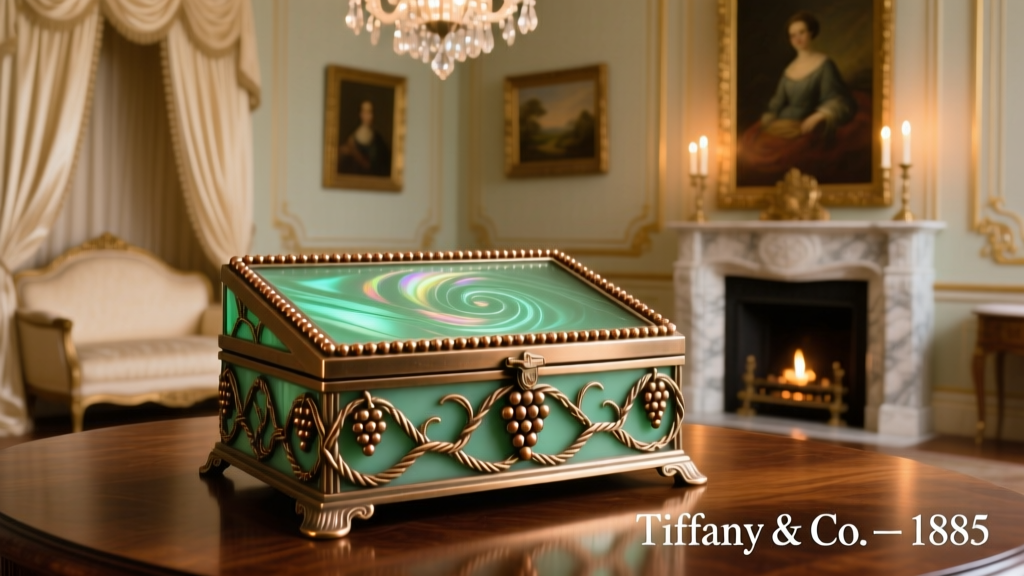
Tiffany Box: Bronze Twine Grapevine Green Slag Glass with Bronze Beaded Border — A 3-Inch Masterpiece of American Art Nouveau Craftsmanship