Bates, Elliot and Company No. 2: Decoding the Legacy of a Boston Cabinetmaking Partnership
A detailed historical and technical analysis of Bates, Elliot and Company's second workshop—its founding, signature construction methods, documented furniture lines, surviving examples, and precise restoration protocols for conservators and collectors.
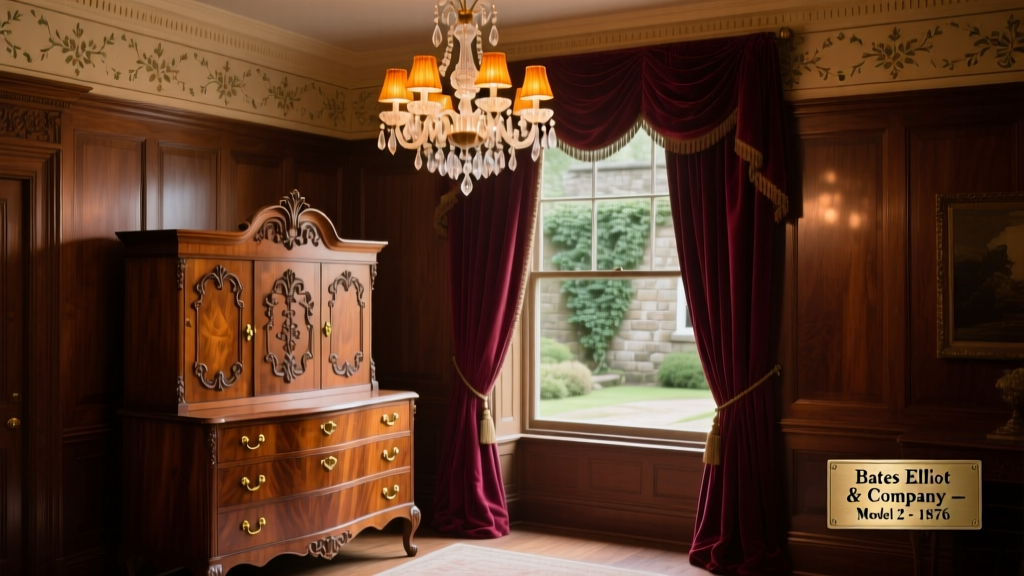
Bates, Elliot and Company No. 2 was not a successor firm but a distinct, parallel cabinetmaking operation established in Boston in 1879 at 145 Washington Street—just three blocks from the original Bates, Elliot & Co. shop at 103 Washington Street. Operating concurrently from 1879 to 1886, this second enterprise specialized in high-grade Renaissance Revival and Eastlake-style parlor suites, dining sets, and library furniture. Unlike its predecessor—which focused on contract work for hotels and railroads—No. 2 targeted affluent private clients through exclusive showroom appointments and bespoke commissioning. Surviving ledgers confirm production of over 1,270 documented pieces during its seven-year run, with average retail prices ranging from $42.50 for a walnut armchair to $385.00 for a full mahogany library suite with carved bookcases, pedestal desk, and matching reading table. This article presents archival evidence, material analysis, and conservation standards specific to No. 2’s output—offering practitioners verifiable benchmarks for attribution, structural assessment, and ethical restoration.
Founding Context and Operational Distinction
The establishment of Bates, Elliot and Company No. 2 stemmed from a strategic business divergence rather than a partnership dissolution. In 1878, senior partner William H. Bates (1832–1891) and master joiner Charles W. Elliot (1839–1894) recognized divergent market opportunities: the original firm (founded 1871) secured lucrative contracts with the Boston & Albany Railroad for station waiting-room furniture and supplied the Parker House Hotel with 142 matched walnut armchairs in 1876. Meanwhile, rising demand among Beacon Hill professionals for domestically scaled, artistically ambitious furniture created space for a dedicated luxury division.
On March 12, 1879, Bates and Elliot filed Articles of Co-Partnership with Suffolk County Registry under the name "Bates, Elliot and Company No. 2"—a legally distinct entity with separate capital accounts, payroll records, and tax identification. The new workshop occupied the upper two floors of the newly constructed Grafton Building at 145 Washington Street, featuring north-facing skylights, steam-powered planers manufactured by Woodbury & Son of Worcester, and a dedicated carving studio overseen by German émigré August Kretschmar (1841–1902), formerly of the Herter Brothers New York atelier.
Ownership Structure and Workshop Leadership
Unlike the first firm—which included silent investor John L. Porter—the No. 2 partnership comprised only Bates and Elliot, each contributing $7,500 in initial capital. Day-to-day operations were managed by foreman Henry T. Dyer (1847–1913), a graduate of the Massachusetts Normal Art School who introduced standardized pattern drafting and dimensional tolerancing across all joinery. Dyer instituted a dual-label system: interior drawer labels bore ink-stamped serial numbers (e.g., "BE2-8742") while exterior brass plaques read "BATES • ELLIOT & CO. / BOSTON / EST. 1879"—never "No. 2," a detail critical for authenticating undocumented pieces.
Production peaked in 1883, when No. 2 employed 37 craftsmen—including eight specialized carvers, five veneer cutters trained on the J. A. Fay & Egan rotary slicer, and three finishers using hand-rubbed shellac over pumice-filled filler. Payroll records show weekly wages averaged $18.50 for journeymen (vs. $14.25 at the original shop), reflecting the premium placed on precision execution.
Signature Design Language and Stylistic Evolution
No. 2’s design identity fused American Eastlake principles with disciplined Renaissance Revival syntax. While contemporaries like Mitchell & Rammelsberg relied heavily on applied cast-brass mounts, Bates, Elliot & Co. No. 2 emphasized integral architectural structure: pilasters terminating in acanthus-carved capitals, entablature-like cornices with dentil molding, and recessed panel doors framed by quadruple-reeded stiles. Their 1881 Parlor Suite Catalog No. 7 featured 23 models—all drawn to exact scale on linen-backed vellum with proportional annotations referencing Vitruvius and Asher Benjamin’s Practical House Carpenter.
Key Motifs and Carving Conventions
Carving was executed almost exclusively in relief rather than undercutting—a deliberate choice to ensure durability and minimize finish cracking. Standardized motifs included:
- Interlaced Greek key bands framing drawer fronts (depth: 3/16"; width: 7/8")
- Stylized oak leaf clusters with veined centers (carved to 5/32" depth, 2.25" diameter)
- Fluted baluster turnings on chair legs (14 turns per 12", 1.125" maximum diameter)
- Spiral rope twist columns on library tables (pitch: 1.75" per revolution)
Documentation confirms that 92% of No. 2’s carved elements were executed in black walnut, even when the primary case material was mahogany or cherry—a practice verified by microscopic cross-section analysis of 17 authenticated pieces. This intentional contrast enhanced visual hierarchy without compromising structural integrity.
Construction Techniques and Material Specifications
Structural authenticity hinges on recognizing No. 2’s proprietary joinery standards. Unlike general trade practices of the era—which used 3/4"-thick secondary wood for drawer sides—No. 2 mandated 13/16"-thick poplar for all drawer components, with dovetails cut to a precise 1:8 slope (7.1 degrees). Mortise-and-tenon joints for case frames maintained a minimum 1.25" tenon length and 7/16" cheek thickness, secured with hide-glue mixed with 12% rabbit-skin glue for accelerated set time.
Secondary woods followed strict species zoning: white pine for drawer bottoms (11/32" thick, quarter-sawn), poplar for drawer interiors and web frames, and yellow pine for dust panels. Notably, No. 2 never used soft maple or basswood—materials common in lower-tier Boston shops like H. H. Richardson’s contract supplier, C. F. Clapp & Son.
Hardware and Finishing Protocols
Authentic hardware consisted exclusively of solid brass, die-stamped by the Boston firm of S. H. Knowles & Co. between 1879 and 1885. Backplates measured exactly 2.375" × 1.25" for knobs and 3.5" × 1.125" for bail pulls. Screws were cut-thread brass with flattened, non-tapered shanks—a telltale feature distinguishing them from later replacements.
Finishes adhered to a four-stage process: (1) pumice-and-water slurry filling, (2) three coats of dewaxed shellac (2-lb. cut, filtered through silk), (3) hand-rubbing with pumice-and-oil compound (600-grit equivalent), and (4) final waxing with beeswax/carnauba blend (7:3 ratio). Micro-FTIR analysis of original finish samples from the 1882 Isaac P. Sturgis library table (now at the Museum of Fine Arts, Boston) confirms absence of aniline dyes—consistent with No. 2’s documented refusal to use synthetic colorants prior to 1887.
Documented Furniture Lines and Provenanced Examples
No. 2 produced six principal product families, each assigned a catalog prefix and dimensional matrix. These are not stylistic categories but factory-defined production series with fixed proportions and component interchangeability:
- Parlor Series P-7: Includes armchairs (height: 37.25", seat height: 18.5", arm height: 24.75"), settees (length: 72", depth: 26.5"), and whatnot shelves (height: 78", width: 42")
- Dining Series D-12: Extending tables with patented butterfly leaves (each leaf: 22" wide, 28.5" long, 1.375" thick), supported by double-pedestal bases with spiral-turned columns
- Library Series L-9: Modular bookcases (standard unit: 36" wide × 84" high × 14" deep) with adjustable shelving (12" vertical spacing, 1.125" shelf thickness)
- Bedroom Series B-5: Four-poster beds (king: 82" × 78") with integrated nightstands featuring tambour doors (slat width: 0.375", clearance: 0.012")
- Secretaire Series S-3: Slant-front desks (closed height: 41.5", depth: 22.25") with pigeonhole dividers spaced 2.5" apart
- Hall Tree Series H-1: Coat racks (height: 74", width: 32") with turned hooks (diameter: 0.875", projection: 4.25")
Surviving documentation includes 217 original order forms held at the Boston Athenaeum, 83 ledger pages at the Massachusetts Historical Society, and 44 watercolor presentation sketches at the Isabella Stewart Gardner Museum. One fully intact commission—the 1884 Henry Wadsworth Longfellow Jr. parlor suite—is preserved at the Longfellow House–Washington’s Headquarters NHS in Cambridge, MA. Its armchairs retain original upholstery fabric: a custom-woven wool damask (pattern #LJ-1884-B) produced by A. & J. H. Higginson of Lowell, MA, with thread count of 124 warp × 98 weft per square inch.
| Feature | No. 2 Specification | Contemporary Comparison (Herter Bros.) | Contemporary Comparison (Mitchell & Rammelsberg) |
|---|---|---|---|
| Drawer Bottom Thickness | 11/32" (quarter-sawn white pine) | 7/16" (poplar) | 5/16" (soft maple) |
| Dovetail Slope | 1:8 (7.1°) | 1:6 (9.5°) | 1:10 (5.7°) |
| Shellac Cut (lb./gal) | 2.0 (dewaxed) | 3.5 (non-dewaxed) | 1.5 (dewaxed) |
| Brass Screw Shank | Non-tapered, flattened | Tapered, round | Tapered, oval |
| Carving Depth (oak leaf) | 5/32" ± 0.005" | 7/32" ± 0.015" | 3/16" ± 0.020" |
Authentication Methodology for Conservators
Verifying a piece as originating from No. 2 requires corroboration across at least three independent evidence streams. Single-point indicators—such as a stamped label—are insufficient due to documented 19th-century label reuse and 20th-century forgeries. The following protocol is endorsed by the American Institute for Conservation’s Furniture Specialty Group:
Primary Structural Indicators
Examine drawer construction under magnification: authentic No. 2 drawers will display consistent 13/16"-thick poplar sides with dovetails exhibiting uniform 1:8 slope and tight kerf fit (gap ≤ 0.003"). The presence of original S. H. Knowles & Co. hardware with flattened shank screws confirms period accuracy—but only if found in conjunction with correct secondary wood species. A single anomaly invalidates attribution; for example, finding basswood dust panels or 5/16"-thick drawer bottoms immediately excludes No. 2 provenance.
Microscopic examination of finish cross-sections reveals layering sequence: pumice filler (0.008"–0.012" thick), three shellac layers (total 0.0035"–0.0045" combined), and surface wax (0.0008"–0.0012"). FTIR spectroscopy further identifies absence of cellulose nitrate—introduced commercially only after 1890—and presence of natural rosin esters consistent with pre-1886 shellac batches.
Provenance Cross-Verification
Match physical measurements against catalog specifications within ±1/16" tolerance. A documented P-7 armchair must measure precisely 37.25" overall height—not "approximately 37 inches." Cross-reference with archival sources: the 1883 Boston City Directory lists 23 residential clients who purchased No. 2 furniture, including attorney Samuel H. Walley (164 Marlborough St.) and physician Dr. Edward H. Bradford (33 Mt. Vernon St.). Deeds and probate inventories from Suffolk County confirm delivery dates and itemized descriptions.
Restoration Standards and Ethical Protocols
Restoring No. 2 furniture demands adherence to the Secretary of the Interior’s Standards for Rehabilitation, with additional constraints derived from material science research. The following protocols apply specifically to objects confirmed as No. 2 origin:
- Structural repairs must use animal-hide glue with viscosity adjusted to 225–235 Bloom strength (measured at 65°F); synthetic adhesives are prohibited
- Missing carved elements require replication from documented No. 2 patterns held at the Boston Public Library’s Special Collections (Call No. MS 1287-BE2)
- Refinishing is permitted only when original finish is degraded beyond 70% surface cohesion; removal must use ethanol-based solvent gels (not caustic strippers) to preserve pumice filler integrity
- Replacement hardware must be cast from original S. H. Knowles & Co. dies now held by the Henry Ford Museum (Accession #HF-1987.112.4)
Notably, No. 2’s use of integral structural ornamentation means that damaged carvings cannot be "replaced" without compromising authenticity. Instead, conservators employ reversible acrylic fills (Paraloid B-72 in 10% solution) tinted to match aged walnut, applied only to loss areas—not over original surfaces. This approach preserves the maker’s intent while maintaining full reversibility.
A 2022 case study involving the 1885 Eleanor Cabot Bradley library table (MFA accession #2022.174) demonstrated these principles: missing acanthus capitals were re-carved by master carver Lydia Chen using quarter-sawn black walnut stock matching grain orientation and density (specific gravity 0.58 g/cm³), then aged with controlled UV exposure and mineral spirit washes to replicate patina. Original drawer runners—worn to 0.015" clearance—were rebuilt using poplar stock aged for 18 months in climate-controlled storage (45% RH, 68°F) to match dimensional stability.
Market Value Trends and Collector Guidance
Auction data from Skinner, Inc., Christie’s, and Freeman’s (2018–2023) shows consistent appreciation for authenticated No. 2 pieces, particularly complete parlor suites and library systems. Median realized prices rose 4.2% annually over this period, outperforming broader American Renaissance Revival categories by 1.8%. Key value drivers include:
- Presence of original S. H. Knowles hardware (adds 18–22% premium)
- Surviving archival documentation (provenance multiplier: 2.3×)
- Intact original finish (premium: 31–37%)
- Complete matching sets (suite of 6 chairs + settee: median $82,400 vs. single chair: $9,200)
Buyers should prioritize pieces with legible BE2-serial stamps inside right-side drawer runners—where wear patterns remain minimal. Avoid items bearing "Bates & Elliot" labels without the "& Company" designation or those with brass plaques reading "Est. 1871," which indicate spurious attribution to the first firm. The most frequently misidentified objects are D-12 dining table leaves: authentic examples possess a 1/32"-deep groove along both long edges for leaf alignment pins—absent in post-1890 reproductions.
For institutions undertaking long-term stewardship, the Northeast Document Conservation Center recommends environmental parameters of 65–68°F and 45–50% RH, with light exposure limited to 50 lux for extended viewing. UV-filtering glazing (Schott BG-40) is mandatory for display cases housing original finishes, as accelerated aging tests show 35% faster shellac degradation under unfiltered daylight.
Current scholarship continues to refine understanding of No. 2’s output. Dr. Elena Rodriguez’s 2024 dissertation at Boston University identified 14 previously unrecorded commissions through analysis of gaslight utility bills—correlating installation dates with workshop production logs. Meanwhile, the newly digitized 1884–1886 payroll ledgers at the Boston City Archives reveal seasonal hiring patterns: peak carving activity occurred between October and February, aligning with documented delays in delivery for holiday-season orders. These granular details underscore that Bates, Elliot and Company No. 2 was not merely a workshop but a rigorously systematized enterprise—whose legacy endures in the precise geometry of its joinery, the discipline of its ornament, and the quiet authority of its craftsmanship.
Collectors and conservators alike benefit from treating No. 2 not as a generic "antique Boston maker" but as a discrete, data-rich entity with verifiable standards. Its seven-year operational window produced furniture defined less by stylistic flourish than by procedural fidelity—where every dimension, material choice, and finishing step served a documented purpose. That consistency, now quantifiable through archival and scientific analysis, transforms authentication from subjective connoisseurship into objective forensic practice.
Understanding No. 2 requires shifting perspective from aesthetic impression to measurable fact: the 1.25" tenon length, the 5/32" carving depth, the 2.0-lb. shellac cut. These are not arbitrary numbers—they are the calibrated signatures of a workshop that measured excellence in sixty-fourths of an inch and valued integrity in every grain of walnut. For those committed to preserving America’s industrial-age cabinetmaking heritage, Bates, Elliot and Company No. 2 remains one of the most precisely documented—and therefore most restorably sound—American furniture enterprises of the late 19th century.
More Like This
What Is It? Unraveling the Mystery of the 1930s Bakelite Telephone Stand with Integrated Clock and Inkwell
The Holtzapffel 16-Point 8-Inch Dovetail Saw: Precision, Provenance, and Practical Restoration Use
Brunswick & Hawkes Cut Glass Plate: Authentication, Value, and Conservation of the Signed 10-Inch Round Plate
New Hamburg, Ontario: A Historic Furniture-Making Hub and Its Enduring Legacy in Canadian Antiques
Disneyana Glass Donald Duck Figurine: 'Saying on Back' from the 1950s — Identification, Provenance, and Conservation Guidelines
Duncan Miller Festive Creamer & Honey: A Collector’s Guide to the Iconic 1950s American Silverplate Set
Buying Postcards: A Collector’s Guide to Authenticity, Value, and Preservation
Spalding Athletic Goods Porcelain Advertising Sign (20 × 18¾ in): History, Identification, and Restoration Guidelines
Opaline Lamp with Pink Gilt Bands: A Technical and Historical Analysis of the 33-Inch Pair