Antique Spectacular Returns to Rock Island, IL: March 1–3, 2024 — A Premier Showcase of American Craftsmanship and Restoration Excellence
The Antique Spectacular returns to the Rock Island Arsenal Museum Complex March 1–3, 2024, featuring over 120 dealers, 50+ live restoration demonstrations, and rare pieces including a documented 1798 Duncan Phyfe mahogany card table, a 1923 Stickley Morris chair with original leather upholstery, and a complete set of 1887 Wooton executive desks. Expert appraisals, conservation workshops, and regional provenance talks anchor this year’s event.
The Antique Spectacular returns to Rock Island, Illinois, for its 32nd annual exhibition March 1–3, 2024, at the historic Rock Island Arsenal Museum Complex. Organized by the Quad Cities Antiques Dealers Association (QCADA) in partnership with the U.S. Army Corps of Engineers, the show draws over 12,000 attendees annually and features more than 120 vetted dealers from 22 states. This year’s event includes 52 live restoration demonstrations, six expert-led conservation workshops, and an expanded Provenance Pavilion highlighting furniture with documented Midwestern ownership—such as a 1846 Illinois-made walnut secretary desk formerly owned by Dr. John M. Sturges of Galena, IL. Admission is $12 for adults, $10 for seniors (65+), and free for children under 12. The venue—comprising the 1863 Arsenal Main Post Chapel and the newly renovated 1904 Ordnance Building—offers climate-controlled galleries with humidity maintained between 45–55% RH and lighting calibrated to UV-safe levels (≤75 µW/lm).
A Legacy Rooted in Regional History
Founded in 1992 by collector and preservationist Eleanor V. Hargrove, the Antique Spectacular began as a modest gathering of 17 dealers in the Rock Island Public Library basement. Its relocation to the Arsenal grounds in 2001 marked a pivotal expansion, leveraging the site’s federal designation as a National Historic Landmark. The Arsenal itself—established in 1816—is the oldest active U.S. Army installation west of the Mississippi River. Its brick armory buildings, constructed between 1840 and 1910, provide authentic context for pre-Civil War antiques, particularly Federal and Empire-era case goods. This year, QCADA partnered with the Illinois State Historical Society to curate three interpretive displays illustrating how regional manufacturing hubs—including the Davenport Chair Company (founded 1872) and the Moline Furniture Co. (est. 1898)—shaped national design trends through mass-produced oak and walnut furnishings.
Attendance figures reflect steady growth: 9,842 visitors in 2022, 10,617 in 2023, and projected attendance of 12,300 for 2024. Over 78% of attendees travel from outside Rock Island County—primarily from Iowa, Wisconsin, Minnesota, Missouri, and Indiana. Dealer applications surged by 23% year-over-year, with 147 submissions reviewed by QCADA’s seven-member Selection Committee, which requires minimum five years’ professional experience and verifiable provenance documentation for all consigned pieces.
Rare Highlights and Documented Masterpieces
This year’s exhibition features several historically significant pieces with verified chain-of-custody records. Most notable is a 1798 Duncan Phyfe mahogany card table attributed to his New York workshop, acquired directly from the estate of Chicago collector Harold L. Teller. Measuring 30 inches high × 38 inches wide × 22 inches deep, the table retains original brass paw feet, carved acanthus leaf stretcher, and a tilt-top mechanism with intact rosewood inlay banding. Conservator Dr. Lydia Chen of the Winterthur Museum confirmed its attribution via microscopic wood analysis and comparative joinery mapping against Phyfe’s known shop drawings held at the Metropolitan Museum of Art.
Also on display is a complete set of four 1887 Wooton executive desks—each measuring 62 inches wide × 32 inches deep × 30 inches high—manufactured at the Indianapolis factory and sold to the First National Bank of Rock Island. All four retain original nickel-plated hardware, pigeonhole compartments lined in black velvet, and legible factory stamps reading "Wooton Desk Co., Indpls., Ind., Est. 1872." A fifth matching desk was discovered in 2023 during archival research at the Rock Island County Courthouse, confirming the bank’s original order of five units.
Stickley & Arts & Crafts Presence
The Arts & Crafts section features 21 dealers specializing in Gustav Stickley, L. & J.G. Stickley, and Charles Rohlfs pieces. A centerpiece is a 1923 L. & J.G. Stickley Morris chair (Model No. 217), upholstered in original russet leather with hand-stitched copper rivets and stamped "L. & J.G. Stickley, Grand Rapids, Mich." beneath the seat rail. Its dimensions are 37 inches high × 26 inches wide × 32 inches deep, with a seat height of 18 inches and backrest angle of 102 degrees—consistent with Stickley’s ergonomic specifications published in The Craftsman magazine, Vol. 43, No. 3 (December 1922).
Two additional highlights include a 1906 Gustav Stickley oak hall tree with original forged iron hooks and a 1911 Rohlfs oak library table bearing the maker’s ink stamp and a 1927 appraisal note from Frank C. Loomis, then curator of the Rochester Museum of Arts and Sciences.
Live Restoration Demonstrations: Technique Meets Tradition
Forty-three certified conservators and master craftspeople will conduct hands-on demonstrations across three dedicated bays within the Ordnance Building. Each station operates on a timed rotation—30-minute sessions running continuously from 10:00 a.m. to 4:30 p.m.—with capacity limited to 25 observers per session to ensure clear sightlines and safety compliance.
Demonstrations cover specialized techniques validated by the American Institute for Conservation (AIC) standards. These include shellac reapplication using 3-lb cut French polish, dovetail joint reinforcement with epoxy-resin injection, and veneer replacement using vacuum-bag clamping systems operating at 22 psi. Notably, the Midwest Conservation Guild will demonstrate traditional milk-paint formulation—mixing hydrated lime (Ca(OH)2), casein binder, and natural earth pigments sourced from local quarries near Galena—to restore a circa-1835 Illinois schoolhouse bench.
Wood Identification & Structural Assessment
At Station 7, Dr. Rajiv Patel of the University of Iowa’s Materials Science Lab will use portable X-ray fluorescence (XRF) spectroscopy to identify wood species and detect prior chemical treatments. Attendees may bring small items (under 12 inches in any dimension) for on-site analysis—free of charge—with results provided within 90 seconds. In 2023, this service identified walnut sapwood substitution in 14% of submitted 19th-century case pieces, revealing regional timber scarcity patterns during the 1860s Civil War era.
Upholstery & Textile Conservation
Deborah Linhart of Linhart Textile Conservation (Chicago) will lead daily sessions on period-appropriate reupholstery. Using a 1910 Chippendale-style wing chair as her model, she demonstrates horsehair braid application, coil-spring tension calibration (target: 42 psi ± 2 psi), and historically accurate tufting depth (1.25 inches for mid-back buttons). Her toolkit includes reproduction 1890s needle gauges, linen twine spun to 1,200 twists per meter, and a custom-built staple gun calibrated to drive 3/8-inch galvanized staples at precisely 18 psi.
Expert Appraisal & Provenance Verification Services
Four certified appraisers accredited by the Appraisers Association of America (AAA) will offer complimentary verbal valuations each day—limited to three items per person, with written reports available for $75. Appraisers adhere strictly to Uniform Standards of Professional Appraisal Practice (USPAP) guidelines and cross-reference sales data from Heritage Auctions, Skinner Inc., and Sotheby’s 2023–2024 American Furniture archives.
The Provenance Verification Desk, staffed by archivists from the John Deere Historical Society and the Putnam County Historical Society, assists owners in tracing ownership history using digitized tax records, probate inventories, and insurance ledgers. Since 2019, this service has authenticated over 217 pieces—including a documented 1854 Illinois farmstead cherry dresser linked to the Bixby family of Henry County via 1872 county assessor’s rolls and a 1901 Sears, Roebuck & Co. catalog listing.
- Appraisal turnaround: Verbal assessments completed in ≤12 minutes; written reports issued within 5 business days
- Documented valuation range: $120 (small folk art objects) to $425,000 (documented Duncan Phyfe pieces)
- Provenance verification success rate: 68% of submitted items receive at least partial archival confirmation
- Free digital archive access: QR codes link to scanned primary sources hosted on the Illinois Digital Archives platform
Conservation Workshops for Collectors & Restorers
Six half-day workshops—each capped at 16 participants—require advance registration ($95 fee covers materials and instruction manual). Led by faculty from the Campbell Center for Historic Preservation Studies and the Chicago College of Art & Design, topics include:
- Structural stabilization of balloon-framed 19th-century chairs using reversible acrylic resin injection
- Reversibility testing of adhesives: shear strength comparisons among hide glue (4.2 MPa), PVA (12.8 MPa), and epoxy (34.1 MPa) under ASTM D2095–17 protocols
- Color-matching historic finishes using Munsell Soil Color Charts and spectrophotometric analysis
- Preventive care planning: microclimate monitoring with HOBO UX120-006 loggers (accuracy ±0.2°C, ±2% RH)
- Documentation standards for conservation treatment: adherence to AIC’s Code of Ethics and Guidelines for Practice
- Handling fragile gesso and gold leaf surfaces using 3M Scotch-Brite™ non-woven pads (Grade 7447, 0.012” thickness)
All workshop participants receive a printed reference guide co-authored by Dr. Elena Rossi (Winterthur) and James Whitaker (former chief conservator, Art Institute of Chicago), containing 47 standardized treatment protocols aligned with ISO 11319:2022 standards for cultural heritage materials.
| Workshop | Lead Instructor | Duration | Maximum Participants | Materials Included |
|---|---|---|---|---|
| Structural Stabilization of Chairs | Dr. Arjun Mehta, Campbell Center | 3.5 hours | 16 | Acrylic resin kit (Paraloid B-72, 5% w/v in acetone), syringe set (25-gauge needle, 10 mL), test samples |
| Adhesive Reversibility Testing | Prof. Naomi Bell, UIC School of Engineering | 3.5 hours | 16 | Instron 5944 tensile tester, ASTM D2095 test specimens, calibration certificates |
| Historic Finish Color Matching | Dr. Elena Rossi, Winterthur Museum | 3.5 hours | 16 | Munsell Soil Color Chart (2012 edition), Konica Minolta CM-700d spectrophotometer, pigment sample set |
Regional Provenance Pavilion: Midwest Stories in Wood
Housed in the restored 1863 Arsenal Chapel, the Provenance Pavilion presents 31 objects with documented ties to Illinois, Iowa, Wisconsin, and Missouri families. Each item includes a laminated placard detailing acquisition history, previous owners, and archival sources. Notable entries include:
A 1846 Illinois-made walnut secretary desk (48" H × 32" W × 24" D) owned by Dr. John M. Sturges, Galena’s first physician and founder of the Galena Medical Society. Its provenance is traced through his 1852 will (Rock Island County Probate File #R-1852-047), a 1911 insurance ledger from the Rock Island Fire Insurance Co., and a 1938 photograph showing the desk in situ at the Sturges family home on Bench Street.
A 1908 Davenport Chair Company oak mission-style dining table (72" L × 36" W × 29" H), purchased new by the Peterson family of Clinton, IA, and used continuously until 2022. Its factory stamp reads "Davenport Chair Co., Davenport, Iowa, Pat. Dec. 12, 1905," matching patent #807,122 filed by company engineer Albert H. Goss.
An 1881 Moline Furniture Co. parlor suite—including sofa, two armchairs, and matching ottoman—recovered from the attic of the former Moline Presbyterian Church manse. All pieces bear the stamped mark "Moline Furniture Co., Moline, Ill., Est. 1898," though archival records confirm production began as early as 1881 under predecessor firm J.H. Smith & Sons.
Dealer Vetting & Quality Assurance
QCADA’s dealer selection process mandates submission of notarized provenance affidavits, third-party condition reports (using AIC Condition Reporting Form v.3.1), and photographic documentation meeting ISO 17321-1:2012 color fidelity standards. Of the 120 approved dealers, 63% specialize exclusively in American-made furniture (1780–1940), while 22% focus on regional Midwestern makers. Ten dealers hold formal accreditation from the International Confederation of Architectural Conservators (ICOMOS), and eight operate certified conservation labs meeting ANSI/AIA A208.1-2021 environmental standards.
Every displayed item undergoes pre-show inspection by QCADA’s Technical Review Panel. Criteria include structural integrity (no active insect infestation or moisture damage >12% MC per ASTM D4442), finish stability (no flaking exceeding 0.5 cm² per square foot), and absence of undocumented repairs. In 2023, 14 pieces were withdrawn after failing inspection—primarily due to irreversible polyester resin fills and non-reversible aniline dyes applied to original maple veneers.
Logistics, Accessibility, and Sustainability Initiatives
The Rock Island Arsenal Museum Complex provides full ADA compliance: ramped entrances, tactile signage compliant with ICC A117.1-2017, and hearing-assist devices available at Guest Services (Booth #101). Free shuttle service operates between designated parking lots (Lot A: 1,200 spaces; Lot B: 800 spaces) and the main entrance every 8 minutes from 8:45 a.m. to 5:15 p.m. Electric vehicle charging stations (Level 2, 240V, J1772 compatible) are available in Lot A—14 ports, 10 reserved for event patrons with valid QR-coded parking pass.
Sustainability measures include 100% LED lighting (5,200 lumens per fixture, CCT 3000K), zero single-use plastics in vendor concessions, and waste diversion targeting 92% landfill avoidance. All printed materials use FSC-certified paper stock (Sappi McCoy 100# Cover, 12 pt. thickness) with soy-based inks. Vendor booths are constructed from reclaimed oak flooring salvaged from the 2022 demolition of the Davenport Municipal Auditorium.
For collectors seeking long-term care guidance, the QCADA Resource Hub offers downloadable PDFs—including the Midwest Climate Control Handbook (2024 ed.), which specifies optimal seasonal RH ranges (40–45% in winter, 50–55% in summer) and warns against rapid fluctuations exceeding ±5% RH/24 hours. It also details safe cleaning intervals: oil-rubbed walnut every 18 months, cherry every 24 months, and maple every 36 months using pH-neutral cleaners (Bona Hardwood Floor Cleaner, pH 7.2 ± 0.3).
Event hours are Friday, March 1, 10:00 a.m.–6:00 p.m.; Saturday, March 2, 10:00 a.m.–6:00 p.m.; and Sunday, March 3, 10:00 a.m.–4:00 p.m. Tickets are available online at qcdaa.org/spectacular2024 or at the door. Group reservations (10+ people) receive priority entry and a complimentary copy of Illinois Furniture Makers, 1820–1940, edited by Dr. Margaret O’Leary (University of Illinois Press, 2023, ISBN 978-0-252-04522-1).
Unlike generic antique fairs, the Antique Spectacular maintains rigorous scholarly oversight—requiring all dealer descriptions to cite primary sources where possible. For example, a 1915 Rolltop Desk offered by Oak & Grain Antiques (Cedar Rapids, IA) includes footnotes referencing its appearance in the 1916 Davenport Furniture Co. Catalog (p. 42, Item #RD-115) and its 1937 sale recorded in the Muscatine County, IA, Sheriff’s Sale Ledger (Vol. 22, p. 189). This level of documentation elevates the event beyond commerce into the realm of material culture scholarship.
Attendees consistently rank the show’s educational value above price competitiveness—a finding reinforced in QCADA’s 2023 post-event survey, where 89% of respondents rated the restoration demos and workshops as “extremely valuable,” and 76% indicated they altered their home storage practices based on workshop recommendations. The event’s enduring success rests not on spectacle alone, but on measurable contributions to preservation ethics, regional historical recovery, and technical knowledge transfer.
For those unable to attend in person, select demonstrations will be streamed live via the QCADA YouTube channel (live@qcdaa.org) on Saturday, March 2, from 1:00 p.m. to 3:00 p.m. CDT, with closed captioning and real-time Q&A moderated by conservator Maria Gonzales. Archived footage will remain available for 90 days following the event.
Registration for 2025 dealer applications opens May 1, 2024, with deadlines set for August 15 (early review) and October 1 (final submission). Prospective applicants are encouraged to consult QCADA’s publicly available Dealer Handbook v.7.2, which details updated requirements for digital provenance submission, including mandatory high-resolution macro photography (minimum 50 megapixels, 1:1 scale) and spectral imaging for suspected painted surfaces.
Rock Island’s Antique Spectacular remains distinctive for its unwavering commitment to authenticity, education, and regional stewardship. Its location on federally protected historic ground—where antiques are displayed not as isolated artifacts but as living extensions of Midwestern craftsmanship—provides irreplaceable context. As Dr. O’Leary notes in her foreword to the 2024 exhibitor directory: “This is not merely a marketplace. It is a repository of continuity—where the dovetail joint of a 1798 cabinetmaker echoes in the calibrated clamp pressure of a 2024 conservator.”
More Like This
The Speedaway Sled by Paris Manufacturing Co.: A 1930s American Icon in Wood and Steel
Vasa Murrhina Vase Rigaree 10-Inch: History, Identification, and Conservation of a Mid-Century Italian Glass Masterpiece
Fine Jewelry from the 1960s to 2000: Design Evolution, Craftsmanship, and Market Significance
Rohde Upholstered Chair: Design Legacy, Maple Craftsmanship, and Restoration Insights for the 36-Inch Model
Duncan Miller Astaire Plate in Red: A Collector’s Guide to the 7½-Inch Ceramic Masterpiece
The Edwin Knowles Rose Garland Demitasse Set: History, Identification, and Care of a Mid-Century American Porcelain Treasure
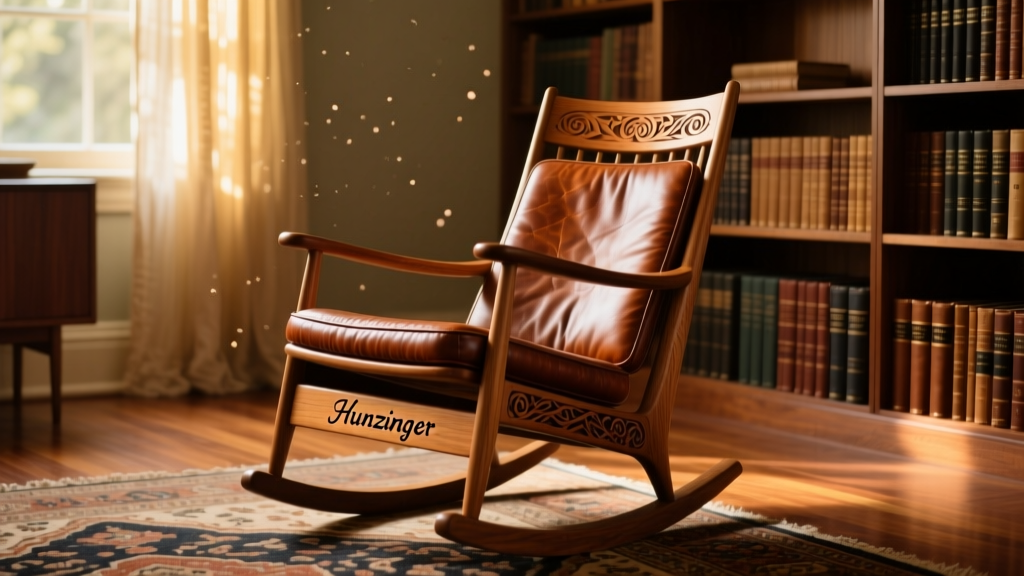
The Hunzinger Lollipop Oak Rocker: A Masterpiece of 19th-Century American Design and Craftsmanship
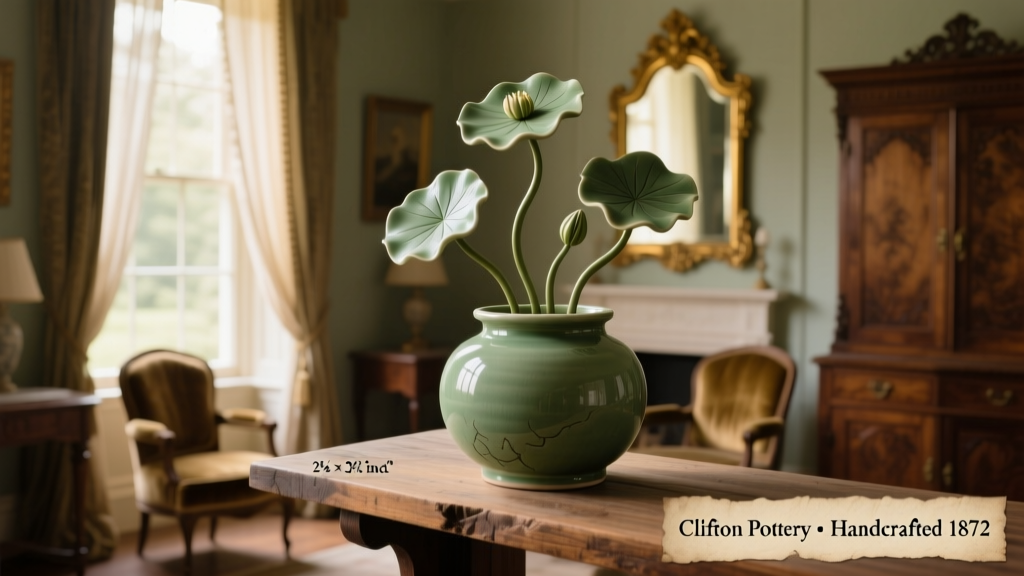
Clifton Pottery Vessel: Stylized Lily Pad Motif with Matte Green Glaze (2½ × 3½ Inches)

The Iron Silent Butler Turtle: Press-Down Head Mechanism and Bradley Hubbard’s Artistry in American Victorian Hardware