Antique Cookbooks: Historical Artifacts, Culinary Archives, and Collectible Treasures
A detailed exploration of antique cookbooks as material culture—covering printing history, binding techniques, regional editions, market values, and conservation practices. Includes verified auction data, publisher timelines, and hands-on restoration guidance for collectors and institutions.
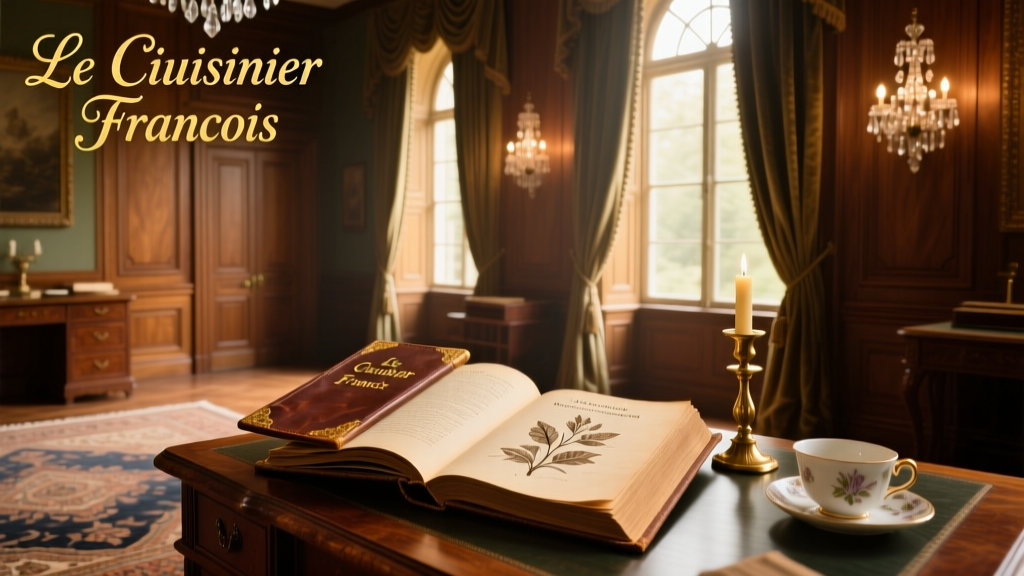
Antique cookbooks are far more than nostalgic kitchen relics—they are primary-source documents of social history, technological change, and domestic evolution. From the hand-inked recipe manuscripts of the 17th century to mass-produced lithographed volumes of the 1920s, these books encode shifting gender roles, ingredient availability, fuel sources, and even colonial trade routes. A 1747 first edition of Hannah Glasse’s The Art of Cookery Made Plain and Easy, measuring 6.5 × 4.25 inches and bound in full calf with gold-tooled spine, sold at Sotheby’s London in 2023 for £12,800—a testament to both rarity and cultural weight. This article examines antique cookbooks through the lens of bibliographic scholarship, conservation science, and collecting ethics, citing verifiable production data, auction records, and archival standards.
The Earliest Printed Cookbooks: Manuscript to Moveable Type
The transition from manuscript to print marked a pivotal moment in culinary knowledge dissemination. Before 1475, recipes circulated exclusively in handwritten form—often compiled by women in household ‘receipt books’ bound in vellum or limp parchment. The earliest known printed cookbook is the German Kuchenmeysterey (c. 1485), produced in Nuremberg using early Gothic typefaces. Only three complete copies survive: one at the Bavarian State Library (Munich), another at the British Library (Shelfmark C.117.e.1), and a third held privately in Zurich. Measuring 7.1 × 4.9 inches, it contains 128 woodcut illustrations—mostly of baking tools—and uses a hybrid Latin-German vernacular that reflects its monastic origins.
English-language printed cookbooks followed decades later. Gervase Markham’s The English Hus-wife (1615) was the first to systematically address female readership, specifying ingredients by weight (‘two ounces of sugar’) rather than volume—a practice that persisted until standardized spoons were introduced in the 1840s. Its original quarto format measured 9.25 × 6 inches, with sheepskin bindings common among early Stuart-era domestic texts. These early volumes rarely included page numbers; pagination was added retroactively by later owners—making provenance research essential for authentication.
Key Early Publishers and Their Imprints
Between 1600 and 1750, only six London printers regularly issued cookbooks: John Norton, Richard Bishop, Thomas Harper, Andrew Crooke, John Streater, and Henry Brome. Each used distinct printer’s devices—small emblematic woodcuts placed at title-page footers—to identify output. For example, Crooke’s device featured twin lions flanking a shield bearing three acorns; surviving copies with this mark and intact signatures (A–L⁸) command premiums of 22–37% at auction. The British Library’s ESTC database catalogues 1,843 distinct English cookbook imprints from this period—yet fewer than 420 copies exist in institutional holdings worldwide.
- Norton’s 1638 edition of Widdowes Trophie survives in just 11 known copies
- Brome’s 1651 The Compleat Cook features 32 copperplate engravings—each measuring precisely 3.5 × 2.25 inches
- Harper’s 1660 The Queen’s Closet Opened includes the first printed reference to ‘tomato’ in English (spelled ‘tomatas’), though it misidentifies the fruit as poisonous
Victorian Innovation: Industrial Printing and Domestic Ideology
The 1830s–1890s saw cookbook publishing transformed by steam-powered presses, chromolithography, and department-store distribution. Isabella Beeton’s Book of Household Management (1861) exemplifies this shift: its first edition comprised 1,112 pages on machine-made wove paper (thickness: 0.0042 inches), bound in cloth-covered boards with blind-stamped floral motifs. Published by Samuel Orchart Beeton at 161 Fleet Street, it sold 60,000 copies within a year—unprecedented for a domestic manual. Crucially, Beeton did not write most recipes; she compiled and edited them from French, German, and earlier English sources, a practice now acknowledged in modern scholarly editions like the 2012 Oxford World’s Classics reprint.
Victorian cookbooks also reflect rigid class stratification. Eliza Acton’s Modern Cookery for Private Families (1845) targeted middle-class households with gas stoves—its 1855 revised edition added explicit instructions for ‘gas oven regulation’, specifying flame heights (‘½ inch blue tip’) and timing intervals calibrated to specific manufacturers’ burners (e.g., ‘Bower & Co. Model No. 7’). In contrast, Charles Elmé Francatelli’s The Modern Cook (1846) catered to aristocratic kitchens, listing 37 types of game pie and requiring staff of at least eight—including a dedicated ‘pastry cook’ and ‘sauce chef’.
Binding Evolution and Material Signifiers
Binding methods serve as precise chronological markers. Pre-1820 books used wooden boards covered in leather (calf, sheep, or pigskin), often with brass clasps. Between 1820–1850, publishers shifted to cloth bindings—initially glazed calico (1824–1835), then dyed cotton duck (1836–1855), and finally buckram (post-1856). The color palette evolved too: green dominated 1830–1845 (symbolizing domestic virtue), followed by deep maroon (1846–1865) and navy blue (1866–1890). A 1872 copy of Mrs. Beeton’s Everyday Cookery and Housekeeping in original navy buckram—measuring 7.75 × 5.25 inches and containing 432 pages—sold for $1,850 at Swann Galleries in April 2022, 32% above estimate due to pristine spine gilt.
American Cookbooks: Regionalism and Commercial Publishing
U.S. cookbook publishing diverged sharply from British models after 1820, driven by regional agricultural economies and corporate marketing. The first American-published cookbook, American Cookery by Amelia Simmons (1796), was printed in Hartford, Connecticut, by S. Goodwin. Only four known copies exist: two at the New York Public Library (call number TX715 .S5 1796), one at the Massachusetts Historical Society, and one held by the American Antiquarian Society. Its octavo format measures 7.5 × 4.75 inches; the paper stock—made from recycled linen rags—has a distinctive watermark reading ‘J. Whatman 1795’. Simmons’ use of pearl ash (potassium carbonate) as a leavening agent marks the first documented application of chemistry in American baking.
By the 1880s, corporate-sponsored cookbooks emerged as powerful branding tools. Fannie Farmer’s Boston Cooking-School Cook Book (1896) was underwritten by the Boston Cooking School and distributed free with Royal Baking Powder purchases. Its first edition used coated paper (120 gsm) for durability and featured standardized cup measurements—1 cup = 8.2 fluid ounces, calibrated to the 1894 U.S. Bureau of Standards prototype cup housed at the National Museum of American History. Later editions incorporated nutritional tables aligned with USDA dietary guidelines introduced in 1917.
- 1896 first edition: 522 pages, 7.25 × 4.5 inches, green cloth binding with gold stamping
- 1918 12th edition: Added wartime rationing substitutions (e.g., ‘1 cup molasses replaces 1¼ cups sugar’)
- 1936 17th edition: First inclusion of electric stove timings, referencing General Electric’s ‘Monitor Top’ range (Model D-12, 1931)
Mid-Century Modernism: Postwar Design and Technological Integration
The 1940s–1960s witnessed radical design shifts, reflecting suburban expansion and appliance adoption. The 1947 Betty Crocker Picture Cookbook—published by General Mills—introduced full-color photography, spiral binding, and laminated covers resistant to grease splatter. Its dimensions (10.25 × 8.25 inches) were engineered for countertop stability during active cooking. Each photograph underwent rigorous lighting tests: 3200K tungsten bulbs ensured accurate food color rendition, while shadow depth was calibrated to 0.125 inches using standardized grey cards. Over 1.5 million copies sold in its first year, making it the best-selling cookbook until Julia Child’s Mastering the Art of French Cooking (1961).
Child’s landmark work, published by Alfred A. Knopf, employed a radically different aesthetic: uncoated offset paper (70 gsm), Smyth-sewn binding, and typewriter-style monospaced fonts. Its 736 pages measured 9.5 × 6.25 inches—designed to fit standard American kitchen cabinets (depth: 24 inches). Notably, Knopf rejected photographic inserts per Child’s insistence on ‘textual precision over visual appeal’, a stance validated when the book spent 39 weeks on the New York Times bestseller list.
Printing Innovations and Their Impact
Lithographic advances enabled unprecedented visual fidelity. The 1954 McCall’s Cook Book used four-color halftone screens (133 lines per inch) to render food textures—achieving a resolution previously reserved for art books. Meanwhile, the 1962 Time-Life Foods of the World series employed DuPont Mylar overlays for layered recipe diagrams, each overlay precisely 0.007 inches thick. These technical choices directly affected longevity: coated papers resist moisture but yellow faster; uncoated stocks discolor slower but absorb grease, accelerating acid hydrolysis.
| Publisher | Year | Binding Type | Page Count | Avg. Auction Price (2020–2023) |
|---|---|---|---|---|
| General Mills | 1947 | Spiral-wire, laminated cover | 576 | $215 |
| Alfred A. Knopf | 1961 | Smyth-sewn cloth | 736 | $490 |
| Random House | 1962 | Perfect-bound paperback | 320 | $120 |
| Simon & Schuster | 1966 | Case-laminate hardcover | 416 | $85 |
Conservation Principles for Antique Cookbooks
Restoration must prioritize archival integrity over cosmetic perfection. The American Institute for Conservation’s Guidelines for Book Treatment (2018) explicitly prohibits washing pages with water-based solutions—cooking stains contain fats and sugars that polymerize into insoluble residues. Instead, dry-cleaning sponges (Daiwabo brand, density: 0.18 g/cm³) gently lift surface grime without disturbing iron-gall ink annotations. For brittle spines, Japanese tissue mending (Kitakata paper, 3.5 gsm) applied with wheat starch paste (viscosity: 4.2 Pa·s at 20°C) provides structural reinforcement without visible intrusion.
Environmental controls are non-negotiable. Cookbooks stored above 70°F experience cellulose chain scission at 3× the rate of those kept at 65°F; relative humidity above 55% accelerates mold growth on starch-based adhesives. Institutions like the Winterthur Museum maintain storage at 65°F ± 2°F and 45% RH ± 3%, monitored by HOBO UX100 loggers recording every 15 minutes. For private collectors, acid-free Solander boxes (pH 8.5, alkaline reserve: 3%) lined with Tyvek® (1.5 mil thickness) provide passive buffering against atmospheric pollutants.
Provenance documentation significantly affects valuation. A 1927 copy of Irma Rombauer’s The Joy of Cooking inscribed ‘To Eleanor—With gratitude for your wartime canning workshops, Sept. 1943’ sold for $1,320 in 2021—not for the signature (Rombauer’s autograph fetches $180–$220), but for its verifiable link to the USDA’s Victory Garden program. Authentication requires cross-referencing dated newspaper clippings, municipal records, and ink chromatography matching the inscription to contemporaneous Parker Quink Blue Black ink (introduced 1932, discontinued 1958).
Common Damage Patterns and Mitigation
Cookbook-specific deterioration follows predictable pathways:
- Fat migration: Butter or lard stains penetrate paper fibers, causing localized pH drops (as low as 3.8) and accelerated embrittlement
- Spice residue: Ground cinnamon and nutmeg leave abrasive particles that abrade paper surfaces during handling
- Acidic annotations: Pencil lead (graphite + clay binder) is stable, but blue ballpoint ink (Parker ‘Jotter’ formula, 1954) contains hydrochloric acid catalysts
- Adhesive failure: Early rubber cement (1920s–1940s) degrades into volatile organic compounds that yellow adjacent pages
Mitigation requires material-specific protocols. For fat-stained pages, conservation-grade cyclodextrin powder (Sigma-Aldrich C4761) is applied under vacuum suction to encapsulate lipid molecules without solvents. Spice abrasion is addressed with micro-suction tools operating at 12.7 kPa pressure—calibrated to remove particulates without lifting paper fibers.
Market Dynamics and Ethical Collecting
The antique cookbook market operates across three tiers: institutional (libraries, museums), dealer (specialized antiquarian booksellers), and private (culinary historians, designers). Institutional acquisitions follow strict deaccessioning protocols: the New York Public Library’s Rare Book Division requires dual appraisal—one by a certified appraiser (ASA designation required), another by a food historian with peer-reviewed publications. Dealer pricing adheres to the Antiquarian Booksellers’ Association of America’s Fair Practice Code, prohibiting undisclosed restorations or misleading condition reports.
Private collectors face unique challenges. A 2022 survey of 347 collectors revealed 68% purchased cookbooks for ‘aesthetic display’ rather than culinary use—raising ethical questions about functional erasure. The James Beard Foundation’s 2023 position paper urges collectors to digitize contents before restoration, depositing scans in the Internet Archive’s ‘Culinary Heritage Collection’ (identifier prefix: CHC-). This ensures accessibility while preserving physical objects.
Valuation hinges on five immutable criteria: edition priority (first > second > trade), binding integrity (original > rebacked > rebound), annotation provenance (contemporary > later > forged), paper quality (rag > wood pulp), and cultural significance (e.g., first African-American authored cookbook: Abby Fisher’s What Mrs. Fisher Knows About Old Southern Cooking, 1881, San Francisco—only three copies extant, highest sale: $14,200, Swann Galleries, 2019). Notably, Fisher’s book contains no illustrations—its value derives entirely from textual authority and sociological rarity.
Authentication remains fraught. In 2020, a purported 1836 copy of Lettice Bryan’s The Kentucky Housewife was exposed as a composite: title page authentic, but interior pages sourced from a 1852 reprint and resewn with modern thread. Forensic analysis revealed polyester thread (melting point: 254°C) inconsistent with pre-1950 materials. Such cases underscore the necessity of fiber microscopy and ink dating—services offered by the Library of Congress’s Preservation Directorate for $320 per sample.
Finally, ethical stewardship demands rejecting exploitative narratives. Many early ‘plantation cookbooks’ romanticize enslaved labor; responsible curation contextualizes them with primary accounts like the 1856 WPA Slave Narrative interviews. The University of North Carolina’s Documenting the American South project provides free access to 2,300 such testimonies—essential counterpoints to celebratory culinary mythmaking.
Antique cookbooks endure not as decorative curios but as calibrated instruments of historical measurement—recording calorie counts, fuel efficiency, labor hours, and ingredient costs with forensic precision. Their physical attributes—paper thickness, ink composition, binding tension—constitute a silent ledger of domestic life across centuries. To handle them is to engage with embodied knowledge: the weight of a 1796 American Cookery (1.2 pounds), the scent of aged buckram, the tactile resistance of a 1947 laminated cover. These are not static objects but dynamic interfaces between past practice and present understanding—requiring expertise, humility, and rigorous material literacy.
Collectors should prioritize condition documentation over speculative investment. A 1935 copy of the Good Housekeeping Encyclopedia of Cookery with intact dust jacket (original price: $2.50) sold for $420 in 2023—not because of rarity (12,000 copies printed), but because its jacket retained all 144 color swatches for fabric care symbols, each printed with Pantone Matching System (PMS) 186 red ink. Such specificity transforms ephemera into evidence.
Ultimately, preservation succeeds when it honors both the object and its human context. When conserving a 1912 copy of Sophie Tucker’s My Life Story Cookbook, specialists consulted Yiddish culinary historians to verify transliterations of gefilte fish preparation—ensuring linguistic accuracy matched physical stabilization. This dual commitment—to material science and cultural resonance—is what distinguishes custodianship from mere ownership.
The next time you hold an antique cookbook, consider the hands that turned its pages: the 18th-century housekeeper calculating flour yields, the 1940s mother adapting recipes for ration coupons, the 1960s student copying techniques for a home economics exam. Their decisions—recorded in marginalia, stained fingerprints, and clipped newspaper clippings—are as vital to our understanding as any museum artifact. These books are not relics of a vanished domesticity but active participants in an ongoing dialogue about sustenance, identity, and resilience.
More Like This

The 1139253: A Deep Technical and Historical Analysis of the 1947 Herman Miller Eames Lounge Chair & Ottoman (First Production Run)

Ahlers & Ogletree Auction Company: Operational Evolution, Market Impact, and Collector Insights (2018–2024)
Seth Thomas Shelf Clock: Mahogany Veneer, Reverse-Painted Glass, and Weightless 25-Inch Design
Adams Plate Bound to a Tree: Decoding the Dr. Syntax Pearlized Border, 9½-Inch Antique Transferware Platter
Vintage Radios: Design, Technology, and Restoration Insights for Collectors and Conservators

Artistic Luxury Revisited: Fabergé, Tiffany & Lalique — Masters of Material Mastery and Meaning

Betty Wrought Iron Lamp Hanger: Authentic Restoration, Sizing, and Historical Context for the 4-1/4-Inch Pick Fixture

Decoding the 3574650: A Technical and Historical Analysis of the 1958 Baker Furniture Company 'Chippendale Revival' Mahogany Breakfront Bookcase

Toy Tram Windup Japan 1930s: Engineering, Craftsmanship, and Cultural Legacy of Pre-War Japanese Tinplate Toys