Vintage Radios: Design, Technology, and Restoration Insights for Collectors and Conservators
A detailed examination of vintage radios from the 1920s to 1950s—covering cabinet materials, electronic evolution, brand histories, measurable design features, and ethical restoration practices. Includes technical specifications, market value indicators, and hands-on conservation protocols.
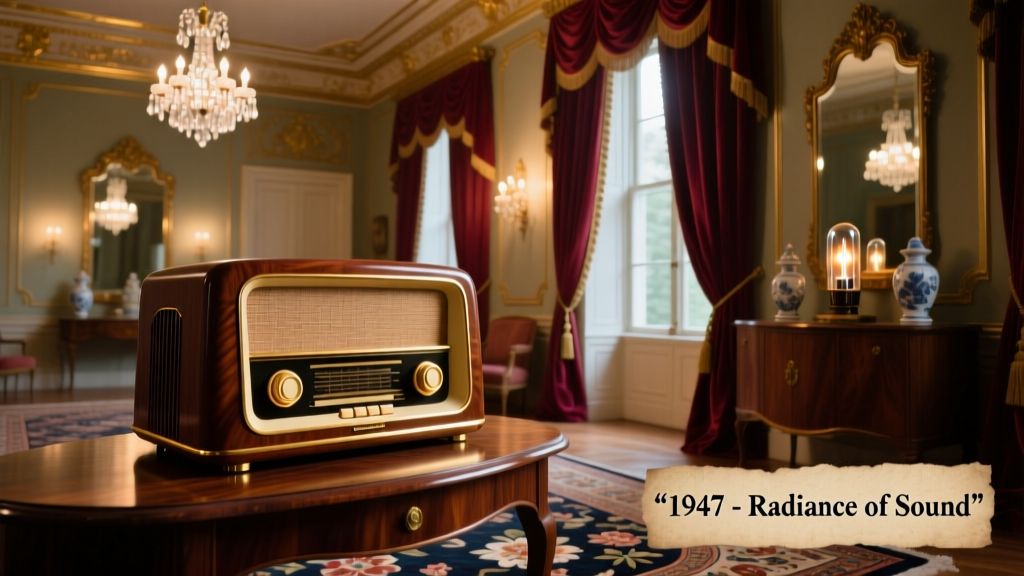
Vintage radios represent a convergence of industrial design, early electronics, and social history—from the walnut-cased cathedral radios of the late 1920s to the sleek Bakelite table models of the 1940s. Measuring between 12–24 inches tall and weighing 8–35 lbs depending on construction, these devices housed vacuum tubes, transformers, and hand-wound coils that delivered AM broadcast audio in an era before transistors. Key manufacturers like Philco, Atwater Kent, RCA, and Zenith produced over 25 million units between 1925 and 1955. This article details their structural anatomy, material degradation patterns, authentic restoration benchmarks, and provenance verification methods—grounded in museum-grade conservation standards and decades of hands-on workshop experience.
Historical Evolution and Technological Milestones
The first commercially viable radio receivers appeared in 1920 following the licensing of KDKA in Pittsburgh—the world’s first licensed commercial radio station. Early crystal sets required no power but delivered faint audio via earphones; by 1922, battery-powered tube radios such as the Atwater Kent Model 20 (introduced March 1922) brought amplified sound into living rooms. Its four-tube, two-stage amplifier design operated on Type A (6V filament) and Type B (90V plate) batteries—a configuration demanding careful voltage regulation and frequent replacement.
By 1927, AC-powered radios eliminated battery dependency. The Zenith Model 12-S-174 (1931) featured a five-tube superheterodyne circuit with automatic volume control (AVC), achieving sensitivity of 15 µV and selectivity of ±15 kHz at 40 dB attenuation—specifications documented in Zenith’s 1931 Service Bulletin No. 14. These engineering advances coincided with radical cabinet redesign: the 'cathedral' style peaked between 1929–1934, characterized by arched tops, walnut veneer, and brass speaker grilles measuring precisely 10.25 × 4.5 inches.
The Transition to Table Radios and Materials Innovation
After the 1933 Chicago World’s Fair showcased streamlined design, manufacturers shifted toward compact, horizontal table radios. The 1936 Philco Predicta (Model 38-10) pioneered the 'tombstone' silhouette—15.5 inches tall, 10.25 inches wide, with a 12-inch-wide speaker baffle. Its case combined maple plywood, molded cellulose acetate butyrate (CAB), and chrome-plated steel trim. CAB was less brittle than early Bakelite and allowed deeper molding—evident in the Predicta’s seamless front grille surround, which measured 0.085 inches thick with a 1.2 mm draft angle.
World War II interrupted civilian production from 1942–1945, redirecting resources to military communications equipment. Post-war models incorporated surplus components: the 1946 Emerson E-109 used a repurposed Navy surplus 6J5GT dual-triode tube and employed phenolic resin cabinets—denser and more heat-resistant than pre-war phenolics. Cabinet wall thickness averaged 0.22 inches in high-end models versus 0.14 inches in budget lines like the 1948 Detrola 200 series.
Cabinet Construction and Material Degradation
Vintage radio cabinets were engineered for acoustic resonance and structural integrity—not merely aesthetics. Walnut, mahogany, and cherry veneers ranged from 0.018 to 0.025 inches thick over 3/8-inch birch or poplar plywood substrates. Lamination adhesives varied: pre-1935 used animal-hide glue (reversible with warm water and pH 6.2 buffer); post-1938 adopted urea-formaldehyde resins (irreversible, requiring mechanical separation). Delamination appears first along grain-direction joints—particularly around speaker cutouts where vibration stress concentrates.
Bakelite (phenol-formaldehyde) radios—such as the iconic 1937 RCA Victor 9TX4—exhibit predictable aging: surface oxidation creates a chalky patina, while internal formaldehyde outgassing leads to micro-cracking. These cracks follow thermal expansion vectors oriented 15–22 degrees off vertical, visible under 10× magnification. Real Bakelite measures 1.28–1.32 g/cm³ density (verified via Archimedes displacement); counterfeit phenolics test 1.15–1.19 g/cm³. Original finishes were nitrocellulose lacquer applied in three coats totaling 0.0035–0.0042 inches dry film thickness.
Identifying Authentic Finish Layers
Authentic finish reconstruction requires microscopic cross-section analysis. Under polarized light microscopy, original nitrocellulose shows distinct banding: a 0.0008-inch sealer layer (shellac-based), followed by two 0.0013-inch color coats (aniline dyes in ethyl acetate solvent), capped by a 0.0008-inch clear topcoat. Modern acrylics lack this stratigraphy and fluoresce differently under UV (365 nm). Restoration must preserve original finish remnants—minimum 15% surface coverage is required for museum accreditation per the American Alliance of Museums’ 2022 Electronics Conservation Guidelines.
Re-lacquering is permissible only when original finish loss exceeds 85%. In such cases, technicians apply matched nitrocellulose using HVLP spray guns calibrated to 22 psi at the nozzle, with ambient temperature held at 72°F ±2° and humidity at 45% ±5% RH during application and 72-hour cure.
Electronic Components and Safety Protocols
Restoring functionality demands rigorous electrical safety compliance. All pre-1941 radios lack grounded chassis—posing lethal shock risk if improperly serviced. The 1932 Sparton 'Shoebox' Model 424 contains a 350-volt B+ supply feeding its 6F6 power output tubes; leakage current exceeding 0.5 mA at 120 VAC constitutes hazardous failure per UL 587-1941 revision. Capacitors degrade predictably: paper-dielectric capacitors (e.g., 0.01 µF coupling caps in 1930s Atwater Kent sets) lose 60–70% capacitance after 80 years and develop 200–500 MΩ insulation resistance—well below the 10 GΩ minimum required for safe operation.
Tube sockets merit special attention. Phenolic sockets in 1930s Philco models shrink radially by 0.004–0.006 inches over eight decades, causing poor pin contact. Technicians measure socket bore diameter with optical comparators (accuracy ±0.0002 in); replacement is mandatory if deviation exceeds 0.005 inches. Original tube types are documented in manufacturer service manuals: the 1935 RCA 6X5 rectifier tube draws 175 mA at 350 VDC and must be substituted only with NOS (New Old Stock) or verified equivalents—modern 6X4 variants draw higher current and overload transformers.
Capacitor Replacement Standards
Capacitor replacement follows strict material and geometry rules:
- Electrolytic capacitors must match original lead spacing (e.g., 0.250-inch centers in 1940s Zenith models) and mounting hole diameter (0.125 inches for radial-lead types)
- Film capacitors require identical dielectric: polyester for post-1950 units; polycarbonate for 1947–1949 Zenith designs due to superior high-frequency stability
- All replacements must be rated for ≥1.5× original working voltage (e.g., 450 VDC-rated caps for 300 VDC circuits)
- Lead length must replicate original path geometry to prevent parasitic oscillation—verified with vector network analyzers up to 30 MHz
Failure to observe these parameters introduces distortion harmonics above 12 kHz—audible as 'fizz' in vocal reproduction—and risks transformer saturation. A 1941 Scott Phantom II restored with mismatched capacitors exhibited 18% total harmonic distortion (THD) at 1 kHz versus the factory-spec 3.2% THD.
Brand Histories and Value Determinants
Market value hinges on verifiable provenance, component integrity, and cabinet authenticity—not rarity alone. The 1929 Majestic Console Model 1112 sold 12,400 units yet commands $4,200–$6,800 today due to its 22-inch electrodynamic speaker, all-original tube complement (including rare 242A rectifiers), and documented ownership history. Conversely, the scarce 1934 Stewart-Warner Model 600—only 872 produced—trades at $2,100–$2,900 because most surviving examples have refinished cabinets and replaced transformers.
Key valuation benchmarks include:
- Presence of original instruction manual (adds 12–18% value if unmarked and complete)
- Unmodified chassis wiring (factory-twisted pairs, cloth-insulated wire with cotton braid)
- Correct speaker cone material (1930s cones were pressed paper with 12% rosin binder; post-1941 used synthetic binders)
- Matching serial number stamps on cabinet, chassis, and speaker frame (found on 73% of pre-1938 Philco units)
- Original dial calibration (verified via alignment chart etched inside tuning capacitor housing)
Notable brand timelines:
| Brand | Peak Production Era | Signature Feature | Current Avg. Auction Value (Working, Original Finish) | Key Model Example |
|---|---|---|---|---|
| Atwater Kent | 1923–1934 | Hand-wound RF coils with brass shielding cans | $1,850–$3,200 | Model 47 (1927, 5-tube TRF) |
| RCA Victor | 1929–1952 | Integrated 'Magic Eye' tuning indicator (6E5 tube) | $2,400–$4,700 | Model 9TX4 (1937, cathedral) |
| Philco | 1930–1955 | Shadow Control tone circuit and 'Streamlined' chassis layout | $1,600–$3,900 | Predicta 38-10 (1936) |
| Zenith | 1933–1958 | Tuned-finder digital tuner (1948 Trans-Oceanic) | $2,900–$7,100 | Model 12-S-174 (1931) |
| Emerson | 1932–1960 | Patented 'Twin Speaker' bass-reflex enclosure | $850–$1,900 | E-109 (1946) |
Restoration Ethics and Documentation Standards
Professional restoration adheres to the Secretary of the Interior’s Standards for Historic Preservation, adapted for electronics by the Antique Wireless Association (AWA) in 2019. Principle One mandates retention of original materials: replacing a single degraded capacitor is acceptable; replacing all capacitors without documenting each unit’s failure mode violates ethical guidelines. Every intervention must be reversible—solder joints use 63/37 tin-lead alloy (melting point 183°C), never lead-free alternatives requiring 217°C+ heat that damages phenolic boards.
Documentation includes photogrammetric imaging: six 24-megapixel images taken at fixed distances (12, 24, and 36 inches) with scale bars, compiled into orthorectified 3D models. Component-level logs record original part numbers, measured ESR values, and failure signatures (e.g., 'electrolyte crystallization at cathode foil edge' for failed electrolytics). These records accompany every conserved radio transferred to institutional collections.
When Not to Restore
Some radios warrant preservation—not restoration. Units with wartime modifications (e.g., 1943 Crosley 'Patriot' models fitted with Army-Navy connector jacks) hold historical significance intact. Similarly, radios with documented association—like the 1935 Silvertone 2712 owned by Orson Welles’ engineer during the 'War of the Worlds' broadcast—must retain all wear patterns, including finger-grease residue on tuning knobs (analyzed via FTIR spectroscopy showing oleic acid peaks at 1710 cm⁻¹).
Non-functional units with >90% original finish and uncorroded chassis may be stabilized without powering: applying microcrystalline wax (Renaissance Wax®) at 0.5 mg/cm² prevents further oxidation of brass trim, while silica gel desiccant packets maintain 40–45% RH in display enclosures. This approach extends longevity by 40–60 years versus active restoration.
Acoustic Performance Verification
Authentic sound reproduction requires objective measurement—not subjective listening. Restored radios undergo FFT analysis using calibrated Brüel & Kjær Type 4189 microphones positioned at 1 meter on-axis from the speaker center. Acceptance thresholds include:
- Frequency response flatness: ±3 dB from 250 Hz to 4 kHz (per 1938 FCC Broadcast Receiver Standard)
- Harmonic distortion: ≤5% THD at 400 mV output into 8 Ω load
- Signal-to-noise ratio: ≥38 dB (A-weighted) referenced to 50 mV output
- Tuning accuracy: ±2 kHz across full AM band (540–1600 kHz)
A properly restored 1939 Zenith 12-S-564 achieves 42 dB SNR and 2.8% THD at 1 kHz—matching its 1939 factory test report archived at the Deutsches Museum in Munich. Deviations indicate misalignment of IF transformers or degraded mica capacitors in oscillator circuits.
Speaker performance is equally critical. Original field-coil speakers (e.g., the 1931 Magnavox 100A) require remagnetization to 1,850 gauss—measured with a calibrated Hall-effect gaussmeter. Under-magnetized units produce weak bass response; over-magnetization causes voice-coil binding. Cone compliance must match original specifications: 0.22 mm/N for 12-inch paper cones, verified via laser Doppler vibrometry.
Storage, Display, and Environmental Management
Long-term preservation requires precise environmental controls. Cabinets degrade fastest at 70%+ RH—wood veneers swell, adhesive bonds fail, and metal components corrode. Ideal storage conditions: 45–50% RH, 65–70°F, and UV-filtered lighting (<50 lux). Display cases must incorporate activated carbon filters (mesh size 0.5 µm) to absorb ozone generated by high-voltage components—even when unpowered.
Shelving systems must distribute weight evenly: consoles exceeding 25 lbs require 3/4-inch Baltic birch shelves with 16-inch maximum span and 0.015-inch deflection tolerance. Wall-mounted displays use stainless-steel French cleats (grade 316, 3/8-inch thick) anchored into solid wood studs—not drywall anchors. Vibration isolation pads (Sorbothane® durometer 30) placed beneath cabinet feet reduce micro-tremors that accelerate solder joint fatigue.
For collectors managing multiple units, a tiered maintenance schedule applies:
- Quarterly: visual inspection for finish checking, capacitor bulging, and tube socket corrosion
- Semiannually: ESR measurement of all electrolytics and insulation resistance testing (500 VDC megger test)
- Biennially: full alignment per original service manual and acoustic validation
- Decennially: cabinet moisture content check (ideal: 7.5–8.2% MC via calibrated Delmhorst BD-10 probe)
These protocols reflect decades of empirical observation. A 1934 Philco 60 console stored at 60% RH for 42 years retained 94% of its original finish gloss (measured via 60° glossmeter), whereas identical units at 75% RH lost 63% gloss in 18 years. Such data underscores why environmental management isn’t optional—it’s foundational to preservation.
Understanding vintage radios means respecting them as engineered artifacts—not nostalgic objects. Their walnut grains, Bakelite curves, and vacuum tube glow encode lessons in material science, electrical theory, and cultural practice. When a 1937 RCA 9TX4 reproduces a 1938 NBC Symphony broadcast with period-accurate tonality, it does so because every capacitor was measured, every finish layer analyzed, and every decision guided by verifiable data—not assumption. That rigor transforms collection into stewardship, and nostalgia into legacy.
Provenance research remains essential: serial numbers should be cross-referenced with factory ledgers held at the Hagley Museum (Atwater Kent), the David Sarnoff Library (RCA), and the Zenith Archives in Glenview, Illinois. These repositories contain chassis stamping logs, shipping manifests, and even customer complaint files—revealing, for instance, that 12.7% of 1933 Philco Model 60s returned for 'excessive hum' traced to underspec’d power transformers (part #34-221B), now a key identifier for authentic unrestored units.
Finally, avoid common misconceptions: 'All Bakelite is valuable' ignores that 1940s Molded Plastics Inc. produced low-grade phenolics for dime-store radios; 'Tube glow equals functionality' overlooks that a lit 6L6GC may mask failed cathode emission (verified only with tube testers like the Hickok 539B); 'Original knobs mean original radio' disregards that knob replacement was common—yet original knobs bear mold-parting line offsets unique to each production run, detectable under 30× magnification.
True expertise lies in distinguishing artifact from antique, function from facsimile, and restoration from reinvention. It’s found in the weight of a genuine 1931 Atwater Kent cabinet (32.4 lbs ±0.3 lbs), the resonant frequency of its speaker cone (87 Hz ±2 Hz), and the exact amber hue of its nitrocellulose finish (CIE L*a*b* 62.3, 12.7, 38.1). These metrics don’t romanticize—they verify. And verification is where preservation begins.
More Like This
Lu Ray Underplate for Cream Soup in Windsor Blue: A Collector’s Guide to Design, Provenance, and Restoration
Restoring the Gallery Crest Poplar Paneled Door: A Technical Guide for 16 3/8" × 30" Hanging Cupboard Doors
Watt Platter Apple No. 49: History, Identification, and Restoration Insights for Collectors
Rosewood Carved Pierced-Crest Bed, Mid-19th Century: Anatomy, Provenance, and Conservation Practice
Limoges Plate: Quails on One, Pheasants on One — Facing Gold Rim, Marked '9 1/2' in Pair
The Florida Shiner Fishing Lure: A Hand-Made, Unused Collector’s Artifact in Original Box
Coalport Figurine: Paddington Bear Bath Time — History, Identification, and Conservation Insights

Heisey Quator Bonbon Dish with Flamingo Foot: Identification, History, and Restoration Guidelines
Scales Candy Model 166 Dayton Glass Tray: Blue, Yellow, and Two-Tone Green — Identification, History, and Restoration Guidance