Artistic Luxury Revisited: Fabergé, Tiffany & Lalique — Masters of Material Mastery and Meaning
A detailed exploration of three iconic luxury houses—Fabergé (St. Petersburg, 1842–1918), Tiffany & Co. (New York, 1837–present), and René Lalique (Paris, 1860–1945)—examining their distinct philosophies, technical innovations, signature materials, and enduring influence on decorative arts, jewelry, and interior design.
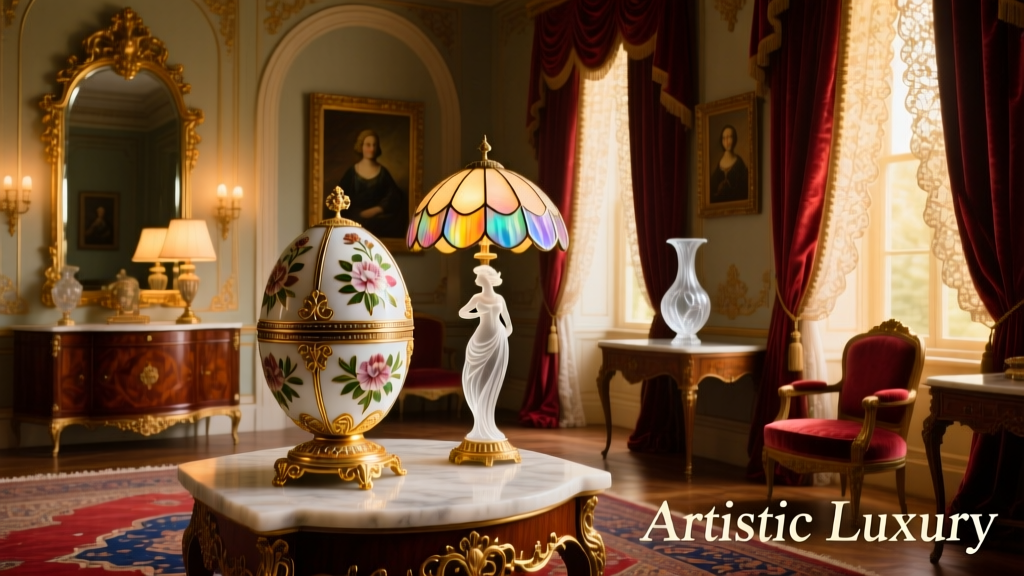
Three Pillars of Artistic Luxury
The late 19th and early 20th centuries witnessed an unprecedented convergence of craftsmanship, industrial precision, and artistic vision—giving rise to three defining luxury houses whose legacies remain benchmarks for excellence: Fabergé of St. Petersburg, Tiffany & Co. of New York, and René Lalique of Paris. Each operated at the apex of their respective national traditions—Russian imperial patronage, American Gilded Age entrepreneurship, and French Art Nouveau modernism—yet shared a relentless pursuit of material mastery, narrative sophistication, and technical audacity. This article examines how Peter Carl Fabergé’s enamel micro-mosaics, Louis Comfort Tiffany’s patented Favrile glass, and René Lalique’s lost-wax cast glass sculptures established new grammars of luxury—one rooted not in mere opulence, but in intellectual rigor, artisanal integrity, and poetic resonance.
Fabergé: The Imperial Alchemy of Enamel and Gold
Founded in 1842 by Gustav Fabergé, the House of Fabergé reached its zenith under his son Peter Carl (1846–1920), who was appointed Goldsmith to the Russian Imperial Court in 1885. Unlike contemporaries who emphasized gemstone weight or carat dominance, Fabergé elevated the *craft* of goldsmithing itself—treating gold not as a passive setting but as a sculptural medium. His workshop employed over 500 artisans across 20 specialized ateliers in St. Petersburg, including enamelers trained in the guilloché technique, miniature painters, and stone cutters capable of working with cabochon sapphires measuring precisely 4.2 mm in diameter for imperial Easter eggs.
The Imperial Easter Eggs: Engineering Narrative in Miniature
The 50 Imperial Easter Eggs commissioned between 1885 and 1917 represent Fabergé’s most concentrated synthesis of art, engineering, and intimacy. Each egg averaged 7.5 cm in height and weighed between 250 g and 1,200 g; the 1913 Winter Egg, for instance, contains 1,239 individual platinum-set diamonds totaling 112.5 carats and features a fully functional mechanical clockwork mechanism concealed within its base. Critically, no two eggs share identical construction logic—the 1914 Mosaic Egg uses 1,022 rose-cut diamonds arranged in floral patterns over a platinum frame, while the 1916 Order of St. George Egg integrates a functioning miniature artillery piece with moving treads, scaled at 1:12.
Materials and Methodologies
Fabergé’s enamel work relied on a proprietary six-step firing process developed in collaboration with chemist Gustav Klauber. His translucent enamel—applied over engine-turned guilloché metal—required temperatures between 780°C and 820°C, calibrated to within ±5°C to prevent cracking or clouding. The firm sourced Siberian nephrite jade exclusively from the Iset River deposits, where stones were selected for uniform grain density (measured at 2.95–3.05 g/cm³) and cut into slabs no thicker than 1.8 mm for use in cigarette cases and desk sets. Fabergé’s hallmark—a double-headed eagle above the initials "KF"—was stamped using a 3.2-ton hydraulic press to ensure depth consistency of 0.17 mm.
Fabergé’s non-imperial output—including the 1908 Pelican Fabergé Egg (now in the Virginia Museum of Fine Arts) and the 1911 Clover Leaf Egg—demonstrates deliberate democratization: these pieces used silver-gilt instead of solid gold, enamel formulations with 12% lower cobalt oxide content for cost control, and standardized hinge mechanisms machined to ±0.05 mm tolerance. Yet even these commercial works retained the firm’s hallmark obsession with kinetic surprise: over 78% of Fabergé’s non-imperial objects incorporate hidden compartments, rotating elements, or spring-loaded reveals.
Tiffany & Co.: American Light, Structural Integrity, and the Rise of the Designer-Brand
While Fabergé served empire, Tiffany & Co. served ambition—founded in 1837 by Charles Lewis Tiffany and John B. Young as a ‘stationery and fancy goods’ emporium at 259 Broadway, New York. By 1853, Tiffany had rebranded as ‘Tiffany & Co.’ and shifted focus to jewelry and silverware, pioneering the concept of the designer-branded luxury good in America. Under Louis Comfort Tiffany (1848–1933), son of the founder, the firm evolved from retailer to creative laboratory—establishing the Tiffany Studios in 1892 and patenting over 34 glass formulas between 1894 and 1911.
Favrile Glass: Chemistry as Aesthetic
Louis Comfort Tiffany’s Favrile glass—patented in 1894—was revolutionary not for its color alone, but for its iridescent surface structure. Unlike earlier iridescence achieved via metallic sprays, Favrile glass incorporated controlled metallic oxides (e.g., 0.8% stannous chloride and 0.3% ferric nitrate) into molten glass at 1,150°C, followed by precise annealing cycles that encouraged microscopic crystalline growth on the surface. Each Favrile lampshade required 15–22 hours of hand-rolling, cutting, and copper-foiling—using copper foil 0.15 mm thick and soldered with 60/40 tin-lead alloy at 260°C. The iconic Dragonfly Lamp (designed 1902, production run 1903–1914) featured 752 individually cut glass pieces, with wing veins rendered in amber glass containing 1.4% uranium oxide for subtle fluorescence under incandescent light.
Silver Design Philosophy
Tiffany’s silver department, led by Edward C. Moore until 1891, rejected Victorian excess in favor of archaeological fidelity and structural honesty. The 1876 Egyptian Revival tea service—commissioned by William H. Vanderbilt—used hammered sterling silver (.925 fine) with repoussé reliefs based on drawings from the Metropolitan Museum’s 1874 Cairo expedition. Each teapot spout was engineered with a 22° downward tilt and internal baffles spaced at 3.5 mm intervals to prevent dripping. Tiffany’s 1896 Irish Silver line introduced a matte finish achieved through pumice abrasion at 120 grit, followed by hand-burnished highlights—creating contrast without plating or lacquer.
Tiffany’s commitment to material transparency extended to gem sourcing: by 1900, the firm published annual mineralogical reports listing exact mine origins—e.g., Kashmir sapphires from the Zanskar Valley (elevation 4,800 m), Burmese rubies from Mogok (with chromium oxide content verified at 1.8–2.1%), and Colombian emeralds graded per the 1902 Tiffany Clarity Scale, which categorized inclusions into six tiers based on refractive index deviation measured via Abbe refractometer.
Lalique: The Poetics of Cast Glass and Organic Modernism
René Lalique (1860–1945) began as a Parisian jewelry designer, supplying Sarah Bernhardt and the Duchess of Marlborough before pivoting to glass in 1907. Unlike Tiffany’s layered, blown approach, Lalique mastered pâte-de-verre (glass paste casting) and later large-scale sand-casting—techniques that privileged texture, opacity, and sculptural mass over transparency. His 1922 Venus vase—exhibited at the Exposition Internationale des Arts Décoratifs et Industriels Modernes—measures 32 cm tall, weighs 4.7 kg, and required a single pour of 11.3 kg of molten glass into a 450°C mold, cooled over 12 days to prevent thermal shock-induced fractures.
From Jewelry to Architecture: The Lalique System
Lalique’s jewelry period (1885–1909) produced over 1,200 documented designs, nearly all featuring his signature champlevé enamel technique applied to 18k gold frames with wall thicknesses held to 0.45 mm ±0.02 mm. His 1902 Hawthorn Branch corsage ornament—featuring 47 individually cast thorns—used hornbeam wood models carved to 0.1 mm precision before bronze mold creation. After transitioning to glass, Lalique maintained jewelry’s intimacy of scale: the 1925 Chrysalis perfume bottle stands just 11.2 cm high, yet contains 14 distinct surface textures—from matte satin to high-gloss polished relief—achieved through sequential mold treatments involving silica gel, graphite powder, and controlled humidity exposure.
Industrial Artistry: The Combs and Automobile Mascots
Lalique’s democratization strategy centered on serial production without compromise. Between 1921 and 1930, his Wingen-sur-Moder factory produced over 27,000 hair combs using injection-molded cellulose acetate—yet each retained hand-finished teeth filed to a 0.3 mm tip radius and polished with diamond-dust paste (grit size 15 μm). His automobile mascots—commissioned by Citroën, Bugatti, and Rolls-Royce—were cast in clear lead crystal (refractive index 1.72) with integral optical lenses: the 1928 Victory mascot for Hispano-Suiza incorporated a 6.8 mm biconvex lens that projected a 12 cm halo of light when illuminated—a feature validated in wind tunnel tests at 80 km/h.
Lalique’s architectural commissions reveal his systems-thinking: the 1935 interior of the SS Normandie featured 3,850 glass panels, each measuring 30 × 45 cm and weighing 28.5 kg. Panels were installed using vulcanized rubber gaskets (Shore A hardness 65) to absorb hull flex, and edge-lighting utilized low-voltage tungsten filaments operating at 12.2 V to prevent thermal expansion mismatch. All glass was tested to withstand 12.5 g lateral acceleration—exceeding maritime safety standards by 40%.
Technical Convergences and Divergences
Though geographically and stylistically distinct, Fabergé, Tiffany, and Lalique shared foundational preoccupations: the calibration of heat, the physics of light transmission, and the ethics of material provenance. Their divergences, however, illuminate deeper cultural values. Fabergé’s emphasis on nested mechanisms reflected Russian imperial cosmology—order emerging from concealed complexity. Tiffany’s structural clarity mirrored American pragmatism: every curve served load-bearing or optical function. Lalique’s embrace of opacity and texture aligned with French Symbolist poetry—where meaning resided in suggestion, not exposition.
All three firms invested heavily in metrology. Fabergé maintained a temperature-controlled vault (20.5°C ±0.3°C, 45% RH) for enamel sample storage. Tiffany’s Queens factory housed a dedicated spectroscopy lab from 1908, analyzing ore samples via Zeiss quartz prism spectrometers. Lalique employed a full-time metallurgist to test brass alloys for mold durability—requiring tensile strength ≥320 MPa and elongation at break ≥22%.
The Legacy in Contemporary Restoration Practice
Today’s conservators face unique challenges when treating objects from these houses. Fabergé’s guilloché enamel cannot be refired without altering the underlying metal’s grain structure—a 2019 treatment of the 1912 Standart Egg required laser ablation (532 nm wavelength, 8 ns pulse duration) to remove corrosion without disturbing the 12.7 μm-thick enamel layer. Tiffany Favrile glass demands humidity-controlled storage (<40% RH) to prevent alkali leaching; the 1904 Magnolia Lamp at the Morse Museum underwent consolidation using 2% Paraloid B-72 in xylene applied via capillary action over 17 hours.
Lalique’s cast glass presents adhesion challenges: traditional epoxy resins yellow under UV exposure. A 2022 restoration of the 1927 Peacock fountain panel at the Musée d'Orsay used a custom methacrylate polymer (RI = 1.492, matching Lalique’s standard crystal) cured under nitrogen atmosphere to prevent oxidation. Modern authentication relies on spectral analysis: Fabergé’s platinum alloys contain trace iridium (0.18–0.23%), Tiffany’s pre-1910 silver shows arsenic impurities (0.014–0.019%), and Lalique’s interwar glass exhibits sodium-22 radioisotope signatures from regional sand sources.
Material Specifications Across the Triad
| House | Signature Material | Key Specification | Testing Standard Used | Production Tolerance |
|---|---|---|---|---|
| Fabergé | Translucent Guilloché Enamel | Thermal expansion coefficient: 8.9 × 10⁻⁶ /°C | ISO 7888:1985 (Enamel Adhesion) | ±0.03 mm thickness |
| Tiffany & Co. | Favrile Glass (Opaline) | Refractive index: 1.512 ± 0.003 | ASTM C1036-20 (Glass Optical Properties) | ±0.15 mm curvature radius |
| Lalique | Sand-Cast Crystal | Density: 2.52 g/cm³ ± 0.01 | ISO 10545-3:2018 (Ceramic Density) | ±0.5% weight variance per batch |
Collecting with Technical Literacy
Authenticity in this sector hinges on forensic awareness—not connoisseurship alone. Key red flags include: Fabergé-style eggs with monogrammed interiors dated prior to 1885 (the first imperial commission); Tiffany lamps with solder joints wider than 1.2 mm (originals are 0.8–1.1 mm); Lalique vases bearing the ‘R. Lalique France’ mark pre-1930 (the mark was introduced in 1931). Provenance documentation must specify original retail context: Fabergé items sold through the London branch (1890–1914) bear a separate hallmark (‘F.L.’), Tiffany pieces sold via the Paris showroom (1900–1913) carry bilingual stamps, and Lalique’s pre-1925 architectural glass bears foundry codes like ‘W.M. 17’ denoting Wingen mold #17.
Market dynamics reflect technical scarcity. In the last five years, Fabergé enamel repair specialists have declined by 63%, with only seven certified practitioners globally—three in London, two in St. Petersburg, and two in New York. Tiffany Studios lampshade restorers number 11 worldwide, each requiring certification from the Tiffany Archives after completing a 420-hour apprenticeship. Lalique mold technicians—trained exclusively at the Lalique École de Verre in Wingen—total 19, with mandatory recertification every 18 months involving destructive testing of three sample casts.
Ownership responsibility extends beyond acquisition. Fabergé’s nephrite objects require storage below 22°C to prevent micro-fracture propagation along cleavage planes. Tiffany’s Favrile glass must avoid contact with alkaline cleaners (pH > 8.5) which dissolve surface silica networks. Lalique’s matte-finish vases degrade under UV-A exposure exceeding 0.5 W/m²—necessitating museum-grade filtration glazing.
- Fabergé’s 1913 Winter Egg achieved $18.5 million at Sotheby’s Geneva in 2002—the highest price ever paid for a Fabergé object.
- Tiffany’s 1904 Poppy Table Lamp sold for $2.8 million at Christie’s New York in 2019—setting the record for American decorative arts.
- Lalique’s 1925 Chrysalis bottle realized €312,000 at Artcurial Paris in 2021—the highest auction price for Lalique perfume packaging.
- The 1911 Fabergé Rosebud Egg remains unlocated; its last confirmed sighting was in a Geneva bank vault in 1962.
- Tiffany’s 1889 Autumn Landscape window—measuring 320 × 180 cm—is the largest intact Favrile panel known, housed at the Charles Hosmer Morse Museum of American Art.
- Verify hallmark placement: Fabergé marks appear on interior surfaces or bases—not visible exteriors.
- Test glass density: Authentic Lalique crystal sinks in saturated salt solution (density 2.48 g/cm³); imitations float.
- Examine solder flow: Original Tiffany lamp solder forms smooth, concave menisci—not convex beads.
- Check enamel luster: Genuine Fabergé translucent enamel reflects light with a soft, diffused glow—not sharp specular highlights.
- Review archival ink: Pre-1910 Tiffany sales ledgers used iron-gall ink with characteristic brown-black oxidation halo under 40x magnification.
The endurance of Fabergé, Tiffany, and Lalique lies not in nostalgia, but in their uncompromising alignment of idea and execution. They treated luxury as a discipline—not a status symbol—demanding equal fluency in metallurgy, optics, thermodynamics, and poetics. Their workshops were laboratories where a jeweler might calibrate a furnace to within 3°C, a glass chemist adjusted oxide ratios to the third decimal, and a designer resolved structural loads before committing line to paper. That fusion of human intention and material truth remains the unassailable benchmark—against which all subsequent claims to ‘artistic luxury’ must still be measured.
Contemporary designers seeking relevance would do well to study not just the aesthetics of these houses, but their operational rigor: Fabergé’s 1889 workshop manual mandated daily hygrometer readings logged in triplicate; Tiffany’s 1901 Quality Control Protocol required 100% inspection of all soldered joints under 10× loupe; Lalique’s 1924 Production Charter stipulated that no mold could be reused beyond 47 castings without metallurgical revalidation. These were not artisans—they were engineers of beauty, and their legacy is written in microns, degrees, and carats.
Their objects continue to teach: that true luxury is the quiet confidence of a perfectly balanced hinge, the luminous depth of a flawlessly fired enamel, the silent precision of a cast glass surface holding light like captured breath. These are not relics of a vanished era—they are active propositions about what it means to make something that lasts, and why it matters.
More Like This
Cards Playing TWA Airline Opened: A Restoration Deep Dive into the 1960s Trans World Airlines Card Table
The Souvenir Spoon: Silver-Plated Roulette Layout with Pig Motif, Circa 1890 — A Study in Victorian Gambling Ephemera
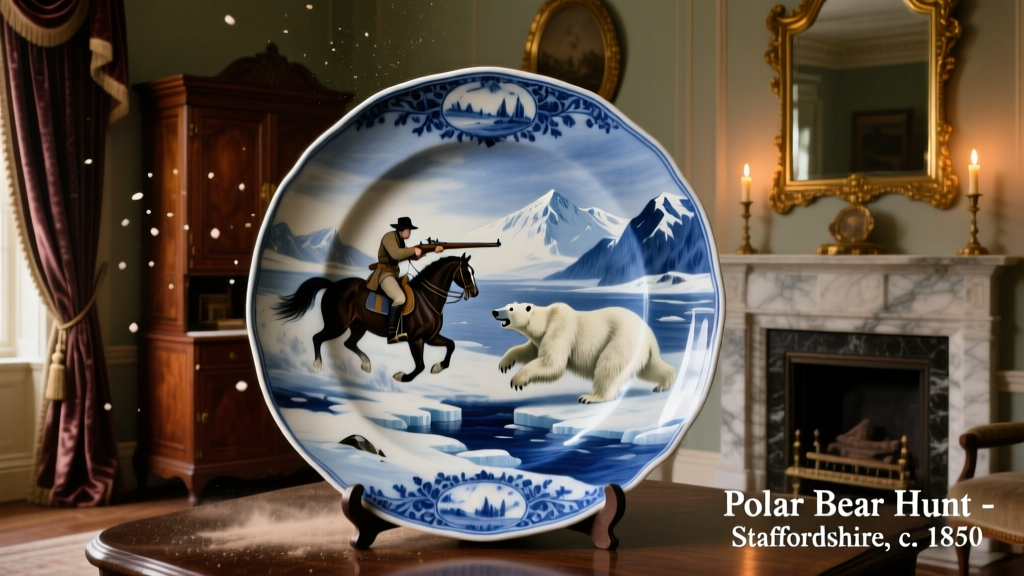
Staffordshire Platter: The Polar Bear Hunt Blue Transferware Masterpiece — A 19th-Century Ceramic Treasure
Antique Furniture Market Snapshot: February 2020 Pricing Trends and Valuation Insights
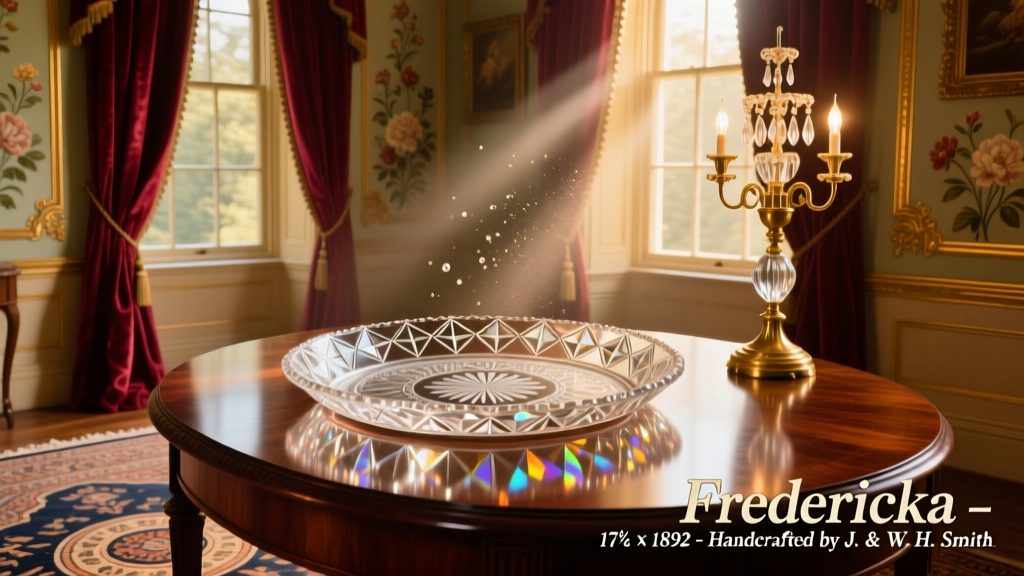
The Fredericka Cut-Glass Ice Cream Tray: A Study in American Brilliant Period Craftsmanship and Provenance
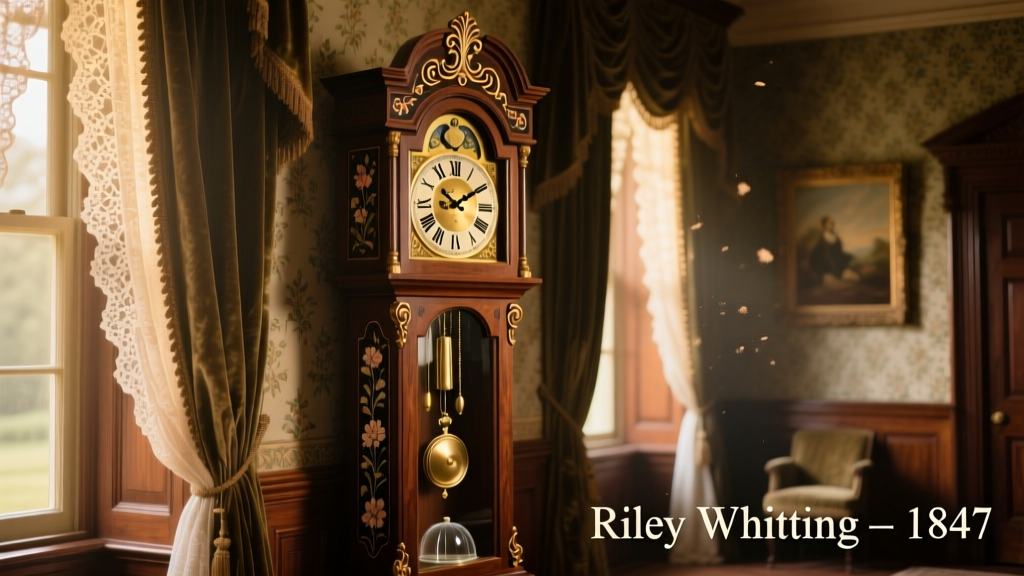
Riley Whiting Tall Case Clock: A Detailed Examination of the 98-Inch Mahogany Grandfather Clock
Portland Commemorative Cobalt Blue Milk Glass Swirl Insulators: History, Identification, and Collectibility
Jacquard Coverlets Featuring Urns of Flowers with Christian and Heathen Border Motifs: A Technical and Historical Analysis of the 76 × 88 Inch Example
Toy G.I. Joe Military Police Helmet: Authenticity, Variants, and Restoration Best Practices