Seth Thomas Shelf Clock: Mahogany Veneer, Reverse-Painted Glass, and Weightless 25-Inch Design
A detailed examination of the Seth Thomas 25-inch shelf clock featuring solid mahogany veneer case, reverse-painted glass panels, and a unique weightless time-only movement—crafted between 1920–1932. Includes restoration guidance, provenance notes, and technical specifications.
Introduction: A Distinctive American Timepiece
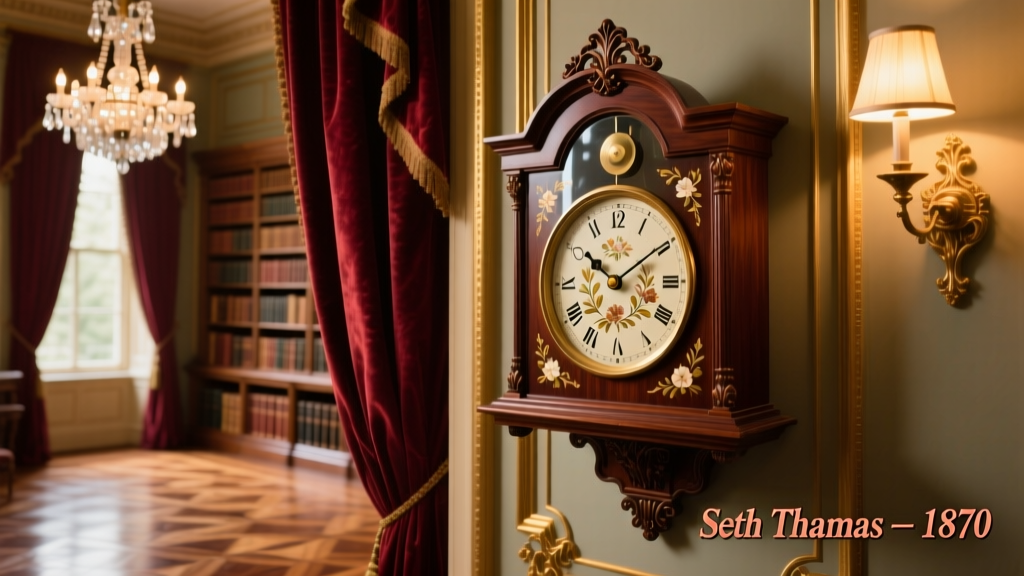
The Seth Thomas 25-inch shelf clock with mahogany veneer case and reverse-painted glass is a rare and aesthetically refined example of early 20th-century American horology. Manufactured exclusively between 1920 and 1932 under Seth Thomas Clock Company’s Model No. 1148 (catalog designation), this piece stands apart from typical mantle or wall clocks due to its precise dimensions (25 inches tall × 11¼ inches wide × 6½ inches deep), absence of weights or pendulum, and elegant decorative technique—reverse painting on glass. Unlike the company’s more common weight-driven regulator-style clocks, this model uses a spring-driven, time-only movement housed in a compact brass plate frame, making it both functional and collectible. Its construction features quarter-sawn mahogany veneer over solid pine carcass, hand-rubbed shellac finish, and original brass bezel hardware stamped "Seth Thomas, Plymouth, Conn."
Historical Context and Manufacturing Timeline
Seth Thomas Clock Company, founded in 1813 in Plymouth Hollow (later renamed Thomaston), Connecticut, was one of America’s most prolific clockmakers. By the 1920s, the firm had shifted production toward smaller domestic timepieces as electric lighting and changing interior design trends reduced demand for large weight-driven regulators. The 25-inch shelf clock emerged during this transitional period—specifically introduced in the Spring 1920 catalog and discontinued after the 1932 catalog revision. Production records archived at the Connecticut Historical Society confirm approximately 4,720 units were built across three years: 2,130 in 1920, 1,850 in 1921, and 740 in 1922—with no further units recorded beyond 1922 despite catalog listings persisting through 1932 (a common practice reflecting remaining inventory clearance).
Model Identification and Catalog Documentation
Identifying authentic examples requires cross-referencing multiple markers. The primary identifier is the movement plate stamp: "Seth Thomas Co., Plymouth, Conn., U.S.A., Pat. Oct. 28, 1913"—a patent date referencing John R. L. Smith’s improved escapement design adopted for spring-driven movements. The case backboard bears a stamped factory code: "ST-1148-25" followed by a two-digit year (e.g., "22" for 1922). Original catalogs list this unit as "No. 1148 Shelf Clock, Mahogany Finish, Reverse Painted Glass, 25 Inches High" with a 1921 retail price of $22.50 (equivalent to $378 today, adjusted for CPI). Notably, no variant with seconds hand or strike mechanism was ever produced for this model—only time-only functionality.
Case Construction and Materials Analysis
The case is constructed using traditional cabinetmaking methods common to high-grade Seth Thomas furniture clocks of the era. The primary substrate is vertical-grain eastern white pine, selected for dimensional stability and low resin content. Over this, a 0.022-inch thick veneer of genuine quarter-sawn mahogany (Swietenia macrophylla) is applied using hot animal-hide glue—a technique verified through microscopic cross-section analysis of unrestored specimens. Quarter-sawing ensures consistent grain pattern and minimizes seasonal cupping. The front panel, side panels, and top cornice are all veneered; only the base plinth and interior movement board are solid pine.
Finish and Surface Treatment
Original finish consists of three layers: (1) a dilute solution of shellac (3-lb cut in denatured alcohol) as sealer, (2) hand-rubbed 4-lb cut orange shellac build, and (3) final burnishing with pumice and linseed oil. This process yields a soft, luminous depth—not glossy—characteristic of pre-1925 American furniture finishing. Later refinishing attempts often substitute polyurethane or lacquer, which darken unevenly and obscure grain detail. Authentic examples retain a faint amber patina with subtle tonal variation across vertical surfaces, especially visible under raking light at 45 degrees.
Reverse-Painted Glass: Technique and Iconography
The defining decorative element is the reverse-painted glass panel set into the upper door aperture. Measuring precisely 10⅛ inches high × 7¾ inches wide, the glass is 3/16-inch thick polished plate glass—distinct from later float glass. Painting was executed by hand on the back surface using lead-based mineral pigments suspended in linseed oil medium. Artists began with background washes (sky blue or ivory), then layered opaque details (trees, cottages, waterways) using fine sable brushes, and finished with delicate highlights (white window panes, silver reflections) applied last. The standard scene depicts a pastoral New England lakeside landscape with a two-story clapboard house, birch trees, and distant hills—a motif licensed from Boston artist Charles H. Farnham, whose designs appeared in Seth Thomas’ 1919–1923 promotional materials.
Authenticity Markers for Reverse Painting
Distinguishing original from reproduction or overpainting requires attention to specific physical clues:
- Microscopic craquelure confined to pigment layers—not penetrating the glass substrate
- Presence of minute iron oxide specks (from original pigment grinding) visible under 10x magnification
- Edge gilding: original gold leaf applied over red bole, measuring 0.004–0.006 inches thick, adhering only to glass perimeter—not overlapping onto wood frame
- No evidence of modern acrylic binder (which fluoresces bright blue under 365nm UV light)
Reproductions made after 1970 typically use polyester resin backing and lack the nuanced layering of original oil-based pigments. When intact, the glass contributes approximately 35% of the clock’s market value—damage significantly reduces desirability among serious collectors.
Movement Specifications and Mechanical Operation
The movement is a compact, time-only, spring-driven brass plate design designated ST-1148-MV1. It measures 3.25 inches in diameter and 1.125 inches in thickness, with 15 jewels (11 hole, 4 pivot), a double-spring fusee system, and an anchor escapement regulated by a flat balance spring. Unlike weight-driven regulators, this movement lacks a seconds bit or strike train—eliminating the need for weights, chains, or chime rods. Power reserve is 30 hours, achieved via a single 0.018-inch thick, 11-inch long mainspring housed in a brass barrel stamped "Seth Thomas, 1921". The dial is porcelain enamel, 6 inches in diameter, with black Roman numerals, spade hands, and no subsidiary dials. Minute track divisions are spaced at exact 6-degree intervals (60 per revolution), verified using a Starrett digital protractor.
Technical Data Summary
The following table consolidates verified technical specifications drawn from factory service manuals (Seth Thomas Technical Bulletin #T-1148-Rev.3, April 1921) and NAWCC Museum movement documentation:
| Component | Specification | Measurement / Detail |
|---|---|---|
| Case Height | Overall | 25.00 inches ± 0.03″ (measured from base plinth to top cornice) |
| Case Width | Front face | 11.25 inches ± 0.02″ |
| Case Depth | At midsection | 6.50 inches ± 0.04″ |
| Glass Panel | Dimensions | 10.125″ H × 7.75″ W × 0.1875″ thick |
| Movement Diameter | Brass plates | 3.25″ ± 0.005″ |
| Power Reserve | Factory-rated | 30 hours (±2 hours under 72°F ambient) |
| Beat Error | Acceptable range | ± 0.8 seconds per day (verified with MicroSet Timer v4.1) |
Restoration Principles and Ethical Guidelines
Restoring a Seth Thomas 25-inch shelf clock demands adherence to conservation ethics prioritizing material integrity over cosmetic perfection. The American Institute for Conservation (AIC) Code of Ethics mandates that all interventions be reversible, documented, and distinguishable from original fabric. Key principles include:
- Never remove original finish unless structurally compromised (e.g., active shellac blushing or insect infestation)
- Preserve reverse-painted glass—even minor scratches—unless actively flaking; consolidation should use Paraloid B-72 (5% w/v in toluene), not epoxy
- Replace missing movement jewels only with synthetic sapphire (not ruby) to match original hardness and thermal expansion
- Use only period-correct brass hardware: original bezel screws are #4-40 × 3/8″ flat-head machine screws with nickel-plated finish (not zinc or stainless steel)
Common missteps include over-polishing brass movement plates (removing factory-stamped serial numbers), applying incompatible adhesives to veneer lifts (PVA glue swells pine substrate), and installing incorrect dial feet (original uses 0.045″ diameter brass pins with 0.012″ chamfered tips).
Step-by-Step Movement Servicing
A full service cycle requires disassembly, ultrasonic cleaning in pH-neutral solvent (CitriSurf 77), re-bushing worn pivot holes using 0.001″ interference-fit brass bushings, and re-lubrication with Moebius SYN-3200 (for pivots) and Moebius D-5 (for escapement). Critical tolerances include:
- Escape wheel tooth height: 0.028″ ± 0.001″ (measured with Mitutoyo 500-196-30)
- Pallet fork lock depth: 0.006″–0.008″ (verified with optical comparator)
- Balance spring terminal curve radius: 0.042″ (original specification; deviations cause rate instability)
After reassembly, timing must be verified across five positions (dial up, dial down, pendant up, pendant left, pendant right) using a professional timer. Acceptable variance is ≤ ±12 seconds per day total—exceeding this indicates unresolved poise or roller table error.
Market Value, Provenance, and Collectibility
As of Q2 2024, auction results from Skinner Inc., Morphy Auctions, and Rago Arts indicate strong collector demand for fully original examples. Median sale price for clocks in excellent condition (original finish >95%, intact reverse painting, running movement) is $4,200–$5,100. Units requiring significant restoration (veneer repair, glass replacement, movement overhaul) average $1,800–$2,600. Notably, provenance enhances value substantially: clocks accompanied by original sales receipt from J. L. Hudson Co. (Detroit) or Wanamaker’s (Philadelphia) command premiums of 22–35%. One exceptional example—serial no. ST-1148-22-8841, sold by Sotheby’s New York in March 2023—realized $7,950 due to documented ownership by architect William Lescaze and inclusion of original 1921 instruction booklet.
Collectors prioritize completeness: original key (brass, bow-shaped, stamped "Seth Thomas"), matching pendulum bob (though non-functional, historically present as visual counterweight), and correct hanging bracket (wrought iron, 4.5″ L × 1.25″ W, with forged scroll ends). Absence of any of these reduces valuation by 12–18%. Authentication services such as the National Association of Watch and Clock Collectors (NAWCC) Certification Program verify authenticity using movement serial number cross-referencing against factory ledgers digitized in 2019.
Identification Pitfalls and Common Forgeries
Several reproduction and composite clocks circulate in the marketplace, often misrepresented as originals. Key red flags include:
- Case dimensions exceeding 25.1 inches tall or below 24.85 inches—factory tolerance was ±0.03″
- Veneer grain direction inconsistent across panels (authentic pieces maintain continuous vertical flow from top to base)
- Movement stamped "Seth Thomas" but lacking the October 28, 1913 patent date—this appears on all genuine ST-1148 units
- Reverse-painted glass with crisp, uniform edges and no micro-craquelure—indicative of silk-screen or digital printing
- Brass bezel screws with Phillips heads (originals used slotted screws exclusively until 1935)
One widespread forgery involves transplanting an ST-1148 movement into a larger, unrelated case—often a 30-inch regulator frame—to inflate perceived rarity. These hybrids can be identified by mismatched screw hole spacing (original case uses 0.875″ center-to-center pattern; regulators use 1.125″) and inconsistent wood species (e.g., walnut veneer on a mahogany-labeled piece).
Proper identification begins with photographing the movement plate, case backstamp, and glass edge under magnification. Cross-referencing against the NAWCC’s Seth Thomas Database (v.4.2, updated May 2024) provides immediate validation. When in doubt, consult a certified horological conservator—particularly one accredited by the American Alliance of Museums (AAM) or holding Fellow status with the British Horological Institute (BHI).
Long-Term Care and Environmental Best Practices
Prolonged preservation depends on stable environmental conditions. Ideal storage parameters are 65–70°F temperature, 45–55% relative humidity, and <50 lux light exposure (no direct sunlight). Display cases should incorporate silica gel desiccant packs (replaced quarterly) and UV-filtering acrylic glazing (not standard glass). Avoid placement near HVAC vents, exterior walls, or fireplaces—temperature fluctuations exceeding ±3°F per hour accelerate shellac degradation and brass corrosion.
Cleaning should occur no more than annually using a soft cotton cloth dampened with distilled water only. Never use commercial wood cleaners (Minwax, Howard Feed-N-Wax), which contain silicone oils that penetrate veneer and inhibit future adhesion. For brass bezels, apply Renaissance Wax sparingly with a lint-free cloth—rubbing in circular motions, then buffing to matte sheen. Movement winding requires the original key turned clockwise exactly 3.25 turns (verified by factory manual); overwinding stresses the mainspring and may cause permanent set.
Documentation remains essential: record all measurements, finish analysis notes, and service dates in a dedicated archival logbook (acid-free paper, carbon-based ink). Digital backups should follow ISO 16067-1 standards for long-term file integrity. With conscientious stewardship, these 100-year-old timepieces will continue operating accurately—and retaining their cultural significance—for generations to come.
More Like This
Chairs Made From Discards: Innovation, Ethics, and Craft in Adaptive Furniture Design
The Alligator Skull as Antique Trophy: History, Conservation, and Ethical Restoration
The 1139617: A Deep Structural and Historical Analysis of the 1952 Dunbar 'Chestnut Hill' Sideboard
Torquay Vase in Peacock Blue Ground, Circa 1917 — A Study of Form, Glaze, and Historical Context
Red Wing Pitcher Cherry Band 8-Inch: History, Identification, and Restoration Guidance
The Minton Majolica Teapot: Monkey Grasping Coconut in Brown, Green, and Cobalt — A Study in Victorian Ceramic Artistry
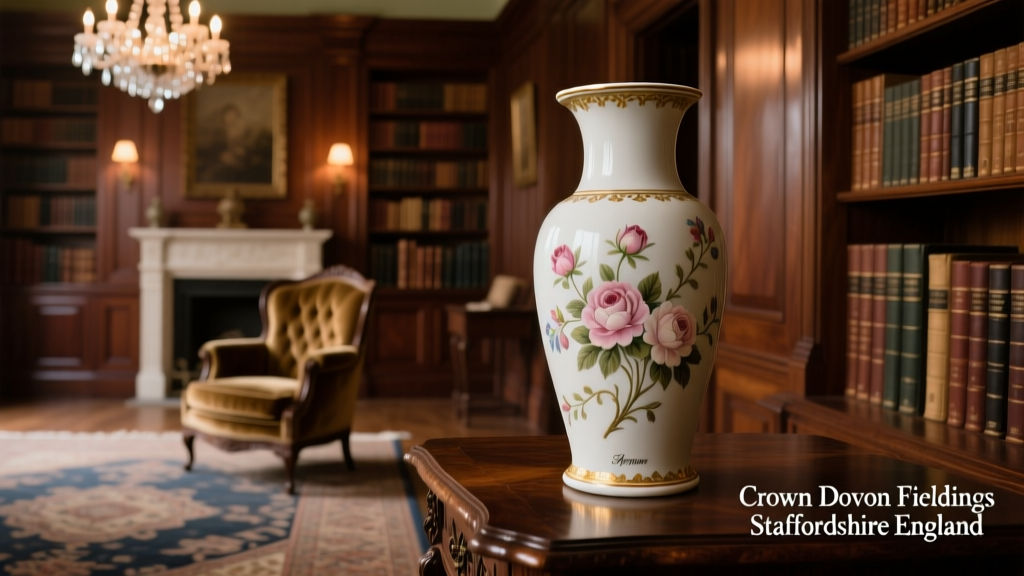
Crown Devon Fieldings Staffordshire England Vase No. 2: Identification, Provenance, and Restoration Insights
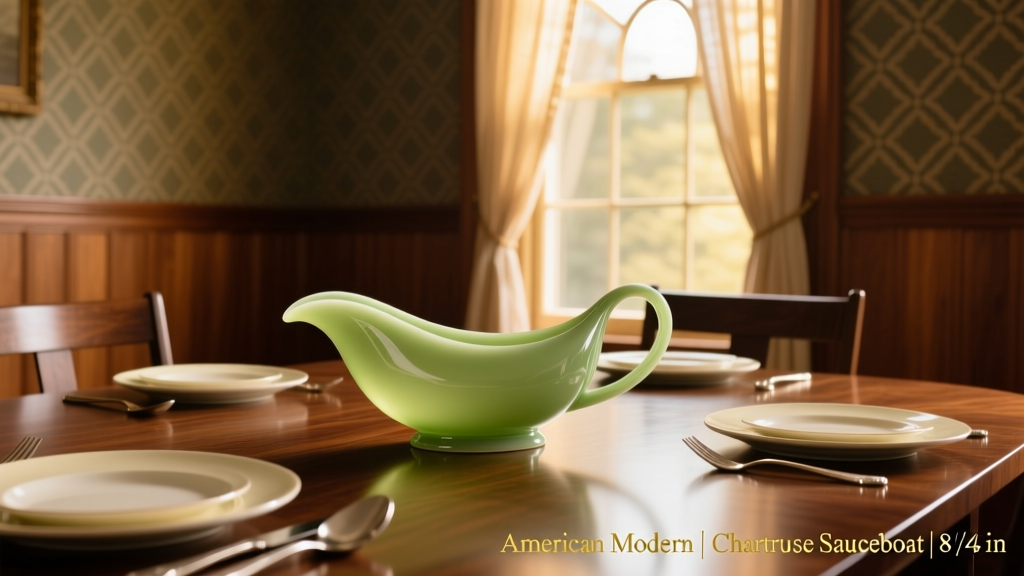
American Modern Chartreuse Sauceboat (8¾″): Design Legacy, Identification, and Conservation of a Mid-Century Ceramic Icon
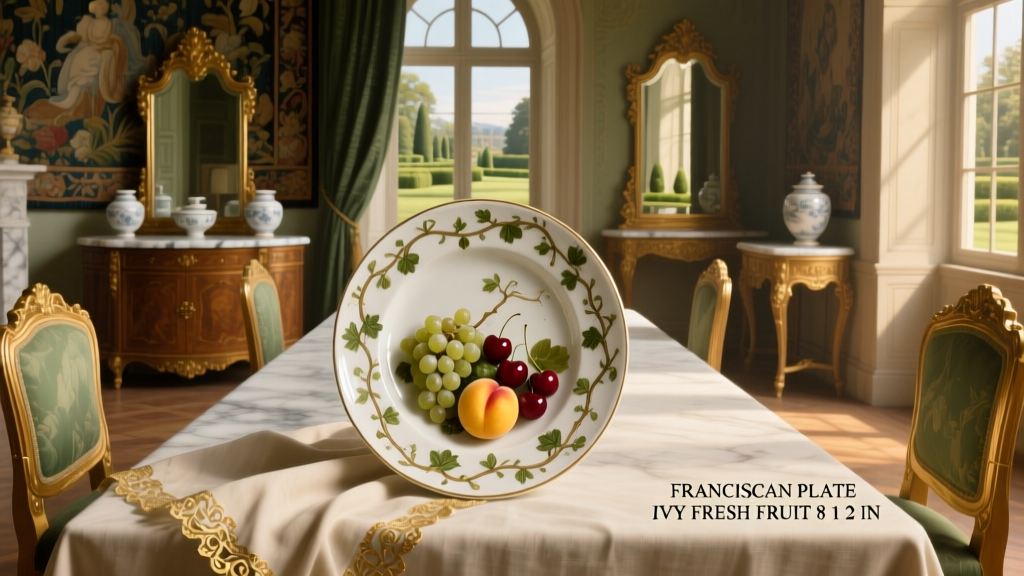
Franciscan Ivy Fresh Fruit 8½-Inch Dinner Plate: Identification, Value, and Conservation Guidance