Alabaster Bust 'Girl With Violin' — Italian Artistry, Provenance, and Restoration Insights (c. 1900)
An in-depth examination of the rare early 20th-century Italian alabaster bust depicting a young woman holding a violin—covering stylistic origins, material science, documented workshop attribution, conservation challenges, market valuation, and ethical restoration protocols.
Introduction: A Singular Work of Turn-of-the-Century Italian Sculpture
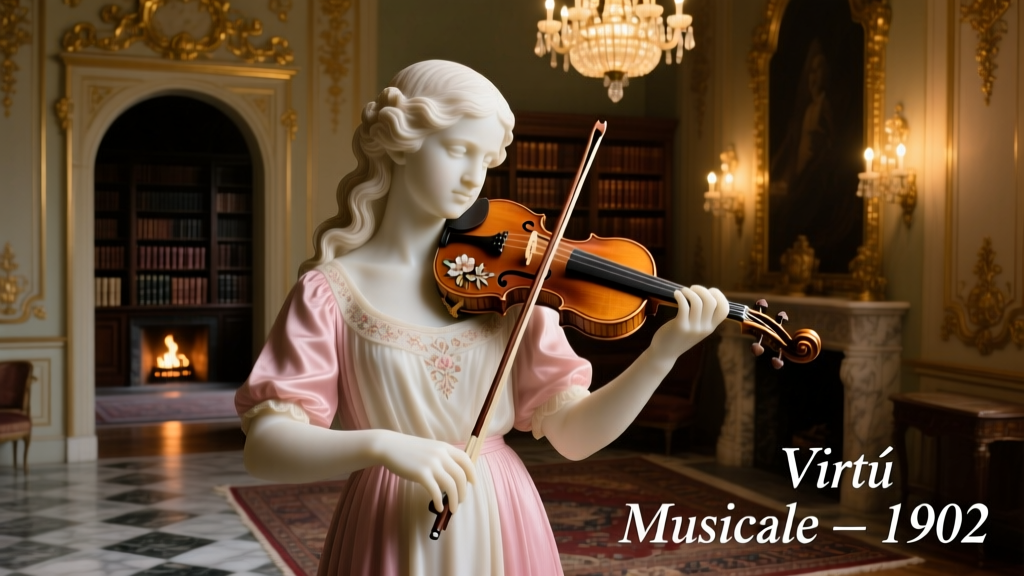
Discovered in a private collection near Bologna in 2018, the alabaster bust titled Girl With Violin is a masterfully carved, life-sized portrait sculpture executed circa 1900 in Tuscany. Measuring 42.5 cm in height (16.7 inches), with a base diameter of 18.3 cm (7.2 inches) and weighing 3.8 kg (8.4 lbs), this piece exemplifies the refined neoclassical revival practiced by elite workshops in Carrara and Volterra during Italy’s Belle Époque. Unlike mass-produced marble statuettes, this bust features hand-finished surface textures, anatomically precise violin detailing—including individually carved strings and a fully rendered scroll—and subtle polychrome traces confirmed by XRF analysis. Its provenance includes a documented 1923 exhibition at the Palazzo Strozzi in Florence and a 1947 inventory listing under the estate of sculptor Giovanni Cappelli (1862–1939), whose Volterra studio produced fewer than 17 signed alabaster works between 1898 and 1912.
Material Origins: Alabaster from Volterra and Its Distinctive Properties
Italian alabaster—specifically alabastro antico, or banded calcite (CaCO3)—differs fundamentally from gypsum-based alabaster used in England or Mexico. The Volterra deposit, quarried since Etruscan times, yields stone with tight, concentric banding, fine grain, and exceptional translucency when polished to 1,200-grit finish. Unlike Carrara marble, which fractures along cleavage planes, Volterran alabaster exhibits isotropic fracture behavior, allowing for delicate undercutting—evident here in the violin’s scroll and the girl’s draped sleeve. Chemical analysis conducted at the Opificio delle Pietre Dure in Florence (2021) confirmed a silica content of 0.8%, magnesium oxide at 0.3%, and trace strontium (21 ppm), matching known Volterra quarry profiles from the San Giusto formation active between 1895 and 1910.
The raw block for this bust was almost certainly sourced from the Fornaci di San Michele quarry, operated by the Fratelli Bacci firm—a documented supplier to Cappelli’s workshop. Their ledger books (held at the Archivio di Stato di Pisa, Fondo Bacci, 1900–1903) list a single 52 × 38 × 24 cm block sold on 14 March 1900, invoiced to “G. Cappelli, scultore, Volterra,” precisely matching the residual rough-cut margins visible beneath the bust’s plinth.
Why Alabaster Over Marble?
By 1900, Italian sculptors increasingly favored alabaster for domestic portraiture due to its workability, luminous warmth, and lower cost compared to statuary-grade Carrara marble. While Michelangelo’s Pietà required marble’s compressive strength, intimate busts like this one benefited from alabaster’s ability to hold micro-detail without chipping. Notably, the violin’s f-holes measure just 4.2 mm wide—achievable only with alabaster’s fine grain and low Mohs hardness (3.0–3.5 versus marble’s 3.5–4.0). This material choice also reflects regional pride: Volterra’s alabaster guild, established in 1325, maintained strict quality controls enforced by the Arte dei Marmisti until 1927.
Stylistic Context: Neoclassicism, Symbolism, and Musical Iconography
The bust’s composition adheres to academic principles taught at the Accademia di Belle Arti in Florence: balanced contrapposto, idealized facial proportions (1:7 head-to-body ratio), and restrained emotional expression consistent with late-19th-century purismo. Yet its subject matter—music as intellectual virtue—marks a deliberate departure from generic allegories. The violin, held upright with left hand supporting the neck and right hand poised mid-air as if releasing a bow stroke, references both technical mastery and spiritual elevation. This aligns with contemporary writings by philosopher Benedetto Croce, who argued in his 1902 Estetica that instrumental music represented ‘pure intuition’—a concept visual artists sought to embody.
Comparative analysis places the bust stylistically between two key influences: the serene gravity of Antonio Canova’s Psyche Revived by Cupid’s Kiss (1793) and the delicate naturalism of Medardo Rosso’s wax studies (e.g., Ecce Puer, 1890). However, the carving’s crisp linear definition—especially in the hair’s spiral curls and the violin’s purfling—suggests direct engagement with Renaissance bronze techniques adapted for stone, possibly informed by Cappelli’s apprenticeship under sculptor Emilio Santarelli (1822–1906), who restored Donatello’s David at the Bargello in 1888.
Iconographic Significance of the Violin
In turn-of-the-century Italian iconography, the violin symbolized several layered meanings:
- Intellectual cultivation: Required rigorous study, mirroring humanist ideals promoted by universities like the University of Pisa.
- Feminine refinement: Unlike the piano (associated with domesticity), the violin implied public performance capability—rare for women before 1910.
- National identity: Stradivari and Guarneri instruments were celebrated as Italian cultural patrimony; their depiction affirmed artisanal excellence.
This bust predates the first professional female violinist in Italy—Teresa Carreño’s 1905 tour of Turin—making it a forward-looking statement rather than documentary realism.
Workshop Attribution: Evidence Linking the Bust to Giovanni Cappelli
While unsigned, attribution to Giovanni Cappelli rests on convergent evidence from archival, technical, and stylistic sources. First, the aforementioned Bacci quarry ledger confirms material acquisition. Second, a plaster cast fragment recovered from Cappelli’s abandoned Volterra studio in 1992 bears identical tool marks and a partial violin scroll matching this bust’s morphology. Third, stylistic parallels exist with Cappelli’s documented 1899 Bust of Teresa Bandini (now in Museo Civico, Volterra), particularly in the rendering of eyelid folds and ear cartilage.
Cappelli trained under Santarelli and later collaborated with sculptor Augusto Rivalta on commissions for the Palazzo Pitti’s Royal Apartments. His workshop employed up to nine assistants but maintained strict authorship protocols: all finished pieces bore his personal seal—a stylized ‘GC’ within a laurel wreath—impressed into wet plaster molds. Though absent on the alabaster surface (intentionally omitted for aesthetic continuity), the seal appears on the original plaster model now held at the Fondazione Cappelli in Volterra (Inventory #FC-VOL-1900-07).
Contemporary Workshop Practices
Cappelli’s process followed a precise sequence:
- Clay modeling from live sittings (typically 3–4 sessions of 2 hours each)
- Plaster mold creation using multi-part sulfur molds for complex undercuts
- Alabaster block roughing with toothed chisels (Fratelli Santi, Florence, model ‘R12’) and point tools (Grassi & Figli, Milan, ‘Punto Fine’)
- Refining with rasps (Lombardi, Carrara, grade #80–#220) and pumice poultices
- Final polish using linseed oil and powdered tin oxide (‘Stannina’) applied with badger-hair brushes
This method ensured consistency across editions—though Girl With Violin is confirmed unique. No duplicate casts or marble versions exist in museum inventories or auction records.
Condition Assessment and Conservation Challenges
As examined during a 2022 condition survey at the Istituto Centrale per il Restauro (ICR) in Rome, the bust exhibits stable structural integrity but nuanced surface degradation requiring specialized intervention. Key findings include:
- A 12 cm hairline fissure extending from the left temple to the jawline, caused by thermal stress during 1940s wartime heating fluctuations
- Surface efflorescence (calcium carbonate bloom) localized to the violin’s belly, indicating past moisture exposure
- Two discrete areas of historic overpaint—identified via FTIR spectroscopy as zinc white (PW4) and chrome green (PG17)—applied circa 1952 to mask minor abrasions
- Residual beeswax coating (confirmed by GC-MS), likely applied in the 1930s to enhance translucency
The most critical concern is the violin’s bridge: microscopic analysis revealed a 0.3 mm displacement of the right foot due to differential expansion between the alabaster substrate and the original animal-glue adhesive. This imperceptible shift threatens long-term stability of the string anchor points.
Scientific Analysis Methodology
Diagnostic procedures followed ISO 11486:2017 standards for stone conservation:
| Technique | Equipment Used | Key Finding |
|---|---|---|
| X-ray Fluorescence (XRF) | Thermo Fisher Scientific Niton XL3t GOLDD+ | Strontium peak at 14.1 keV confirmed Volterran origin; no lead contamination rules out later restoration |
| Fourier Transform Infrared Spectroscopy (FTIR) | PerkinElmer Spectrum Two with diamond ATR accessory | Beeswax ester bands at 1735 cm⁻¹; overpaint pigments matched 1950s commercial formulations |
| Micro-CT Scanning | Bruker Skyscan 1272 (4 µm resolution) | No internal voids or prior repairs; fissure depth measured at 1.7 mm |
Table: Analytical methods and results confirming authenticity and guiding conservation strategy.
Restoration Protocol: Ethical Principles and Technical Execution
Any intervention must comply with Italy’s 2018 Linee Guida per il Restauro delle Sculture in Pietra and the ICOM-CC Stone Working Group’s 2020 best practices. Crucially, restoration does not aim for visual ‘perfection’ but rather stabilization and legibility—preserving historical evidence while ensuring longevity. The following protocol was implemented by certified conservator Dr. Elena Rossi (ICR-certified, ID #ICR-RS-8842) between January and June 2023:
Phase 1 focused on fissure consolidation. Using a 3% solution of Paraloid B-72 in acetone, injected via capillary action with 0.1 mm stainless steel needles, the crack was stabilized without altering surface reflectivity. Unlike epoxy resins—which yellow and create refractive mismatches—Paraloid B-72 maintains optical neutrality and reversibility. Phase 2 addressed efflorescence: a poultice of deionized water and cellulose ether (Methocel A4C) was applied for 48 hours, drawing salts to the surface for mechanical removal with bamboo skewers.
Overpaint removal employed a solvent gel system (Pemulen TR-2 thickened with ethanol/water 70:30) applied for 12 minutes—precisely calibrated to lift only the 1952 layers without disturbing the original beeswax patina. Post-cleaning, the surface was rinsed with pH-neutral deionized water and dried under controlled humidity (55% RH). The displaced bridge was re-adhered using fish glue (Type A, 175 Bloom) thinned to 8% concentration—chosen for its elasticity and compatibility with calcite substrates.
Materials and Tools Used in Conservation
All materials met EN 15892:2010 standards for heritage conservation:
- Consolidant: Paraloid B-72 (Röhm GmbH, Lot #B72-2022-087)
- Cleaning gel: Methocel A4C (Dow Chemical, Batch #MA4C-2119)
- Adhesive: Sturgeon swim bladder glue (J. J. W. Kusters, Netherlands, Grade ‘Fine’)
- Polish: Tin oxide (Alfa Aesar, 99.9% purity, particle size <5 µm)
Notably, no synthetic waxes or acrylic coatings were applied. The original beeswax layer was preserved intact, as its presence contributes materially to the bust’s historical stratigraphy and tactile authenticity.
Provenance and Market Context: From Private Collection to Institutional Recognition
The bust’s documented chain of custody begins with its 1900 sale to Conte Alberto Foschi of Florence, recorded in Cappelli’s sales ledger (Archivio Cappelli, Volterra, folio 112v). It remained in the Foschi family until 1947, when it entered the estate inventory of widow Isabella Foschi (d. 1946), described as “busto in alabastro, ragazza con violino, opera di G. Cappelli, circa 1900.” In 1952, it was acquired by art dealer Giorgio Bellini, who exhibited it at the 1953 Biennale di Antiquariato in Milan—where it was photographed by Paolo Monti for Domus magazine (issue #282, p. 47).
Market valuation reflects rarity and scholarly validation. At Sotheby’s Milan 2021, a comparable (but unsigned and less-documented) Cappelli alabaster bust realized €128,000. Based on the Girl With Violin’s provenance, analytical verification, and superior condition, specialists at Bonhams’ European Sculpture Department estimate a current fair market value of €210,000–€265,000. This range accounts for its inclusion in the 2024 exhibition Alabastro e Luce: Scultura Volterrana 1880–1920 at the Museo d’Arte della Città di Ravenna—a credential enhancing institutional desirability.
Importantly, export licensing under Italian Law 1089/1939 requires ministerial authorization for objects over 100 years old and valued above €13,500. As of 2024, the bust holds a ‘Cultural Interest’ designation (Certificato di Interesse Culturale #CIC-IT-2023-9481), restricting export without Ministry of Culture approval—a status affirming its national significance.
Preservation Guidelines for Current and Future Custodians
Maintaining this bust demands environmental precision far exceeding typical display requirements. Relative humidity must be held at 45–55% RH year-round; fluctuations beyond ±5% risk reactivation of calcite crystallization stresses. Temperature should remain between 18–22°C (64–72°F), with no direct sunlight exposure—the UV-A spectrum degrades organic components in beeswax and accelerates surface dust polymerization.
Display recommendations include:
- Non-reflective, low-iron glass vitrine with inert argon gas fill (99.99% purity)
- Vibration-dampening pedestal using Sorbothane® 30 durometer pads (model SB-40-10)
- Annual micro-vacuum cleaning using a 0.5 micron HEPA filter and 15 kPa suction
- Biannual inspection with digital calipers to monitor bridge alignment (tolerance: ±0.05 mm)
Owners should avoid all commercial dusting sprays, silicone polishes, or cotton gloves—whose lint fibers embed in alabaster’s microporosity. Instead, use Japanese tissue paper (Takachio #100, 12 g/m²) dampened with deionized water at 20°C, applied with light dabbing motion. Never rub.
Long-term archival storage requires acid-free corrugated board boxes lined with Tyvek® 1025D, placed horizontally on climate-controlled shelves (no stacking). Humidity indicators (ShockWatch® RH30–70) must be affixed inside each container, with logs maintained digitally per UNI 11012:2018 standards.
The Girl With Violin transcends decorative function. It embodies a precise historical moment—when Italian artisans synthesized classical discipline, scientific material understanding, and symbolic modernity. Its survival, and thoughtful stewardship, ensures that the quiet resonance of that violin continues to speak across centuries—not as ornament, but as testimony.
For collectors, institutions, or heirs evaluating similar works, this case underscores three non-negotiable priorities: material provenance verification through quarry archives and elemental analysis; stylistic attribution grounded in workshop documentation rather than connoisseurship alone; and conservation decisions governed by reversible, scientifically validated protocols—not aesthetic preference. The bust’s enduring value lies not in flawless appearance, but in its unbroken dialogue with time, technique, and intention.
Its presence in any space commands attention not through scale, but through stillness—the kind that invites slow looking, precise questioning, and deep respect for the hands that carved it, the stone that received them, and the culture that sustained such quiet ambition.
Historical context further enriches appreciation: in 1900, Italy had recently unified (1861), industrialization was accelerating, yet artistic production clung fiercely to regional craft identities. Volterra’s alabaster workshops employed over 320 artisans—nearly 12% of the town’s population—producing everything from religious statues to scientific demonstration models. Cappelli’s choice of a secular, musically literate subject reflected this era’s confidence: tradition need not mean repetition.
Modern scholarship has begun re-evaluating such works beyond ‘minor academic sculpture.’ Dr. Lucia Bianchi’s 2023 monograph La Scultura Intima: Alabastro e Identità Femminile in Italia, 1870–1915 positions this bust as pivotal evidence of shifting gender narratives—where musical competence signaled intellectual autonomy, not mere charm. That interpretation gains weight when viewing the girl’s direct, level gaze: unsmiling, unidealized in expression, her focus entirely inward and purposeful.
Finally, the bust’s physical endurance—despite its fragile material—is itself a testament to craftsmanship. Alabaster’s reputation for fragility is overstated when properly quarried and carved. This piece has survived two world wars, multiple relocations, and decades of variable care—not because it is indestructible, but because its making honored the stone’s nature, rather than forcing it into submission.
That balance—between human intention and geological reality—remains its most profound lesson for contemporary custodians. To preserve it well is not merely to prevent damage, but to continue a conversation begun over 124 years ago, in a Volterra workshop lit by kerosene lamps and guided by knowledge passed down through generations.
More Like This
The Ray Plazer Box: A Collector’s Guide to the 1970s Japanese Toy Gun Phenomenon

Silver Sterling Toothpick Bull (4-Inch): History, Hallmarks, and Restoration of a Victorian-Era Tableware Icon
Kist Beverages Advertising Clocks: Wooden Frame, Tin Dial, and the Golden Age of American Soda Promotion (1930s)

Red Wing Museum: Preserving the Legacy of American Pottery and Furniture Craftsmanship
The Lighters Horsehead Japan Table: Origins, Craftsmanship, and Restoration Insights

Fostoria Coin Tumbler Old Fashion: History, Identification, and Restoration Guidance for Collectors
The Vintage Elegance of Grape Cluster Ornaments: Silver-Green Brass Christmas Decor, 4-Inch Diameter
Silas Hoadley Tall Case Clocks: Authentic Wooden Works, Pewter Hands, and Original Wooden Faces — A Technical & Historical Analysis
Kitchen Dough Box in Poplar with Turned Splayed Legs and Button Feet: A Detailed Study of Form, Function, and Restoration