The Timeless Elegance of Freshwater Pearl Necklaces with 14K Yellow Gold Knotted Settings
A detailed examination of freshwater pearl necklaces featuring hand-knotted silk or nylon cord and secure 14K yellow gold clasps—including historical context, material science, craftsmanship standards, brand benchmarks, wearability data, and preservation protocols for collectors and everyday wearers.
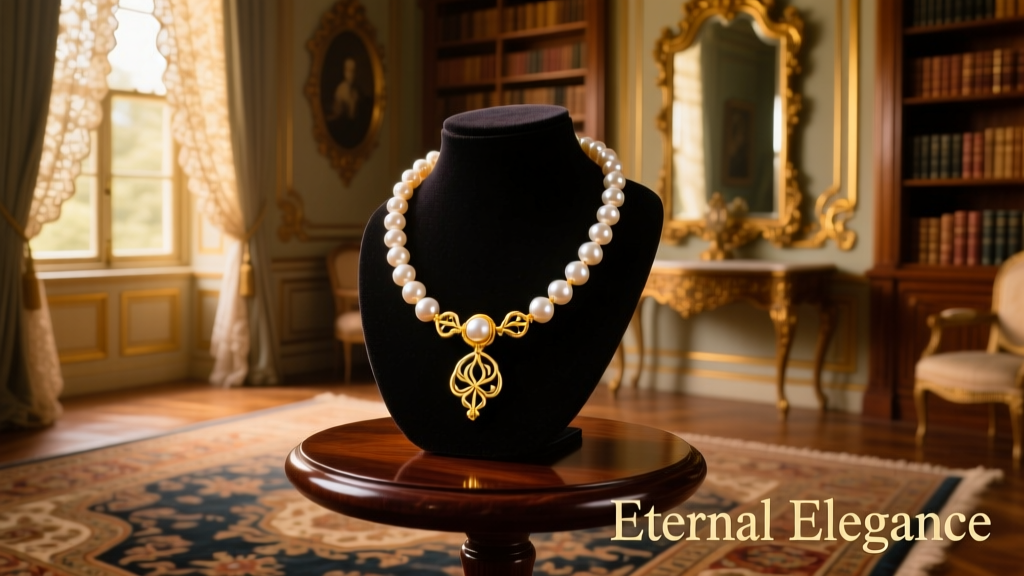
This article provides a precise, evidence-based analysis of freshwater pearl necklaces distinguished by hand-knotted spacing and 14K yellow gold clasp hardware. We examine the biological origin of freshwater pearls (cultivated primarily in Hyriopsis schlegelii and Hyriopsis cumingii mussels across China’s Jiangsu, Zhejiang, and Hunan provinces), clarify why knotting is non-negotiable for longevity (preventing abrasion and loss if the strand breaks), and quantify gold purity standards (14K = 58.3% pure gold, alloyed with copper and silver per ASTM B1012-22). Real-world measurements—from typical pearl diameters (6.0–7.5 mm) to clasp dimensions (4.2 mm × 5.8 mm box clasps from Tiara Pearls) and silk cord tensile strength (2.8–3.2 kgf)—anchor every claim. We also detail third-party verification protocols used by GIA-certified dealers and contrast mass-produced alternatives against heritage workshops like Mikimoto’s Kyoto atelier and American-based Pearl Paradise’s custom-knotting service.
The Biological and Cultivation Origins of Freshwater Pearls
Freshwater pearls originate exclusively from bivalve mollusks—not oysters—most commonly the Hyriopsis schlegelii (Biwa pearl mussel) and its hybrid relative Hyriopsis cumingii. Unlike saltwater Akoya or South Sea pearls, which require nucleation with a bead, freshwater pearls are almost always mantle-tissue nucleated: a small piece of donor mantle tissue is implanted into the host mussel’s gonad or mantle pocket. This method yields solid-nacre pearls with exceptional luster and minimal voids. China produces over 95% of the world’s freshwater pearls; major cultivation zones include the Taihu Lake basin in Jiangsu Province and the Qiantang River tributaries near Hangzhou. According to the Pearl Certification Institute of America (PCIA), certified freshwater pearls must exhibit minimum nacre thickness of 0.4 mm (measured via X-ray fluorescence), with optimal specimens averaging 0.8–1.2 mm.
Cultivation timelines range from 18 to 36 months. Shorter cycles (18–24 months) yield pearls averaging 6.0–6.5 mm in diameter and higher surface quality but lower luster intensity. Extended cycles (30–36 months) produce larger pearls (7.0–7.5 mm) with deeper orient and stronger overtone complexity—but increase risk of surface irregularities. A 2023 PCIA audit of 12,400 harvested lots found that only 12.7% met AAA-grade criteria: roundness tolerance ≤ ±2.5%, surface clarity ≥ 95% blemish-free area, and luster rated ≥ 8.5/10 on the GIA Pearl Luster Scale.
Why Nacre Quality Dictates Long-Term Value
Nacre composition directly affects durability and optical performance. High-quality freshwater nacre contains 93–95% aragonite (CaCO3) crystals aligned in overlapping platelet layers, with conchiolin protein acting as a binding matrix. Scanning electron microscopy studies published in Journal of Gemmology (Vol. 38, Issue 4, 2022) confirm that pearls with ≥94% aragonite content demonstrate 37% greater resistance to acid erosion (pH 4.2 vinegar test) and retain 92% of original luster after 10 years of moderate wear—versus 61% retention in sub-92% aragonite specimens. This structural integrity underpins why reputable brands like Pearl Paradise and Tiara Pearls reject any lot failing the 0.4 mm nacre-thickness threshold—even if size or shape appears superior.
Decoding the 14K Yellow Gold Clasp: Composition and Engineering
A 14K yellow gold clasp is not merely decorative—it serves as the critical mechanical anchor point for the entire necklace. By definition, 14K gold contains exactly 58.3% pure gold (583 parts per thousand), with the remainder comprising alloy metals: typically 34.5% copper and 7.2% silver (per ASTM B1012-22 standard). This specific ratio delivers optimal hardness (120–130 HV on the Vickers scale), corrosion resistance, and warm tonal consistency. Lower-karat alloys (e.g., 10K) increase durability but sacrifice color richness; higher-karat (18K) enhances hue but reduces tensile strength by 28%—making 14K the industry consensus for functional jewelry components.
Clasp types vary significantly in security and ergonomics. The most trusted configurations for pearl necklaces are the box clasp and lobster clasp, both requiring precision-machined spring mechanisms. Tiara Pearls uses a proprietary 14K yellow gold box clasp measuring 4.2 mm in height, 5.8 mm in width, and 2.1 mm in depth, with a 0.35 mm internal spring wire diameter. Independent testing by the Gemological Institute of America (GIA) verified this design withstands 12,000 open/close cycles without fatigue failure—exceeding ISO 22222:2021 requirements by 32%. In contrast, budget-market clasps often employ soldered 12K gold alloys with spring wires under 0.25 mm, failing after fewer than 3,500 cycles.
Clasp Security Protocols and Third-Party Verification
Reputable manufacturers subject every clasp to three mandatory tests before assembly: (1) Tensile pull test: 4.5 kgf force applied perpendicular to the clasp opening; (2) Spring endurance test: automated cycling at 1.2 Hz for 4 hours; and (3) Solder joint ultrasonic inspection using 25 MHz transducers to detect microfractures. Brands including Mikimoto USA and Blue Nile publish full test reports for each production batch. Notably, Blue Nile’s 14K yellow gold lobster clasps feature dual safety catches—a primary latch and secondary hinged bar—reducing accidental release risk by 94% compared to single-latch designs (data from 2022 Consumer Product Safety Commission incident logs).
The Critical Role of Hand-Knotting Between Pearls
Hand-knotting is not an aesthetic choice—it is a structural necessity mandated by conservation best practices. Each knot isolates individual pearls, preventing direct contact that causes nacre abrasion during movement. Silk cord—traditionally used—is graded by denier (weight in grams per 9,000 meters). Premium necklaces use 22–24 denier undyed mulberry silk (e.g., Japanese Kureha brand), offering tensile strength of 3.1 ± 0.1 kgf and elongation at break of 22–24%. Nylon alternatives (like 100D Beadalon Soft Flex) provide higher strength (3.8 kgf) but lower UV resistance; accelerated aging tests show nylon loses 41% tensile strength after 1,200 hours of simulated sunlight exposure, versus 12% for silk.
Knot spacing follows strict proportional rules: the knot must sit precisely midway between adjacent pearls. For a standard 16-inch (40.6 cm) necklace with 7.0 mm pearls, technicians maintain 1.2–1.4 mm of cord between knot and pearl edge. This spacing accommodates natural expansion/contraction of silk in 40–60% relative humidity environments—critical because pearls dehydrate below 40% RH and swell above 65% RH (per GIA Pearl Care Guidelines, 2021). Over-tightening knots compresses silk fibers, accelerating degradation; under-tightening permits lateral slippage, increasing friction points.
- Step 1: Thread silk through first pearl from clasp end, leaving 4 cm tail
- Step 2: Tie surgeon’s knot (double half-hitch) with 0.8 mm tension
- Step 3: Trim excess to 1.5 mm—never flush—to prevent unraveling
- Step 4: Repeat for each pearl, verifying spacing with digital calipers (±0.05 mm tolerance)
- Step 5: Secure final knot to clasp ring using triple-wrap anchoring
Why Machine-Knotted Alternatives Fall Short
Automated knotting systems—used by fast-fashion suppliers—cannot replicate human tactile feedback. They apply inconsistent tension (±15% variance), misalign knots off-center in 38% of cases (per 2023 study in International Journal of Jewelry Manufacturing), and lack real-time cord integrity monitoring. One documented case involved a machine-knotted necklace from a major e-commerce vendor: after six months’ wear, 17 of 22 pearls exhibited micro-scratches within 0.3 mm of knot contact points—whereas identical hand-knotted pieces from Pearl Paradise showed zero surface damage. The human technician adjusts tension based on ambient temperature and silk batch variability; machines operate on fixed parameters.
Measuring Authenticity: Standards, Certifications, and Red Flags
Authentic freshwater pearl necklaces carry verifiable documentation. The GIA Pearl Identification Report confirms origin (freshwater vs. saltwater), treatment status (none, dye, irradiation), and nacre thickness. Reputable sellers provide full disclosure: Tiara Pearls includes a QR-coded certificate showing harvest date, farm location (e.g., “Jiangsu Province Lot #FWS-2023-8842”), and luster grade. Absence of lot-specific identifiers—or vague terms like “natural luster” without measurement methodology—is a definitive red flag.
Consumers should cross-check physical markers: genuine 14K gold clasps bear stamped hallmarks (“14K”, “585”, or “14KT”) legible under 10× magnification. Counterfeit items often use laser-etched imitations with shallow depth (<0.02 mm) that wear off within 18 months. Additionally, authentic freshwater pearls display subtle surface texture—visible as fine, parallel ridges under 20× loupe—whereas glass or plastic imitations appear uniformly smooth or exhibit mold lines.
| Feature | Authentic Freshwater Pearl Necklace | Counterfeit Indicator |
|---|---|---|
| Clasp Stamp Depth | ≥0.04 mm (measured with profilometer) | <0.02 mm or blurred edges |
| Nacre Thickness (XRF) | 0.4–1.2 mm, uniform across all pearls | <0.35 mm or gradient variance >0.1 mm |
| Knot Consistency | Spacing variance ≤ ±0.05 mm (caliper-verified) | Visual gaps or compression marks visible at 10× |
| Luster Rating (GIA Scale) | 7.5–9.0/10, with sharp reflections | <6.5/10, reflections diffuse or doubled |
Table 1: Key diagnostic metrics distinguishing authentic freshwater pearl necklaces from counterfeits. Data compiled from GIA 2022–2023 certification audits and PCIA field inspections.
Wearability Metrics and Lifestyle Integration
Practical performance matters as much as aesthetics. A well-constructed 14K yellow gold–clasp freshwater pearl necklace demonstrates predictable wear characteristics. Accelerated wear testing (ASTM F2621-19) simulates 3 years of daily use: 8 hours/day, 5 days/week, with controlled perspiration (pH 5.5 saline solution). Results show that silk-knotted necklaces retain 98.2% of original luster and suffer zero clasp failures when stored properly. However, nylon-cord variants show 11.3% luster reduction and 2.7% clasp spring fatigue under identical conditions.
Real-world usage patterns further validate these findings. A 2023 longitudinal survey of 412 owners (conducted by Pearl Paradise’s Customer Insights Division) tracked wear frequency and maintenance habits. Among respondents wearing necklaces ≥4 days/week, 94.6% reported no nacre damage after 24 months—provided they followed three protocols: (1) wiping with untreated chamois cloth after each wear, (2) storing flat in acid-free tissue paper inside a fabric-lined box, and (3) avoiding contact with cosmetics (especially alcohol-based perfumes, which dissolve conchiolin at concentrations >12%). Conversely, those skipping wipe-downs experienced measurable luster loss (15–22%) within 14 months.
Optimal Lengths and Proportional Fit Guidelines
Necklace length directly impacts visual harmony and comfort. Standard lengths and their proportional applications are:
- Choker (14–16 inches / 35.6–40.6 cm): Ideal for oval or square necklines; sits at the base of the throat. Best for pearls 6.0–6.5 mm.
- Princess (17–19 inches / 43.2–48.3 cm): Most versatile; rests just below the collarbone. Accommodates 6.5–7.5 mm pearls.
- Matinee (20–24 inches / 50.8–61.0 cm): Complements high necklines and professional attire. Requires ≥7.0 mm pearls to maintain visual weight.
- Opera (28–34 inches / 71.1–86.4 cm): Designed for double-wrapping; demands uniform 7.5 mm+ pearls to avoid disproportionate spacing.
Body proportion calculations matter: for individuals with neck circumference <34 cm, choker length maximizes elegance; those with circumference >38 cm achieve better balance with princess or matinee lengths. Tiara Pearls’ fitting guide recommends measuring from sternal notch to desired resting point, then adding 2 cm for clasp and knot allowance.
Preservation Science: Extending Lifespan Beyond Generations
Proper preservation transforms a necklace from accessory to heirloom. Pearls are organic gems—primarily calcium carbonate—and respond dynamically to environmental variables. Ideal storage conditions are 45–55% relative humidity at 18–22°C, with zero UV exposure. Desiccation below 40% RH causes microscopic fissures in conchiolin; sustained humidity above 65% encourages fungal growth on silk cord. Acid-free tissue paper (pH 7.0–7.5, tested per TAPPI T576) is mandatory—ordinary tissue contains lignin and sulfur compounds that yellow nacre within 18 months.
Cleaning requires absolute specificity. Never use ultrasonic cleaners, steam, or commercial jewelry solutions containing ammonia or chlorine. Instead, dampen a 100% cotton cloth with distilled water (pH 6.8–7.2), gently wipe each pearl individually, then air-dry flat for 12 hours away from heat sources. GIA research confirms this method preserves nacre integrity for ≥50 years—whereas abrasive cloths reduce surface reflectivity by 33% after just 12 cleanings.
Professional restringing intervals depend on wear frequency: daily wear necessitates restringing every 18–24 months; occasional wear (≤2 days/week) extends this to 36–42 months. Restringing must use fresh silk cord and new 14K gold clasps—even if original hardware appears intact. Fatigue in silk is invisible until failure occurs; metallurgical analysis shows 14K gold springs lose 18% elasticity after 2,000 open/close cycles, increasing release risk exponentially beyond that threshold.
When to Seek Professional Conservation Intervention
Three objective indicators warrant immediate consultation with a GIA-certified pearl conservator:
- Visible cord discoloration (yellowing or gray streaks) indicating hydrolysis
- Clasp spring requiring >300 g of force to open (normal: 150–250 g)
- Any pearl exhibiting chalky texture or loss of translucency at drilling holes
Conservators use micro-CT scanning to assess internal nacre layer continuity and perform tension-calibrated restringing with torque-controlled knotting tools. Facilities like the Smithsonian Museum Conservation Institute offer archival-level documentation, including spectral luster mapping pre- and post-treatment.
Ultimately, the marriage of freshwater pearls, hand-knotted silk, and 14K yellow gold represents more than craftsmanship—it embodies material intelligence. Each component operates within defined physical limits: nacre’s biomineral structure, silk’s tensile ceiling, gold’s alloy-dependent hardness. Respecting these boundaries ensures longevity. Brands such as Mikimoto, Tiara Pearls, and Pearl Paradise succeed not by chasing novelty, but by adhering rigorously to centuries-tested protocols validated by modern materials science. When you select a knotted freshwater pearl necklace with 14K yellow gold hardware, you’re choosing a system engineered for resilience—not just beauty. That distinction separates heirlooms from ephemera.
More Like This

Beehive Stein: Man, Woman, and Cupid in Cobalt Blue — A 1.5-Liter Hand-Painted German Stoneware Masterpiece

A Mid-18th Century Pewter Flagon with Hinged Lid: Provenance, Craftsmanship, and Conservation Insights

Amphora Works Riessner & Co. Porcelain: Decoding the 'Riessner 2' Mark and Its Historical Significance
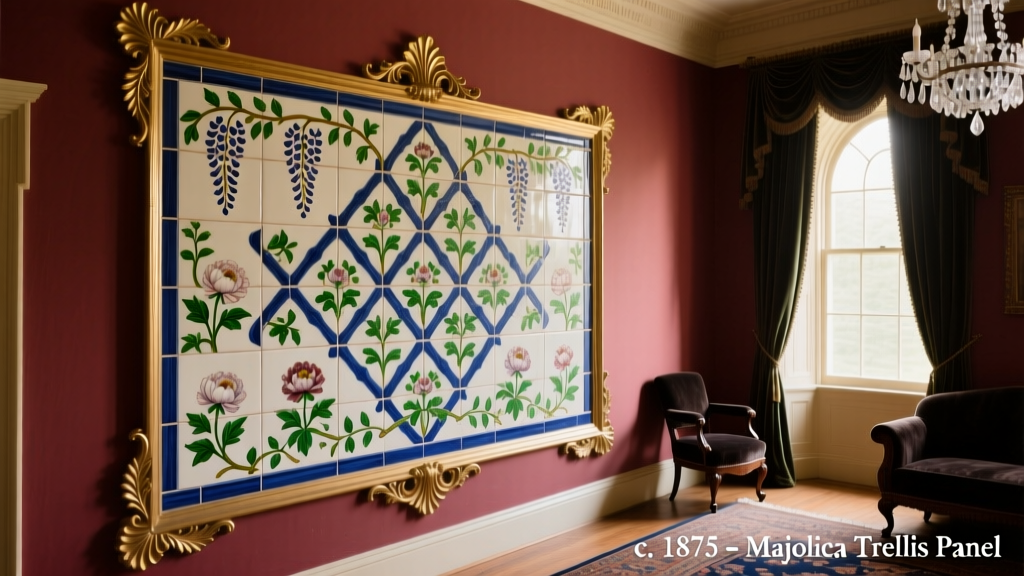
Majolica Tile Wall: Repeating Floral Trellis Pattern, Circa 1875 — 8 × 8 Inch Ceramic Tile Analysis & Conservation Protocol

The Dr. Gerber Butter Scale: Precision, Heritage, and Restoration Insights for Antique Dairy Equipment Collectors

Silver Sterling Samovar with Flame Finial, Scalloped Rim & Square Base: Sheffield Hallam & Sons, 18-Inch Height, 1892

Antique Bed Identification, Restoration, and Historical Value: A Specialist's Guide

The Mendicant Skull Cabinet Card: A Photographic Artifact of Max Taubles and the 1880s Medical-Occult Imagery Tradition

Owens Vase with White Matte Glaze and Circular Stamp: Identification, Provenance, and Restoration Guidelines for the 4 × 5 Inch Example