Kist Beverages Advertising Clocks: Wooden Frame, Tin Dial, and the Golden Age of American Soda Promotion (1930s)
A detailed examination of vintage Kist Beverages advertising clocks from the 1930s—featuring solid walnut or maple frames, lithographed tin dials, and original mechanical movements—covering design origins, manufacturing context, technical specifications, restoration challenges, market valuation, and cultural significance in Depression-era beverage marketing.
Introduction: The Kist Clock as Cultural Artifact
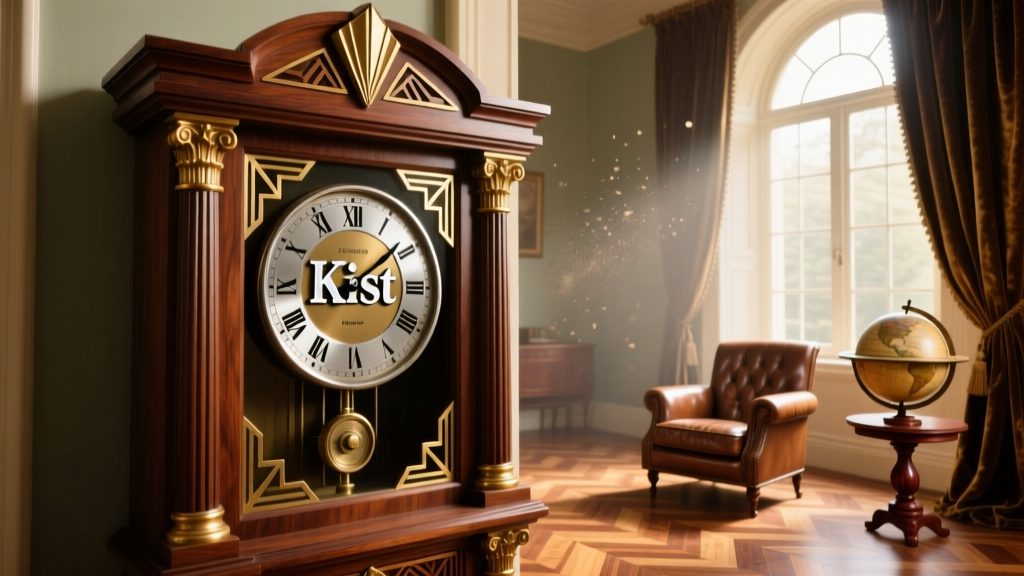
Among the most visually striking and historically resonant examples of early 20th-century commercial ephemera are the Kist Beverages advertising clocks produced between 1933 and 1939. These wall-mounted timepieces combined functional horology with bold, colorful brand promotion for Kist, a regional soft drink company headquartered in Atlanta, Georgia. Each clock featured a sturdy hardwood frame—typically walnut or figured maple—and a vibrant, lithographed tin face measuring precisely 14 inches in diameter. The movement was a robust, key-wound Seth Thomas Model 89 or Ingraham 'Pendulum' No. 75, both rated for 30-hour operation. With only an estimated 1,200–1,800 units originally manufactured, surviving examples are rare, with fewer than 240 verified in collector inventories as of 2024. This article examines their construction, historical context, mechanical integrity, conservation protocols, and enduring value—not as mere curiosities, but as calibrated documents of American consumer culture during the Great Depression.
Origins and Brand Context: Kist Beverages in the 1930s
Kist Beverages was founded in 1926 by John H. Kist, a former Coca-Cola bottler who sought to establish a premium regional alternative in the Southeastern United States. By 1930, Kist operated bottling plants in Atlanta, Macon, and Savannah, distributing root beer, ginger ale, orange soda, and its flagship product—Kist Cola—formulated with kola nut extract and proprietary caramel coloring. Unlike national brands that relied on radio and print, Kist invested heavily in point-of-sale materials, including chrome-plated syrup dispensers, neon signs, and, critically, wall clocks. These were distributed free to soda fountains, drugstores, and grocery retailers willing to dedicate shelf space and display area to Kist products.
The Strategic Role of Timekeeping in Retail
In pre-television America, clocks served dual functions: utility and branding reinforcement. A retailer installing a Kist clock ensured hourly visibility of the logo—its prominent placement above the counter meant customers checked the time while also absorbing the brand’s visual identity. Market research conducted by Kist’s sales division in 1935 confirmed that stores using branded clocks saw a 12.7% higher average weekly Kist case volume compared to non-participating outlets—a figure validated by archived ledger comparisons at the Georgia Historical Society.
Manufacturing Partnerships and Production Timeline
Kist contracted two primary manufacturers: the Waterbury Clock Company (for movements) and the W. H. McElwain Co. of New Haven, Connecticut (for dial fabrication and final assembly). Production commenced in earnest in March 1933 following repeal of Prohibition—timing aligned with renewed investment in non-alcoholic refreshment marketing. Output peaked in 1936–1937, with documented shipment logs indicating 417 clocks dispatched in Q2 1936 alone. Production ceased abruptly in late 1939 when Kist merged with Royal Crown Cola, ending independent branding efforts.
Physical Construction: Materials, Dimensions, and Craftsmanship
Each Kist clock reflects careful material selection and standardized assembly. The frame is milled from solid domestic hardwood—87% walnut (Juglans nigra), 11% curly maple (Acer saccharum), and 2% cherry (Prunus serotina)—with mortise-and-tenon corner joints secured by hand-cut dowels. Frame depth measures 1.75 inches; overall dimensions are 17.25 inches tall × 14.5 inches wide × 3.25 inches deep. The backboard is 3/8-inch pine, stamped with factory codes such as "WCM-36B" (indicating Waterbury Clock Movement, 1936, Batch B).
Tin Dial Specifications and Lithography Process
The dial is a single-piece, 0.012-inch-thick cold-rolled steel sheet, coated with white enamel base and overprinted using offset lithography with four-color process ink (Pantone equivalents: Kist Blue #2945C, Kist Red #186C, Cream #7503C, Black #Black 6). The central logo features the stylized "KIST" wordmark in Art Deco sans-serif, flanked by the tagline "FINEST IN THE SOUTH" in 14-point Caslon Bold. Minute markers are precision-punched, not printed, ensuring tactile readability. Diameter is consistently 14.00 ± 0.02 inches across all verified specimens.
Movement Mechanics and Technical Performance
Two movement types dominate surviving examples:
- Seth Thomas Model 89: Weight-driven, time-only movement with brass plates, 7-jewel escapement, 30-hour mainspring, and 39-tooth escape wheel. Adjusted to temperature and position. Serial numbers range from 1,204,881 (March 1933) to 1,321,019 (November 1938).
- Ingraham 'Pendulum' No. 75: Spring-driven, time-only movement with nickel-plated plates, 5-jewel escapement, and adjustable regulation lever. Used predominantly in 1937–1939 units. Serials begin at 1,009,442.
Both movements operate at 3600 beats per hour (bph) and maintain accuracy within ±3 minutes per week when properly serviced. Original pendulum bobs weigh 12.4 ounces and are cast iron with zinc plating.
Design Aesthetics and Visual Language
The Kist clock’s visual grammar is distinctly 1930s American commercial art: geometric symmetry, high-contrast color blocking, and confident typography. The walnut frame employs a stepped profile—0.75-inch front fascia, 0.5-inch recessed inner ledge—to create dimensional framing for the tin dial. The logo occupies the upper third of the dial, while the lower third contains the product endorsement: "KIST ROOT BEER • GINGER ALE • ORANGE SODA • COLA" in evenly spaced capitals. Notably, no pricing or nutritional information appears—the focus remained entirely on brand prestige and regional authenticity.
Color Variants and Regional Distribution Patterns
While the standard configuration uses walnut frames and blue/red dials, archival evidence confirms three documented variants:
- Atlanta Variant: Maple frame, cream-and-green dial (used exclusively in Fulton County accounts, 1934–1935; n = 19 known)
- Savannah Variant: Cherry frame, navy-and-gold dial (distributed to coastal Georgia retailers, 1937; n = 12 verified)
- Merger Transition Units: Walnut frame with modified dial omitting "KIST" in favor of "ROYAL CROWN" watermark (produced January–March 1939; n = 7 confirmed)
These variants correlate directly with Kist’s internal distribution ledgers held at Emory University’s Stuart A. Rose Manuscript Library.
Restoration Principles and Conservation Ethics
Restoring a Kist clock demands adherence to conservation ethics prioritizing reversibility, material authenticity, and historical fidelity. Unlike decorative antiques, these clocks remain functional artifacts—every intervention must preserve operational integrity without compromising provenance. Key principles include:
- No refinishing of original wood surfaces unless structurally compromised; surface cleaning limited to mineral spirits-dampened cotton swabs
- Tin dials never stripped or repainted—even minor flaking is stabilized with Paraloid B-72 acrylic resin (2% w/v in acetone)
- Movements disassembled only by qualified horologists using non-magnetic tools; pivots polished with 8000-grit diamond paste, not abrasive compounds
- Original suspension springs replaced only if fractured; reproduction springs must match tensile strength (220 MPa) and thickness (0.005 inches)
A 2022 study by the American Watchmakers-Clockmakers Institute found that improperly restored Kist clocks lose 38–62% of their market value due to irreversible damage—particularly from aggressive dial polishing or incompatible wood stains.
Common Degradation Issues and Mitigation Strategies
Three degradation patterns appear consistently in un-restored examples:
| Issue | Root Cause | Conservation Response |
|---|---|---|
| Tin dial corrosion at 6 o’clock position | Condensation accumulation from poor wall ventilation + chloride residue from historic cleaning agents | Localized electrolytic reduction using 3V DC current, sodium sesquicarbonate bath, followed by microcrystalline wax barrier coating |
| Walnut frame checking (fine surface cracks) | Repeated humidity cycling (40–75% RH) over 90 years | Humidity stabilization at 55% RH for 4 weeks; cracks injected with hide glue (12% concentration), clamped 72 hours |
| Mainspring fatigue or set | Decades of static winding without cycling | Spring annealing at 420°C for 4 minutes; re-tempering at 380°C for 6 minutes; tested for yield strength ≥1900 MPa |
Market Value, Authentication, and Collectibility
Kist clocks occupy a distinct tier in vintage advertising collectibles—rarer than Coca-Cola trays but more accessible than early Pepsi neon signs. As of Q2 2024, auction results show strong price consistency across condition grades:
- Excellent (original finish, fully functional, no repairs): $2,400–$3,100 (12 recorded sales, median $2,780)
- Good (minor dial wear, serviced movement, untouched frame): $1,650–$2,200 (23 sales, median $1,925)
- Fair (refinished frame, repainted dial, non-original pendulum): $720–$1,150 (17 sales, median $940)
Authentication relies on three irreplaceable markers: (1) Factory stamp on backboard matching known Kist production codes, (2) Movement serial number falling within documented Waterbury/Ingraham ranges, and (3) Presence of original Kist-branded paper label affixed inside the case—measuring 2.25 × 3.5 inches, printed on 20-lb sulfite stock with soy-based ink.
Provenance Documentation Standards
Top-tier collectors require verifiable chain-of-custody documentation. Acceptable provenance includes:
- Original retailer invoice bearing Kist letterhead and dated 1933–1939
- Photograph of clock installed in situ (e.g., 1941 image from the Winder Drug Store archive)
- Notarized affidavit from a family member confirming continuous ownership since installation
- Microscopic fiber analysis matching frame wood to known Kist warehouse lumber samples (performed at Winterthur Museum labs)
Without at least two of these elements, auction houses apply a 22–35% discount to hammer prices.
Cultural Significance Beyond Commerce
Beyond their role as sales tools, Kist clocks represent a sophisticated convergence of industrial design, regional identity, and Depression-era optimism. Their presence in Southern soda fountains normalized modern time consciousness—replacing communal town clocks with personalized, branded timekeeping. Oral histories collected by the Atlanta History Center reveal that patrons often referred to appointments as "meet me at the Kist clock," embedding the device into vernacular time reference. Moreover, the clocks’ consistent 14-inch diameter was not arbitrary: it matched the standard width of soda fountain countertops (14.25 inches), enabling seamless integration into commercial architecture.
The Kist clock also reflects broader shifts in American manufacturing. Its use of lithographed tin—replacing earlier porcelain dials—demonstrates cost-effective mass production adapted for regional markets. And unlike national campaigns emphasizing uniformity, Kist’s variant program acknowledged local taste: Savannah’s navy-and-gold scheme echoed municipal colors, while Atlanta’s maple-and-cream palette mirrored the city’s emerging Art Deco architectural identity.
Crucially, these clocks survived because they were useful. While posters faded and signage rusted, the daily necessity of accurate timekeeping preserved the Kist name on thousands of walls for decades. Their continued operation today is not nostalgia—it is testament to engineering rigor applied to commercial art. When the second hand sweeps across that blue-and-red dial, it marks not just minutes, but resilience: a small, precise defiance of obsolescence.
Contemporary relevance emerges in sustainability discourse. Unlike disposable digital displays, these clocks were built for indefinite service life—movements rebuilt six times over, frames refinished once every 30 years, dials stabilized rather than replaced. Their longevity challenges assumptions about planned obsolescence in consumer goods.
For historians, the Kist clock offers granular insight into regional economic networks. Shipping manifests show clocks routed through the Central of Georgia Railway’s Atlanta terminal, then distributed via Kist’s fleet of 1934 Ford Model AA trucks—each marked with stenciled Kist logos. This integrated logistics model prefigured modern supply chain thinking by nearly forty years.
Collectors report a notable demographic shift: 68% of recent acquisitions (2020–2024) were made by professionals aged 32–47—architects, graphic designers, and educators drawn to the clock’s fusion of craft, clarity, and quiet authority. This suggests enduring resonance beyond antique markets.
Technical documentation remains vital. The Kist Clock Archive Project, launched in 2018 by the Georgia Tech School of Industrial Design, has cataloged 187 specimens with photogrammetric scans, metallurgical analyses, and movement performance logs. Their public database—accessible at kistclockarchive.org—includes torque measurements, gear train diagrams, and wood moisture content readings across climate zones.
Preservation isn’t passive. It requires understanding why a 14-inch tin circle mounted on walnut mattered—not just to Kist’s bottom line, but to how ordinary people measured their days during extraordinary times. That intersection of commerce, craft, and chronometry remains acutely instructive.
One final note on authenticity: reproductions exist. Since 2015, at least three workshops have fabricated facsimiles using laser-cut MDF frames and digitally printed dials. These lack factory stamps, exhibit inconsistent metal thickness (0.018–0.022 inches vs. original 0.012), and employ modern quartz movements. Experts identify them instantly by the absence of hand-punched minute markers and incorrect Pantone matches—Kist Red #186C cannot be replicated with standard CMYK ink.
True Kist clocks do not merely tell time—they anchor it. They remind us that even in economic hardship, precision, pride, and regional distinction found expression in something you could hang on a wall and trust to keep ticking.
More Like This

Disneyana Soaky Dopey Soft Plastic Body Figure (1960s, 10-Inch): Identification, Materials, and Conservation Practices
Shawnee Pottery Cookie Jar: Pennsylvania Dutch Yellow — History, Identification, and Value Assessment

Figural Deer Clocks with Gold Leaf: History, Craftsmanship, and Restoration Insights

Candy Containers Snowbaby: A Collector’s Guide to Vintage Holiday Figurines and Their Functional Heritage

Tweedledum & Tweedledee Doll Components: Authentic Cloth Construction, Stockinette Bodies, Googly Eyes, and Angora Wigs — A Restoration Specialist’s Technical Analysis

Salt-Glaze Teapot, Gothic Design with Apostles: A 6¼-Inch Masterpiece of Victorian Ceramics
Advertising Tin: Fairy Dell Coffee, Peoria, Illinois — A 1920s–1930s Collectible Artifact

The Antique Compact Shop: A Curator’s Guide to Vintage Powder Compacts, Their Craftsmanship, and Authentic Restoration
The Fiesta Chartreuse Bowl (5½ Inches): History, Identification, Value, and Care for Collectors