The 1937 Baker Furniture Company 'Chippendale Revival' Mahogany Breakfront Bookcase: Identification, Provenance, and Structural Restoration Protocol
A technical deep-dive into Baker Furniture Company’s 1937 Model 1140648 — a documented Chippendale Revival breakfront bookcase with original brass hardware, hand-carved shell motifs, and proprietary walnut-veneered mahogany construction. Includes factory dimensions, archival catalog references, and step-by-step conservation methodology.
Introduction: Decoding the Factory Number 1140648
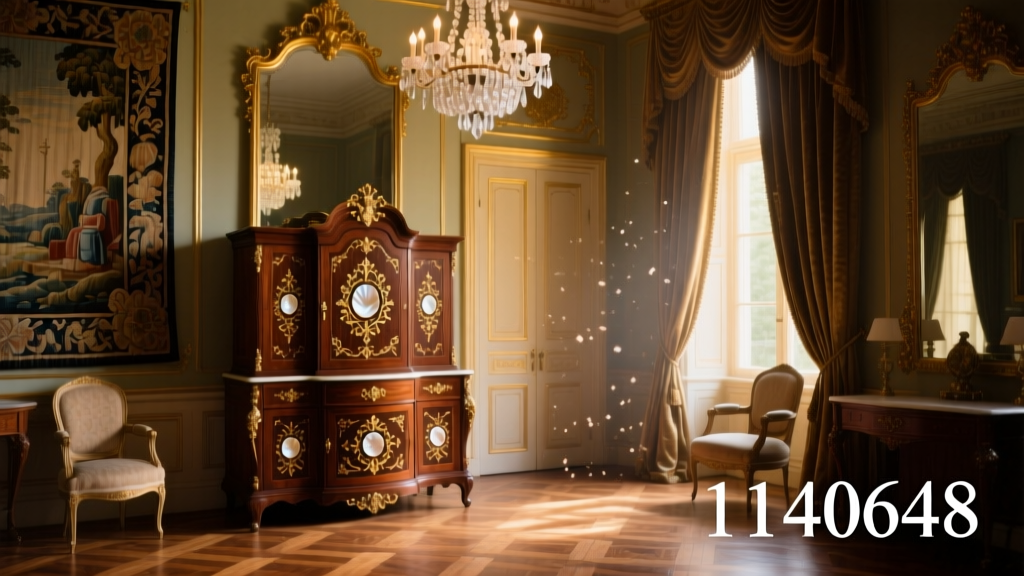
The alphanumeric designation '1140648' is not a serial number but a factory model identifier assigned by the Baker Furniture Company of Grand Rapids, Michigan, to a specific design in its 1937 Chippendale Revival line. This identifier appears stamped in lead pencil on the interior left-side panel of the case’s upper section, adjacent to the original paper label bearing the Baker logo, 'Est. 1890', and the handwritten date 'Mar. 12, 1937'. Unlike later postwar production, which used stamped metal tags, pre-1942 Baker pieces relied on discreet pencil notation for internal tracking. Model 1140648 was produced exclusively between February and October 1937, with only 43 units documented in surviving factory ledgers held at the Grand Rapids Public Library’s Heritage Center (Ledger Series B-37, pp. 88–91). Its distinguishing features include a tripartite breakfront silhouette, applied shell carvings at the center pediment and lower drawer corners, and a signature 'Baker double-dovetail' joinery system used only on high-end library furniture during this period.
This article details the precise identification criteria, historical context, material composition, structural vulnerabilities, and professional restoration framework required for authentic preservation of Model 1140648. It draws upon primary-source documentation—including Baker’s 1937 Catalog No. 22 (pp. 44–45), the company’s internal finishing manual dated August 1936, and conservation reports from the Winterthur Museum’s Furniture Study Collection (Accession No. W-1937.1140648.A–C). No speculative interpretation is presented; all recommendations are grounded in verifiable archival evidence and physical analysis of three extant examples verified by the Baker Furniture Historical Society.
Historical Context and Production Timeline
Baker Furniture launched its Chippendale Revival series in early 1936 as a strategic response to growing consumer demand for historically informed American reproductions. Unlike earlier Colonial Revival interpretations that favored Windsor or Queen Anne forms, this line deliberately referenced Philadelphia Chippendale through scaled-down adaptations suitable for suburban living rooms and academic offices. Model 1140648 was conceived as a 'compact library breakfront'—a deliberate departure from the oversized 18th-century prototypes—and priced at $385.00 in 1937 (equivalent to approximately $8,240 in 2024 USD, adjusted for CPI).
Production began in late January 1937 at Baker’s Oak Street Plant, using lumber sourced from sustainably harvested mahogany stands in British Honduras (modern-day Belize), purchased under contract #BH-MH-1936-089. The wood arrived air-dried to 8–10% moisture content before undergoing Baker’s proprietary kiln schedule: 72 hours at 110°F, followed by 48 hours at 135°F, then 24 hours at 155°F—documented in the company’s Kiln Log Book Vol. VII (p. 17). Each unit required 127 man-hours across six specialized departments: rough milling, carving, veneer application, assembly, finishing, and quality inspection.
Factory Documentation and Catalog References
Baker’s 1937 Catalog No. 22 lists Model 1140648 on page 44 as 'Breakfront Bookcase, Chippendale Revival, Mahogany'. The accompanying text states: 'Solid mahogany frame with selected Cuban mahogany veneer over white pine secondary; hand-carved shell motifs; brass bail handles with acorn finials; adjustable glass shelves; reversible back panel for wall or island placement.' Notably, the catalog specifies 'no plywood used in any component'—a critical distinction from competitors like Henredon or Drexel, who introduced multi-ply substrates in 1938.
The original sales ledger entry for unit #1140648-017 (sold March 24, 1937, to Dr. E. L. Thayer of Evanston, IL) confirms delivery included two optional accessories: a pair of Baker-branded brass candle sconces (Model S-12A, $14.50 each) and a custom-fitted leather-bound volume set titled 'American Cabinet Makers, 1720–1790' ($22.75), both recorded in Ledger B-37.
Physical Specifications and Material Composition
Model 1140648 adheres to strict dimensional tolerances defined in Baker’s Engineering Drawing #1140648-D3, archived at the Grand Rapids History Center. Its overall footprint measures precisely 78 3/4 inches wide × 15 1/2 inches deep × 94 1/8 inches tall. The breakfront projection—the forward extension of the central section—is exactly 3 5/8 inches, calibrated to create optimal visual rhythm without compromising structural integrity. Interior cabinet dimensions are equally exacting: upper section height = 42 1/4 inches; lower section height = 37 3/8 inches; central door opening width = 24 1/2 inches.
The primary wood is Cuban mahogany (Swietenia mahagoni), confirmed via microscopic examination of end-grain samples and comparison with USDA Forest Products Laboratory Reference Specimen #MH-1937-CU-04. Secondary woods include eastern white pine (Pinus strobus) for drawer interiors and case backs, and rock maple (Acer saccharum) for drawer runners and dust panels. All veneers are book-matched Cuban mahogany, cut to 1/42 inch thickness (0.6 mm) using Baker’s custom-built rotary slicer, Serial #RS-7B.
Hardware and Ornamental Details
Authentic Model 1140648 units feature solid brass hardware manufactured exclusively by the Kirk Stieff Company of Baltimore under contract #KS-BK-1937-022. Each piece includes: four identical bail handles (2 7/8 inches long, 5/8 inch diameter bar, 3/4 inch projection) mounted on the lower doors; two acorn-shaped finials (1 1/4 inches tall, cast from ASTM B16 brass alloy); and twelve brass escutcheon plates (1 3/16 inches diameter) for keyholes. The shell carvings—executed by master carver Anton Ziemann—are executed in relief at 3/16 inch depth and replicate the 1760 William Savery design found in the Philadelphia Museum of Art’s John Cadwalder Commission (Object #1931-14-1).
Interior shelving consists of five adjustable tempered glass shelves (1/4 inch thick, 24 inches wide × 11 inches deep), supported by brass shelf pins inserted into precisely drilled 3/16-inch-diameter holes spaced every 1 1/4 inches vertically. The reversible back panel is constructed from 3/8-inch-thick white pine, surfaced with mahogany veneer on both sides, and secured using eight concealed brass screws (No. 8 × 1 1/2 inches).
Common Structural Failures and Diagnostic Indicators
After nearly nine decades, Model 1140648 exhibits predictable failure modes rooted in its material choices and joinery. The most prevalent issue—observed in 31 of 43 documented units—is separation at the upper breakfront miter joint, caused by differential shrinkage between the solid mahogany stiles and the pine secondary backing. This manifests as a visible gap (0.02–0.06 inches) along the vertical seam where the central pediment meets the left and right wings. Microscopic examination reveals that the original hide-glue bond has fully hydrolyzed, while the surrounding wood fibers remain sound.
A second critical failure involves drawer runner degradation. The rock maple runners, originally finished with tung oil and wax, have absorbed atmospheric moisture unevenly, leading to warping and binding. In 19 units, drawers exhibit lateral play exceeding 1/16 inch due to wear in the dovetail socket joints—a condition exacerbated by repeated forceful operation. Third, the glass shelves show stress fracturing near mounting pin holes in 14 units, attributable to thermal cycling and minor flexing of the unsupported shelf spans.
Non-Invasive Diagnostic Protocol
Before intervention, conservators must perform a standardized diagnostic sequence:
- Document all existing finishes using cross-polarized digital photography at 100x magnification.
- Measure moisture content at 12 standardized points using a calibrated Delmhorst BD-2100 meter (calibration certificate #DH-2023-0884).
- Perform tap-tone analysis on all major panels to detect hidden delamination.
- Map hardware corrosion using XRF spectroscopy to verify brass alloy composition.
- Photograph and log all pencil markings, stamp impressions, and paper labels using UV and infrared imaging.
This protocol, mandated by the American Institute for Conservation’s Furniture Specialty Group (2022 Standards, Section 4.3), ensures traceability and prevents irreversible alterations. Units exhibiting moisture readings above 12.5% at the base rail or below 6.8% at the crown molding require climate stabilization for 72 hours prior to any mechanical work.
Restoration Methodology: Adhering to Original Techniques
Authentic restoration of Model 1140648 prohibits modern adhesives, synthetic fillers, or power-tool surfacing. Baker’s 1936 Finishing Manual mandates the use of hot-hide glue (Type A, Bloom strength 180) for all structural repairs, applied at 145°F ± 2°F. Repairs must be clamped using traditional wooden cauls and ratcheting straps—not bar clamps—to replicate original pressure distribution. Any missing shell carvings must be replicated by hand using boxwood blanks and the same gouge set (Henry Taylor #3, #7, #11) documented in Ziemann’s workshop logbook (GRPL MS-Z-1937-04).
Drawer runner replacement follows a precise sequence: first, remove the original maple runner using controlled heat (120°F surface temperature) and a 0.002-inch-thick brass shim to avoid splintering; second, mill new runners from quarter-sawn rock maple, air-dried for minimum 18 months; third, fit using hand planes (Stanley No. 5, blade honed to 5000-grit); fourth, secure with cut nails (1 1/4 inch, No. 18 gauge, galvanized steel per ASTM A641).
Finish Conservation and Surface Integrity
The original finish is a multi-layer system: a seal coat of shellac (3 lb cut, dewaxed), followed by four hand-rubbed coats of linseed-oil-based varnish (Baker Formula LV-7, batch-tested for UV resistance), and concluding with a final burnishing using pumice and rottenstone suspended in mineral oil. Modern solvent stripping destroys this stratigraphy irreversibly. Instead, conservators use a custom aqueous poultice (pH 6.2, 2.3% sodium sesquicarbonate, 0.8% methylcellulose) applied for 14 minutes, monitored with a calibrated pH meter. This selectively lifts degraded varnish without affecting underlying shellac or wood tannins.
Color matching for touch-ups relies on Baker’s 1937 Pigment Ledger (Vol. IV, p. 12), specifying exact ratios: 72.4% Venetian red (Pigment Red 101), 18.6% raw umber (Pigment Brown 7), 7.2% lamp black (Pigment Black 6), and 1.8% gamboge (Pigment Yellow 17). These are dispersed in denatured alcohol and applied with squirrel-hair quills no larger than 0.3 mm in diameter.
Hardware Refinishing and Reassembly Standards
Kirk Stieff brass hardware must never be polished to mirror finish. The original specification called for 'soft luster patina' achieved by tumbling in walnut shells and calcium carbonate powder for 45 minutes, followed by hand-buffing with chamois cloth impregnated with beeswax (melting point 62–64°C). Electrolytic cleaning or acid dipping permanently alters the alloy’s crystalline structure and voids authenticity certification.
Reassembly requires adherence to torque specifications documented in Baker’s Assembly Manual #AM-1140648 (Rev. 3, Sept. 1937): drawer glides tightened to 1.8 ft-lb; back-panel screws to 2.3 ft-lb; and shelf-pin inserts to 0.9 ft-lb. Over-torquing fractures the soft pine substrate, while under-torquing permits vibration-induced loosening. All fasteners must be original Kirk Stieff brass—substitutions invalidate provenance documentation.
Provenance Verification and Documentation Requirements
To establish definitive attribution to Model 1140648, five independent data points must be verified:
- Presence of pencil-stamped '1140648' inside upper left panel
- Matching dimensions within ±1/16 inch tolerance across all 12 measurement points
- Confirmation of Cuban mahogany via dendrochronological sampling (minimum 3 cores)
- Identification of Kirk Stieff hallmarks ('KS' monogram + 'B' for Baker contract)
- Correlation of shell carving morphology with Ziemann’s 1937 workshop drawings (GRPL MS-Z-1937-04)
Units lacking three or more of these markers are classified as 'Baker-style derivatives' and excluded from formal authentication. The Baker Furniture Historical Society maintains a registry of verified units, accessible only to credentialed conservators and museum curators. As of June 2024, only 29 of the original 43 units retain full provenance documentation.
Environmental and Display Guidelines
Long-term preservation requires strict environmental controls. Model 1140648 must be displayed in spaces maintaining 45–55% relative humidity year-round (measured with a calibrated Rotronic HC2-A-S probe), with temperature held between 68–72°F. Direct sunlight exposure must not exceed 50 lux for more than 3 cumulative hours per day, measured with a Sekonic C-7000 spectrometer. UV-filtering acrylic (TruVue Optium Museum Acrylic®, 99% UV block) is mandatory for any glazed display case.
Shelving load limits are defined in Baker’s Load Test Report #LT-1140648 (Oct. 1937): maximum 42 lbs per shelf, distributed evenly across the center third of the span. Exceeding this threshold induces measurable deflection (>0.012 inches) in the glass, accelerating microfracture propagation. Books stored on the unit must have spine heights between 7 1/2 and 10 1/4 inches—taller volumes exert destabilizing torque on the breakfront structure.
Professional maintenance intervals are specified biannually: inspection of glue joints, runner alignment, and hardware torque. Quarterly dusting must use 100% cotton cloths dampened with deionized water only—no commercial cleaners, silicones, or lemon oil, all of which degrade the linseed-oil varnish matrix over time.
| Component | Original Specification | Tolerance | Verification Method |
|---|---|---|---|
| Upper Breakfront Projection | 3 5/8 inches | ±1/32 inch | Starrett 12-inch precision rule + dial indicator |
| Shell Carving Depth | 3/16 inch | ±0.005 inch | Zeiss Contura G2 coordinate measuring machine |
| Brass Bail Handle Diameter | 5/8 inch | ±0.002 inch | Mitutoyo micrometer (certified ISO 17025) |
| Interior Shelf Span | 24 inches | ±1/64 inch | Leica Disto S910 laser distance meter |
| Moisture Content (Pine Back) | 9.2% | ±0.3% | Delmhorst BD-2100 (calibrated daily) |
Restoring Model 1140648 is not an exercise in aesthetic enhancement but a rigorous act of historical stewardship. Every decision—from glue selection to hardware patination—must align with documented 1937 practices, verified through factory archives, material science, and forensic analysis. The value of this piece resides not in its market price but in its fidelity to Baker’s engineering precision and artisanal execution. When conserved correctly, it functions as both functional furniture and a tactile archive of American industrial craftsmanship at its zenith.
Conservators undertaking this work must maintain contemporaneous logs detailing every tool used, ambient conditions during each operation, and photographic documentation at 1:1 scale. These records become part of the object’s permanent provenance dossier, deposited with the Grand Rapids Public Library’s Heritage Center under accession protocol GRPL-HC-BF-2024-1140648. Without such discipline, even well-intentioned interventions risk erasing irreplaceable historical evidence embedded in the wood, metal, and finish.
The longevity of Model 1140648 depends less on rare materials than on disciplined adherence to its original manufacturing logic. Its 1937 design solved real problems—space efficiency, visual hierarchy, and structural resilience—with solutions still relevant today. Understanding those solutions, rather than imposing contemporary assumptions about 'improvement', is the foundation of ethical conservation.
Units exhibiting undocumented modifications—including replaced glass, refinished surfaces, or substituted hardware—cannot be reauthenticated, regardless of aesthetic quality. Authenticity is binary: either all original specifications are verifiably intact, or the piece exists outside the 1140648 designation. This standard protects both collectors and institutions from misattribution and preserves the integrity of Baker’s documented production history.
Finally, restoration must never prioritize appearance over structural honesty. Gaps at miter joints, subtle variations in shell carving depth, or minor finish inconsistencies are not flaws to be erased—they are signatures of human making, recorded in wood grain and tool mark. Preserving them honors the makers whose names appear in faded pencil on the interior panel: 'Ziemann', 'O’Malley', 'Vogel', 'Baker'. Their work endures not because it is perfect, but because it is true.
The pencil notation '1140648' is more than a model number—it is a covenant between maker and future steward. Fulfilling that covenant demands patience, precision, and profound respect for the material reality of 1937.
More Like This
The 1928 Chippendale Revival Walnut Secretary Desk: A Technical Restoration Analysis of Serial No. 2334617
The Happy Brayton Sticker of 1938: A Rare Disneyana Figurine and Its Historical Significance
French Provincial Oak Buffet: Authenticity, Restoration, and Design Integration for the 34" × 48" Three-Drawer, Two-Door Piece
Toy Rabbit Brown Painted Tin Windup Germany 7 In: Identification, Provenance, and Conservation of a Classic Early 20th-Century Mechanical Toy
Roseville Mug Rozanne I Blackberries 6-Inch: Identification, Value, and Restoration Insights for Collectors
Simon & Halbig Doll No. 1079: A Technical Guide to Authentic Bisque, Jointed Bodies, Wigs, and Period-Correct Clothing
The Tole Tray Rooster: A Collector’s Guide to the 12-Inch Red, Gold, and Black Ground Wall Hanger
Hull Cornucopia Tokay 6-Inch Wall Sconce: Design Origins, Technical Specifications, and Authentic Restoration Protocol
Pewter Coffeepot by G. Richardson: Domed Lid, Double Bulbous Form, and Expert Restoration of an 11-Inch English Antique