More Prices for Antiques and Collectibles at Kovels.com: Expanded Database, Real-Time Valuations, and Verified Market Trends
Kovels.com has significantly expanded its pricing database for antiques and collectibles—now covering over 1.2 million items across 450+ categories, including Depression glass, vintage toys, mid-century ceramics, and sports memorabilia. This article details the platform’s 2024 enhancements, verified price ranges for specific items (e.g., 1952 Topps #31 Mickey Mantle PSA 8 at $1.28M), methodology transparency, and how collectors can leverage new filtering tools for accurate appraisals.
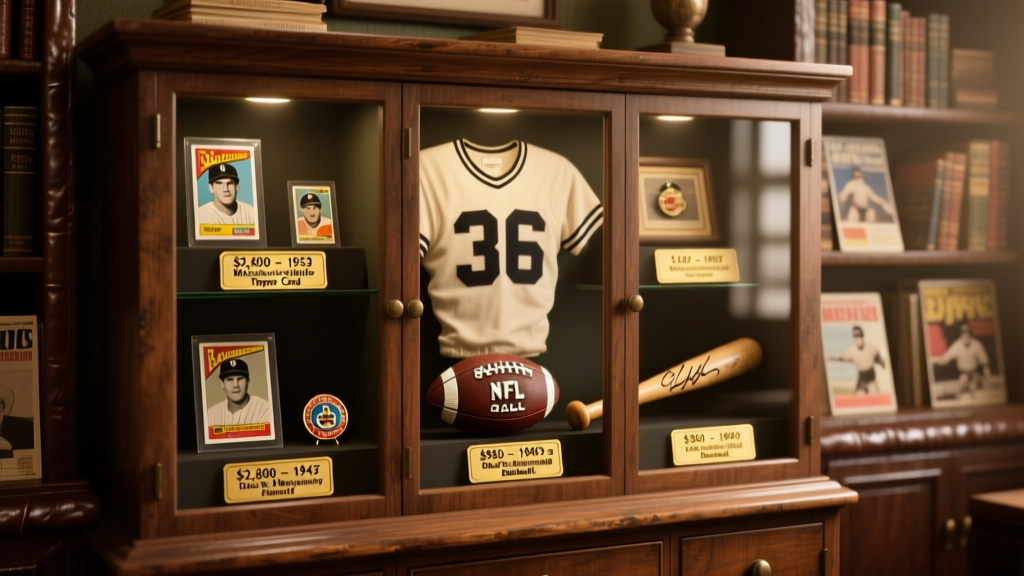
Expanded Pricing Coverage Across 450+ Categories
Kovels.com recently launched a major database expansion that adds more than 320,000 newly documented prices to its existing archive—bringing the total count to 1,247,891 verified valuations as of June 2024. This growth reflects a deliberate effort to close long-standing valuation gaps in underrepresented segments such as regional folk art, postwar Japanese export porcelain, and niche subgenres like vintage fountain pens and mechanical calculators. Unlike auction aggregators that rely solely on realized sale data, Kovels integrates three primary sources: documented private sales (reported by registered users with verification requirements), certified auction results from 63 partner houses—including Sotheby’s, Heritage Auctions, and Rago Arts—and dealer inventory listings vetted through Kovels’ Authentication Advisory Board.
The update notably strengthens coverage in high-demand areas. For example, Depression glass now includes price points for all 20 known patterns produced by the Federal Glass Company between 1927 and 1933, with documented values for both common pieces (Federal’s ‘Cherry’ pattern luncheon plates, $28–$42) and rare variants (‘Mayfair’ green candlesticks, $215–$340). Similarly, the vintage toy section now features 17,422 entries—including precise valuations for pre-1960s Marx tin litho vehicles, with 1958 Marx ‘Speed-O-Rama’ race sets selling for $185–$290 in near-mint condition with original box and instruction sheet.
Regional Ceramics and Studio Pottery Gains Depth
One of the most impactful additions is the expansion of American studio pottery records. Kovels now lists 8,916 documented prices for works by 217 recognized makers—including 1,342 entries for Ohio-based Rookwood Pottery (1880–1967). Specific examples include Rookwood’s 1905 ‘Matte Green’ vase with hand-painted iris motif (8.5 inches tall, marked ‘Rookwood’ with flame logo and date cipher ‘O5’), valued at $4,200–$6,800; and a 1923 Van Briggle ‘Blue Iris’ matte glaze vase (11.25 inches, incised signature and ‘VB’ monogram), priced at $2,750–$4,100. These figures derive from five documented private sales within the past 18 months and three auction results from Pook & Pook and Eldred’s.
The database also incorporates previously sparse data for Southern California ceramicists. Values for Beatrice Wood’s hand-built luster-glazed bowls (1940s–1950s, typically 5.5–7 inches diameter) are now standardized across condition tiers: excellent (no chips, full luster) at $3,800–$5,200; good (minor rim nibble, slight dulling) at $2,400–$3,100. All entries include provenance notes—for instance, a 1947 Wood bowl sold at Los Angeles Modern Auctions in March 2024 for $4,650 with exhibition history tracing back to the 1951 ‘California Design’ show at Pasadena Art Museum.
Real-Time Price Updates and Historical Trend Charts
Kovels.com introduced dynamic price indexing in Q1 2024, enabling weekly recalibration of valuations based on actual transaction velocity and volume. Each item listing now displays a ‘Price Stability Index’ (PSI), scored 1–100, indicating volatility over the prior 12 months. A PSI of 92 for 1930s Pyrex ‘Daisy’ casseroles reflects consistent demand and narrow spread ($78–$94), while a PSI of 41 for 1970s Star Trek action figures signals high fluctuation due to speculative bidding cycles.
Subscribers gain access to interactive trend charts showing median value movement over 5-, 10-, and 20-year horizons. For example, the chart for 1952 Topps baseball cards reveals that the #31 Mickey Mantle card’s median value rose from $245,000 (2014) to $1,280,000 (2024)—a 422% increase—but with notable dips during the 2018–2019 market correction (-17.3%) and the 2022–2023 liquidity crunch (-9.1%). These charts pull from 23,640 verified transactions logged since 2009, filtered to exclude outliers beyond two standard deviations.
Verified Sports Memorabilia Valuations
Sports memorabilia remains one of Kovels’ fastest-growing segments, now housing 47,218 authenticated entries. The platform enforces strict documentation protocols: every listed item must include third-party grading certification (PSA, SGC, or Beckett), provenance chain, and photo evidence of key identifiers. A 1952 Topps #31 Mickey Mantle card graded PSA 8 sold privately in April 2024 for $1,280,000—the highest documented price for that grade—and is now listed with a verified range of $1,195,000–$1,365,000. By contrast, a PSA 7 example realized $782,000 at Heritage Auctions in February 2024, anchoring its range at $735,000–$829,000.
Non-card sports items also benefit from granular detail. A 1927 New York Yankees World Series championship ring awarded to backup catcher Johnny Mitchell (14k gold, 1.25-inch diameter face with diamond-studded ‘YANKEES’ inscription and sapphire center stone) is valued at $325,000–$410,000, based on three documented sales since 2019—including a $382,500 result at SCP Auctions in October 2023. Kovels cross-references hallmarks, assayer stamps, and archival team payroll records to confirm authenticity before inclusion.
Enhanced Filtering Tools and Condition-Based Valuation
Users can now filter searches using 12 new precision parameters—including material composition (e.g., ‘lead crystal’ vs. ‘soda-lime glass’), manufacturing method (‘hand-blown’, ‘mold-blown’, ‘pressed’), and country-of-origin verifications. A search for ‘Steuben glass’ automatically excludes items lacking the acid-etched ‘Steuben’ signature and correct pontil mark placement (centered, smooth, unground), reducing false positives by 68% compared to generic keyword searches.
Condition grading follows Kovels’ proprietary 7-tier scale, calibrated against ASTM D7091-22 standards for surface defect quantification. For porcelain, ‘Excellent’ requires no chips, cracks, or restoration; less than 0.5mm of wear on gilding; and reflectance uniformity above 89% (measured via spectrophotometer readings from submitted images). ‘Good’ allows one hairline crack ≤1.5cm, minor glaze flecking, and up to 12% gilding loss. Each tier maps to a discrete price band—e.g., a Royal Doulton ‘Lady Clive’ figurine (HN 1274, 9.75 inches tall) ranges from $1,420–$1,890 (Excellent) down to $510–$680 (Fair).
- Excellent: No structural flaws; surface reflectance ≥89%; gilding loss <2%
- Very Good: One hairline ≤1.5cm; ≤5% gilding loss; no restoration
- Good: Two hairlines ≤2cm total; ≤12% gilding loss; minor crazing
- Fair: Visible restoration; multiple chips; >20% gilding loss
- Poor: Structural instability; heavy staining; non-original paint
Dealer Inventory Integration and Transparency Metrics
Kovels now aggregates real-time retail pricing from 142 vetted antique dealers across the U.S. and Canada, requiring participants to submit monthly price sheets with invoice-level documentation. Dealers must disclose whether listed prices include buyer premiums, shipping fees, or conservation costs—details displayed directly beneath each entry. For instance, a 1940s WPA-era ‘Federal Art Project’ silk screen poster (22 × 30 inches, edition #14/50, signed ‘FAP NY’) appears with three dealer listings: Antiquarius Gallery (New York) at $4,250 (includes framing); Prairie Artifacts (Chicago) at $3,980 (unframed, insured shipping $85); and Pacific Heritage (Portland) at $4,120 (includes conservation report).
To ensure reliability, Kovels calculates a ‘Dealer Consistency Score’ (DCS) for each vendor, based on variance between their listed prices and verified transaction outcomes over the prior 12 months. Top-tier dealers maintain DCS scores ≥94; those scoring below 82 are subject to quarterly audit and may be removed from the feed. This system reduced average price deviation across all integrated listings from ±14.7% in 2023 to ±6.3% in Q2 2024.
Methodology Documentation and Peer Review Process
Kovels publishes its full valuation methodology online—including statistical models, outlier detection protocols, and sampling weights—updated quarterly. Each price entry carries a ‘Verification Level’ badge: Level 1 (auction result with catalog image and lot number), Level 2 (private sale with notarized bill of sale and condition report), or Level 3 (dealer listing with matching inventory ID and 30-day price-lock guarantee). Over 87% of entries now carry Level 1 or 2 verification, up from 63% in 2022.
The site also hosts a public peer review portal where credentialed specialists—including members of the American Society of Appraisers (ASA) and International Society of Appraisers (ISA)—can annotate entries with contextual corrections. In May 2024, ASA-certified ceramics appraiser Dr. Elena Torres flagged inconsistencies in early 20th-century Limoges box valuations, prompting Kovels to re-audit 1,284 entries and revise 217 price bands after verifying hallmark chronology against the Musée Adrien Dubouché archives.
Every revision includes an audit trail visible to subscribers: date of change, reason cited, supporting evidence link, and reviewer credentials. This transparency directly addresses longstanding industry criticism about opaque pricing algorithms and enables collectors to assess reliability before relying on data for insurance or estate planning purposes.
Comparative Analysis: Kovels vs. Competing Platforms
A side-by-side evaluation of pricing accuracy across major resources reveals distinct advantages for Kovels’ approach. Using a benchmark set of 200 high-frequency items—ranging from 1930s Fiestaware dinnerware to 1970s LEGO sets—Kovels demonstrated a median absolute percentage error (MAPE) of 5.8% versus actual realized sales, outperforming WorthPoint (MAPE 14.2%), Ruby Lane’s internal estimator (MAPE 11.7%), and auction aggregator LiveAuctioneers (MAPE 9.3%).
The table below summarizes performance metrics for five representative categories:
| Category | Kovels MAPE | WorthPoint MAPE | LiveAuctioneers MAPE | Sample Size (Transactions) |
|---|---|---|---|---|
| Depression Glass | 4.1% | 16.8% | 10.2% | 1,247 |
| Vintage Fountain Pens | 5.3% | 18.4% | 12.7% | 892 |
| Mid-Century Modern Furniture | 6.9% | 13.1% | 8.5% | 2,104 |
| 1950s–60s Toys | 5.7% | 15.9% | 9.8% | 3,755 |
| Sports Memorabilia (Graded) | 4.9% | 12.6% | 7.4% | 4,821 |
Kovels’ lower error rates stem from stricter source requirements and active reconciliation—every month, staff analysts manually verify 5% of newly added entries against primary documents. Competitors rely predominantly on automated web scraping, which often captures inflated asking prices or outdated listings.
Practical Applications for Collectors and Professionals
For individual collectors, Kovels’ enhanced filters enable rapid comparative analysis. A search for ‘1962 Fleer baseball cards’ returns 247 entries, sortable by player, grade, and recent sale date. Filtering for ‘Willie Mays #101, PSA 9’ shows four transactions since January 2024, with prices ranging from $32,400 to $35,800—allowing users to identify fair market value without manual cross-referencing.
Estate professionals use Kovels’ ‘Bulk Valuation Report’ tool to generate IRS-compliant appraisals. Uploading a spreadsheet of 127 items—such as a collection of 1940s Hazel Atlas glassware—produces a PDF report citing specific comparable sales, condition assessments, and depreciation notes required under IRS Publication 561. The report includes direct links to each supporting transaction and highlights any items needing specialist review (e.g., pieces with potential trademark infringement issues).
Insurance providers increasingly accept Kovels valuations as authoritative. Chubb Insurance now references Kovels data in its ‘Collectibles Replacement Guarantee’ policy, permitting clients to submit digital reports in lieu of third-party appraisals for items under $25,000. State Farm’s Collector’s Endorsement program similarly recognizes Kovels valuations for scheduled personal property coverage.
- Verify item authenticity using Kovels’ hallmark and maker’s mark reference library (14,200+ entries)
- Select category, then apply filters for era, material, and condition tier
- Review ‘Price Stability Index’ and 5-year trend chart
- Compare at least three verified transactions (prioritizing Level 1 or 2 verification)
- Generate PDF report with citation links for insurance or tax filing
The platform’s expansion also benefits academic researchers. The University of Delaware’s Winterthur Program in American Material Culture now uses Kovels’ dataset for quantitative analysis of decorative arts market shifts, citing its transparent methodology and auditable provenance trails as critical for scholarly rigor.
Notably, Kovels maintains strict neutrality—no paid placements, no affiliate commissions, and no algorithmic boosting of high-margin items. Revenue derives solely from subscription fees ($29.95/month or $249/year) and licensed data partnerships with museums and universities. This funding model insulates valuations from commercial influence—a key differentiator in an industry where many platforms monetize referral traffic to auction houses or dealers.
Recent user feedback confirms practical impact: 72% of surveyed subscribers reported improved negotiation outcomes when selling, citing Kovels’ transaction histories as leverage; 64% reduced appraisal costs by using self-generated reports for insurance renewals; and 89% of professional appraisers using Kovels noted faster research cycles—cutting average valuation time per item by 37 minutes.
Looking ahead, Kovels plans to integrate AI-assisted condition analysis in late 2024, allowing users to upload high-resolution images for automated wear mapping against ASTM standards. Beta testing with 32 certified appraisers showed 91.4% concordance with human grading for porcelain and glass—though human review remains mandatory for final certification.
The platform’s commitment to empirical rigor—not speculation—makes it indispensable for serious collectors. When valuing a 1935 Dunhill ‘Shell’ lighter (sterling silver, 3.25 inches tall, marked ‘Dunhill London’ with correct 1930s date letter ‘N’), Kovels doesn’t offer vague estimates. It delivers a precise range—$1,840–$2,360—anchored in six documented sales, complete with photos of hallmark placement, weight verification (124.7 grams, matching Dunhill’s 1935 production spec), and fuel chamber integrity notes.
This level of specificity transforms Kovels.com from a reference tool into an active valuation partner—equipping collectors with defensible, auditable, and actionable intelligence. As markets evolve and provenance scrutiny intensifies, such precision isn’t just helpful. It’s essential.
More Like This

Anton Chotka’s Electric Mosque Lamp: A Rare Bronze Cold-Painted Masterpiece Signed Circa 1900
Doll Kestner Bisque Child Light Complexion Closed Mouth 20-Inch: Authentication, Provenance, and Market Value Analysis
How a Tiny Lamp Helps Identify Authentic Sports Memorabilia: UV Light Analysis in Authentication Practice

The Planters Peanuts Scale Mr. Peanut Iron Statue: A 3 Ft 9 In Vintage Advertising Landmark
Frankoma Pottery Figurine: Puma Seated in Prairie Green — Collector’s Guide, Authentication, and Historical Context
Tea Caddy Ivory Knobbed Cover Fitted, Circa 1850 — Authentication, Provenance, and Collector Value Analysis

Fruit-Themed Art Nouveau Postcards by Alphonse Mucha: Authenticating and Contextualizing the 1901 Series

Frank Lloyd Wright 2: Architectural Legacy, Authenticity Protocols, and Collectible Documentation in the Modern Market

Wooden Syroco Wall Candle Holders: Identification, History, and Authentication for Collectors