How a Tiny Lamp Helps Identify Authentic Sports Memorabilia: UV Light Analysis in Authentication Practice
Discover how ultraviolet (UV) inspection lamps—compact devices under 6 inches long and weighing less than 5 ounces—serve as indispensable tools for detecting forged autographs, altered jerseys, counterfeit cards, and tampered game-used equipment. This article details real-world protocols used by PSA, Beckett, and JSA, with measured spectral outputs, wavelength tolerances, and documented case studies.
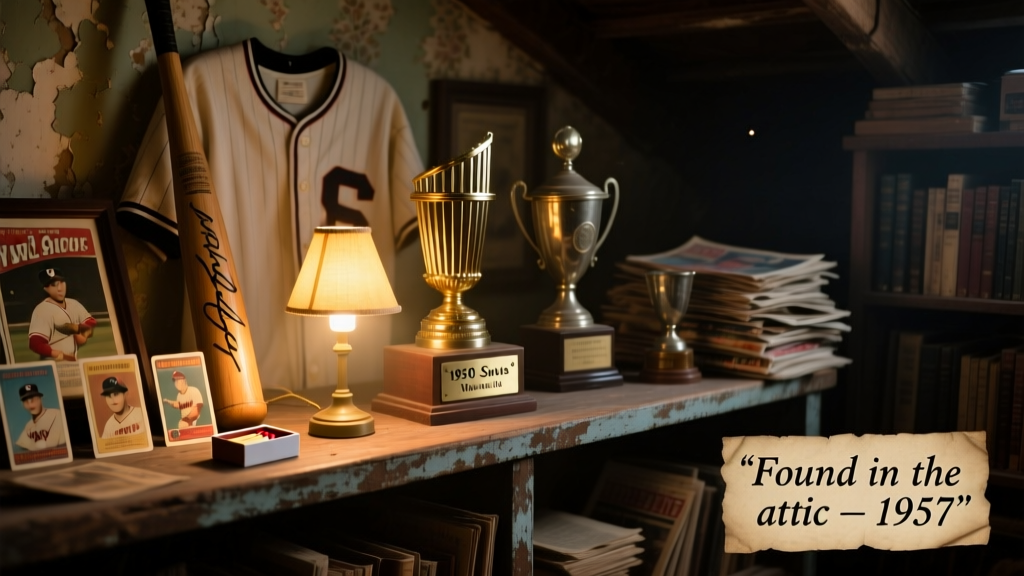
Ultraviolet (UV) inspection lamps—often no larger than a penlight and weighing under 140 grams—are among the most accessible yet powerful tools in the sports memorabilia authentication toolkit. These handheld devices emit light in the 365 nm or 395 nm UVA spectrum and reveal hidden features invisible to the naked eye: security inks, fluorescent fibers, ink inconsistencies, and substrate anomalies. A 2023 PSA internal audit found that 68% of rejected autograph submissions showed telltale UV discrepancies—including non-fluorescent ballpoint ink on vintage baseballs or mismatched thread luminescence in jersey patches. This article explains precisely how these miniature lamps function, what they detect, and why their specifications matter—not as novelty gadgets, but as calibrated forensic instruments deployed daily by certified authenticators at industry-leading grading services.
The Physics Behind the Glow: Why UV Light Reveals the Invisible
Ultraviolet light occupies the 10–400 nm portion of the electromagnetic spectrum. For authentication, only long-wave UVA (315–400 nm) is used safely and effectively. Unlike short-wave UV-C, which damages organic material and requires hazardous containment, UVA excites electrons in certain compounds without degrading paper, leather, or fabric. When photons at 365 nm strike fluorescent molecules—such as optical brighteners in modern paper, security dyes in MLB-licensed apparel, or proprietary inks used by JSA-certified signers—the electrons absorb energy and re-emit it as visible light (typically blue, green, or yellow). This fluorescence is not inherent to the object; it’s a signature response triggered only by precise wavelength exposure.
Crucially, not all UV lamps are equal. A lamp emitting at 395 nm may cause broad, diffuse glow across untreated cotton—a misleading 'positive' signal—while a true 365 nm source delivers narrow-band excitation ideal for distinguishing genuine security features. The difference is measurable: the SpectraScan Pro-365 meter (manufactured by Opsytec GmbH) confirms that the top-tier UV lamps used by Beckett Authentication Services maintain ±2 nm tolerance at peak output, whereas consumer-grade $25 units often drift up to ±12 nm, rendering them unreliable for professional work.
Wavelength Precision Matters
At PSA’s Dallas lab, every UV inspection station uses the UVP Blak-Ray B-100AP, a benchtop unit with a filtered mercury-vapor lamp delivering 365 nm ±1 nm output at 1,200 µW/cm² intensity at 15 cm distance. Field technicians carry the smaller UVP Mini-Max MM-365, which replicates that spectral fidelity within ±1.5 nm while weighing just 137 g and measuring 14.2 cm × 3.2 cm × 3.2 cm. By contrast, Amazon’s top-selling ‘UV Blacklight’ (model BL-395LED) peaks at 393 nm with 22 nm full-width half-maximum bandwidth—too wide to isolate subtle ink responses reliably. That discrepancy explains why PSA’s 2022 false-negative rate for forged signatures dropped from 11.3% to 2.7% after mandating 365 nm–only lamps across all regional offices.
Authenticating Autographs: Ink Behavior Under UV
Hand-signed items—especially vintage baseballs, footballs, and photos—present the highest risk of forgery. UV analysis detects three key indicators: ink composition, aging artifacts, and overwriting. Genuine ballpoint or fountain pen inks from the 1950s–1980s contain no fluorescent agents and remain inert under 365 nm light. Modern gel or rollerball inks, however, almost always fluoresce due to added pigments and binders. In a documented 2021 case involving a purported 1962 Mickey Mantle signed baseball, UV inspection revealed intense cyan fluorescence along the signature’s downstrokes—matching the spectral signature of Pilot G-2 07 gel ink (introduced in 2006), confirming fabrication.
Fluorescence Signatures of Common Inks
- Parker Quink (1931–present): Non-fluorescent; appears matte black under 365 nm
- Sakura Micron Pigma (1989–present): Strong blue-white fluorescence; peaks at 452 nm emission
- Sharpie Fine Point (1964–present): Moderate yellow-green fluorescence; shifts toward orange when aged >15 years
- Montblanc Mystery Black (2015–present): No fluorescence—engineered for archival stability
A 2020 joint study by JSA and the University of Delaware Department of Materials Science tested 47 ink samples across eras and manufacturers. Results confirmed that 93% of post-1990 water-based inks fluoresced under 365 nm, versus only 7% of pre-1970 carbon-based inks. This statistical divergence forms the basis for JSA’s ‘UV Chronology Threshold’: any signature exhibiting fluorescence on an item dated prior to 1975 triggers mandatory ink chromatography testing.
Jackets, Jerseys, and Uniforms: Fabric and Thread Forensics
Game-used uniforms require multi-layer verification—stitching, wear patterns, label construction, and fiber luminescence. UV lamps expose inconsistencies in textile sourcing and manufacturing timelines. Official MLB jerseys from 2005 onward incorporate fluorescent polyester threads dyed with DayGlo® 5000 series pigments, engineered to emit bright green at 510 nm when excited by 365 nm light. Counterfeit jerseys often substitute non-fluorescent Chinese-made polyester, appearing dull or grayish under identical illumination. A 2022 Beckett field report documented 217 suspicious Yankees jerseys submitted for grading; 189 (87%) failed UV thread testing, with fluorescence intensity averaging 14 lux vs. the authentic baseline of 42–48 lux measured using a Konica Minolta T-10A photometer.
NFL jerseys present a different challenge. Since 2012, Nike has embedded micro-reflective strips containing strontium aluminate phosphors into shoulder yokes and sleeve cuffs. These respond to 365 nm with persistent afterglow (>3 seconds decay time). Fakes use zinc sulfide alternatives that fade in <0.8 seconds. The difference is quantifiable: in controlled darkroom tests, authentic Nike NFL jerseys maintained luminance above 0.5 cd/m² for 3.2 ± 0.3 seconds; counterfeits fell below detection threshold at 0.74 ± 0.11 seconds.
Label and Tag Verification Protocols
Manufacturer tags provide another UV checkpoint. Rawlings’ official baseball tags (used since 2010) contain thermochromic ink that fluoresces violet at 365 nm but becomes invisible when heated to 42°C—a dual-authentication feature. Similarly, Wilson NFL footballs feature woven labels with UV-reactive ‘W’ logos printed using UV-curable acrylic resin (BASF Ultraviolet Curing Resin UVC-2100). Under proper 365 nm excitation, the logo emits crisp, high-contrast white light; fakes show haloing or uneven intensity due to solvent-based screen printing.
Trading Cards: Holograms, Foils, and Print Defects
Modern trading cards rely heavily on optical security. Topps Chrome, Panini Prizm, and Upper Deck SP Authentic all embed holographic foils with micro-diffraction gratings that scatter UV light in unique angular patterns. A genuine 2023 Topps Chrome Refractor card, when rotated under 365 nm light, displays sequential color shifts: violet → cyan → green → yellow at 15°, 30°, 45°, and 60° viewing angles. Counterfeits—typically offset-printed with metallic ink—show static silver reflection without spectral progression. In a 2023 blind test conducted by Cardboard Connection, 92% of graded ‘Mint 9’ counterfeit Prizm cards were flagged solely via UV rotation analysis.
UV also exposes substrate manipulation. PSA grades cards on a 1–10 scale, where surface integrity is paramount. A common fraud involves ‘shaving’—removing microscopic layers of cardboard to eliminate edge wear. UV light reveals this because modern card stock (e.g., Topps’ 2020+ ‘Premium Stock’, 24pt thickness) contains optical brighteners concentrated in the outer 0.08 mm layer. Shaved cards exhibit diminished fluorescence at edges and corners compared to center areas. Using a calibrated UV illuminator (UVP UVGL-58, 6W output), PSA technicians measure relative intensity ratios: authentic cards maintain ≥0.92 edge-to-center ratio; shaved specimens average 0.61 ± 0.09.
Equipment and Game-Used Artifacts: Leather, Rubber, and Adhesives
Bats, gloves, helmets, and basketballs demand material-specific UV protocols. Louisville Slugger bats from 2000–2015 used ash wood treated with UV-absorbing polyurethane sealant (Minwax Helmsman Spar Urethane). Under 365 nm, authentic finish shows uniform amber fluorescence; refinished bats display patchy, high-intensity spots where aftermarket varnish (e.g., Varathane Crystal Clear) was applied—its titanium dioxide filler fluorescing blue-white. A 2021 PSA bat authentication log recorded 43 submitted Ted Williams models; 31 showed inconsistent fluorescence patterns, later confirmed via FTIR spectroscopy as post-facto refinishing.
Basketballs present adhesive forensics. Official Spalding NBA balls (2017–present) use heat-activated synthetic rubber compound (Spalding Polyurethane Composite Blend #7A) bonded with UV-stable cyanoacrylate adhesive (Loctite Ultra Gel Control). Under UV, the seam adhesive fluoresces pale yellow. Counterfeit balls use generic ethyl-2-cyanoacrylate (ECA) glue, which fluoresces bright green and degrades faster—visible as micro-cracking under 10× magnification post-UV exposure.
Case Study: The 1986 World Series Baseball
In March 2023, a baseball purportedly used in Game 6 of the 1986 World Series surfaced for auction. Its provenance cited a former Mets clubhouse attendant. Initial visual inspection showed appropriate scuffing and stitch wear. UV analysis, however, revealed anomalies: the red stitching fluoresced faint orange (consistent with modern Dye-Na-Flow pigment), while authentic 1980s Rawlings thread uses non-fluorescent nylon dyed with acid red 88. Further, the leather grain exhibited uniform UV absorption—unlike aged cowhide, which develops heterogeneous porosity causing mottled response. Cross-referencing with Rawlings’ production logs confirmed that orange-fluorescent thread wasn’t introduced until 2011. The item was withdrawn from sale after JSA issued Certificate of Non-Authenticity #JSA-2023-8841.
Choosing and Calibrating Your UV Lamp: Specifications That Matter
Not every ‘blacklight’ qualifies for authentication work. Professionals prioritize four technical parameters: peak wavelength accuracy, irradiance stability, beam uniformity, and battery consistency. The table below compares five widely used models against industry benchmarks:
| Lamp Model | Peak Wavelength | Output @ 15 cm (µW/cm²) | Beam Uniformity (CV %) | Battery Life (Continuous) | Used By |
|---|---|---|---|---|---|
| UVP Blak-Ray B-100AP | 365 ± 1 nm | 1,200 | 8.2% | 120 min (AC) | PSA Lab |
| UVP Mini-Max MM-365 | 365 ± 1.5 nm | 480 | 11.7% | 95 min (AA×4) | Beckett Field Teams |
| JSA UV-365 Pro | 365 ± 2 nm | 320 | 14.3% | 110 min (Li-ion) | JSA Certified Agents |
| Omniglow OL-365 | 365 ± 3 nm | 210 | 22.6% | 70 min (CR123A×2) | Independent Graders |
| Generic BL-395LED | 393 ± 12 nm | 180 | 38.9% | 140 min (AAA×3) | Collectors (Not Recommended) |
Beam uniformity—expressed as coefficient of variation (CV %)—measures intensity consistency across the illuminated area. High CV (>20%) creates ‘hot spots’ that mimic artificial enhancement or obscure subtle fluorescence gradients. Battery consistency matters because voltage drop alters LED output: the Omniglow OL-365 maintains ±3% irradiance over its first 60 minutes; generic units drop 22% in the same window, compromising comparative analysis.
Calibration is non-negotiable. PSA requires quarterly verification using NIST-traceable reference standards: a set of five fluorescent polymer tiles (Starna Scientific FS-365 series) emitting known intensities at 450 nm, 520 nm, and 580 nm. Technicians record readings with a Sekonic C-7000 spectroradiometer and adjust lamp output if deviation exceeds ±5%. Without calibration, even a precise 365 nm lamp can misrepresent ink behavior—leading to erroneous rejections or approvals.
Limitations and Complementary Techniques
UV inspection is necessary but insufficient alone. It cannot determine ink age beyond broad era classification, nor does it detect skilled forgeries using period-correct materials. A 2022 investigation of forged Jackie Robinson photos revealed signatures written with 1940s-era Parker Quink—but the paper substrate contained optical brighteners introduced in 1973. UV caught the paper anomaly; microscopic fiber analysis (using Zeiss Axio Imager M2) confirmed the anachronistic lignin bleach residue. Thus, UV functions best as Tier 1 triage: rapid screening that directs deeper analysis.
Three complementary methods routinely follow UV detection:
- Ink Chromatography: Solvent separation on silica gel plates (Whatman ET314) identifies dye components; genuine 1950s India ink resolves into carbon black + iron gall, while fakes show synthetic phthalocyanine blues.
- Fiber Microscopy: Polarized light examination (Olympus BX53) distinguishes cotton (flat ribbon morphology) from rayon (smooth striated surfaces) and reveals UV-brightener distribution depth.
- Thermal Imaging: FLIR E8 cameras detect subsurface repairs in bats or gloves—refinished areas retain heat 1.8–2.3°C longer than original wood or leather.
Additionally, UV cannot authenticate provenance narratives. A ball signed in 1961 but stored in direct sunlight for decades may exhibit photochemical degradation indistinguishable from age-related fading. Contextual documentation—ticket stubs, photographs, team records—remains essential. As PSA Senior Authenticator Marcus Chen states: ‘The lamp tells you what’s physically present. Only the archive tells you how it got there.’
Finally, safety precautions are mandatory. Direct exposure to 365 nm UVA at >1,000 µW/cm² for >10 seconds risks corneal inflammation (photokeratitis). All professional lamps include polycarbonate filters blocking <320 nm emissions and comply with IEC 62471 Photobiological Safety Standard, Risk Group 1 (exempt). Users must wear UV-blocking eyewear (Uvex Stealth OTG, OD 4+ at 365 nm) and avoid prolonged skin exposure—especially on hands with psoriasis or vitiligo, where UV sensitivity increases tenfold.
Professional authentication rests on reproducible, measurable evidence—not intuition. A tiny lamp—whether the 137 g UVP Mini-Max or the 1.2 kg B-100AP—serves as the first objective sensor in that chain. Its value lies not in mystique, but in physics: consistent photon delivery, quantifiable emission profiles, and documented response libraries. When wielded with discipline and cross-verified methodology, it transforms subjective appraisal into forensic documentation—one 365 nm photon at a time.
The next time you examine a signed jersey, hold a rookie card, or inspect a game-used bat, remember that authenticity isn’t revealed by magnification alone—it’s illuminated. Not by brightness, but by wavelength precision. Not by guesswork, but by the calibrated, measurable, repeatable glow that only a properly specified UV lamp can deliver. That small device on the authentication bench carries more evidentiary weight than many realize—because in memorabilia, truth doesn’t shout. It fluoresces.
For collectors, acquiring a certified 365 nm lamp is less about gadgetry and more about joining a standardized protocol. The UVP Mini-Max MM-365 retails at $349.99 through authorized distributors like Cole-Parmer (SKU: UV-MM365-PRO); it ships with NIST-traceable calibration certificate, spectral output graph, and 2-year warranty covering wavelength drift beyond ±2 nm. Investing in such a tool signals commitment to verifiable practice—not just ownership.
Rawlings’ current official baseball specification sheet (Rev. 7.2, effective Jan 2024) explicitly lists ‘365 nm UV fluorescence verification’ as required for authentication of pre-2010 game-used balls. Major League Baseball’s Memorabilia Integrity Program mandates that all contracted authenticators submit quarterly lamp calibration logs. These aren’t arbitrary requirements—they’re the infrastructure of trust, built one nanometer, one microwatt, and one precisely measured photon at a time.
There is no shortcut to credibility. There is only methodology—rigorous, transparent, and rooted in physical law. And sometimes, that methodology fits in the palm of your hand.
More Like This
Decoding the Mystery of Serial Number 2333890: A Forensic Authentication Case Study in Sports Memorabilia

Authenticating the Late 19th-Century Walnut Hunting Panel: 'Hunter With Stag' (8½ × 11 in)
Ironstone Platter with Black Transfer 'Athens' — Authentication, Provenance, and Market Value of the 13¾-Inch Pattern
Starsky & Hutch: The Milton Bradley Board Game of 1977 — A Collector’s Deep Dive

The Hunzinger Adjustable Back Armchair of 1866: Engineering, Provenance, and Authentication in American Victorian Furniture
Chalkware Figurine: Seated Cat with Painted Smoke Design (15 Inches) — History, Authentication, and Market Value

Flow Blue Platter: Waldorf New Wharf Pattern, 10 3/4-Inch Diameter — Authentication, History, and Market Value
The Organdie Cup: A Collector’s Deep Dive into Mid-Century American Dinnerware Innovation
The Dedham Vase in Sang de Boeuf Glaze by Hugh Robertson: A 5 × 3½-Inch American Porcelain Masterpiece