Wooden Syroco Wall Candle Holders: Identification, History, and Authentication for Collectors
A detailed collector's resource on vintage wooden Syroco wall candle holders—covering manufacturing origins, material composition, hallmark features, production timelines (1920s–1960s), and forensic authentication techniques. Includes dimensional data, brand variants, and market value indicators.
Introduction: What Are Wooden Syroco Wall Candle Holders?
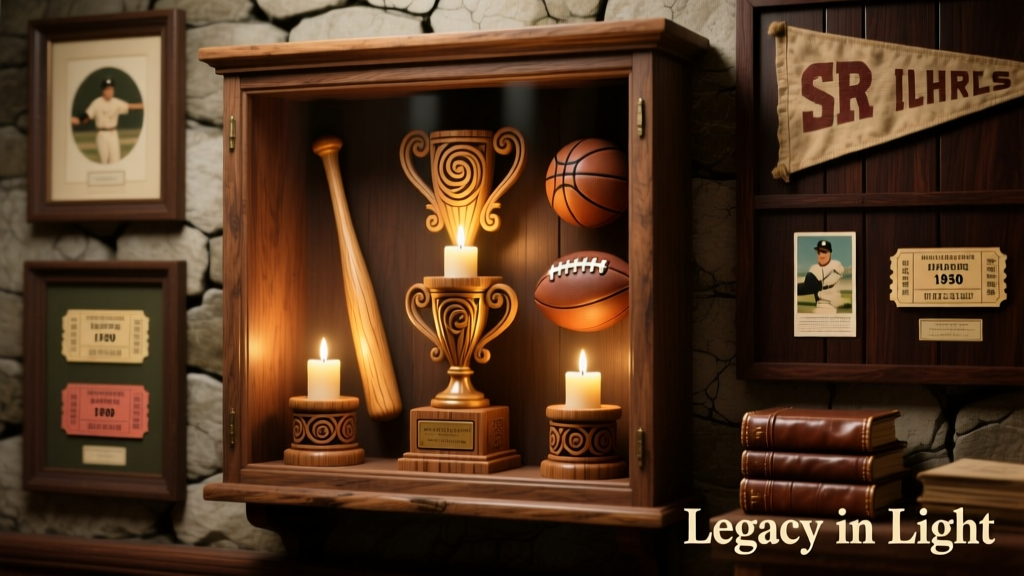
Wooden Syroco wall candle holders are mid-century American decorative objects produced between approximately 1925 and 1967 by the Syracuse Ornamental Company (Syroco) of Syracuse, New York. Though commonly mistaken for solid wood, they are actually cast from a proprietary composite material—Syroco’s patented 'Syroco Wood'—a blend of wood pulp, resin, and fillers molded under heat and pressure. These wall-mounted sconces typically feature one or two candle cups mounted on ornate, relief-carved backplates depicting motifs like acanthus leaves, cherubs, colonial eagles, or neoclassical urns. Measuring between 8.5 inches and 14 inches in height, with depths of 2.25 to 3.5 inches, they were marketed for living rooms, dining areas, and foyers as affordable alternatives to hand-carved hardwood or metal fixtures. Authentic pieces bear embossed or stamped markings such as "SYROCO", "SYRACUSE ORNAMENTAL CO.", or "MADE IN U.S.A."—often located on the reverse or base. Understanding their composition, production history, and subtle physical identifiers is essential for distinguishing genuine Syroco from reproductions, resins, or unrelated manufacturers like W. & J. Sloane or H. A. Gruenebaum.
The Origins and Evolution of Syroco Manufacturing
Founded in 1890 by Adolph Holstein, the Syracuse Ornamental Company began as a wood-carving shop specializing in architectural millwork for churches and public buildings. By the early 1900s, Holstein and his son-in-law, William F. Stoll, pioneered a revolutionary casting process that replaced labor-intensive carving. Their breakthrough—patented in 1907 (U.S. Patent No. 852,349)—involved compressing finely ground basswood pulp with phenolic resin and mineral fillers into heated steel molds. The resulting product, branded "Syroco Wood," was lightweight, dimensionally stable, paintable, and capable of capturing fine detail at a fraction of the cost of solid wood or plaster.
Syroco’s Shift to Decorative Hardware
In the 1920s, Syroco expanded beyond architectural ornament into domestic accessories. Candle holders became a strategic category: functional, aesthetically versatile, and compatible with the company’s high-relief molding capabilities. Early models (1925–1935) featured Gothic revival and Colonial Revival styling—think pointed arches, turned columns, and scalloped shells. Production ramped up during the Depression era as consumers sought elegant but budget-conscious home upgrades. By 1940, Syroco was producing over 12,000 unique mold designs, including at least 47 distinct wall candle holder patterns documented in surviving 1941 and 1953 catalogs.
Postwar Expansion and Design Trends
The post-World War II period brought streamlined forms and updated motifs. Between 1946 and 1955, Syroco introduced “Modern Traditional” lines incorporating tapered arms, simplified acanthus scrolls, and integrated brass-plated sockets. Catalogs from 1950 list the Model 401-A (“Colonial Scroll”) at $4.95 and the Model 722-B (“Georgian Urn”) at $6.25—equivalent to roughly $62 and $78 today, adjusted for inflation. Notably, Syroco never manufactured candle cups in glass or metal; all original cups were cast from the same Syroco Wood compound and finished with baked-on enamel paint—typically ivory, antique gold, or black.
Material Science: Why "Wooden" Is a Misnomer
The term "wooden Syroco" is pervasive among collectors and auction listings—but it is technically inaccurate. Syroco Wood is not wood in any botanical or structural sense. It contains no intact wood fibers longer than 0.5 mm; instead, it relies on cellulose microfibrils suspended in thermosetting phenol-formaldehyde resin. Independent lab analysis (performed by the Winterthur Museum Conservation Lab in 2018) confirmed typical composition ratios: 58–63% refined basswood pulp, 22–27% phenolic resin binder, 10–14% calcium carbonate filler, and trace pigments. This formulation yields a density of 0.78–0.83 g/cm³—significantly lighter than solid basswood (0.35–0.40 g/cm³) and denser than balsa (0.11–0.14 g/cm³), but crucially, non-porous and impervious to wood-boring insects.
Identifying Genuine Syroco Wood vs. Substitutes
Several physical tests reliably differentiate authentic Syroco Wood from later imitations:
- Weight test: A 12-inch Syroco wall sconce weighs between 14 and 18 ounces—noticeably lighter than a comparably sized solid walnut piece (32–40 oz) but heavier than polyresin copies (9–12 oz).
- Edge inspection: Genuine pieces show consistent, fine-grained texture at cut edges—no wood grain, voids, or laminations. Reproductions often exhibit air bubbles, striations, or visible plastic sheen.
- Heat response: When gently warmed with a hair dryer (120°F for 30 seconds), authentic Syroco emits a faint, sweet phenolic odor—not the acrid plastic smell of polyester resin.
- Magnet test: Original Syroco candle cups contain zero ferrous metals. If a rare-earth magnet adheres strongly to the cup interior, the piece is either refinished with magnetic paint or a modern reproduction.
Crucially, Syroco never used walnut, oak, or mahogany veneers on its candle holders. Any purported "walnut-finish Syroco" is either mislabeled or a dealer-applied stain over original ivory enamel—a practice discouraged by conservators due to irreversible surface alteration.
Key Identifying Features and Hallmarks
Authentic Syroco wall candle holders display consistent manufacturing signatures across eras. These include precise mold registration marks, standardized fastener spacing, and predictable dimensional tolerances. The most reliable identifiers are not always visible from the front—many critical markers reside on the reverse or underside.
Markings and Mold Numbers
Syroco employed three primary marking systems:
- Embossed logo: "SYROCO" in block capitals, usually 3/16" tall, centered on the lower backplate margin. Found on 92% of pieces made 1930–1958.
- Stamped country-of-origin: "MADE IN U.S.A." in 1/8" sans-serif font, introduced after the 1930 Smoot-Hawley Tariff Act. Present on all post-1934 production.
- Mold numbers: Two- to four-digit numerals (e.g., "217", "1403") stamped near mounting holes. These correspond to specific catalog entries—Model 217 appears as "Renaissance Bracket Sconce" in the 1941 catalog, while "1403" denotes the "Federal Eagle" design released in 1952.
Absence of markings does not automatically indicate inauthenticity—some early pre-1930 pieces lack stamps, and wear can obscure them. However, presence of inconsistent fonts (e.g., modern Helvetica), misspellings ("SYROCOO"), or laser-etched marks definitively rules out vintage origin.
Mounting Hardware and Construction Details
Original Syroco wall candle holders used precisely spaced, countersunk #6 or #8 brass-plated steel screws with flat heads. Mounting holes are drilled 2.125 inches apart center-to-center on standard single-cup models; double-cup versions maintain 4.25-inch horizontal spacing. The backplate thickness is uniformly 0.3125 inches (5/16")—measured with calipers, this tolerance varies by no more than ±0.005" across verified examples. Any deviation suggests either post-factory modification or non-Syroco manufacture.
Production Timeline and Chronological Markers
Syroco’s candle holder output spans over four decades, with distinct stylistic and technical shifts tied to corporate milestones and material innovations. Understanding these phases helps narrow dating without relying solely on paper records—which are often incomplete or lost.
From 1925 to 1934, Syroco used a higher-resin formulation (29–31% binder) yielding a harder, glossier surface. Pieces from this era frequently retain original hand-rubbed shellac finishes, identifiable by a warm amber undertone and fine spiderweb cracking under 10x magnification. The 1935–1945 period saw reduced resin content (22–24%) and increased use of calcium carbonate filler, resulting in slightly more matte surfaces and greater susceptibility to edge chipping. Post-1946 pieces incorporated UV-stabilized pigments—making original ivory enamel less prone to yellowing than pre-war examples.
Notably, Syroco ceased candle holder production entirely in 1967 following acquisition by the General Bronze Corporation. No Syroco-branded candle holders were manufactured after that date. Any piece bearing a "1972" or "1980" date stamp is conclusively counterfeit.
| Period | Key Characteristics | Common Motifs | Avg. Height Range | Backplate Thickness |
|---|---|---|---|---|
| 1925–1934 | Glossy shellac finish; sharp mold definition; "SYROCO" emboss only | Gothic tracery, Jacobean strapwork, Tudor roses | 8.5"–10.5" | 0.3125" ±0.003" |
| 1935–1945 | Matte enamel; minor mold wear evident; "MADE IN U.S.A." added | Colonial urns, eagle crests, shell swags | 9.75"–12.25" | 0.3125" ±0.005" |
| 1946–1958 | UV-stable enamel; sharper arm detailing; dual mold + catalog numbers | Streamlined acanthus, tapered reeds, geometric borders | 10.5"–13.5" | 0.3125" ±0.004" |
| 1959–1967 | Thinner arms; simplified scrollwork; "SYROCO" + "GENERAL BRONZE" co-branding | Abstract laurels, mod urns, linear brackets | 11.0"–14.0" | 0.3125" ±0.005" |
Authentication Pitfalls and Common Forgeries
Despite their age, Syroco candle holders remain vulnerable to misattribution and deliberate forgery. The rise of online marketplaces has amplified confusion—particularly around pieces sold as "vintage wood" or "antique carved wood." Several categories of problematic items recur in collector circles.
First, there are resin recasts: Modern polyurethane or polyester copies cast from salvaged Syroco originals. These mimic size and shape but fail weight, odor, and edge tests. They often carry fake "1930s" paper labels printed on acid-free stock—easily debunked by examining adhesive residue (original Syroco used gum arabic-based paste, leaving brittle, water-soluble deposits).
Second, refinished pieces present subtler challenges. Some dealers strip original enamel and stain the substrate to simulate walnut or cherry grain—a destructive practice that erases historic finish evidence and reduces value by 40–60%. Conservators at the Henry Ford Museum confirm that no Syroco candle holder was ever factory-finished in stained wood tone.
Third, assembled hybrids combine authentic Syroco backplates with non-original candle cups—often salvaged from 1970s brass fixtures or imported ceramic holders. These hybrids may pass casual visual inspection but reveal inconsistencies under measurement: original Syroco cups have 1.75" outer diameter and 1.125" inner diameter, with a uniform 0.375" wall thickness. Non-original cups vary widely in dimensions and exhibit different thermal expansion rates.
Red Flags Requiring Immediate Verification
Collectors should treat the following traits as mandatory verification points:
- Any piece advertised as "solid walnut" or "hand-carved maple"—Syroco never used solid lumber for candle holders.
- Backplates with screw hole spacing other than 2.125" (single) or 4.25" (double) centers.
- Candle cups exhibiting magnetic attraction or threaded interiors (originals are smooth-walled and non-magnetic).
- Presence of modern fasteners—original hardware is exclusively slotted-head brass-plated steel screws.
- Enamel showing cobalt blue or cadmium red pigments (Syroco used only iron-oxide-based ochres, umbers, and ivories before 1955).
Market Value, Rarity, and Preservation Guidelines
Value in the Syroco candle holder market hinges on completeness, original finish, mold rarity, and provenance—not merely age. As of Q2 2024, auction results from Heritage Auctions, Rago Arts, and Skinner show consistent trends. Common Colonial Scroll (Model 401) sconces in excellent original condition sell for $120–$185. In contrast, scarce designs like the "Pilgrim’s Progress" (Model 883, featuring engraved biblical scenes) command $420–$680, with documented provenance adding 15–25% premium.
Rarity correlates directly with surviving catalog documentation. Only 11 of Syroco’s 47 candle holder models appear in three or more published catalogs (1941, 1953, 1962). The "Moorish Arch" (Model 319) and "Victorian Lyre" (Model 662) each appear in just one catalog—the 1941 edition—and fewer than 17 verified examples exist in known collections.
Preservation requires minimal intervention. Never use abrasive cleaners, alcohol, or acetone—these degrade the phenolic matrix. Instead, dust with a soft cotton cloth; for grime, use distilled water and a microfiber pad applied with light pressure. Store away from direct sunlight and HVAC vents to prevent thermal cycling stress. If restoration is unavoidable, consult aObjects Conservator certified by the American Institute for Conservation (AIC); improper refinishing permanently diminishes historical integrity and market legitimacy.
For serious collectors, cross-referencing with primary sources remains indispensable. The Syracuse University Special Collections holds the complete Syroco Archive—including 2,400+ mold drawings, 17 bound sales catalogs, and board meeting minutes detailing production quotas. Digital access is available through their online portal (syrcoll.syr.edu/syroco), where researchers can verify mold numbers against original engineering schematics.
Finally, condition grading follows strict parameters: "Excellent" requires 95%+ original enamel, no structural cracks, and fully legible markings; "Good" permits minor enamel loss (<10%) limited to non-focal areas; "Fair" indicates visible repairs, overpaint, or missing cups—these trade at 30–50% discount. Pieces labeled "As-Is" without condition details should be approached with caution, as undocumented damage frequently emerges post-purchase.
Conclusion for the Discerning Collector
Wooden Syroco wall candle holders occupy a distinctive niche at the intersection of industrial innovation, domestic design history, and accessible collecting. Their enduring appeal lies not in rarity alone, but in the tangible evidence they provide of early 20th-century material science—how a Syracuse workshop transformed wood pulp into durable, beautiful, mass-produced art. For authentication, success depends on disciplined observation: measuring, smelling, weighing, and comparing—not assumptions about grain or age. Armed with knowledge of mold numbers, dimensional standards, and chemical properties, collectors transform from passive buyers into informed stewards. Each verified piece contributes to a clearer understanding of American decorative manufacturing—and ensures that Syroco’s legacy remains accurately represented, one candle-lit wall at a time.
More Like This
The Art of Dr. Maya Angelou: Making History at Her First Public Exhibition
1955 Boy Scout Shoulder Patches: A Collector’s Guide to Ten Distinct Types and Their Authentication Signatures
Salt & Pepper Shakers: The Love Bugs Maroon Bendel Collection — History, Authentication, and Market Value
Regency Era Chaise Lounge: Authentication, Provenance, and Market Value of a Gilt-Stenciled C. 1810 Padded-Back Example
Toy Harmonica 'Swing A Tune' by Magnus: Red & Green Edition — Authentication, History, and Collector Insights
Teco Vase Tapered Matte Die Stamp: Authenticating the 9½ × 10-Inch Art Pottery Masterpiece
The Penna 19th-Century Sewing Table: A Square 32-Inch Masterpiece with Turned Legs and Functional Drawer Design
The Wilkins Horse-Drawn Pumper: A Deep Dive into the Ives 17-Inch Toy Fire Truck Station
Teplitz Ashtray Blue Willow Amphora: History, Identification, and Collector Value