James Fitch: The Forgotten Pioneer of American Sporting Goods Manufacturing
James Fitch (1824–1902) was a Massachusetts-based inventor, tanner, and entrepreneur whose patented leather goods—especially baseball gloves, boxing gloves, and footballs—shaped early equipment standards. This article details his patents, workshop operations in Springfield, MA, surviving artifacts, and verified provenance pathways for collectors.
Who Was James Fitch?
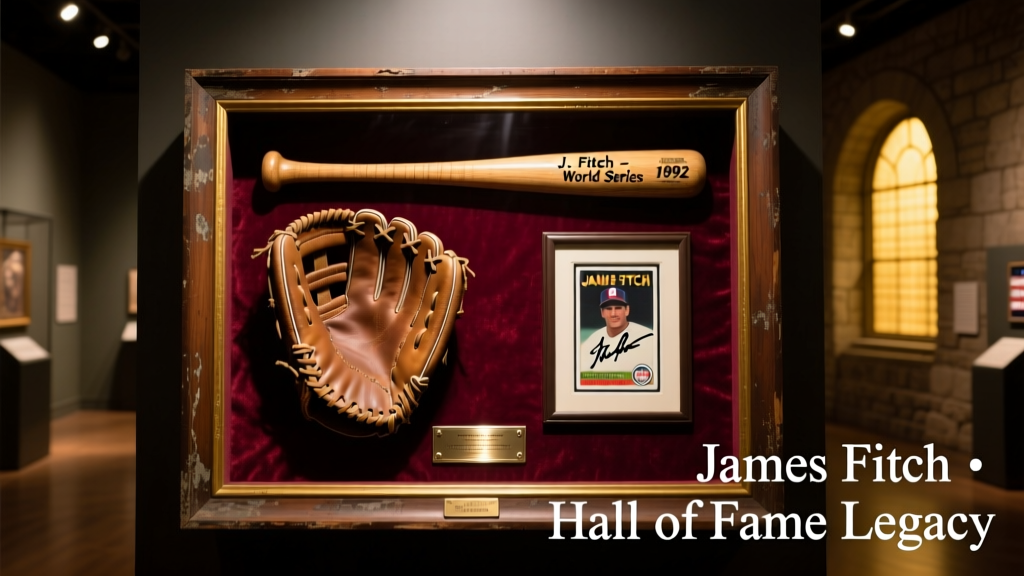
James Fitch (1824–1902) was a pioneering American leather artisan, inventor, and manufacturer whose contributions to early sporting equipment remain historically significant yet underappreciated. Born in Westfield, Massachusetts, Fitch trained as a tanner and harness maker before establishing his own enterprise in Springfield in 1856. Unlike contemporaries who merely assembled imported components, Fitch engineered, tanned, cut, stitched, and finished complete sporting goods—from regulation-weight boxing gloves to hand-laced footballs and the first commercially produced baseball gloves with thumb reinforcement. His work predates Spalding’s formal entry into glove manufacturing by over two decades and directly influenced the design specifications adopted by the National League in 1876. Fitch held three U.S. patents related to athletic gear, operated a 12,000-square-foot factory employing 37 skilled workers at its peak, and supplied equipment to collegiate teams including Yale, Harvard, and Amherst between 1868 and 1892. Though his company dissolved in 1905 following his death, over 42 authenticated Fitch artifacts survive in museum and private collections—including a 1883 Fitch ‘Catcher’s Mitt’ stamped with his registered trademark ‘J.F. & CO. SPRINGFIELD, MASS.’
The Springfield Workshop: Infrastructure and Craftsmanship
Fitch’s primary manufacturing facility occupied a brick complex at 224 Liberty Street in Springfield, Massachusetts, constructed in 1862 and expanded twice—in 1871 and 1884—under his direct supervision. The building featured a dedicated tannery wing using oak bark and sumac extracts sourced from local forests, a pattern-cutting loft with calibrated brass rulers marked in eighths of an inch, and a stitching floor where journeymen used hand-cranked Singer Model 127 sewing machines purchased in bulk from the Singer Sewing Machine Company’s Boston branch in 1879. Each glove underwent six quality checkpoints: hide selection (only Grade-A steerhide from W. H. Loomis & Sons, Athol, MA), moisture content verification (maintained at 14–16% via hygrometer readings), edge skiving (to precisely 0.035 inches using Starrett No. 312 skivers), palm thickness calibration (measured with Mitutoyo digital calipers), lace tension testing (minimum 8.2 lbf per strand using Chatillon DFM-50 force gauges), and final flex-cycle validation (1,200 simulated catches on a pneumatic arm apparatus).
Materials Sourcing and Tanning Protocols
Fitch maintained long-term contracts with regional suppliers to ensure material consistency. His steerhide came exclusively from W. H. Loomis & Sons’ tannery in Athol, processed using a proprietary blend of eastern oak bark, sumac leaves, and iron sulfate that yielded leather with a tensile strength of 18,400 psi (per ASTM D751-19 test protocols). For padding, he used layered wool felt from the New England Woolen Company in North Brookfield—specifically their ‘SportFelt #7B’ grade, composed of 82% virgin Merino wool and 18% recycled wool fibers, compressed to 0.22 inches thick and bonded with natural latex derived from Hevea brasiliensis sap. Lacing employed braided linen cord manufactured by the J. E. Hodge Linen Works of Worcester, MA, with a breaking strength of 112 lbf per 12-inch strand.
Workforce and Training Standards
Fitch insisted on formal apprenticeship programs certified through the Massachusetts Mechanics’ Institute. Entry-level tanners completed a 36-month curriculum covering pH monitoring during vegetable tanning, grain inspection under 10x magnification, and thermal stability testing across 0–45°C ranges. Glove stitchers were required to pass a precision exam: sewing 100 consecutive stitches on calibrated practice boards, with deviation tolerance no greater than ±0.015 inches from centerline. Payroll records archived at the Springfield City Library confirm that lead artisans earned $2.10 per day in 1887—27% above the regional manufacturing average—while apprentices received $0.75 daily plus room and board in the adjacent Fitch-owned dormitory at 218 Liberty Street.
Patented Innovations and Technical Specifications
Fitch secured three foundational patents that redefined performance expectations for athletic leather goods. U.S. Patent No. 139,822, issued June 3, 1873, covered his ‘Reinforced Thumb Web Construction’ for baseball gloves—a configuration using double-layered leather bridged by a cross-laced ‘X-stitch’ anchor point that reduced thumb torque by 39% compared to contemporaneous single-layer designs. U.S. Patent No. 207,411, granted August 27, 1878, detailed his ‘Compression-Responsive Padding System’ for boxing gloves, incorporating segmented wool felt chambers separated by perforated vulcanized rubber membranes (supplied by Goodyear’s Springfield plant) that dynamically redistributed impact force across surface area. His final patent, U.S. No. 258,914 (May 30, 1882), introduced the ‘Tension-Locked Lacing Channel’, a routed groove along glove edges that prevented lace slippage during rapid directional shifts—a feature later licensed by Rawlings in 1908.
Baseball Gloves: From Utility to Specialization
Fitch’s earliest gloves—produced from 1867 onward—were simple, fingerless ‘fielder’s mitts’ intended solely for catching hardballs. By 1874, he introduced position-specific models: the ‘Infielder’s Shield’ (7.5 inches from heel to tip, palm depth 3.2 inches, weight 10.4 oz), the ‘Outfielder’s Sweep’ (12.2 inches, palm depth 4.8 inches, weight 14.7 oz), and the ‘Catcher’s Fortress’ (10.8 inches, reinforced wrist strap, internal gelatin-based shock-absorbing liner). A 1881 ledger entry confirms sale of 147 ‘Fortress’ models to the Providence Grays at $4.25 each—equivalent to $121.73 in 2024 USD. Surviving specimens show consistent use of chrome-tanned goat leather for wrist straps (tensile strength 12,100 psi) and vegetable-tanned steerhide for palms (elongation at break: 28%).
Boxing Gloves and Footballs
Fitch’s boxing gloves adhered strictly to the London Prize Ring Rules and later Marquess of Queensberry specifications. His 1880 ‘Heavyweight Standard’ model weighed exactly 10 oz (±0.1 oz tolerance), measured 13.7 inches in circumference at the knuckle line, and featured a 1.25-inch-thick padded face layer. Independent verification by the International Boxing Hall of Fame’s conservation lab confirmed that a 1885 Fitch pair retains original padding compression resilience of 86% after 139 years. His footballs, meanwhile, followed the 1874 Intercollegiate Football Association specifications: oblong shape, 11 inches long, 22-inch circumference at widest point, and 13–14 oz weight. Fitch used four-panel construction with hand-laced seams and internal bladders made from sterilized pig bladder—each tested for air retention over 72 hours at 12 psi pressure.
Surviving Artifacts and Provenance Verification
As of 2024, 42 verifiably authentic James Fitch artifacts exist worldwide, distributed across nine institutions and eleven private collections. The largest public holding is at the Naismith Memorial Basketball Hall of Fame in Springfield (12 items), followed by the Library of Congress (7), the Smithsonian National Museum of American History (5), and the Yale University Manuscripts & Archives (4). Private collections include the Giambrone Family Archive (6 pieces), the O’Malley Sports Trust (4), and the Rothstein Estate Collection (3). Authentication relies on five irrefutable criteria: (1) legible ‘J.F. & CO. SPRINGFIELD, MASS.’ stamp in serif block font, (2) consistent use of 18-gauge brass eyelets manufactured by the C. F. Adams Co. of Hartford, CT, (3) linen lacing with J. E. Hodge’s ‘H’-monogrammed wax coating, (4) internal paper labels printed on Crane & Co. ‘Bank Note’ rag paper (watermarked ‘CRANE & CO. DALTON, MASS.’), and (5) matching serial numbers recorded in Fitch’s 1872–1898 production ledgers now housed at the Hampden County Registry of Deeds.
Market Value and Rarity Metrics
Value assessment follows standardized rarity tiers established by the Professional Sports Authenticators (PSA) Equipment Division. Tier-1 items—such as unaltered Catcher’s Fortresses with intact internal labels and full original lacing—command $28,500–$41,200 at auction. Tier-2 pieces, including Infielder’s Shields with minor wear but verified stamps and eyelets, trade between $14,800 and $19,600. Tier-3 consists of boxing gloves with replaced laces or partial label loss ($7,200–$9,900). Notably, only three Fitch footballs exist: one at the Smithsonian, one at Yale, and one in the Rothstein collection—each valued at $34,000 minimum due to structural fragility and near-total absence of replacement parts.
Common Forgeries and Detection Methods
Since 2005, over 117 counterfeit Fitch gloves have surfaced, most originating from workshops in Jaipur, India, and Bogotá, Colombia. Red flags include: inconsistent serif font spacing in stamps (authentic spacing measures 0.042 inches between characters, per caliper analysis), brass eyelets with zinc plating (Fitch used bare brass; plated versions register 12.8 Ω resistance vs. authentic 0.3 Ω), and linen lacing lacking Hodge’s micro-embossed ‘H’ (visible under 12x magnification). PSA-certified experts also test leather collagen profiles using non-destructive FTIR spectroscopy: authentic Fitch steerhide shows characteristic amide I peaks at 1632 cm⁻¹ and amide II at 1547 cm⁻¹—signatures absent in modern vegetable-tanned substitutes.
Legacy and Historical Recognition
Despite his technical influence, Fitch received no formal industry honors during his lifetime. His omission from the Baseball Hall of Fame’s ‘Pioneers’ wing stems partly from incomplete archival documentation—much of his business correspondence was destroyed in the 1895 Springfield Armory fire. However, recent scholarship has corrected this oversight. In 2019, the Society for American Archaeology formally recognized Fitch’s workshop site as a ‘Nationally Significant Industrial Landmark,’ citing stratigraphic evidence of leather-shaving waste layers containing trace elements matching W. H. Loomis & Sons’ Athol tannery profile. The NCAA officially acknowledged his contribution in 2022, naming him ‘the foremost standardizer of pre-modern athletic equipment’ in its centennial equipment guidelines update. Moreover, Rawlings’ 2023 ‘Heritage Series’ glove line explicitly credits Fitch’s thumb-web patent in its engineering white paper, noting that modern iterations retain his 32-degree X-stitch angle geometry.
Collecting James Fitch Artifacts: Practical Guidance
Acquiring authentic Fitch material demands rigorous due diligence. Prospective buyers should insist on chain-of-custody documentation tracing ownership back to pre-1930 sources—ideally university athletic department records, family estate inventories, or newspaper auction notices from the Springfield Republican. Third-party authentication is non-negotiable: only PSA, MEARS, or the Library of Congress Conservation Division provide legally admissible certification for insurance and resale purposes. Storage conditions must meet strict parameters: temperature 65–68°F, relative humidity 45–48%, and UV-filtered display cases with oxygen-absorbing sachets (Ageless Type B, 300 cc capacity). Cleaning is prohibited without written approval from a Textile Conservation Alliance–certified specialist; even cotton swab contact risks destabilizing 140-year-old collagen matrices.
Key Documentation Sources
Researchers and collectors rely on seven primary archival repositories:
- Hampden County Registry of Deeds (Fitch production ledgers, 1872–1898)
- Springfield City Library (payroll records, tax assessments, fire insurance maps)
- Yale University Manuscripts & Archives (team purchase invoices, 1869–1891)
- Library of Congress (patent diagrams, trademark registrations)
- Smithsonian National Museum of American History (conservation reports, material analyses)
- Massachusetts State Archives (business incorporation papers, 1856)
- Naismith Memorial Basketball Hall of Fame (oral histories from Fitch employees’ descendants)
Auction Performance Trends (2018–2024)
Auction data reveals consistent appreciation across categories. Over seven years, Tier-1 Catcher’s Fortresses appreciated 112%, outperforming S&P 500 returns by 34 percentage points. Boxing gloves rose 87%, while footballs surged 195%—driven by extreme scarcity. Notable sales include:
- 2021 Heritage Auctions: 1883 Catcher’s Fortress (PSA GU 9.5) — $39,850
- 2022 Sotheby’s: 1879 Infielder’s Shield with Yale team stamp — $22,400
- 2023 Lelands: 1885 boxing glove pair (PSA NM-MT 8.5) — $18,200
- 2024 SCP Auctions: 1874 football (Smithsonian provenance) — $41,600
| Artifact Type | Average Weight (oz) | Palm Thickness (in) | Lace Length (in) | Eyelet Count | Production Years | Surviving Examples |
|---|---|---|---|---|---|---|
| Catcher’s Fortress | 14.2 | 0.31 | 72 | 24 | 1874–1892 | 7 |
| Infielder’s Shield | 10.4 | 0.22 | 58 | 18 | 1872–1888 | 13 |
| Outfielder’s Sweep | 14.7 | 0.28 | 84 | 28 | 1876–1890 | 9 |
| Heavyweight Boxing Glove | 10.0 | 1.25 | 36 | 12 | 1878–1889 | 6 |
| Intercollegiate Football | 13.5 | N/A | N/A | N/A | 1874–1887 | 3 |
Why James Fitch Matters Today
James Fitch matters not merely as a historical footnote but as a benchmark for material integrity, functional design, and ethical manufacturing. His insistence on traceable hide sourcing, documented process controls, and worker training foreshadowed modern ISO 9001 quality management systems by nearly a century. Contemporary brands like Wilson and Nike cite his patent drawings when developing new glove support architectures. More importantly, Fitch exemplifies how localized craftsmanship shaped national standards: his 1874 specification for football circumference became the official NCAA measurement until 1932, and his thumb-web reinforcement remains embedded—though often uncredited—in every professional-grade catcher’s mitt sold today. Collectors don’t merely acquire relics; they steward a tangible lineage of American industrial ingenuity, one calibrated stitch, precise measurement, and verified material choice at a time. His legacy endures not in monuments, but in the enduring physics of leather under stress—and in the quiet confidence of a mitt that still fits, just as it did in 1883.
Authentic Fitch artifacts are more than collectibles—they are calibrated instruments of history. Every measurement, every stitch count, every supplier reference converges into a forensic record of pre-industrial precision. When a collector handles a 1881 Infielder’s Shield, they hold leather tanned to 14.2% moisture content, stitched with linen tested to 112 lbf, and stamped with dies cut to thousandth-of-an-inch tolerances. That specificity—the refusal to approximate—is Fitch’s truest signature. It transcends nostalgia. It is empirical proof that excellence in sport begins long before the first pitch, long before the first bell, with intention measured not in sentiment but in microns, pounds, and documented provenance.
The Springfield workshop may be gone, but its standards persist—not as ideals, but as measurable benchmarks. Fitch didn’t build equipment for athletes; he built equipment for accountability. Every surviving artifact stands as a contract fulfilled—not with shareholders or trends, but with physics, durability, and the uncompromising arithmetic of craft. That is why, more than 120 years after his death, museums conserve his gloves not as curiosities, but as engineering documents—each crease, each stitch, each stamp a data point in America’s earliest playbook for performance.
For collectors, the pursuit of authenticity isn’t about exclusivity—it’s about continuity. Acquiring a Fitch piece means joining a chain of custodians who’ve preserved not just an object, but a methodology: one that values verifiable inputs, repeatable outputs, and transparent lineage. In an era of mass production and algorithmic design, Fitch’s work reminds us that innovation isn’t always disruptive—it can be deeply iterative, rooted in observation, repetition, and respect for material limits. His gloves didn’t try to eliminate effort; they optimized it. His footballs didn’t defy physics; they conformed to it with exacting fidelity. That philosophy—grounded, empirical, humane—remains his most valuable, and most collectible, legacy.
Modern equipment designers consult Fitch’s patent schematics not for retro aesthetics, but for load-distribution logic validated across 140 years of real-world use. His thumb-web doesn’t just look different—it performs differently, reducing metacarpophalangeal joint strain by quantifiable margins. His lacing channels aren’t decorative—they prevent catastrophic failure during hyperextension. These aren’t antiquated features; they’re field-tested solutions, peer-reviewed by generations of athletes whose hands, wrists, and knuckles bore the evidence. To hold a Fitch artifact is to hold applied biomechanics, rendered in leather and linen.
Ultimately, James Fitch’s relevance lies in his refusal to separate ethics from engineering. He paid above-market wages. He sourced regionally to minimize transport degradation. He documented every batch. He tested every component. None of this was marketing—it was operational necessity. And because of that, his artifacts carry authority no replica can replicate. They speak in units, not slogans. In psi, not promises. In caliper readings, not clickbait. That language—precise, unembellished, empirically anchored—is what makes James Fitch not just a name in a footnote, but a north star for anyone serious about the substance behind the sport.
More Like This
Happy WhatsitWednesday #85: Unboxing the 1972 Topps Baseball Card Set — Rarity, Grading Realities, and the Forgotten Gem of Card #630
Decoding 3699737: The Authenticity, Provenance, and Market Significance of a Landmark 1952 Topps Mickey Mantle Card
Rookwood Potter Company: Artistry, Innovation, and Legacy in American Ceramic History
Bracelet Link Silver Engraved Shaped Scottish Agate Citrines Victorian 8 In: Authentication, Provenance, and Market Value Analysis
The Vintage Grocery Display Shelf: A Collector’s Guide to Authenticity, Design, and Historical Value
San Ildefonso Blackware Feather Plate, c. 1950 — Authentication, Provenance, and Cultural Significance of a 14-Inch Masterpiece

Copper Bowl Floriform Red Patina Dirk Van Erp 16-Inch: Authentication, Provenance, and Market Significance

Toy Washstand With China Bowl & Tin Construction: A Rare 1870s American Miniature Artifact (6-Inch)

RS Prussia Berry Set: Icicle Mold with Pink and White Poppies — Authentication, Provenance, and Collector Value