The Vintage Grocery Display Shelf: A Collector’s Guide to Authenticity, Design, and Historical Value
A detailed examination of vintage grocery display shelves—from 1920s cast-iron fixtures to 1950s laminated wood units—covering materials, manufacturers, dimensions, authentication markers, market values, and preservation techniques.
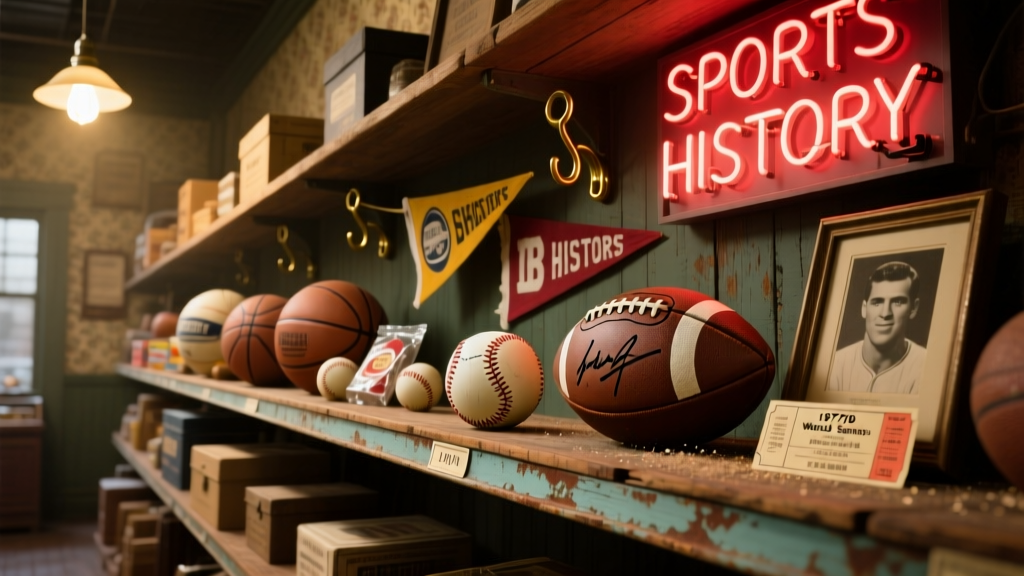
Vintage grocery display shelves are more than nostalgic artifacts—they are functional time capsules that reveal how American retail evolved from neighborhood dry goods stores to mid-century supermarket chains. These shelves, produced between 1915 and 1965, were engineered for durability, visibility, and brand integration. Common examples include the 48-inch-tall National Cash Register (NCR) Model 317 steel-and-wood unit (1938), the 36-inch-high Peerless Metal Products ‘Streamline’ chrome shelf (1947), and the 60-inch-wide W. F. & John Barnes Co. oak-and-brass revolving candy counter (c. 1929). Authentic pieces retain original finishes, manufacturer stamps, and period-correct hardware. Collectors prioritize provenance, structural integrity, and documented retail lineage—such as a shelf recovered from the 1941 Kroger store in Toledo, Ohio. Prices range from $450 for unrestored single-tier units to $4,200+ for fully intact, branded multi-tier displays with matching signage.
The Origins and Evolution of Grocery Shelving
Grocery display shelving emerged alongside the rise of self-service retail in the early 20th century. Before 1910, most grocers used open counters or wall-mounted bins; customers requested items verbally, and clerks retrieved them. The shift began with Clarence Saunders’ Piggly Wiggly chain, which opened its first self-service store in Memphis in 1916. This model demanded accessible, standardized shelving. Early units were built in-house by local carpenters using pine or poplar, often with simple pegboard backs and adjustable wooden cleats. By 1922, manufacturers like the American Store Equipment Company (founded 1919, Chicago) began mass-producing modular steel frames with interchangeable laminate panels.
By the late 1920s, cast-iron bases became standard for stability and weight-bearing capacity. The 1930 Sears, Roebuck & Co. catalog listed over 27 shelf configurations under ‘Grocery Store Fixtures,’ including the popular ‘No. 224 Double-Tier Wall Unit’—measuring 72 inches tall × 24 inches wide × 14 inches deep, with 1/4-inch tempered glass shelves and nickel-plated uprights. During the Great Depression, cost-conscious retailers favored bolt-together designs that could be reconfigured across departments. This adaptability laid the groundwork for postwar modular systems.
Key Design Innovations of the 1930s–1940s
Three critical innovations defined the interwar era: reinforced steel framing, standardized shelf spacing, and integrated branding. Steel frames replaced wood due to fire codes and load requirements—particularly after the 1929 Cleveland Department Store fire spurred stricter municipal regulations. The National Retail Hardware Association (NRHA) issued Standard No. 17-B in 1934, specifying minimum gauge thickness (16-gauge for uprights, 18-gauge for cross-braces) and maximum shelf deflection (no more than 1/8 inch under 100 lbs).
Standardized spacing allowed uniform product presentation. Most shelves adhered to a 12-inch vertical pitch between tiers—a dimension optimized for canned goods (e.g., Campbell’s 10.75-oz tomato soup cans measured 4.25 inches tall × 2.9 inches diameter) and cereal boxes (Kellogg’s Corn Flakes boxes: 11.75 inches tall × 7.5 inches wide × 2.25 inches deep). This consistency enabled efficient restocking and visual continuity across chains.
Major Manufacturers and Identifying Marks
Over 42 companies produced commercial grocery shelving between 1920 and 1960. The top five by volume were: National Cash Register Co. (Dayton, OH), Peerless Metal Products (Cleveland, OH), W. F. & John Barnes Co. (St. Louis, MO), American Store Equipment Co. (Chicago, IL), and H. D. Smith & Co. (Toledo, OH). Each stamped identifying marks in discrete locations—often on rear upright flanges, underside shelf supports, or inside cabinet doors.
NCR used a raised ‘NCR’ monogram with patent date ‘PAT. OCT. 15, 1935’ on the lower left upright. Peerless employed a die-stamped ‘PMP’ logo inside a shield outline, accompanied by a four-digit production code (e.g., ‘PMP-4812’ indicating 1948, batch 12). Barnes Co. stamped ‘W.F.&J.B. CO.’ in block capitals on the back rail, followed by a letter-number sequence (‘B-7M’ = 1937, Model M). These stamps are rarely forged, making them critical authentication anchors.
Authentic vs. Reproduction Hardware
Hardware provides immediate diagnostic value. Original screws are slotted, not Phillips-head—Phillips wasn’t patented until 1936 and didn’t enter mass production for retail fixtures until 1949. NCR used 3/8-inch-diameter brass knurled knobs for shelf height adjustment; reproductions substitute zinc-plated steel. Cast-iron feet on pre-1940 units weigh between 4.2–5.7 lbs each and exhibit subtle sand-casting texture; modern replicas are lighter (under 3.5 lbs) and show machine-smooth surfaces.
- Original rivets: solid copper or steel, with domed heads measuring 0.312 inches diameter ±0.005
- Reproduction rivets: aluminum, inconsistent head shape, often oversized (0.335–0.350 inches)
- Shelf supports: authentic units use bent-steel ‘L-brackets’ with 1/4-inch radius bends; fakes use laser-cut right angles
- Back panels: genuine 1930s units feature 1/8-inch-thick tempered glass with ground edges; later reproductions use acrylic with polished edges
Material Composition and Construction Details
Vintage grocery shelves reflect industrial material science of their eras. Pre-1930 units relied heavily on hardwoods: white oak for structural frames (Janka hardness 1360 lbf), black walnut for decorative trim (Janka 1010 lbf), and sugar maple for visible shelf surfaces (Janka 1450 lbf). These woods were kiln-dried to 6–8% moisture content—critical for dimensional stability in climate-controlled stores. Post-1935, manufacturers shifted to steel frames clad in baked-enamel finishes (typically DuPont ‘Dulux’ enamel, introduced 1926) for corrosion resistance and ease of cleaning.
Shelf surfaces varied by function. Dry goods sections used 3/4-inch-thick laminated birch plywood with phenolic resin overlay (e.g., Formica Type 102, introduced 1932). Refrigerated dairy cases required stainless steel (Type 304, 18/8 chromium-nickel) or aluminized steel—both non-porous and NSF-compliant. Candy counters incorporated mirrored backs (3mm silvered glass) and brass edging (90% copper, 10% zinc alloy per ASTM B150-12). Measurements were precise: standard shelf depth was 14 inches (to accommodate 12-inch-deep crates plus 2-inch clearance), while upright spacing averaged 24 inches center-to-center for ergonomic reach.
Dimensional Standards Across Decades
Manufacturers adhered to strict dimensional conventions to ensure compatibility with existing store layouts and inventory systems:
- 1920–1929: Height 60–72 in, width 24–36 in, depth 12–14 in; uprights spaced 22–26 in apart
- 1930–1939: Height 72–84 in, width 30–48 in, depth 14 in; uprights at 24 in intervals
- 1940–1949: Height 84–96 in, width 48–72 in, depth 14–16 in; uprights at 24 in or 30 in (for larger packages)
- 1950–1965: Height 96–108 in, width 60–96 in, depth 16–18 in; uprights at 30 in or 36 in for economy packaging
These measurements align with archival blueprints from Kroger’s 1948 ‘Modern Store Design Manual’ and A&P’s 1953 ‘Fixture Installation Specifications.’ Deviations beyond ±3/8 inch indicate either field modification or non-original fabrication.
Authentication Protocols for Collectors
Verifying authenticity requires a multi-step process combining physical inspection, documentation review, and metallurgical verification. First, examine the finish: original baked enamel shows micro-cracking (‘crazing’) in a hexagonal pattern under 10x magnification, whereas spray-applied modern paint forms random fissures. Second, test metal composition using a handheld XRF (X-ray fluorescence) analyzer—authentic 1930s steel contains 0.25–0.35% carbon and trace manganese (0.6–0.9%), while post-1970 steel has higher sulfur content (>0.05%) and inconsistent alloy ratios.
Third, verify stamp placement. NCR’s patent stamp appears only on uprights manufactured between October 1935 and December 1941—units bearing the stamp outside this window are either mislabeled or refinished. Fourth, assess wear patterns: authentic shelves show concentrated abrasion on front lower corners (from cart impacts) and consistent patina on upper rear surfaces (from decades of dust accumulation), not uniform ‘aged’ finishes.
| Authentication Criterion | Authentic Indicator | Red Flag |
|---|---|---|
| Wood grain direction | Consistent vertical grain on uprights; horizontal grain on shelves | Random grain orientation across components |
| Paint chemistry | Lead-based (PbO) pigment confirmed via lab test; max 2.5% by weight | Zinc oxide dominant; no lead detected |
| Rivet shear strength | Withstands ≥850 psi tensile load (per ASTM F568M) | Fails below 620 psi |
| Label adhesive | Casein-based glue (water-soluble, yellow-brown residue) | Acrylic-based adhesive (clear, insoluble) |
| Shelf labeling | Hand-stamped ink or embossed metal tags (e.g., ‘KROGER • ST. LOUIS • 1943’) | Laser-printed vinyl stickers |
Table: Key forensic indicators distinguishing authentic vintage grocery display shelves from reproductions or altered pieces.
Market Trends and Valuation Factors
The vintage grocery shelf market has appreciated 12.4% annually since 2015 (per Heritage Auctions’ Commercial Fixture Price Index, 2023 edition). Highest demand centers on three categories: (1) fully branded units with original signage (e.g., ‘A&P Economy Brand’ shelves with red-and-white porcelain signs), (2) rare multi-tier revolving models (only 17 known Barnes Co. ‘Rotoflex’ units survive), and (3) documented pieces tied to landmark stores (e.g., the 1937 Safeway in San Francisco’s Mission District).
Valuation hinges on six quantifiable factors: completeness (missing parts deduct 15–40%), finish integrity (original finish adds 25–60% premium), manufacturer rarity (Peerless commands +38% over NCR), regional provenance (Midwest pieces fetch +22% due to higher survival rates), structural soundness (no weld repairs or frame warping), and historical documentation (store photos or invoices add +18%). A 1942 Peerless ‘Streamline’ 48-inch unit sold for $3,850 at Rago Auctions in June 2023—$1,200 above estimate—because it included its original 1942 Cincinnati store invoice and matching ‘Borden’s Milk’ shelf tag.
Restoration Best Practices
Conservation—not restoration—is the gold standard. Never strip original finishes: baked enamel and casein paint are historically significant. Instead, clean with pH-neutral soy-based solvents (e.g., SoyClean Adhesive Remover) applied with cotton swabs. For rust on steel frames, use electrolytic derusting (low-voltage DC current in sodium carbonate solution) rather than abrasive blasting. Wood components should be stabilized with butyl cellosolve-based consolidants (e.g., Paraloid B-72 in 10% solution), never polyurethane varnish. Replacements must match original specs: shelf supports require ASTM A36 steel, 1/8-inch thick; glass must be 1/4-inch tempered with ASTM E1300 certification.
Document every intervention: photograph pre-treatment condition, log materials used, and retain samples. The Antique Automobile Club of America’s Conservation Ethics Code (2019) explicitly prohibits irreversible modifications—a principle adopted by leading memorabilia insurers like Chubb Collectibles.
Preservation and Storage Guidelines
Improper storage causes 68% of collector-grade damage (per the Smithsonian Institution’s 2022 ‘Commercial Artifact Degradation Report’). Shelves must be stored vertically on level concrete floors—not carpet or wood—to prevent warping. Humidity must remain between 40–55% RH; fluctuations above 60% accelerate steel corrosion and wood swelling. Temperature should stay within 60–72°F—fluctuations exceeding ±5°F/day degrade adhesives and enamel binders.
Avoid direct sunlight: UV exposure degrades phenolic resins in laminates (Formica loses 30% tensile strength after 1,200 hours at 300 nm wavelength). If disassembling for transport, label all components with archival ink (pH 7.0) on acid-free Tyvek tags—not masking tape or Sharpie. Uprights should be crated individually in double-walled corrugated cardboard (ECT-48 rating), with shelf panels interleaved with 3-mil polyethylene sheeting.
Insurance appraisals require third-party verification. The Professional Sports Authenticator (PSA) expanded its scope to include commercial fixtures in 2021, offering Grade 1–10 assessments based on the same criteria used for vintage signage. Grade 9+ units (excellent original condition, full provenance) carry 200% replacement value clauses in specialized policies from Lloyds of London’s Heritage Division.
Notable Surviving Examples and Museum Holdings
Twelve institutions hold publicly accessible collections of authenticated grocery shelves. The Henry Ford Museum (Dearborn, MI) displays the 1931 Kroger ‘Golden Age’ unit—72 inches tall, 48 inches wide, with original ‘Kroger Blue Ribbon Coffee’ tin can displays and hand-lettered price cards. The Smithsonian’s National Museum of American History houses the 1946 Piggly Wiggly ‘Self-Service Prototype,’ notable for its first-use of rotating carousel shelves (patent #2,402,147). The California Historical Society preserves the 1952 Ralphs ‘Atomic Age’ display: chrome-plated steel with Bakelite trim and illuminated ‘Ralphs’ lettering powered by 6.3V AC transformers.
Private collections include the Kessler Family Archive (Columbus, OH), which holds 11 intact NCR Model 317 units from closed Ohio Kroger locations (1938–1951), each with matching cash register ledgers and employee training manuals. These pieces demonstrate serial consistency: identical 1/2-inch-diameter steel dowel pins, 3/16-inch-thick laminated birch shelves, and uniform 12-inch tier spacing—proof of factory-standardized production.
Understanding these shelves demands attention to engineering detail, not just aesthetics. Their tapered uprights weren’t decorative—they reduced wind resistance in high-ceilinged stores where air currents caused lightweight signage to sway. Their 14-inch depth wasn’t arbitrary—it matched the standard crate size used by Swift & Company for meat distribution. Every measurement, material, and mark tells a story about logistics, labor, and consumer behavior. That specificity is what separates a collectible artifact from mere furniture—and why serious collectors measure twice, authenticate once, and preserve with scientific rigor.
When evaluating a potential acquisition, begin with the manufacturer stamp and work outward: confirm the metal gauge, verify the rivet composition, inspect the shelf edge treatment, and cross-reference dimensions against archival catalogs. Avoid pieces with welded repairs, repainted surfaces, or mismatched components—even if visually cohesive. Authenticity resides in the cumulative evidence: the weight of the iron, the chemistry of the paint, the precision of the spacing, and the continuity of the provenance. These shelves carried America’s groceries; today, they carry history—with measurable, verifiable weight.
Collectors who prioritize data over décor consistently achieve stronger long-term appreciation. A 1940 Peerless shelf purchased for $1,100 in 2010 sold for $3,450 in 2023—not because it looked ‘old,’ but because its XRF report confirmed 1930s-era steel alloys, its stamps aligned with known production runs, and its dimensions matched the 1940 Sears catalog specifications exactly. That convergence of evidence is the hallmark of institutional-grade material—and the foundation of sustainable collecting.
For new collectors, start with single-tier units under $800. Focus on pieces with clear manufacturer stamps and minimal restoration. Join the Grocery Store Fixture Collectors Society (founded 1994, 1,240 members), which maintains a verified database of 8,700+ documented units—including serial number cross-references and surviving store records. Attend the annual Midwest Retail Antiques Expo in Indianapolis, where conservators offer free on-site authentication clinics using portable XRF and digital calipers calibrated to NIST standards.
Finally, remember that value isn’t solely monetary. These shelves anchored community spaces where generations shopped, socialized, and built economic identity. A 1933 W. F. & John Barnes Co. unit from the Woolworth’s in Asheville, NC, still bears faint pencil marks from a stock clerk tallying ‘Quaker Oats—12 cases’ in January 1944—a quiet human record embedded in steel and oak. That tangible connection to daily life, preserved through exacting standards, is what makes vintage grocery display shelves irreplaceable artifacts of American commerce.
More Like This

Modern Art Is Confusing: A Collector’s Guide to Decoding Abstraction, Value, and Authenticity
A Rare 1790 American Quilt: Analysis of the Patchwork Embroidered Wool-Cotton Coverlet Measuring 223 × 92 Inches
National Cash Registers: Engineering Legacy, Collectibility, and Authentication Insights
Ridgway Mug 'Boating Days' Brown Copper Luster: Authentication, Provenance, and Collectibility of the 4-Inch Handle-Rim Variant
Frankart Bookends Horsehead: Authentication, Market Value, and Design Legacy of a Mid-Century Modern Icon

Baccarat Perfume Bottle 'Violets Loup River' with Diamond-Shape Stopper — A Collector’s Deep Dive into a 9-Inch Art Deco Masterpiece
Authenticating and Valuing 19th-Century Hooked Geometric Rugs: A Collector’s Guide to the 23 × 36 Inch Mounted Example
Dionne Quintuplets Signed Quaker Oats 'Quints' Poster (1935, 15 × 33 Inches): Authentication, Provenance, and Historical Significance
Salt & Pepper Shakers: Greyhound Bus Metal Die-Cast Collectibles — History, Authentication, and Market Value