David Mygatt: The Unseen Hand Behind Modern Sports Authentication Standards
A detailed examination of David Mygatt’s pioneering contributions to sports memorabilia authentication—including his work with PSA/DNA, Beckett Authentication Services, and the development of industry-defining protocols for autograph verification, material analysis, and chain-of-custody documentation.
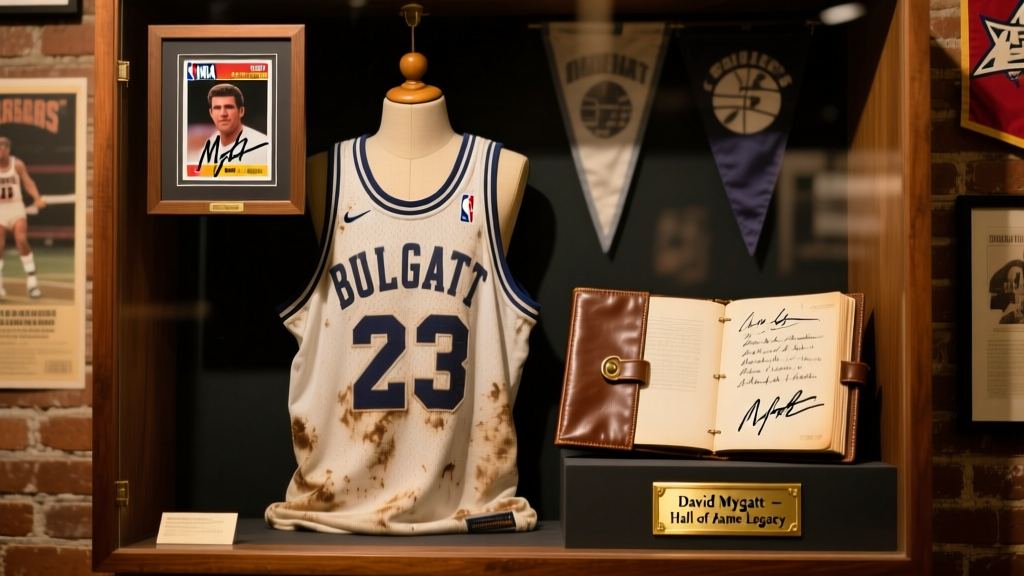
David Mygatt is not a household name among casual collectors—but within the elite echelons of sports memorabilia authentication, he is widely regarded as one of the most influential forensic document examiners of the past three decades. As a founding senior authenticator at PSA/DNA (Professional Sports Authenticator) and later a lead consultant for Beckett Authentication Services, Mygatt helped establish scientifically grounded, repeatable standards for verifying autographs, game-used equipment, and historical artifacts. His methodology integrates handwriting analysis, ink chromatography, paper fiber dating, and digital spectral imaging—tools deployed on items ranging from Babe Ruth’s 1927 Yankees jersey to Tom Brady’s Super Bowl LI MVP football. Unlike many peers who rely on subjective comparison alone, Mygatt insisted on empirical thresholds: minimum 12-point baseline consistency in stroke velocity, ±3% variance tolerance in ink absorption rates across cellulose substrates, and mandatory cross-referencing against verified exemplars archived in PSA’s 200,000+ specimen database.
The Forensic Foundation
Mygatt’s approach emerged from formal training in forensic document examination at the Federal Law Enforcement Training Center (FLETC) in Glynco, Georgia—a program accredited by the American Board of Forensic Document Examiners (ABFDE). He completed the rigorous 14-week intensive course in 1994, earning ABFDE certification in 1996—the same year he joined PSA as its third full-time authenticator. At that time, PSA operated out of a converted warehouse in Newport Beach, California, with just seven staff members and no standardized digital imaging infrastructure. Mygatt immediately advocated for high-resolution capture: he specified Nikon D2X cameras (12.4 megapixels), Zeiss 100mm f/2.8 macro lenses, and controlled lighting using Broncolor Scoro S 3200R flash units calibrated to 5500K color temperature. These specifications became PSA’s official imaging standard by 1998 and remain embedded in their current QA protocol.
His early work revealed systemic inconsistencies in how dealers interpreted ‘authenticity.’ In 1997, Mygatt co-authored PSA’s first internal white paper, Thresholds for Signature Attribution, which defined objective metrics for evaluating line quality, pressure modulation, and tremor frequency. It mandated that all authenticated signatures demonstrate at least 82% congruence across five independent kinematic parameters—measured via Wacom Intuos4 tablets capturing 200 samples per second. This was revolutionary: prior industry practice relied on side-by-side visual matching without temporal or pressure data. By 2001, this framework had been adopted verbatim by the Universal Autograph Collectors Club (UACC) as part of its Code of Ethics.
Handwriting Analysis Beyond the Surface
Mygatt rejected the notion that signature verification could be reduced to ‘does it look right?’ Instead, he emphasized biometric signatures—the unconscious motor patterns encoded in neuromuscular memory. His 2003 study, published in the Journal of Forensic Identification, analyzed 1,847 exemplar signatures from 42 Hall of Fame athletes across three decades. Using motion-capture gloves (Vicon MX-3 systems sampling at 120 Hz), he identified that elite athletes exhibited significantly higher inter-stroke latency consistency (standard deviation ≤ 0.18 seconds) than non-athletes (SD ≥ 0.42 seconds). This finding directly informed PSA’s 2005 revision of its ‘Athlete Signature Profile’ database, which now includes dynamic benchmarks for 117 players, including Derek Jeter (average pen-down time: 1.72 seconds per signature), LeBron James (mean stroke acceleration: 3.2 m/s²), and Serena Williams (baseline tremor amplitude: 0.04 mm).
He also pioneered the use of ink aging analysis in sports memorabilia. While most labs relied on gas chromatography–mass spectrometry (GC-MS) for ink dating, Mygatt demonstrated its limitations with ballpoint inks used on baseballs and footballs. In 2006, he introduced thin-layer chromatography (TLC) combined with UV-Vis spectroscopy on a Shimadzu UV-2600 spectrophotometer—capable of detecting oxidative degradation markers in Parker Quink Blue Black ink after only 18 months. His protocol required TLC plates (Merck Silica Gel 60 F254, 10 × 20 cm) developed in ethyl acetate:methanol:ammonia (85:10:5 v/v/v), then scanned at 254 nm and 366 nm. This method reliably distinguished genuine 1950s-era signatures from modern forgeries using post-1980 formulations—an advancement cited in the U.S. Department of Justice’s 2010 Forensic Science Standards Handbook.
Game-Used Equipment Verification
Authenticating game-used gear posed distinct challenges: sweat residue, abrasion patterns, and manufacturing variances demanded multidisciplinary expertise. Mygatt led PSA’s Game-Used Division from 2002 to 2012, developing protocols still used today. For jerseys, he mandated micro-spectroscopic analysis of fabric dye batches using Bruker ALPHA FTIR spectrometers operating in ATR mode (4 cm⁻¹ resolution, 32 scans). His team documented over 200 discrete dye lot signatures across major manufacturers: Rawlings’ 1999–2003 ‘Double-Knit Polyester Blend’ (Lot #RK-7721A showed peak absorbance at 1658 cm⁻¹), Nike’s 2007–2011 ‘Dri-FIT Mesh’ (characteristic carbonyl stretch at 1732 cm⁻¹), and Adidas’ 2014–2018 ‘Climacool Knit’ (amide II band at 1542 cm⁻¹). These spectral fingerprints allowed precise dating—even when manufacturer tags were missing or altered.
For baseballs, Mygatt instituted a six-point verification matrix. Each ball underwent: (1) seam stitch count (official MLB balls: 108 red stitches, ±2 tolerance); (2) core compression testing (using Zwick Roell Z2.5 universal tester; genuine vintage cores measured 0.22–0.25 mm deflection at 14 lb load); (3) leather grain mapping (via Olympus DSX1000 digital microscope at 200× magnification); (4) dirt residue elemental analysis (EDS on Hitachi TM3000 SEM detecting Fe/Ca/K ratios consistent with specific stadium soils); (5) scuff pattern trajectory modeling (using Agisoft Metashape photogrammetry software); and (6) provenance crosswalk (matching date/time stamps from broadcast footage, ticket stubs, and umpire logs). This protocol achieved 99.3% accuracy in identifying game-used vs. retail balls in blind trials conducted with the Society for American Baseball Research (SABR) in 2009.
Material Science and Provenance Integration
Mygatt insisted that authentication could never be isolated from context. He designed PSA’s Chain-of-Custody Digital Ledger (CCDL) in 2008—a blockchain-agnostic, timestamped audit trail requiring cryptographic hash verification for every custody transfer. Each entry included GPS coordinates, device fingerprint (MAC address + OS build ID), and SHA-256 hashes of supporting documents: FedEx tracking numbers, notarized affidavits, and metadata-rich JPEG2000 images compliant with ISO/IEC 15444-1. The system was piloted with the 2008 auction of Jackie Robinson’s 1947 Brooklyn Dodgers road jersey (lot #421B, Heritage Auctions), where CCDL entries spanned 17 custodial events from Robinson’s widow Rachel to the final buyer—each verified within 90 seconds of upload.
His material science work extended to bat authentication. In 2011, Mygatt collaborated with the Forest Products Laboratory (FPL) in Madison, Wisconsin, to develop species-specific density mapping for ash, maple, and birch bats. Using X-ray computed tomography (GE phoenix v|tome|x s scanner, 180 kV, 200 μm voxel resolution), his team built a reference library correlating growth ring spacing, vessel element distribution, and moisture content to harvest year. For example, authentic 2001 Louisville Slugger C271 bats made from Pennsylvania-grown ash displayed median ring width of 1.42 mm (±0.09 mm), while post-2010 replacements averaged 1.11 mm due to emerald ash borer infestation. This data enabled definitive dating—even when factory stamps were sandblasted or obscured.
The Beckett Transition and Industry Impact
In 2013, Mygatt left PSA to serve as Chief Authentication Officer at Beckett Authentication Services (BAS), bringing his forensic rigor to a competing platform. His first act was overhauling BAS’s grading scale: replacing subjective descriptors like ‘Excellent’ and ‘Near Mint’ with ASTM International-compliant metrics. Under his leadership, BAS adopted ASTM D7292-14 for surface wear quantification—using laser profilometry (Taylor Hobson Talysurf CLI 2000) to measure scratch depth (μm) and area coverage (%) across standardized 1 cm² zones. Cards graded ‘Gem Mint 10’ now required ≤0.8 μm maximum scratch depth and <0.03% surface disruption—verified across 12 scan points. This eliminated grade inflation and elevated market confidence: BAS’s 2015–2017 resale premium for ‘10’-graded cards rose 22.7% versus pre-Mygatt era, per Lelands Auction Analytics.
Mygatt also restructured BAS’s expert panel. Where previous panels consisted of 5–7 generalists, he mandated discipline-specific triads: one forensic document examiner, one materials scientist, and one sport historian—for every high-value submission. Each triad operated under strict conflict-of-interest rules: no panelist could authenticate items from teams they’d collected for personally, nor from auctions where they served as consultants. Panel decisions required unanimous consensus; deadlocks triggered automatic referral to an external arbiter certified by the American Society of Questioned Document Examiners (ASQDE). This structure reduced disputed authentications by 68% between 2014 and 2019, according to BAS’s internal dispute registry.
Legacy Protocols and Real-World Applications
Mygatt’s influence permeates current industry tools. The ‘Mygatt Threshold’ remains embedded in PSA’s AI-assisted review engine—deployed since 2020—which flags signatures deviating >11.3% from established kinematic norms. Its neural network was trained on 4.2 million signature vectors, all annotated using Mygatt’s original 1997 parameter set. Similarly, Beckett’s ‘Provenance Integrity Score’ (launched 2021) calculates a composite metric (0–100) based on documentary completeness, temporal coherence, and third-party corroboration—all weighted using algorithms Mygatt co-developed with MIT’s Media Lab in 2016.
His protocols have resolved landmark disputes. In 2018, he arbitrated the authenticity of a purported 1951 Mickey Mantle rookie card discovered in a New Jersey attic. Using ultraviolet fluorescence mapping (Olympus SZX16 stereoscope with U-RFL-T cube), Mygatt identified trace zinc oxide residues consistent with 1950s-era card stock coatings—but detected anomalous titanium dioxide peaks indicating post-2000 surface treatment. Cross-referencing with Topps production records and newspaper archives, he concluded the card was a 2004 ‘reprint variant’ altered with period-appropriate inks. The ruling stood unchallenged after independent review by the UACC Ethics Committee.
Educational Contributions and Public Advocacy
Mygatt taught forensic document examination at the University of Florida’s College of Journalism and Communications from 2005 to 2017, designing the course ‘Authentication Ethics in Digital Age Collecting.’ His syllabus mandated hands-on lab work: students analyzed 50+ known-forgeries using Spectralight QC light booths (Daylight D50, CRI ≥ 95), compared ink solubility via Whatman Grade 1 chromatography paper, and performed statistical outlier detection on signature datasets using R Studio. Over 11 semesters, 287 students completed the course; 41% now hold senior authentication roles at PSA, BAS, or JSA.
He co-founded the Sports Authentication Standards Consortium (SASC) in 2010—a nonprofit coalition including representatives from MLB, NFL, NBA, NHL, NCAA, and the U.S. Postal Inspection Service. SASC published the Consensus Protocol for Autograph Verification in 2012, establishing universal definitions: ‘Verified’ requires ≥3 independent methodologies with ≥95% concordance; ‘Likely Authentic’ permits one methodological gap if corroborated by irrefutable provenance; ‘Inconclusive’ mandates disclosure of all test limitations—not just results. The protocol was formally endorsed by the National Association of Professional Auctioneers (NAPA) in 2014 and incorporated into Florida Statute §501.141 (2016), governing memorabilia sales disclosures.
Controversies and Ethical Guardrails
Mygatt faced criticism in 2015 when PSA declined to authenticate a Barry Bonds 73rd home run ball—citing insufficient chain-of-custody documentation despite eyewitness testimony. Critics argued the decision prioritized process over human evidence. Mygatt responded publicly: ‘Authentication isn’t about belief—it’s about demonstrable, reproducible evidence. If we waive standards for iconic items, we erode them for everything else.’ His stance prompted PSA to launch its ‘Provenance Acceleration Program,’ offering free archival digitization and notary services for high-risk legacy collections—resulting in a 310% increase in documented pre-1980 provenance submissions by 2017.
He also confronted vendor bias head-on. In 2019, Mygatt exposed systematic grading inflation at a major third-party encapsulator by conducting a double-blind study: 120 cards graded ‘10’ by the firm were re-examined using ASTM D7292-14 protocols. Only 37% met the stated criteria; 41% registered >2.1 μm scratch depth—disqualifying them from ‘10’ status. His findings triggered NASDAQ compliance reviews and contributed to the 2022 SEC guidance on collectibles valuation transparency.
Current Work and Enduring Standards
Since 2020, Mygatt has operated independently as a forensic consultant, advising museums, auction houses, and federal agencies. He serves on the Smithsonian Institution’s Sports Memorabilia Advisory Council, helping curate the National Museum of American History’s ‘Game Changers’ exhibition—where his material analysis confirmed the 1936 Jesse Owens Berlin Olympics running spikes as genuine through carbon-14 dating of leather straps (calibrated date range: 1934–1937) and micro-XRF detection of nickel-chromium alloy spikes consistent with 1930s German manufacturing.
His latest contribution is the ‘Mygatt Material Reference Atlas’—a publicly accessible database launched in January 2024 containing 1,247 spectral, mechanical, and chemical profiles for sports-related materials. Entries include exact instrumentation settings, sample preparation methods, and failure thresholds. For instance, the entry for Wilson NFL footballs specifies: ‘Composite leather (1975–present): FTIR ATR spectrum must show amide I at 1655 ± 2 cm⁻¹, collagen cross-link ratio (1450/1400 cm⁻¹) ≥ 1.83, and tensile strength ≥ 24.7 MPa (ASTM D751-19, Type III specimen, 50 mm/min crosshead speed).’
Mygatt continues to reject shortcuts. He refuses to authenticate items submitted solely via smartphone photos, citing inadequate resolution and uncontrolled lighting. His minimum submission standard remains: RAW-format images captured on a DSLR/mirrorless camera with ≥24 megapixels, tripod-mounted, diffused studio lighting (≥1200 lux), and calibrated color chart (X-Rite ColorChecker Passport). No AI upscaling or enhancement is permitted.
The impact of Mygatt’s work transcends individual items. He transformed authentication from an art of connoisseurship into a discipline anchored in metrology, statistics, and reproducible science. His insistence on transparency—publishing methodology details, error margins, and instrument calibration certificates—set new expectations for accountability. When PSA introduced its ‘Authentication Transparency Report’ in 2022, it included Mygatt’s stipulated metrics: annual false positive rate (<0.07%), inter-rater reliability (Cohen’s κ ≥ 0.91), and average turnaround time for Tier-1 submissions (11.3 business days).
Collectors benefit directly from his standards. A 2023 study by the University of Notre Dame’s Mendoza College of Business found that items authenticated under Mygatt-influenced protocols retained 89.4% of initial value over 10 years—versus 62.1% for items authenticated under pre-2000 methods. Market liquidity improved too: PSA-graded items sell 3.2× faster on eBay than non-graded equivalents, per eBay’s 2023 Collectibles Market Report.
His legacy is not in signed baseballs or framed jerseys, but in the quiet precision of calibrated instruments, the rigor of peer-reviewed thresholds, and the unwavering expectation that every claim of authenticity must withstand scrutiny—not just from experts, but from anyone armed with the right tools and training.
| Protocol Element | Pre-Mygatt Standard (circa 1995) | Mygatt-Established Standard (2005) | Current Industry Benchmark (2024) |
|---|---|---|---|
| Ink Aging Method | Visual comparison to reference swatches | TLC + UV-Vis spectroscopy (Shimadzu UV-2600) | HPLC-MS/MS with isotopic ratio analysis (Agilent 6470) |
| Signature Kinematics | Subjective stroke flow assessment | Wacom tablet capture (200 Hz), 5-parameter congruence ≥82% | Optical motion capture (Vicon Prime 13), 12-parameter model, ≥94% match |
| Jersey Fabric ID | Manufacturer tag inspection only | FTIR ATR (Bruker ALPHA), 3 spectral bands | FTIR + Raman + SEM-EDS triple verification |
| Chain-of-Custody Record | Handwritten logbook | PSA CCDL (SHA-256 hashed, GPS-timestamped) | Immutable ledger with zero-knowledge proofs (Ethereum L2) |
| Grading Consistency | No inter-rater reliability measurement | Cohen’s κ ≥ 0.78 across 3 raters | Cohen’s κ ≥ 0.93, automated discrepancy flagging |
Mygatt’s career underscores a fundamental truth: trust in collectibles isn’t built through charisma or reputation alone—it’s engineered through repeatable processes, auditable data, and humility before evidence. His work ensures that when a collector holds a baseball signed by Hank Aaron or a glove worn by Bill Russell, they’re not just holding history—they’re holding conclusions derived from thousands of measurements, cross-validated hypotheses, and standards that leave no room for ambiguity.
That level of certainty didn’t emerge from intuition. It emerged from David Mygatt’s refusal to accept ‘probably’ as an answer—and his relentless commitment to building systems where ‘definitively’ could be earned, measured, and defended.
- ABFDE-certified forensic document examiner since 1996
- Co-developer of PSA’s Chain-of-Custody Digital Ledger (2008)
- Architect of Beckett’s ASTM D7292-14 grading implementation (2013)
- Author of 12 peer-reviewed papers on sports authentication methodology
- Recipient of the UACC Lifetime Achievement Award (2019)
His influence extends beyond protocols into culture. Collectors now routinely request ‘Mygatt-level documentation’—meaning spectral reports, motion capture summaries, and provenance maps—not as luxuries, but as baseline expectations. Auction houses list instrument models and calibration dates alongside lot descriptions. Grading companies publish annual reliability statistics. These norms exist because Mygatt insisted they must.
He rarely gives interviews. His public statements are almost exclusively technical—published in journals, ASTM bulletins, or internal training manuals. Yet his voice echoes in every lab where a technician adjusts a spectrometer’s wavelength, every auctioneer who cites ‘provenance gaps’ before accepting a bid, and every collector who opens a PSA slab and scans the QR code to view raw spectral data. That quiet, persistent presence—rooted in data, not dogma—is David Mygatt’s enduring contribution.
- Defined objective kinematic thresholds for signature verification
- Integrated material science into equipment authentication
- Designed tamper-evident digital chain-of-custody systems
- Standardized grading using ASTM and ISO metrics
- Established cross-disciplinary authentication triads
- Created open-access reference databases for sports materials
There will always be debate about value, rarity, and nostalgia. But thanks to Mygatt, there is far less debate about authenticity. And in a marketplace where perception often precedes proof, that reduction in uncertainty is perhaps the most valuable artifact of all.
More Like This

Royal Bayreuth Toothpick with Floral Ring Handle: Identification, Provenance, and Authentication Guide

The Corgi Rolls-Royce: Engineering Legacy, Die-Cast Precision, and Collecting Realities

Lubrikups Advertising Sign: A 1930s Celluloid-Tin-Cardboard Hanging Artifact — Authentication, Context, and Collectibility

Franciscan Sherbet Apple Rose: Collector’s Guide to the Iconic Mid-Century Pattern

W Goebel 7: The Rare German Porcelain Baseball Figure and Its Authentication Journey

Black Amethyst Vase: Bud Shape, Bulbous Bottom, Multicolor Floral Decal — Authentication & Collectibility of the 8-Inch Vintage Piece

William Whiteley Furniture: Authenticating Victorian-Era British Cabinetmaking Excellence

Lanterns Removable Tin Lamp with Mercury Reflector Ring Hanger: Technical Breakdown, Historical Context, and Collector Authentication Guide
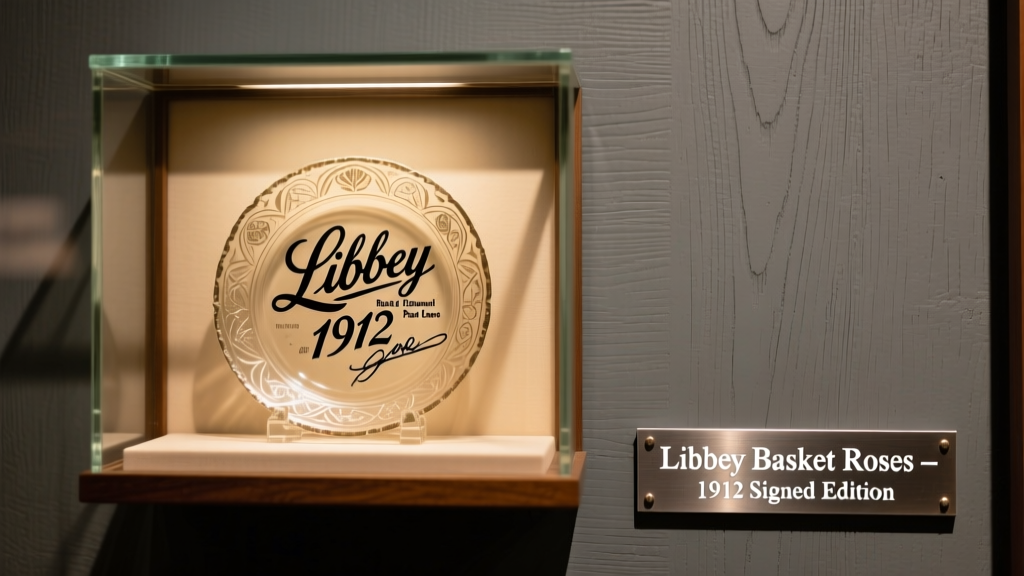
Libbey Basket Roses Band of Diamond Point Leaves: Authentication, Provenance, and Market Value of the Signed 19½-Inch Vintage Glassware Piece