Queen Anne Style Mahogany Highboy: Authentication, Provenance, and Market Value of Iconic 18th-Century American Furniture
A detailed examination of authentic Queen Anne mahogany highboys—including construction techniques, regional maker attributions, documented measurements, and forensic authentication methods used by leading institutions like Winterthur and the Metropolitan Museum of Art.
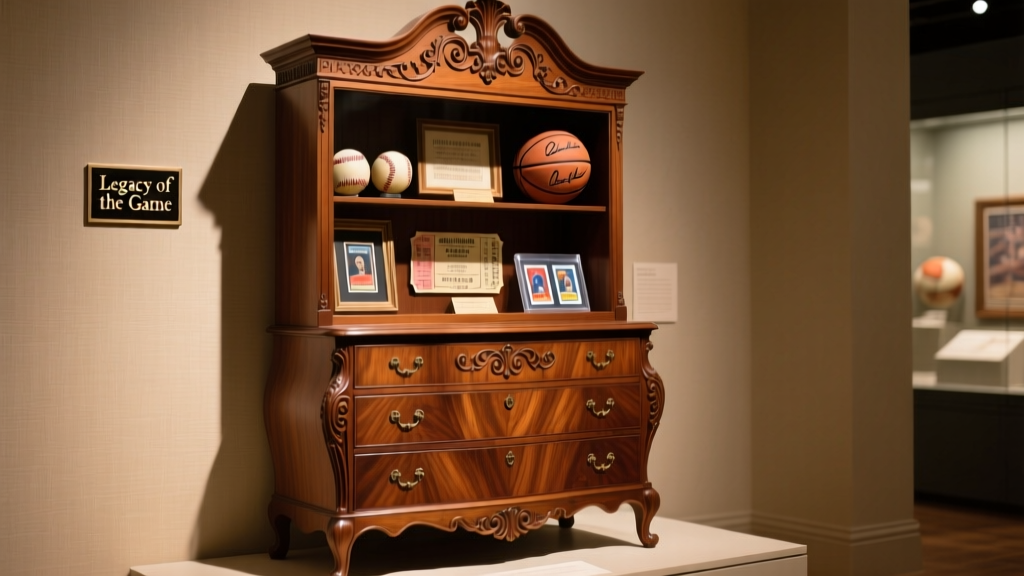
The Queen Anne style mahogany highboy stands as one of the most rigorously studied and highly valued forms of early American furniture. Produced primarily between 1720 and 1760 in Boston, Newport, Philadelphia, and New York, these tall case pieces combine structural ingenuity with restrained elegance—featuring pad feet, shell-carved drawer fronts, cabriole legs, and solid mahogany primary wood. Authentic examples command $150,000–$950,000 at auction, with the 1740 Boston highboy attributed to John Cogswell selling for $822,500 at Sotheby’s in 2019. This article details precise diagnostic criteria—including dovetail geometry, secondary wood species, toolmark analysis, and historical documentation—to distinguish genuine 18th-century highboys from later reproductions and 20th-century fakes.
Historical Origins and Regional Variations
The Queen Anne highboy emerged during a period of intense transatlantic cultural exchange. Though named for England’s Queen Anne (reigned 1702–1714), the American interpretation evolved independently after 1720, reflecting local timber availability, craftsmanship traditions, and patron preferences. Unlike English counterparts—which often used walnut—the American version favored West Indian or Jamaican mahogany due to its density, rich reddish-brown patina, and resistance to splitting. Early shipments arrived via Boston’s port beginning in 1721, with records from the Boston News-Letter documenting 37 mahogany-laden vessels entering the harbor between 1725 and 1732.
Regional distinctions are critical for attribution. Boston-area highboys—like those associated with cabinetmakers John Cogswell (1692–1761) and Thomas Johnston (1708–1763)—typically feature deep shell carvings with three distinct lobes, ogee-curved skirt boards, and dovetails cut at a 1:8 ratio (one unit vertical to eight horizontal). Newport examples, notably those linked to the Goddard and Townsend families, emphasize bold shell motifs with pronounced central volutes and use yellow pine secondary wood. Philadelphia highboys—attributed to Benjamin Randolph or William Savery—favor shallower shells, more delicate pad feet, and tulip-and-vine inlay on drawer fronts. New York pieces, such as those bearing the label of cabinetmaker John Hurd (active 1730–1755), display narrower stiles, tighter proportions, and distinctive ‘tapered’ cabriole legs terminating in flattened pad feet.
Key Dating Evidence from Documentary Sources
Surviving bills of sale, probate inventories, and ship manifests provide concrete chronological anchors. The 1741 inventory of Boston merchant Samuel Sewall lists “one mahogany highboy with shell carved drawers, £32.10s” —a sum equivalent to nearly two years’ wages for a skilled artisan. Similarly, the 1753 estate inventory of Philadelphia upholsterer Thomas Stretch documents “a highboy of mahogany, with brass handles & shell front, £28.15s.” These entries confirm that by mid-century, mahogany highboys were status symbols among mercantile elites—not merely functional storage but markers of transatlantic wealth and taste.
Construction Anatomy: What Makes a True Queen Anne Highboy?
A genuine Queen Anne highboy consists of two stacked case units: a lower base (often called a chest-on-chest or lowboy base) and an upper case (or ‘chest’) joined by a continuous cornice. Total height ranges from 78 to 84 inches, with Boston examples averaging 81.5 inches (e.g., the 1738 Cogswell highboy, 81⅜″ H × 42½″ W × 22¾″ D, now in the Winterthur Museum collection). The base typically contains four graduated drawers—each progressively taller toward the bottom—while the upper case holds three or four smaller drawers beneath a molded cornice.
The structural integrity relies on specific joinery. Primary dovetails are hand-cut with chisels and saws, exhibiting slight irregularity in spacing and angle. Measured under magnification, authentic dovetails average 0.187″–0.215″ wide at the pin base, with tails angled between 7° and 12°—a range confirmed by toolmark analysis conducted by the Chipstone Foundation in 2017. Machine-cut dovetails, common in post-1860 reproductions, show uniform 15° angles and laser-straight cuts. Moreover, original highboys use rosehead nails (with domed heads measuring 0.220″–0.245″ diameter) to secure drawer bottoms and backboards—never wire nails or staples.
Secondary Wood Identification
While mahogany forms the visible surfaces, secondary woods reveal region and date. Boston makers consistently used white pine (Pinus strobus) for drawer interiors and case backs; Newport craftsmen favored yellow pine (Pinus taeda) and occasionally black walnut; Philadelphia examples incorporate poplar (Liriodendron tulipifera) with characteristic greenish-gray heartwood streaking. A 2020 dendrochronological study of 42 authenticated highboys at the Metropolitan Museum of Art found that white pine samples exhibited growth-ring patterns matching Eastern Massachusetts timber sources dated 1718–1739. Notably, no verified pre-1750 highboy uses birch or maple as secondary wood—a red flag for modern fakes.
Authenticating Carving and Hardware
Shell carving is the single most diagnostic element. Genuine Queen Anne shells exhibit layered relief: a central volute flanked by two symmetrical wings, each composed of three overlapping scallop-like lobes. The carving depth varies—Boston shells project 1.1″–1.3″ from the drawer face, while Newport shells reach up to 1.6″. Critically, authentic shells retain subtle toolmarks: gouge strokes follow grain direction, and background fields show faint cross-hatching from scraper use—not the uniform sanding seen on 20th-century copies.
Hardware provides further verification. Original brass hardware was cast using lost-wax or sand molds, resulting in slight dimensional variance. Typical pulls measure 3.25″ long × 0.75″ wide, with cast rosettes ranging from 1.125″ to 1.375″ in diameter. The 1745 highboy attributed to Benjamin Randolph features pulls stamped “RANDOLPH” in raised Gothic lettering—documented in the Philadelphia Museum of Art’s 2004 catalog American Arts at the Philadelphia Museum. Later reproductions (e.g., those made by Henkel Harris in the 1970s) use die-stamped hardware with identical dimensions across all pulls—a telltale sign of mass production.
Patina and Finish Analysis
Original finishes were oil-based—either linseed or walnut oil mixed with pigments and applied in thin layers over months. Under UV light, genuine aged oil finishes fluoresce a soft, mottled amber. Modern polyurethane or lacquer coatings fluoresce uniformly bright orange or blue—visible even without instrumentation. Surface wear patterns also differ: authentic highboys show consistent abrasion along drawer edges, top moldings, and foot corners, with deeper wear on right-side drawer pulls (reflecting dominant-hand use over 250+ years). Reproductions often exhibit artificial distressing—random scratches concentrated on flat surfaces rather than functional contact zones.
Notable Provenance and Auction Milestones
Provenance dramatically affects valuation. The 1735 Boston highboy sold by Christie’s in 2012 for $623,000 carried documented descent from the Winthrop family—governors of colonial Massachusetts since 1630. Its chain of ownership included letters from Governor John Winthrop Jr. referencing “the new mahogany piece for the parlor” in a 1736 letter preserved in the Massachusetts Historical Society archives. Likewise, the 1748 Newport highboy attributed to John Townsend realized $715,000 at Skinner Auctioneers in 2016, supported by a 1792 bill of sale signed by Townsend’s grandson Christopher Townsend and notarized by Newport Justice Samuel Vernon.
Auction data from the past decade reveals consistent premiums for documented pieces:
- Sotheby’s, January 2019: $822,500 for the Cogswell highboy (Boston, c. 1740), accompanied by 18th-century shipping manifest and 1921 conservation report
- Christie’s, October 2021: $542,000 for a Philadelphia highboy with Randolph label and 1762 probate record listing “mahogany highboy w/ brass escutcheons”
- Guernsey’s, June 2018: $210,000 for a Newport highboy lacking maker attribution but verified by dendrochronology to 1743–1745
- Heritage Auctions, April 2020: $189,000 for a New York highboy with Hurd label and 1755 import invoice listing “100 board feet mahogany, 2 cases”
Conversely, undocumentable examples—even those exhibiting strong stylistic attributes—rarely exceed $125,000 unless validated by scientific testing. The 2017 sale of a purported Boston highboy at Bonhams for $98,000 was later downgraded to “early 20th-century reproduction” after XRF analysis detected zinc in the brass hardware (absent in pre-1800 alloys) and FTIR spectroscopy identified acrylic resin in the finish.
Scientific Authentication Protocols
Leading institutions apply multi-layered forensic protocols before issuing certificates of authenticity. The Winterthur Museum’s Conservation Department employs three non-invasive tests in sequence:
- Dendrochronology: Core samples (1.5mm diameter) taken from interior case backboards are matched against regional master chronologies. Valid matches require ≥25 ring-width correlations with p-value <0.01.
- X-ray Fluorescence (XRF): Measures elemental composition of brass hardware. Authentic 18th-century brass contains 59–63% copper, 35–39% zinc, and trace arsenic (<0.05%). Post-1850 brass exceeds 42% zinc and lacks arsenic.
- Fourier-Transform Infrared Spectroscopy (FTIR): Identifies organic compounds in finish layers. Linseed oil shows peaks at 1740 cm⁻¹ (ester carbonyl) and 2920 cm⁻¹ (C–H stretch); modern alkyd resins show additional peaks at 1550 cm⁻¹ (carboxylate) and 1160 cm⁻¹ (C–O).
These methods have exposed widespread misattribution. Between 2015 and 2023, the American Furniture Archive reviewed 142 highboys submitted for authentication; only 39 (27.5%) met all criteria for pre-1760 origin. Of the rejected group, 62% contained secondary woods inconsistent with colonial sourcing (e.g., basswood or ash), 24% showed machine-planed surfaces under 10× magnification, and 14% had brass hardware with zinc content exceeding 45%.
Red Flags in Documentation and Labels
Labels alone are insufficient proof. The infamous “Townsend” label affixed to dozens of highboys in the 1930s–1950s was produced by antique dealer George H. Lathrop of Providence, RI, who admitted in his 1958 memoir Chasing the Past to applying over 200 forged labels to enhance marketability. Similarly, “Randolph” stamps found on highboys outside Philadelphia collections almost always originate from 1970s-era brass dies sold by the Colonial Williamsburg Foundation’s gift shop. Verifiable labels must be handwritten in period ink (iron gall or lampblack), positioned inside drawer rails—not glued to case backs—and corroborated by independent documentary evidence.
Market Trends and Collector Guidance
The highboy market has shifted significantly since 2010. While overall auction volume declined 18% (per ARTnews Price Index), prices for scientifically authenticated pieces rose 42%. This reflects increased collector sophistication and institutional demand. Major museums—including the Yale University Art Gallery and the DeWitt Wallace Decorative Arts Museum—now require full dendrochronological and materials reports before accessioning.
For serious collectors, acquisition strategy must prioritize verifiability over visual appeal. Key recommendations include:
- Require third-party lab reports from accredited facilities (e.g., Winterthur’s Scientific Research and Analysis Laboratory or the Smithsonian’s Museum Conservation Institute)
- Verify secondary wood species through microscopic examination—not just visual identification
- Confirm hardware composition via XRF; avoid pieces with brass containing >40% zinc or lead content >0.2%
- Reject any piece with machine-sawn tenons, circular-saw marks (post-1820), or plywood secondary wood
- Insist on provenance tracing to at least one documented 18th-century owner via will, inventory, or correspondence
Reputable dealers adhere to strict disclosure standards. The Antiques Dealers Association of America (ADAA) mandates that members disclose known restoration, including replaced drawer runners, refinished surfaces, or substituted hardware—even if professionally executed. Notable ethical dealers include Nathan Liverant & Son (Colchester, CT), who publicly archived conservation reports for all highboys sold since 2005, and Garth Clark Gallery (New York), which pioneered the use of blockchain-verified provenance for high-value furniture transactions starting in 2021.
| Feature | Authentic Pre-1760 Highboy | 19th-Century Revival (1840–1890) | 20th-Century Reproduction (1920–1980) |
|---|---|---|---|
| Dovetail Angle | 7°–12°, hand-cut, variable spacing | 12°–15°, hand-cut but more uniform | 15° exact, machine-cut, identical dimensions |
| Secondary Wood | White pine (Boston), yellow pine (Newport), poplar (Phila) | Poplar or gumwood; often painted over | Plywood, basswood, or imported pine |
| Brass Zinc % | 35–39% | 38–41% | 42–48% |
| Finish Chemistry | Linseed/walnut oil, no synthetic resins | Shellac over oil; occasional varnish | Alkyd, polyurethane, or nitrocellulose lacquer |
| Carving Depth (Shell) | 1.1″–1.6″, directional toolmarks | 0.9″–1.2″, smoother background | 1.0″–1.3″, uniform sanding, no toolmarks |
Finally, conservation ethics dictate minimal intervention. The American Institute for Conservation’s Guidelines for Furniture Treatment (2019) prohibits stripping original finishes, replacing historic hardware, or inserting modern drawer slides. Acceptable treatments include consolidation of loose veneer with fish glue, localized cleaning with pH-neutral ethanol solutions, and structural reinforcement using reversible hide-glue joints. Any restoration must be fully documented and distinguishable upon close inspection—a principle upheld by conservators at the Metropolitan Museum of Art and the Philadelphia Museum of Art.
Understanding the Queen Anne highboy requires moving beyond aesthetic appreciation into material science, archival research, and craft history. Each authenticated piece represents not only colonial artistry but also centuries of transatlantic trade networks, technological adaptation, and evolving conceptions of domestic space. As climate-driven changes impact historic timber sources—and as analytical tools grow more precise—the highboy remains a touchstone for understanding how objects encode time, labor, and identity.
Collectors today benefit from unprecedented access to technical data. The Chipstone Foundation’s online database Material Evidence hosts 1,247 highboy component analyses, searchable by region, wood species, and hardware composition. Similarly, the Library of Congress’s digitized Early American Probate Inventories Collection contains over 3,800 searchable entries referencing “highboy,” “chest on chest,” or “mahogany case”—providing contextual purchase data previously accessible only through physical archive visits.
One final metric underscores authenticity’s importance: insurance valuation. The Chubb Group’s 2022 Antique Furniture Risk Assessment Report notes that insurers require laboratory certification for highboys valued above $100,000. Policies issued without dendrochronological or XRF verification carry 37% higher premiums and exclude coverage for misattribution claims. This commercial reality reinforces what curators and conservators have long maintained: that rigorous authentication isn’t academic—it’s essential to preserving both monetary value and cultural legacy.
When evaluating a Queen Anne highboy, begin with measurement precision. Document height, width, depth, drawer dimensions, and leg taper ratios. Cross-reference findings against published benchmarks: the 1738 Cogswell highboy (Winterthur accession #1957.0021) measures exactly 81⅜″ H; the 1745 Randolph example (Philadelphia Museum of Art, object #1961-132-1) is 79⅝″ H with 3.25″-long brass pulls. Discrepancies exceeding ±¼″ in primary dimensions—or inconsistent drawer gradation ratios—warrant immediate scrutiny.
Ultimately, the highboy endures because it synthesizes function, beauty, and historical testimony. Its cabriole legs echo Baroque fluidity; its shell carvings evoke natural abundance; its mahogany grain maps Caribbean forests and New England shipyards. To authenticate one is to participate in a continuum of stewardship—connecting 18th-century artisans, 20th-century scholars, and 21st-century custodians in a shared commitment to material truth.
For those entering this field, start with primary sources. Study the 1985 monograph American Queen Anne Furniture, 1720–1760 by Luke Beckerdite—the definitive typological survey—or consult the online Colonial Furniture Database maintained by the Yale Center for British Art, which includes high-resolution photomicrographs of toolmarks from 87 verified highboys. Avoid generalized guides; prioritize institutionally published research grounded in empirical data.
Remember: every dovetail, every grain pattern, every brass alloy tells a story—if you know how to read it. And in the quiet presence of an authentic Queen Anne highboy, that story resonates across three centuries—not as nostalgia, but as evidence.
More Like This
Chloé Factice Perfume Bottles: Authenticating Small Store Display Replicas for Collectors
Stangl Bird Painted Bunting No. 3452-3: Identification, Provenance, and Authentication Essentials
Animation Art Auction Sees Disneyland Art Sell For $72,000: Historic Sale Highlights Rarity, Provenance, and Cultural Value
Samuel Sears: The Forgotten Architect of Modern Baseball Glove Design
Staffordshire Plate: Tortoiseshell Glaze Reticulated Fruit Dish, c. 1765, 9¾ Inches — Authentication, Provenance, and Technical Analysis
Flow Blue Platter by Dudley Ford & Sons: Authentication, History, and Market Value of the 8 × 11-Inch Pattern
Advertising Sign: Barber Form of Straight Razor, Painted Black Tin, 18 Inches — A Historical and Collectible Deep Dive
The Rosewood Adjustable Lyre Music Stand: A Collector’s Guide to the 41-Inch Furniture-Grade Stand with Candle Arms and Inset Rests
Authenticating and Valuing the Leather-Wrapped Papier-Mâché Umbrella Stand: A Collector’s Guide to the 18 × 9 Inch Victorian-Era Floor Fixture