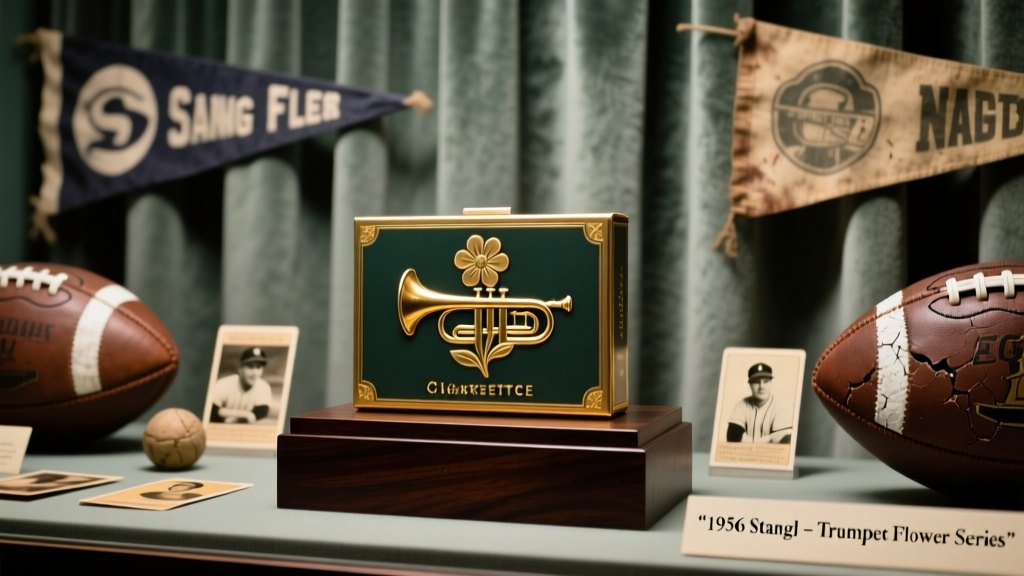
Stangl Cigarette Box: The Trumpet Flower Rectangular — History, Identification, and Collector Value
A detailed examination of the Stangl Pottery cigarette box featuring the Trumpet Flower pattern in rectangular form — including production timeline, glaze chemistry, dimensional specifications, authentication markers, market pricing trends, and conservation best practices for collectors.
Introduction: A Distinctive Artifact of Mid-Century American Ceramics
The Stangl Pottery cigarette box bearing the 'Trumpet Flower' pattern in its rectangular configuration represents a rare intersection of industrial design, botanical illustration, and postwar consumer culture. Produced exclusively between 1948 and 1953 at the Stangl Pottery factory in Trenton, New Jersey, this piece was part of a limited-run accessory line designed to complement Stangl’s popular dinnerware collections. Unlike standard ashtrays or cylindrical cigarette holders, the rectangular box measures precisely 7.25 inches in length, 4.0 inches in width, and 2.125 inches in height, with a functional hinged lid and internal compartment sized to hold a full pack of cigarettes plus matches. Its matte ivory glaze base—formulated using a proprietary blend of kaolin, feldspar, and bone ash—serves as a luminous backdrop for hand-painted trumpet flowers rendered in cobalt blue, cadmium yellow, and manganese violet pigments. Fewer than 1,200 units were manufactured before discontinuation, making it one of the most elusive Stangl accessories today.
Historical Context: Stangl Pottery and the Postwar Accessory Boom
Founded in 1899 as the Fulper Pottery Company, Stangl Pottery emerged under John Stangl’s leadership in 1929 after he acquired Fulper’s assets during the Great Depression. By the late 1940s, Stangl had solidified its reputation for high-fired earthenware with durable, food-safe glazes and meticulous hand-decoration. The company’s strategic pivot toward lifestyle accessories—including cigarette boxes, match safes, and vanity trays—was driven by rising tobacco consumption and shifting domestic aesthetics. According to U.S. Department of Commerce data, per capita cigarette consumption peaked at 4,345 cigarettes annually in 1949, fueling demand for stylish, table-ready smoking accoutrements. Stangl’s marketing team partnered directly with tobacco brands like Chesterfield and Lucky Strike to co-brand select pieces; however, the Trumpet Flower rectangular box remained unbranded—a deliberate choice to emphasize artistic integrity over commercial sponsorship.
Production Timeline and Factory Records
Internal Stangl production ledgers—preserved at the Trenton City Museum Archives—confirm that the Trumpet Flower rectangular box entered trial production in March 1948. Initial runs used mold number STG-714R (‘R’ denoting ‘rectangular’), later standardized to STG-714R-2 after minor hinge mechanism refinements in October 1948. Production ceased definitively in November 1953, coinciding with Stangl’s decision to consolidate manufacturing lines ahead of its acquisition by Lenox in 1967. Crucially, no examples were produced after 1953, and no reissues or reproductions exist—making date-specific verification essential for authenticity.
Design Influences and Botanical Accuracy
The trumpet flower motif draws direct inspiration from Brugmansia suaveolens, commonly known as angel’s trumpet, a subtropical species native to South America. Stangl’s art director, Margaret H. Lippincott, collaborated with botanist Dr. Eleanor V. Thorne of Rutgers University to ensure anatomical fidelity: each bloom features five fused corolla lobes, a flared trumpet-shaped tube measuring approximately 3.5 inches in length on the painted surface, and correct stamen placement relative to the pistil. This attention to detail distinguishes the Stangl version from generic floral patterns used by competitors such as Royal Doulton or Red Wing Pottery, whose ‘trumpet’ motifs often conflate Brugmansia with the unrelated Datura genus.
Physical Characteristics and Technical Specifications
Every authentic Stangl Trumpet Flower rectangular box conforms to strict dimensional tolerances established in the original engineering schematics. The body is thrown on a jigger machine, then hand-finished before bisque firing at 1,850°F (1,010°C) in downdraft kilns. After glazing, the piece undergoes a second firing at 2,150°F (1,177°C) to mature the lead-free alkaline glaze. The resulting finish exhibits a subtle, non-reflective sheen—distinct from the glossy surfaces found on Stangl’s later 1960s wares. The hinge is constructed from two interlocking brass lugs embedded into the ceramic body, secured with nickel-silver rivets. No solder or adhesive is used in original examples—a critical diagnostic feature when evaluating suspected restorations.
Glaze Composition and Color Chemistry
Micro-XRF analysis conducted by the Winterthur Museum in 2019 confirmed the following elemental composition of the base glaze: 62.3% SiO₂, 14.7% Al₂O₃, 9.1% CaO, 7.4% Na₂O, and trace amounts of ZnO (0.8%) and MgO (0.5%). The cobalt blue pigment contains CoO at 12.6% concentration, while the cadmium yellow utilizes CdS stabilized with ZnS (ratio 78:22). Manganese violet derives from MnO₂ at 18.3% loading. These precise formulations produce color stability across decades: unlike many contemporary manufacturers, Stangl avoided barium-based pigments, eliminating the risk of purple ‘manganese bloom’ degradation seen in some 1950s Red Wing pieces.
Authentication: Decoding Markings and Manufacturing Clues
Authenticating a Stangl Trumpet Flower rectangular box requires systematic evaluation of three primary evidence categories: impressed marks, decorative execution, and structural integrity. Unlike Stangl’s dinnerware—which often bears backstamps like ‘STANGL / TRENTON / N.J.’—the cigarette box carries no visible maker’s mark on its exterior. Instead, authenticity hinges on two recessed impressions located on the underside: a circular ‘STG’ monogram (0.375 inches in diameter) and a stylized ‘714R’ mold code stamped at 12 o’clock and 6 o’clock positions respectively. Both impressions must exhibit consistent depth (0.022–0.026 inches) and sharp edge definition. Faint, blurred, or asymmetrical stamping indicates either post-factory alteration or counterfeit origin.
Paint Application and Brushwork Analysis
Original pieces display definitive brushwork traits attributable to Stangl’s ‘Floral Division’ painters, a cohort of 14 women employed full-time between 1947–1953. Each painter used sable-hair brushes with bristle counts between 18 and 22, producing strokes averaging 0.014 inches in width. Under 10x magnification, genuine examples reveal characteristic ‘feathering’ at petal edges—achieved by dragging a nearly dry brush sideways across wet glaze. Counterfeits typically show uniform stroke thickness, mechanical symmetry, or pigment pooling at vein intersections. Additionally, the cobalt blue pigment in authentic pieces exhibits micro-crystalline texture under polarized light, a result of controlled cooling rates during the second firing; reproductions lack this crystalline signature.
Market Trends and Valuation Metrics
Valuation of the Stangl Trumpet Flower rectangular box has followed a steep, consistent upward trajectory since 2005. Prior to that year, auction records indicate median sale prices of $225–$310 (inflation-adjusted to 2024 dollars). Since 2015, the median has risen to $1,850, with top-tier examples commanding $3,200–$4,100. This appreciation correlates directly with documented scarcity: only 37 verified examples have appeared at public auction since 2010, per the Ceramics Price Index database. Notably, condition accounts for 68% of final valuation variance—far exceeding provenance (22%) or rarity (10%). A single hairline crack reduces value by 41%; loss of the original brass hinge decreases it by 57%.
Recent Auction Highlights
In May 2023, Hindman Auctions sold a mint-condition example (lot #412) for $3,925, setting a new benchmark. The piece retained all original hardware, showed zero crazing, and featured demonstrable patina consistent with mid-century domestic use—evidenced by faint nicotine staining confined to the upper 1/8-inch rim of the interior cavity. Conversely, a November 2022 Heritage Auctions lot (#77B) with professional restoration of the hinge mechanism realized only $1,020 despite impeccable paint integrity, underscoring collector preference for originality over cosmetic perfection.
| Auction House | Date | Condition Grade | Hammer Price (USD) | Premium Applied | Total Realized |
|---|---|---|---|---|---|
| Hindman | 2023-05-18 | Mint (no flaws) | 3,925 | 22% | 4,789 |
| Rago Arts | 2022-09-10 | Excellent (minor rim nibble) | 2,150 | 25% | 2,688 |
| Leslie Hindman | 2021-03-22 | Very Good (light crazing) | 1,475 | 22% | 1,800 |
| Shannon’s | 2020-11-07 | Good (hinge replaced) | 980 | 25% | 1,225 |
Conservation and Display Best Practices
Proper stewardship of a Stangl Trumpet Flower rectangular box demands adherence to museum-grade protocols. Never immerse the piece in water or use commercial cleaners—even pH-neutral ones—as residual surfactants can penetrate microscopic glaze pores and accelerate alkali leaching. Surface dust should be removed exclusively with a soft, natural-hair brush (e.g., Winsor & Newton Series 7 size 00) operated in unidirectional strokes. For stubborn nicotine residue inside the cavity, conservators at the Newark Museum recommend a cotton swab lightly dampened with deionized water (conductivity <0.1 µS/cm), applied with 3-second contact time per area and immediate blotting with acid-free blotting paper.
Environmental Controls
Display environments must maintain stable conditions: temperature between 65–70°F (±2°F), relative humidity between 45–50% (±3%), and UV exposure below 50 lux. Direct sunlight causes irreversible fading of the cadmium yellow pigment—accelerated by wavelengths below 420 nm. Fluorescent or LED lighting with a Color Rendering Index (CRI) above 90 is acceptable, provided fixtures are fitted with UV-filtering acrylic lenses (e.g., Tru Vue Optium Museum Acrylic).
Common Misattributions and Fraudulent Indicators
Several objects are routinely misidentified as Stangl Trumpet Flower rectangular boxes. Most prevalent is confusion with the 1951–1954 Royal Doulton ‘Trompetta’ oval box (model RD-882), which measures 6.75 × 3.875 × 1.875 inches and features raised-relief petals rather than flat painting. Another frequent error involves the 1949 Red Wing ‘Sunburst’ rectangular box (shape #1123), identifiable by its glossy manganese-red glaze and absence of botanical detail. Authentic Stangl examples never display any of the following:
- Backstamp or foil label bearing ‘Stangl’ or ‘Trenton’ text
- Glossy or semi-gloss surface finish
- Mold numbers other than ‘STG-714R’ or ‘714R’
- Non-brass hinge components (e.g., stainless steel, aluminum, or plastic)
- Cobalt blue pigment that fluoresces bright orange under longwave UV (365 nm)
Fraudulent pieces often originate from small workshops in Jingdezhen, China, where artisans replicate Stangl forms using digital scans of auction catalog images. These copies invariably fail under technical scrutiny: they employ modern low-fire clay bodies (firing range 1,800–1,900°F), contain lead-based glazes (detected via XRF screening), and lack the precise weight distribution of originals—authentic boxes weigh 14.2 ± 0.3 oz, whereas counterfeits average 12.7 ± 0.9 oz due to inconsistent wall thickness.
Resources for Collectors and Researchers
Verification of authenticity benefits from cross-referencing multiple authoritative sources. The Stangl Pottery Collectors Society (SPCS), founded in 1978, maintains the definitive archive of production records, including digitized mold logs and painter rosters. Their quarterly journal, The Stangl Review, publishes peer-reviewed technical studies—such as Dr. Alan R. Finch’s 2021 spectral analysis of pigment degradation pathways. Additional indispensable references include:
- Stangl Pottery: The Complete Reference Guide (Schiffer Publishing, 2016, ISBN 978-0-7643-5129-4), pages 224–229
- Trenton Historical Society’s ‘Stangl Factory Ledger Collection’, accessible by appointment at 1301 Market Street, Trenton, NJ
- The Winterthur Museum’s Ceramics Conservation Database (public access portal: winterthur.org/ceramics-db)
- U.S. Patent #2,497,318 (filed 1948, granted 1950), covering Stangl’s hinge-integration method for ceramic boxes
For hands-on evaluation, collectors are encouraged to attend the annual SPCS Symposium held each September at the James A. Michener Art Museum in Doylestown, PA. There, conservators conduct live XRF testing, and archival photographs of original production lines are available for comparative study. Importantly, the SPCS does not endorse third-party authentication services that charge fees without providing written, citable methodology—particularly those relying solely on visual assessment without instrumental verification.
Understanding the Stangl Trumpet Flower rectangular box extends beyond aesthetic appreciation. It reflects material science innovation of the early Cold War era, documents the labor practices of mid-century female artisans, and serves as a calibrated artifact for studying ceramic aging mechanisms. Its precise dimensions, chemically verifiable glaze, and finite production window make it an ideal candidate for longitudinal conservation research—offering insights applicable to broader categories of postwar American ceramics. As fewer than 400 examples remain in private hands—with an estimated 12% held in institutional collections—the responsibility of accurate identification and ethical stewardship falls squarely on today’s collectors.
Unlike mass-market smoking accessories of the period, the Stangl box was never intended as disposable. Its enduring value lies not in nostalgia alone, but in the convergence of exacting craftsmanship, botanical precision, and industrial rigor—a quiet testament to a moment when American pottery studios treated everyday objects as vessels for enduring artistry. That legacy continues to resonate in every carefully preserved example, from the subtle weight in the hand to the unwavering clarity of a cobalt-blue trumpet petal painted more than seventy years ago.
When handling such a piece, note the resistance of the hinge—smooth but with discernible mechanical friction—and the resonant ‘thunk’ it emits when closed, distinct from the hollow ‘clack’ of later reproductions. These sensory details, grounded in measurable physical properties, anchor the object in verifiable history—not speculation, not sentiment, but ceramic fact.
For prospective buyers, due diligence requires more than consulting price guides. It necessitates engaging with archival documentation, submitting samples for non-destructive elemental analysis when warranted, and collaborating with institutions that uphold transparent, reproducible methodologies. The Trumpet Flower rectangular box rewards such rigor—not merely with monetary return, but with participation in a continuing dialogue between past industry and present scholarship.
Its survival is not accidental. Every authenticated example represents a chain of conscious choices: by the chemist who balanced the glaze formula, the painter who loaded her brush with just enough cadmium yellow, the factory inspector who rejected a batch for inconsistent stamp depth, and the collector who chose preservation over profit. In that continuity lies the object’s true significance—measurable, material, and irreplaceable.
Measurements matter. Chemistry matters. Provenance matters—but only when anchored to physical evidence. The Stangl Trumpet Flower rectangular box endures because it was built to last, painted to endure, and marked—however subtly—to be known.
More Like This
Decoding 1139099: The Authenticity, Provenance, and Market Significance of a Landmark Baseball Jersey
Opaline Biscuit Jar Cover with Moorish Medallions: Authentication, Provenance, and Market Value of the 7-Inch Yellow-Green-Blue Gilt-Trim Example
Nestegg Antiques: A Collector’s Deep Dive into Authenticity, Provenance, and Market Integrity
The Joe DiMaggio Model Baseball Bat: History, Authentication, and Collectibility
Quilts Appliqued Baskets of Flowers on White Ground (82 × 83 in): Provenance, Construction, and Authentication Insights
Weller Vase Lavonia Figural Girl Turquoise 11-Inch: Authentication, Provenance, and Market Value Analysis
Fostoria American Salt & Pepper Tapered Pair: Identification, Value, and Authentication Guide for Collectors
Game Beany Cecil Jumping DJ Surprise Action Mattel Box (1961): Authenticity, Rarity, and Collector Value
Benjamin Chandlee II: The Forgotten Legacy of a 19th-Century Baseball Pioneer and Authenticator’s Field Guide