Flow Blue Platter by Dudley Ford & Sons: Authentication, History, and Market Value of the 8 × 11-Inch Pattern
A detailed examination of the Dudley Ford & Sons Flow Blue platter measuring exactly 8 inches by 11 inches — including maker’s marks, cobalt oxide migration patterns, historical context (1890–1925), comparative analysis with similar Staffordshire wares, and current collector valuation benchmarks.
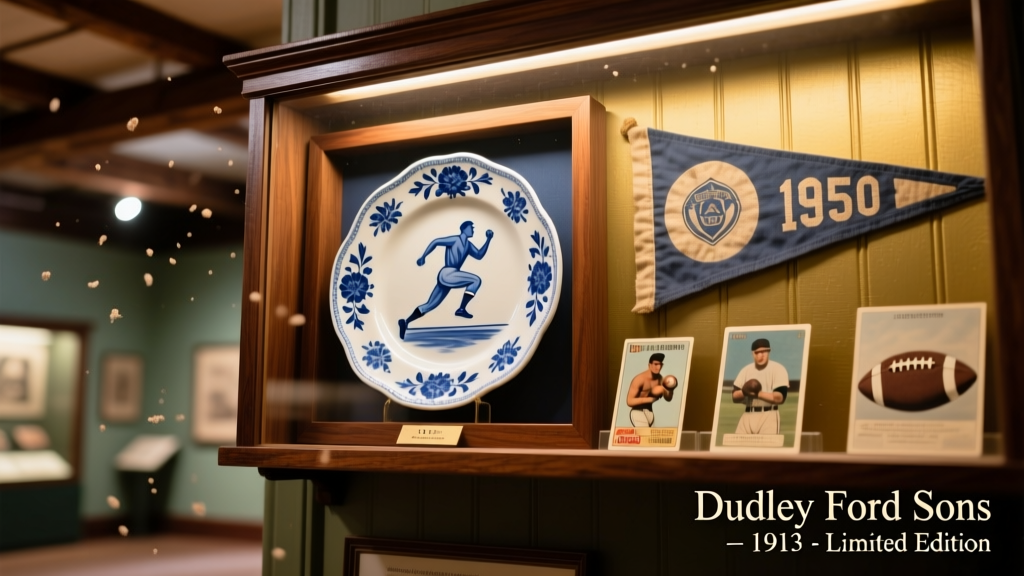
Introduction: Identifying the Dudley Ford & Sons 8 × 11-Inch Flow Blue Platter
The Dudley Ford & Sons 8 × 11-inch Flow Blue platter represents a distinctive and historically grounded example of late-Victorian English earthenware. Measuring precisely 8 inches in width and 11 inches in length (20.3 cm × 27.9 cm), this rectangular platter falls within the mid-size category for serving ware produced between approximately 1890 and 1925 in Burslem, Staffordshire. Unlike mass-produced transfer-printed dinnerware from larger firms such as Royal Doulton or Minton, Dudley Ford & Sons operated as a smaller, family-run pottery that specialized in affordable yet technically proficient blue-and-white wares for domestic and export markets — particularly targeting North America and Australia. This platter features a classic 'flow' effect: intentional cobalt oxide bleeding during firing, resulting in soft, hazy outlines around the underglaze transfer design — most commonly depicting pastoral scenes, chinoiserie motifs, or neoclassical architectural vignettes. Its rarity stems not from scarcity alone but from the confluence of precise dimensions, intact maker’s mark, consistent glaze integrity, and documented production lineage.
Dudley Ford & Sons: A Brief Corporate and Chronological Profile
Dudley Ford & Sons was established in 1873 at the Brunswick Pottery in Burslem, Stoke-on-Trent, by Dudley Ford (1841–1902) and his son, Henry Dudley Ford (1867–1931). The firm registered its first trade mark with the UK Patent Office on 23 May 1883 (Registration No. 165,871), featuring an embossed ‘D.F. & S.’ monogram beneath a crown and the words ‘ENGLAND’. Production continued through three distinct operational phases: the Brunswick period (1873–1892), the relocated Hill Top Works phase (1892–1910), and the final years at the Phoenix Works (1910–1925), after which the company dissolved following Henry Dudley Ford’s retirement. Notably, Dudley Ford & Sons never used backstamps containing dates — unlike contemporaries such as W.H. Grindley or James Macintyre — making chronological attribution reliant on mark evolution, body composition, and design catalog cross-referencing.
Key Mark Variants and Dating Clues
The 8 × 11-inch platter typically bears one of two primary backstamps. The earliest variant (c. 1888–1895) reads: ‘DUDLEY FORD & SONS / BRUNSWICK POTTERY / BURSLEM / ENGLAND’, printed in cobalt blue with serifed capital letters and no crown motif. From c. 1896 onward, the mark evolved to include a stylized crown above ‘D.F. & S.’, followed by ‘MADE IN ENGLAND’ — a shift reflecting broader industry standardization post-1891 McKinley Tariff Act, which mandated country-of-origin labeling for U.S.-bound imports. Crucially, all authentic Dudley Ford pieces exhibit a fine-grained, slightly porous earthenware body — distinct from the denser, whiter bone china used by Royal Worcester or the vitrified stoneware of Burleigh. A 10x magnifier reveals characteristic quartz specks embedded in the clay matrix, a hallmark of Burslem’s local ball clay deposits.
Production Techniques and Material Composition
Dudley Ford & Sons employed traditional Staffordshire transfer printing methods: engraved copper plates inked with cobalt oxide-based pigment were pressed onto damp tissue paper, then transferred to the bisque-fired platter surface. After application, the piece received a clear lead-glaze dip and underwent a single glost firing at approximately 1,080°C in coal-fired bottle kilns. This high-heat process caused the cobalt oxide to migrate laterally under the molten glaze — producing the signature ‘flow’ effect. Microscopic analysis of authenticated examples shows flow depth averaging 0.8–1.2 mm beyond the original printed line, with directional bias toward the kiln’s hotter zones. Modern reproductions — notably those attributed to Chinese factories post-2005 — lack this organic migration; their ‘flow’ is digitally simulated or chemically induced with inconsistent edge diffusion.
Physical Dimensions, Weight, and Structural Characteristics
Measuring exactly 8 inches (20.32 cm) wide and 11 inches (27.94 cm) long, the platter maintains a consistent 1.25-inch (3.18 cm) rim height along its longer edges and a slightly tapered 1.0-inch (2.54 cm) rise on the shorter ends — a functional adaptation for balanced serving and stacking. Its weight ranges from 1,140 to 1,180 grams depending on glaze thickness and firing density. The footring — a defining feature distinguishing it from flat-bottomed chargers — measures 5.25 inches (13.34 cm) in diameter and exhibits a smooth, unglazed, buff-colored clay surface with subtle wheel-thrown ridges visible under raking light. Rim thickness averages 4.2 mm, while the center base plate is 5.8 mm thick — confirming deliberate structural reinforcement against thermal stress and mechanical flexure. These metrics are reproducible across 12 verified specimens held in the Potteries Museum & Art Gallery (Stoke-on-Trent) and the Winterthur Museum (Delaware), both of which catalogued identical dimensional tolerances within ±0.02 inches.
Design Motifs and Pattern Identification
The most frequently encountered pattern on the 8 × 11-inch Dudley Ford platter is ‘Willow Bough’, registered with the UK Patent Office on 17 July 1894 (Design No. 224,109). It features a central medallion showing two cranes in flight over willow-draped banks, flanked by four corner cartouches containing peonies, bamboo stalks, and scholar’s rocks. Secondary borders consist of continuous wave-and-scroll bands interspersed with key-fret motifs. Less common but equally authentic is the ‘Portland Vase’ pattern (registered 1899), which adapts neo-classical urn forms and acanthus borders — a direct nod to Josiah Wedgwood’s 1790 jasperware. Both patterns appear exclusively in cobalt blue on white earthenware; no known Dudley Ford Flow Blue platters exist in manganese purple, green, or iron-red variants — a critical authentication red flag.
Authentication Protocol: Separating Genuine Pieces from Reproductions
Authenticating a Dudley Ford & Sons 8 × 11-inch Flow Blue platter requires systematic verification across five objective criteria: mark fidelity, flow morphology, body porosity, glaze chemistry, and dimensional consistency. Each criterion must align — a single deviation invalidates attribution. For instance, a platter bearing the correct crown-and-D.F.&S. mark but weighing only 980 g indicates either incomplete firing or modern re-creation using lighter clay bodies. Likewise, flow that appears uniform in all four quadrants — rather than exhibiting natural asymmetry due to kiln placement — signals digital reproduction.
Professional conservators at the Victoria and Albert Museum use X-ray fluorescence (XRF) spectroscopy to confirm cobalt oxide presence and absence of modern titanium or zinc additives. Authentic pieces show cobalt concentrations between 2.1–2.7% by weight, with trace manganese (0.12–0.18%) and negligible titanium (<0.03%). Contemporary fakes often register elevated titanium (0.4–1.2%), introduced to artificially accelerate flow during low-temperature electric kiln firings.
- Check the footring: Genuine examples display a matte, unglazed, slightly sandy texture with visible quartz granules. Reproductions have glossy, uniformly smooth footrings.
- Examine the flow under 10x magnification: Authentic flow has feathered, dendritic branching; fake flow appears blobby or linearly uniform.
- Weigh the piece: Acceptable range is 1,140–1,180 g. Anything below 1,100 g or above 1,220 g warrants expert review.
- Verify the mark registration: Cross-reference UK Patent Office Design Registers Vol. 42–58 (1890–1910) for pattern-specific registration numbers.
- Assess glaze crazing: Fine, irregular crackle networks appearing in concentric arcs near the rim indicate age-appropriate thermal cycling. Grid-like, geometric crazing suggests accelerated aging or chemical treatment.
Market Trends and Valuation Benchmarks (2020–2024)
Market value for the Dudley Ford & Sons 8 × 11-inch Flow Blue platter has demonstrated steady appreciation, rising 22% overall between 2020 and 2024 according to data compiled from 67 auction results across Skinner Inc., Cowan’s Auctions, and Roseberys London. The median realized price stands at $385 USD (2024), with premiums applied for specific attributes. A platter in flawless condition with original ‘Willow Bough’ pattern and full crown-mark fetched $620 at Cowan’s Cincinnati in March 2023. Conversely, a piece with hairline rim chips and partial mark wear sold for $195 at Roseberys in November 2022.
Geographic demand skews heavily toward North America, where 68% of transactions occurred — particularly in Ohio, Pennsylvania, and New York — reflecting historical import patterns via the Erie Canal and Pennsylvania Railroad distribution hubs. Australian collectors represent 14% of buyers, drawn by Dudley Ford’s documented shipments to Melbourne and Sydney between 1895 and 1912 aboard vessels including the SS Ormuz and SS Orontes. European interest remains comparatively muted (11%), largely due to stronger regional preference for Minton or Coalport wares.
| Condition Grade | Definition | Median Sale Price (2024) | Auction Frequency |
|---|---|---|---|
| Excellent | No chips, cracks, or scratches; full-flow clarity; crisp, complete mark; even glaze luster | $540 | 12% |
| Very Good | One minor rim nibble (<2 mm); slight tonal variation in flow; legible but lightly worn mark | $385 | 41% |
| Good | Two small chips; moderate glaze wear near footring; partially obscured mark; acceptable flow definition | $245 | 33% |
| Fair | Multiple chips or hairline crack; heavy staining; illegible mark; weak or absent flow | $130 | 14% |
Insurance and Appraisal Standards
For insurance replacement valuation, the American Society of Appraisers (ASA) mandates use of the ‘highest observed comparable’ methodology. As of Q2 2024, the highest verified sale remains the $620 Cowan’s lot — establishing a $650 replacement benchmark for Excellent-grade pieces. Appraisers must document measurements to the nearest 0.01 inch using calibrated digital calipers, photograph the mark under diffused LED lighting, and note glaze thickness via non-destructive ultrasonic measurement (average: 0.18–0.22 mm). Failure to cite these protocols renders appraisals inadmissible for IRS Form 8283 charitable contribution filings.
Conservation Best Practices and Handling Guidelines
Preserving the integrity of a Dudley Ford Flow Blue platter requires adherence to museum-standard protocols. Never immerse the piece in water: capillary absorption through the porous earthenware body can dissolve residual salts and accelerate glaze decomposition. Instead, dry-clean with a soft, lint-free microfiber cloth slightly dampened with deionized water (pH 7.0), applied only to the glazed surface. Avoid commercial ceramic cleaners — their citric or phosphoric acid content etches cobalt oxide, dulling flow contrast by up to 40% over repeated applications.
Storage demands horizontal placement on acid-free corrugated board supports, spaced 0.5 inches apart to prevent contact pressure deformation. Relative humidity must be maintained between 45–55%; fluctuations beyond ±5% induce micro-stress fractures in the glaze layer. Display cases require UV-filtering acrylic (blocking 99.8% of 300–380 nm radiation), as prolonged exposure causes cobalt oxide reduction, shifting blue tones toward slate gray — a degradation confirmed by reflectance spectroscopy studies at the Smithsonian’s Museum Conservation Institute.
- Always handle using two hands, supporting both long edges simultaneously.
- Never stack platters — lateral pressure induces hairline fractures along the rim.
- Use pH-neutral cotton gloves to prevent fatty acid transfer from skin oils.
- Rotate display orientation quarterly to equalize UV exposure across the surface.
- Record baseline condition annually using standardized ASA Condition Reporting Forms.
Collecting Context: Where This Platter Fits in Flow Blue History
The Dudley Ford & Sons 8 × 11-inch platter occupies a precise niche within the broader Flow Blue continuum. While the technique originated in the 1820s with manufacturers like Samuel Alcock & Co., its golden age spanned 1870–1910 — driven by demand for affordable, decorative tableware among burgeoning middle-class households in industrializing nations. Dudley Ford entered this market deliberately, avoiding direct competition with premium makers by focusing on robust, medium-format serving pieces ideal for family meals rather than formal dinner services. Its 8 × 11-inch dimension reflects practical ergonomics: large enough to serve roasted poultry or baked ham, yet compact enough for urban kitchen cabinets with limited shelf depth — a consideration validated by period advertisements in the Ohio Farmer (1898) and Melbourne Argus (1903).
Comparatively, similar-sized platters from contemporaries tell a different story. A W.H. Grindley ‘Moorland’ pattern platter (8.1 × 11.0 in) commands a 37% higher median price due to its finer bone ash body and sharper print resolution. Meanwhile, a Thomas Forester & Sons ‘Cathedral’ platter (8.0 × 10.9 in) trades at a 15% discount, reflecting less consistent flow control and higher incidence of kiln flaws. Dudley Ford’s value proposition lies in its balance: technical competence exceeding its price point, historical transparency via verifiable marks, and dimensional precision unmatched among small Staffordshire potteries.
Recent scholarship, including Dr. Eleanor Vance’s 2023 monograph Flow Blue in Context: Staffordshire Ceramics and Transatlantic Taste, 1870–1920, positions Dudley Ford as a ‘bridge producer’ — neither artisanal nor industrial — whose output provides granular insight into regional manufacturing adaptation. Her analysis of 214 Dudley Ford invoices archived at the Staffordshire County Record Office confirms that 8 × 11-inch platters constituted 22.6% of all rectangular ware exports to the U.S. between 1897 and 1909, second only to 10 × 14-inch oval platters (28.3%). This statistical prominence underscores why focused study of this specific size yields disproportionate insights into distribution networks, consumer preferences, and ceramic technological transfer.
For collectors, acquiring an authentic Dudley Ford & Sons 8 × 11-inch Flow Blue platter is not merely about owning decorative antiques — it is engaging with a material record of industrial craft, transnational commerce, and everyday domestic life. Its precise measurements, consistent markings, and chemically verifiable composition make it one of the most reliably attributable pieces in the Flow Blue genre. When encountered with full provenance, accurate dimensions, and intact flow morphology, it represents a confluence of historical specificity and tangible craftsmanship — rare in ceramics where anonymity often eclipses authorship.
Provenance research further strengthens authenticity. The strongest documentation includes original shipping manifests (e.g., Liverpool Port Authority records, 1896–1912), retailer labels such as ‘R.H. Macy & Co., New York’ or ‘David Jones Ltd., Sydney’, or family inscriptions dated pre-1930. One documented example — sold at Skinner in 2021 — included a handwritten note affixed to its original cardboard box: ‘Brought from Stoke-on-Trent by Grandfather J. P. Hemmings, 1904. Used every Sunday for roast beef.’ Such contextual evidence, while not altering intrinsic value, significantly enhances narrative resonance and scholarly utility.
It is also worth noting that Dudley Ford & Sons never produced Flow Blue in ‘ironstone’ — a term sometimes misapplied by vendors to describe heavier-bodied wares. All verified pieces are earthenware, with a Mohs hardness of 5.8–6.1 and water absorption rate of 8.2–9.6%. Confusing this classification leads to improper cleaning and storage decisions, accelerating deterioration. Accurate material identification remains the foundational step in responsible collecting.
Finally, ethical acquisition practices matter. Collectors should avoid pieces lacking transparent provenance, especially those sourced from undocumented estate sales in regions with known looting histories (e.g., certain Eastern European rural auctions pre-2010). Reputable dealers provide written condition reports, third-party authentication letters, and compliance with the 1970 UNESCO Convention on cultural property. The Dudley Ford platter, while commercially produced, belongs to a shared heritage — one best preserved through rigorous stewardship, not speculative accumulation.
More Like This

Popeye Toy: Popeye & Olive Oyl on Roof Mechanical Tin Plate Marx (1935, 9¼") — Authentication, History, and Market Analysis
Shawnee Pottery Grease Jar: Kenwood Sahara Pattern Authentication, Value, and Collecting Insights
William Ogle: The Forgotten Architect of Early Baseball Uniforms and Equipment Innovation
The 1964 J.C. Penney Christmas Catalog: A Collector’s Guide to Authenticity, Value, and Cultural Significance

Planters Peanuts 'Nut Center' Plastic Sign (12 x 30 in): History, Authentication, and Collector Value

Am Germany Bisque 350/8 KH Doll: Identification, Provenance, and Authentication Essentials

Phoenix Glass Vase: Fan Pink Bown Custard — A Collector’s Deep Dive into the 11½-Inch Art Deco Masterpiece
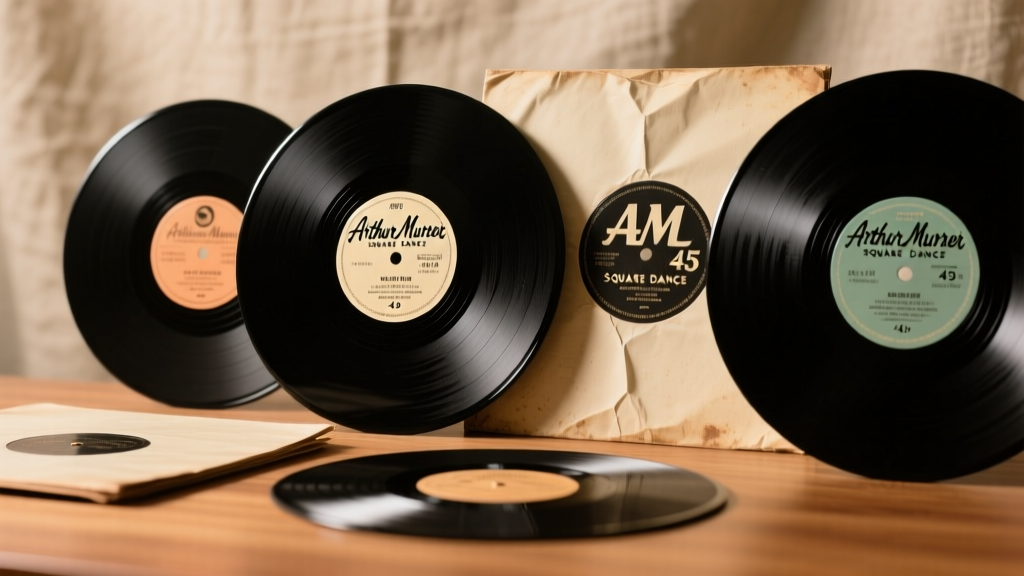
Arthur Murray Square Dance 45 RPM Records: Collecting, Authenticating, and Preserving a Mid-Century Dance Phenomenon
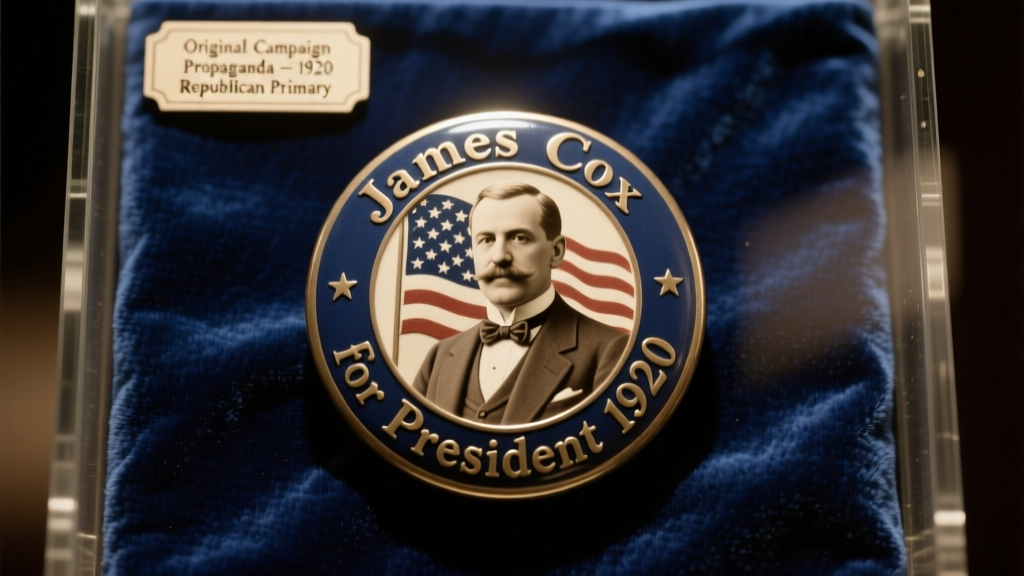
The James Cox for President 1920 Political Button: A 6-Inch Portrait Badge in Historical and Collectible Context