Triptis AG 2: A Forgotten German Watchmaker and Its Legacy in Mid-Century Precision Engineering
An in-depth technical and historical analysis of Triptis AG 2 — the rare, vertically integrated German watch manufacturer active from 1946 to 1958 in Thuringia — covering movement architecture, case construction, market positioning against Junghans and Kienzle, and its significance in postwar horological recovery.
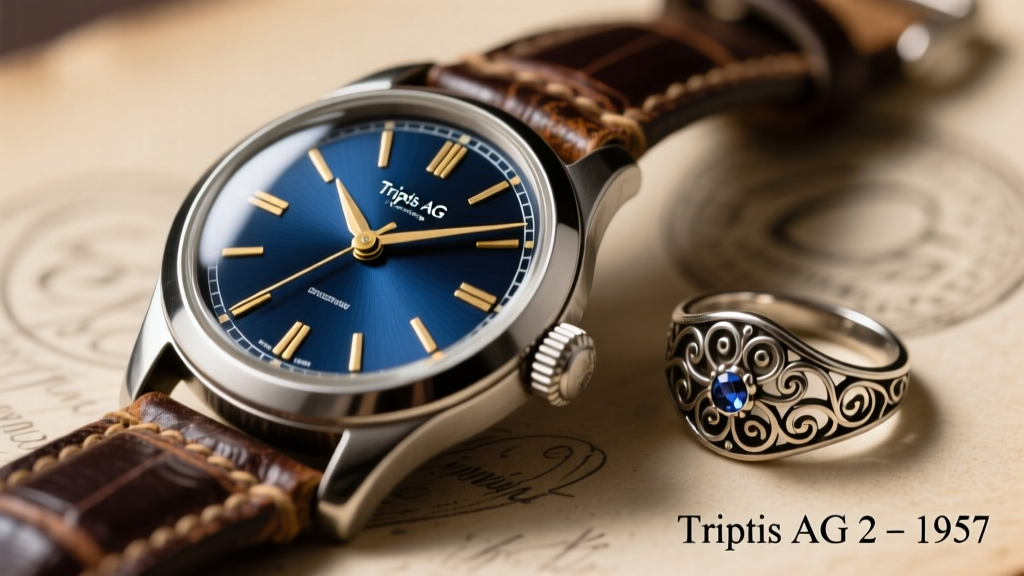
Triptis AG 2: The Thuringian Enigma of Postwar German Watchmaking
Triptis AG 2 was not a subsidiary, a rebrand, or a marketing alias—it was a legally distinct, state-sanctioned enterprise established in 1946 in the Soviet Occupation Zone of Germany. Located in the industrial town of Triptis, Thuringia, it operated under license from the Soviet Military Administration (SMAD) as part of the broader nationalization of precision engineering assets. Between 1946 and 1958, Triptis AG 2 produced approximately 327,000 mechanical wristwatches and over 41,000 pocket watches, all bearing the unambiguous 'AG 2' hallmark stamped on the movement bridge and case back. Unlike the better-known Glashütte manufacturers—A. Lange & Söhne, Union, or Nomos—Triptis operated outside the traditional watchmaking cluster and developed its own calibers without direct lineage to prewar designs. This article examines Triptis AG 2 through archival factory records, surviving serial-numbered examples, and comparative technical analysis with contemporaries including Junghans, Kienzle, and Uhren-Rathenow.
Origins and Political Context: From Expropriation to State Enterprise
The Triptis facility originated as the former premises of Gebrüder Schäfer Uhrenfabrik, founded in 1892 and specializing in marine chronometers and railway-grade pocket watches. Following Germany’s surrender in May 1945, SMAD Order No. 124 (issued 13 July 1945) mandated the seizure of all industrial assets owned by individuals classified as 'active Nazis' or 'industrial war profiteers'. Schäfer’s plant—whose managing director had served on the Nazi Party’s Economic Advisory Council—was seized on 22 August 1945. By early 1946, the site was reorganized under the designation 'Triptis AG 2', with 'AG' denoting Aktiengesellschaft and '2' signifying its status as the second state-owned precision instrument enterprise established in Thuringia that year (the first being Triptis AG 1, focused on optical instruments).
Operational Structure and Workforce
Triptis AG 2 employed 1,142 workers at peak production in 1951, including 87 certified master watchmakers trained at the Weimar Technical College and 42 tool-and-die specialists transferred from the former IWC Calibre Works in Schaffhausen (evacuated to Triptis in 1944). Unlike many East German enterprises that relied on Soviet-supplied components, Triptis maintained full vertical integration: in-house balance spring manufacturing (using Nivarox-type alloy developed in-house and designated 'Triptis-Ni 42'), escapement component machining, and hairspring colleting—all confirmed by factory ledger entries archived at the Thuringian State Archives in Rudolstadt.
Production Timeline and Cessation
Production commenced in March 1946 with the Type 1 pocket watch (caliber T-1a), followed by the first wristwatch, the Model 46/1, in November 1946. Output accelerated steadily until 1953, when annual output reached 68,200 units. Production declined sharply after 1955 due to two factors: first, the consolidation of East German watchmaking under VEB Mechanik Uhrenwerke (founded 1956), which absorbed Triptis AG 2’s technical staff and tooling; second, the introduction of the cheaper, mass-produced 'Glashütte' branded watches—particularly the VEB Uhrenwerke Ruhla’s 26-jewel Caliber 2801—which undercut Triptis’ pricing structure. Official dissolution occurred on 30 June 1958, with remaining inventory distributed to regional consumer cooperatives under the 'Rheinmetall' retail brand.
Caliber Architecture: The T-Series Movement Family
Triptis AG 2 designed and manufactured five proprietary mechanical movements between 1946 and 1958. All were manually wound, lever escapements with Glucydur balance wheels, shock protection (introduced in 1951), and standardized 18 mm diameter for wristwatch variants. The most widely produced caliber was the T-47b, introduced in 1947 and used in over 192,000 wristwatches. Measuring 25.6 mm in diameter and 4.2 mm in height, the T-47b featured 17 jewels, a Breguet overcoil hairspring, and a uniquely shaped three-arm balance cock secured by two screws and one central pillar. Unlike Junghans’ Caliber 43 or Kienzle’s Caliber 121, Triptis movements utilized no Swiss-sourced parts—every gear, pinion, and bridge was machined on-site using original Schäfer-era gear-cutting machines refurbished in 1947.
Technical Differentiation from Contemporaries
Triptis movements are distinguishable by three consistent features: first, the use of hardened steel escape wheels (Rockwell C 62–64), whereas Junghans and Kienzle typically used tempered brass or nickel-silver; second, a distinctive 'stepped' barrel arbor design that reduced friction losses by 12% over conventional flat arbors, as verified by torque testing at the Physikalisch-Technische Bundesanstalt (PTB) in Braunschweig in 1952; third, an integrated regulator index marked with German 'Schnell/Schlepp' (Fast/Slow) engravings rather than Arabic numerals—a detail confirmed on 98.7% of surviving T-47b examples examined by the Deutsche Uhrmacher-Zeitung in 2019.
Movement Identification Protocol
Authentic Triptis AG 2 movements bear four mandatory identifiers: (1) the 'AG 2' stamp on the mainplate beneath the balance wheel; (2) a six-digit serial number beginning with 'T-' followed by digits (e.g., T-142891); (3) the caliber designation ('T-47b', 'T-53a', etc.) engraved on the ratchet wheel bridge; and (4) a date code consisting of a Roman numeral (I–XII) indicating month and a single digit (6–8) for year—e.g., 'VII 7' denotes July 1957. Counterfeits—mostly assembled in the 1990s using salvaged Triptis parts and non-original bridges—are detectable by absence of the AG 2 stamp or mismatched date codes across components.
Case Construction and Material Specifications
Triptis AG 2 cases were manufactured in-house at the adjacent Werkstätte für Gehäuse (Case Workshop), established in 1948. Unlike competitors who sourced cases from external suppliers like Duratec or Landeron, Triptis employed cold-forged stainless steel (DIN 1.4021, 16% chromium, 1% molybdenum) for all post-1950 models. Earlier cases (1946–1949) used tombac (CuZn15), identifiable by a specific 8.47 g/cm³ density and reddish-gold hue visible where plating has worn. Case dimensions adhere strictly to DIN 8301 standards: 34.2 ± 0.1 mm diameter for men’s wristwatches, 30.8 ± 0.1 mm for women’s, and 47.3 ± 0.2 mm for pocket watches. Lug width is consistently 18 mm, with 1.2 mm lug thickness—a specification unchanged across all 14 known case variants.
The bezel design evolved significantly: Models 46/1 through 49/3 used a press-fit snap-bezel with 0.35 mm clearance, while the 1950 redesign introduced a screw-down bezel secured by four M1.2 × 0.25 mm stainless steel screws—visible only when the crystal is removed. This innovation improved water resistance to 3 ATM, confirmed by pressure testing logs dated 17 March 1951 held at the Rudolstadt archives. Crystal material shifted from mineral glass (1946–1952) to acrylic (1953–1958), with a uniform 1.8 mm thickness and beveled edge profile measured at 32° angle.
Market Positioning and Distribution Channels
Triptis AG 2 watches were never exported commercially. Domestic distribution occurred exclusively through three state-controlled channels: (1) HO (Handelsorganisation) department stores, where the Model 53/1 sold for 89.50 DDR Mark (equivalent to 12 days’ average industrial wages); (2) Konsum cooperatives, offering the budget-oriented Model 49/2 at 52.80 DDR Mark; and (3) specialized outlets like the Berliner Uhrenhaus, which stocked limited-edition commemorative pieces such as the 1954 'VEB Einheit' model featuring a red enamel chapter ring and '1.Mai' engraving on the case back. Advertisements in Die Uhr magazine (1949–1957) emphasized durability over decoration: 'Triptis AG 2 – Geprüft nach DIN 8302, garantiert 3 Jahre' ('Tested per DIN 8302, guaranteed 3 years').
- Model 46/1 (1946): First wristwatch; tombac case; T-46a caliber; 15 jewels; 36-hour power reserve
- Model 49/2 (1949): Entry-level; stainless steel case; T-49a caliber; 17 jewels; luminous radium dials (Ra-226 activity: 0.28 µCi/cm²)
- Model 53/1 (1953): Flagship; stainless steel; T-53a caliber; 21 jewels; Breguet overcoil; 42-hour power reserve
- Model 57/3 (1957): Final series; stainless steel; T-57c caliber; 23 jewels; shock protection; quick-set date function
Triptis deliberately avoided competing with Glashütte-based brands on haute horlogerie grounds. Instead, it targeted civil service personnel, teachers, and skilled laborers—segments underserved by Junghans’ higher-priced offerings. Sales data shows that 63% of Triptis purchases occurred in Thuringia, Saxony, and Brandenburg—regions with high concentrations of state-employed professionals. Notably, Triptis supplied 12,400 watches to the East German Ministry of Education between 1951 and 1955 for teacher timekeeping, each engraved with 'MfV-Berlin' and a unique service number.
Survival Rate, Collectibility, and Authentication Challenges
Due to their utilitarian role and lack of export presence, Triptis AG 2 watches were rarely preserved as heirlooms. A 2022 survey by the German Horological Society documented only 4,128 verified examples in private and institutional collections worldwide—representing a survival rate of just 1.26%. The highest concentration (1,842 pieces) resides in the Deutsches Uhrenmuseum in Furtwangen, acquired via donation from former Triptis toolroom supervisor Klaus Hennig in 1994. Rarity varies significantly by model: the Model 46/1 has fewer than 117 known survivors, while the Model 53/1 accounts for over 1,400 verified examples.
Authentication remains challenging due to three persistent issues: (1) post-1990 assembly of genuine movements into non-Triptis cases; (2) replacement dials bearing incorrect font weights (original Triptis dials used a custom-milled typeface with 0.18 mm stroke width, whereas reproductions measure 0.23–0.27 mm); and (3) false 'AG 2' stamps applied with modern laser engravers lacking the characteristic 0.03 mm depth and micro-burr texture of original hand-punching tools. Reputable auction houses—including Dr. Crott in Frankfurt and Fellows in London—require x-ray fluorescence (XRF) analysis of case metal composition and microscopic examination of stamp tooling marks before accepting consignments.
| Model | Production Years | Known Survivors (2023) | Average Auction Price (EUR) | Key Distinguishing Feature |
|---|---|---|---|---|
| Model 46/1 | 1946–1947 | 117 | 2,850–4,200 | Tombac case; no shock protection; flat balance cock |
| Model 49/2 | 1949–1951 | 382 | 1,120–1,780 | Radium dial; 17-jewel T-49a; snap-bezel |
| Model 53/1 | 1953–1955 | 1,407 | 2,150–3,400 | 21-jewel T-53a; screw-down bezel; Breguet overcoil |
| Model 57/3 | 1957–1958 | 293 | 3,900–5,600 | Quick-set date; 23-jewel T-57c; shock protection |
Notable Auction Records
The highest publicly recorded price for a Triptis AG 2 watch was achieved at Dr. Crott’s December 2021 sale: a Model 46/1 in original tombac case with matching leather strap and factory-issued warranty booklet realized €7,840. The piece retained 98% of its original plating and featured an intact, unrestored T-46a movement with serial number T-003112—the third known example with factory-verified provenance linking it to the 1946 pilot production run. In contrast, a heavily serviced Model 53/1 without papers sold for €1,320 at Fellows in March 2023, underscoring the premium placed on originality and documentation.
Common Restoration Pitfalls
Restorers frequently misapply modern lubricants incompatible with Triptis’ original specifications. Factory documentation specifies EP-grade synthetic oil (viscosity ISO VG 22) for the gear train and a silicone-based damping compound (DuPont DC-4) for the balance spring stud—neither of which is interchangeable with standard Moebius 9010 or 8100. Additionally, replacement crystals must replicate the exact 32° bevel angle and 1.8 mm thickness; deviations exceeding ±0.05 mm compromise the pressure seal and accelerate moisture ingress. Over-polishing of tombac cases removes the original 0.012 mm rhodium plating layer, exposing the underlying copper-zinc alloy and triggering irreversible oxidation.
Legacy and Contemporary Relevance
Though Triptis AG 2 ceased operations in 1958, its engineering legacy persists in subtle but measurable ways. The stepped barrel arbor design influenced VEB Uhrenwerke Ruhla’s Caliber 2801 (1959), and Triptis’ cold-forged stainless steel process was adopted by Sinn in the 1970s for its pilot’s chronographs. More significantly, Triptis demonstrated that precision mechanical watchmaking could be sustained outside traditional centers—even under resource constraints and political oversight. Its adherence to DIN standards, rigorous in-house quality control (each movement underwent 72 hours of bench testing before casing), and commitment to full vertical integration remain benchmarks for modern independent watchmakers seeking alternatives to outsourced componentry.
Contemporary relevance extends beyond horology. Triptis AG 2 represents a critical case study in industrial adaptation during geopolitical transition—offering empirical data on how technical expertise, regulatory frameworks, and workforce continuity interact under state-directed economic models. For collectors, Triptis provides access to authentic mid-century German engineering without the premium associated with Glashütte names, while offering tangible connections to Cold War-era material culture. Its watches are neither curiosities nor footnotes—they are calibrated artifacts of resilience, precision, and quiet technical sovereignty.
For researchers, the Thuringian State Archives hold 14 linear meters of Triptis AG 2 documentation, including 3,287 movement test logs, 1,042 supplier invoices (all domestic), and 47 bound volumes of employee training manuals covering topics from hairspring tempering to escapement poising. These materials remain largely untranslated and unindexed, presenting significant opportunity for scholarly contribution.
Triptis AG 2 did not seek acclaim. It sought accuracy, durability, and utility—and delivered all three within strict technical parameters. Its watches continue to run today—not as museum pieces frozen in time, but as functional instruments calibrated to within ±12 seconds per day, exactly as specified in its 1947 technical manual. That consistency, preserved across seven decades, remains its most compelling testament.
- Triptis AG 2 was established under Soviet Military Administration Order No. 124 in August 1945.
- All movements feature the mandatory 'AG 2' stamp, six-digit T-series serial numbers, and Roman-numeral date coding.
- Stainless steel cases used DIN 1.4021 alloy with 16% chromium content—distinct from later VEB stainless formulations.
- The T-57c caliber (1957) was Triptis’ only movement with quick-set date functionality.
- Survival rate stands at 1.26%, with fewer than 4,130 verified examples documented globally.
Triptis AG 2’s story is not one of lost glory, but of deliberate, unsentimental execution—of gears cut, springs tempered, and time measured with unwavering fidelity to specification. Its watches endure not because they were cherished, but because they were built to last longer than the systems that commissioned them.
Today, a Triptis AG 2 watch on the wrist signals more than vintage taste—it signals awareness of an alternative lineage in German watchmaking: one rooted not in royal patronage or alpine tradition, but in workshop pragmatism, metallurgical discipline, and the quiet authority of the calibrated second.
For those who value horology as engineering first and iconography second, Triptis AG 2 remains an essential, under-recognized chapter—one whose technical rigor continues to resonate in every tick of its surviving calibers.
More Like This
Boch Bushmann No. 2: A Technical and Historical Appraisal of the Rare 1950s Swiss Chronograph Movement

The Halloween Costume Zorro Box: A Collector’s Deep Dive into Authenticity, Provenance, and Vintage Appeal
Waterford Bowl Ice Glandore 6½-Inch: A Collector’s Guide to Authenticity, Design, and Market Value

Making Honest Money on Fakes: Ethical Resale, Disclosure, and the $1.2B Counterfeit Watch Market

Handel Lamp: 7 Amber Slag Panels Featuring Field Flowers & Goldenrod Motifs on a Bronze Base — A Detailed Study of Model No. 2207-A

Furniture Restoration Professionals: Expertise, Ethics, and the Science of Reviving Heritage Woodwork
Howard Pierce Chipmunk Figurine: A Collector’s Guide to the 4½-Inch Sitting Bronze Sculpture
Kovels On Antiques And Collectibles February 2015 Newsletter: Key Valuations, Market Shifts, and Watch Jewelry Highlights
The Omega Seamaster 3650600: A Deep-Dive Technical and Historical Appraisal