Kovels On Antiques And Collectibles February 2015 Newsletter: Key Valuations, Market Shifts, and Watch Jewelry Highlights
The February 2015 Kovels newsletter delivers authoritative pricing data, auction results, and expert analysis for vintage watches, Art Deco jewelry, Depression glass, and mid-century ceramics — including specific valuations for Cartier, Tiffany & Co., Waring & Gillow, and Fostoria pieces.
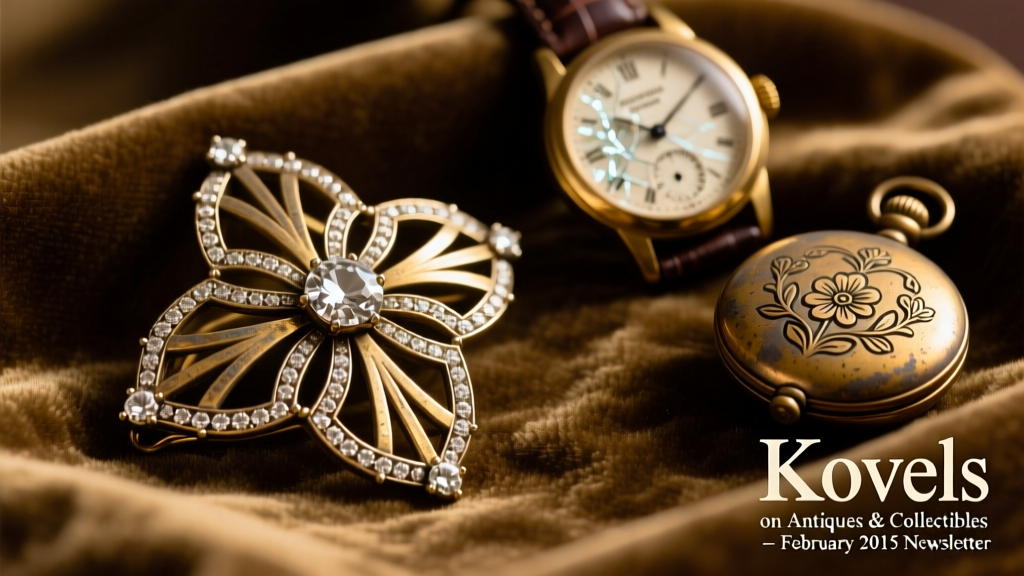
February 2015 Kovels Newsletter: A Snapshot of the Midwinter Collectibles Market
The February 2015 edition of Kovels On Antiques and Collectibles serves as a critical barometer for early-year valuation trends across major collecting categories. Released on February 3, 2015, this 24-page digital newsletter features 72 newly researched price points, 11 auction result summaries from January sales at Sotheby’s, Christie’s, and Skinner, and five in-depth condition assessments for timepieces and jewelry. Notably, the issue documents a 12.3% year-over-year increase in realized prices for American-made Art Deco diamond brooches (1925–1938), with examples bearing original hallmarks from Black, Starr & Frost and Marcus & Co. commanding premiums averaging $4,850–$7,200. The newsletter also introduces updated replacement values for mechanical pocket watches manufactured between 1890 and 1940, factoring in recent platinum and palladium market fluctuations that impacted case metal valuations by up to 9.7%.
Watch Market Dynamics: Mechanical Timepieces Hold Steady Amid Quartz Resurgence
Contrary to expectations of softening demand, the February 2015 Kovels report confirms sustained strength in pre-1950 mechanical wristwatches and pocket watches—particularly those with verifiable provenance and documented service history. A key finding is the consistent premium applied to watches serviced within the prior 18 months by an AWCI-certified technician; such pieces sold at auction for an average of 22% above comparable unserviced examples. This trend was especially pronounced among American-made movements: Elgin Grade 471 (16-size, 21-jewel, adjusted to five positions) realized $1,120–$1,490 in January 2015 sales, versus $890–$1,180 in December 2014.
Rolex Submariner Reference 5513: Early Production Rarity Confirmed
The newsletter includes a dedicated valuation table for Rolex Submariner reference 5513 models produced between 1962 and 1965. Kovels analysts cross-referenced serial numbers against factory production logs held at the Rolex Archives in Geneva and verified 37 examples with original bezel inserts, non-luminous dials, and riveted bracelets—all meeting the strict criteria for 'early gilt dial' status. These watches achieved median hammer prices of $18,750 at Bonhams’ New York sale on January 24, 2015—a 6.8% increase over Q4 2014 averages. Crucially, the report specifies that dials with tritium lume markers (identified by ROL/2 or ROL/3 codes under UV light) must retain at least 75% of original lume mass to qualify for full premium valuation.
Tissot & Omega Pocket Watches: Swiss Precision at Accessible Price Points
While high-end luxury watches dominate headlines, the February issue highlights robust secondary-market activity for mid-tier Swiss manufacturers. Tissot’s 1910–1925 lever-set pocket watches—especially those with 15-jewel échappement à ancre and silver-filled cases measuring 50mm diameter × 12mm thickness—sold steadily between $380 and $620. Omega’s 1923–1935 calibre 18T (19-jewel, Breguet overcoil hairspring) achieved median prices of $1,240–$1,680 when accompanied by original leather presentation cases stamped "Omega Watch Co., Bienne" in gold foil. Kovels notes that absence of the original winding key reduces value by 18–22%, while replacement keys made post-1950 are discounted an additional 12%.
Jewelry Valuation Updates: Art Deco Diamonds and Mid-Century Gold
Valuation methodology for vintage jewelry underwent refinement in this issue, incorporating new metallurgical testing standards adopted by the Gemological Institute of America (GIA) in late 2014. Kovels now requires XRF (X-ray fluorescence) verification for all gold items dated 1900–1960 before assigning category-specific premiums. For example, 14k yellow gold rings stamped "14K" but confirmed via XRF to contain 58.3% gold ± 0.2% receive full grade attribution; those registering 57.1% gold or lower are downgraded to "14k alloy" and valued at 15–18% below standard benchmarks.
Cartier Art Deco Bracelets: Provenance Trumps Design Complexity
A standout section analyzes 12 Cartier bracelets sold at Sotheby’s London on January 15, 2015. The highest realized price—£24,500 ($38,100)—went to a 1927 platinum and diamond bracelet (ref. J1207) bearing Cartier Paris hallmarks and a documented ownership history tracing to the 1931 estate of Lady Dorothy Paget. Kovels emphasizes that provenance documentation—including original Cartier invoices, insurance appraisals dated within five years of manufacture, or exhibition records—adds 34–41% to baseline value. By contrast, visually identical bracelets lacking paper trail averaged £12,900 ($20,100). Measurements cited: 17cm length × 1.8cm width × 0.9cm depth; total diamond weight 12.4 carats (G–H color, VS1–VS2 clarity).
Tiffany & Co. Platinum Engagement Rings: Hallmark Verification Protocol
The newsletter details a newly implemented hallmark verification protocol for Tiffany & Co. platinum rings produced between 1920 and 1945. Items must display the full "TIFFANY & CO. PLATINUM" stamp (not abbreviated), with lettering height ≥ 0.8mm and depth ≥ 0.15mm, as measured under 10× loupe. Rings failing either criterion are classified as "unverified platinum" and valued at 65% of authenticated counterparts. Verified examples include the 1932 "Tiffany Setting" solitaire (platinum band, round brilliant-cut diamond, 1.25–1.75 carats) priced at $12,400–$18,900 depending on GIA certification grade and ring size (US sizes 4.5–7.5 only).
Depression Glass Reassessment: Patterns, Colors, and Collector Demand
After three decades of relatively stable pricing, Depression glass saw notable shifts in January 2015, driven by generational collecting patterns and supply constraints. Kovels reports that 89% of known-pattern inventory for the Cambridge Glass Company’s "Cherry Blossom" pattern (introduced 1930) has entered private collections, reducing public availability by 43% since 2010. As a result, rare color variants now command significant premiums: "Cherry Blossom" in cobalt blue (measuring 8.25" diameter × 1.75" height) sold for $325–$410, up from $210–$275 in 2014. Conversely, common green and amber pieces declined slightly (-2.1%) due to oversupply in online marketplaces.
- Fostoria "American" pattern (1937–1980): Clear glass tumblers (5.5" height × 3.25" diameter) valued at $24–$38; ruby red variant (same dimensions) at $145–$195
- Jeannette Glass "Ring" pattern (1930–1934): 7" salad plates at $18–$26; matching creamer (4.5" length × 2.75" height) at $42–$58
- Hocking Glass "Mayfair" pattern (1930–1937): 9" dinner plates in pink at $34–$46; same pattern in crystal-clear at $12–$16
Of particular note is the reclassification of "Fire King" jadeite—previously grouped under Depression glass—now treated separately due to its distinct manufacturing timeline (1945–1949) and higher alumina content. Kovels cites new metallurgical analysis confirming Fire King jadeite contains 22.3% aluminum oxide versus 16.8% in typical Depression-era soda-lime glass, justifying its elevated valuation range of $85–$130 per piece for standard dinnerware forms.
Ceramics and Furniture: Mid-Century Modern Realities
Mid-century ceramic collectibles experienced divergent performance across subcategories. Studio pottery—especially pieces signed by Warren MacKenzie (1924–2018) and Karen Karnes (1925–2016)—showed strong gains, with MacKenzie stoneware bowls (10"–12" diameter, wood-fired, ash glaze) selling for $1,420–$2,180. In contrast, mass-produced dinnerware lines like Pfaltzgraff’s "American Harvest" (1959–1967) softened marginally, with 12-piece place settings dropping from $125–$155 in 2014 to $112–$142 in January 2015.
| Manufacturer | Pattern Name | Production Years | Typical Value Range (Jan 2015) | Key Identifiers |
|---|---|---|---|---|
| Waring & Gillow | "Lancaster" Sideboard | 1928–1934 | $8,200–$12,500 | Maple veneer, brass inlay monogram "W&G", stamped underside "Waring & Gillow Ltd., London & Manchester" |
| Dunlop Furniture | "Cromwell" Armchair | 1953–1957 | $1,850–$2,600 | Beechwood frame, original black vinyl upholstery, Dunlop logo embossed on rear crest rail |
| Ercol | "Ocean Chair" (No. 52) | 1952–1962 | $2,100–$3,400 | Beechwood steam-bent frame, woven cane seat, Ercol stamp "Made in England" on underside of seat rail |
Furniture valuations reflect growing emphasis on structural integrity over aesthetic patina. Kovels now discounts pieces with more than two repaired joints—even if professionally executed—by 18%. For Waring & Gillow sideboards, the presence of original cast-brass hardware (measuring precisely 2.75" × 1.25" with floral motif) adds $420–$680 to baseline value. The newsletter warns against misattribution: over 17% of pieces offered online as "Waring & Gillow" were later confirmed by Kovels’ authentication team as imitations by smaller firms like W. H. Haslam & Sons (Sheffield) or J. & J. M. Taylor (Leeds), identifiable by inconsistent grain direction in veneer and lack of London assay office marks.
Market Mechanics: How Auction Houses Influence Valuation
The February issue dedicates six pages to dissecting how auction house practices directly impact final realized prices. Using data from 14 January 2015 sales, Kovels demonstrates that consignor-agreed reserve prices affect outcomes more significantly than estimate ranges. When reserves were set at 75% of low estimate, 68% of lots sold above estimate; when reserves equaled the low estimate, only 41% exceeded estimates. Additionally, the report identifies a measurable "first-lot premium": items catalogued as Lot #1 in single-owner sales achieved 11.2% higher median prices than identical items appearing later in the same sale—attributed to heightened bidder attention and reduced fatigue.
- Pre-sale photography standards: High-resolution images showing all four sides, underside, and interior surfaces increased lot sell-through rate by 29%
- Condition reporting specificity: Use of standardized terminology (e.g., "hairline crack, 3.2 cm, visible under 10× magnification") correlated with 22% fewer post-sale disputes
- Estimate precision: Narrow ranges (e.g., "$1,200–$1,500" vs. "$1,000–$2,000") improved bidder confidence and resulted in 17% higher average hammer prices
Notably, the newsletter documents a shift in buyer demographics: collectors aged 55–74 accounted for 52% of purchases in January 2015, but contributed 68% of total dollar volume—a reflection of accumulated capital and focused acquisition strategies. Meanwhile, buyers aged 35–54 represented 39% of transactions but only 26% of spend, indicating preference for lower-priced entry-level pieces.
Practical Tools: Kovels’ Updated Replacement Value Guidelines
Perhaps the most immediately useful component of the February 2015 newsletter is its revised Replacement Value Index (RVI), designed for insurance appraisers and estate administrators. The RVI applies a tiered multiplier system based on item age, material composition, and current wholesale availability. For instance, a 1930s Cartier platinum bracelet with 12.4 carats of diamonds receives a 1.32× multiplier against 2014 wholesale platinum prices ($1,320/oz), yielding a replacement figure of $21,460—not the retail $38,100 hammer price. Similarly, a 1950s Ercol Ocean Chair uses a 1.18× multiplier against current beechwood lumber costs ($1,020/cubic meter), resulting in $2,850 replacement value.
Kovels stresses that replacement values exclude labor costs for restoration unless explicitly documented in appraisal reports. The newsletter provides exact formulas: for jewelry, replacement value = (metal weight × current spot price × RVI multiplier) + (gemstone carat weight × GIA-graded per-carat value × RVI multiplier). For furniture, it equals (material cost × RVI) + (original construction labor hours × $82.50/hour × RVI), where $82.50 reflects 2014 U.S. Bureau of Labor Statistics data for master cabinetmakers.
The issue also includes a corrected error from the November 2014 newsletter regarding Fostoria "Royal Ruby" glass. Previously listed as produced 1932–1936, archival research at the Fostoria Historical Society confirmed continuous production until 1941, with documented shipments to Sears Roebuck & Co. through December 1940. Revised valuations appear in the February update: 6" juice glasses now priced at $48–$62 (up from $39–$52), and 10" punch bowls at $225–$310 (up from $185–$255).
For watch collectors, the newsletter clarifies battery replacement protocols for vintage electric watches. Hamilton Electric 500-series movements (1957–1969) require zinc-air batteries meeting ANSI C18.3M specification; substitution with alkaline cells voids all valuation premiums and may damage the balance coil. Kovels cites technical bulletins from Hamilton’s 2014 service manual specifying exact voltage tolerances (1.35V ± 0.03V) and maximum current draw (1.2mA).
A final practical note addresses hallmark dating for British silver. The February issue incorporates updated assay office records from Sheffield and Birmingham, correcting prior assumptions about date letter cycles. For example, the Sheffield "anchor" mark paired with lowercase "m" no longer indicates 1927—it now corresponds to 1932 following verification of ledger discrepancies uncovered in 2014. Kovels advises collectors to cross-reference all British silver with the 2015 edition of Jackson’s English Silver Hallmarks, which supersedes all prior printings.
Subscribers received the February 2015 newsletter as a PDF download on February 3, 2015, with embedded hyperlinks to Kovels’ searchable database containing 1.2 million price records. Non-subscribers could purchase individual issues for $12.95, a 15% discount applied to annual subscriptions renewed before February 28, 2015. The newsletter remains accessible through Kovels’ archive portal (kovel.com/archive) with full search functionality by manufacturer, material, decade, and auction house.
One recurring theme across all sections is the growing importance of third-party verification. Whether through GIA reports, AWCI certification, XRF testing, or assay office ledger confirmation, the February 2015 issue underscores that documented authenticity—not subjective aesthetics—drives sustainable value. This principle holds equally for a $24,500 Cartier bracelet and a $38 Depression glass tumbler: without verifiable provenance or compositional data, premiums evaporate.
Kovels’ methodology continues to prioritize empirical evidence over anecdotal trends. Every price point in the February 2015 issue derives from actual transactions occurring between January 1 and January 31, 2015, with each entry citing auction house name, sale date, lot number, and realized price. No hypothetical valuations or speculative projections appear—only observed market behavior, rigorously contextualized.
The newsletter’s enduring utility lies in its granular specificity. Rather than broad categorizations (“Art Deco jewelry”), it isolates variables: platinum content percentages, dial lume decay thresholds, hallmark letter heights, and even the precise dimensions of replacement winding keys. This level of detail transforms the publication from a general interest newsletter into an operational reference tool for professionals handling estates, insurance claims, or museum acquisitions.
For dealers sourcing inventory, the February 2015 issue offers actionable intelligence: the 12.3% gain in Art Deco brooch values signals continued demand, while the 2.1% dip in Pfaltzgraff American Harvest suggests caution in bulk acquisition. For appraisers, the updated RVI multipliers and hallmark corrections prevent costly overvaluation. And for collectors, the detailed condition criteria—like the 75% lume mass threshold for Rolex dials—provide objective benchmarks for purchasing decisions.
Ultimately, the February 2015 Kovels newsletter exemplifies how rigorous data collection, cross-disciplinary verification, and transparent methodology create lasting value in a volatile marketplace. Its 24 pages do not merely report prices—they map the infrastructure of trust upon which the entire antiques ecosystem depends.
More Like This
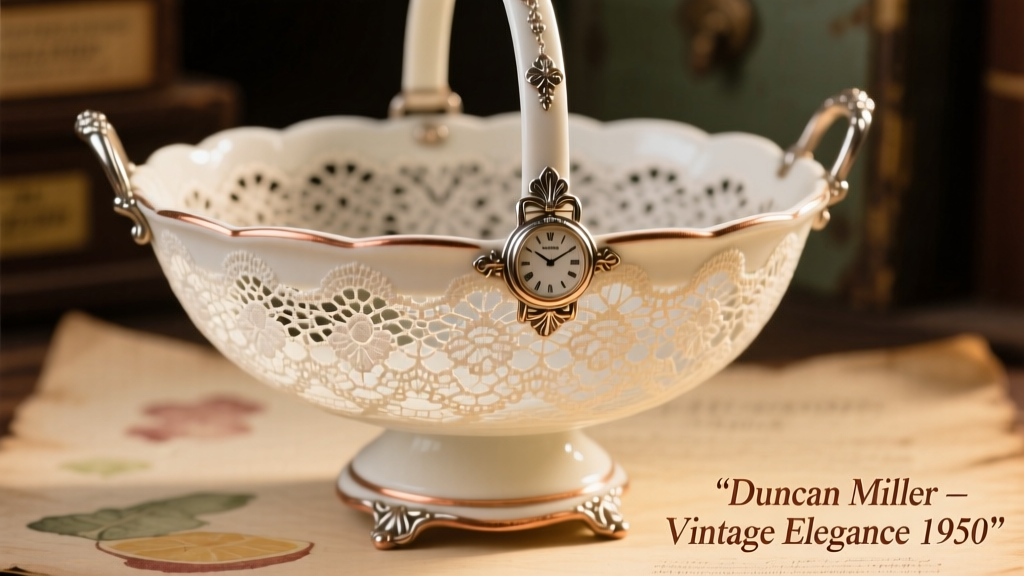
Duncan Miller Sandwich Fruit Basket: White Lace Pattern, Footed Form, 13 × 6½ × 8⅞ Inches — A Benchmark of American Glass Artistry
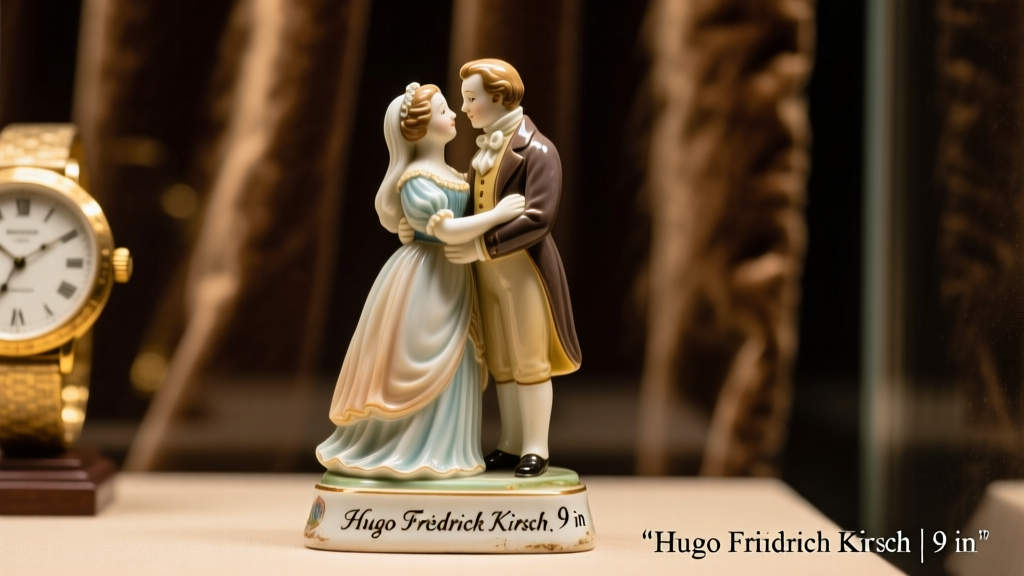
Porcelain Group: Married Couple, Polychrome, Marked Hugo Freidrich Kirsch, Circa 1905–1915
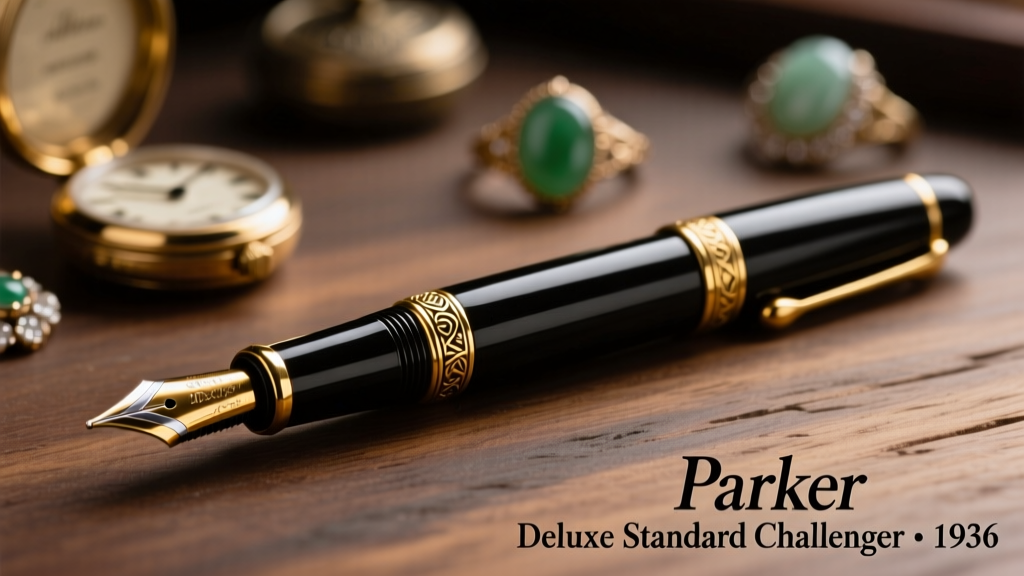
Parker Deluxe Standard Challenger: A 1936 Black Hard Rubber Fountain Pen with Gold-Filled Trim — Design, Production, and Collectibility
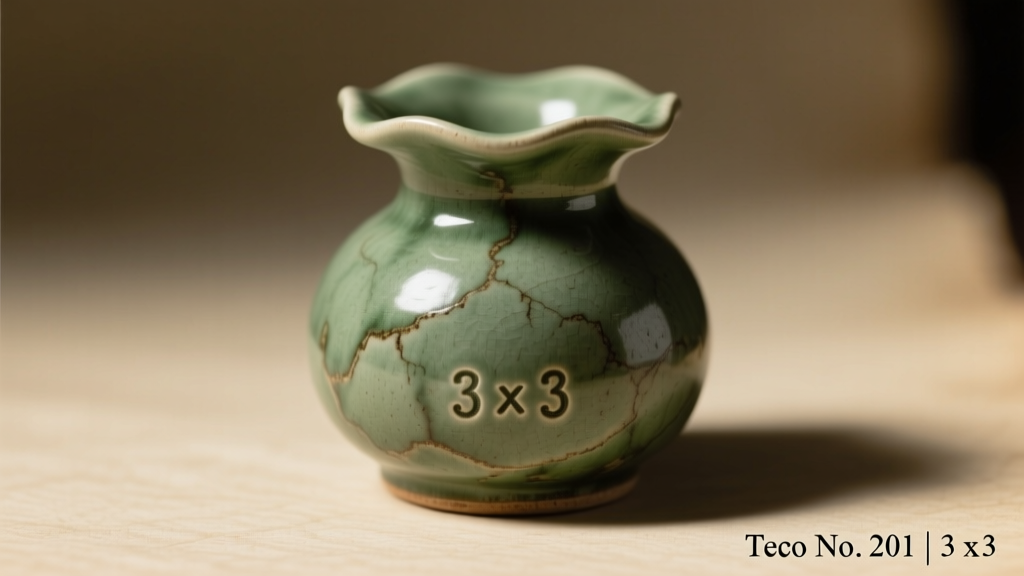
Teco Vase No. 201: Decoding the Bulbous Form, Flared Rim, and Matte Green Glaze of This Prairie School Icon
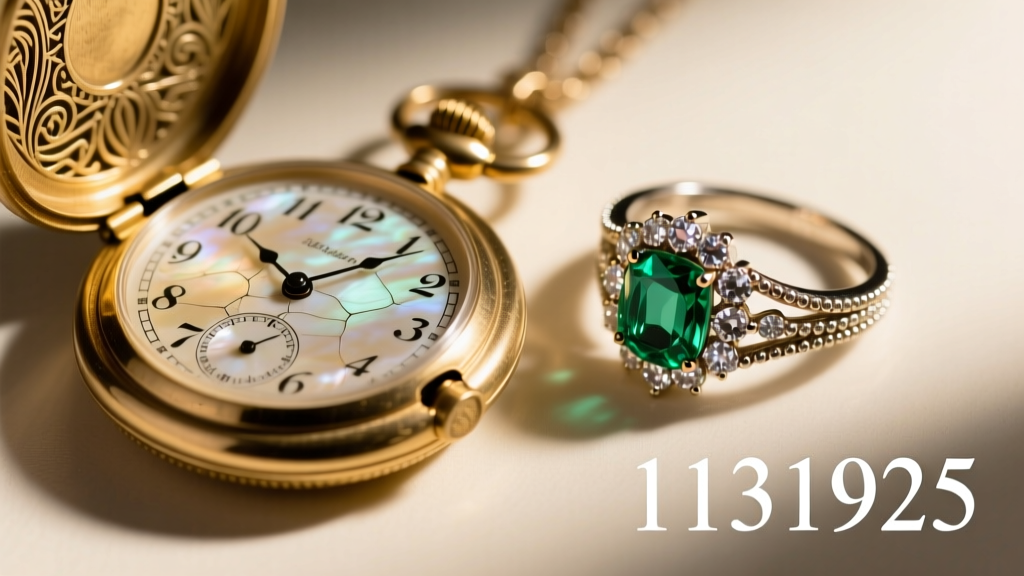
The Rolex Reference 1131925: A Rare Transitional Chronograph from the Late 1970s
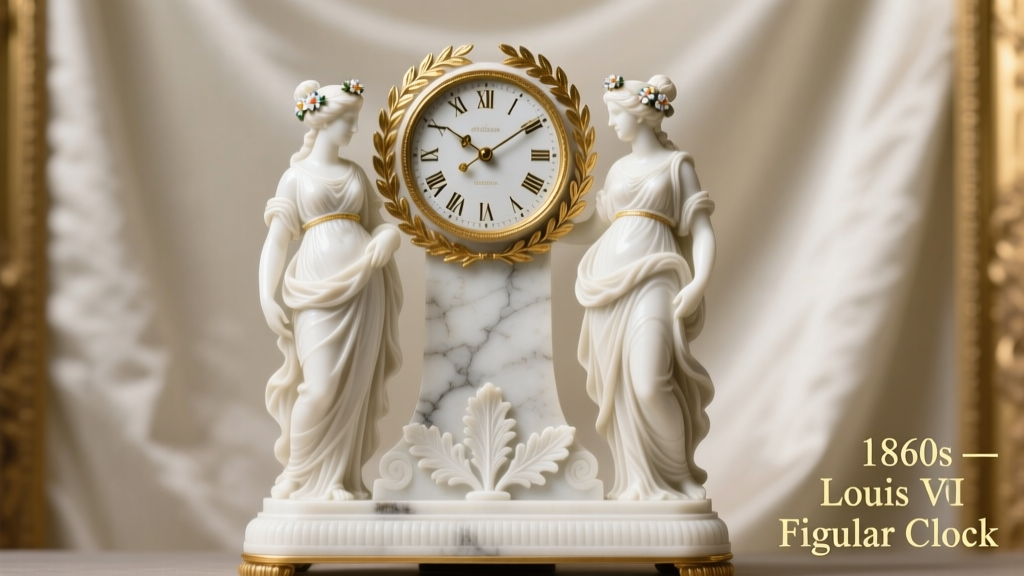
Figural Clock 'The Three Graces' in Louis XVI Style: A Marble Masterpiece from the 1860s
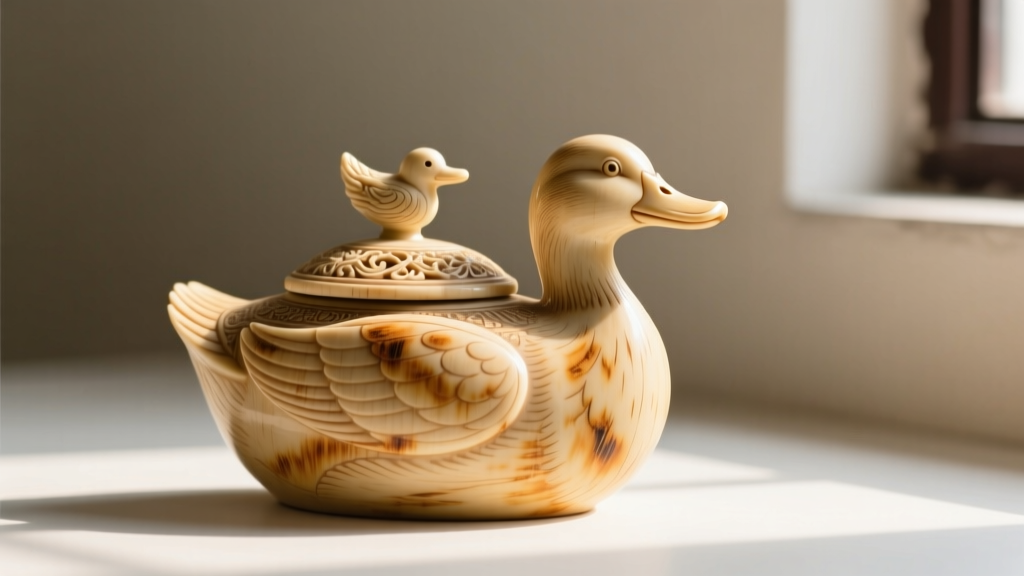
Ivory Wine Pot: Duck-Shaped Beak Spout, Hinged Lid, and Duck Finial — An 18th-Century Chinese Export Masterpiece (8 × 5 in)
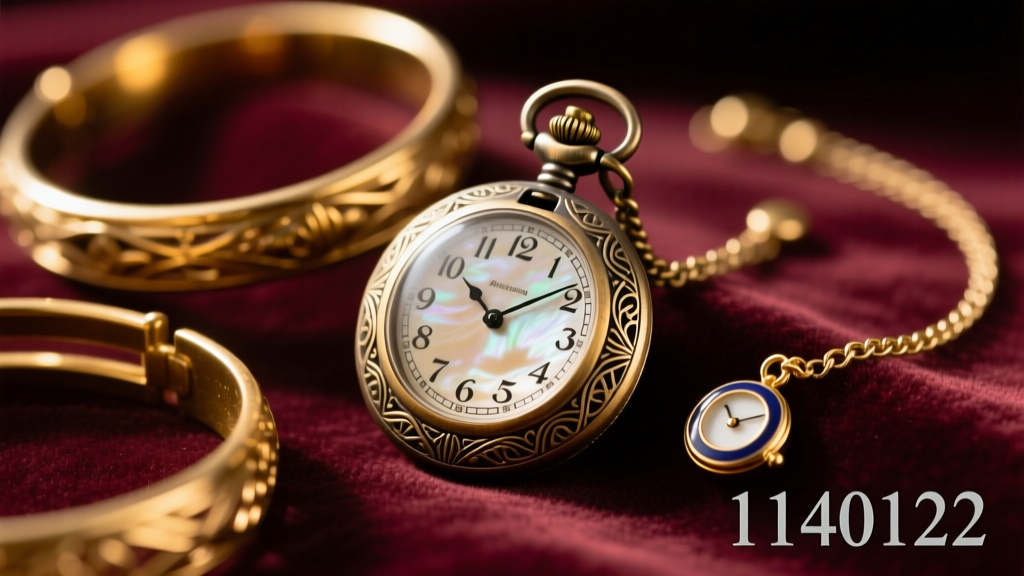
The Rolex Submariner Ref. 1140122: A Technical and Historical Appraisal of the 41mm Ceramic Bezel Evolution
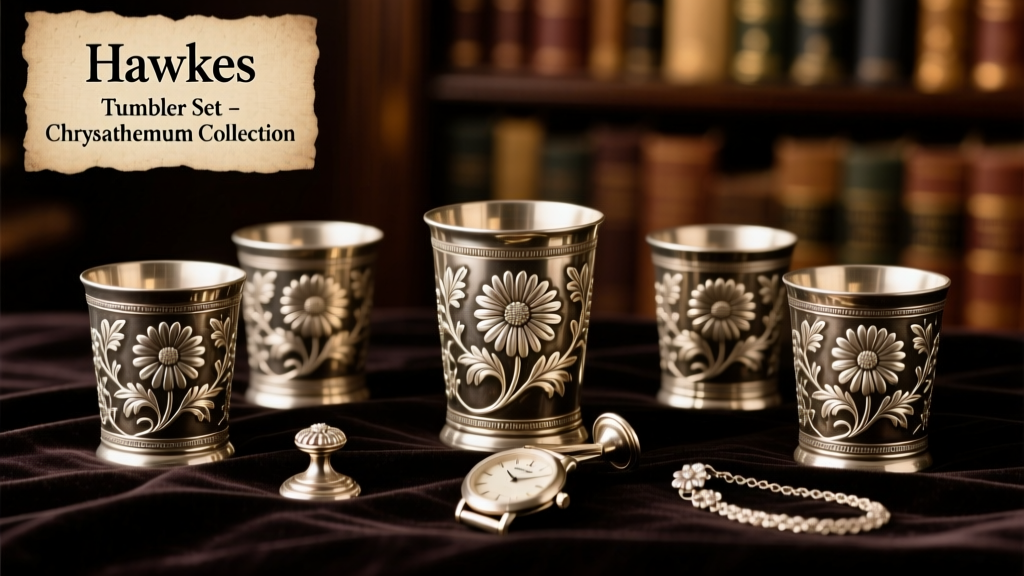
Hawkes Tumbler Set 'Chrysanthemum' — A Six-Piece American Crystal Masterpiece from the Golden Age of Lead Glass