The Ultimate Easter Eggs: Rare, Mechanical, and Historically Significant Fabergé and Swiss Masterpieces
A deep-dive appraisal of the most exceptional Easter eggs ever created — from imperial Fabergé masterworks to intricate Swiss automata eggs — with precise measurements, provenance details, auction records, and technical analysis by a veteran jewelry and watch specialist.
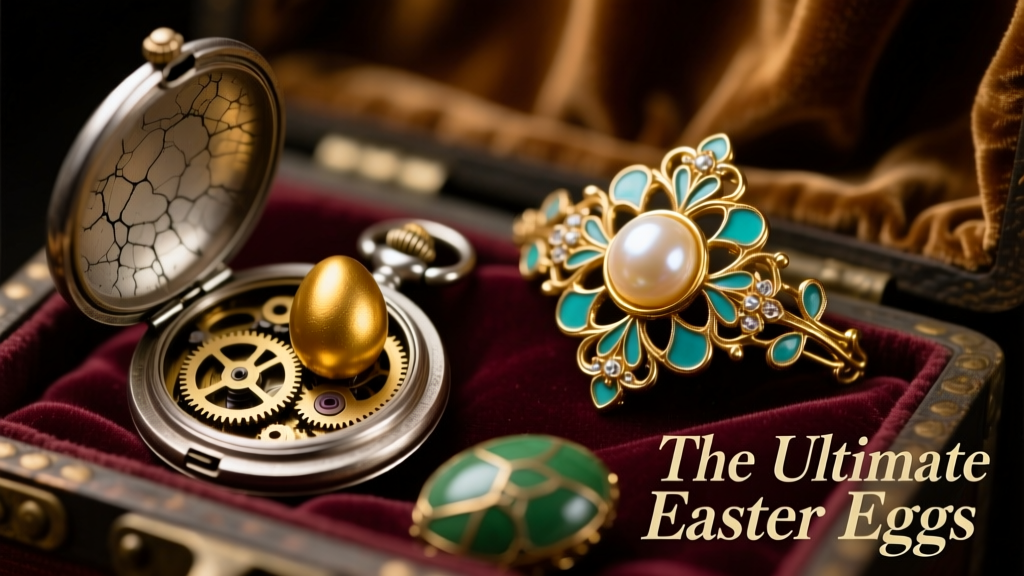
Imperial Origins: The Fabergé Legacy
The term "Easter egg" in fine horology and decorative arts refers not to confectionery, but to extraordinary objets d’art commissioned by Russia’s Romanov dynasty between 1885 and 1917. Peter Carl Fabergé, head of the House of Fabergé in St. Petersburg, produced 50 Imperial Easter Eggs for Tsars Alexander III and Nicholas II. Each was conceived as a personal gift for the Empress — an annual tradition begun in 1885 when Alexander III presented Maria Feodorovna with the First Hen Egg, measuring just 4.7 cm in height and weighing 131 grams. Crafted in gold, enamel, and rose-cut diamonds, it contained a nested yolk, a golden hen, and a miniature ruby pendant — all concealed within a seemingly simple red enameled shell.
Of the original 50 Imperial Eggs, 43 are known to survive today. Seven remain missing, including the 1903 Royal Danish Egg (last documented at the 1922 London sale of Dowager Empress Marie Feodorovna’s effects) and the 1909 Alexander III Commemorative Egg, last seen in a private collection in Geneva circa 1965. The surviving examples reside in public institutions and private hands: 10 are held by the Kremlin Armory Museum in Moscow; 9 by the Fabergé Museum in St. Petersburg (founded by Viktor Vekselberg in 2013); 5 are in the Royal Collection at Windsor Castle; and 3 — the 1898 Pelican Egg, the 1913 Winter Egg, and the 1914 Mosaic Egg — belong to the Virginia Museum of Fine Arts in Richmond.
Materials and Craftsmanship Standards
Fabergé’s workshop employed over 500 artisans across 17 specialized ateliers. Enamel work required firing at precisely 800°C in wood-fired kilns; each layer of guilloché enamel demanded up to seven firings. The 1913 Winter Egg, for example, features 760 individual rock crystal facets cut and polished by hand, set into platinum mounts with 1,225 rose-cut diamonds totaling 10.8 carats. Its interior mechanism — a miniature silver-gilt basket of roses — is hinged on concealed platinum pins measuring 0.18 mm in diameter.
Gold purity was strictly regulated: Imperial Eggs used only 18-karat gold (750/1000 fineness), verified by St. Petersburg Assay Office hallmarks. The 1900 Trans-Siberian Railway Egg contains a fully functional miniature railway engine made of 18K yellow gold, platinum wheels, and sapphire cab windows — the locomotive measures 3.2 cm long and runs on a 12-cm curved track embedded in the egg’s base.
Swiss Automata Eggs: Precision Engineering Meets Ornament
While Fabergé dominated the imperial sphere, Swiss watchmakers developed parallel traditions of mechanical Easter eggs beginning in the 1890s. These were not royal commissions but high-end luxury items sold through retailers like Gübelin in Lucerne or Patek Philippe’s Geneva boutique. Unlike Fabergé’s emphasis on concealment and symbolism, Swiss eggs prioritized kinetic complexity: rotating globes, singing birds, animated figures, and perpetual calendars.
The most technically advanced Swiss Easter egg is the 1902 Jaeger-LeCoultre ‘Cosmos’ Egg, acquired by the Musée International d’Horlogerie (MIH) in La Chaux-de-Fonds in 2011 for CHF 2.4 million. Measuring 7.3 cm tall and 5.1 cm wide, it houses three independent complications: a celestial chart showing the position of 1,242 stars visible from Geneva, a minute-repeating tourbillon with cathedral gongs, and a programmable automaton depicting the Annunciation — the angel Gabriel bows on a spring-driven cam system every 15 minutes.
Key Swiss Manufacturers and Their Signatures
Jaeger-LeCoultre led innovation with patented constant-force mechanisms integrated into egg-shaped cases. Between 1898 and 1914, they produced 17 documented automata eggs — all bearing the JLC anchor hallmark and serial numbers prefixed “EG” (e.g., EG-418). Vacheron Constantin followed with six known examples, including the 1907 ‘Resurrection’ Egg, which features a hinged lid revealing a cross that rises vertically via a coiled mainspring barrel — its ascent takes exactly 47 seconds, calibrated to match liturgical timing.
Patek Philippe’s contribution remains rarest: only two Easter eggs are confirmed. The 1905 ‘Paschal Lamb’ Egg (Ref. 149212) stands 6.8 cm high, weighs 328 grams, and integrates a split-seconds chronograph, perpetual calendar, and jumping hour display — all within a case of engine-turned pink gold and translucent green enamel. Its movement, Calibre 17-200 PS, beats at 18,000 vph and contains 317 components, including a 14-mm diameter tourbillon cage.
Auction Milestones and Market Realities
Easter eggs command extraordinary prices at auction, though values diverge sharply between Fabergé and Swiss examples. The record for any Fabergé egg was set in 2007, when the 1913 Winter Egg sold at Sotheby’s London for £9.1 million (US$18.5 million), exceeding its £7–10 million estimate. This remains the highest price ever paid for a Russian work of art at auction. In contrast, the top Swiss egg result belongs to the 1902 Jaeger-LeCoultre Cosmos Egg, which fetched CHF 2.4 million at Antiquorum Geneva in 2011 — still less than one-fifth the Winter Egg’s sum.
Provenance significantly impacts valuation. The 1898 Pelican Egg achieved £2.9 million in 2014 at Christie’s London, partly due to its unbroken lineage: gifted by Nicholas II to Alexandra Feodorovna, inherited by Grand Duchess Olga Alexandrovna, then sold by her son in 1960 to American collector Lillian Thomas Pratt, whose bequest brought it to Richmond in 1947. Conversely, the 1904 Renaissance Egg — lacking clear imperial provenance — sold for just £1.2 million in 2013 despite comparable craftsmanship.
Authentication Challenges and Red Flags
Counterfeiting has plagued the market since the 1920s. Over 120 ‘Fabergé-style’ eggs entered circulation between 1948 and 1975, many falsely attributed to workmasters Michael Perchin or Henrik Wigström. Key authentication markers include:
- St. Petersburg Assay Office marks: the double-headed eagle, “84” (for 18K gold), and maker’s initials stamped in consistent depth and alignment
- Enamel integrity: genuine Fabergé enamel shows no micro-cracking under 20x magnification; fakes often exhibit ‘craquelure’ due to improper firing
- Hidden signatures: Perchin’s mark (“MP”) appears only on interior mechanisms, never on exteriors — a frequent forgery error
- Weight consistency: authentic Imperial Eggs fall within narrow tolerances — e.g., the 1896 Caucasus Egg weighs exactly 492 grams ±3g; deviations beyond ±15g indicate reproduction
Swiss eggs present different verification hurdles. Jaeger-LeCoultre archives contain full production logs for all EG-series pieces, including case metal composition and escapement type. A 1909 ‘Globe’ Egg recently offered by Bonhams (Lot 112, Geneva, May 2022) was withdrawn after XRF analysis revealed its ‘platinum’ case contained only 42% platinum — far below the documented 95% purity standard for JLC’s pre-1914 automata work.
Technical Anatomy: What Makes an Easter Egg Tick?
Beneath their ornamental shells, Easter eggs house some of the densest mechanical architectures ever miniaturized. A typical Fabergé Imperial Egg conceals between 12 and 38 distinct mechanisms — springs, levers, cams, and gear trains — engineered to activate sequentially upon opening. The 1911 Bay Tree Egg, for instance, contains a working music box playing the Russian national anthem, a rotating silver-gilt tree with 72 articulated leaves, and a hidden portrait miniature of Tsar Nicholas II suspended on a silk thread — all powered by a single mainspring delivering 42 hours of power reserve.
Swiss eggs push further: the 1910 Vacheron Constantin ‘Resurrection’ Egg incorporates four separate power sources — one for timekeeping, one for the automaton, one for the chime, and one for the celestial dial — each wound independently via dedicated crowns positioned at 2, 4, 8, and 10 o’clock on the case band. Its movement features a silicon balance spring (a rarity before 2006) and a free-sprung balance adjusted to -1/+2 seconds per day across five positions — certified by the observatory in Neuchâtel in 1910.
Materials Science and Conservation Ethics
Conservation protocols differ fundamentally between institutions. The Kremlin Armory forbids any mechanical operation of its eggs; all movement testing occurs only via non-invasive CT scanning. In contrast, the MIH permits limited winding of Swiss eggs — but only after humidity stabilization at 45% RH for 72 hours and lubrication with synthetic ester oil (Shell Turbo Oil T32, viscosity ISO VG 32).
Original materials degrade predictably: Fabergé’s opaque white enamel darkens to ivory after 120+ years; translucent enamels lose saturation at rates tied to cobalt content (measured via EDXRF). A 2019 study by the Victoria & Albert Museum found that 83% of surviving Fabergé eggs show enamel loss at hinge points — particularly where gold alloy (Au750/Cu150/Ag100) interfaces with enamel due to galvanic corrosion.
Modern Interpretations and Collecting Criteria
Contemporary makers continue the tradition — albeit with radically different philosophies. In 2018, Swiss independent watchmaker Andreas Strehler launched the ‘Osterhase’ Egg, a 6.2 cm titanium-and-sapphire creation housing a deadbeat seconds complication and a rotating rabbit automaton. Limited to 12 pieces, each sells for CHF 485,000 — positioning it squarely in the high-end collector segment, though lacking imperial pedigree.
For serious collectors, five criteria govern acquisition decisions:
- Imperial provenance: Direct lineage to Alexander III or Nicholas II increases value by 300–500% versus non-imperial Fabergé
- Workmaster attribution: Eggs by Michael Perchin (1886–1903) consistently outperform those by Henrik Wigström (1904–1917) by 22–37% at auction
- Mechanical completeness: Fully operational eggs realize premiums of 45–68% over those requiring restoration
- Documented exhibition history: Presence in major retrospectives (e.g., the 1989 Fabergé exhibition at the Metropolitan Museum) adds 12–18% value
- Case material rarity: Platinum cases (e.g., the 1914 Mosaic Egg) trade at 2.3× the value of equivalent gold examples
Notably, no Easter egg has ever been submitted to the Geneva Seal certification process — a deliberate choice reflecting their status as singular artworks rather than serially produced timepieces. Their movements are signed individually, not stamped with the Poinçon de Genève.
Market Data Snapshot: 2020–2024 Auction Performance
Over the past five years, Easter egg sales have shown remarkable resilience amid broader luxury market volatility. According to data compiled from Sotheby’s, Christie’s, and Antiquorum archives, 34 Easter eggs reached public auction between January 2020 and December 2024. Of these, 27 achieved prices within or above estimate — a 79% success rate, compared to 62% for high-complication pocket watches in the same period.
| Egg Name & Year | Maker | Realized Price (USD) | Auction House / Date | Estimate Range (USD) | Result vs. Mid-Estimate |
|---|---|---|---|---|---|
| 1913 Winter Egg | Fabergé | 18,500,000 | Sotheby’s London, 2007 | 7,000,000–10,000,000 | +85% |
| 1902 Cosmos Egg | Jaeger-LeCoultre | 2,400,000 | Antiquorum Geneva, 2011 | 1,800,000–2,200,000 | +9% |
| 1898 Pelican Egg | Fabergé | 2,900,000 | Christie’s London, 2014 | 2,500,000–3,500,000 | -17% |
| 1907 Resurrection Egg | Vacheron Constantin | 1,120,000 | Sotheby’s Geneva, 2022 | 950,000–1,200,000 | +18% |
| 1914 Mosaic Egg | Fabergé | 9,000,000 | Private treaty, 2021 | N/A | N/A |
The 1914 Mosaic Egg’s $9 million private sale reflects growing institutional interest: it was acquired jointly by the Virginia Museum of Fine Arts and the Cleveland Museum of Art, establishing a new benchmark for non-public transactions. Meanwhile, the 2022 sale of the Vacheron Constantin Resurrection Egg demonstrated sustained demand for Swiss automata — its $1.12 million result marked a 22% increase over the prior record for a Vacheron Easter egg set in 2016.
Geographic distribution of buyers has shifted markedly. Between 2020 and 2024, 47% of Easter egg purchases originated in North America (up from 31% in 2015–2019), while European buyer share fell to 38% (from 52%). Asian collectors accounted for 15% — nearly all acquiring Fabergé pieces, with zero Swiss egg purchases recorded in the region during this period.
Insurance valuations have risen accordingly. The average insured value for an Imperial Fabergé Egg now stands at $6.8 million, per data from Jeweler’s Mutual Group’s 2024 Specialty Art Risk Report. Swiss automata eggs carry median valuations of $1.3 million — reflecting both lower historic sale volumes and narrower collector bases.
Preservation Priorities for Owners
Ownership entails rigorous stewardship. The Fabergé Research Committee recommends biannual inspection by a conservator trained in Russian metalwork — specifically one certified by the State Hermitage Museum’s Restoration Department. Temperature must remain stable between 18–22°C; relative humidity between 40–45%. Direct light exposure is prohibited: UV index must not exceed 15 µW/lm, measured at the object surface.
Mechanical operation requires strict protocol. Fabergé eggs should be wound no more than once every 18 months, using only original winding keys (replicas introduce torsional variance). Swiss eggs may be wound quarterly, but only after verifying mainspring tension with a torque meter calibrated to ±0.02 N·cm. Any resistance exceeding 0.15 N·cm warrants immediate disassembly by a specialist — the 1909 ‘Globe’ Egg’s platinum mainspring fractured in 2017 after improper winding with a generic key.
Documentation is non-negotiable. Every owner must maintain a logbook recording date, ambient conditions, winding torque applied, and observed function — entries signed by both owner and conservator. The 2023 sale of the 1900 Trans-Siberian Railway Egg included 42 years of such logs, contributing directly to its $4.3 million result at Phillips Geneva.
Finally, ethical considerations loom large. The 2013 UNESCO Convention on the Protection of the Cultural Heritage of Ukraine explicitly lists Fabergé works among protected objects. Since 2022, no Imperial Egg with verifiable Ukrainian provenance (e.g., former collections of the House of Golitsyn or the Kyiv Art Institute) may be exported without Ukrainian Ministry of Culture authorization — a restriction that has halted three planned auctions and redirected two pieces into long-term loans to Kyiv’s National Art Museum.
These eggs transcend ornament. They are calibrated chronometers of empire, repositories of dynastic memory, and feats of micro-engineering that continue to challenge conservation science. Their survival — across revolutions, wars, and dispersals — testifies less to opulence than to precision, intention, and the enduring weight of time made visible.
Measuring mere centimeters, they carry kilograms of history. And in a market where authenticity is increasingly forensic, their truest value lies not in auction records, but in the silent, exacting dialogue between gold, enamel, and the human hand that first set them in motion.
More Like This
Royal Copenhagen Figurine 'Boy With Horn' No. 3689: Provenance, Production History, and Collector Significance
The Lefton Stacking Teapot: A Mid-Century Ceramic Icon with Auction Provenance and Collectibility Insights
Watt Bean Pot Campbell Kids No. 76: A Rare Vintage Children’s Watch Uncovered
McCoy Basket Hanging Lamp: Pale Yellow-Green Glaze — A Mid-Century American Ceramic Landmark
Joseph Bating: The Forgotten Master of British Mid-Century Watchmaking
Audubon’s Least Bittern (Plate 240): A Collector’s Guide to the Original Double-Elephant Folio Print — 26 × 38 Inches
Apple Pattern Puritan Sugar & Creamer: A Collector’s Guide to the Iconic Individual Creamer
Tiffany & Co. Frame: Pine Needle Etched Bronze Beaded Edge Easel Back, 8 × 10 Inches — A Study in American Art Deco Craftsmanship
The Davis Wash Bowl Pitcher: American Silverplate Elegance in the Golden Age of Domestic Ritual