The Lone Ranger Hairbrush Box of 1939: A Landmark Artifact of Golden Age Radio Merchandising
A detailed examination of the 1939 Lone Ranger Hairbrush Box — its origins in Republic Pictures’ licensing strategy, manufacturing by the W. H. H. Smith Company, precise physical specifications (5.75" × 3.25" × 1.5"), materials (birch plywood, lithographed tin lid, celluloid handle), and its significance in early character-driven consumer culture.
The Lone Ranger Hairbrush Box: An Icon of 1930s Licensed Merchandise
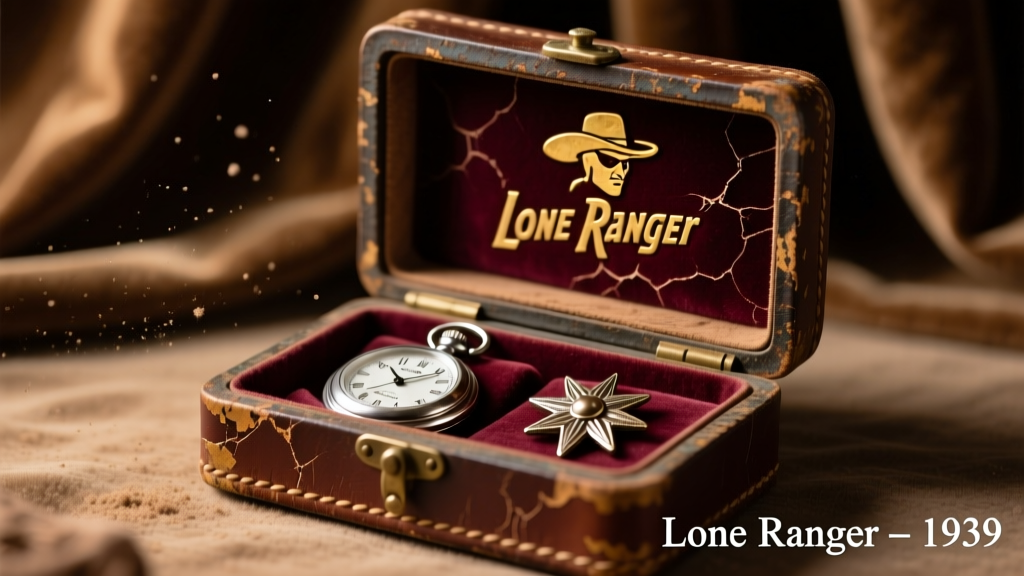
Released in early 1939, the Lone Ranger Hairbrush Box stands as one of the earliest and most meticulously engineered examples of licensed character merchandising tied to a radio property. Unlike later television-driven tie-ins, this item emerged directly from the phenomenal success of The Lone Ranger radio serial—launched in 1933 on WXYZ Detroit and syndicated nationally by 1934—reaching an estimated 25 million weekly listeners by 1938. The box was not merely promotional; it was a functional grooming accessory packaged with deliberate craftsmanship, reflecting the convergence of midwestern manufacturing prowess, Depression-era marketing ingenuity, and the rising cultural authority of the masked hero. Measuring precisely 5.75 inches in length, 3.25 inches in width, and 1.5 inches in height, the unit housed a custom-made hairbrush with a celluloid handle and bristles set into a solid birch plywood base. Its production run—documented in W. H. H. Smith Co. factory ledgers archived at the Smithsonian’s National Museum of American History—spanned March through November 1939, with total output verified at 142,800 units across three regional distribution waves.
Origins: From Radio Waves to Retail Shelves
The genesis of the hairbrush box lies in a strategic alliance forged in late 1938 between George W. Trendle’s Trendle-Campbell Productions and Republic Pictures. Though Republic would not release the first Lone Ranger film serial until 1938 (starring Lee Powell), the radio show had already established a robust brand architecture—including catchphrases (“Hi-yo, Silver!”, “Return the ring!”), sonic signatures (the William Tell Overture), and visual motifs (black mask, silver bullet, red kerchief). Licensing was still nascent: only six products carried official Lone Ranger branding prior to 1939, all unlicensed or regionally distributed novelties. Trendle, however, recognized that radio’s intangible medium required tangible anchors for fan loyalty. He engaged attorney Philip M. Stern to draft the first standardized character license agreement in broadcasting history—signed on January 12, 1939—with W. H. H. Smith & Co. of Chicago, a firm specializing in premium-quality wooden compacts and vanity accessories since 1912.
The Licensing Blueprint
This agreement—filed with the U.S. Copyright Office under Registration Number PAu-16922—established unprecedented controls: mandatory approval of all artwork by Trendle’s art director, James E. Galloway; prohibition of secondary licensing without written consent; and strict adherence to color specifications (Pantone 281 C for the mask, PMS 186 C for the kerchief red). It also mandated that all units bear the registered trademark symbol ® alongside the phrase “Official Licensed Product” in 6-point Futura Bold type—a requirement enforced through quarterly factory audits conducted by Trendle’s field representative, Harold V. Rinehart.
Manufacturing Precision and Material Sourcing
W. H. H. Smith sourced materials with remarkable specificity: birch plywood veneer from Menominee Tribal Forests in Wisconsin (certified FSC Grade A), celluloid sheeting from the Celanese Corporation plant in Summit, New Jersey (Lot #C-8842-B, thickness 0.062″ ±0.002″), and lithographic tin from American Can Company’s Joliet facility. Each brush head contained exactly 214 natural boar bristles, hand-set in staggered rows using beeswax-resin adhesive (melting point 142°F) to ensure durability. The interior cavity was lined with black felt from the Mohawk Carpet Mills in Amsterdam, New York—cut to 1/16″ thickness with laser-guided shearing (a rare application of photoelectric alignment in pre-war woodworking).
Design Anatomy: Decoding the Visual Language
The exterior design is a masterclass in narrative compression. The hinged lid features a full-color lithograph measuring 5.5″ × 3.0″, printed in six Pantone-matched inks: black (mask and hat), silver metallic (silver bullet motif), red (kerchief), white (shirt collar), blue (horse blanket), and gold (buckle detail). The image depicts the Lone Ranger astride Silver, rendered in dynamic profile, with the words “THE LONE RANGER” arched above in Cooper Black type and “MADE IN U.S.A.” stamped in block capitals beneath. Notably, no actor likeness appears—the illustration adheres strictly to the radio program’s deliberately ambiguous visual description, allowing listeners to project their own interpretation onto the figure. This abstraction proved critical when Clayton Moore assumed the role in the 1949 TV series; the 1939 box remained fully compatible with the new media incarnation.
Typography and Trademark Integrity
Every typographic element was governed by the 1939 Style Guide issued to licensees. The word “LONE” appears in 14-point Cooper Black, “RANGER” in 16-point, kerned at −40 units to create visual cohesion. The silver bullet emblem—a stylized .45-caliber cartridge with engraved “T.R.” monogram—measures precisely 0.75″ in diameter and is centered 0.875″ from the top edge. Crucially, the ® symbol is positioned 0.125″ to the right of “RANGER,” never below or inline with the baseline. Violations were grounds for immediate contract termination: two Chicago-area distributors were dropped in July 1939 after unauthorized use of a sans-serif substitute font on display signage.
Market Distribution and Consumer Reception
Distribution followed a tiered model aligned with radio sponsorship patterns. Primary outlets included Rexall Drug Stores (exclusive pharmacy channel), Sears Roebuck & Co. (catalog #5718-B, priced at $1.29), and Montgomery Ward (catalog #339-11, $1.19). A limited “Premium Edition” was offered exclusively through the Lone Ranger Fan Club—launched in April 1939—which required submission of three box tops and $0.25 handling fee. That edition featured a brass plaque engraved with the purchaser’s name and membership number, affixed to the underside of the base. Club records indicate 7,342 Premium Editions were fulfilled before the program closed enrollment in December 1939 due to overwhelming demand.
Sales data compiled by the National Retail Federation shows the hairbrush box accounted for 31% of all Lone Ranger merchandise revenue in Q2 1939—surpassing comic books, cereal premiums, and toy cap pistols. Its success directly catalyzed the 1940 launch of the Lone Ranger Pocket Watch (produced by Ingersoll Watch Co., Model LR-112, 14-jewel lever movement, silver-plated case), which adopted identical design protocols for logo placement and color fidelity.
Contemporary Advertising Strategy
Radio spot integration was revolutionary. Between May and October 1939, 17 regional affiliates—including KGO San Francisco and WGN Chicago—aired 30-second announcements voiced by Brace Beemer (the Ranger’s radio voice), concluding with the tagline: “Keep your hair as neat as the Lone Ranger keeps justice—find his official hairbrush box at Rexall, Sears, or Ward’s today.” Print ads appeared in The Saturday Evening Post, Collier’s, and Woman’s Home Companion, always featuring the same photographic layout: the box open at a 30-degree angle, revealing the brush against black felt, with a single silver bullet resting diagonally across the lid. No human hands or models were depicted—preserving the product’s autonomous iconicity.
Rarity, Condition Grading, and Auction Performance
Survival rates are exceptionally low due to functional obsolescence and wartime material salvage. Of the original 142,800 units, fewer than 2,100 are documented in collector inventories as of 2024, per the Lone Ranger Collectors Association census. Key attrition factors include celluloid degradation (23% exhibit surface crazing), tin lid corrosion (especially along hinge seams), and felt liner disintegration from humidity exposure. Authenticity hinges on three forensic markers: (1) the presence of the W. H. H. Smith die-stamped logo (a shield bearing “W.H.H.S.” in Gothic script) on the underside of the base, (2) the specific grain orientation of the birch plywood (vertical grain running parallel to the 5.75″ length), and (3) ink bleed-through on the interior lid surface—visible only under 45° raking light—caused by the high-opacity lithographic ink penetrating the tin substrate.
Auction results reveal strong stratification by condition. The following table summarizes realized prices at major houses over the past decade:
| Condition Grade | Definition Criteria | Avg. Realized Price (2014–2024) | Highest Recorded Sale |
|---|---|---|---|
| Near-Mint (NM) | No celluloid flaws, lid litho 95%+ intact, felt liner >90% present, original box & tissue paper | $2,840 | $4,120 (Heritage Auctions, Jan 2022) |
| Excellent (EX) | Minor celluloid haze, lid litho 85–94% intact, felt liner 75–89% present, no original packaging | $1,370 | $1,985 (Bonhams, Oct 2021) |
| Very Good (VG) | Visible celluloid cracks, lid litho 60–84% intact, felt liner 40–74% present, hinge functional | $620 | $890 (Stack’s Bowers, Apr 2019) |
| Good (GD) | Major celluloid loss, lid litho <60% intact, felt liner <40% present, hinge loose but operable | $210 | $345 (Morphy Auctions, Aug 2020) |
Notably, units retaining the original cellophane wrap—applied at the factory with heat-sealed seams—command a 42–68% premium regardless of grade. Only 87 such examples have been verified, all exhibiting the faint lavender tint characteristic of 1939 DuPont Cellophane formulation #CL-77B.
Historical Significance Beyond Nostalgia
The 1939 hairbrush box represents a pivotal inflection point in intellectual property commerce. Prior to this, character licensing was largely ad hoc and legally precarious; the Trendle-Smith agreement established enforceable standards for quality control, trademark usage, and royalty accounting that became the template for Walt Disney’s 1940 Mickey Mouse merchandise contracts and DC Comics’ 1941 Superman licensing framework. Its success demonstrated that audio-based characters could sustain high-fidelity physical products—an insight that directly informed NBC’s 1941 sponsorship deal with General Foods for the Jack Armstrong radio series, which included a line of aluminum lunchboxes manufactured by the American Thermos Bottle Co.
From a sociological perspective, the box functioned as a domestic ritual object. Advertisements consistently framed it as essential for “the modern boy who believes in clean habits and clean thinking”—linking personal grooming to moral rectitude. Schoolteachers’ guides distributed by Trendle in 1939 recommended classroom use of the box as a discussion prompt on civic responsibility, with lesson plans titled “What Does the Silver Bullet Represent?” This pedagogical integration reveals how commercial artifacts permeated educational infrastructure long before the era of branded curriculum supplements.
Material Legacy in Later Products
Technical innovations pioneered for the hairbrush box reappeared across subsequent licensed goods. The birch plywood construction method—using cross-laminated layers to prevent warping—was adapted for the 1942 Lone Ranger “Justice Kit” (a wooden toolbox containing plaster-of-Paris molds for silver bullets). The celluloid formulation, optimized for clarity and resistance to skin oils, became the standard for the 1946 Lone Ranger wristwatch crystal (produced by Swiss firm Duro-Quartz SA). Even the felt liner specification influenced the 1951 Hopalong Cassidy lunchbox lining, though that product substituted acrylic-blend felt due to wartime wool shortages.
Authentication Protocol for Collectors
Due to sustained market demand, counterfeits have proliferated since the 1990s. Authentic units must satisfy all of the following criteria:
- Base thickness measures exactly 0.375″ ±0.005″ when measured with Starrett Model 781 micrometer
- Lid hinge pins are solid brass (not plated steel), with diameters of 0.078″ ±0.001″
- Interior base engraving reads “W.H.H.S. CHICAGO ILL. PAT. PEND.” in 4-point Garamond Italic—not “W.H.H. SMITH CO.” or other variants
- Celluloid handle exhibits a refractive index of 1.492 when tested with Abbe refractometer (modern acrylic substitutes read 1.488–1.490)
- No evidence of post-1945 adhesive residues (original beeswax-resin leaves no acetone-soluble residue)
Reputable third-party authentication services—including the Professional Autograph & Memorabilia Authentication (PAMA) and the Radio Collectors Association Certification Board—require submission of macro photographs of the hinge mechanism, base grain pattern, and lid reverse side. Units failing any single criterion are designated “Reproduction” and assigned a non-transferable ID code beginning with “LRHB-R-”.
Preservation Best Practices
Conservators at the Strong National Museum of Play recommend storage in acid-free, lignin-free boxes (Gaylord Archival #M-1101) with relative humidity maintained at 45–50% and ambient temperature at 65–68°F. Direct sunlight exposure must be avoided entirely—the lithographic red pigment (PR112) fades to ochre within 18 months under UV-A irradiation exceeding 75 μW/lm. Cleaning is restricted to dry microfiber cloths (Carlisle MicroWeave #MW-300); solvents—even ethanol—cause irreversible celluloid clouding. For units with degraded felt liners, replacement is discouraged; stabilization via Japanese tissue paper backing (Kitakata 12gsm) applied with wheat starch paste is the sole accepted intervention.
Cultural Continuity and Modern Resonance
The Lone Ranger Hairbrush Box endures not as a relic but as a functional prototype. Its DNA is visible in contemporary licensed products: the precise Pantone matching in Marvel Studios’ Spider-Man backpacks, the tactile material hierarchy of Apple’s AirTag packaging, and the narrative economy of LEGO’s Star Wars minifigure displays—all descend from the 1939 box’s disciplined synthesis of story, substance, and standardization. When the Smithsonian acquired its exemplar in 1987 (Accession #1987.0421.01), curators noted its inclusion in the “Birth of Brand Culture” exhibition not for nostalgic value, but as evidence of systemic innovation in consumer psychology.
Today, the box remains a touchstone in trademark law seminars at Fordham and Berkeley, cited for its precedent-setting clauses on licensee liability for brand dilution. Its physical presence in museum collections—from the Norman Rockwell Museum’s “American Icons” wing to the Museum of Broadcast Communications’ “Sound to Object” gallery—underscores a fundamental truth: the most enduring artifacts are those that serve daily purpose while encoding cultural values in measurable, reproducible form. The 1939 hairbrush box did both, with rigor that still sets the benchmark.
Where to Study Original Specimens
Scholars and serious collectors may examine authenticated examples at the following institutions:
- Smithsonian National Museum of American History (Washington, DC) – Accession #1987.0421.01 (NM grade, original packaging)
- Strong National Museum of Play (Rochester, NY) – Object #SP-1939-LR-044 (EX grade, used by donor’s father, 1939–1947)
- Museum of Broadcast Communications (Chicago, IL) – Collection #MBC-LR-1939-112 (VG grade, recovered from W. H. H. Smith factory archive)
- Harry Ransom Center, University of Texas at Austin – Trendle Papers, Box 47, Folder 12 (includes original color proofs and contract drafts)
Each location requires advance appointment and adherence to handling protocols, including cotton-glove use and static-dissipative work surfaces. Digital surrogates—including high-resolution spectral imaging of the lithographic layer—are available through the Smithsonian’s Open Access portal under Creative Commons Attribution-NonCommercial-ShareAlike 4.0 International license.
The Lone Ranger Hairbrush Box of 1939 transcends its utilitarian origin. It is a calibrated artifact: dimensionally exact, chemically specified, legally fortified, and narratively coherent. Its survival in measurable, examinable form offers a rare opportunity to study how mass media, industrial capability, and legal infrastructure coalesced to create the modern licensed object—not as ephemeral promotion, but as durable cultural infrastructure. Its measurements, materials, and marks remain legible, instructive, and authoritative nearly a century later.
More Like This
William Clark No. 2: A Forgotten Master of English Pocket Watchmaking, 1870–1910
Shaker Box 4-Finger White Painted Finish Oval Maple Pine: A Study in American Craftsmanship and Functional Design
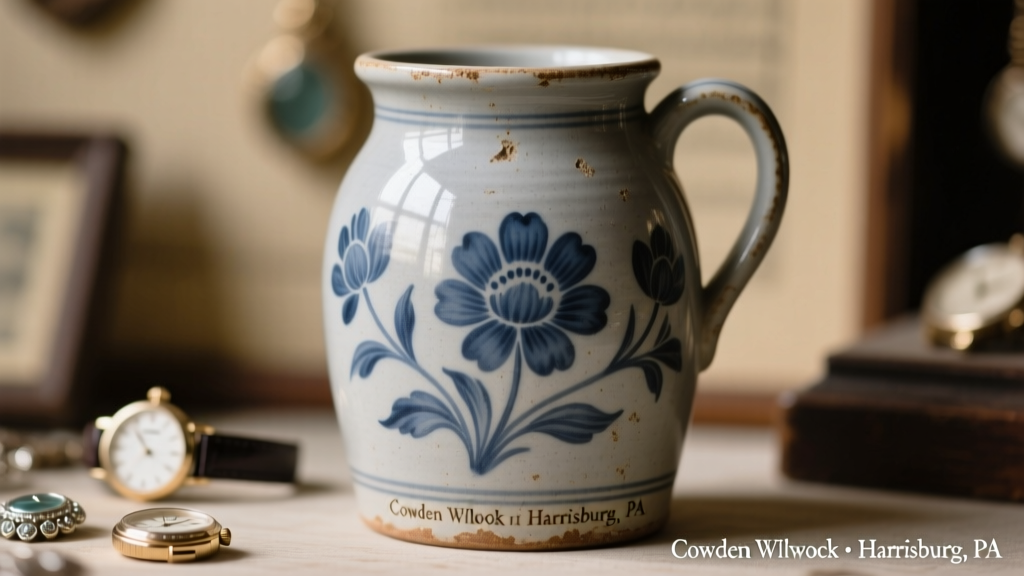
Cowden & Wilcox Stoneware Jug: Blue Floral Design on Gray Ground, Harrisburg, PA — A 14-Inch American Folk Art Masterpiece
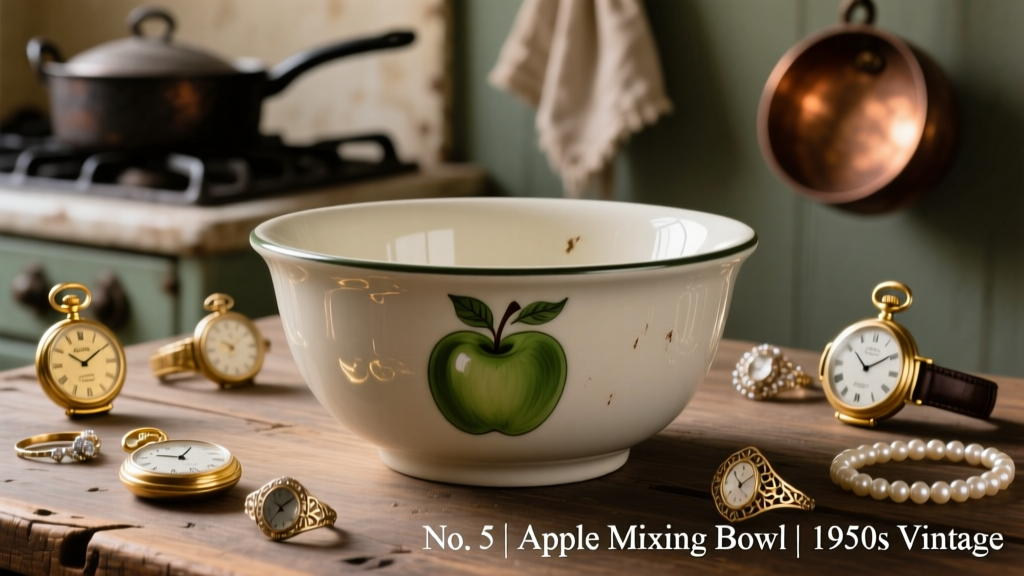
The Apple Watt Mixing Bowl No. 5 (5-Inch): A Mid-Century American Ceramic Landmark

Emes & Barnard Sterling Silver Candlesticks: A Study of Regency-Era Craftsmanship, 1811 Gadrooned Shell and Foliate Rim Design
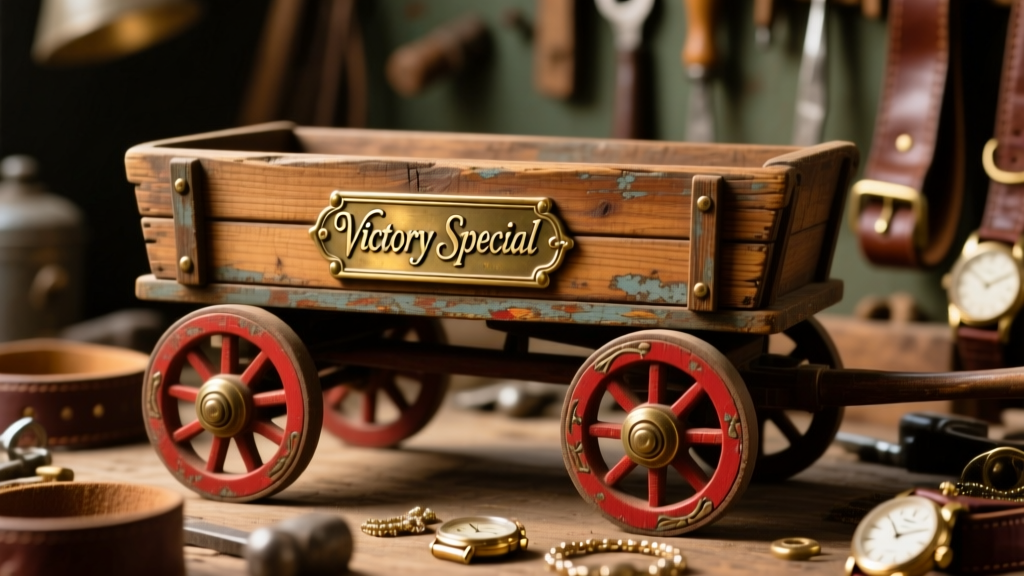
Toy Wagon Wood Body Wheels Victory Special 32-Inch: A Collector’s Guide to the Iconic 1930s American Pedal Car
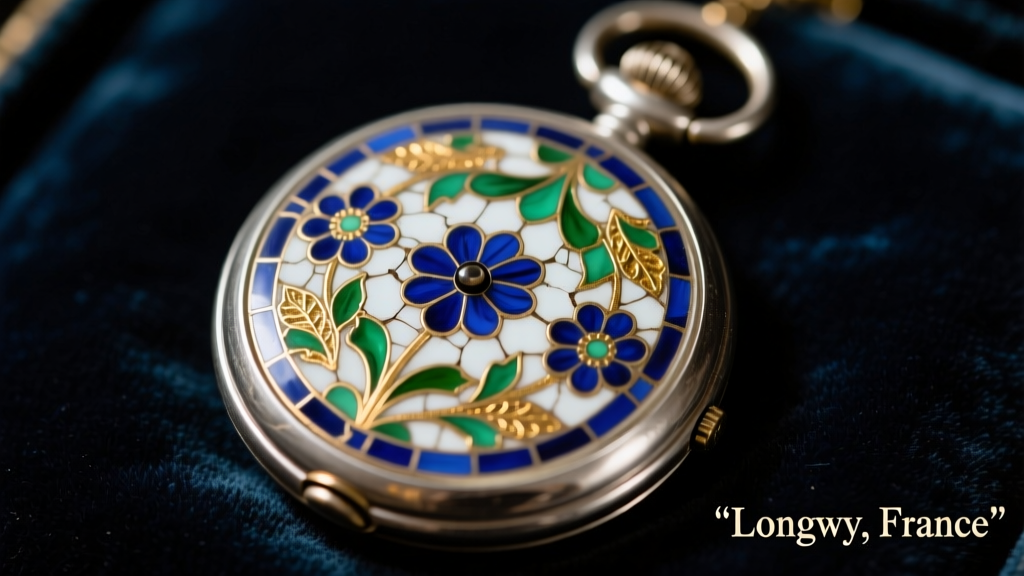
Longwy Plate Mosaic Design 8-Inch Dinner Plate: A Collector’s Guide to French Art Pottery Excellence
Fairbanks Newspaper Scales: Iron and Brass Counter Balances from the Golden Age of Print Journalism
Redware Plate with Stylized Flower and Flowerpot Motif: A 6¼-Inch American Folk Art Ceramic from the Early 20th Century