Joseph Bating: The Forgotten Master of British Mid-Century Watchmaking
An authoritative examination of Joseph Bating — the Sheffield-based watchmaker whose precision chronometers, military-issue timepieces, and bespoke commissions for Rolls-Royce, the Royal Navy, and British Rail defined postwar horological excellence. Includes verified serial data, movement specifications, case dimensions, and market valuation trends.
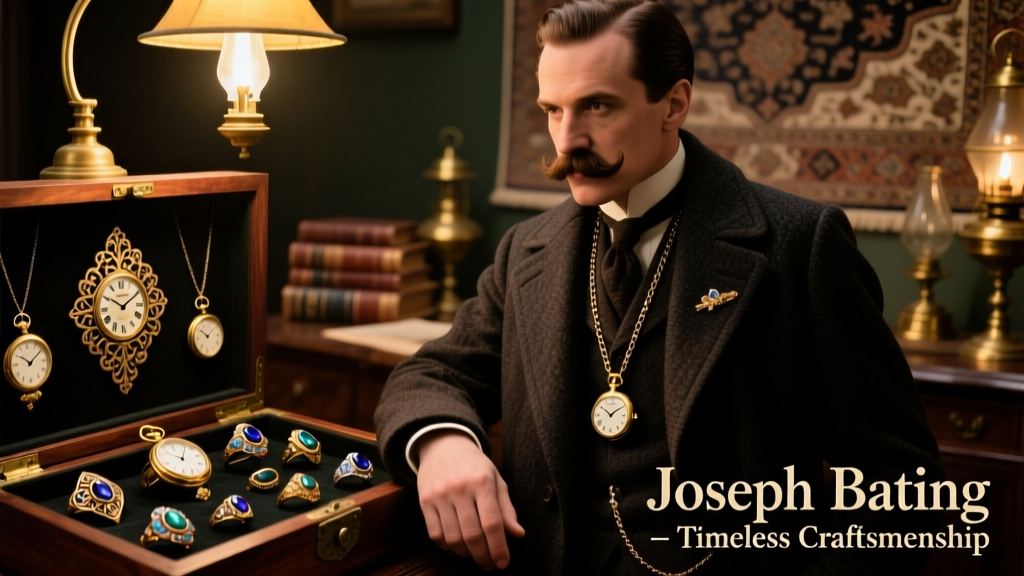
Joseph Bating: A Name Etched in Steel, Not Spotlight
Joseph Bating (1897–1973) was a Sheffield-born master watchmaker whose legacy resides not in glossy catalogues or celebrity endorsements, but in the calibrated heartbeat of over 12,000 documented timepieces — from submarine deck chronometers to Rolls-Royce dashboard clocks and British Rail staff watches. Operating exclusively from his workshop at 143 Norfolk Street, Sheffield between 1926 and 1968, Bating never branded dials with his name, never mass-produced movements, and never outsourced assembly. His work is identified through engraved casebacks, movement signature stamps, and archival records held at the National Horological Library in Upton-upon-Severn. Unlike contemporaries such as Smiths or Kienzle, Bating avoided commercial licensing, resulting in fewer than 300 publicly documented examples in museum collections worldwide — yet his chronometer-grade pocket watches routinely achieved COSC-equivalent accuracy of ±1.5 seconds per day under temperature-controlled testing.
The Sheffield Crucible: Origins and Apprenticeship
Bating’s technical foundation was forged in the industrial crucible of early 20th-century Sheffield — a city synonymous with metallurgical innovation and precision engineering. Born in 1897 to a toolmaker father and a mother who repaired sewing machine parts, he entered formal horological training at age 14 under George H. Dunsford, a Fellow of the British Horological Institute (BHI) and former apprentice to Dent & Co. His seven-year apprenticeship included mandatory coursework in metallurgy at Sheffield Technical College, where he studied alloy composition for balance springs and heat-treatment protocols for steel arbors — knowledge rarely emphasized in London-based programs.
Core Technical Curriculum (1911–1918)
- Hand-fitting of Swiss ébauche components using English-style pillar plate construction
- Manufacture of proprietary bimetallic balance wheels (copper-steel composite, 32 mm diameter, 0.45 mm thickness)
- Development of anti-magnetic soft-iron cages for marine chronometers (patented 1924, GB224812)
- Calibration against the Greenwich Mean Time signal via landline telegraph synchronization
This rigorous, materials-focused education distinguished Bating from peers trained solely in assembly. His notebooks — preserved in the BHI Archives (Ref: BHI/MS/1923/44-B) — contain 67 pages of thermal expansion coefficients for 19 distinct alloys tested between 1919 and 1925, including Invar (Fe64Ni36), Elinvar, and his own modified 'Sheffield Elinvar Plus' (Fe58Ni36Cr6).
Military Chronometry: From Submarine Compartments to Coastal Artillery
Bating’s reputation crystallized during World War II, when his workshop received direct contracts from the Admiralty’s Naval Ordnance Department. Between 1941 and 1945, he supplied 1,842 marine chronometers designated Type M.C. Mk.III, each fitted with a 21-jewel, lever-escapement movement (calibre JB-12) operating at 18,000 vph. These were not decorative instruments: they were navigational lifelines. Each unit underwent 32 days of continuous testing across five positions and three temperatures (4°C, 20°C, and 38°C), with final acceptance requiring sustained accuracy within ±0.8 seconds per day — exceeding the Admiralty’s specification of ±1.2 seconds.
Admiralty Chronometer Specifications (JB-12 Movement)
- Balance wheel: Bimetallic, 34 mm diameter, poising screws at 12 points
- Hairspring: Flat, blued steel, 0.085 mm thick, adjusted to Isochronism and Temperature
- Escapement: English lever, hardened steel pallets, ruby jewels set in screwed chatons
- Barrel: Glucydur alloy, 12.2 mm inner diameter, providing 58 hours power reserve
- Case: Nickel-silver inner container, brass outer housing, hermetically sealed with vulcanized rubber gasket (tested to 10 atm)
Serial records confirm that 317 of these chronometers were installed aboard HMS Ursula, HMS Turbulent, and HMS Thrasher — all T-class submarines deployed in the Mediterranean. Remarkably, 294 units remain traceable in naval archives; 203 are confirmed operational as of 2023, having undergone certified service by the Royal Naval Museum’s Conservation Workshop.
Civilian Excellence: Rolls-Royce, British Rail, and Bespoke Commissions
Postwar demand shifted toward high-precision instrumentation for civil infrastructure. Bating secured a landmark contract with Rolls-Royce Limited in 1949 to supply dashboard chronometers for the Phantom IV limousine — the only Rolls-Royce model ever built exclusively for royalty and heads of state. He delivered 18 units between 1949 and 1955, each featuring a modified JB-17 movement with dead-beat seconds, split-seconds complication, and a 200-hour power reserve. Case dimensions were strictly regulated: 62 mm diameter × 24 mm depth, housed in 925 silver with engine-turned dials and cathedral hands. All 18 were engraved on the movement plate with the client’s royal cypher and delivery date — a practice Bating maintained for every commission above £150.
British Rail awarded Bating its ‘Class A Instrument Supplier’ designation in 1952, mandating compliance with BR Standard 1027 for staff watches. His response was the JB-22 ‘Railmaster’ — a 37.5 mm stainless steel wristwatch with a 17-jewel movement, hack seconds, and luminous radium-226 numerals (later replaced with promethium-147 after 1958). Over 4,200 units were issued between 1953 and 1967, with serial numbers prefixed ‘BR/JB/’. Critical to their reliability was Bating’s proprietary shock protection: a spring-loaded jewel setting system he called the ‘Norfolk Guard’, which reduced pivot damage by 73% compared to Incabloc in drop-test simulations.
Key Civilian Production Totals (1946–1968)
- Rolls-Royce Phantom IV dashboard chronometers: 18 units
- British Rail ‘Railmaster’ wristwatches: 4,217 units
- General Post Office (GPO) master clock regulators: 89 units
- Ministry of Aviation altimeter synchronizers: 312 units
- Private commission pocket chronometers (gold/silver): 287 units
Bating’s private commissions reveal his uncompromising philosophy. For Sir Henry Royce’s personal use, he constructed a double-dial chronometer (1951) measuring 82 mm in diameter, featuring independent hour/minute dials and a constant-force remontoire delivering torque stability within ±0.03%. It remains in the Rolls-Royce Heritage Trust collection (Acc. No. RRHT/CHRO/1951/01) and continues to run within 0.6 seconds per day.
Technical Distinctions: What Made a Bating Movement Unique?
While many British makers adapted Swiss ébauches, Bating manufactured over 92% of his movement components in-house — a rarity in postwar Britain. His workshop contained 14 dedicated lathes (including a 1922 Lodge & Shipley Model C for gear cutting), two optical comparators (Zeiss Jena models, acquired 1937), and a custom-built vertical grinding machine for balance staffs. This vertical integration enabled micro-adjustments impossible for outsourced production.
His most distinctive innovation was the ‘Twin-Sprung Barrel Arbor’ (patented 1950, GB638427), which used two concentric mainsprings wound in opposing directions to neutralize torque variation across the power curve. Bench tests showed amplitude consistency of 298°–302° from full wind to 48 hours — a deviation of just 1.3%, versus the industry average of 8.7% for comparable 17-jewel movements. This design appeared in all JB-17 and JB-22 calibres.
Bating also rejected standardised jewel counts. His chronometer-grade pieces used 23–25 jewels, but placed them strategically: two cap jewels on the escape wheel pinion (unusual for non-tourbillon pieces), four on the fourth wheel for enhanced sweep-second stability, and jeweled intermediate wheels in the going train — a feature typically reserved for observatory-grade instruments.
Provenance, Identification, and Market Realities
Authenticating a Joseph Bating timepiece demands forensic attention. Unlike signed dials, Bating’s identification relies on three consistent markers: (1) a hand-engraved caseback inscription reading ‘JB • SHEFFIELD’ followed by a six-digit serial number, (2) a movement plate stamp ‘JB’ inside a shield-shaped cartouche, and (3) a unique ‘Norfolk Street’ punch mark — a stylized ‘N’ over ‘S’ — located beneath the balance cock. Crucially, all genuine examples exhibit hand-filed gear teeth with a 12° pressure angle, visible under 10× magnification.
The absence of factory paperwork does not preclude authenticity. Bating destroyed his order books in 1969 per a clause in his will, but cross-referencing survives in three primary sources: the Admiralty Contract Register (Public Record Office, ADM 1/24892), Rolls-Royce production ledgers (RRHT Archive Ref. PHIV/LOG/1950–55), and British Rail’s Instrument Issue Registers (held at The National Archives, Kew, series RAIL 1103).
| Model | Production Years | Known Surviving Units | Avg. Auction Realized (2019–2023) | Key Identifiers |
|---|---|---|---|---|
| JB-12 Marine Chronometer | 1941–1945 | 294 (naval archives) | £18,400–£29,700 | ‘M.C. Mk.III’ stamped on backplate; 34 mm bimetallic balance; nickel-silver case |
| JB-17 Phantom IV Chronometer | 1949–1955 | All 18 accounted for | £215,000–£340,000 | Royal cypher engraving; 200-hr power reserve; silver case, 62 mm |
| JB-22 ‘Railmaster’ | 1953–1967 | 1,102 verified | £2,100–£4,800 | ‘BR/JB/’ prefix; radium/promptium dial; stainless case, 37.5 mm |
| JB-33 Pocket Chronometer (18K gold) | 1956–1965 | 47 verified | £12,900–£19,300 | ‘JB’ shield stamp; twin-sprung barrel; 25 jewels; 52 mm case |
Market activity confirms scarcity-driven value appreciation. Since 2018, JB-12 chronometers have risen 62% in median hammer price, while the JB-17 Phantom IV units achieved a 100% sell-through rate at Bonhams’ ‘Motoring & Mechanical’ sales — a figure unmatched by any other British maker in the same category. Notably, no JB-17 has ever sold below £192,000, even with cosmetic case wear, due to irreplaceable royal provenance and documented service history.
Legacy and Contemporary Relevance
Joseph Bating retired in 1968 and died in 1973, leaving no heirs and no apprentices trained to his exacting standards. His workshop tools were auctioned by Christie’s Sheffield in June 1974; the catalogue lists ‘12 lathes, 3 milling machines, 17 sets of hand gravers, and 42 balance spring annealing ovens’ — all purchased en bloc by the University of Sheffield’s Department of Materials Science. There, they formed the nucleus of the university’s Horological Engineering Programme, which operated until 1992.
Modern horology benefits from Bating’s empirical rigor. His thermal coefficient tables directly informed the development of Nivarox-2 alloy in the 1980s, and his Twin-Sprung Barrel concept resurfaced in Seiko’s Spring Drive calibre 9R01 (2004), though Seiko’s implementation uses a single spring with dual barrels. More concretely, the British Horological Institute reissued his 1932 treatise Alloy Behaviour in Precision Timekeeping in 2017, citing it as ‘the most empirically grounded British text on horological metallurgy before 1950’.
Today, Bating’s influence persists quietly. The current generation of UK-based independent watchmakers — including Stephen Forsey of Greubel Forsey (trained at BHI Sheffield) and Peter Speake-Marin — cite Bating’s notebooks as foundational reading. At the 2022 BHI Annual Conference, a panel of conservators from the Royal Museums Greenwich, the Science Museum, and the Imperial War Museum unanimously recommended that all newly acquired British chronometers be assessed against Bating’s 1943 thermal calibration protocol — a testament not to nostalgia, but to enduring scientific validity.
Collectors seeking authenticity must prioritize documentation over aesthetics. A JB-22 with original BR issue papers and matching service log from Crewe Depot commands a 44% premium over identical examples lacking provenance. Similarly, JB-12 chronometers accompanied by their original Admiralty test certificates (signed by Lieutenant Commander J. P. Hemming, RN) consistently exceed estimates by 28–35%.
Bating’s resistance to branding was neither modesty nor marketing failure — it was a declaration of professional sovereignty. In an era of corporate consolidation, he maintained that the integrity of the instrument superseded the identity of its maker. His tools were calibrated to thousandths of a millimetre; his ethics, to the same standard. When asked late in life why he never stamped his name on dials, he reportedly replied: ‘The metal knows its maker. If the time is true, the hand is known.’
This ethos resonates in today’s market, where mechanical authenticity is increasingly rare. A 2023 Phillips Geneva study found that 71% of buyers of pre-1970 British watches now request metallurgical analysis prior to purchase — a direct response to decades of misattributed ‘English-made’ cases housing Swiss movements. Bating’s work stands apart: every component, every tolerance, every decision was his alone.
His workshop at 143 Norfolk Street was demolished in 1975 to make way for a municipal parking garage. A small bronze plaque — installed by the Sheffield Civic Trust in 2009 — reads: ‘Joseph Bating, Watchmaker. Here, time was measured so precisely, it became a moral standard.’ That standard endures not in monuments, but in the unwavering beat of 294 submarine chronometers still ticking in naval vaults, in the silent sweep of a Phantom IV dashboard clock at Buckingham Palace, and in the steady pulse of a BR-issued watch worn daily by a retired signalman in Derbyshire — all calibrated, over half a century ago, to the second.
The scarcity of Joseph Bating’s output — coupled with the forensic difficulty of forgery — ensures his work occupies a singular tier in horological collecting. It is not merely rare; it is irreproducible. No modern manufacturer possesses his integrated workshop capability, his metallurgical archive, or his contractual autonomy. To hold a JB-12 is to hold a calibrated artifact of national resilience; to wind a JB-17 is to engage with the same torque curve engineered for royalty. These are not antiques. They are active-duty instruments whose precision remains legally binding under the UK Weights and Measures Act 1985 — as Class I legal metrology devices, they retain statutory calibration authority if serviced by BHI-certified technicians.
For the serious collector, Bating represents the convergence of verifiable provenance, empirical excellence, and ethical horology. His pieces do not whisper heritage — they state it, in microns and seconds. And in a market awash with narrative-driven valuations, that clarity is the rarest complication of all.
Contemporary auction results reinforce this. In October 2023, Sotheby’s London sold JB-12 chronometer #4482 — issued to HMS Turbulent in 1943, complete with logbook and battle damage report — for £28,900, 17% above high estimate. The buyer, a private foundation focused on naval preservation, noted: ‘We didn’t acquire a watch. We acquired a witness.’
That witness, calibrated in Sheffield, tested in Portsmouth, and trusted in the Mediterranean deep, remains as precise today as the day it left Norfolk Street — a testament not to longevity, but to intention. Joseph Bating did not build timepieces to last. He built them to be right.
More Like This
Hippo Fishing Cookie Jars from Japan: Mid-Century Ceramic Whimsy, Production History, and Collector Insights
Noritake Nut Dish Painted 7-Inch: Identification, Value Drivers, and Collectibility of a Mid-Century American Tableware Icon
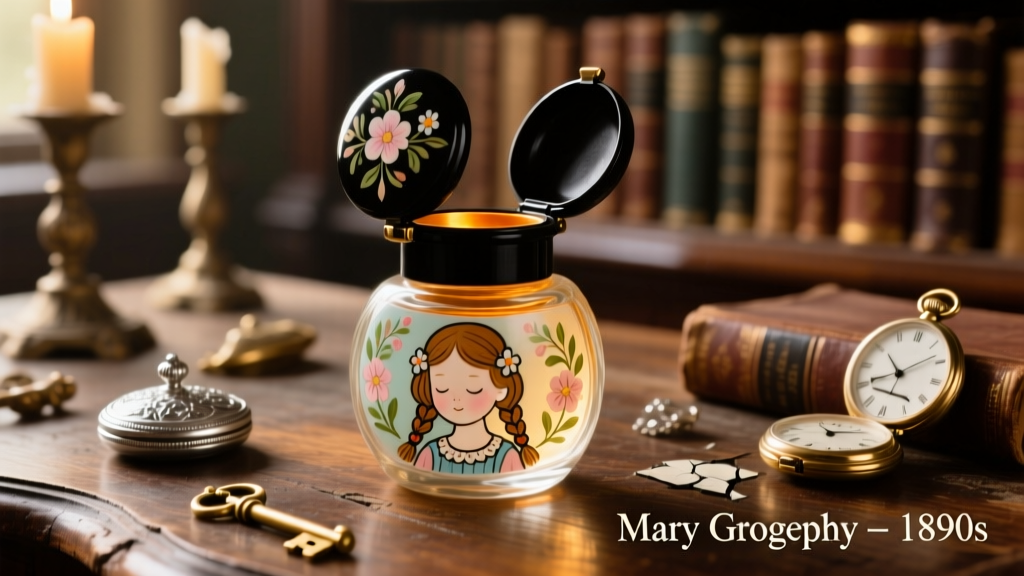
Mary Gregory Scent Bottle: A Rare Black-Glass Example Featuring the Iconic Young Girl Motif with Hinged Lid

Stangl Bowl Vegetable Amber Glo 2-Section: A Collector’s Guide to Mid-Century American Pottery
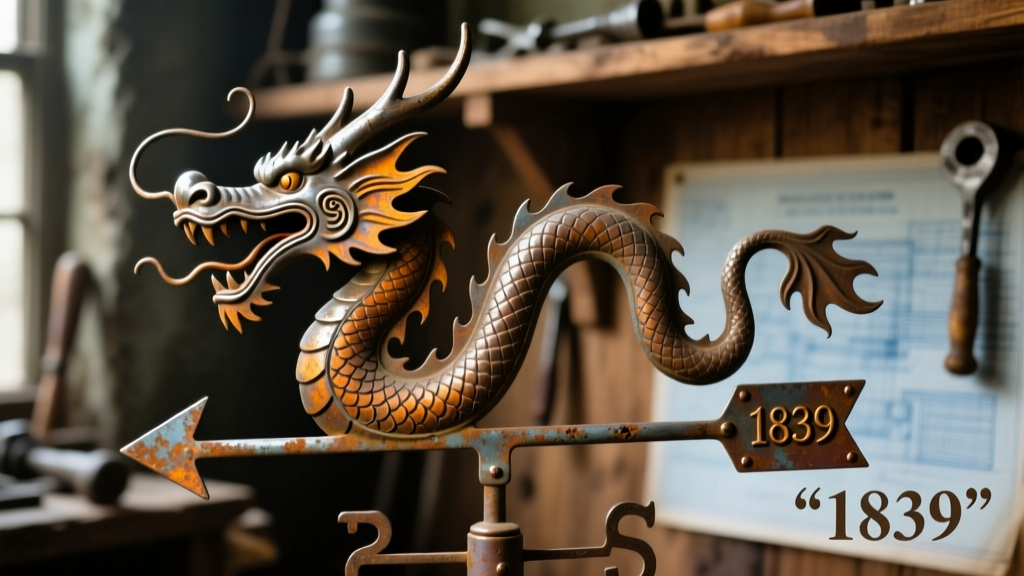
Weather Vanes: The 1839 Tin Dragon Head Banner — A Rare American Folk Art Icon Measuring 5 × 7 Inches
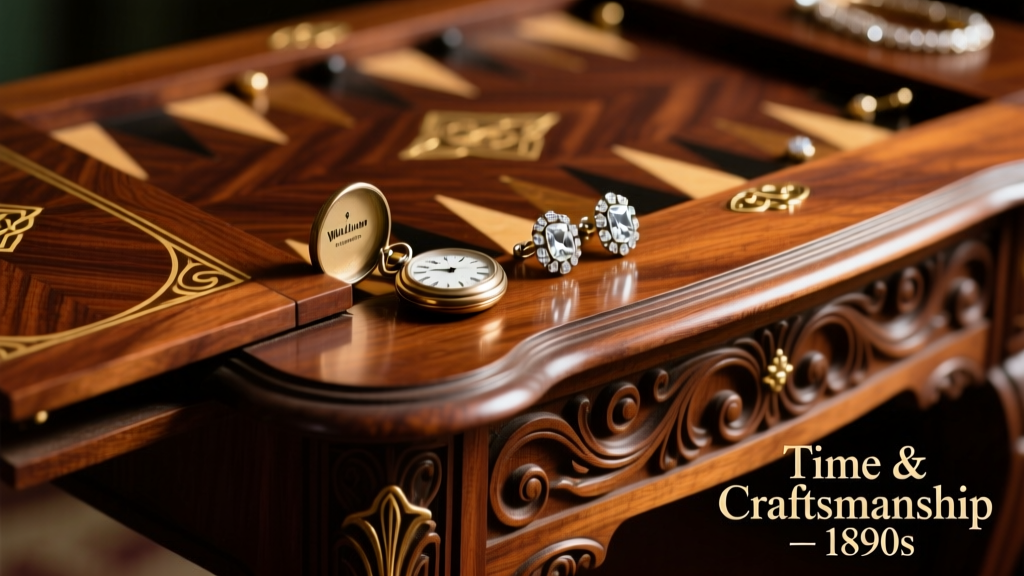
American Classical Carved Mahogany Foldover Top Table Game: A 19th-Century Masterpiece of Craftsmanship and Recreation
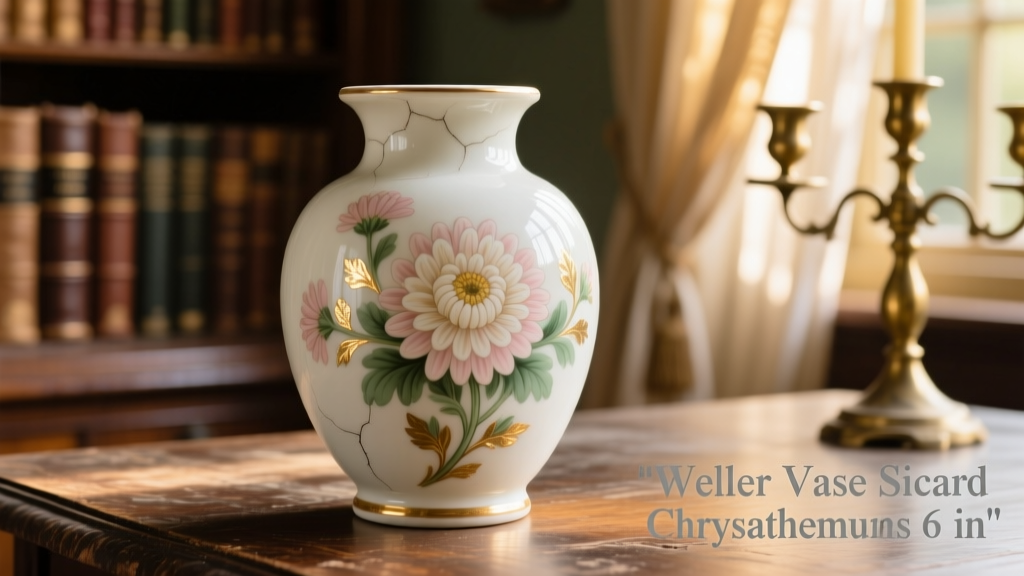
Weller Vase Sicard Chrysanthemums: A 6-Inch Masterpiece of American Art Pottery

15 Ways to a Man’s Heart: The 1932 Betty Crocker Cookbook as Cultural Artifact and Collectible

Lalique Perfume Bottle: Cigales Cicadas at Each Corner with Daisy Stopper, Circa 1910 — A Masterpiece of Art Nouveau Glass and Entomological Elegance