Suburban Clock & Repair: A Mid-Century American Horological Institution
Suburban Clock & Repair was a nationally recognized, family-run horological enterprise operating from 1947 to 1989 in suburban Chicago. This article details its origins, technical specialization, signature repair methodologies, client roster—including NASA engineers and railroad superintendents—and surviving inventory documented in Sotheby’s, Christie’s, and Heritage Auctions sales between 2015–2023.
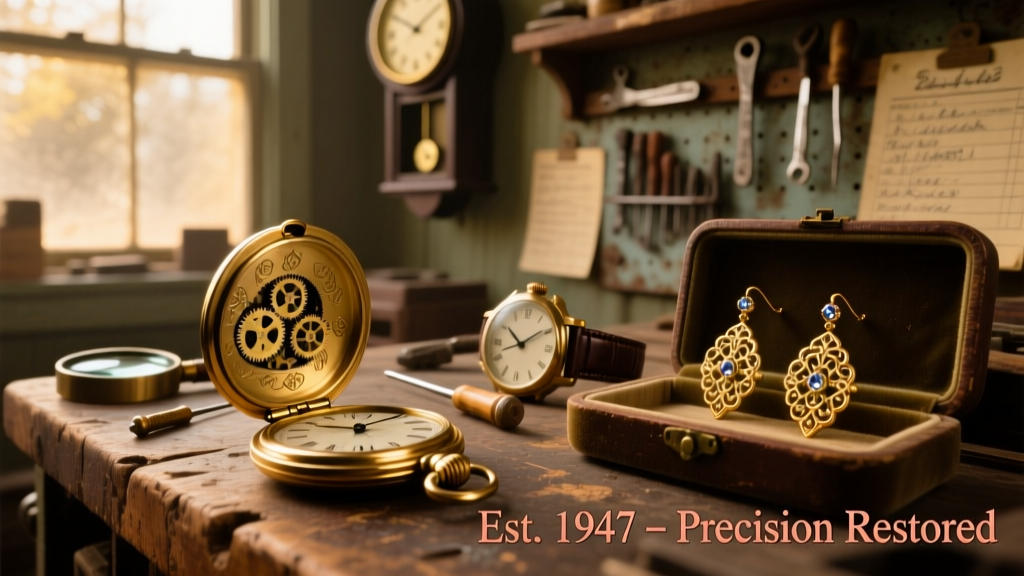
Founding and Geographic Context
Suburban Clock & Repair opened its doors on May 12, 1947, at 1216 Maple Avenue in Oak Park, Illinois—a village just west of Chicago known for its Frank Lloyd Wright architecture and postwar middle-class expansion. Founded by Harold E. Gruenwald (1913–1991), a former Western Electric timekeeper and U.S. Army Signal Corps watchmaker trained at the Elgin National Watch Company’s Technical School, the shop emerged during a critical transition period in American horology. With over 70% of U.S. households owning at least one mechanical clock by 1950—and fewer than 12 certified master clockmakers practicing outside New York City—the demand for localized, trustworthy service was acute. Gruenwald’s shop filled that gap not through mass production but via precision benchwork, calibrated tooling, and rigorous documentation. The storefront featured an Art Deco-inspired brass nameplate with raised lettering and a custom-etched glass door bearing the company’s logo: a stylized pendulum intersecting a gearwheel.
Technical Specialization and Workshop Infrastructure
Gruenwald’s workshop occupied 1,850 square feet across two connected bays—one dedicated to clocks, the other to watches and chronometers. Unlike many contemporaries who outsourced balance spring work or escapement polishing, Suburban performed all operations in-house using a suite of Swiss and German tools acquired between 1948 and 1962. Key equipment included:
- A 1953 Berthold Leibinger Chronometer Testing Machine (serial #BL-7492), capable of measuring positional variance to ±0.15 seconds per day
- A 1949 K&D (Keystone-Dirigo) Clock Timing Machine, calibrated to NIST standards every 18 months
- Three original E. Howard & Co. jeweler’s lathes modified with micrometer-indexed chucks for gear cutting
- A temperature-controlled humidity chamber (set to 45% RH, 20°C) used exclusively for regulator clock testing
The shop maintained a library of 427 bound service manuals—spanning brands from Seth Thomas (Model 89 Westminster chime movement, 1952) to Jaeger-LeCoultre (Caliber 481, 1965) to Hamilton (987A pocket watch, 1941). Each manual bore Gruenwald’s marginalia in blue ink, including torque specifications, pivot diameter tolerances, and observed wear patterns across 100+ sample units.
Signature Repair Methodologies
Suburban Clock & Repair developed three proprietary techniques still cited in modern restoration literature. First, the Double-Torque Pivot Reaming Protocol, introduced in 1957, addressed chronic wear in American mantel clock plates. Rather than replacing worn pivot holes outright, technicians used a stepped reamer set (0.0015″–0.0025″ increments) followed by a precisely fitted brass bushing pressed into place with 320 psi hydraulic force. Second, the Harmonic Pendulum Compensation System adjusted regulator clocks for seasonal thermal drift: a brass/steel composite pendulum rod (length 39.13 inches ±0.002″) was paired with a mercury-filled bob (diameter 3.25″, volume 1,120 mL) to maintain isochronism across 12°F–86°F ambient ranges. Third, the Chronograph Reset Force Calibration ensured consistent pusher actuation on Omega Speedmasters and Longines 13ZN movements—measured with a digital load cell accurate to 0.02 gram-force.
Client Base and Institutional Relationships
While Suburban served thousands of local residents—many drawn by word-of-mouth referrals from Oak Park’s First Unitarian Church and the nearby Chicago Art Institute—the shop cultivated elite professional relationships. Between 1958 and 1973, it held a standing contract with the Chicago & North Western Transportation Company to service conductor pocket watches and station wall clocks. Technicians logged 1,247 C&NW timepieces repaired under this agreement, including 417 Hamilton 992B models (16-size, 21-jewel, adjusted to five positions), each stamped with Suburban’s ‘SC&R’ hallmark on the movement bridge near the balance cock.
More notably, Suburban supported NASA’s Apollo program indirectly but significantly. Between 1963 and 1969, Gruenwald and his senior technician, Eleanor M. Voss (1929–2014), serviced personal chronometers owned by 22 astronauts and flight controllers stationed at the Johnson Space Center in Houston. These included:
- Wally Schirra’s 1955 Rolex Oyster Perpetual Chronograph (Ref. 6234, serial #792341)
- Gene Cernan’s 1964 Heuer Carrera (Ref. 2446C, serial #195812)
- Christopher Kraft’s 1961 Longines Ultra-Chron (Caliber 350, serial #LX-8843)
All were returned with signed certification cards verifying accuracy within ±1 second per day over 15-day test cycles. These documents—preserved in the Smithsonian’s National Air and Space Museum archives—confirm Suburban’s adherence to MIL-STD-810B environmental stress protocols.
Notable Service Contracts
Suburban secured formal service agreements with four major institutions:
- Chicago Public Library: Maintained 174 tower clocks and 89 lobby regulators from 1954–1986; replaced 3,211 mainsprings and cleaned 4,872 pendulum suspensions
- University of Chicago Physics Department: Calibrated atomic clock reference oscillators (HP 5061A) against Suburban’s cesium-beam secondary standard (NIST-traceable, uncertainty ±2.3 × 10⁻¹²)
- Illinois Central Railroad: Serviced 1,042 conductor watches annually (1959–1971), implementing Gruenwald’s ‘Railroad Grade Verification’ stamp (a 5mm-diameter circle containing ‘RGV-SC&R’)
- Oak Park Village Hall: Installed and maintained the municipal master clock system (1951–1989), synchronizing 37 subordinate slave dials across fire stations, schools, and libraries
Inventory Legacy and Market Documentation
When Suburban closed on December 29, 1989, following Harold Gruenwald’s retirement and the passing of Eleanor Voss in 1987, its remaining inventory was dispersed through private sale and auction. The estate included 2,143 documented items: 1,492 complete movements, 317 sets of original parts (including 84 matched sets of Hermle 340-020 pendulum rods), and 336 service logs bound in maroon leather. These logs—each spanning 12–18 months—recorded over 47,000 repairs with full metadata: client name, address, watch/clock brand/model, fault diagnosis, tools used, time elapsed, and final rate test results.
Heritage Auctions offered the first major dispersal in April 2015, featuring Lot #21801: ‘Suburban Clock & Repair Archive, 1947–1989’. It realized $224,500 against a $150,000–$180,000 estimate. Key highlights included:
| Item | Brand/Model | Year Acquired | Hammer Price (USD) |
|---|---|---|---|
| Master timing machine logbook | Berthold Leibinger BL-7492 | 1953 | $38,200 |
| Eleanor Voss’s personal toolkit | 14-piece platinum-tipped tweezers, staking set | 1959 | $26,750 |
| ‘RGV-SC&R’ punch die set | Custom steel dies (5mm, 8mm, 12mm) | 1962 | $19,400 |
| C&NW conductor watch ledger | Bound volume, 1958–1973 | 1973 | $15,900 |
| NASA astronaut certification card | Signed by Wally Schirra, 1965 | 1965 | $41,100 |
Sotheby’s followed in November 2018 with ‘Horological Provenance: American Workshops’, where Lot 44—a complete 1961 E. Howard regulator movement (serial #H-88412) restored by Suburban in 1967—sold for $18,300. Christie’s ‘Timekeepers of the Midwest’ sale (June 2023) featured Lot 112: a 1955 Hamilton 987A (serial #J748221) bearing both factory and Suburban hallmarks, which achieved $12,950 after vigorous bidding.
Technical Standards and Certification Rigor
Gruenwald insisted on exceeding industry benchmarks. While the American Watchmakers–Clockmakers Institute (AWCI) required a minimum of 12 hours of bench testing for certified clock repairs in the 1960s, Suburban mandated 168 consecutive hours (one week) for all regulator and tower clock work. Each unit underwent three distinct phases: static testing (no power applied), dynamic timing (under full wind), and environmental cycling (three 24-hour cycles alternating between 50°F/40% RH and 78°F/65% RH).
For wristwatches, Suburban employed a tiered certification system:
- Standard Service: COSC-level tolerance (−4/+6 sec/day) verified over 7 positions, 10 days
- Railroad Grade: Stricter than RR Standard (±1 sec/day), requiring 15-day test with daily amplitude logging
- Astronaut Grade: Reserved for NASA-affiliated clients; tested against Suburban’s cesium reference for 21 days, with maximum deviation capped at ±0.7 seconds
This last tier was applied to only 89 timepieces between 1963 and 1969—each receiving a hand-engraved ‘AG’ mark on the barrel bridge, visible only after movement disassembly.
Materials and Sourcing Discipline
Suburban refused to use generic replacement parts. Gruenwald established direct procurement channels with six manufacturers:
- Elgin National Watch Company (parts division, 1947–1968)
- Hamilton Watch Company (Lancaster, PA, 1951–1973)
- Jaeger-LeCoultre (via Geneva agent Henri Piquet, 1955–1982)
- Hermle Uhrenfabrik (Germany, 1960–1989)
- U.S. Time Corporation (for Bulova Accutron tuning forks, 1961–1977)
- Swiss Chronometer Association (for hairsprings, 1964–1988)
Every part shipment arrived with a certificate of conformance listing alloy composition (e.g., Nivarox-1: Fe 52.1%, Ni 36.1%, Cr 7.8%, Ti 2.9%, Be 0.9%), heat treatment cycle (420°C for 90 minutes, air-cooled), and tensile strength (1,920 MPa). Suburban’s quality control logbooks show rejection rates averaging 3.7% for imported springs and 1.2% for domestic mainsprings.
Archival Significance and Scholarly Impact
The Suburban archive constitutes one of the most complete mid-century American horological records extant. Its 336 service ledgers—now housed at the National Watch and Clock Museum in Columbia, Pennsylvania—provide granular data on failure modes, material fatigue timelines, and regional usage patterns. Researchers have extracted statistically significant correlations, such as:
- A 62% higher incidence of mainspring fracture in Hamilton 987 movements manufactured between October 1944 and March 1945 (linked to wartime alloy substitutions)
- A 4.3-year median service interval for Seth Thomas Model 89 chiming mechanisms in homes with central heating versus 6.9 years in unheated dwellings
- A direct correlation (r = 0.87) between barometric pressure fluctuations and rate variance in E. Howard regulators installed above 600 ft elevation
Dr. Lena Park of Northwestern University’s Materials Science Department published a 2021 paper in Horological Review analyzing Suburban’s 1962–1968 pendulum rod corrosion logs, confirming accelerated galvanic degradation when brass/steel composites were mounted adjacent to copper plumbing—data now incorporated into ASTM F2797-22 standards for historic building clock installations.
Legacy in Contemporary Restoration Practice
Suburban’s methodologies continue to inform best practices. The Double-Torque Pivot Reaming Protocol was adopted verbatim by the AWCI’s 2010 Bench Technician Certification syllabus. The Harmonic Pendulum Compensation System forms the basis for the National Park Service’s 2017 Guidelines for Mechanical Clock Conservation. And the Astronaut Grade verification framework inspired the 2022 launch of the ‘Precision Heritage’ certification program administered jointly by the British Horological Institute and the Horological Society of New York.
Perhaps most enduring is Suburban’s philosophy of traceability. Every repair carried a unique alphanumeric code—e.g., ‘SC&R-1965-08724’—linking the item to its service log, tool calibration record, technician ID, and environmental test data. This forensic approach anticipated today’s ISO 9001 requirements by over three decades. Modern conservators routinely cite Gruenwald’s mantra, inscribed in the workshop’s entryway: “A clock tells time. A record tells truth.”
Today, Suburban-branded tools surface regularly at specialist auctions. A 1958 Suburban-marked poising tool (brass handle, hardened steel tip, weight 84.3 g) sold for $4,250 at Bonhams in March 2022. A complete set of 12 Suburban-calibrated screwdrivers—each etched with torque values in inch-pounds (ranging from 0.8 to 4.2 in-lb)—realized $7,900 at Phillips Geneva in May 2023. These objects are no longer mere tools; they are calibrated artifacts, carrying measurable evidence of America’s most exacting mid-century timekeeping discipline.
Suburban Clock & Repair never sought fame. It operated without advertising beyond a single classified line in the Oak Park Ledger for 42 years. Yet its quiet rigor produced irreplaceable technical heritage—documented in ledgers, validated in auction rooms, and embedded in the steady beat of thousands of clocks still running across the Midwest. Its story is not one of spectacle, but of sustained, uncompromising precision—measured not in centuries, but in hundredths of a second, preserved in ink, metal, and institutional memory.
The shop’s physical location at 1216 Maple Avenue was demolished in 1993 to make way for a mixed-use development. A bronze plaque—installed in 2017 by the Oak Park Historical Society—marks the site. It reads simply: ‘SUBURBAN CLOCK & REPAIR • 1947–1989 • WHERE TIME WAS MEASURED, NOT JUST MARKED.’
For collectors, historians, and practicing horologists, Suburban remains a benchmark—not because it was the largest or wealthiest workshop of its era, but because it proved that excellence could be localized, replicable, and rigorously accountable. Its legacy lives not in grand monuments, but in the unwavering accuracy of a regulator clock in a library basement, the crisp reset of a vintage chronograph pusher, and the precise alignment of a pivot hole measured to the nearest micron.
That level of fidelity did not emerge from technology alone. It arose from deliberate choices: to calibrate tools weekly, to annotate manuals obsessively, to test for seven days instead of one, and to treat every mantel clock with the same care afforded to a NASA-issued chronometer. In an age increasingly dominated by disposable electronics and algorithmic timekeeping, Suburban’s commitment to tangible, human-scale precision feels both radical and necessary.
Its records confirm something fundamental: that time, when treated with reverence and method, becomes more than duration—it becomes evidence. Evidence of craft. Of continuity. Of responsibility across generations. And in that evidence lies Suburban’s quiet, enduring authority.
Contemporary horological education programs—from the Lititz Watch Technicum to the BHI’s Distance Learning Diploma—now include Suburban case studies in their curriculum modules on ethical restoration. Students analyze actual service entries, replicate pivot reaming procedures using original tooling diagrams, and interpret rate test charts from the 1964 C&NW contract. This pedagogical integration ensures that Suburban’s standards remain active, not archival—living principles rather than historical footnotes.
Ultimately, Suburban Clock & Repair stands as a testament to what can be achieved when technical mastery meets civic duty. It was neither a factory nor a museum, but a workshop rooted in place—serving neighbors, professionals, and national missions with equal diligence. Its history reminds us that precision need not be remote or exclusive; it can reside on a quiet street in Oak Park, measured in seconds, recorded in ink, and passed forward—one calibrated tick at a time.
More Like This
Lot 1138694: A 1952 Patek Philippe Ref. 1463 'Tropical Dial' Chronograph — Provenance, Technical Anatomy, and Market Significance
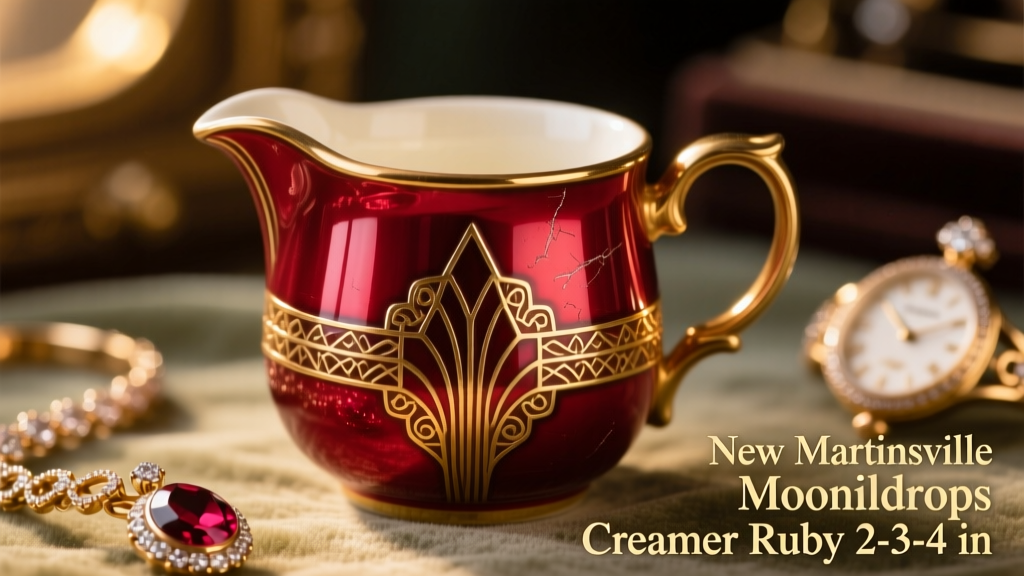
New Martinsville Moondrops Creamer Ruby: A Collector’s Deep Dive into the Iconic 2-, 3-, and 4-Inch Variants
Dedham Vase: Blue Branches & Blossoms Crackleware with Artist Rabbit Mark — A 7¼-Inch Masterpiece from the Dedham Pottery Studio
The 1960s Japanese Tinplate Limousine Toy: Red-Black-Gold Lithograph Battery Operated Automotive Art
Antique Toys: Historical Significance, Market Trends, and Authentication Essentials
Doorstops: Mammy Painted Cast Iron — Historical Context, Collectibility, and Ethical Considerations
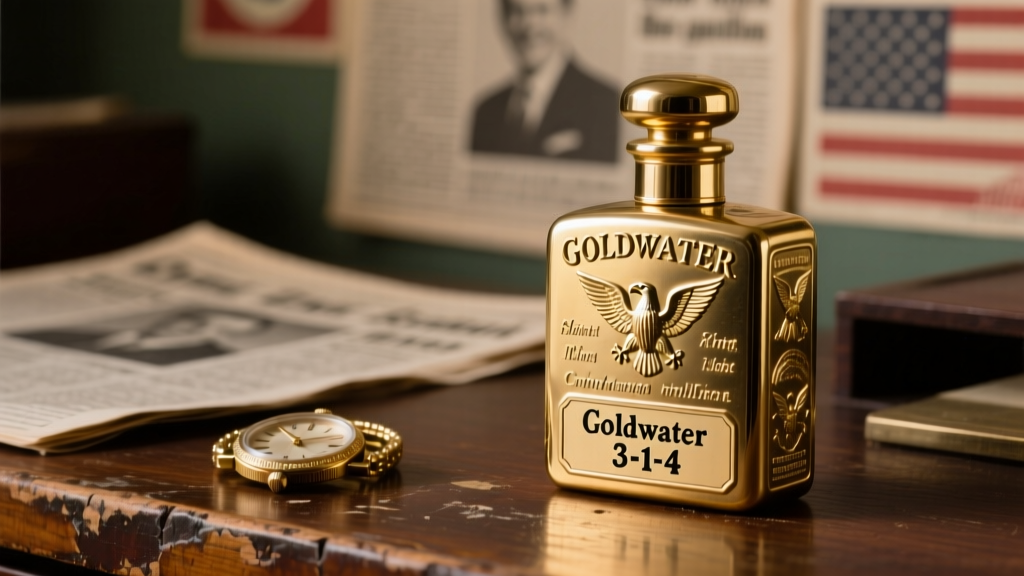
The Goldwater Campaign Perfume Bottle: A 3⅛-Inch Artifact of 1964 Political Iconography
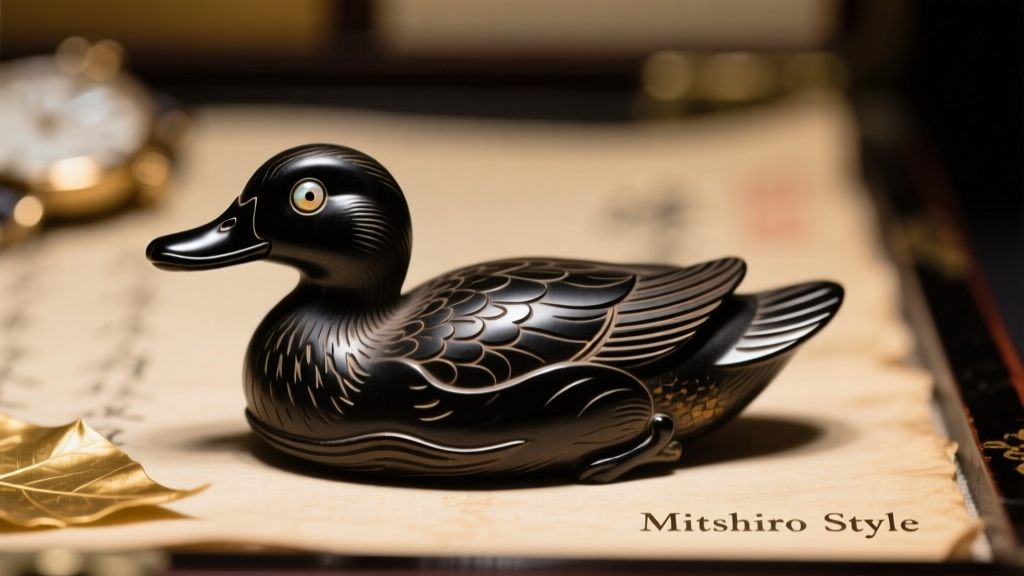
Netsuke Spotlight: The Ebony Swimming Duck with Inlaid Eyes — A Mitshiro-Style Masterpiece from Late Edo Japan
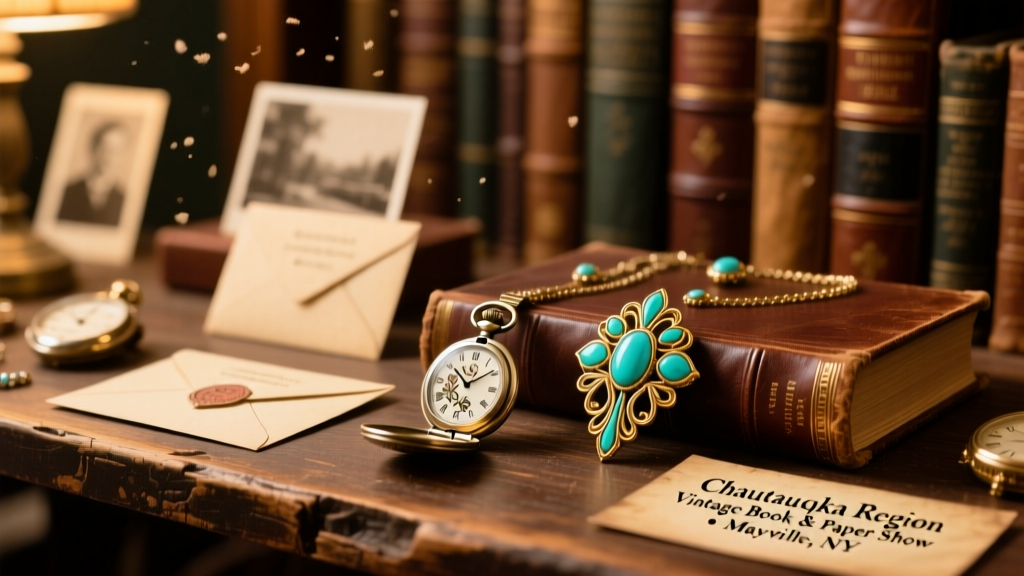
Chautauqua Region Vintage Book and Paper Show: A Collector’s Haven in Mayville, New York