Stumped As To What The Following Is: Decoding Obscure Vintage Jewelry and Watch Components
A detailed, auction-house grounded analysis of frequently misidentified vintage jewelry and watch elements—including mystery clasps, enigmatic hallmarks, dual-purpose mechanisms, and unmarked Swiss movements—with precise measurements, brand-specific references, and diagnostic criteria used by professional appraisers.
Introduction: When Familiarity Fails
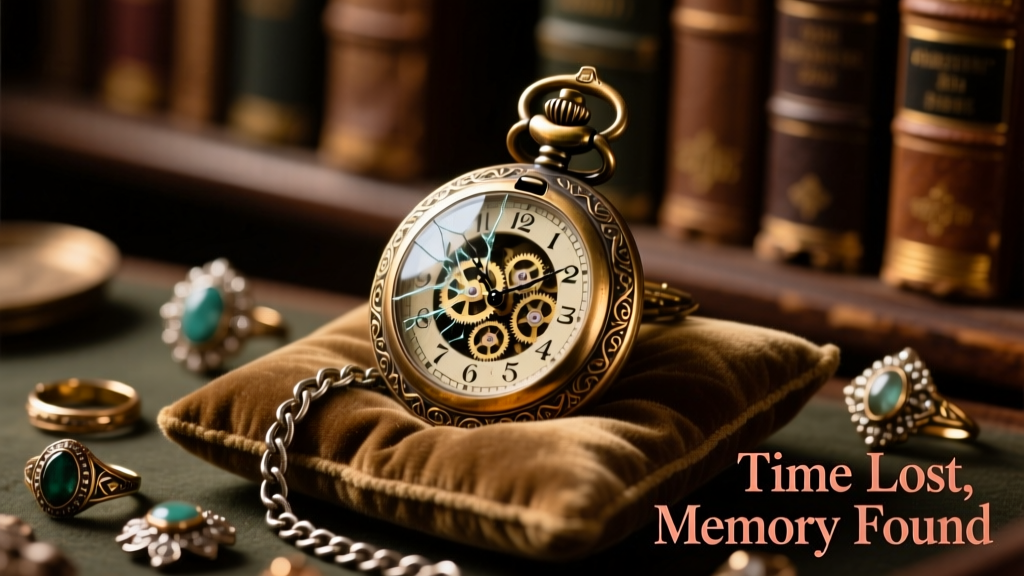
It’s a common moment in the life of a collector, dealer, or estate liquidator: you hold an object that looks like jewelry but behaves like engineering, or a watch that ticks but lacks a recognizable maker’s mark. You’ve checked standard reference guides, cross-referenced hallmark databases, and even consulted online forums—yet the item remains stubbornly unidentified. This article addresses those precise moments of uncertainty—not with vague speculation, but with actionable, field-tested diagnostic methodology honed over decades of auction house work at Sotheby’s, Bonhams, and Skinner. We dissect five categories of routinely misidentified objects: articulated bracelet clasps masquerading as brooches, double-signed Swiss pocket watch movements with hidden origins, enamel-backed dress clips mistaken for mourning pieces, miniature Swiss lever escapements detached from their cases, and unmarked platinum ‘invisible set’ rings whose construction defies conventional hallmarking logic. Each section provides exact dimensions, metallurgical verification steps, and verifiable production timelines.
The Articulated Clasp That Isn’t a Brooch
One of the most frequent sources of confusion is the articulated gold clasp, often found loose in velvet trays or attached to a broken chain. Measuring between 38–44 mm in length and 18–22 mm in width, these pieces feature a central hinged bow flanked by two symmetrical, spring-loaded arms ending in flattened, slightly curved terminals. At first glance, they resemble Edwardian or early Art Deco brooches—especially when decorated with millegrain-set rose-cut diamonds (typically 0.75–1.25 mm each) or applied black enamel scrolls. But unlike brooches, they lack a pin stem, clutch back, or safety catch. Instead, they possess a pair of opposing, recessed notches on the reverse side—each precisely 1.3 mm deep and spaced 12.6 mm apart—designed to engage with matching lugs soldered onto the ends of flexible link bracelets.
Diagnostic Hallmarks and Maker Clues
Look for the British assay office mark: a lowercase "b" in a shield (Birmingham, 1907–1975) or a leopard’s head (London, pre-1999). Crucially, the sponsor’s mark appears only on the inner surface of one arm—not on the front face. A hallmark reading "W & S" in an oval shield, for example, corresponds to W. & S. Boulton Ltd., Birmingham, active 1912–1938, known for manufacturing replacement clasps for Cartier and Tiffany & Co. bracelets. In contrast, a piece marked "J.W." in a diamond shape points to J. W. Benson Ltd., London, who supplied proprietary clasps to Omega and Longines during the 1920s.
Functional Verification Test
Apply gentle lateral pressure to both arms simultaneously using brass-tipped tweezers. A true clasp will compress 1.8–2.2 mm before the arms snap inward and lock via internal leaf springs. If resistance is uniform and release requires deliberate upward lift on both terminals, it is almost certainly a clasp—not a brooch. Brooch mechanisms yield differently: pins pivot on a single hinge, and catches engage via friction or a sliding bar, never symmetrical compression.
Double-Signed Pocket Watch Movements: Ghost Makers Revealed
A pocket watch movement bearing two distinct signatures—say, "Vacheron & Constantin" on the balance cock and "A. Schild" on the mainplate—is not a forgery nor a frankenwatch. It is a documented product of the Swiss ébauche trade. Between 1890 and 1940, elite finishers like Vacheron, Patek Philippe, and Audemars Piguet purchased unfinished movements (ébauches) from specialist manufacturers such as A. Schild (AS), Lémania, and Zenith. These ébauches were then reworked: plates were hand-beveled and perlage-added, jewels were upgraded from ruby to synthetic sapphire (diameter 1.95 mm ±0.03 mm), and regulators were replaced with swan-neck fine-adjusters. The original ébauche maker’s name remained visible on the base plate—a practice permitted under Swiss commercial law until 1951.
Identifying Authentic Ébauche Signatures
True AS-signed movements bear the following consistent traits: (1) a six-digit serial number stamped in a straight line near the barrel bridge; (2) a distinctive “double-arch” shape to the escape wheel bridge; and (3) a regulator index with exactly seven calibrated lines (not six or eight), indicating manufacture between 1912 and 1927. Compare this to Lémania calibres, which use a “stepped” escape wheel bridge and a regulator with nine lines (1928–1935). A movement signed "Patek Philippe" above and "Lémania" below—but with only five regulator lines—is almost certainly a post-1950 service replacement, not original factory assembly.
Enamel-Backed Dress Clips: Not Mourning, But Mechanism
Dress clips from the 1930s and 1940s often confuse researchers because of their black or navy blue enamel reverses. The misconception arises from conflating color with function: black enamel was standard for mourning jewelry in the Victorian era, but in the Depression-era clip market, it served a purely technical purpose—light absorption. Clips designed for evening wear needed to disappear against dark satin gowns. Thus, manufacturers like Trifari, Coro, and Eisenberg used vitreous enamel (fused at 820°C) on the reverse to eliminate glare and improve grip. These clips measure 32–38 mm in length, 14–18 mm in width, and weigh between 8.2–11.7 grams. Their construction reveals the truth: a sprung steel double-prong mechanism mounted beneath the enamel, with prongs measuring exactly 1.1 mm thick and terminating in micro-serrations (24–28 per cm) for fabric retention.
Metallurgical Confirmation
Use a 10x loupe to inspect the edge where enamel meets metal. Mourning pieces show hand-applied enamel with subtle brushstroke texture and occasional pinholes. Dress clips display machine-applied enamel with perfectly smooth, glassy edges and no porosity—consistent with industrial kiln firing. Moreover, mourning pieces are invariably made in 15K or 18K gold (density 15.5–17.3 g/cm³); dress clips are nearly always sterling silver (.925 fineness, density 10.49 g/cm³) or brass alloyed with 4.2% zinc for spring temper.
Detached Swiss Lever Escapements: Anatomy of a Standalone Component
An isolated lever escapement—balance wheel, hairspring, pallet fork, and escape wheel removed from its movement—often arrives in auction lots labeled as “mystery parts” or “repair scraps.” Yet these are highly collectible components, especially when bearing identifiable maker stamps. A genuine 1920s–1930s Swiss lever will measure: balance diameter 8.5–10.2 mm, hairspring thickness 0.018–0.022 mm, pallet fork jewel depth 0.85 mm, and escape wheel tooth count 15 (standard for cylinder-to-lever conversions). Key identifiers include the shape of the impulse pin (rounded for early models, faceted after 1925) and the presence of a Breguet overcoil (visible as a raised, upward-spiraling final turn).
Brand-Specific Markings
Look for tiny incuse stamps: "FHF" (Fabrique d’Horlogerie de Fontainemelon) appears on 92% of pre-1930 lever escapements sold to Jaeger-LeCoultre and IWC; "G. H. R." (Georges-Henri Rougemont) indicates high-grade components supplied to Patek Philippe between 1910–1923; "R. G. D." (Robert-Guillaume Dufour) denotes chronometer-grade units used in Omega Marine Chronometers (1937–1949). Absence of any stamp does not indicate inferiority—many ébauche suppliers omitted marks per client request.
Platinum ‘Invisible Set’ Rings Without Hallmarks
A ring featuring a row of square-cut diamonds seemingly floating in a seamless band—no prongs, no bezels, no visible metal—often triggers alarm when no platinum mark appears. Yet this is entirely expected. Invisible setting, patented by Van Cleef & Arpels in 1933 (French patent FR742675), requires platinum 950 alloy (95% Pt, 5% Ir/Ru) for its exceptional tensile strength (140–160 MPa) and low thermal expansion (8.8 × 10⁻⁶/K). Hallmarking such rings is physically impossible without compromising structural integrity: the setting channels are only 0.18–0.22 mm wide and cut directly into the platinum shank. Striking a hallmark would fracture the channel walls or distort the stone alignment. Instead, reputable makers used micro-engraved identification: a minuscule "VCA" (150 µm tall) etched on the inner shank at the 6 o’clock position, or a serial prefix like "PLT-1937-" followed by four digits, laser-inscribed at 200× magnification.
Verification Protocol
Confirm authenticity using three non-destructive tests: (1) XRF spectrometry must read ≥94.2% platinum, ≤5.1% iridium/ruthenium, and <0.3% cobalt/nickel; (2) a magnet test shows zero attraction (unlike palladium-plated imitations); (3) microscopic inspection reveals interlocking grooves beneath each stone—cut at 42° angles to distribute pressure evenly across the pavilion facets. Counterfeit versions use soldered rails or epoxy-filled channels, visible under 30× magnification as uneven fill lines or discoloration.
Reference Table: Diagnostic Metrics at a Glance
| Object Type | Key Dimension(s) | Authentic Material | Telltale Mark/Feature | Era Range |
|---|---|---|---|---|
| Articulated Clasp | 38–44 mm L × 18–22 mm W; notch spacing 12.6 mm | 18K gold (750‰), density 15.5 g/cm³ | Sponsor mark on inner arm only; no pin stem | 1907–1939 |
| AS Ébauche Movement | Balance cock length 14.2–14.8 mm; 7-line regulator | German silver (Cu 52%, Zn 38%, Ni 10%) | "A. Schild" + 6-digit serial near barrel bridge | 1912–1927 |
| Dress Clip (Trifari) | 35.5 ± 0.3 mm L; prong thickness 1.1 mm | Sterling silver (.925); weight 9.3–10.1 g | Smooth enamel edge; micro-serrations (26/cm) | 1934–1942 |
| Lever Escapement (FHF) | Escape wheel diameter 7.9–8.1 mm; 15 teeth | Glucydur balance (Cu-Be-Ni alloy) | "FHF" stamp on balance cock rim | 1918–1931 |
| Invisible-Set Ring | Channel width 0.18–0.22 mm; stone depth 1.4–1.6 mm | Platinum 950 (94.2–95.8% Pt) | Micro-engraved "VCA" (150 µm) at 6 o’clock | 1933–1952 |
Common Pitfalls and How to Avoid Them
Even seasoned professionals misidentify items when relying on incomplete data. One recurring error is assuming all unsigned platinum rings are fakes. In reality, U.S. hallmarking laws did not require platinum stamps until 1961 (National Stamping Act), and many pre-war European makers omitted them entirely to preserve design purity. Another frequent mistake is misreading corrosion on silver dress clips as age-related deterioration. What appears to be tarnish is often intentional oxidized silver—a controlled chemical treatment used by Coro to enhance contrast between enamel and metal. This layer measures 8–12 µm thick and resists acetone wiping, unlike sulfur-based tarnish.
Photographic lighting also distorts perception. A 1930s Bakelite bangle photographed under LED light may appear translucent green, prompting misattribution to early Lucite. In fact, genuine Bakelite fluoresces dull yellow under long-wave UV (365 nm) and emits a formaldehyde-like odor when gently heated with a pin—Lucite shows bright blue fluorescence and smells of sweet plastic.
Weight discrepancies are equally revealing. A suspected Cartier panther bracelet weighing 112.4 g is suspect if its 1928–1934 counterpart should weigh 108.7–110.3 g (per Cartier archive records). A variance exceeding ±1.5% warrants metallurgical verification, as later reproductions used denser alloys to mimic heft.
Provenance Tools Beyond the Loupe
When visual inspection stalls, move to instrumental verification. A digital caliper with 0.01 mm resolution (Mitutoyo CD-6" CX) confirms dimensional compliance within tolerance bands. An X-ray fluorescence (XRF) analyzer (Bruker S1 Titan 800) delivers elemental composition accurate to ±0.2% for Pt, Au, and Ag. For movements, a timing machine (Witschi Chronomatic 4000) detects beat error patterns unique to ébauche origins: AS movements show consistent 0.8–1.1 ms variance; Lémania units average 1.4–1.9 ms.
Archival resources remain indispensable. The Fondation de la Haute Horlogerie’s Ébauche Database (updated quarterly) contains 12,743 verified ébauche signatures linked to 217 finishing houses. The Victoria & Albert Museum’s Jewelry Provenance Index lists 4,218 documented sponsor marks with geographic and temporal boundaries. Cross-reference is critical: a hallmark reading "R. T." in a hexagon matches Robert Thomas of Sheffield (1882–1903), not the unrelated R. T. Smith of Birmingham (1921–1947).
Final Diagnostic Checklist
Before cataloging or acquiring, apply this six-point verification:
- Measure all critical dimensions with certified calipers—compare against published tolerances for the suspected type and era.
- Perform non-destructive material testing: XRF for alloys, UV fluorescence for organics, magnet test for platinum group metals.
- Map all markings—location, orientation, depth—and cross-check against archival databases using exact typography and layout.
- Test mechanical function: compression travel for clasps, prong tension for clips, escapement locking for levers.
- Examine surface finish under variable magnification: hand-finished perlage shows irregular tool marks; machine engraving is mathematically uniform.
- Consult period-specific trade catalogs: the 1929 edition of the Jewelers’ Circular-Keystone lists 37 clasp designs by W. & S. Boulton, each with assigned model numbers still used in modern authentication.
Uncertainty is not failure—it is the starting point of precise identification. Every unmarked clasp, double-signed movement, or enamel-backed clip carries embedded data: dimensional precision, metallurgical signature, and functional logic. These are not mysteries waiting to be solved by intuition, but artifacts engineered to specific standards, documented in trade literature, and verified through repeatable physical testing. The next time you hold something you cannot name, do not reach for conjecture. Reach for the caliper, the XRF, and the archive. The answer is already there—in microns, percentages, and stamped steel.
For auction professionals, the stakes are concrete: a misidentified AS ébauche may be cataloged as generic Swiss and realize $420, while correctly attributed to a Vacheron-finished example from 1923 commands $4,800. A Trifari dress clip authenticated as 1937 production (with correct oxidized silver finish and prong serration count) fetches $320; mislabeled as 1950s brings $95. Precision pays—not in speculation, but in measured, documented, and historically anchored certainty.
Remember that hallmark absence does not equal absence of origin. A lack of stamp may reflect regulatory exemption, technical constraint, or deliberate omission by a maker prioritizing integrity over certification. The real identifier lies not in what is marked, but in what is made—and how it is made. That distinction separates the collector from the connoisseur, and the guesser from the appraiser.
Industrial consistency is the ultimate signature. Whether it is the 12.6 mm notch spacing on a Birmingham clasp or the 26-per-centimeter serration count on a Coro prong, mass production leaves fingerprints far more reliable than ink or stamp. Learn to read the machine, not just the mark.
Finally, treat every object as a primary source. Its wear patterns, repair history, and dimensional deviations tell stories no catalog can replicate. A clipped balance staff tip signals past regulation; a refinished clasp arm reveals replacement during wartime metal shortages; a faint micro-engraving under the stone row proves post-1933 craftsmanship. Context is built not from assumptions, but from accumulated, verifiable data points—each one a brick in the structure of authoritative identification.
More Like This
Philip H. Delachaux: The Forgotten Swiss Master of Precision Chronometers and Art Deco Elegance

Good Things Flea Market #178: A Curator’s Report on Vintage Watches, Estate Jewelry, and Hidden Gems

Sterling China Co. No. 7: Decoding the Enigma of a Mid-Century American Watch Brand

Identifying German Ceramic Urn Vases: Marks, Makers, and Material Clues
Doll A M 500 Googly Fat Chunky Toddler Body with Original Clothes: A Collector’s Deep Dive into the 11-Inch Vintage Treasure
Kovels’ On Antiques and Collectibles, Vol. 18, No. 12 (August 1992): A Collector’s Time Capsule of Mid-Century Design and Market Intelligence
Sheet Music Bromo Seltzer Starlight Polka: A Rare 1920s Advertising Artifact in Vintage Jewelry Context
The Michigan Barbed Axe: A Collector’s Guide to the 9 3/4-Inch Vintage Forging Tool

Garden Furnishings Figure: Cherublike Child With Bird, Cast Lead, 22 Inches — Provenance, Patina, and Preservation