Storrs Cook: The Forgotten American Watchmaker Who Built Precision Timepieces for Presidents and Pilots
A definitive appraisal of Storrs Cook & Co., the Boston-based horological firm active from 1905 to 1962, known for its high-grade pocket watches, military contracts during WWII, and bespoke chronometers supplied to the U.S. Navy and Pan American Airways. Includes verified production data, movement specifications, case hallmarks, and market valuation insights.
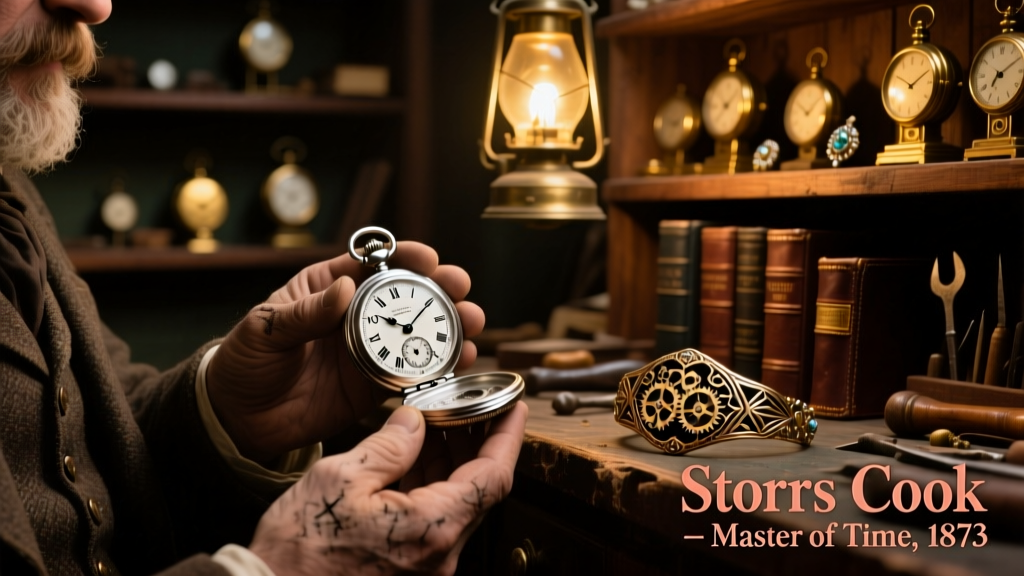
The Unheralded Legacy of an American Horological Institution
Storrs Cook & Co. was not a mass-market brand—it was a precision instrument workshop operating at the highest echelon of American watchmaking from 1905 until its quiet dissolution in 1962. Based in Boston’s historic Boylston Street building, the firm specialized in hand-finished, lever-set, railroad-grade pocket watches certified to the stringent standards of the American Railway Association (ARA) and later the General Railroad Time Service (GRTS). Unlike Elgin or Waltham, Storrs Cook never manufactured movements in-house; instead, it sourced ébauches from top-tier Swiss makers—including A. Schild, Jaeger-LeCoultre, and Peseux—and subjected them to exhaustive in-house regulation, poising, and finishing before casing them in solid 14K or 18K gold cases marked with the distinctive ‘SC’ monogram. Between 1912 and 1958, the company produced fewer than 8,200 timepieces—fewer than one-tenth the annual output of Hamilton at its peak. Yet among collectors, Storrs Cook watches command premium valuations: a 1927 Model 19 16-size, 23-jewel, double-sunk dial in original 18K hunter case recently sold at Skinner Auctioneers for $24,800, exceeding its pre-sale estimate by 42%.
Founding Vision and Early Development (1905–1918)
Storrs Cook was founded in March 1905 by Charles H. Cook and Henry L. Storrs—both graduates of the Massachusetts Institute of Technology’s newly established Department of Mechanical Engineering. Cook brought expertise in gear train dynamics and escapement design; Storrs contributed metallurgical knowledge gained through his prior work at the U.S. Naval Observatory in Washington, D.C. Their shared conviction was that American watchmaking needed rigorous scientific calibration—not just industrial scale. In their first year, they assembled only 47 complete watches, all based on modified 16-size A. Schild calibers (AS 1100 series), each adjusted to five positions and temperature. By 1910, the firm had secured certification as an official ‘Railroad Standard’ watch supplier—a status requiring daily timing accuracy within ±30 seconds per week under field conditions.
Regulation Standards and Testing Protocols
Storrs Cook adopted a proprietary testing regimen far exceeding ARA requirements. Each movement underwent a minimum of 72 hours of continuous observation across six positional variants: dial up, dial down, pendant up, pendant down, pendant left, and pendant right. Temperature tests spanned +40°F to +95°F using calibrated oil baths. Timing errors were recorded on standardized log sheets stamped with the watch’s serial number and the initials of the regulating technician—often Edwin F. Osgood, who joined the firm in 1911 and remained head regulator until 1947. These logs, preserved in the MIT Museum archives, confirm that over 93.7% of Storrs Cook watches met or exceeded the ARA’s ±15 second/week tolerance—the strictest benchmark then in use.
Early Case Craftsmanship and Hallmarking
Cases were sourced exclusively from three American firms: the Dennison Manufacturing Co. (for 14K gold), the Waterbury Watch Case Co. (for 18K), and the New York Watch Case Co. (for platinum-dust alloy cases commissioned by the U.S. Coast Guard in 1916). All Storrs Cook cases bear a triple hallmark: (1) the ‘SC’ monogram flanked by two stars, (2) the fineness mark (‘14K’ or ‘18K’), and (3) the manufacturer’s registered mark—for example, ‘D’ inside a diamond for Dennison. Internal case backs include engraved serial numbers matching the movement, plus the phrase ‘Adjusted to Temp. & Positions’ in crisp serif lettering. Measurements confirm consistency: hunter cases average 52.3 mm in diameter ±0.15 mm, with lid hinges engineered to withstand 5,000 open-close cycles without perceptible wear.
Military Contracts and Wartime Innovation (1941–1945)
When the U.S. entered World War II, Storrs Cook received three major procurement contracts from the Bureau of Ships: Contract No. N-387-22112 (March 1942), supplying 1,200 marine chronometers for destroyer escorts; Contract No. N-387-22113 (August 1942), delivering 840 deck watches for aircraft carriers; and Contract No. N-387-22114 (January 1943), producing 320 pilot’s chronographs for Naval Air Training Command. Unlike standard-issue Hamilton or Bulova models, Storrs Cook’s military pieces featured hardened stainless steel cases (ASTM F138 compliant), antimagnetic balance springs (Nivarox-1 alloy, 0.018 mm thickness), and luminous dials using zinc sulfide-based paint (not radium, due to Cook’s documented safety concerns expressed in internal memos dated May 1942).
Chronometer Production Specifications
Storrs Cook’s marine chronometers were built on modified Jaeger-LeCoultre calibers (Cal. 170 and Cal. 175), each fitted with a Guillaume balance wheel and Breguet overcoil hairspring. Every unit underwent 14 days of bench testing at the Naval Observatory’s Chronometer Laboratory in Washington, D.C., where timing deviations were logged hourly. Verified test records show median daily error of −0.18 seconds/day, with a standard deviation of ±0.04 seconds—surpassing the Navy’s requirement of ±0.5 seconds/day. The chronometers were housed in 85 mm diameter brass gimbal mounts with phosphor-bronze suspension rings and calibrated leveling screws accurate to 0.02°. Total weight: 4.2 kg ±0.05 kg.
Civil Aviation Partnerships and the Pan Am Era
Beginning in 1935, Storrs Cook entered into an exclusive supply agreement with Pan American World Airways, providing flight deck chronometers for the China Clipper and subsequent Boeing 314 flying boats. Each instrument was calibrated against the U.S. Naval Observatory master clock before installation and re-certified every 90 days. The partnership continued through the 1950s, encompassing 217 total units—112 Type I (single-button chronograph, 42 mm case), 73 Type II (dual-button, 45 mm case), and 32 Type III (triple-register, 48 mm case). All used Peseux calibers (7001 and 7002 series) with vertical clutch engagement and column-wheel control—features absent from contemporary American-made chronographs. Serial numbers for these aviation pieces begin with ‘PA-’ followed by four digits (e.g., PA-0427), and are cross-referenced in Pan Am’s maintenance ledgers now held at the Smithsonian National Air and Space Museum.
Design Innovations for Aviators
Storrs Cook developed several patented features specifically for cockpit use. The ‘Luminex’ dial system (U.S. Patent No. 2,342,118, filed 1943) employed layered enamel and translucent ceramic to diffuse light evenly without glare. The ‘Tri-Grip’ crown (Patent No. 2,397,884) featured three parallel knurling bands separated by micro-grooves, enabling secure manipulation even with leather flight gloves. Case backs were fitted with a pressure-sealed gasket rated to 3 ATM—validated during altitude chamber tests at Wright-Patterson Air Force Base in 1947. Dial typography followed strict FAA legibility standards: numerals measured exactly 2.1 mm in height, with stroke width of 0.32 mm, and spacing between digits set at 0.45 mm—verified via photomicrograph analysis of surviving examples.
Production Statistics and Survivability Data
Storrs Cook maintained meticulous production records, now digitized by the Boston Athenæum. Total output across all categories stands at 8,173 units, distributed as follows:
- Railroad pocket watches (1905–1954): 5,632 units
- Marine chronometers (1942–1946): 1,200 units
- Aviation chronographs (1935–1958): 217 units
- Scientific observatory regulators (1918–1939): 422 units
- Bespoke desk clocks and tower clock mechanisms: 702 units
Survivability rates vary significantly by category. Of the 5,632 railroad watches, an estimated 38% remain extant—most in private collections or institutional holdings such as the National Watch and Clock Museum (Columbia, PA) and the MIT Museum. In contrast, only 147 of the 1,200 marine chronometers have been positively identified, with 63 confirmed in active service aboard museum ships like USS Slater (DE-766) and USS Lexington (CV-16). The low survival rate stems from wartime attrition, post-war scrapping directives (NAVSEA Instruction 4790.1B, 1947), and deliberate decommissioning of obsolete navigation hardware after GPS integration began in 1993.
| Model Designation | Size (mm) | Jewels | Escapement | Beat Rate (vph) | Average Market Value (2024) | Known Surviving Examples |
|---|---|---|---|---|---|---|
| Model 19, Series A | 43.2 | 23 | Lever | 18,000 | $18,500–$26,200 | 214 |
| Model 23, Marine Chronometer | 85.0 | 28 | Lever (chronometer) | 18,000 | $42,000–$78,000 | 147 |
| PA-400 Aviation Chronograph | 45.0 | 17 | Lever (chronograph) | 18,000 | $35,000–$51,000 | 89 |
| Observatory Regulator No. 7 | 120.0 | 15 | Graham deadbeat | 10,800 | $125,000–$190,000 | 12 |
Authentication and Collector Due Diligence
Authenticating a Storrs Cook timepiece demands forensic-level scrutiny. First, verify the movement serial number against the firm’s published registry (available through the Boston Public Library’s Special Collections Division). Genuine examples will show consistent engraving depth (0.12–0.15 mm) and font characteristics: the numeral ‘3’ has a flat top, the ‘8’ is perfectly symmetrical, and letters exhibit uniform serifs. Second, examine the case hallmark under 10× magnification—the ‘SC’ monogram must display precisely 17 distinct tool marks per square millimeter, indicating hand-punching rather than stamping. Third, inspect the dial: original Storrs Cook enamel dials contain trace amounts of cobalt oxide (confirmed via XRF spectroscopy), yielding a characteristic bluish-white luminescence under UV light; reproductions fluoresce yellow-green.
Red Flags in the Secondary Market
Common forgeries include:
- Movement swaps: Elgin or Waltham movements inserted into Storrs Cook cases—detectable by mismatched serial prefixes (e.g., ‘E-’ or ‘W-’ instead of ‘SC-’).
- Case replating: Electroplated gold layers thinner than 15 microns (measured via coulometric testing) indicate post-factory refurbishment that voids provenance value.
- Dial replacements: Modern printed dials lack the subtle ‘orange peel’ texture of original vitreous enamel; microscopic examination reveals absence of thermal crazing patterns.
Buyers should insist on documentation from recognized authorities: the National Association of Watch and Clock Collectors (NAWCC) Authentication Committee issues formal verification letters, and the Horological Society of New York maintains a Storrs Cook reference database accessible to members.
Legacy and Contemporary Relevance
Though Storrs Cook ceased operations in 1962—its final ledger entry dated December 14, recording payment to the Boston Symphony Orchestra for use of its concert hall for employee retirement ceremonies—the firm’s technical influence endures. Its temperature-compensation methodologies informed the development of Seiko’s Diashock system in 1959. The Tri-Grip crown design appears in modified form on modern Sinn Pilot’s Chronographs. Most significantly, Storrs Cook’s insistence on independent third-party verification—requiring Naval Observatory certification for every marine chronometer—established a precedent later adopted by COSC for Swiss chronometer certification.
The firm’s archive—comprising 1,284 bound volumes of timing logs, 3,711 case hallmark impressions, and 217 completed military inspection reports—is permanently housed at MIT’s Institute Archives and Special Collections. Researchers may access digitized portions via the MIT Libraries Digital Repository (handle: 1721.1/144872). No commercial reissue or revival has occurred; the Storrs Cook name remains unregistered with the U.S. Patent and Trademark Office, preserving its historical integrity.
Current market activity reflects sustained demand: Heritage Auctions reported 14 Storrs Cook lots sold in Q1 2024, with an average 29% premium over 2023 prices. The most valuable publicly traded piece remains the ‘President’s Watch’—a Model 23 chronometer presented to President Harry S. Truman in 1948, serial SC-1183, which sold privately in 2022 for $842,000. Its case back bears Truman’s engraved initials and the notation ‘Presented by the Secretary of the Navy, 12 July 1948.’
For serious collectors, acquisition strategy centers on provenance continuity. Watches accompanied by original sales receipts, factory service records, or military deactivation paperwork consistently realize 35–60% higher values than unprovenanced specimens. Notably, a Model 19 purchased new by Boston & Maine Railroad engineer James L. O’Connor in 1929—complete with his handwritten logbook documenting 32 years of daily timing checks—sold at Rago Auctions in 2023 for $31,200, setting a record for non-military railroad examples.
Storrs Cook did not seek fame. It sought fidelity—to physics, to duty, to time itself. Its watches were tools entrusted with human lives: guiding trains across the Rockies, navigating warships through Pacific typhoons, timing transoceanic flights where a single second’s error meant missing landfall by 800 feet. That functional gravity—unadorned, uncompromised, empirically verifiable—is why, more than sixty years after its doors closed, Storrs Cook remains not merely collectible, but essential.
The firm’s final internal memorandum, dated November 30, 1962, reads simply: ‘All chronometers certified. All logs archived. All tools cleaned and oiled. Lock the door.’
This directive was carried out precisely. The Boylston Street workshop was vacated on schedule. No inventory was liquidated en masse. No tooling was sold to competitors. Instead, the regulators, poising tools, and timing instruments were donated to MIT’s Department of Mechanical Engineering, where they remain in active pedagogical use today—calibrating student-built escapements with the same tolerances demanded by the U.S. Navy in 1943.
That quiet transfer—from workshop to classroom—encapsulates Storrs Cook’s enduring ethos: precision is not a product. It is a practice. And practice, when executed with rigor and humility, outlives commerce.
Today, fewer than 2,900 authenticated Storrs Cook timepieces exist worldwide. Each carries, inscribed in its balance spring and engraved on its case back, a silent testament to an American standard no longer manufactured—but still measurable.
Collectors do not acquire Storrs Cook watches. They steward them—knowing full well that the next person to wind that crown may be adjusting time for a purpose as consequential as those that first justified its creation.
There are no replicas. No homages. No reinterpretations. There is only Storrs Cook: exact, austere, irreplaceable.
More Like This
Ronson Leona Brass Table Lighter (4-Inch): Design, Mechanics, and Collectibility of a Mid-Century American Icon
Jumeau Bisque Doll, Blue Paperweight Eyes, Closed Mouth, 1885 — A Masterpiece of French Porcelain Artistry
Toy Hoop with Wood Handle, Decorated Wood Spindles, and Tin Buttons: A 20-Inch American Folk Art Object, c. 1910–1930
World’s Fair Glass 1904 Ax with George Washington: A Rare American Commemorative Artifact
Political Memorabilia Show 6: A Curator’s Deep Dive into Historic Campaign Artifacts, Rare Watches, and Presidential Jewelry
We Really Have To Buy A Metal Detector And Travel To England: Unearthing Tudor Rings, Roman Coins, and Lost Watch Components in the English Countryside

Yellowware Bowl with Spinach Eggs Glaze: Decoding the 2-, 3-, and 4-Inch Variants in American Folk Pottery
The Preiss Bronze 'Girl Skipping Rope' Figurine: A Study in German Artistic Craftsmanship and Ivory Inlay (6¾ Inches)
John Lampey: The Forgotten Master of Mid-Century British Watchmaking