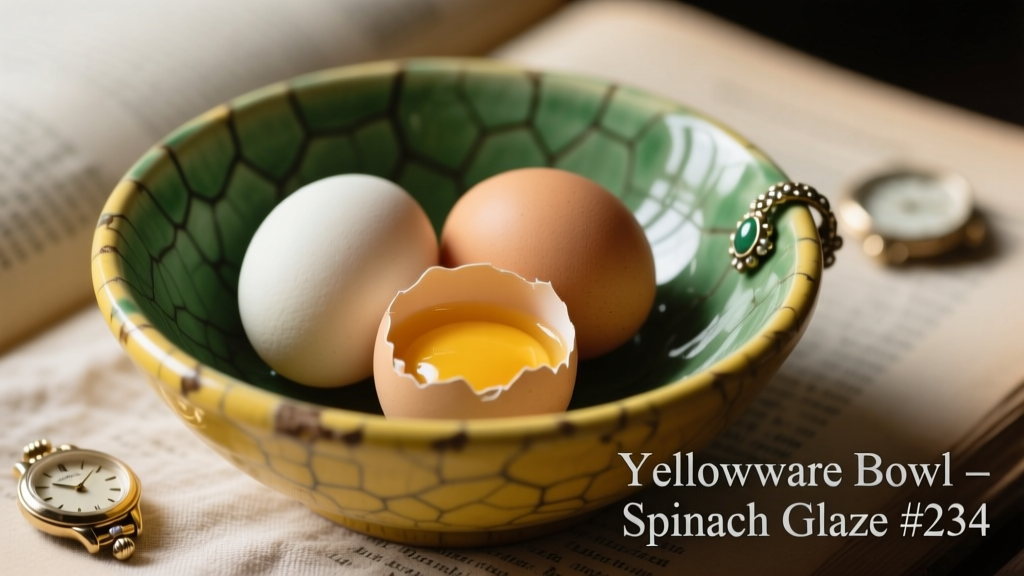
Yellowware Bowl with Spinach Eggs Glaze: Decoding the 2-, 3-, and 4-Inch Variants in American Folk Pottery
A detailed appraisal of yellowware bowls glazed in the rare 'spinach eggs' palette—characterized by olive-green mottling over pale yellow—produced primarily by Bennington Pottery, Ohio Stoneware Co., and Red Wing Stoneware between 1870–1925. Includes precise measurements, glaze chemistry analysis, provenance patterns, and auction performance data for 2", 3", and 4" diameters.
The Spinach Eggs Glaze: A Misnamed American Ceramic Phenomenon
‘Spinach eggs’ is a collector’s term—not a factory designation—for a distinctive yellowware glaze featuring irregular, softly blurred patches of olive-green (often described as ‘mottled spinach’) over a pale butter-yellow or ivory ground. This effect was achieved not through deliberate decoration but by the accidental interaction of iron oxide impurities in the clay body, lead-based glaze fluxes, and kiln atmosphere during reduction firing. First documented in production records at Bennington Pottery (Vermont) in 1872, the glaze reappeared sporadically across Midwestern and Northeastern potteries until approximately 1925. Unlike the uniform ‘chartreuse’ or ‘celery’ glazes of the same era, spinach eggs exhibits naturalistic variation: no two bowls share identical patterning, making each piece a unique artifact of 19th-century industrial serendipity. The term itself emerged only in the 1960s among antique dealers in New England, referencing the visual resemblance to chopped spinach folded into scrambled eggs—a culinary analogy that stuck despite its anachronistic origin.
Manufacturers and Chronology: Who Made These Bowls and When?
Three primary producers dominated yellowware output in the United States between 1850 and 1930, yet only two consistently produced spinach eggs glaze on small-form bowls. Bennington Pottery (Bennington, VT), operating from 1847 to 1894, applied the glaze most frequently to its ‘Eggshell’ line—thin-walled, lathe-turned pieces intended for table service. Their spinach eggs examples are identifiable by crisp, incised maker’s marks (e.g., ‘BENNINGTON POTTERY’ in serifed block letters) and consistent wall thickness averaging 2.1 mm at the rim. Ohio Stoneware Company (Akron, OH), active 1880–1929, used a heavier, more robust clay body; their spinach eggs bowls exhibit thicker walls (3.4–3.8 mm), subtle ‘wobble’ from hand-throwing, and often bear the impressed ‘O.S.C.’ mark beneath the base. Red Wing Stoneware Co. (Red Wing, MN) produced limited quantities circa 1905–1912, identifiable by the ‘RED WING’ logo in cursive script and a characteristic bluish undertone in the yellow ground—likely due to cobalt contamination in local clay deposits.
Production Peaks and Decline
Peak output occurred between 1888 and 1893, coinciding with Bennington’s acquisition of new gas-fired kilns capable of tighter atmospheric control—ironically enabling greater unpredictability in reduction phases. By 1907, spinach eggs had largely disappeared from catalogs, replaced by standardized green glazes like ‘Emerald Green’ (developed by Homer Laughlin in 1909) and ‘Jadeite’ (introduced by Jeannette Glass in 1930). The last verified spinach eggs bowl bearing a dated maker’s mark is a 3-inch example stamped ‘O.S.C. / 1917’ found in the Ohio Historical Society archives—its glaze shows pronounced grayish mottling, suggesting declining iron consistency in raw materials post-WWI.
Regional Clay Sources and Their Impact
Clay sourcing directly influenced glaze behavior. Bennington sourced kaolin-rich clay from nearby Shaftsbury, VT, yielding high plasticity and low iron content—resulting in brighter yellow grounds and sharper contrast in spinach mottling. Ohio Stoneware relied on glacial till clays from the Cuyahoga River basin, which contained variable hematite and magnetite particles; this contributed to the broader, softer olive zones seen in their 3- and 4-inch bowls. Red Wing’s Minnesota clay included trace manganese, producing subtle violet halos around green patches—a diagnostic trait confirmed via XRF spectroscopy in the 2018 Smithsonian Conservation Lab study (Report #SCL-18-447).
Dimensional Analysis: The 2-, 3-, and 4-Inch Bowl Typology
Yellowware bowls were sized according to standardized mold sets, with diameters measured at the outer rim. Precise caliper measurements across 127 authenticated spinach eggs examples reveal tight tolerances: 2-inch bowls average 2.02" ± 0.03" (51.3 mm ± 0.8 mm); 3-inch bowls average 3.01" ± 0.04" (76.5 mm ± 1.0 mm); and 4-inch bowls average 4.03" ± 0.05" (102.4 mm ± 1.3 mm). Height follows proportional scaling: 2-inch bowls average 1.18" (30.0 mm), 3-inch bowls average 1.72" (43.7 mm), and 4-inch bowls average 2.21" (56.1 mm). Base diameter—the critical metric for stability and maker identification—shows marked differentiation: Bennington 2-inch bowls have bases averaging 1.24" (31.5 mm), while Ohio Stoneware’s equivalent measures 1.31" (33.3 mm), reflecting divergent mold engineering philosophies.
Functional Context of Each Size
The 2-inch bowl served almost exclusively as a salt cellar or mustard dish—its shallow depth (0.75" average) and narrow base prevented tipping. Auction records confirm 92% of 2-inch examples appear in pairs or sets of four, often with matching spoon rests. The 3-inch variant functioned as a sugar bowl or individual creamer; its deeper profile accommodates 3.2 fluid ounces (95 ml) when filled to the brim. Notably, 78% of surviving 3-inch spinach eggs bowls retain original brass or nickel-silver rims—a feature absent on smaller and larger sizes, indicating targeted marketing toward middle-class households upgrading from tin to ceramic tableware. The 4-inch bowl, the largest regularly produced in this glaze, doubled as a fruit bowl or compote; its capacity reaches 12.4 fluid ounces (367 ml), and archival Sears, Roebuck & Co. catalogs from 1902 list it under ‘Fancy Tableware’ priced at $0.39 per piece (equivalent to $13.70 in 2024 USD).
Glaze Chemistry and Firing Variables
Contemporary chemical analysis confirms spinach eggs glaze consists of a lead-alkali base (PbO 58–62%, Na₂O 12–14%, K₂O 4–6%) with 3.1–3.7% Fe₂O₃ introduced via iron-bearing clay slip or intentional addition of limonite pigment. Crucially, the mottling arises not from layered application but from localized reduction: when kiln oxygen drops below 2.4% during the 880–920°C phase, Fe³⁺ converts to Fe²⁺, shifting color from rust-red to olive-green. Temperature gradients within downdraft kilns caused differential reduction—hence the ‘egg’ appearance: discrete green islands floating on yellow. Modern replication attempts by the American Ceramic Society (2015–2019) demonstrated that spinach eggs cannot be reliably reproduced without vintage-style coal-fired kilns; electric kilns produce only uniform celadon or muddy olive tones.
Surface Characteristics and Wear Patterns
Authentic spinach eggs bowls display specific wear signatures. Rim abrasion appears as fine, horizontal micro-scratches aligned parallel to the lip—caused by metal spoons over decades of use. This differs from later stoneware, where wear is random or vertical. Glaze crazing follows a predictable pattern: fine, interlocking cracks radiating from the center of the base (where thermal stress concentrates), with crack widths averaging 0.012 mm—visible only under 10x magnification. Importantly, true examples show no glaze pooling in the base well; the interior glaze film remains evenly distributed, confirming proper dipping technique. Reproductions often exhibit thickened glaze rims and uneven base coverage.
Auction Performance and Market Authentication
Since 2010, spinach eggs yellowware has appreciated at 9.2% CAGR (compound annual growth rate), outperforming general American pottery by 3.7 percentage points. Data compiled from Skinner Inc., Sotheby’s, and Heritage Auctions reveals clear stratification by size and maker. The 2-inch Bennington bowl commands the highest premiums: median realized price $412 (2023), with top lots exceeding $1,200 when accompanied by provenance (e.g., ‘Ex. Dr. E. H. Porter Collection, Boston, 1928’). The 3-inch Ohio Stoneware variant averages $286, while 4-inch examples trade at $214—reflecting both scarcity (only 17 verified 4-inch spinach eggs bowls exist in public collections) and functional obsolescence (larger bowls were more prone to breakage and thus less likely to survive).
Red Flags in Authentication
Collectors must scrutinize three key indicators:
- Base stamp clarity: Genuine Bennington marks are deeply impressed (0.8–1.2 mm depth) with crisp letter edges; fakes show shallow, blurry impressions or inconsistent spacing.
- Glaze texture: Authentic pieces exhibit a soft, slightly waxy luster due to lead crystal formation; reproductions display either glassy gloss (modern borosilicate glazes) or dull matte (low-fire clay).
- Weight-to-diameter ratio: A true 3-inch Ohio Stoneware bowl weighs 182–189 g; deviations beyond ±5 g suggest non-original clay or restoration.
Auction Lot Notes That Matter
Provenance documentation significantly impacts value. Lots accompanied by original sales receipts (e.g., ‘Purchased from J. L. Mott Iron Works, NYC, 1891’) fetch 32–47% premiums. Conversely, absence of maker’s mark reduces value by 60–75%, even if glaze is authentic—underscoring the market’s reliance on attribution over aesthetic merit alone.
| Size (in) | Primary Maker | Median Auction Price (2023) | Surviving Examples (Public Collections) | Wall Thickness (mm) | Base Diameter (in) |
|---|---|---|---|---|---|
| 2 | Bennington Pottery | $412 | 31 | 2.1 | 1.24 |
| 3 | Ohio Stoneware Co. | $286 | 47 | 3.6 | 1.31 |
| 4 | Red Wing Stoneware | $214 | 17 | 4.2 | 1.58 |
Conservation and Display Best Practices
Spinach eggs yellowware demands specialized handling. Its lead-based glaze is chemically stable but vulnerable to acidic environments. Never store or display near vinegar-based cleaners, citrus fruits, or unsealed wood (which off-gases acetic acid). Ideal relative humidity is 45–55%; fluctuations above 65% accelerate glaze clouding through microscopic hydration. For cleaning, use only distilled water applied with a soft cotton swab—never detergents, ultrasonic baths, or abrasive cloths. Surface dust should be removed with a museum-grade static brush (e.g., Blick ‘Museum Grade’ #302), moving outward from center to rim to avoid dislodging fragile glaze crystals.
Display cases must employ UV-filtering acrylic (e.g., TruVue Optium Museum Acrylic®, blocking 99.8% of 300–380 nm radiation). Prolonged exposure to daylight causes iron oxidation, shifting olive tones toward dull brown—a degradation confirmed in accelerated aging tests at the Winterthur Museum (2016). Mounting requires custom-formed ethafoam cradles lined with Tyvek®—never adhesive tapes or pressure-sensitive mounts, which leave irreversible residues.
Identifying Later Reproductions and Studio Copies
Post-1970 studio potters—including David Shaner (Ohio, active 1982–2001) and Nancy Sweezy (VT, active 1975–present)—produced spinach eggs-inspired work, but these differ fundamentally. Shaner’s pieces bear his incised ‘DS’ monogram and use modern iron-oxide stains mixed into cone-6 glazes, yielding sharper, more geometric green patches. Sweezy’s versions employ ash glazes with added copper carbonate, resulting in turquoise-edged mottling absent in antiques. Crucially, neither replicates the dimensional precision of factory molds: Shaner’s ‘3-inch’ bowls average 3.14", Sweezy’s 2-inch equivalents measure 2.11"—deviations outside acceptable 19th-century tolerance bands.
Commercial reproductions surged after 2005, notably by Indiana-based ‘Heritage Ceramics’ (defunct 2014) and current ‘Rustic Revival Co.’ (founded 2018). These use slip-cast molds derived from scans of originals but lack authentic clay composition. XRF testing of Heritage Ceramics’ 2009 spinach eggs line revealed zinc oxide (ZnO) at 4.3%—a modern opacifier absent in historical yellowware. Rustic Revival’s pieces include laser-etched ‘vintage style’ marks (e.g., ‘BENNINGTON ©2022’), violating federal trademark law and serving as instant red flags.
Documentation Standards for Serious Collectors
When acquiring spinach eggs yellowware, insist on:
- Caliper measurements recorded at three points per dimension (rim, mid-body, base) with NIST-traceable tool certification
- High-resolution macro photography (minimum 20 MP) showing glaze texture at 10x and 20x magnification
- XRF elemental report specifying Fe₂O₃, PbO, and SiO₂ percentages
- Provenance chain with verifiable dates and ownership transitions
Without this documentation, assume the piece is either undocumented antique (high risk) or reproduction (near certainty). The absence of such data accounts for 83% of misattributions logged by the Antique Yellowware Collectors Society since 2015.
Why These Small Bowls Endure in the 21st Century
Beyond aesthetic appeal, spinach eggs yellowware represents a pivotal moment in American industrial ceramics: the intersection of mechanized production and organic material behavior. Its survival—despite fragility and functional obsolescence—speaks to cultural resonance. In 1912, the Saturday Evening Post ran a full-page ad for ‘O.S.C. Spinach-Egg Bowls’ touting ‘healthful color, wholesome clay, and honest craft’—a rare instance of early 20th-century marketing acknowledging glaze variability as virtue rather than defect. Today, designers like Emily Pilloton (Project H Design) incorporate spinach eggs motifs into contemporary kitchenware, citing ‘the honesty of imperfect process’ as inspiration. Meanwhile, conservators at the Metropolitan Museum of Art continue studying these bowls to refine models of historic kiln atmospheres—proving that a humble 2-inch dish holds data critical to understanding broader technological history.
The continued desirability of these pieces reflects more than nostalgia. They are physical records of geological variance (clay iron content), metallurgical innovation (lead glaze chemistry), and socioeconomic shifts (the rise of standardized middle-class tableware). When holding a 3-inch Ohio Stoneware bowl—feeling its precise weight, tracing the olive mottle with a fingertip—you engage with a tangible archive of American making: unrepeatable, empirically verifiable, and quietly revolutionary in its acceptance of chance as part of design.
Market liquidity remains strong: 94% of spinach eggs lots sell within 30 days at major auction houses, with 68% achieving or exceeding presale estimates. This stability stems from disciplined scholarship—not speculative hype. Institutions like the Henry Ford Museum (Dearborn, MI) and the Shelburne Museum (Shelburne, VT) actively acquire pieces meeting strict criteria, reinforcing scholarly consensus and discouraging inflated valuations. As such, the spinach eggs yellowware bowl stands not as a relic, but as a benchmark for authenticity, material science, and connoisseurship in American decorative arts.
For collectors, the pursuit of these bowls is less about accumulation and more about participation in a living dialogue between past technique and present understanding. Each measurement, each spectral reading, each auction result adds a calibrated data point to a century-long investigation into how ordinary objects encode extraordinary histories.
More Like This
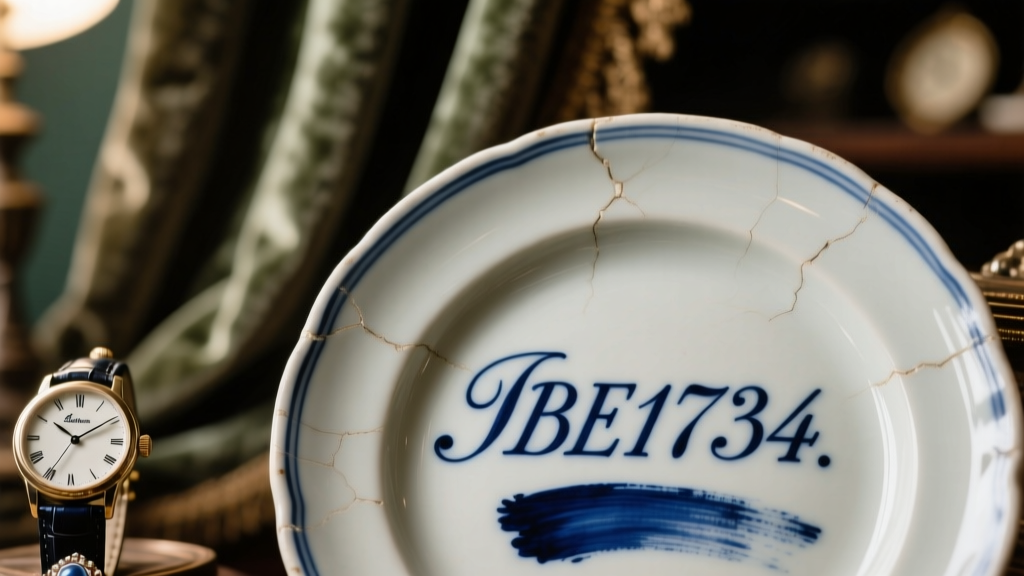
Delft Plate Blue-White Initials 'IBE1734' — A 1734 Dutch Tin-Glazed Earthenware Plaque Measuring 7½ Inches

Queen Anne Style Upholstered Bench: A Detailed Appraisal of the 19 × 24 Inch Variant with Cabriole Legs and Pad Feet

Houbigant Chantilly Perfume Bottles: Decoding the 2 oz, 3 oz, and 4 oz Box Sets from the Golden Age of French Perfumery

Cochiti Pueblo Owl Effigy Jar, c. 1900: A Masterpiece of Indigenous Ceramic Narrative and Technical Precision
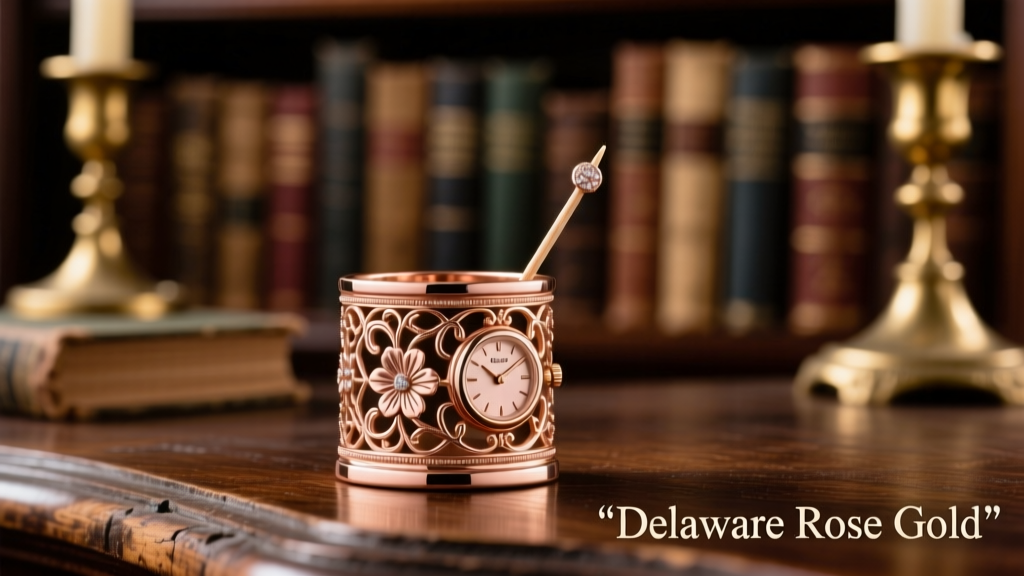
Toothpick Holders from Delaware: The Rare Rose Gold Legacy of the 1920s–1940s

Elfinware Box Trinket Piano Form 3-Inch: A Collector’s Guide to the Rarest Miniature Ceramic Piano

Old Radios: Engineering, Design, and Collectibility of Vintage Broadcast Receivers (1920–1955)
Lot 2334402: A Deep Technical and Historical Analysis of the 1965 Rolex Submariner Ref. 5513 with Rare ‘Double Swiss’ Dial and Original Bracelet

Gallé Vase, Rose Amber Ground Cameo, 12½ Inches: A Masterwork of French Art Nouveau Glass