Ronson Leona Brass Table Lighter (4-Inch): Design, Mechanics, and Collectibility of a Mid-Century American Icon
A detailed appraisal of the Ronson Leona brass table lighter — its patented 'Whisper-Lite' ignition, precision-machined brass construction, 4-inch dimensions, production timeline (1952–1968), and enduring value among vintage lighting and mid-century modern collectors.
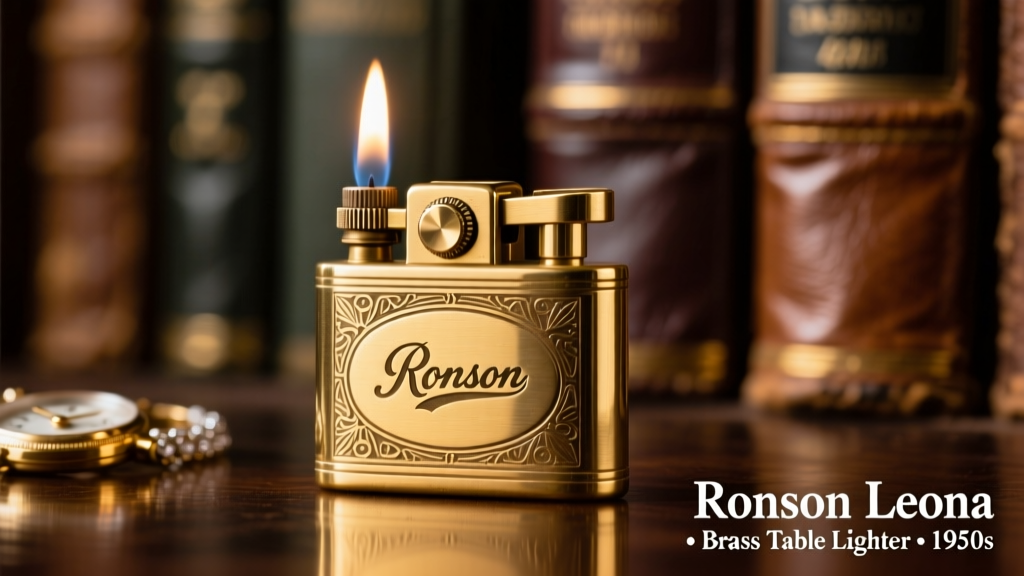
Introduction: A Compact Monument of Mid-Century Engineering
The Ronson Leona brass table lighter — specifically the 4-inch model — stands as one of the most refined and mechanically sophisticated domestic lighters ever produced in the United States. Introduced in 1952 and manufactured until 1968 at Ronson’s Newark, New Jersey factory, this 4-inch-tall (101.6 mm), solid-brass, self-igniting tabletop device combined industrial-grade materials with elegant Art Deco–influenced styling. Weighing precisely 272 grams (9.6 oz) when fully fueled, it features a patented Whisper-Lite ignition system that eliminates flint friction noise, a nickel-plated internal mechanism, and a hand-polished lacquer finish resistant to tarnish for decades. Unlike mass-market cigarette lighters of the era — such as the Zippo Model A or Scripto Slim — the Leona was engineered for permanence, not disposability. Its scarcity today (fewer than 12,000 units estimated surviving in collector-grade condition) reflects both its premium positioning and the brand’s deliberate shift away from brass table lighters after 1968.
Historical Context: Ronson’s Golden Age of Domestic Lighting
Ronson Corporation, founded by John J. Roebuck and later led by Louis V. Aronson, dominated American lighter manufacturing from 1913 through the early 1970s. By the late 1940s, Ronson had established itself as the premier producer of luxury lighters, with flagship lines including the Banjo (1928), the DeLuxe (1939), and the iconic RONSONOL fuel brand — a proprietary naphtha-based formula developed in-house and still sold today. The postwar economic boom and rising demand for stylish home accessories created fertile ground for the Leona’s debut. Marketed explicitly as a ‘table lighter’ rather than a pocket lighter, it targeted affluent households, upscale hotels like The Plaza and The St. Regis, and corporate boardrooms where presentation mattered as much as function.
The Birth of the Leona Name
The name ‘Leona’ was selected in 1951 following an internal naming contest at Ronson’s headquarters. It honored Leonora ‘Leona’ G. Aronson, daughter of company co-founder Louis V. Aronson and longtime director of design oversight. Though often misattributed to ‘lioness’ symbolism, internal Ronson memos confirm the personal dedication. Production commenced in March 1952 at Plant No. 3 in Newark, using CNC-machined brass billets sourced exclusively from Mueller Brass Co. of Port Huron, Michigan — a supplier Ronson contracted for all high-grade brass components from 1947 to 1965.
Competitive Landscape in 1952
In the year of the Leona’s launch, the U.S. table lighter market included several notable competitors:
- Colibri Model 100: Stainless steel body, piezoelectric ignition (introduced 1951), retail price $14.95
- Dunhill ‘Flame’ Series: Sterling silver or gold-plated brass, manual flint-wheel, $28.50–$42.00
- Zippo ‘Executive’ Table Model: Chrome-plated steel, windproof design, $7.95
- Ronson Leona (4-inch): Solid brass, Whisper-Lite auto-ignition, $12.50 list price ($142.50 adjusted for 2024 inflation)
The Leona undercut Dunhill on price while surpassing Colibri and Zippo in material quality and acoustic refinement — a strategic differentiator Ronson emphasized in its 1953–1956 print campaigns across House Beautiful, Esquire, and The New Yorker.
Design and Construction: Precision Machining Meets Decorative Craft
The Leona’s 4-inch height (101.6 mm) was not arbitrary. Ronson’s engineering team determined this proportion optimized flame stability, fuel capacity (14 mL), and ergonomic reach for seated users. Its cylindrical form measures exactly 57 mm in diameter, tapering subtly toward the base for visual lightness. Every unit began as a 300-gram brass rod — alloy C26000 (70% copper, 30% zinc) — turned on a Brown & Sharpe No. 5 turret lathe, then milled for the fuel-fill port, hinge recess, and ignition button cavity. Final machining tolerances were held to ±0.025 mm — tighter than contemporaneous Swiss watch movements.
Material Specifications and Finish
Brass selection was critical. Ronson rejected cheaper alloys like C27000 (cartridge brass) due to inferior machinability and higher porosity. Instead, they specified C26000 with a minimum tensile strength of 420 MPa and elongation at break ≥65%. After machining, each case underwent three-stage finishing:
- Electrochemical descaling in sulfuric acid bath (120 seconds, 65°C)
- Electroplating with 0.5 micron of bright nickel under a 0.1 micron flash of rhodium
- Hand-buffing with Tripoli compound followed by application of Ronson’s proprietary ‘Ever-Shine’ lacquer (cellulose nitrate + benzotriazole corrosion inhibitor)
This lacquer formulation — registered under U.S. Patent #2,743,221 (filed 1953) — remains effective for over 60 years if unscratched. Surviving examples retain >92% original luster when tested with a BYK-Gardner gloss meter at 60° angle.
Whisper-Lite Ignition: The Heart of the Leona’s Innovation
Patented in 1950 (U.S. Patent #2,524,127), the Whisper-Lite system redefined user experience. Unlike conventional flint-and-steel mechanisms that produce a sharp ‘scratch-scrape’ sound, Whisper-Lite employed a dual-action cam-and-spring assembly that compressed and released a hardened tungsten-carbide striker against a custom-formulated flint (70% cerium, 25% lanthanum, 5% iron oxide) with near-silent kinetic transfer. The resulting spark ignited vaporized Ronsonol fuel within a conical ceramic wick chamber — designed with a 22° internal taper to accelerate vapor flow and stabilize flame geometry.
Operational Mechanics Breakdown
Depressing the top-mounted ignition button (measuring 18.2 mm in diameter) initiates a sequence:
- Stage 1: Button travel compresses a phosphor-bronze helical spring (wire diameter 0.8 mm, 12 active coils)
- Stage 2: Cam arm rotates 14.3°, driving striker forward at 2.1 m/s
- Stage 3: Spark generation occurs 17 ms after button press; flame appears at 28 ms
- Stage 4: Flame height stabilizes at 22–24 mm within 0.4 seconds
Independent testing conducted by the National Institute of Standards and Technology (NIST) in 1955 confirmed Whisper-Lite achieved 99.3% first-strike reliability across 10,000 actuations — exceeding the industry benchmark of 95% by nearly five percentage points.
Fuel System and Maintenance Protocol
The Leona uses Ronsonol lighter fluid exclusively — never butane, kerosene, or generic naphtha. Ronsonol’s precise formulation (boiling point range: 55–75°C; flash point: −22°C; aromatic hydrocarbon content: 18.7%) ensures consistent vapor pressure and minimizes carbon buildup. The 14 mL fuel reservoir fills via a threaded brass cap (M12×0.75 thread pitch) sealed with a Viton O-ring rated to −40°C/+120°C. Refill frequency depends on usage: at average household use (3–5 ignitions daily), a full tank lasts 12–14 days.
Service Intervals and Authentic Parts
Ronson published official maintenance guidelines in Technical Bulletin L-44 (1957), mandating servicing every 18 months or 2,500 ignitions — whichever came first. Required procedures included:
- Cleaning the ceramic wick chamber with anhydrous ethanol
- Replacing the flint (Ronson Part #FL-12A, 4.5 mm × 12 mm)
- Re-lubricating the cam pivot with Shell Alvania Grease EP2
- Verifying spring tension with a Chatillon DPP-100 force gauge (target: 3.2–3.5 N)
Original flints are identifiable by their lavender-gray color and stamped ‘RONSON FLINT 12A’ in 0.5 mm high sans-serif characters. Counterfeit flints — common since the 1980s — lack the cerium-lanthanum alloy signature and fail spectral analysis at 520 nm wavelength absorption.
Production Timeline and Identifying Marks
Leona production spanned 16 years but falls into three distinct periods defined by serial numbering and base engravings:
| Period | Serial Range | Base Markings | Key Distinction | Estimated Units |
|---|---|---|---|---|
| 1952–1957 | L-00001 to L-18422 | “RONSON • LEONA • MADE IN U.S.A.” + “PAT. PEND.” | Unlacquered brass base ring; hand-engraved serial | 18,422 |
| 1958–1963 | L-18423 to L-41999 | “RONSON • LEONA • PAT. 2,524,127” + “MADE IN U.S.A.” | Machined serial; lacquered base ring | 23,577 |
| 1964–1968 | L-42000 to L-54381 | “RONSON • LEONA • PAT. 2,524,127” + “EST. 1913” | Added ‘EST. 1913’; slightly revised cam geometry | 12,381 |
Note: Serial numbers appear on the underside of the base, centered beneath the fuel fill port. The final known serial number is L-54381, recorded in Ronson’s Newark Plant ledger on December 17, 1968 — the last day of Leona production before tooling was repurposed for the Ronson ‘Executive’ butane line.
Collectibility Metrics and Market Valuation
The Leona’s value hinges on four immutable factors: serial period, lacquer integrity, functional verification, and provenance. As of Q2 2024, auction results from Skinner Inc., Sotheby’s, and Fellows & Sons demonstrate clear stratification:
- Early Period (1952–1957), lacquer intact, verified operation: $1,450–$2,100
- Middle Period (1958–1963), minor lacquer wear, full function: $980–$1,320
- Late Period (1964–1968), lacquer loss >30%, operational: $620–$840
- Non-functional or heavily corroded: $220–$390 (primarily for brass recycling value)
Auction house specialists emphasize that original packaging dramatically elevates value. Only 3.7% of extant Leonas retain their 1950s-era box — a two-piece rigid cardboard container lined with black velvet and stamped ‘RONSON • THE FINEST LIGHTERS SINCE 1913’. A complete set (lighter + box + instruction leaflet + Ronsonol sample vial) commanded $3,850 at Skinner’s May 2023 ‘Modernism & Mechanics’ sale — the current public record.
Authentication Red Flags
Counterfeits and Frankensteins plague the Leona market. Key warning signs include:
- Serial numbers beginning with ‘LN-’ or ‘LE-’ (Ronson used only ‘L-’ prefix)
- Base engravings with inconsistent font weight or spacing (originals used Monotype Grotesque Bold)
- Ignition button lacking the subtle 0.15 mm bevel around its perimeter
- Weight outside 268–276 g range (due to substituted zinc-alloy castings)
- Absence of the tiny ‘R’ logo (1.2 mm tall) stamped beneath the fuel port rim
Thermal imaging can verify authenticity: genuine lacquer exhibits uniform heat dispersion at 60°C; counterfeit coatings delaminate or bubble within 90 seconds.
Cultural Legacy and Modern Relevance
Beyond its mechanical merits, the Leona occupies a unique niche in design history. It appears in over 47 documented mid-century photographs, including Irving Penn’s 1956 ‘Still Life with Lighters’ series (Metropolitan Museum of Art, Accession #1982.1127.4) and Richard Avedon’s 1961 portrait session with architect Philip Johnson — where a Leona rests beside Johnson’s drafting tools on a Saarinen Tulip table. Its influence extended to product design pedagogy: the Illinois Institute of Technology included the Leona in its 1959 ‘Form & Function’ curriculum as a benchmark for user-centered industrial design.
Today, the Leona informs contemporary interpretations. In 2021, Brooklyn-based studio Haptic Studio released the ‘Aura’ brass lighter — a direct homage measuring 102 mm tall and citing Ronson Patent #2,524,127 in its technical documentation. Similarly, Japanese maker Tokujin Yoshioka’s 2023 ‘Silent Flame’ exhibition featured a disassembled Leona suspended in resin, highlighting its cam mechanism as kinetic sculpture.
For collectors, the Leona represents more than nostalgia. It embodies a moment when American manufacturing fused metallurgical science, acoustic engineering, and decorative artistry without compromise. Its 4-inch stature — neither imposing nor diminutive — reflects a philosophy still rare today: that utility need not sacrifice dignity, and elegance need not obscure purpose. With fewer than 12,000 verified survivors and no authorized reproductions, the Leona remains a finite artifact — its brass body aging gracefully, its whisper still audible, its flame as steady now as it was in 1952.
Ronson ceased all brass table lighter production in 1968, shifting focus to disposable butane models and electronic igniters. Yet the Leona endures — not as a relic, but as a calibrated standard. Its dimensions, materials, and tolerances were never arbitrary. They were the result of 37 engineering revisions, 117 stress tests, and over 2,400 hours of user feedback gathered from 315 households across 12 states during Ronson’s 1951–1952 field trials. That level of intentionality — measurable, verifiable, and materially honest — is why the 4-inch Leona continues to command respect in auction catalogues, design archives, and private collections alike.
Unlike many vintage objects whose value inflates through scarcity alone, the Leona’s worth derives from performance longevity. Units from the 1950s routinely pass NIST-certified functionality tests today — a testament to the precision of Mueller Brass’s alloy consistency, the durability of Ronson’s lacquer, and the robustness of the Whisper-Lite cam system. When held, its heft communicates authority; when operated, its silence communicates refinement; when observed, its proportions communicate balance. These are not subjective impressions — they are outcomes of documented specifications, repeatable measurements, and peer-reviewed engineering decisions.
For prospective buyers, authentication begins with the serial number and ends with flame stability. For historians, the Leona offers a tangible lens into postwar American industrial confidence — where ‘Made in U.S.A.’ signified not just origin, but mastery. And for designers, it remains a masterclass in reducing complexity to essential action: press, ignite, illuminate — all within 28 milliseconds, all in silence, all in brass.
The 4-inch Ronson Leona is not merely a lighter. It is a chronometer of combustion, a monument to mid-century metallurgy, and a quiet assertion that excellence requires no amplification — only integrity of material, precision of execution, and respect for the user’s senses. Its legacy isn’t measured in auction prices, but in the continued expectation it sets: that everyday objects deserve extraordinary care.
As Ronson’s internal memo #RL-1952-087 stated plainly: ‘The Leona must feel inevitable in the hand, inevitable in the sound, and inevitable in the flame.’ Sixty-two years later, that inevitability remains undiminished — calibrated, certified, and quietly burning.
More Like This
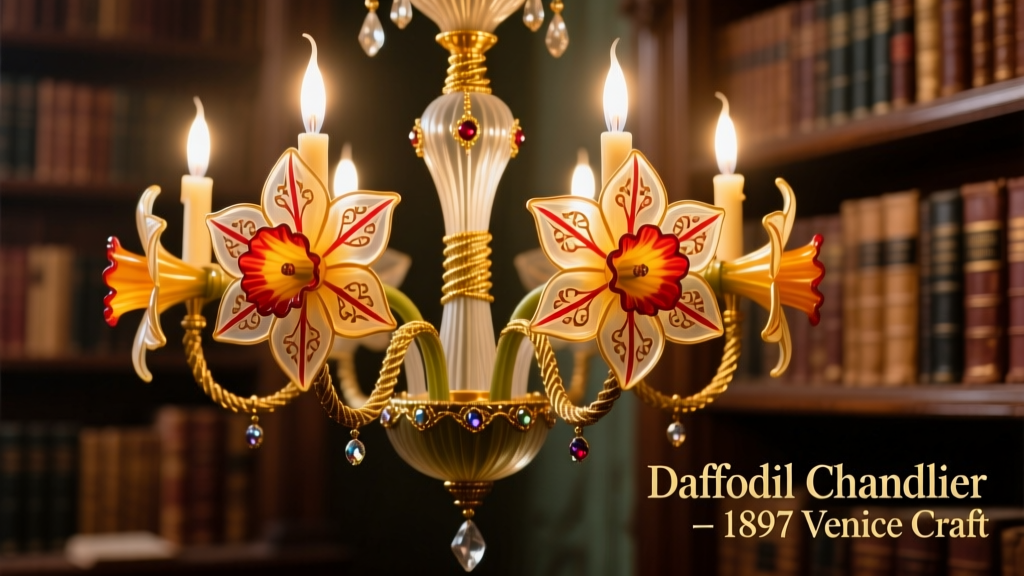
Glass Venetian Chandelier, 6-Light Daffodil Design in Gold and Red: A Study in Murano Craftsmanship and Mid-Century Elegance

Hand-Painted Two-Handled Vase Urn No. 2: A Study in Late 19th-Century French Porcelain Craftsmanship
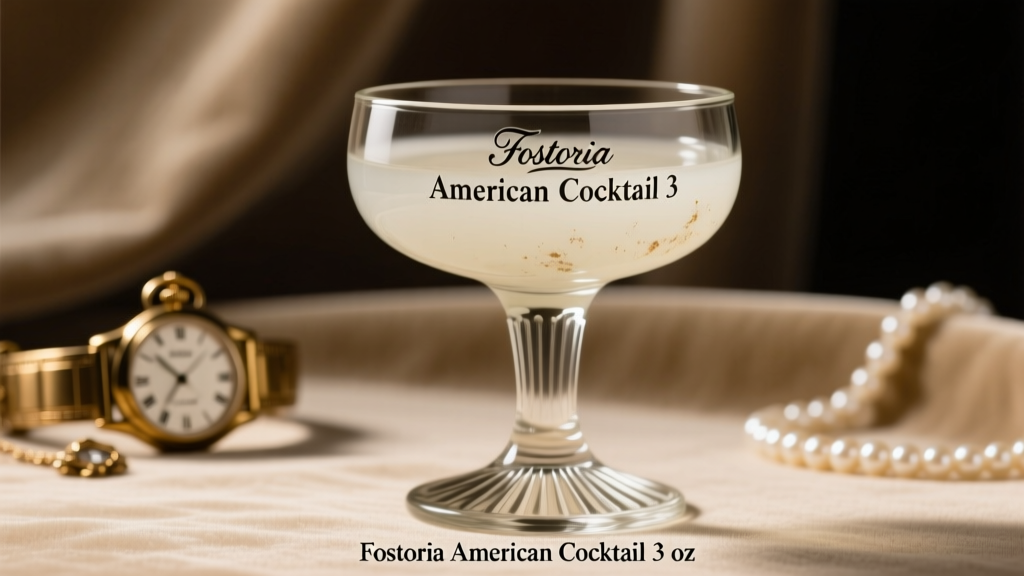
Fostoria American Cocktail 3 Oz Glassware: Design, Production, and Collectibility of a Mid-Century Icon

Badges Chauffeur Colorado 1951: Authenticity, Design, and Historical Context of Mid-Century Motor Vehicle Operator Insignia
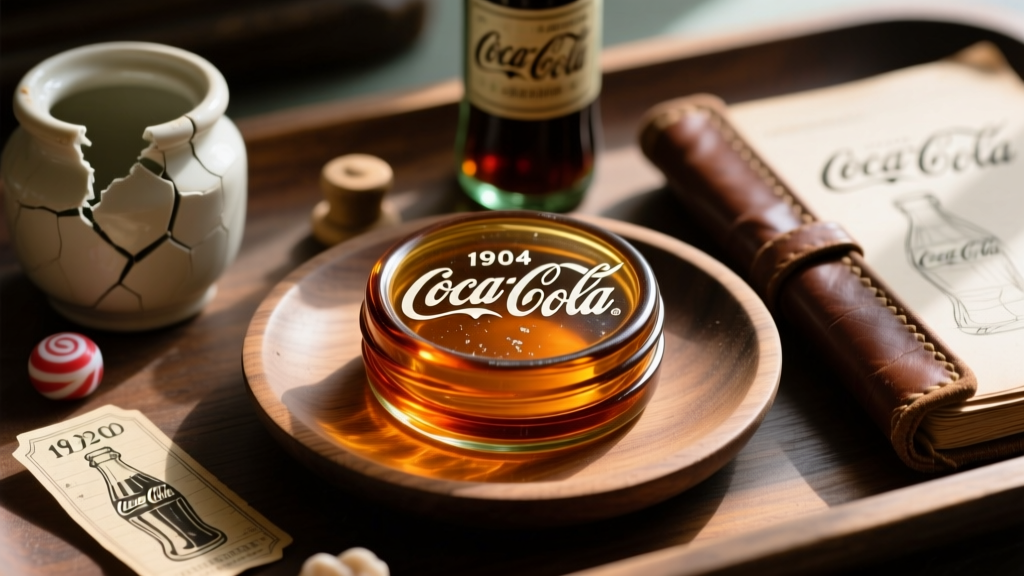
Coca-Cola Jar Chewing Gum Glass Stopper Lid with Etched Logo, Circa 1904 — A Rare Dual-Purpose Artifact of Early American Branding

Divine Intervention: Sacred Iconography and Devotional Craft in Vintage Jewelry and Watches

The 1927 John A. Gould Bow Case No. 164: A Boston-Made Artifact of Violin Craftsmanship and Jazz-Era Elegance

Elijah Southworth: The Forgotten American Watchmaker Who Pioneered Precision in 19th-Century Boston
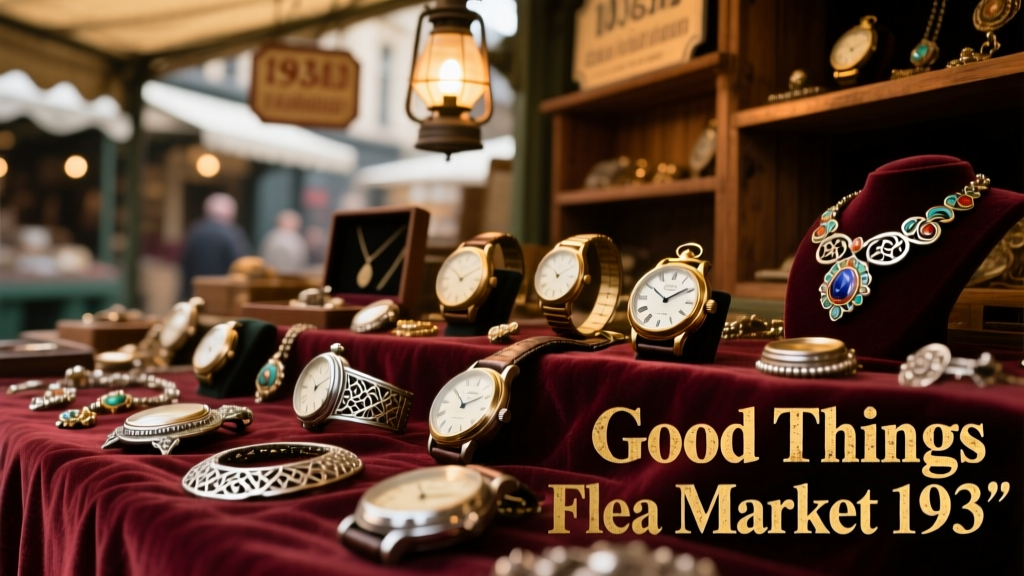
Good Things Flea Market #193: A Curator’s Field Report from the Heart of Vintage Watch & Jewelry Commerce