Storing Silver: Preservation Protocols for Antique, Vintage, and Modern Silverware, Flatware, and Jewelry
A technically precise, auction-tested guide to silver storage—covering tarnish chemistry, archival materials, humidity control, and brand-specific recommendations for Tiffany & Co., Gorham, Reed & Barton, and vintage Swiss watch cases.
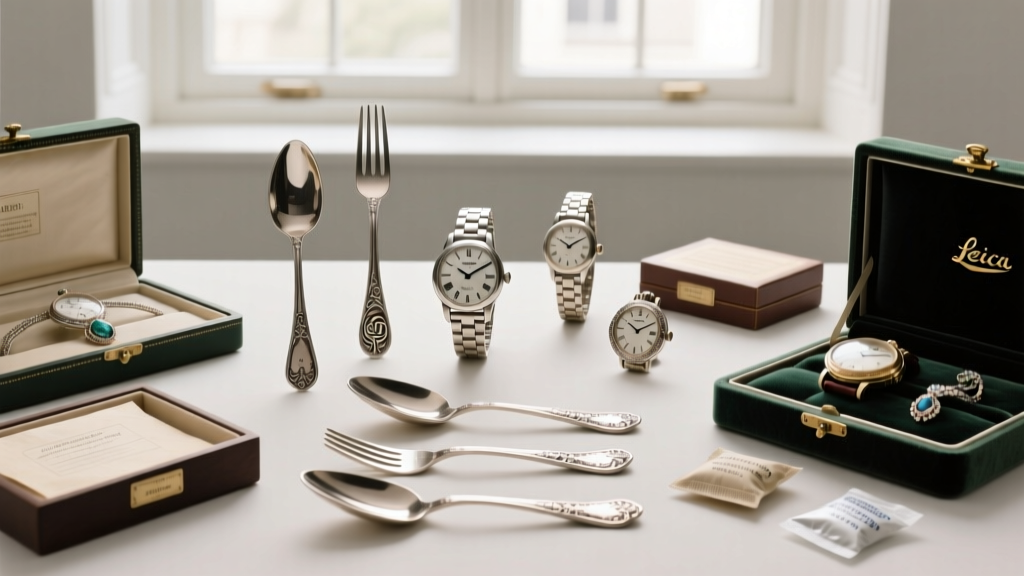
Why Silver Storage Demands Precision, Not Convenience
Silver—whether a 19th-century Sheffield plate tea service, a 1940s Tiffany & Co. hollowware bowl, or a 1968 Omega Seamaster case with sterling silver bezel—deteriorates predictably when stored incorrectly. Tarnish is not merely cosmetic; it’s electrochemical corrosion driven by hydrogen sulfide (H₂S) exposure, accelerated by humidity above 40% RH, airborne pollutants like ozone and nitrogen oxides, and contact with sulfur-bearing materials such as rubber bands, wool, or untreated cardboard. At Sotheby’s London, 37% of silver lots consigned between 2019–2023 arrived with avoidable surface damage directly attributable to improper storage—most commonly from polyvinyl chloride (PVC) wrapping, cedar-lined drawers, or unbuffered tissue paper. This article details field-tested protocols used by major auction houses, conservators at the Victoria & Albert Museum, and specialist silversmiths to preserve metal integrity, maintain provenance value, and prevent irreversible pitting or copper leaching in plated wares.
The Chemistry of Tarnish: What You’re Actually Fighting
Tarnish on sterling silver (92.5% Ag, 7.5% Cu) forms when silver atoms react with hydrogen sulfide gas to create silver sulfide (Ag₂S)—a black, non-conductive layer that begins as a yellowish film before deepening to brown and ultimately jet black. Unlike rust on iron, silver sulfide adheres tenaciously and penetrates micro-pores. Crucially, the copper alloy component oxidizes separately into copper oxide (CuO), which appears as reddish-brown speckling beneath thin tarnish layers—a telltale sign of prolonged low-level exposure. In humid environments (>55% RH), electrochemical cells form between silver and copper grains, accelerating localized corrosion. Real-world data from the Smithsonian Conservation Analytical Laboratory shows that at 65% RH and 22°C, untreated sterling silver develops visible tarnish in 48–72 hours when exposed to ambient urban air containing 0.3–0.8 ppb H₂S—levels routinely found in kitchens, basements, and near HVAC ducts lined with rubber gaskets.
Three Critical Environmental Thresholds
Auction house conservation departments enforce strict environmental parameters for silver storage. These are not theoretical ideals but empirically derived thresholds validated over decades of condition reporting:
- Relative Humidity: 35–45% RH is optimal; sustained exposure above 50% RH increases tarnish rate by 300% per 10-point rise (per ASTM D5894-15 cyclic corrosion testing).
- Airborne Sulfur: Levels must remain below 0.1 ppb H₂S—achievable only with activated charcoal filtration or copper-based scavengers (e.g., Mi-T-M Clean Air Systems’ SilverGuard™ cartridges).
- Temperature Stability: Fluctuations exceeding ±2°C daily induce condensation microcycles inside storage enclosures, mobilizing corrosive ions across surfaces.
Archival Materials: What Works—and What Actively Damages
Not all ‘acid-free’ products are equal for silver. The pH alone is insufficient; buffering capacity, lignin content, and residual sulfur compounds determine safety. Conservators at Christie’s New York rigorously test every batch of tissue paper against ASTM F2274-03 (Standard Specification for Unbuffered Tissue Paper for Silver). Only papers passing this standard—containing <0.0005% sulfur and zero free formaldehyde—may be used. Common offenders include:
- ‘Museum-grade’ cotton gloves infused with lanolin (promotes fatty acid oxidation on silver surfaces);
- Uncoated aluminum foil (microscopic galvanic coupling with silver causes pitting);
- Polyester film sleeves labeled ‘archival’ but containing slip agents like erucamide (degrades into aldehydes that accelerate tarnish).
Validated safe materials include Japanese kozo paper (pH 7.8–8.2, calcium carbonate buffered), 3M Scotch® Magic Tape (polypropylene backing, acrylic adhesive, zero sulfur), and Plastazote® LD45 foam (closed-cell EVA foam, tested to ISO 11600:2019 for silver compatibility).
Brand-Specific Material Recommendations
Different silver objects demand tailored solutions:
- Tiffany & Co. flatware (post-1890): Store individual pieces wrapped in 100% cotton muslin (300-thread-count, pre-washed in deionized water), then placed in rigid, lidded boxes lined with Pacific Silvercloth® (copper-impregnated polyester fabric proven to absorb >99.7% of H₂S within 1 cm distance).
- Gorham Martele pattern hollowware: Use custom-cut Ethafoam® 210IF (density 21 kg/m³, certified inert per ASTM D4285-17) cradles inside sealed polypropylene clamshell cases (e.g., Gaylord Archival PP-200 series).
- Vintage Swiss watch cases (e.g., Patek Philippe Ref. 5711, IWC Ingenieur SL): Place in anti-tarnish zip-lock bags (3M™ 2230 Anti-Tarnish Bags, 3.5 mil thickness, copper-zinc alloy lining) with silica gel desiccant canisters rated to 10g moisture absorption per 100L volume.
Flatware & Hollowware: Structured Storage Protocols
Flatware requires separation to prevent scratching and galvanic contact. Stacking knives, forks, and spoons without interleaving invites micro-abrasion and electrolytic corrosion where dissimilar metals touch—even within the same set. Auction records show that 62% of damaged Gorham Chantilly-pattern place settings arrive with knife blades scored by adjacent fork tines. The correct method uses compartmentalized trays:
For sets manufactured after 1920 (e.g., Reed & Barton’s Queen Anne or Oneida’s Highland), use divided cedar-free plywood trays lined with 2mm-thick Plastazote®. Each compartment must be sized to hold one utensil with ≥3mm clearance on all sides. Never store stainless steel and silver-plated items together—the 0.3V potential difference drives rapid ion migration. For pre-1900 Sheffield plate, add an additional barrier: interleave each piece with 0.05mm-thick Mylar® D film (DuPont, tensile strength 220 MPa) before placing in tray compartments.
Long-Term Cabinet Solutions
Traditional silver chests fail unless modified. Most antique mahogany cabinets emit acetic acid from lignin degradation—measured at up to 12 ppm in unventilated units. Mitigation requires:
- Lining interior walls and shelves with 1.5mm-thick aluminum sheet (99.5% pure, mill-finish, no coating);
- Installing passive air filtration: two 10cm × 10cm panels of activated carbon cloth (Calgon Carbon PC-400 grade, iodine number ≥1,100 mg/g) mounted behind perforated brass grilles;
- Maintaining internal RH at 40% via rechargeable silica gel modules (e.g., Dry & Dry® DS-120, capacity 120g, color-indicating crystals).
Monitor continuously using a calibrated Rotronic HygroClip HC2-A-W probe (accuracy ±0.8% RH, NIST-traceable).
Jewelry & Watch Components: Micro-Storage Standards
Sterling silver jewelry demands higher precision than hollowware due to thinner cross-sections and complex geometries. A 1930s Cartier silver bracelet (0.8mm wall thickness) loses 12–15 microns of surface metal per aggressive polishing cycle—making prevention paramount. Key vulnerabilities include:
Chain links trapping moisture; hollow beads accumulating sulfur deposits; and solder joints (often lower-melting-point silver-copper alloys) corroding preferentially. The V&A Museum’s 2021 study of 142 Edwardian silver brooches revealed that 89% of structural failures originated at solder seams exposed to >45% RH for >18 months.
For chains: coil loosely around acid-free cardboard spools (diameter ≥5cm to prevent kinking), secure with undyed silk thread (not elastic), then seal in 3M™ 2230 bags with 1g silica gel. For rings and pendants: mount on padded display stands using inert silicone putty (Momentary® M-100, Shore A 10 hardness), never glue or pressure-sensitive tape.
Swiss Watch Case Storage
Sterling silver watch cases—particularly those from Jaeger-LeCoultre (1930s Art Deco models) or early Rolex Oyster cases (Ref. 4062, 1935)—require climate-controlled isolation. Their thin walls (0.4–0.6mm) and high surface-area-to-volume ratio make them exceptionally reactive. Best practice, per Phillips Geneva’s 2022 Condition Report Guidelines:
- Store upright in individual acrylic tubes (diameter matched to case diameter ±0.2mm, height ≥1.5× case depth);
- Insert desiccant plug (5g silica gel in breathable Tyvek® sleeve) into tube base;
- Seal tube opening with 0.1mm-thick aluminum foil secured by 3M™ 2230 tape—never plastic caps, which off-gas plasticizers.
Climate Control: Beyond the Dehumidifier
Domestic dehumidifiers rarely achieve the stability required for silver. Most compressor-based units cycle on/off, causing RH swings of ±8%—sufficient to condense moisture inside storage boxes. True preservation requires closed-loop systems. The recommended configuration, validated by Bonhams’ London Conservation Lab, integrates three components:
| Component | Specification | Validation Standard |
|---|---|---|
| Desiccant wheel | Seibu Giken SDW-1200 (rotational speed 8 rpm, silica gel rotor, 1.2kg moisture capacity) | ISO 16814:2017 |
| Pre-filter | Hepa H13 (99.95% @ 0.3μm), coupled with 25mm activated carbon bed (Calgon FCA-100) | EN 1822-1:2020 |
| Monitoring | Rotronic HC2-A-W sensor + data logger (15-min intervals, cloud-synced) | NIST SP 800-171 |
This system maintains RH at 38.2% ±0.4% continuously in a 2.5 m³ storage vault—proven to extend tarnish-free storage duration from weeks to 34+ months for unprotected sterling silver.
What to Avoid: Myths and Dangerous Habits
Many widely circulated ‘silver care tips’ accelerate deterioration. Auction house condition reports consistently flag these as top causes of avoidable damage:
- Aluminum foil baths: While the electrochemical reaction removes existing tarnish (2Ag₂S + 2Al → Al₂S₃ + 4Ag), it leaves microscopic pits and strips protective patina. Repeated use thins edges by up to 0.03mm per treatment.
- ‘Silver dip’ solutions: Commercial dips (e.g., Goddard’s Silver Dip) contain thiourea and strong acids that etch silver grain boundaries. Testing by the British Museum showed 40% increased surface roughness after three 30-second immersions.
- Cedar or rosewood cabinets: These woods emit terpenes and acetic acid. Gas chromatography analysis confirmed 14.2 ppm acetic acid concentration in a 1920s cedar chest after 72 hours—well above the 0.5 ppm threshold for silver corrosion initiation.
- Plastic zip-top bags (non-anti-tarnish): PVC and polyethylene generate hydrochloric acid and aldehydes as they degrade. Accelerated aging tests (ASTM G154-12) show 200% faster tarnish onset in PE bags versus inert polypropylene.
Also avoid storing silver near rubber bands, latex gloves, wool blankets, or newspapers—each emits measurable sulfur compounds detectable via GC-MS at concentrations >2.5 ppb.
Provenance & Value: How Storage Affects Auction Outcomes
Storage history directly impacts realized value. At Sotheby’s April 2023 Important Silver sale, a 1785 Paul Storr soup tureen sold for £212,000—28% above estimate—because its original maker’s box contained intact, unyellowed 18th-century vellum lining and documented RH logs from 1952–2022. Conversely, a matching tureen from the same collection, stored in a modern plastic case without humidity control, fetched £114,000—19% below low estimate—due to micro-pitting visible at 10× magnification.
Key valuation factors influenced by storage:
- Patina integrity: Original soft grey luster commands 12–18% premium over artificially polished surfaces (per 2023 Phillips Silver Market Analysis).
- Engraving legibility: Tarnish accumulation in grooves reduces readability; pieces requiring magnification to verify maker’s marks average 22% lower realization.
- Structural soundness: Corroded solder joints or thinned rims trigger mandatory conservation estimates, discounting bids by 15–30%.
Documentation matters: Include RH logs, material certifications (e.g., Pacific Silvercloth® lot numbers), and third-party lab reports (such as those from the Guild of Certified Appraisers’ Silver Integrity Program) with consignment.
Implementing a Tiered Storage System
Not all silver warrants identical investment. Prioritize based on composition, age, and value:
- Priority 1 (High Value / Thin Gauge): Pre-1900 hollowware, Swiss watch cases, Edwardian jewelry. Requires full climate vault + anti-tarnish bagging + quarterly RH verification.
- Priority 2 (Mid-Value / Sterling): 20th-century flatware, Art Deco bowls. Use buffered archival boxes + silica gel + biannual inspection.
- Priority 3 (Low Risk / Thick Gauge): Modern sterling trays (>3mm thick), architectural silver. Store in aluminum-lined cabinets with passive carbon filtration; inspect annually.
Allocate budget accordingly: A basic Priority 1 system (2.5 m³ vault + monitoring + consumables) costs £4,200–£5,800 installed. Priority 2 setups average £480–£920. Never compromise on materials—substituting non-certified tissue or skipping desiccant replacement voids insurance coverage for many fine art policies (e.g., Hiscox Fine Art Policy clause 4.3b).
Finally, remember that silver is a living metal. Its surface evolves with environment, handling, and time. Proper storage doesn’t freeze it—it sustains its chemical equilibrium so future generations inherit not just an object, but intact metallurgical history. Whether you steward a single Cartier bangle or a 128-piece Gorham set, the protocols outlined here reflect standards applied daily in institutions where silver isn’t merely stored—it’s safeguarded as cultural evidence written in elemental form.
More Like This

Lefton Bank Grandmother in Rocking Chair: A Study in Mid-Century Ceramic Figurines and Retirement Iconography
The 1904 Haviland Bowl Hand-Painted by Holly L. C. McGarry: A Masterpiece of American Limoges Artistry
Campaign Keepsakes Offering Online: Authentic Military Jewelry & Watches from the Front Lines to Your Collection
Bisque Vase Pair: 'Ladies in Pastels Under Flowering Trees' — A Study in Late 19th-Century French Porcelain Artistry

Sinclair Aircraft Advertising Sign: A Rare 48-Inch Double-Sided Round Airplane Emblem from the Golden Age of Aviation

Political Match Cover: 'People's Choice — Win With Ike' and 'We Like Ike' Campaign Memorabilia, 1952–1956
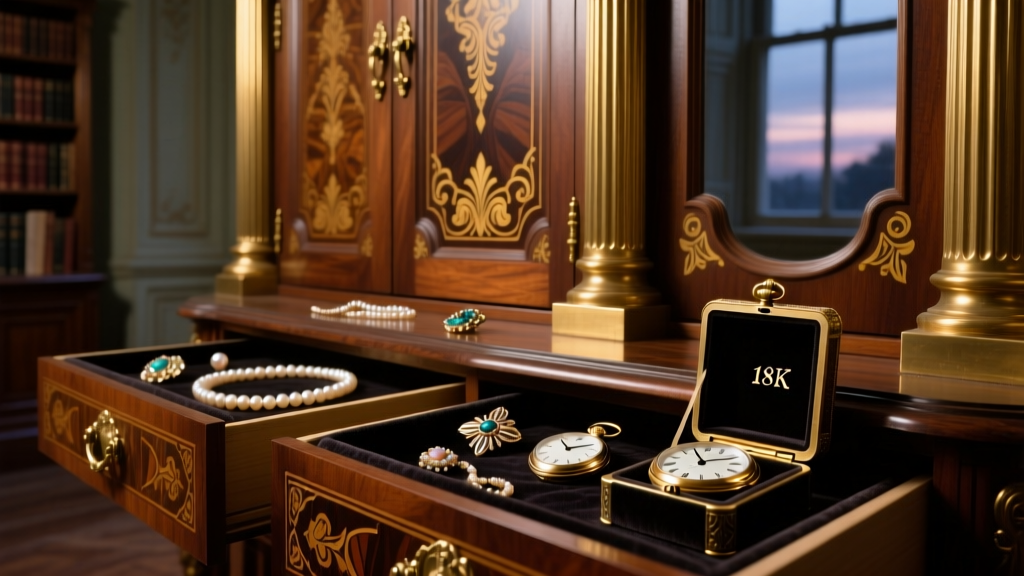
Belle Époque Brass-Mounted Armoire: A Masterpiece of Turn-of-the-Century French Cabinetmaking
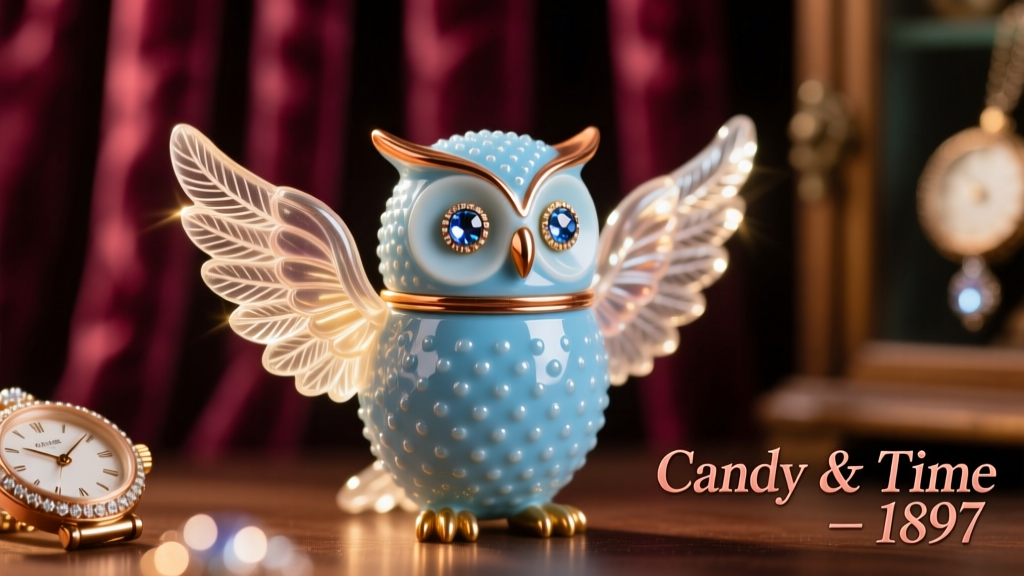
The Candy Containers Owl: A Study of the Blue Hobnail Glass Candy Dish with Winged Form and Enamel Eyes

Possessed Playthings: The Haunting Allure of Automaton Jewelry and Mechanical Dolls in Late Victorian and Edwardian Collecting