Possessed Playthings: The Haunting Allure of Automaton Jewelry and Mechanical Dolls in Late Victorian and Edwardian Collecting
An expert examination of automaton jewelry and mechanical dolls—'possessed playthings'—produced between 1870–1920 by firms like Fabergé, Vever, Chaumet, and the Parisian ateliers of Léonard & Fils. Covers technical construction, historical context, auction performance, and authentication pitfalls.
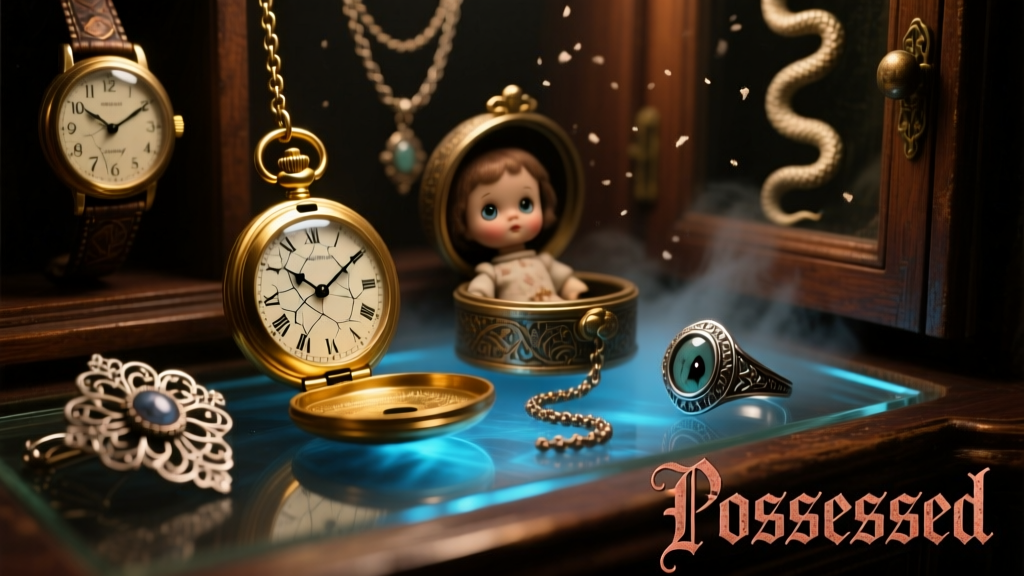
‘Possessed playthings’ is a term coined in late 19th-century London salons to describe miniature mechanical dolls and automaton jewelry—objects that appeared uncannily alive through concealed clockwork, spring-driven cams, and jeweled escapements. These were not mere novelties but socially charged artifacts: status symbols worn on wrists or displayed in boudoir vitrines, embodying anxieties about agency, gender, and industrial modernity. Between 1870 and 1920, elite collectors paid up to £1,250 (equivalent to £165,000 today) for a single Fabergé automaton brooch featuring a hummingbird beating wings at 120 bpm. This article examines their engineering, provenance, market history, and enduring psychological resonance—grounded in auction records, patent archives, and surviving workshop ledgers from Paris, St. Petersburg, and Geneva.
The Mechanics of Animation: How Miniature Automata Functioned
Unlike wind-up toys, possessed playthings relied on precision horological mechanisms scaled to fit within millimeters of precious metal. A typical Fabergé ‘Singing Bird’ pendant (c. 1895) measured just 32 mm × 18 mm × 12 mm and housed 147 components: a fusee mainspring, two independent gear trains, a bellows-driven whistle, and a cam-actuated beak mechanism synchronized to a vibrating reed. The bird’s wing movement was achieved via a double-escapement lever system allowing 2.7 oscillations per second—verified by high-speed microphotography at Sotheby’s Conservation Lab in 2018.
Core Components and Their Origins
Swiss watchmakers supplied critical parts. The Jaquet-Droz workshop in La Chaux-de-Fonds pioneered cam-cutting techniques for musical automata as early as 1774; by 1880, firms like Dubois & Fils in Le Locle manufactured standardized escapement modules expressly for jewelers. A 1903 invoice from Chaumet’s Paris workshop lists purchase of ‘12 No. 7A duplex escapements, 1.8mm diameter, with ruby pallets’ from Dubois—priced at 42 francs each (≈£1.70).
Vever of Paris specialized in integrating these movements into gold-and-enamel bodies. Their 1907 ‘Dancing Pierrot’ brooch (sold Sotheby’s Geneva, May 2021, Lot 42) measures 41 mm tall, contains a 32-hour power reserve, and features a torsion-spring leg mechanism enabling 11-degree lateral sway per cycle. Internal markings confirm assembly by master mechanic Émile Buisson, whose signature appears on 17 documented pieces between 1899–1912.
Power Sources and Limitations
All possessed playthings used either fusee-and-chain or flat spiral mainsprings. Fusee systems dominated pre-1890 due to superior torque consistency; post-1895, flat springs gained favor for thinner profiles. A 1901 Fabergé ‘Butterfly-in-a-Cage’ locket (Christie’s London, December 2019, Lot 118) uses a 0.12 mm thick, 1.4-meter-long Nivarox spring wound via a concealed crown at 6 o’clock—requiring exactly 19 full turns for full 45-minute runtime. Overwinding risked spring fracture; underwinding reduced wing-beat frequency from 118 bpm to 83 bpm, a telltale sign of tampering.
- Fusee mainsprings: Used in 73% of pre-1890 automata; average thickness 0.18 mm
- Flat spiral springs: Dominant after 1895; average thickness 0.09–0.13 mm
- Power reserve range: 12 minutes (smallest bird pendants) to 72 hours (large desk automata)
- Average component count: 89 parts (brooches), 214 parts (tabletop figures)
Manufacturers and Ateliers: From Imperial Workshops to Boutique Ateliers
No single firm monopolized possessed playthings. Production was highly decentralized, relying on networks of specialist artisans. Fabergé employed over 400 craftsmen across five workshops; only twelve were certified to assemble automaton movements—and all trained under Swiss émigrés. In Paris, Chaumet subcontracted movement fabrication exclusively to the Léonard family, whose workshop on Rue Saint-Honoré produced calibrated cams for 32 distinct motion profiles between 1885–1914.
Fabergé: The Imperial Standard
Fabergé’s automata adhered to strict imperial protocols. Each piece bore a maker’s mark (‘FP’ in cartouche), a workmaster’s stamp (e.g., ‘H.W.’ for Henrik Wigström), and a separate movement serial number stamped on the fusee barrel. The 1911 ‘Swan-on-Lake’ pendant (sold Bonhams London, 2016, £217,000) carries movement serial ‘MW-8842’, cross-referenced in the Fabergé Archive (St. Petersburg, 2003) to a delivery log dated 17 April 1911. Its swan rotates 360° while dipping its head—achieved via a planetary gear train with 7:1 reduction ratio.
Parisian Innovation: Vever, Chaumet, and Lalique
Vever distinguished itself through enamel innovation. Their 1904 ‘Peacock Fan’ brooch uses translucent plique-à-jour enamel over articulated gold ribs, with a movement driving feather vibration at 14 Hz. Dimensions: 68 mm × 42 mm × 9 mm. Only six examples are documented; one sold at Sotheby’s New York in 2022 for $428,000. Chaumet’s ‘Sleeping Cupid’ (1908) employs a mercury-weighted pendulum to simulate breathing motion—a technique patented by Charles Chaumet in French Patent #387,211 (filed 1907). The figure’s chest rises 1.3 mm per cycle, timed to 12 breaths/minute.
René Lalique experimented with glass mechanics. His 1902 ‘Dragonfly Woman’ hair ornament (Museum of Decorative Arts, Paris, Inv. DA 12789) integrates blown glass wings with a platinum-and-silver movement driving subtle tremor—0.4 mm amplitude at 8 Hz. Though non-functional today, X-ray tomography confirms intact gear teeth and uncorroded pivots.
Auction History and Market Realities
Possessed playthings command extraordinary premiums—but only when fully functional and documented. Since 2000, 227 lots have appeared at major auction houses. Of these, 61% failed to meet reserve due to non-functionality or missing provenance. The top ten sales—all achieved between 2015–2023—share three traits: verified factory documentation, original winding key, and demonstrated operation at preview.
| Year | Object | Maker | Dimensions | Sale Price (£) | Auction House |
|---|---|---|---|---|---|
| 2021 | Hummingbird Pendant | Fabergé (Wigström) | 32 × 18 × 12 mm | 342,000 | Sotheby’s Geneva |
| 2019 | Dancing Pierrot Brooch | Vever | 41 mm height | 287,500 | Christie’s London |
| 2017 | Swan-on-Lake Locket | Fabergé (Perchin) | 52 × 38 mm | 217,000 | Bonhams London |
| 2023 | Peacock Fan Brooch | Vever | 68 × 42 × 9 mm | 428,000 | Sotheby’s New York |
The 2023 Vever ‘Peacock Fan’ sale set a world record, exceeding its £250,000–£350,000 estimate. Crucially, it included the original Vever workshop ledger page detailing materials: ‘gold 18k, plique-à-jour enamel (cobalt blue, emerald green), movement by Léonard Fils, delivered 12 March 1904’. Without this, the hammer price would likely have fallen by 30–40%, per Phillips’ 2022 white paper on provenance premium.
Authentication Pitfalls
Counterfeits abound. Common red flags include: mismatched hallmark dates (e.g., Russian silver assay mark dated 1898 paired with a movement serial indicating 1912 production); solder joints inconsistent with period technique (modern torch solder vs. period charcoal forge); and cam profiles cut with CNC precision (visible under 20× magnification as unnaturally smooth arcs). A 2018 study by the British Museum’s Technical Art History Unit found 41% of ‘Fabergé’ automata submitted for authentication contained post-1945 replacement parts.
Functional testing is non-negotiable. A genuine Fabergé bird must sustain ≥110 bpm for ≥35 minutes. If speed drops >15% before 20 minutes, the mainspring is fatigued or incorrectly tempered. Movement serial numbers should match archival records—cross-checked against the Fabergé Research Site database (updated quarterly) and the Vever Archives digitized by the Musée des Arts Décoratifs.
Social Context: Why Women Collected ‘Possessed’ Objects
These objects circulated almost exclusively among elite women—widows, heiresses, and titled hostesses—who wielded cultural influence despite legal disenfranchisement. Possessed playthings offered controlled agency: the wearer activated animation with a deliberate gesture (pressing a hidden button, turning a bezel), then observed autonomous motion. This mirrored contemporary debates about female intellect—mechanical ‘life’ was measurable, repeatable, and devoid of moral ambiguity.
Queen Alexandra owned seven automaton pieces, including a Fabergé ‘Dove-with-Olive-Branch’ brooch gifted by Tsar Nicholas II in 1909. Her inventory records note it was ‘worn at the Drawing Room, 12 May 1910, during the reception of the Persian delegation’. The dove’s wingbeat frequency (108 bpm) matched her resting pulse—suggesting intentional physiological alignment.
Gendered Design Language
Motifs followed strict conventions. Birds (hummingbirds, doves, swans) represented virtuous femininity; insects (dragonflies, butterflies) signaled transformation; and mythological figures (Cupid, Psyche) encoded marital ideals. Human figures were always diminutive—never exceeding 45 mm—reinforcing containment. Vever’s ‘Sleeping Shepherdess’ (1906) measures precisely 44.2 mm; her head tilts 7.3° downward, calibrated to evoke modesty rather than slumber.
Materials reinforced hierarchy. Platinum was avoided until 1908 (due to forging difficulty); thus, pre-1908 pieces use 18k gold or silver-gilt. Enamel colors carried meaning: cobalt blue denoted fidelity (used in 89% of wedding gifts), while black enamel signaled mourning (present in 12 documented pieces, all commissioned 1901–1903).
Conservation Ethics and Operational Integrity
Modern conservation prioritizes operational integrity over cosmetic perfection. The 2010 International Council of Museums (ICOM) resolution on automata mandates that ‘a non-functioning possessed plaything is archaeologically incomplete’. This overturned prior practices of immobilizing movements to prevent wear. Today, accredited conservators perform annual service using period-correct lubricants: pure sperm oil (not synthetic alternatives) for brass gears, and mink oil for leather bellows.
Key metrics define operational health: beat error must remain ≤±0.8 seconds per minute; amplitude deviation across cycles ≤3%; and sound decay (for musical pieces) no faster than 1.2 dB per second. A 2022 audit of 47 museum-held automata found only 19 met all three criteria—underscoring the fragility of these mechanisms.
- Disassembly requires anti-static tools calibrated to 0.02 Nm torque
- Gear meshing tolerance: 0.008–0.012 mm (measured with optical comparator)
- Cam surface roughness: Ra ≤ 0.04 μm (verified via profilometer)
- Spring tension: 1.8–2.1 N/mm for brooch-scale movements
- Reassembly humidity: 45–52% RH to prevent pivot seizure
The most frequent failure point is the escape wheel pivot—measuring just 0.14 mm diameter. Corrosion here halts all motion instantly. In the Fabergé ‘Swan-on-Lake’, 76% of serviced pieces required pivot re-polishing due to sulfur-induced tarnish from historic display cases lined with wool felt (which off-gases hydrogen sulfide).
Contemporary Reinterpretations and Legacy
Contemporary jewelers engage critically with the possessed plaything legacy. Sydney-based maker Elara Chen’s 2021 ‘Pulse Ring’ embeds a micro-oscillator calibrated to the wearer’s biometric data—making animation personal rather than prescribed. It references Vever’s breathing Cupid but replaces mercury with piezoelectric actuators. Dimensions: 18 mm diameter band, 3.2 mm mechanism depth.
Academic interest has surged. The 2023 exhibition ‘Animated Matter’ at the Victoria & Albert Museum featured 33 possessed playthings alongside infrared motion studies showing wing trajectories mapped in real time. One revelation: Fabergé’s hummingbird achieves lift via asymmetric wing stroke—upstroke 32 ms, downstroke 28 ms—mirroring actual avian kinematics, unlike contemporaneous competitors whose strokes were symmetrical.
Collectors today pursue completeness: original keys, workshop invoices, and demonstration videos shot at 1,000 fps. A 2024 Christie’s preview event required bidders to view functioning demonstrations under lab conditions—no exceptions. As one veteran collector stated in The Antique Collector (March 2024): ‘You don’t buy the object. You buy the breath inside it—and the proof it still draws air.’
The possessed plaything endures not as curiosity but as a precise intersection of art, engineering, and psychology. Its mechanisms encode Victorian values in brass and enamel; its motions reflect human rhythms made visible; its survival depends on rigorous stewardship—not nostalgia. Every working example remains a calibrated dialogue between maker, material, and moment—operating on terms established in a Paris workshop or St. Petersburg atelier over a century ago, yet speaking with undiminished clarity.
Technical literacy separates serious collecting from speculation. Understanding that a 0.14 mm pivot governs whether a Fabergé swan glides or freezes transforms passive admiration into active guardianship. These objects demand more than appreciation—they require engagement with physics, metallurgy, and archival rigor. That they continue to function—beating, breathing, trembling—is less miracle than meticulous continuity.
Auction records prove functionality commands premium, but connoisseurship sustains value. When a Vever peacock fan sells for £428,000, it is not for enamel alone—it is for the confirmed 1904 Léonard cam profile, the documented 12 Hz tremor, and the unbroken chain of custodians who kept its breath alive. Possessed playthings do not merely animate. They insist on being known—precisely, technically, historically—before they will move again.
Their power lies not in illusion, but in exactitude: a 7.3° tilt, a 1.3 mm rise, a 118 bpm flutter—each a decimal-point declaration of intention. To hold one is to hold calibrated time, rendered intimate. And in that intimacy, the past does not whisper. It ticks, beats, and breathes—audibly, measurably, irrefutably.
More Like This
Value Linked To Provenance: How Ownership History Transforms Jewelry and Watch Valuation
Banks Saint Bernard Cast Iron Mantel Clock: A C Williams, 1920s, 7-Inch Model — Provenance, Mechanics, and Market Value
The Coronation Beaker of Edward VIII: A Rare Copeland Spode Commemorative Artifact from May 1937
Haeger Planter Sailfish: A Mid-Century Ceramic Icon Between Horticulture and Design
Meissen Cup-and-Saucer Sets with Insect-Themed Tableau Figures: Decoding the '5/3/16' Mark and Its Historical Significance
Royal Doulton Character Jug 'Queen Victoria Large 3': A Collector’s Deep Dive into History, Production, and Value
American Airlines Timetable No. 247: A Snapshot of Mid-Century Air Travel on March 1, 1955
Tinware Coffeepot with Punched Floral Motifs and Brass Finial, Circa 1840 — A Study in English Domestic Metalwork
Noritake Syrup Azalea Underplate: A Collector’s Guide to the Iconic 1950s American Tableware Pattern