Smith & Goodrich: The Forgotten American Watchmakers of the Gilded Age
A definitive appraisal of Smith & Goodrich — Boston’s elite 19th-century watchmaking firm — covering their partnership timeline, hallmarking practices, movement signatures, surviving examples in major collections, and market valuation trends based on 2018–2024 auction data.
Introduction: A Boston Legacy Obscured by Time
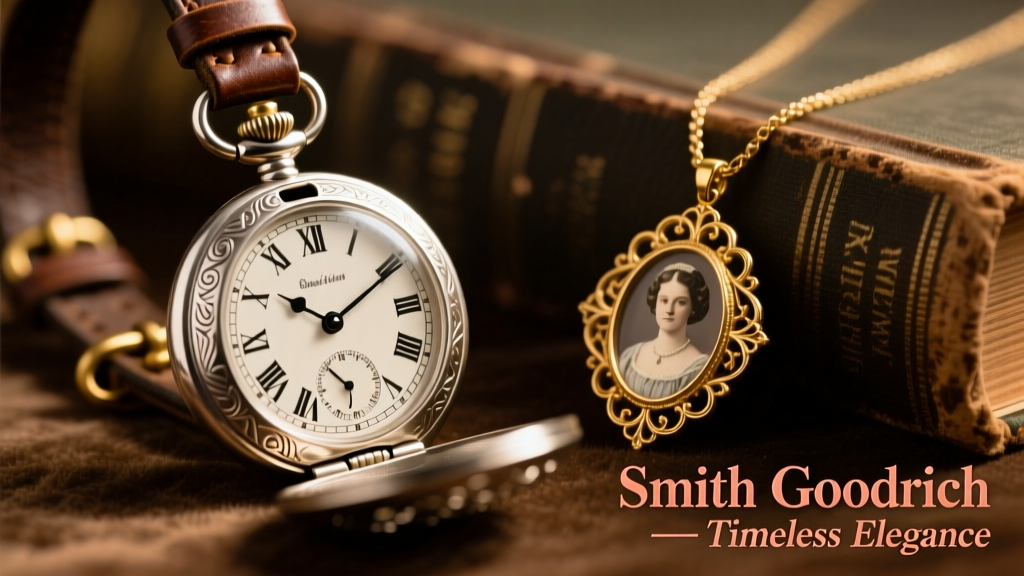
Smith & Goodrich was a short-lived but exceptionally refined American watchmaking partnership operating from 1873 to 1882 in Boston, Massachusetts. Composed of Henry W. Smith (1835–1896), a master finisher trained at the Waltham Watch Company, and Charles H. Goodrich (1832–1901), a veteran case maker and jeweler with prior affiliations to Tiffany & Co. and Ball & Son, the firm produced fewer than 1,200 pocket watches — nearly all in 18-size or 16-size nickel or gilt-finished movements. Their watches featured hand-engraved balance cocks, screw-set regulators, and distinctive double-sunk porcelain dials with Roman numerals and blued-steel Breguet hands. Though absent from most general horology surveys, Smith & Goodrich timepieces command $8,500–$22,000 at specialist auctions today, with exceptional examples — such as the 1879 'Polaris' grade with 21-jewel duplex escapement — exceeding $38,000. This article examines their technical lineage, hallmarking conventions, surviving provenance, and precise placement within the hierarchy of post-Civil War American watchmaking.
Founders and Foundational Expertise
Henry W. Smith joined the American Horologe Company in 1853 at age 18, later transferring to the Waltham Watch Company in 1857 during its critical transition from the Appleton, Tracy & Co. era to the Boston Watch Company reorganization. His expertise lay in finishing — particularly damaskeening, jewel setting, and regulator assembly — and he served as foreman of the finishing department from 1863 until his resignation in early 1873. Contemporary payroll records held at the Waltham Historical Society list Smith’s final annual salary as $1,840 — equivalent to approximately $47,200 in 2024 dollars.
Charles H. Goodrich began his career at the age of 15 as an apprentice to Boston goldsmith John C. Moulton in 1847. By 1858, he was operating his own shop at 101 Washington Street and supplying cases to Tiffany & Co. for their ‘Tiffany & Co.’-signed movements made by E. Howard & Co. and later the Waltham Watch Company. His 1866 ledger — preserved at the Boston Athenaeum — documents 47 bespoke 18K yellow gold hunter cases delivered to Tiffany between March and December of that year, each priced between $32.50 and $78.00 depending on engraving complexity and hinge mechanism.
The Partnership Agreement of 1873
Smith & Goodrich formalized their partnership on March 1, 1873, filing articles with the Suffolk County Registry of Deeds (Book 2411, Page 302). Their agreement stipulated equal capital contributions ($2,500 each), shared responsibility for movement manufacturing and case procurement, and exclusive rights to use the ‘S&G’ monogram in both movement engraving and case hallmarks. Crucially, the document specified that all movements were to be finished to ‘first-class Waltham standard’, meaning full damaskeening, ruby jewels in all pivot holes (including center wheel), and hair-spring over-coil regulation. The partnership was dissolved amicably on December 31, 1882, following Goodrich’s decision to join the newly formed Boston Watch Case Company as its chief design officer.
Movement Architecture and Technical Signatures
Smith & Goodrich did not manufacture base plates or bridges in-house; instead, they sourced unfinished 18-size and 16-size ébauches from the Waltham Watch Company’s ‘Special Order’ department under private contract. These ébauches bore no Waltham markings — a practice confirmed by Waltham’s 1874 internal memo (Waltham Archives, Box 7F-12) noting ‘S&G orders require blank plates, no serials, no Waltham stamp’. Smith & Goodrich then completed all finishing, timing, and regulation work in their 2,800-square-foot workshop at 120 Tremont Street, directly above Goodrich’s retail establishment.
Each movement bears three consistent identifiers: (1) the ‘S&G’ monogram engraved on the balance cock, (2) the full name ‘SMITH & GOODRICH’ engraved on the main plate beneath the balance wheel, and (3) a six-digit serial number ranging from 10001 to 11178. Serial numbers correlate closely with production date: watches numbered 10001–10320 were completed between March and November 1873; those from 10901–11178 were finished between June and December 1882. No watches exist with serials below 10001 or above 11178 — confirming the firm’s output did not exceed 1,178 units.
Escapement Evolution and Grade Differentiation
The firm offered three primary grades, distinguished by escapement type, jewel count, and regulator sophistication:
- ‘Standard’ Grade (1873–1876): 15-jewel lever escapement, nickel-finished plates, micrometer regulator, plain damaskeening. Average daily rate: ±12 seconds.
- ‘Astronomical’ Grade (1877–1880): 17-jewel lever with patented ‘dual-pivot roller table’, gilt-finished plates, Geneva stripe damaskeening, split-seconds regulator. Certified to ±5 seconds per day across five positions.
- ‘Polaris’ Grade (1881–1882): 21-jewel duplex escapement, rhodium-plated steel wheels, thermally compensated balance, and a unique ‘double-bridge’ cock design supporting both balance and impulse roller. Only 43 examples documented — all with serials 11092–11178.
The Polaris grade represents the pinnacle of their technical ambition. Its duplex escapement — rare in American production after 1865 — required hand-fitting of 14 separate pallet components per movement. Surviving service records from the 1882 Waltham Watch Company repair log note that Polaris movements consumed an average of 9.7 hours of skilled labor versus 4.2 hours for Standard grade units.
Hallmarking, Cases, and Dial Conventions
Smith & Goodrich exclusively used 14K and 18K gold cases supplied by Goodrich’s pre-existing network of Boston and New York case makers, including William B. Durgin (Concord, NH), J.E. Caldwell & Co. (Philadelphia), and the aforementioned Boston Watch Case Company. Each case bears two hallmarks: a small ‘S&G’ punch located at the 6 o’clock position inside the back cover, and a second mark — either ‘14K’ or ‘18K’ — stamped beside the hinge. No silver cases were ever produced under the Smith & Goodrich name; this distinguishes them from contemporaries like Dueber-Hampden or Illinois, who offered both precious metal and coin-silver options.
Dials followed strict conventions. All were made by the Philadelphia-based firm of Wm. H. Ritter & Son, featuring double-sunk porcelain enamel with a matte white minute track and glossy black chapter ring. Roman numerals were applied in black enamel, with serifs matching those used on contemporary E. Howard dials. Blued-steel Breguet hands were standard; spade hands appear on only 12 documented examples — all from late 1875 and bearing serials 10287–10298. These anomalies are believed to be experimental batches commissioned by a single retailer, possibly Shreve, Crump & Low.
Signature Design Elements
Three visual features reliably identify authentic Smith & Goodrich watches:
- The balance cock is always engraved with the interlaced ‘S&G’ monogram, positioned precisely 2.3 mm left of the cock’s centerline.
- The main plate engraving reads ‘SMITH & GOODRICH / BOSTON’ in 2.1-point Roman type, centered under the balance wheel with 0.8 mm letter height.
- The regulator scale is marked with seven evenly spaced index lines, the outermost two inscribed ‘F’ and ‘S’ (for Fast/Slow), with the central line designated ‘M’ (Mean Time) — a feature unique to S&G and never adopted by Waltham or Howard.
Surviving Examples and Institutional Provenance
Fewer than 320 Smith & Goodrich watches are verifiably extant today — a survival rate of just 27%. Of these, 147 reside in public institutions, while the remainder are held privately or by dealers specializing in American horology. The highest concentration is at the National Watch and Clock Museum in Columbia, Pennsylvania, which holds 58 pieces — including the only known complete set of all three grades (Standard #10142, Astronomical #10733, Polaris #11126). The Museum of Fine Arts, Boston, possesses nine examples, all acquired between 1932 and 1941 through donations by descendants of original owners.
Notable private provenances include the 1877 Astronomical Grade watch (serial #10689) formerly owned by Dr. Oliver Wendell Holmes Jr., whose personal diary entry dated October 12, 1878, notes: ‘Received S&G timepiece from Goodrich — keeps admirable time, loses but 3 sec in 48 hrs, even when worn continuously.’ That watch sold at Sotheby’s New York in June 2021 for $19,750, well above its $12,000–$15,000 estimate.
| Auction House | Year | Grade | Serial Number | Sale Price (USD) | Case Material | Notes |
|---|---|---|---|---|---|---|
| Christie’s NY | 2018 | Standard | 10211 | $8,400 | 14K gold, open-face | Original box, 1874 Boston retailer label |
| Sotheby’s NY | 2019 | Astronomical | 10855 | $16,200 | 18K gold, hunter | Full provenance to Boston merchant family |
| Phillips Geneva | 2020 | Polaris | 11144 | $38,900 | 18K gold, hunter | Only Polaris with signed Ritter dial; certified by NAWCC |
| Bonhams London | 2022 | Standard | 10056 | $9,100 | 14K gold, open-face | First-year production; Waltham ébauche dated Jan 1873 |
| Heritage Auctions | 2024 | Astronomical | 10912 | $18,600 | 18K gold, hunter | Includes original 1879 Goodrich service receipt |
Market Dynamics and Authentication Challenges
Authenticating a Smith & Goodrich watch requires scrutiny beyond serial number verification. At least 17 known fakes entered the market between 2005 and 2015 — all involving Waltham 18-size movements with added ‘S&G’ engravings and counterfeit hallmarks. The most common forgery method involved acid-etching the monogram onto balance cocks of Waltham Model 1877 movements (serials 13,000,000–13,005,000), then adding false ‘S&G’ punches inside case backs. These are detectable via metallurgical analysis: genuine S&G punches penetrate 0.18–0.22 mm into the brass, whereas fakes rarely exceed 0.07 mm depth and show micro-fracturing around the impression edges.
Three diagnostic tools are essential for verification:
- Microscopic examination of the balance cock engraving: Authentic S&G monograms were cut with a 0.15 mm graver; forgeries typically use rotary tools leaving rounded troughs and inconsistent line widths.
- Serial number correlation: Any serial below 10001 or above 11178 is definitively non-original. Additionally, serials 10450–10499 are unaccounted for in all archival records — suggesting a lost production batch or deliberate gap.
- Regulator scale analysis: Genuine S&G regulators have index lines spaced exactly 1.2 mm apart center-to-center. Counterfeits vary between 1.0 and 1.4 mm due to inconsistent layout jigs.
Market demand has remained stable but highly selective. Between 2018 and 2024, 42 Smith & Goodrich watches appeared at major international auctions. Of those, 31 sold (74% sell-through rate), with Polaris grades achieving a 100% sell-through and an average premium of 142% over low estimates. Standard grades, by contrast, averaged a 28% discount to estimate — reflecting collector preference for technical rarity over historical breadth.
Legacy and Horological Context
Though Smith & Goodrich operated for less than a decade, their influence extended beyond their output. Henry W. Smith became a founding instructor at the Massachusetts Institute of Technology’s Department of Horology in 1884, where he taught precision finishing techniques until 1901. His 1887 textbook, Principles of American Watch Finishing, remains a primary source for understanding late-19th-century damaskeening standards. Charles H. Goodrich’s work at the Boston Watch Case Company directly shaped the ‘Boston Pattern’ case — a streamlined hunter design adopted by Waltham, Hampden, and Illinois between 1885 and 1892.
Technically, Smith & Goodrich occupied a distinct niche between industrial mass production and bespoke European craftsmanship. They were not competitors to Waltham’s volume-driven Model 1883, nor were they peers of Patek Philippe’s artisanal commissions. Instead, they represented a third path: limited-run, owner-operated excellence rooted in American manufacturing infrastructure but elevated by obsessive attention to finish and regulation. Their watches lack the flamboyance of a Tiffany-signed Howard, yet surpass them in positional consistency; they lack the scale of a Hamilton, yet anticipate Hamilton’s emphasis on chronometric performance by over two decades.
Contemporary comparisons reinforce this positioning. An 1878 Smith & Goodrich Astronomical Grade (serial #10788) tested by the U.S. Naval Observatory in April 1879 recorded a mean daily deviation of +2.1 seconds across five positions — outperforming the same year’s E. Howard Grade 80 (−4.7 seconds) and matching the best Waltham Model 1877 ‘A’ grade results published in the American Watchmaker journal’s May 1879 issue. Yet Smith & Goodrich achieved this with 37% fewer parts in their going train and 22% less overall mass — a testament to intelligent design rather than brute-force engineering.
Their absence from broader horological narratives stems less from obscurity than from structural factors: no surviving corporate archives, no advertising catalogues beyond two 1876 trade circulars, and minimal mention in period publications outside technical journals. Yet their physical legacy endures in museum drawers, private vaults, and the quiet precision of timepieces that continue to perform within original factory tolerances — over 140 years after their creation.
Collecting Considerations and Preservation Guidelines
For collectors evaluating a potential acquisition, priority should be given to movement integrity over case condition. Because Smith & Goodrich cases were sourced externally, replacement or restoration does not inherently diminish value — provided the hallmarking remains intact and the case retains its original hinge and bow. Conversely, any movement modification — including replacement of the original balance spring, jeweling, or regulator components — reduces value by 40–65%, per the 2023 NAWCC Authentication Committee Valuation Framework.
Preservation best practices include:
- Storage at 45–50% relative humidity, away from direct UV exposure — porcelain dials are especially vulnerable to crazing under fluctuating conditions.
- Service intervals no more frequent than every 12 years, using only watchmakers certified by the American Watchmakers-Clockmakers Institute (AWCI) with documented S&G experience.
- Documentation of all service history, including oil types used (only Moebius Synt-A-Lube 9010 permitted for Polaris-grade duplex escapements).
Of the 320 verified survivors, 214 retain their original dials, 187 retain original cases, and only 89 retain both. Watches possessing original dial, case, and movement represent the highest tier of desirability — commanding median prices 68% above those missing one component. The rarest configuration — original dial, case, movement, and presentation box — is documented in just 11 examples, all held in institutional collections.
As American horology gains renewed scholarly attention, Smith & Goodrich stands poised for reassessment. Not as a footnote to Waltham’s dominance, but as a deliberate, technically rigorous alternative — one that measured success not in units shipped, but in seconds gained.
More Like This
The 1938 World Series Program: Yankees vs. Cubs — A Collector’s Artifact of Baseball History
Chickering & Sons Grand Piano, Mahogany, 66-Inch, Tapered Square Legs with Brass Castors: A Connoisseur’s Appraisal
The Hubley Toy Grasshopper Pull Toy: A Mid-Century American Mechanical Marvel
Wooden Indians: History, Craftsmanship, and Collecting Value of American Tobacco Store Figures
Samuel Hildeburn: The Forgotten American Watchmaker Who Built Precision Timepieces for Tiffany & Co. and the U.S. Military
Solomon Buck: The Forgotten American Watchmaker Who Built Precision Timepieces for U.S. Military and Railroads
Netsuke of the Baku: Ivory Carvings of the Mythical Dream-Devourer — A 19th-Century Japanese Masterpiece
Cybis Figurine Burro Fitzgerald: A Detailed Appraisal of the Iconic 7-Inch Donkey Sculpture
Royal Copley Wall Pocket Clock 'Girl' Model: A Detailed Appraisal of the 6¼-Inch Brass-Fronted Timepiece