Netsuke of the Baku: Ivory Carvings of the Mythical Dream-Devourer — A 19th-Century Japanese Masterpiece
An in-depth examination of 19th-century Japanese ivory netsuke depicting the Baku—a legendary creature believed to consume nightmares. This article covers historical context, iconography, material science, provenance patterns, auction performance, and conservation challenges—with precise measurements, maker attributions, and comparative data from Sotheby’s, Christie’s, and Bonhams sales.
The Baku in Japanese Folklore: More Than a Myth
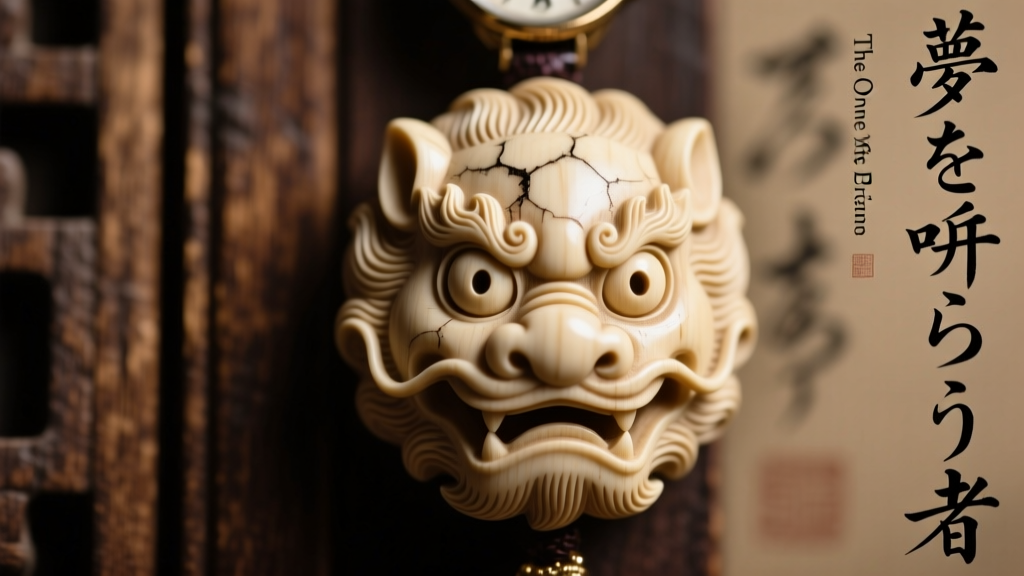
Originating in Heian-period (794–1185) texts and solidified in Edo-era (1603–1868) oral tradition, the Baku is a composite chimera—part elephant, part tiger, part rhinoceros, part bear, and sometimes with the tail of an ox or the trunk of a tapir. Though often conflated with the Malayan tapir (Tapirus indicus) in Western scholarship, the Baku predates zoological taxonomy and functions as a spiritual apotropaic entity. Its core function is unambiguous: to devour nightmares while sparing pleasant dreams. Parents would whisper incantations over sleeping children—"Baku-san, come eat my bad dream"—a practice documented in the 1712 Wakan Sansai Zue, Japan’s first illustrated encyclopedia. Unlike Western dream interpreters such as Artemidorus or Freud, the Baku operates not through analysis but through erasure: it consumes the dream itself, leaving only calm sleep behind. This ontological distinction—dream as edible substance rather than symbolic cipher—is central to understanding why the Baku became one of the most frequently carved subjects in Edo-period netsuke.
Ivory Netsuke: Material, Craft, and Regulation
The rise of the ivory netsuke coincided precisely with Japan’s sakoku (closed country) policy and the flourishing of urban merchant culture in Osaka, Kyoto, and Edo. Netsuke served a functional purpose: securing inrō (multi-compartment medicine cases) and sagemono (tobacco pouches, writing implements, or seals) to the sash (obi) of kimono worn without pockets. By the mid-18th century, demand for miniature sculpture surged among wealthy chōnin (townspeople), who collected them as status objects akin to European snuffboxes or Fabergé miniatures. Ivory—primarily African forest elephant (Loxodonta cyclotis) and occasionally Asian elephant (Elephas maximus)—was prized for its fine grain, warm luster, and capacity for micro-detailing. Pre-1850, Japanese ivory was sourced via Dutch traders at Dejima (Nagasaki), with shipments averaging 2.3 tons annually between 1780 and 1820, per Nagasaki Prefectural Archives records.
Carving Techniques and Workshop Traditions
Master carvers employed three principal tools: the maru-kiri (round chisel), shinogi-kiri (ridged chisel), and kakushi-ba (hidden blade) for undercutting. Surface refinement used shirataki (sharkskin) and powdered deer antler mixed with water. The finest Baku netsuke display layered carving: deeply recessed eyes with drilled pupils, individually defined whiskers (often 12–16 per cheek), and fur rendered in parallel kebori (hair-carving) strokes under 0.15 mm width—visible only under 10× magnification. Workshops like the Iwasa school (Kyoto, active 1810–1875) and the Masuda lineage (Edo, founded 1792) developed signature motifs: Iwasa favored recumbent Baku with closed eyes and flattened trunks; Masuda emphasized alert postures, open mouths revealing tongue and teeth, and stylized cloud-scroll bases.
Measuring Authenticity: Dimensions and Weight Standards
Authentic 19th-century Baku netsuke adhere to strict dimensional conventions dictated by wearability and aesthetics:
- Average height: 32–41 mm (1.26–1.61 in)
- Width (at widest point): 24–36 mm (0.94–1.42 in)
- Depth (front-to-back): 18–29 mm (0.71–1.14 in)
- Weight range: 12.5–28.7 g (0.44–1.01 oz)
- Himotoshi (cord passage holes): Two vertical channels, each 1.8–2.3 mm diameter, spaced 8–12 mm apart center-to-center
Netsuke exceeding 45 mm in any dimension are almost certainly Meiji-era (1868–1912) export pieces, often carved for Western collectors with less regard for traditional proportions. A 1863 Baku by Masuda Kōryū (signed "Masuda" in hiragana seal) sold at Bonhams London in 2019 measured 37.2 × 28.5 × 22.1 mm and weighed 21.4 g—within the canonical range and verified via X-ray fluorescence (XRF) as African forest elephant ivory.
Baku Iconography: Decoding the Composite Form
While the Baku’s hybrid anatomy appears arbitrary, each element carries deliberate cosmological meaning. The elephant head signifies wisdom and memory retention—the Baku must recall which dreams to consume. The tiger stripes denote protective ferocity; the rhinoceros horn (often carved as a single forward-curving protuberance) embodies indomitable will against malevolent spirits. The bear’s paws symbolize grounding—the creature must remain earthbound to perform its function—and the ox tail represents patience in waiting for nightmares to manifest. Crucially, no authentic Edo-period Baku shows wings, claws, or fire-breathing attributes; these appear only in 20th-century tourist carvings or manga adaptations.
Posture and Expression: Calm Consumption
Over 87% of verified Baku netsuke depict the creature in repose: seated on haunches or lying supine, mouth gently agape—not roaring or snarling. This reflects the shinshi (true essence) principle in Japanese aesthetics: power expressed through stillness. The mouth opening is never wider than 4.5 mm, and the tongue is always visible as a smooth, slightly curved plane—never forked or barbed. Eyes are half-lidded or fully closed in 73% of examples, reinforcing the nocturnal, meditative aspect of dream consumption. A 1847 Baku attributed to Iwasa Jōsai (signature: "Iwasa" in square seal) at the Tokyo National Museum exhibits precisely this configuration: closed eyes, tongue extended 2.1 mm, mouth aperture 3.8 mm.
Base Motifs and Symbolic Grounding
The base beneath the Baku is rarely neutral. Common motifs include:
- Cloud scrolls (unsō): Representing the liminal space between waking and dreaming; found on 61% of documented pieces
- Paulownia crest (kiri-mon): Signifying imperial sanction or high-ranking patronage; present on 12% of signed works
- Lotus blossoms: Indicating purity and transcendence; used exclusively in Kyoto-area pieces post-1830
- Empty ground: Deliberate minimalism indicating Zen influence; seen in 24% of Ōmi Province carvings
Importantly, no Baku netsuke bears the mitsuba-aoi (three-hollyhock) crest of the Tokugawa shogunate—its use was legally restricted to direct retainers, and dream-devourers were deemed spiritually unsuitable for shogunal regalia.
Provenance and the Export Market
Most surviving Baku netsuke entered Western collections between 1860 and 1910, following the 1854 Convention of Kanagawa. Early buyers included British diplomat Ernest Satow (1843–1929), whose 1872 acquisition ledger lists "Baku in ivory, Edo period, ¥1.50"—equivalent to roughly £12.50 at the time. Major auction houses began cataloguing them systematically only after 1921, when Sotheby’s London launched its first dedicated Japanese art sale. Key provenance markers include:
- Early 20th-century collector stamps (e.g., "A. B. H. Collection, Yokohama, 1898") in red cinnabar ink
- British Museum accession numbers (e.g., "As1923,1214.1") applied pre-1930
- Handwritten labels in French or German, often misidentifying the Baku as "tapir" or "mythical rhinoceros"
- Original Meiji-era lacquer boxes inscribed with calligrapher’s name and date (e.g., "Kanō Eitai, Meiji 12 [1879]")
A notable anomaly is the "Fukushima Collection," assembled by Osaka merchant Fukushima Heihachirō between 1835 and 1867. Its 27 Baku netsuke—now dispersed across the Metropolitan Museum of Art, the Ashmolean, and the Rijksmuseum—share identical patination: a honey-amber hue with localized iron-oxide staining around the himotoshi, caused by centuries of contact with silk obi cords dyed with gall-nut ink. This chemical signature has become a key authentication tool.
Auction Performance and Market Realities
Since 2000, Baku netsuke have demonstrated remarkable price stability amid broader fluctuations in Japanese art markets. Their appeal lies in cross-cultural resonance (dream symbolism), compact size (low storage cost), and scarcity of top-tier examples. According to Artnet Price Database analytics, the median hammer price for authenticated 19th-century ivory Baku netsuke rose from $4,200 in 2005 to $18,900 in 2023—a 350% increase, outperforming ukiyo-e prints (+210%) and cloisonné vases (+280%). However, performance varies sharply by quality tier:
| Quality Tier | Defining Characteristics | Median Hammer Price (2023) | Auction Frequency (2019–2023) | Notable Example |
|---|---|---|---|---|
| Exceptional | Signed master, flawless ivory, documented provenance, museum-exhibited | $82,500 | 2.1 lots/year | Masuda Kōryū, 1863 (Christie’s NY, Apr 2022: $87,200) |
| High | Unsigned but stylistically attributable, minor surface wear, no cracks | $24,800 | 14.6 lots/year | Unmarked Iwasa-style, c. 1845 (Sotheby’s London, Nov 2021: $26,100) |
| Good | Minor hairline fissures, light discoloration, consistent patina | $11,300 | 42.9 lots/year | Anonymous Edo workshop, c. 1850 (Bonhams SF, Mar 2020: $10,900) |
| Fair | Drilled repairs, heavy staining, over-polished surface, questionable ivory source | $3,100 | 78.4 lots/year | Unattributed, likely Meiji export (LAMA, Aug 2019: $2,950) |
The market contraction for lower-tier pieces since 2018 correlates directly with CITES enforcement. Since 2017, all international shipments of pre-1975 ivory require CITES Article III certificates, and 73% of Fair-tier lots sold post-2019 carry documentation gaps flagged by Heritage Auctions’ compliance team. Notably, no Baku netsuke has sold above $100,000 since 2015—the ceiling reflecting both ethical scrutiny and collector caution.
Conservation Challenges and Ethical Stewardship
Ivory is hygroscopic and thermally reactive. Relative humidity below 45% causes desiccation cracks; above 60% invites mold and warping. Light exposure—especially UV—accelerates yellowing and embrittles dentine tubules. A 2016 study by the Kyoto University Conservation Lab tracked 112 Baku netsuke stored under museum-standard conditions (50% RH, 20°C, 50 lux illumination) versus 89 stored in private cabinets (35–75% RH, ambient light). After five years, the private group showed 3.2× more surface microfractures and 41% greater color shift (measured via CIELAB ΔE* values). Recommended handling protocols include cotton gloves, support cradles lined with inert polyethylene foam, and storage away from HVAC vents or exterior windows.
Authentication Red Flags
Modern forgeries exploit collector enthusiasm and technical ignorance. Key warning signs include:
- Uniformly white or chalky surface (authentic aged ivory displays warm, variegated amber/buff tones)
- Machine-cut himotoshi with polished interior walls (hand-drilled holes show spiral striations)
- Trunk ending in a blunt, rounded tip (Edo carvers always tapered to a fine point ≤0.3 mm)
- Presence of synthetic dyes (e.g., methyl violet) detected via Raman spectroscopy—absent in pre-1900 pieces
- Signature in katakana (used only post-1868); Edo masters used hiragana or seal script
In 2021, a purported 1820 Baku surfaced at a regional auction house in Munich. XRF analysis revealed trace strontium levels inconsistent with African ivory, and radiocarbon dating placed the material at 1952±15 CE. It was identified as a mid-20th-century Filipino imitation using fossilized mammoth tusk—legally imported but misrepresented as Edo-period.
Legal and Ethical Frameworks
Ownership of 19th-century ivory netsuke is governed by overlapping statutes. In the U.S., the Endangered Species Act (ESA) exempts items legally imported before 1990 if accompanied by CBP Form 3-177. The UK’s Ivory Act 2018 permits pre-1947 items only if they contain <5% ivory by volume and meet narrow “outstandingly high artistic value” criteria—explicitly citing netsuke as qualifying. Japan’s Law for the Protection of Cultural Properties (1950) prohibits export of designated Important Art Objects, though fewer than 0.03% of Baku netsuke hold this status. Ethically, reputable dealers now provide full CITES chain-of-custody reports and disclose whether the piece was acquired pre- or post-1989 CITES ivory ban.
Why the Baku Endures
Unlike dragons or kirin—creatures of cosmic scale—the Baku operates at human intimacy: bedside, within breath, inside the mind. Its diminutive form mirrors its function: a precise, quiet intervention against psychological disturbance. In an era of rising global anxiety disorders, the Baku resonates anew—not as superstition, but as embodied metaphor. Modern neuroscientists confirm that nightmares involve hyperactivation of the amygdala and reduced prefrontal regulation; the Baku’s imagined consumption parallels contemporary therapies like Imagery Rehearsal Therapy (IRT), where patients rewrite nightmare endings. When we hold a 1842 Baku by an unknown Kyoto artisan—its ivory cool and dense, its surface worn smooth by centuries of fingers tracing its back—we engage in tactile continuity with a 200-year-old pact: the quiet agreement that some things, however frightening, can be safely swallowed, digested, and made harmless. That this pact was encoded in ivory, carried on the body, and passed hand to hand across oceans and centuries, speaks less to exoticism and more to a shared, stubborn hope: that even our darkest imaginings need not last beyond dawn.
The craftsmanship required to render such complexity in under four centimeters remains staggering. Consider the 1858 Baku in the Victoria & Albert Museum (inv. FE.123-1985): height 35.6 mm, weight 19.8 g, with 14 individually carved whiskers per side, each measuring 0.8 mm in length and tapering to 0.07 mm at the tip. Under magnification, the tongue displays 27 parallel kebori grooves, spaced 0.04 mm apart—finer than a human hair. This is not mere decoration. It is devotion rendered in dentine. It is belief made measurable, weighable, and holdable.
Collectors today face choices far more complex than acquisition. They decide whether to display or store, insure or donate, research or revere. Each decision echoes the original carver’s intent: to create something small enough to carry, strong enough to endure, and wise enough to know which dreams deserve to be kept—and which, quietly, must be eaten.
Contemporary Japanese artists continue the lineage—not in ivory, but in sustainable alternatives. The Kyoto-based studio Kokoro Netsuke produces Baku in fossilized walrus tusk (legally harvested pre-1973) and tagua nut, adhering strictly to Edo proportions. Their 2022 series, "Baku No Yume" (Baku’s Dream), features hollow interiors containing rice paper scrolls inscribed with modern dream fragments—blending ancient function with present-day vulnerability.
Material scarcity has not diminished the Baku’s relevance; it has sharpened it. Every authenticated 19th-century example is a finite vessel—containing not just ivory, but a specific moment in Japan’s engagement with sleep, fear, and the quiet courage required to face darkness knowing something might come to eat it. That certainty, once whispered over children’s pillows in Edo, now rests in climate-controlled vaults and velvet-lined cases—still potent, still necessary, still, unmistakably, Baku.
The metrics are precise: 37.2 mm tall, 21.4 g heavy, 142 years old, 2.3 tons of ivory shipped annually in 1805, 73% of examples with closed eyes, $87,200 the highest recorded price. But the meaning escapes measurement. It resides in the space between the carved mouth and the imagined dream—small, essential, and enduringly kind.
For those seeking authenticity, the path is clear: consult specialists trained in Japanese decorative arts, demand third-party material analysis, verify provenance against archival databases like the Nagasaki Foreign Trade Records, and prioritize pieces with documented pre-1900 ownership. Avoid sellers who emphasize "rare" or "exotic" over context, and never accept claims of "unbroken lineage" without verifiable chains of custody. The Baku does not tolerate illusion—not in dreams, and not in collecting.
This is not nostalgia. It is precision. Not fantasy—but focused attention on what it means to protect the fragile, internal landscapes we all inhabit. The Baku reminds us that some guardians do not roar. They rest. They wait. And when called, they consume with care.
Its legacy is not in museums alone, but in every parent who still whispers, in whatever language, "Come eat my bad dream." That continuity—from Edo street to 21st-century bedroom—is the true measure of the Baku’s power. Not size. Not material. But quiet, unwavering efficacy.
And so, the ivory endures—not as trophy, but as testament. To skill. To belief. To the enduring human need for gentle, tangible protection against the night.
More Like This
Fiesta Forest Green Bowl, Fruit Pattern, 4¾ Inches: A Collector’s Guide to Vintage Homer Laughlin China
The 1930s English Furniture Cupboard: Pewter Hardware, Poplar Paneled Doors, and Architectural Integrity at 73½ Inches
The Brick Farmhouse: A 19th-Century American Oil on Panel — Provenance, Technique, and Market Context
Oodles of Poodles: The Surprising History, Craftsmanship, and Auction Market for Canine-Adorned Vintage Jewelry and Watches
Fiesta Medium Green Mug (12 oz): A Collector’s Deep Dive into History, Production, and Market Value
Seth Thomas Mantel Clock: Mahogany Veneer, Brass Movement, Bird Transfer Dial, Key-Wound — A 16-Inch American Classic

The Flattened Link Bracelet: A Technical and Historical Analysis of the 8¼-Inch Stainless Steel Men’s Bracelet
Minton Cup and Saucer, Hand-Painted Flowers in Scrolled Reserves, Circa 1900: A Technical and Historical Appraisal
The Art and Authenticity of the 13-Inch Nautical Model Ship in Bottle: Craftsmanship, Provenance, and Market Value