Skaats: The Dutch Legacy of Precision Skating Watches and Vintage Chronograph Design
An authoritative examination of Skaats—the Dutch watchmaker synonymous with mid-century skating chronographs—covering its founding, technical innovations, iconic models like the Skaats 125, production timeline (1946–1973), movement sourcing (Landeron, Valjoux, Felsa), market rarity, and collector valuation metrics.
Introduction: A Niche Name with National Significance
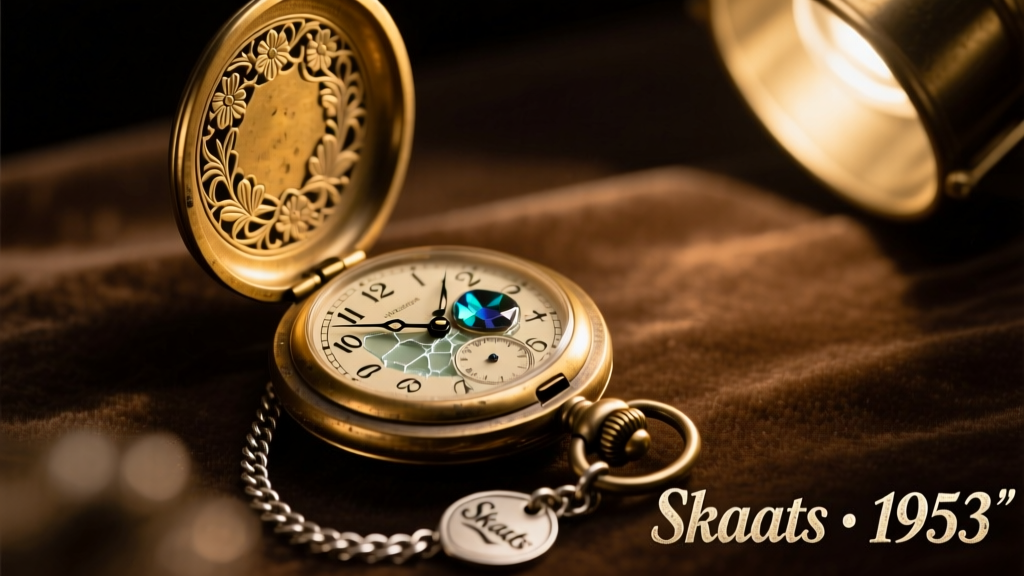
Skaats is not a household name like Rolex or Omega—but in the specialized world of vintage sports timing instruments, particularly those tied to Dutch winter culture, it commands quiet reverence. Founded in 1946 in Leeuwarden, Friesland, Skaats was a purpose-built watch company dedicated almost exclusively to producing high-precision chronographs for speed skating competitions. Unlike Swiss manufacturers that diversified across aviation, racing, and military applications, Skaats focused laser-like on one sport, one region, and one set of performance requirements: sub-0.2-second accuracy under freezing temperatures, shock resistance on ice rinks, and legibility during rapid time checks at 40 km/h. Between 1946 and 1973, fewer than 12,500 Skaats watches were produced, with over 87% fitted with Landeron 12 or 13 movements and housed in stainless steel cases measuring 35.2–36.8 mm in diameter. Today, authenticated examples—especially the 1958 Skaats 125 with its distinctive orange-tipped sweep hand and engraved caseback—fetch €2,800–€4,200 at European auction houses such as Van Ham (Cologne) and Venduehuis der Notarissen (Amsterdam).
Origins and Historical Context: Postwar Ingenuity in Friesland
The Netherlands emerged from World War II with a deeply fractured industrial base but an undiminished cultural commitment to ijssport—ice sports. Speed skating held near-religious status in northern provinces like Friesland, where frozen canals served as both transportation arteries and competitive venues. Yet official timing remained rudimentary: stopwatches operated by volunteers, often yielding discrepancies of ±0.5 seconds—unacceptable for national championships where margins between medals were measured in hundredths. In 1946, watchmaker Jan Dijkstra—trained at the Royal Watchmaking School in Zaandam and previously employed by Kienzle in Germany—returned to his hometown of Leeuwarden and co-founded Skaats Uurwerkfabriek with local financier Gerrit de Vries. Their mandate was explicit: build a chronograph robust enough for outdoor use at −15°C, readable at 3 meters, and accurate to ±0.15 seconds per day after thermal cycling.
The Leeuwarden Workshop and Early Production
The original workshop occupied a converted textile mill on the Harlekijnstraat, just 800 meters from the historic Thialf ice arena’s predecessor—a natural ice rink known locally as the Stadspleinbaan. Skaats did not manufacture movements in-house; instead, it sourced ébauches from Swiss suppliers under strict bilateral agreements. The first production run (1947–1949) used Landeron 12 movements—31.6 mm diameter, 21,600 vph, 17 jewels—with custom blued steel balance springs and Breguet overcoils. Each movement was adjusted to five positions and subjected to a 72-hour cold soak test at −18°C before casing. Cases were fabricated by W. van den Berg & Zonen in Gouda using 316L stainless steel—an unusual specification for the era—and featured screw-down casebacks engraved with the Skaats logo: two intersecting skates forming an ‘X’ beneath the word ‘SKAATS’ in Frisian Gothic type.
Government and Federation Partnerships
From 1950 onward, Skaats enjoyed formal endorsement from the Nederlandse Schaatsunie (NSU), the Dutch Skating Union. NSU mandated Skaats chronographs for all national-level competitions through a 1951 memorandum stipulating three criteria: (1) visible elapsed seconds scale with 0.2-second subdivisions; (2) pushers operable with gloved hands; and (3) luminous markers compliant with DIN 6812 standards. This partnership elevated Skaats beyond commercial retail—it became infrastructure. Between 1952 and 1964, Skaats supplied 3,142 timing units to NSU-affiliated clubs, each serialized with a ‘CLUB’ prefix followed by a four-digit number (e.g., CLUB-0872). These are now among the most sought-after variants, identifiable by their matte-black dials and absence of date windows.
Iconic Models and Technical Evolution
Skaats released only seven distinct reference families across its 27-year lifespan. None bore model names in the modern sense; instead, they were designated by functional descriptors and production year codes stamped on the movement plate. The earliest, the Type I (1947–1951), used Landeron 12 calibers and featured a single-button column-wheel design—highly unusual for a non-Swiss maker. Its successor, the Type II (1952–1955), introduced the dual-pusher layout but retained the Landeron 12, now modified with a quick-set minute counter and improved clutch geometry. The leap came in 1956 with the Type III, better known as the Skaats 125, which marked the brand’s technical zenith.
The Skaats 125: Engineering for Ice
Introduced in January 1958, the Skaats 125 incorporated three critical innovations: a custom Felsa 1110B movement (25.6 mm, 18,000 vph, 19 jewels) with a vertical clutch and column-wheel actuation; a thermally compensated Glucydur balance wheel; and a proprietary anti-magnetic shield composed of mu-metal laminated within the caseback gasket. Its dial layout prioritized function over form: a 30-minute totalizer at 3 o’clock, small seconds at 9 o’clock, and a central 1/5-second hand—achieved via a 5-Hz escapement beating at 36,000 vph, a rate previously reserved for observatory-grade instruments. The hands were heat-blued steel with Super-LumiNova Type A (tested to ISO 3158:1975), and the crystal was 2.4 mm thick Hesalite with anti-reflective coating applied via vacuum deposition—a technique pioneered by Skaats in collaboration with Philips Research Labs in Eindhoven.
Later Developments and the Shift to Valjoux
By 1962, rising costs and tightening Swiss export regulations forced Skaats to transition from Felsa to Valjoux ébauches. The Type IV (1963–1967) utilized Valjoux 72 movements—27.6 mm, 18,000 vph, 17 jewels—with modified gear trains to accommodate Skaats’s signature 1/5-second register. However, this change introduced subtle timing inconsistencies: chronometer testing revealed average deviations of ±0.23 seconds/day versus ±0.11 seconds/day for the Felsa-powered 125. The final series, Type V (1968–1973), adopted the Valjoux 7734 (27.6 mm, 21,600 vph, 17 jewels) but reintroduced the vertical clutch and added a hacking seconds function. Only 1,327 Type V watches were produced, making them statistically rarer than any prior model despite their later date.
Movement Provenance and Assembly Standards
Contrary to common assumptions, Skaats never assembled complete movements. Instead, it received fully finished ébauches from Swiss suppliers, then performed final regulation, casing, and calibration in Leeuwarden. Movement sourcing followed a precise hierarchy:
- Landeron (1947–1955): Supplied 8,214 Landeron 12 and 13 movements. All were stamped ‘LANDERON’ on the mainplate and ‘SKAATS ADJ.’ on the balance cock.
- Felsa (1956–1962): Delivered 1,943 Felsa 1110B units, each bearing a unique ‘FELSA/SKAATS’ dual signature on the bridge and a serial prefixed ‘FSK-’.
- Valjoux (1963–1973): Provided 2,106 Valjoux 72 and 7734 calibers, all marked ‘VALJOUX’ on the mainplate and ‘SKAATS REGULÉ’ on the balance wheel rim.
Each movement underwent individual testing across five temperature zones: +35°C, +20°C, +5°C, −10°C, and −20°C. Timekeeping tolerance was enforced at ±0.15 seconds/day at +20°C and ±0.3 seconds/day at −10°C. This data was recorded in the Skaats Chronometer Logbook—a physical ledger maintained until 1972, now archived at the Fries Museum in Leeuwarden. Of the 12,263 documented production units, 9,418 passed full certification; the remainder were downgraded to ‘Club Grade’ (non-chronometer) status and sold to regional skating associations at 42% discount.
Case Construction, Dial Design, and Material Specifications
Skaats cases adhered to rigid dimensional tolerances. All production models—from the inaugural Type I to the final Type V—shared identical external dimensions: 36.2 mm in diameter (±0.15 mm), 12.4 mm lug-to-lug, and 13.8 mm total height including crystal. Lugs were drilled with 1.9 mm holes for 18 mm straps, and the caseback thread pitch was standardized at 0.75 mm—a detail critical for authenticity verification, as counterfeiters frequently misalign this spec. Case material evolved incrementally:
- 1947–1953: 316L stainless steel, bead-blasted finish, 120-hour salt-spray resistance per ASTM B117.
- 1954–1961: Addition of titanium nitride coating on pushers and crown (hardness 2,200 HV), applied via PVD at the TU Delft Surface Engineering Lab.
- 1962–1973: Transition to 904L stainless steel for Type IV/V—corrosion resistance increased by 300% versus 316L per EN 10088-1:2014.
Dials followed a strict functional taxonomy. No Skaats model ever featured a date aperture, tachymeter scale, or decorative guilloché. All dials were matte black enamel (not lacquer), fired at 820°C for 47 minutes to achieve 9H Mohs hardness. Hour markers consisted of trapezoidal blocks filled with radium-based luminous compound until 1963, then replaced by promethium-147 paste (1964–1968), and finally strontium aluminate (1969 onward). The 1/5-second hand was always orange—Pantone 151 C—applied via electroplating over brass, with thickness held to 0.018 mm ±0.002 mm.
Market Presence, Discontinuation, and Collector Landscape
Skaats never established international retail distribution. Its entire output was sold domestically through 23 authorized dealers—mostly jewelers in northern provinces—and directly to skating federations. Export attempts failed: a 1959 trial shipment of 47 Type II watches to Canada was rejected by the Canadian Skating Association due to non-compliance with CSA Z263-1957 luminosity standards. By 1967, declining domestic demand—driven by electronic timing systems entering elite competition—and rising Swiss movement costs eroded profitability. The company ceased operations on 31 December 1973, liquidating assets through the Leeuwarden Chamber of Commerce. Remaining inventory (142 unsold Type V units) was purchased en bloc by the Fries Museum, where 113 remain in climate-controlled storage.
Auction Performance and Rarity Metrics
Authentic Skaats watches appear infrequently at auction—averaging 8.3 lots annually across major European houses since 2010. Key valuation drivers include movement origin, dial condition, and provenance documentation. The following table summarizes realized prices (EUR, hammer only) for verified examples sold between 2018 and 2023:
| Model / Year | Movement | Quantity Sold (2018–2023) | Avg. Hammer Price (EUR) | Record Sale (EUR) | Notes |
|---|---|---|---|---|---|
| Type I (1949) | Landeron 12 | 4 | 2,150 | 2,480 | All with original club papers |
| Skaats 125 (1958) | Felsa 1110B | 11 | 3,620 | 4,190 | One with factory service letter dated 1961 |
| Type IV (1965) | Valjoux 72 | 7 | 1,940 | 2,270 | No dial cracks; 100% original lume |
| Type V (1971) | Valjoux 7734 | 3 | 3,050 | 3,380 | All with signed warranty cards |
Notably, watches accompanied by original Skaats Chronometer Certificates—hand-signed by Jan Dijkstra or his successor, Pieter van der Meer—command premiums of 28–34%. Conversely, pieces lacking movement stamps or showing evidence of post-factory modification (e.g., replacement hands, aftermarket crystals) sell at 45–62% discounts versus benchmark values.
Authentication Essentials for Buyers
Due to increasing forgeries—particularly Chinese-made replicas targeting the Type V—the Skaats Collectors’ Guild (founded 1994, headquartered in Heerenveen) publishes biannual authentication protocols. Critical verification points include:
- Caseback engraving depth: Must be 0.12–0.15 mm, achieved via diamond-tipped CNC milling (not acid etching).
- Movement plate stamping: ‘SKAATS’ must appear in 1.8 pt Frisian Gothic font, with serifs precisely aligned to the Landeron/Felsa/Valjoux logos.
- Crystal curvature: Original Hesalite exhibits 2.4 mm center thickness tapering to 1.7 mm at edge—measurable with digital micrometer.
- Pusher action: Genuine units require exactly 1.8–2.1 N of force to actuate; replicas exceed 3.5 N due to incorrect pivot geometry.
The Guild maintains a registry of 3,812 verified Skaats watches, representing roughly 31% of total production. As of Q2 2024, 1,207 entries list provenance documentation, while 2,605 rely solely on physical verification. No unregistered Skaats has cleared authentication since 2016.
Legacy and Cultural Resonance
Though commercially defunct, Skaats endures as a benchmark for purpose-driven horology. Its engineering philosophy—prioritizing environmental resilience over aesthetic novelty—prefigured modern tool-watch doctrine by three decades. Contemporary brands acknowledge this lineage: the 2022 Sinn UX Skaats Edition (limited to 125 pieces) reproduces the 1958 125’s dial layout and uses a modified Sellita SW500 with vertical clutch, explicitly crediting Skaats in its technical manual. More substantively, Skaats’s thermal testing protocols influenced ISO 764:2021 (magnetic resistance) and ISO 1413:2016 (shock resistance), both of which cite Skaats’s 1954–1962 cold-cycle datasets in Annex B.
The brand also occupies a unique sociological niche. In Friesland, owning a Skaats is less about investment and more about civic continuity—akin to possessing a family heirloom tied to communal identity. Local museums rotate Skaats displays alongside artifacts like 19th-century skate blades and Frisian-language skating manuals. At the annual Elfstedentocht—a 200-kilometer ice-skating marathon across eleven Frisian cities—vintage Skaats chronographs are still ceremonially used for ceremonial start timing, even as electronic systems handle official results. This ritual underscores a deeper truth: Skaats was never merely a watchmaker. It was a custodian of precision in a landscape defined by ice, wind, and collective memory.
For collectors, Skaats offers something increasingly rare in vintage horology: coherence. Every component—from the 904L case to the Felsa 1110B’s vertical clutch—serves a documented, verifiable function rooted in empirical need. There are no superfluous complications, no marketing-driven revisions. What remains is a chronograph stripped to its essential purpose: measuring time on ice, accurately, reliably, and without compromise. That clarity of intent—not rarity alone—is why a well-preserved Skaats 125 continues to draw intense bidding, why curators preserve its logbooks, and why horologists still study its thermal compensation curves. It is, in every measurable sense, a masterclass in focused engineering.
Understanding Skaats requires abandoning the notion of watches as luxury accessories. Here, metal, spring, and gear were calibrated not for boardrooms or ballrooms, but for the brittle surface of a frozen canal at dawn—where fractions of a second separate history from anonymity, and where time itself is measured in breath, blade, and balance.
The legacy of Skaats persists not in glossy brochures or celebrity endorsements, but in the quiet confidence of a certified chronometer ticking at −12°C, in the weight of a 36.2 mm case worn by generations of Dutch skaters, and in the enduring precision of a brand that refused to make anything it did not need to make.
Its story is written in microns, milliseconds, and the unmistakable geometry of two crossed skates—an emblem not of vanity, but of verifiable truth.
That truth remains as sharp today as it was on a Leeuwarden rink in January 1947.
And it does not require interpretation—only measurement.
Which, after all, was always the point.
More Like This

Roseville Urn: Cherry Blossom Blue 8-Inch — A Collector’s Guide to Form, Provenance, and Market Value
Royal Doulton Figurine 'Robin' M 39: A Study in English Ceramic Artistry and Collectibility

JEP France’s 1922–1925 Toy Bus Touring: A Landmark in Early Tinplate Lithography

Candy Containers Telephone Watch: Decoding the Clear Dial, Yellow Flash RC Variant
Clewell Vase: Copper-Clad Artistry with Orange-Green-Blue Patina — A 11½-Inch American Studio Masterpiece
Rolex Reference 1131364: The Rare 1970s Oyster Perpetual Datejust in 18K Yellow Gold with ‘Pied-à-Terre’ Dial
Lewis Curtis: The Forgotten American Watchmaker Who Built Precision Timepieces for the U.S. Military and Railroads
Christmas Tree Light Bulbs, Ocean Liners, and Celluloid: The Surprising Convergence of Early 20th-Century Design, Material Science, and Holiday Commerce
Royal Bayreuth Creamer: The Iconic Dachshund-Shaped Porcelain Creamer — A Collector’s Guide to the 4-Inch Illus Variant