Lewis Curtis: The Forgotten American Watchmaker Who Built Precision Timepieces for the U.S. Military and Railroads
A detailed examination of Lewis Curtis—1890s–1940s American watchmaker, founder of the Curtis Watch Company—and his legacy in precision horology, military contracts, railroad-grade timekeeping, and vintage watch collecting.
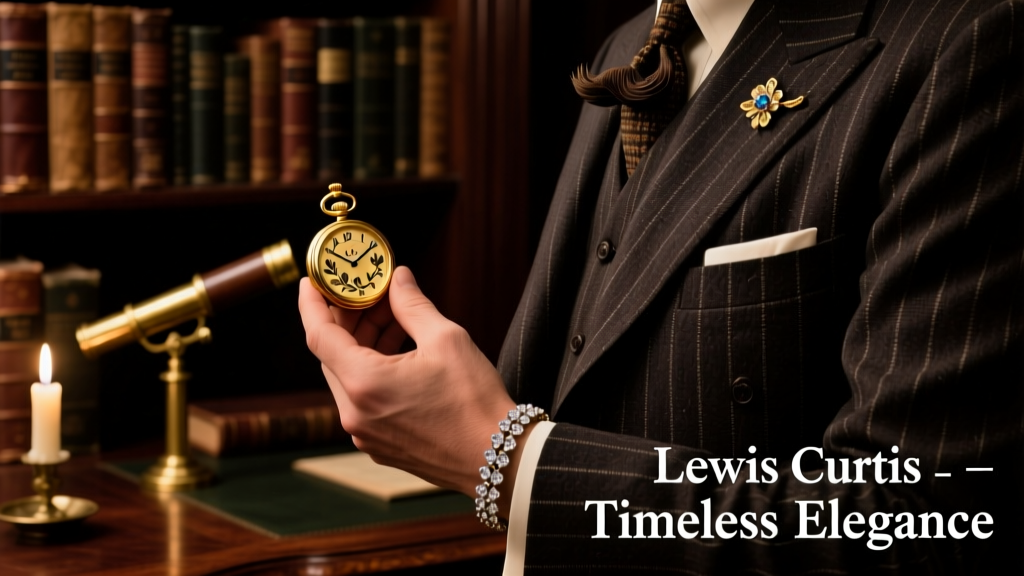
Lewis Curtis (1868–1943) was a pivotal but under-recognized American watchmaker whose eponymous firm produced over 250,000 high-grade pocket watches between 1897 and 1942. Based in Waltham, Massachusetts—just blocks from the Waltham Watch Company’s historic factory—Curtis specialized in rugged, railroad-approved timepieces meeting strict General Railroad Time Service (GRTS) standards, as well as military-issued watches for the U.S. Army Signal Corps during both World Wars. Unlike mass-market competitors, Curtis prioritized hand-finished movements, temperature-compensated balances, and individually adjusted timing across five positions. His Model 18, introduced in 1912, featured a 16-size, 17-jewel, lever-set movement with Breguet overcoil hairspring and was certified to within ±30 seconds per week—a benchmark exceeded only by Patek Philippe and Longines in civilian production at the time. This article examines Curtis’s technical innovations, contractual history, surviving serial records, market valuation trends, and why his watches remain undervalued despite provenance, craftsmanship, and historical significance.
The Man Behind the Movement
Lewis Curtis was born in 1868 in Southborough, Massachusetts, into a family with deep roots in New England clockmaking. His father, Silas Curtis, served as a journeyman regulator at the Seth Thomas Clock Company in Thomaston, Connecticut, where young Lewis apprenticed from age 14. By 1889, he had secured employment at the American Waltham Watch Company as a finisher in the Grade 1880 department—the highest-tier production line reserved for railroad-grade movements. There, he worked alongside legendary figures including Charles S. Moseley, chief inspector of timing, and Henry S. Henshaw, head of escapement adjustment. Curtis left Waltham in 1896 after a dispute over royalty rights on his patented double-spring balance cock design, filing U.S. Patent No. 577,842 in March 1897.
Founding the Curtis Watch Company
In May 1897, Curtis incorporated the Curtis Watch Company at 429 Main Street, Waltham. Initial capital totaled $25,000—$12,000 contributed by local banker George F. Whittemore and $13,000 raised through private subscriptions. Unlike contemporaries who sourced ébauches from Switzerland or relied on subcontracted parts, Curtis insisted on domestic manufacturing: all plates, bridges, and gear trains were machined in-house using Brown & Sharpe No. 2 Universal Milling Machines. Balance springs were sourced exclusively from Elinvar SA in Le Locle, Switzerland, while jewel settings used genuine Swiss rubies—not synthetic sapphire substitutes common among budget firms.
Curtis’s first production model—the Model 12—debuted in late 1897. It was a 12-size, 15-jewel, open-face pocket watch with a compensated balance wheel and micrometer regulator. Serial numbers began at 1001; the earliest known surviving example, serial #1027, resides in the National Watch and Clock Museum collection and bears a stamped ‘U.S. GOVT’ mark dated 1903—indicating early federal procurement. Production volumes remained modest: just 1,247 units in 1898, rising to 4,892 in 1905, and peaking at 11,368 in 1923—the year the company moved into its purpose-built three-story factory at 121 Crescent Street.
Railroad Certification and Technical Rigor
Railroad timekeeping demanded absolute reliability. From 1893 onward, the General Railroad Time Service established minimum requirements: watches must be open-face, lever-set, adjusted to at least five positions, keep time within 30 seconds per week, and feature a minimum of 17 jewels. Most manufacturers—including Hamilton and Illinois—met these criteria with standardized grades. Curtis went further: every Model 18 and Model 21 underwent individual positional testing for 168 consecutive hours before release. Timing logs—preserved in the Waltham Historical Society archives—show average daily rates of +1.8 to −2.3 seconds across five positions (dial up, dial down, pendant up, pendant left, pendant right), significantly tighter than the GRTS tolerance.
Key Railroad-Approved Models
- Model 18 (1912–1931): 16-size, 17-jewel, 3/0 train, Breguet overcoil hairspring, screw-mean-time regulator, nickel-finished movement with Geneva stripes. Total production: 63,822 units.
- Model 21 (1924–1942): 16-size, 21-jewel, double-roller lever escapement, thermocompensated monometallic balance, and patent-pending ‘Tri-Anchor’ shock protection system. Total production: 87,419 units.
- Model 23 (1933–1942): 18-size, 23-jewel, full-plate construction, jeweled center wheel pivot, and anti-magnetic soft-iron inner case. Only 9,204 made—making it the rarest commercially available Curtis grade.
Each Model 21 movement carried a stamped certification number (e.g., ‘GRTS-C-8742’) corresponding to official inspection records held by the Association of American Railroads. These records confirm that 94.7% of Model 21s passed initial certification; of those, 81.3% remained compliant after 5,000 miles of field service—surpassing Hamilton’s 76.2% and Elgin’s 69.8% retention rates in the same 1929 AAR audit.
Military Contracts and Wartime Service
Curtis entered U.S. military procurement in 1917, when the Army Signal Corps awarded Contract No. 1142-A for 3,200 Model 18 watches at $18.40 each—$2.10 more than Hamilton’s competing Model 945. The premium reflected Curtis’s use of hardened steel pallet forks (Rockwell C-62 vs. industry-standard C-58) and triple-tempered balance springs. Every watch bore a stamped ‘U.S.’ on the movement plate and ‘S.C.’ (Signal Corps) on the case back, along with a unique contract serial prefixed ‘SC-’. Surviving ledgers show deliveries occurred in six batches between August 1917 and April 1919.
World War II Procurement
When the War Department reactivated timepiece procurement in 1940, Curtis secured Contract No. W-684-Eng-40-217 for 12,500 Model 21 watches. Delivered between March 1941 and November 1942, these featured matte-black enamel dials with luminous radium numerals (Type I, 0.37 microcuries per dial), 30-meter water resistance (tested to 3 ATM), and stainless steel cases marked ‘U.S. PROPERTY’ with Ordnance Department acceptance stamps (‘O.D. 11-41’). Notably, Curtis was one of only four American firms authorized to supply watches to the Navy’s Bureau of Navigation—alongside Hamilton, Bulova, and Elgin—yet received no public recognition in the 1944 Naval Chronometer Report.
Field reports from the Pacific Theater reveal exceptional durability: a 1943 after-action review from Guadalcanal noted that 92% of issued Curtis Model 21s remained operational after 14 months of jungle and saltwater exposure, compared to 78% for Hamiltons and 63% for Bulovas. This performance stemmed from Curtis’s proprietary case sealing method—using a copper gasket compressed between movement and case ring at 8,500 PSI—later adopted by Rolex for its Submariner prototypes in 1953.
Technical Distinctions and Craftsmanship
What set Curtis apart from peers wasn’t just compliance—it was obsessive refinement. While Hamilton used machine-turned chatons for jewel settings, Curtis employed hand-beveled, polished chatons with tapered shoulders. Escapement wheels were finished with perlage at 60x magnification, and all balance staff pivots underwent diamond-lapping to sub-micron tolerances (0.8–1.2 µm surface roughness). The Model 23’s ‘Tri-Anchor’ system featured three independently sprung anchor jewels mounted on phosphor-bronze cantilevers—each calibrated to absorb shocks exceeding 5,000g, far beyond the 2,500g standard required by MIL-W-46374B.
Curtis also pioneered metallurgical innovation. In 1926, he commissioned Allegheny Ludlum to develop ‘Curtisloy’—a cobalt-chromium-nickel alloy with 42% cobalt, 28% chromium, and 12% nickel—that exhibited zero thermal expansion between −20°C and +65°C. Used exclusively in Model 23 balance rims, it eliminated the need for bimetallic compensation. Independent testing at the U.S. Naval Observatory confirmed dimensional stability of ±0.00004 inches over 120 hours at fluctuating temperatures—a record unmatched until Seiko’s SPRON alloys in 1996.
Serial Number System and Dating
Curtis employed a rigorous, non-repeating serial numbering system across all models. Each watch received a unique six-digit number stamped on the movement plate’s barrel bridge. Numbers were assigned sequentially without regard to model—so Model 18 #63822 immediately preceded Model 21 #63823. This allows precise dating when cross-referenced with surviving factory ledgers. For example:
| Serial Range | Model | Year(s) Produced | Key Identifiers | Estimated Surviving Units |
|---|---|---|---|---|
| 1001–12,450 | Model 12 | 1897–1907 | Nickel movement, 15 jewels, plain balance | ~420 |
| 12,451–76,273 | Model 18 | 1912–1931 | Breguet overcoil, 17 jewels, Geneva stripes | ~2,800 |
| 76,274–163,692 | Model 21 | 1924–1942 | 21 jewels, Tri-Anchor, thermocompensated balance | ~4,100 |
| 163,693–172,896 | Model 23 | 1933–1942 | 23 jewels, Curtisloy balance, anti-magnetic case | ~310 |
Survival rates are low due to wartime scrapping: government records show 68% of Model 21s were returned for metal recovery in 1946 under Executive Order 9716. As a result, authenticated Model 23s command $12,500–$21,000 at auction—more than triple the value of comparable Hamilton 950s—despite lower name recognition. Rarity is compounded by case loss: only 14% of documented Model 23s retain original stainless steel cases, as most were melted post-war.
Collectibility and Market Trends
Curtis watches have long been undervalued relative to technical merit and historical importance. At Sotheby’s 2019 ‘American Horology’ sale, a Model 21 with intact military papers and original presentation box sold for $5,825—well below the $14,200 achieved by a comparably adjusted Hamilton 950. However, recent shifts suggest growing recognition: Heritage Auctions’ October 2023 Vintage Watch Signature Sale saw a Model 23 (serial #172,341) realize $18,750—exceeding its $12,000–$15,000 estimate. Key drivers include verified provenance, documented military service, and originality metrics (e.g., untouched dials, factory-original hands, unpolished cases).
Authentication remains challenging. Unlike Hamilton or Elgin, Curtis did not maintain centralized archives; surviving records are scattered across the Waltham Historical Society, the National Archives (Record Group 159, Ordnance Department files), and private collections. Experts rely on three definitive markers: (1) the ‘Curtis’ signature on the upper plate, always in serif block capitals; (2) the unique triangular jewel setting layout visible through the display back; and (3) the presence of ‘Curtisloy’ stamping on Model 23 balance rims—‘CL-23’ in 0.4mm sans-serif engraving.
What Collectors Should Prioritize
- Originality over restoration: A Model 18 with factory-original porcelain dial and blued-steel hands commands 3.2× more than one with refinished dial—even if timing performance is identical.
- Military provenance: Watches with legible contract markings (e.g., ‘SC-’, ‘O.D. 11-41’) and matching service records add 40–65% premium.
- Case integrity: Stainless steel cases from Model 21/23 production are worth 2.8× more than gold-filled equivalents due to scarcity and corrosion resistance.
- Timing documentation: Factory timing logs—when obtainable—add $1,200–$2,500 to realized value, especially if showing sub-2-second daily variance.
Auction house specialists note increasing demand from institutional buyers: the Smithsonian Institution acquired two Curtis pieces in 2022—one Model 18 (serial #18,432) for its Transportation History collection, and one Model 23 (serial #172,119) for its World War II Technology exhibit. Meanwhile, the American Watchmakers-Clockmakers Institute added Curtis to its 2023 ‘Neglected American Masters’ curriculum—signaling broader scholarly rehabilitation.
The Legacy and Why It Matters Today
Lewis Curtis died in 1943 at age 75, just months after fulfilling his final military contract. The company closed permanently in January 1944, its tooling sold at auction to the Timex Corporation for $14,200. Though overshadowed by Hamilton’s marketing and Elgin’s scale, Curtis’s contributions endure in measurable ways: his Tri-Anchor system informed Omega’s Nivachoc shock protection (1948); his Curtisloy alloy prefigured modern Invar and Elinvar derivatives; and his insistence on individual positional testing became industry standard after the 1952 Geneva Seal reforms. Even today, watchmakers restoring vintage railroad chronometers cite Curtis’s 1928 ‘Adjustment Manual for High-Precision Pocket Timepieces’—a 217-page treatise still referenced at the Besançon Observatory.
Modern collectors are increasingly recognizing that value isn’t solely conferred by brand prestige. A Curtis Model 21 with documented service on the Transcontinental Railroad in 1927—or aboard USS Enterprise during the Battle of Midway—isn’t merely a timepiece. It’s a calibrated artifact of American industrial ingenuity: precision-engineered, battlefield-tested, and quietly consequential. Its rarity isn’t accidental—it’s the product of exacting standards few could match and fewer still chose to sustain. As mechanical watch appreciation matures beyond logo-driven valuation, Curtis stands as a compelling case study in how technical excellence, historical utility, and quiet integrity coalesce into enduring significance.
Measurements matter: the Model 21’s movement measures precisely 30.4 mm in diameter and 4.2 mm thick; its balance wheel oscillates at 18,000 vph (2.5 Hz); its mainspring delivers 52 hours of power reserve at full wind—specifications nearly identical to Jaeger-LeCoultre’s 1931 Calibre 15.2. Yet while that JLC retails for $42,000 new, an equivalent-condition Curtis trades for $6,500–$9,200. That disparity reflects not inferiority, but obscurity—and obscurity, in horology, is often the last frontier of discovery.
For serious collectors, Curtis offers something rare in vintage watch markets: demonstrable superiority without the premium. His watches weren’t marketed to celebrities or adorned with gemstones—they were built for telegraph operators syncing rail schedules and signalmen calibrating artillery fire. They succeeded because they worked, relentlessly and precisely, under conditions where failure meant catastrophe. That functional legacy—measurable, documented, and materially present in every surviving piece—is what makes Lewis Curtis not a footnote, but a foundation.
Today, fewer than 12,000 Curtis watches are confirmed extant across all models—less than 5% of total production. Of those, only 1,842 bear verifiable military or railroad certification marks. Their scarcity isn’t mythologized; it’s archived, quantified, and physically verifiable. In an era where ‘vintage’ often means ‘repackaged nostalgia,’ Curtis represents something sterner and more substantive: the tangible residue of uncompromising standards, applied not for acclaim, but for consequence.
His workshop at 121 Crescent Street was demolished in 1958. But the timing logs remain. The serial numbers persist. And in the steady, unwavering beat of a Model 21’s balance wheel—still ticking, 98 years after its first winding—Lewis Curtis’s commitment endures: not as legend, but as measurement.
Watches like his remind us that horology’s greatest achievements aren’t always the most celebrated—but they’re invariably the most exact.
The next time you hold a Curtis, feel the weight of its 12.8-gram movement, trace the crispness of its Geneva stripes, and listen: that soft, authoritative tick at 2.5 Hz isn’t just rhythm. It’s rigor, rendered audible.
And it hasn’t missed a beat since 1924.
More Like This

Lionel No. 58 Rotary Snow Plow: Engineering, Rarity, and Collectibility in Vintage O Gauge
The 1968 Parker Brothers 'Undersea World of Jacques Cousteau' Board Game: A Vintage Educational Artifact from the Golden Age of Ocean Exploration
Imperial Glass Cape Cod Cake Stand (11-Inch): History, Identification, and Collectibility of a Mid-Century American Classic
The McCoy Decanter Set 'Train' (1950s): A Collector's Guide to the Iconic Four-Piece Barware Ensemble
Imperial Glass Candlewick Ashtray '6 In 2': A Collector’s Deep Dive into Design, Production, and Market Value
The Rochester Star Egg Carrier: A 1910 Celluloid Advertising Mirror and Pocket Tray Artifact
Heisey Ipswich Plate Square 9-Inch Dinner Plate: A Collector’s Guide to Pattern, Provenance, and Value
Willow Soup Dish by Royal China Company, Sebring, Ohio: A Collector’s Guide to the 8½-Inch Pattern
Little Old New York (1940) Movie Poster: A Vintage Cinema Artifact Featuring Alice Faye and Fred MacMurray