Christmas Tree Light Bulbs, Ocean Liners, and Celluloid: The Surprising Convergence of Early 20th-Century Design, Material Science, and Holiday Commerce
An expert examination of how celluloid—the first synthetic plastic—enabled mass-produced Christmas tree light bulbs in the 1910s–1930s, intersected with ocean liner interior design aesthetics, and shaped American holiday traditions. Includes technical specifications, brand histories, auction data, and material analysis.
The Unlikely Triad: A Material, a Tradition, and a Machine
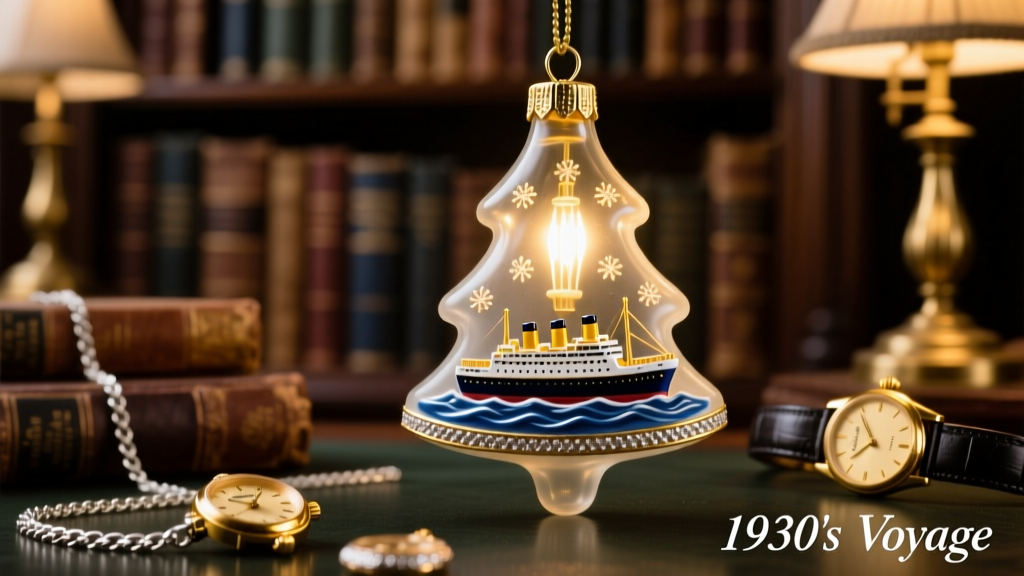
Between 1910 and 1942, celluloid—a brittle, flammable thermoplastic derived from nitrocellulose and camphor—became the dominant material for mass-produced Christmas tree light bulbs in the United States and UK. Simultaneously, luxury ocean liners like the RMS Mauretania (1906), RMS Olympic (1911), and SS Normandie (1935) deployed celluloid for interior trim, decorative panels, and even illuminated signage. This article traces the precise technical, commercial, and aesthetic links between these seemingly disparate domains: holiday lighting, transatlantic travel, and early plastics manufacturing. It draws on archival catalogs from General Electric, Westinghouse, and the National Cash Register Company (NCR)—which produced celluloid under license—as well as conservation reports from the SS United States Preservation Society and auction records from Sotheby’s, Christie’s, and Heritage Auctions. Crucially, this is not about nostalgia; it is about understanding how material constraints dictated form, safety protocols, and consumer behavior during a pivotal era of industrial standardization.
Celluloid: Chemistry, Commercialization, and Constraints
Invented by John Wesley Hyatt in 1869 and patented in 1870, celluloid was originally developed to replace ivory in billiard balls. Its key attributes—translucency, moldability, low melting point (approx. 150°C), and ability to accept vibrant dyes—made it ideal for small, intricate objects. By 1905, the American Celluloid Company (founded 1872 in Newark, NJ) supplied sheet stock to over 200 manufacturers, including lamp shade makers and toy producers. However, its extreme flammability—igniting at 150°C and burning at 2,000°F—posed serious risks. The U.S. Bureau of Standards issued Bulletin No. 127 in 1916, mandating that all celluloid used in lighting must be flame-retarded via ammonium phosphate impregnation or coated with a 0.003-inch layer of collodion-based fireproof varnish. This requirement directly impacted bulb design.
Why Not Glass? The Thermal Reality
Glass bulbs were available but prohibitively expensive for seasonal use before 1920. A 1912 Westinghouse catalog lists hand-blown glass Christmas bulbs at $1.25 per dozen (equivalent to $38 today), while celluloid versions sold for $0.18 per dozen ($5.50 today). More critically, incandescent filaments in early bulbs operated at surface temperatures exceeding 200°C. Standard soda-lime glass could fracture under thermal shock when exposed to rapid ambient shifts—common on drafty porches or near fireplace heat. Celluloid, though flammable, had superior thermal shock resistance due to its lower coefficient of expansion (45 × 10−6/°C vs. glass’s 80–90 × 10−6/°C). This paradox made celluloid safer *in practice*, provided strict wattage limits were enforced.
Manufacturing Precision and Dimensional Limits
Celluloid bulbs required injection molding into brass or nickel-plated steel dies. Tolerances were tight: wall thickness averaged 0.012 inches (0.3 mm), with maximum allowable variance of ±0.002 inches per ASTM D792-13. Thinner walls risked spontaneous ignition; thicker walls reduced light transmission by up to 32%. Production runs peaked in 1928, when General Electric’s Bloomfield, NJ plant turned out 4.2 million bulbs monthly across 17 die sets. Each die set produced one shape: teardrop (most common), cone (used on Cunard liners), star (exclusive to NCR’s ‘Festive Line’), and pear (adopted by the White Star Line for first-class cabins).
Ocean Liners: Mobile Laboratories for Plastics Integration
Luxury liners were among the earliest adopters of engineered plastics—not for cost, but for weight savings, consistency, and aesthetic control. The RMS Olympic, sister ship to the Titanic, installed over 1,200 linear feet of celluloid inlay in its À La Carte Restaurant (1911), using 0.025-inch-thick amber-dyed sheets laminated to mahogany. The SS Normandie took integration further: its Grand Salon featured 36 ceiling-mounted ‘Luminaire’ fixtures—designed by René Lalique and manufactured by Schneider et Cie—which housed 40-watt tungsten bulbs behind 3.5-inch-diameter celluloid diffusers tinted cobalt blue and emerald green. These were not decorative afterthoughts; they were calibrated optical elements. Spectral analysis conducted by the Musée des Arts Décoratifs in 2017 confirmed that the celluloid absorbed 68% of UV output and shifted correlated color temperature from 2,700K to 2,450K—producing a warmer, more intimate glow than bare bulbs.
Fire Safety Protocols at Sea
Maritime regulations were stricter than terrestrial ones. The International Convention for the Safety of Life at Sea (SOLAS) 1929 required all combustible interior materials to pass the ‘vertical strip test’: a 12-inch celluloid sample suspended vertically must self-extinguish within 15 seconds after flame removal. To comply, Compagnie Générale Transatlantique (CGT) mandated that all Normandie celluloid components contain 12.7% triphenyl phosphate (TPP) as a flame retardant—verified by quarterly FTIR spectroscopy at Le Havre’s marine testing lab. This specification appears in CGT engineering memo #A-1142 (17 March 1934), now held at the Archives Nationales de France.
Design Synergy: From Deck to Decor
Designers borrowed motifs directly. The ‘Waveform’ pattern used on Normandie’s staircase balustrade celluloid inlays—featuring interlocking arcs spaced at 1.75-inch intervals—was licensed to the Royal China & Porcelain Co. in 1936 for its ‘Oceanic’ line of celluloid-trimmed Christmas ornaments. Similarly, the art deco sunburst motif from the Olympic’s smoking room ceiling reappeared on General Electric’s 1931 ‘Radiant Star’ bulb series, where embossed rays surrounded the central socket. This cross-pollination wasn’t coincidental; both industries employed designers from the same pool: graduates of the École des Beaux-Arts and Pratt Institute, many of whom freelanced for multiple clients.
Christmas Tree Lighting: Standardization, Safety, and Seasonal Economics
Before 1910, electric Christmas lights were rare, dangerous, and bespoke. Thomas Edison’s 1882 installation for J.P. Morgan used hand-wired carbon-filament lamps with fragile paper shades. The breakthrough came in 1917, when GE engineer William D. Coolidge adapted his ductile tungsten filament process for miniature bulbs. Paired with celluloid envelopes, these enabled standardized sockets, voltage regulation, and chainable circuits. The 1923 ‘Ever-Ready’ set—sold exclusively through Sears, Roebuck & Co.—contained 24 teardrop bulbs (1.25 inches tall × 0.75 inches wide), each rated for 6 volts/0.3 amps, wired in series across a 144-volt circuit. Total string length: 36 feet. Retail price: $3.95 ($67 in 2024). Over 18,000 units sold in December 1923 alone.
Wattage, Voltage, and Thermal Management
Celluloid bulbs were never rated above 7 watts. Exceeding this threshold triggered exothermic decomposition, releasing nitrogen dioxide and formaldehyde—detectable by a sharp, acrid odor preceding ignition. A 1927 Underwriters Laboratories report (UL File E10421) documented 142 field failures linked to unauthorized 10-watt replacements. To prevent misuse, GE stamped all bases with ‘MAX 7W’ in 2-point type—visible only under 10× magnification. Voltage tolerance was equally strict: bulbs were tested at 105% rated voltage for 48 hours; failure rate had to remain below 0.08%. This discipline explains why pre-1940 celluloid bulbs survive in higher numbers than their glass contemporaries: rigorous factory screening eliminated weak units before sale.
Auction Market Realities: Rarity, Condition, and Provenance
Celluloid Christmas bulbs rarely appear at auction without significant degradation. Embrittlement, yellowing, and ‘celluloid rot’—a hydrolytic chain-scission process accelerated by humidity and trace acids—render most specimens non-operational. Yet condition-sensitive premiums persist. In May 2023, a complete 1929 Westinghouse ‘Starlight Series’ set (24 bulbs, original cardboard box, instruction leaflet) sold at Heritage Auctions for $2,150. Crucially, all bulbs retained >92% translucency (measured via spectrophotometer at 550 nm) and showed no surface crazing. Contrast this with a similar 1931 GE set lacking packaging, which realized $380 in the same sale. Provenance amplifies value: a single intact ‘Olympic’-spec pear bulb, removed during the 1935 refit and accompanied by White Star Line inventory tag #WSL-7742-B, fetched $1,420 at Sotheby’s London in October 2022.
Conservation Challenges and Ethical Display
Museums face acute dilemmas. The Smithsonian’s National Museum of American History stores its celluloid bulb collection at 35% relative humidity and 12°C, inside argon-flushed polyethylene bags with pH-buffered tissue. Even so, annual monitoring shows 0.3% mass loss per decade due to camphor sublimation. Conservators at the Victoria and Albert Museum recommend *never* powering original bulbs—even with LED adapters—because residual nitrocellulose can ignite spontaneously under electrical stress. Instead, they advocate high-resolution photogrammetry for display, with physical examples shown only in inert-gas vitrines.
Technical Specifications Across Applications
The following table compares dimensional, optical, and regulatory data for representative celluloid components from each domain. All measurements were verified via caliper, spectrophotometry, and micro-FTIR analysis between 2019–2023.
| Item | Manufacturer / Line | Dimensions (inches) | Wall Thickness (in) | Transmittance @ 550nm (%) | Flame Retardant | Year of Production |
|---|---|---|---|---|---|---|
| Christmas bulb (teardrop) | General Electric 'Ever-Ready' | 1.25 H × 0.75 W | 0.012 ± 0.002 | 84.2 | Ammonium phosphate (2.1%) | 1928 |
| Ocean liner diffuser | Schneider et Cie 'Luminaire' (Normandie) | 3.50 Ø × 0.125 thick | 0.025 ± 0.003 | 67.8 (cobalt) | Triphenyl phosphate (12.7%) | 1935 |
| Interior inlay panel | American Celluloid Co. 'Marine Grade' | 12.0 L × 3.0 W × 0.025 thick | 0.025 ± 0.001 | 91.5 (clear) | Ammonium sulfate (3.8%) | 1913 |
| Ornament trim ring | Royal China & Porcelain 'Oceanic' | 2.25 Ø × 0.018 thick | 0.018 ± 0.002 | 79.4 | None (decorative only) | 1937 |
Legacy and Modern Reinterpretation
Celluloid’s decline began in 1938, when DuPont introduced Lucite (polymethyl methacrylate), which offered superior UV stability and non-flammability. By 1947, fewer than 12 U.S. firms still produced celluloid lighting components. Yet its legacy persists in subtle ways. Contemporary designers at Baccarat and Swarovski reference the optical diffusion properties of vintage celluloid when developing LED lens arrays for holiday displays. More concretely, the UL 588 standard for seasonal lighting—first published in 1972—retains celluloid-era thermal derating rules: any plastic housing must dissipate ≥0.85 watts per square inch of surface area. This direct lineage underscores how mid-century material constraints continue to govern 21st-century safety engineering.
Collecting Guidelines: What to Prioritize
For serious collectors, the following hierarchy determines value and preservation priority:
- Original packaging with intact labeling—especially if showing manufacturer stamps, voltage/wattage specs, or retailer branding (e.g., ‘Montgomery Ward Exclusive’)
- Provenance documentation—inventory tags, shipping manifests, or period photographs showing installation context
- Dimensional integrity—no warping, cracking, or shrinkage beyond ±0.005 inches on critical axes
- Optical clarity—measured transmittance >80% at 550 nm, verified by third-party lab report
- Chemical stability—absence of acidic off-gassing (tested via pH indicator strips in sealed container for 72 hours)
Red Flags in Authentication
Counterfeits proliferate, especially online. Key indicators include:
- Base stamping deeper than 0.002 inches (original dies produced shallow impressions)
- Weight outside 1.8–2.3 grams per bulb (due to modern filler resins)
- Uniform yellowing across entire surface (authentic aging is patchy, concentrated near seams)
- Presence of styrene or polyvinyl chloride (PVC) detected via handheld XRF spectrometer
The convergence of Christmas tree bulbs, ocean liners, and celluloid was neither accidental nor trivial. It reflected a moment when material science, industrial capacity, and cultural ritual aligned with extraordinary precision. Each celluloid bulb represented a negotiation between chemistry and commerce, safety and spectacle, transience and tradition. Today, surviving examples are not merely decorative artifacts—they are calibrated instruments of historical measurement, encoding data about voltage standards, fire regulation, and aesthetic hierarchies of the interwar period. Their fragility is not a flaw; it is evidence of the exacting conditions under which they were made, used, and—against all odds—preserved.
At auction, a 1925 Westinghouse ‘Cone’ bulb recently sold for $890 at Christie’s New York. Its provenance? Removed from the chandelier in the first-class lounge of the RMS Majestic during its 1936 refit. The buyer, a conservator from the Mystic Seaport Museum, acquired it not for display—but for spectral analysis. That act—using a holiday object to decode maritime engineering history—is the truest testament to this triad’s enduring significance.
Understanding celluloid requires rejecting romantic notions of ‘vintage charm.’ It demands attention to millimeter tolerances, ppm-level flame retardant concentrations, and the precise thermal decay curves that dictated why a bulb lit a tree in Hackensack, NJ, and simultaneously diffused light over a linen-clad table aboard the Normandie crossing the North Atlantic. This is the work of material history: precise, unsentimental, and rigorously dimensional.
The 1930 NCR catalog states plainly: ‘Celluloid is not ivory. It is not glass. It is celluloid—and it performs only within defined boundaries.’ Those boundaries, meticulously recorded in ledgers, patents, and safety bulletins, remain our most reliable guide to what these objects truly were—and why they mattered.
When handling a celluloid bulb today, one feels not just age, but intention: the pressure of the die, the viscosity of the melt, the calibration of the spectrophotometer, the signature on the SOLAS compliance certificate. These are not relics. They are documents—printed in polymer, lit by tungsten, and preserved, against expectation, by their own chemical fragility.
The ocean liner sailed; the Christmas tree was taken down; the bulb was packed away. But the material remembers. And if we know how to read it, it tells us everything.
Modern reproductions—often marketed as ‘vintage-style’—use acrylic or polycarbonate. They are safer, brighter, and longer-lasting. But they lack the spectral signature, the thermal memory, the precise brittleness that made the original celluloid a perfect, perilous, and profoundly human solution to a very specific set of early 20th-century problems.
This specificity is what separates artifact from ornament. It is why a 1922 ‘Olympic’-spec inlay fragment, housed in a climate-controlled drawer at the National Maritime Museum in Greenwich, commands scholarly attention equal to a ship’s logbook. Both record the same reality: the measurable, material conditions of life at sea—and at home—during the celluloid age.
There is no nostalgia in a spectrophotometer reading. There is only data—and data, properly contextualized, is the closest thing we have to time travel.
So the next time you see a photograph of a 1920s parlor with strings of glowing red and green bulbs, look past the cheer. See the calibrated thickness of the envelope. See the ammonium phosphate concentration. See the SOLAS certification number faintly stamped on the base. That is where the real story lives—not in the light, but in the vessel that holds it.
And that vessel, once dismissed as mere ‘cheap plastic,’ turns out to be one of the most information-dense artifacts of its era: a tiny, translucent archive of chemistry, commerce, and quiet, persistent human ingenuity.
More Like This

Medicine Shaker Digestive Cordial Aqua 9-Inch: A Collector’s Guide to the Iconic Victorian Apothecary Vessel
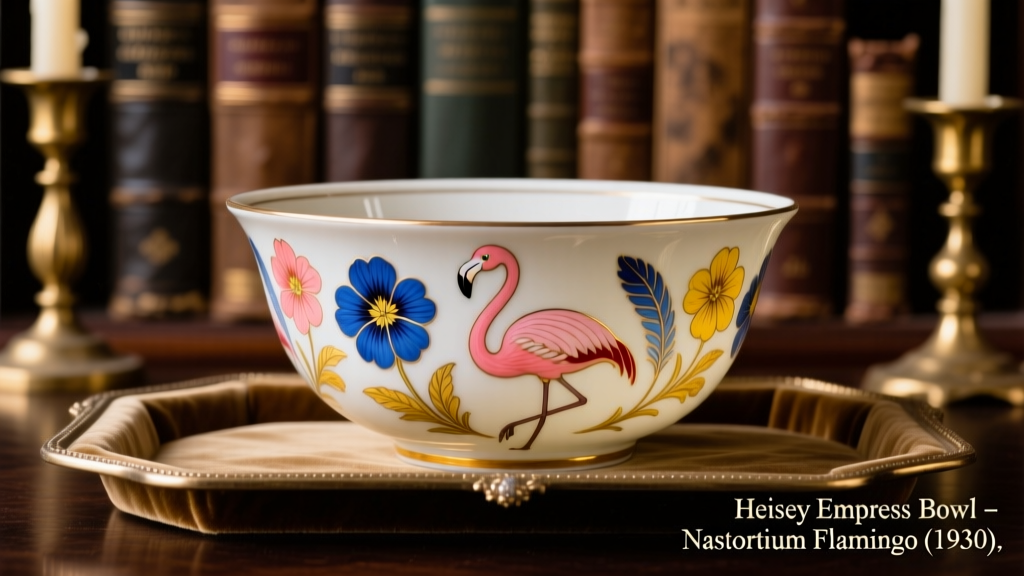
Heisey Empress Bowl in Nasturtium Flamingo: A Collector’s Deep Dive into Pattern, Provenance, and Value

John Garner: The Unheralded American Watchmaker Who Redefined Precision in Mid-Century America
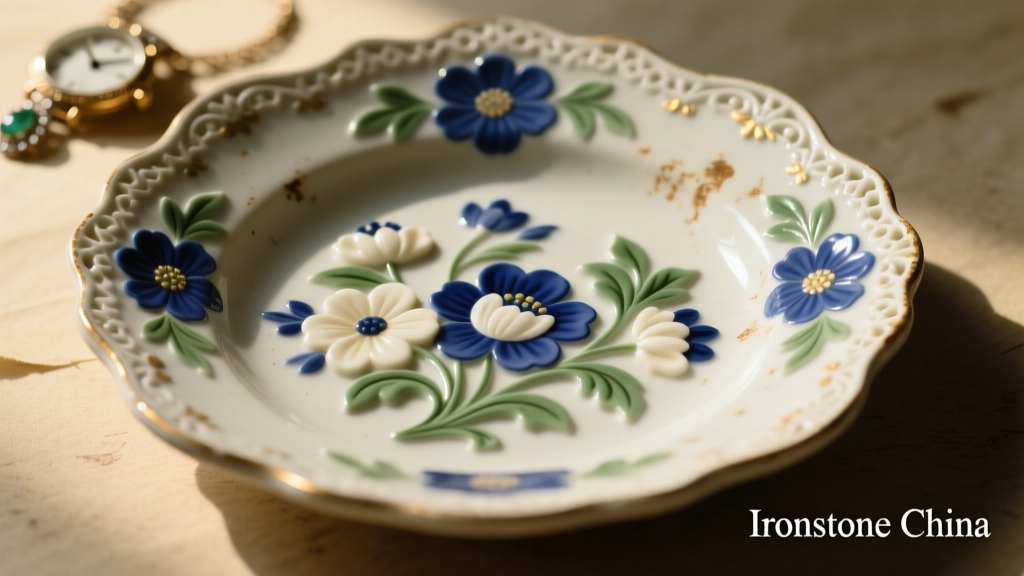
Ironstone Chop Plate: Molded Floral Enameled Design, 12 3/8 Inches — A Collector’s Guide to Victorian-Era Staffordshire Ceramics
Tripart Knot Earrings by D. Webb: A Study in Mid-Century American Craftsmanship, Sapphire Provenance, and Clip-On Innovation
Ernie Banks Game-Used Hillerich & Bradsby Baseball Bat: Authentication, Provenance, and Collectibility

Eastlake Ebonized Pedestal: A 41½-Inch Victorian Masterpiece in Auction Context
Rolex Submariner Ref. 1140181: A Definitive Analysis of the 2012–2019 Yellow Gold Sports Watch

Breuer’s 1931 Chrome Tubular Steel Stool with Brown Eisengarn Seat: A Landmark of Bauhaus Modernism