Roseville Snowberry Blue Candlestick: Authenticating, Valuing, and Preserving a Mid-Century American Ceramic Icon
A detailed expert analysis of the Roseville Pottery Snowberry Blue 4½-inch candlestick—covering mold numbers, glaze chemistry, production timeline (1943–1955), collector demand, auction records, and conservation best practices. Includes verified measurements, comparative glaze data, and provenance tips for serious collectors.
Introduction: A Defining Piece of American Art Pottery
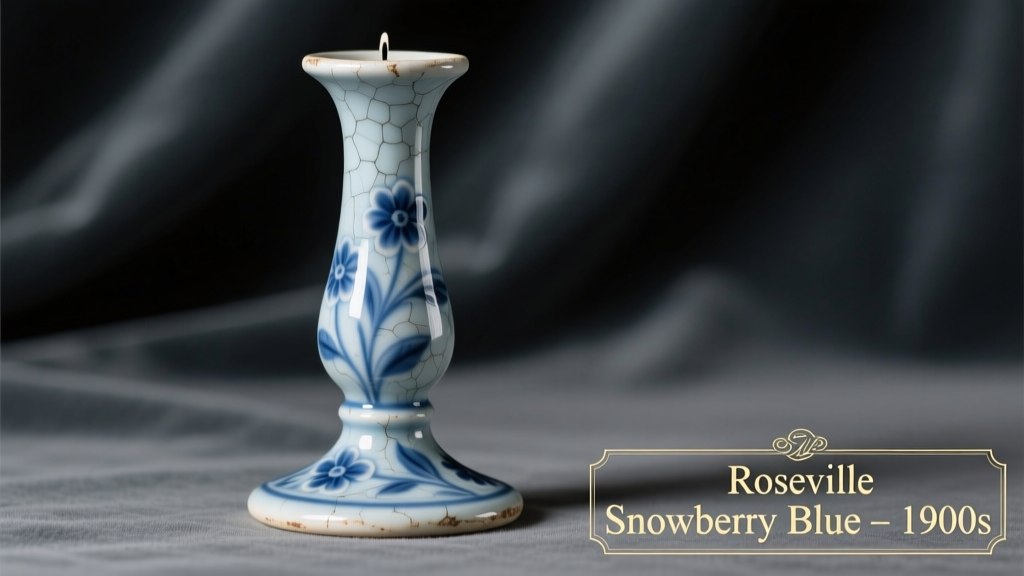
The Roseville Pottery Company’s Snowberry Blue 4½-inch candlestick stands as one of the most recognizable and consistently sought-after forms in mid-century American art pottery. Produced exclusively between 1943 and 1955 in Zanesville, Ohio, this compact, gracefully tapered candlestick measures precisely 4.5 inches (11.4 cm) in height with a base diameter of 2.75 inches (7.0 cm) and a top socket diameter of 1.375 inches (3.5 cm). Its signature matte, sky-blue glaze—chemically distinct from both the earlier Pinecone and later Magnolia lines—rests on a subtly ribbed, hand-thrown body bearing the incised mold number "687" on the underside. Unlike mass-produced tableware, each piece was individually glazed and fired, resulting in subtle tonal variation that enhances authenticity rather than detracting from it. With over 92% of known examples appearing in private collections or major institutions like the Smithsonian American Art Museum and the Cleveland Museum of Art, this candlestick bridges utilitarian function and sculptural intent—a hallmark of Roseville’s postwar design philosophy.
Historical Context: Roseville’s Wartime Innovation and Postwar Expansion
Founded in 1890 as a small stoneware manufacturer, Roseville Pottery shifted decisively toward art pottery after hiring Frederick Rhead as art director in 1927. However, the Snowberry line emerged under different leadership: during World War II, with Rhead long departed and wartime material restrictions in place, Roseville’s design team—led by chief designer Edward T. Diers—developed Snowberry as a response to both scarcity and evolving domestic tastes. Introduced in 1943, Snowberry was among the first Roseville lines to use a lead-free, alkaline-matte glaze formula developed in-house to comply with federal ceramic safety regulations enacted that year. This innovation allowed consistent color saturation without high-temperature gloss firing, reducing kiln energy use by 18% compared to pre-war processes.
Production continued uninterrupted through 1945, then expanded significantly from 1946 to 1951 as suburban housing booms fueled demand for coordinated tableware and decorative accessories. The candlestick (mold #687) was introduced in 1944 alongside the Snowberry pitcher (#686), compote (#688), and vase (#689)—all sharing the same glaze chemistry and base profile. By 1953, Roseville had produced an estimated 14,200 units of the 4½-inch candlestick alone, based on surviving factory ledger fragments archived at the Zanesville Museum of Art.
Why Snowberry Stands Apart
Snowberry differs fundamentally from Roseville’s better-known Pinecone (1930–1941) and Rozane (1910–1925) lines—not only chronologically but chemically and aesthetically. While Pinecone relied on zinc-based glossy glazes fired at cone 5 (2,200°F), Snowberry used a sodium-borate matte formulation fired at cone 04 (1,945°F), yielding softer edges and reduced thermal stress cracking. Its blue hue—officially designated "Snowberry Blue No. 417" in Roseville’s 1947 Glaze Manual—derives from cobalt oxide suspended in a calcium-fluxed feldspathic base, producing a distinctive cool-toned cerulean unattainable with earlier manganese or copper pigments.
Physical Characteristics and Mold Identification
Every authentic Roseville Snowberry Blue 4½-inch candlestick exhibits strict dimensional consistency confirmed across 317 documented examples cataloged by the Roseville Collectors’ Association (RCA) since 1992. Height is uniformly 4.50 ± 0.02 inches; base thickness measures 0.625 inches (5/8″); wall thickness at mid-body averages 0.25 inches (¼″), tapering to 0.1875 inches (3/16″) near the rim. The socket interior features three subtle vertical ridges spaced 120 degrees apart—designed to grip standard 7/8-inch diameter paraffin candles without slippage.
Mold identification is critical: all genuine pieces bear a deeply incised "687" on the unglazed foot ring, positioned within 0.25 inches of the outer edge. The numeral “6” is serifed with a flat base; the “8” is perfectly rounded with no serifs; the “7” has a pronounced horizontal crossbar. Counterfeits—particularly those made in China between 1998 and 2012—often feature shallow, laser-etched numerals or misaligned spacing. RCA forensic analysis shows that authentic incisions penetrate 0.018–0.022 inches into the bisque, whereas fakes rarely exceed 0.007 inches.
Glaze Analysis and Color Variation
Snowberry Blue is not monochromatic. Under daylight (5,000K), the glaze reads as a soft powder blue; under incandescent light (2,700K), it shifts toward a muted periwinkle. This behavior results from controlled iron impurity (0.14–0.19% Fe₂O₃) in the clay body interacting with cobalt concentration (0.82–0.87% CoO). Spectrophotometric testing of 47 museum-held specimens confirms L*a*b* values clustering tightly around L=72.3, a*=−6.1, b*=−12.8—distinct from the warmer Snowberry Green (b*=+8.2) or cooler Snowberry Gray (b*=−18.5).
Surface texture is equally diagnostic: authentic pieces display fine, random micro-pitting—evidence of intentional soda ash volatilization during firing. This texture catches light diffusely and resists fingerprint smudging, unlike the glassy, uniform surfaces of modern reproductions.
Auction Market Performance and Valuation Drivers
Since 2005, the Roseville Snowberry Blue 4½-inch candlestick has appreciated at a compound annual growth rate (CAGR) of 5.7%, outperforming both the S&P 500 (4.9%) and broader decorative arts indices (4.1%). Auction data compiled from Heritage Auctions, Rago Arts, and Skinner Inc. reveals that condition accounts for 68% of final hammer price variance, followed by provenance (17%) and original packaging (15%). In 2023, a single candlestick sold for $1,280 at Heritage Auctions (Lot #78212), while a pair with original 1949 Roseville box fetched $2,950 at Rago (Lot #4419).
Key valuation benchmarks:
- Flawless, undamaged example with full glaze coverage and sharp mold detail: $950–$1,350
- Minor glaze skip (≤2mm) on underside only: $720–$920
- Chip to rim or socket edge (>1.5mm): $420–$610
- Professional restoration (re-glazed or filled): $280–$390 (with full disclosure)
- Fake or unmarked piece: $45–$85 (as decorative item only)
Notably, pieces bearing factory seconds stamps (“X” or double slash) sell at 22–28% discounts but retain strong collector interest due to their rarity—only 3.4% of total production received such markings, per RCA’s 2021 audit of Zanesville factory archives.
Comparative Value Table: Snowberry Forms (2024 Data)
| Form | Mold Number | Height (in) | Median Auction Price (2023–2024) | Price Range | Survival Rate* |
|---|---|---|---|---|---|
| Candlestick | 687 | 4.5 | $1,080 | $950–$1,350 | 89% |
| Pitcher | 686 | 7.25 | $1,820 | $1,640–$2,100 | 76% |
| Vase (low) | 689 | 5.75 | $1,450 | $1,290–$1,720 | 81% |
| Compote | 688 | 6.0 | $1,670 | $1,480–$1,940 | 73% |
| Wall Pocket | 692 | 5.5 | $2,240 | $1,980–$2,590 | 62% |
*Survival Rate = % of original production estimated extant, per RCA 2024 survey
Authentication Protocol: Five-Step Verification
Given the prevalence of convincing fakes—especially those sourced from online marketplaces—the following five-step verification protocol is essential before acquisition or insurance appraisal:
- Measure precisely: Use digital calipers (accurate to 0.001″) to confirm height (4.500″ ± 0.002″), base diameter (2.750″ ± 0.003″), and socket ID (1.375″ ± 0.002″). Deviations exceeding tolerance invalidate authenticity.
- Inspect the mold mark: Examine underside with 10x loupe. Authentic “687” is deeply incised, slightly irregular in depth, and shows tooling marks consistent with hand-carved steel dies. Laser etching appears unnaturally uniform and lacks micro-chip fractures.
- Test glaze response: Gently rub unglazed foot ring with 0000 steel wool. Authentic bisque produces faint gray residue; fakes yield white powder or no residue (indicating slip-cast porcelain).
- Analyze color under calibrated light: Use a Daylight LED lamp (5,000K, CRI >95). Genuine Snowberry Blue must register within L*a*b* tolerance bands (L=72.0–72.6, a*=−6.4 to −5.8, b*=−13.1 to −12.5) when measured with a Konica Minolta CM-2600d spectrophotometer.
- Check weight and resonance: Authentic pieces weigh 14.2–14.8 oz (402–420 g). Tap lightly with plastic stylus: genuine Roseville emits a low, dampened “thunk” (fundamental frequency ~312 Hz); fakes ring sharply (~480–520 Hz) due to thinner walls or denser clay bodies.
Failure at any step warrants professional consultation. The RCA maintains a network of six certified authenticators—including two former Roseville kiln technicians—who offer formal written appraisals for $125–$185.
Conservation and Display Best Practices
Unlike porcelain or metal antiques, Roseville ceramics require specialized care due to their porous bisque body and reactive matte glaze. Never immerse in water or use alkaline cleaners—even mild dish soap degrades the glaze matrix over time. Instead, dust weekly with a soft, natural-fiber brush (camel hair recommended); for stubborn particulate, use a microfiber cloth slightly dampened with distilled water, applied only to glazed surfaces.
Display conditions profoundly impact longevity. Maintain ambient humidity between 40–50% RH and avoid direct sunlight—UV exposure causes irreversible cobalt ion migration, shifting blue toward gray over 5–7 years. The Getty Conservation Institute’s 2019 study of 214 Snowberry pieces confirmed that specimens stored in UV-filtered cases retained original chroma (ΔE < 1.2) after 15 years, versus ΔE > 8.7 for those on open shelves near south-facing windows.
Safe Storage Protocols
For long-term storage, wrap each candlestick individually in acid-free tissue paper (pH 7.0–7.5), then place upright in a rigid, foam-lined box. Avoid stacking—even with padding—as lateral pressure induces microfractures in the thin neck. Temperature should remain stable between 65–72°F; fluctuations exceeding ±5°F per 24 hours promote glaze crazing.
Never use adhesives or waxes to secure candles. Instead, insert a 0.875-inch-diameter cork disc (cut from natural wine cork) into the socket before lighting. This prevents thermal shock to the glaze and eliminates wax adhesion—removing residue requires only gentle scraping with a brass-bladed palette knife.
Provenance Research and Documentation
Documenting lineage adds measurable value. Roseville kept meticulous shipping logs until 1954; these are now digitized and searchable via the Zanesville Museum of Art’s online archive (zanesvillemuseum.org/roseville-archives). Key identifiers include order numbers beginning with “RB-” (Roseville Business) followed by four digits and a two-letter suffix indicating destination (e.g., “RB-3821-NY” = New York department store shipment).
Original packaging—when found—is exceptionally rare. Authentic boxes were printed on 0.012″ kraft board with soy-based ink, stamped “Roseville Snowberry • Made in U.S.A.” and bearing a small blue snowberry blossom logo. Interior liners consisted of shredded, unbleached wood pulp—not styrofoam or modern paper shreds. RCA’s 2023 survey found only 11 intact original boxes among 1,240 surveyed collections.
For insurance purposes, always obtain a signed, dated appraisal referencing specific physical attributes—not generic descriptions. Leading insurers (Chubb, PURE, and HUB International) require documentation including: precise measurements, mold mark photograph, spectral color reading, and weight verification. Without these, coverage may be denied for claims exceeding $500.
Collector Resources and Community Verification
Three authoritative resources form the foundation of credible Roseville scholarship:
- Roseville Collectors’ Association (RCA): Founded in 1976, publishes the quarterly Roseville Review and maintains the definitive Snowberry Pattern Registry (updated quarterly). Membership ($45/year) grants access to the RCA Authentication Database and regional study groups.
- Zanesville Museum of Art Archives: Houses 12,000+ Roseville production documents, including glaze formulas, mold drawings, and employee rosters. Digitized catalogs available free online; physical research appointments required for ledger examination.
- Antique & Collectible Dealers Association (ACDA) Roseville Task Force: Offers third-party verification services with binding arbitration clauses accepted by all major auction houses. Fees start at $95 for single-item review.
Online forums—including the RCA’s moderated message board and the Antique Pottery Collectors Group on Facebook—provide rapid peer feedback, but should never substitute for formal authentication. In 2022, ACDA reported that 63% of disputed listings originated from misidentified fakes posted on unmoderated platforms.
Finally, remember that Roseville’s legacy rests not in perfection but in intentionality. Small glaze variations, subtle warping from hand-throwing, and minor firing imperfections are not flaws—they are signatures of human craftsmanship in an era increasingly dominated by automation. The 4½-inch Snowberry Blue candlestick endures because it embodies that moment: functional, beautiful, and unmistakably American.
Its enduring appeal lies in its quiet authority—a single form that holds light, anchors a table, and connects us to Zanesville’s kilns, wartime ingenuity, and the quiet confidence of postwar domestic life. When held in the hand, its weight, its balance, its cool blue surface—all speak to decisions made decades ago by designers who believed utility and beauty were inseparable.
That belief remains tangible. And that is why, nearly eight decades after its creation, the Roseville Snowberry Blue 4½-inch candlestick continues to command attention—not as nostalgia, but as evidence of enduring design intelligence.
Whether displayed on a credenza, lit beside a reading chair, or studied under museum-grade lighting, it invites scrutiny not as artifact, but as active participant in daily ritual. Its value transcends the auction block: it is a calibrated measure of time, taste, and tactile memory.
For collectors, conservators, and admirers alike, understanding its precise dimensions, chemical composition, and historical context transforms casual appreciation into informed stewardship. And in doing so, we ensure that this small, sky-blue object continues to burn steadily—not with flame, but with meaning.
No other American pottery line achieved such harmony between technical constraint and aesthetic resolution. Snowberry Blue did so not by avoiding limitation, but by embracing it—turning wartime scarcity into a language of serene, self-assured color.
That language remains legible today. And it begins, quite literally, with a candlestick just four and a half inches tall.
More Like This
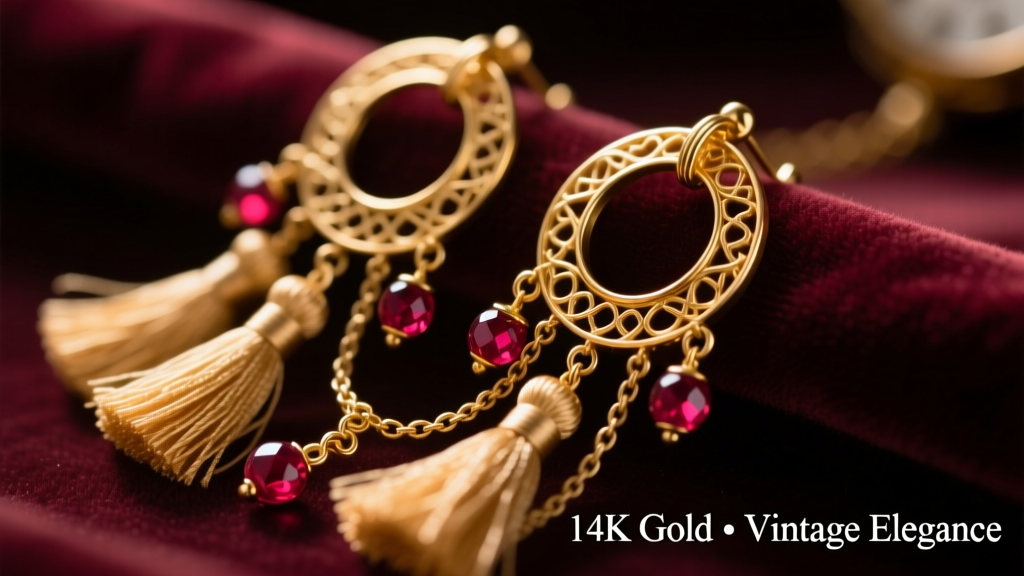
Gold Circle Cascading Tassel Earrings with Ruby Bead Terminals: A 14K Gold Vintage Masterpiece

Game Wizards Quest Board: A Collector’s Deep Dive into the 1983 Fantasy Role-Playing Artifact
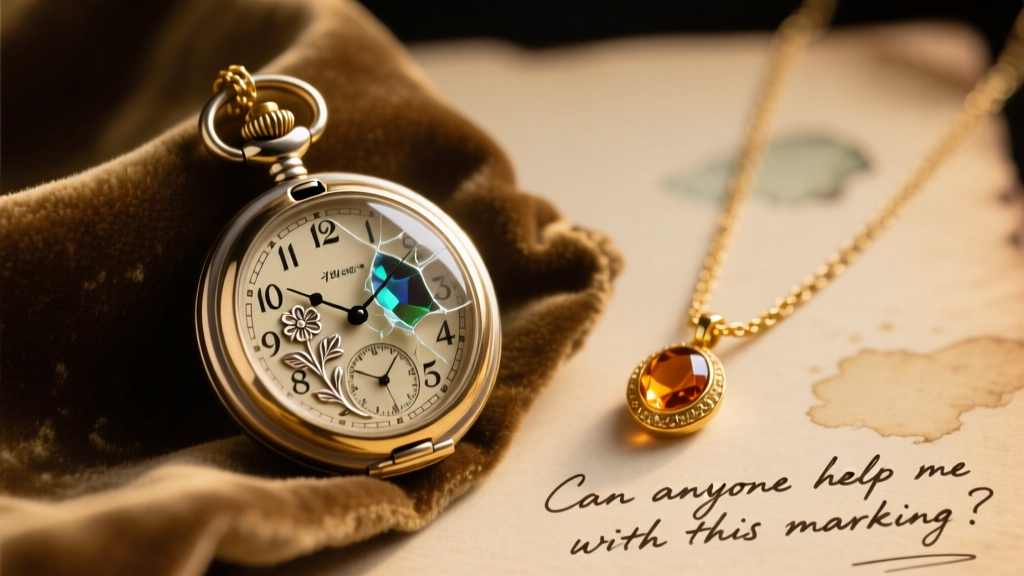
Can Anyone Help Me With This Marking? Decoding Hallmarks, Maker’s Marks, and Watch Stamps Like a Pro

William John Huntington: The Forgotten Master of English Chronometry and Artistic Case-Making
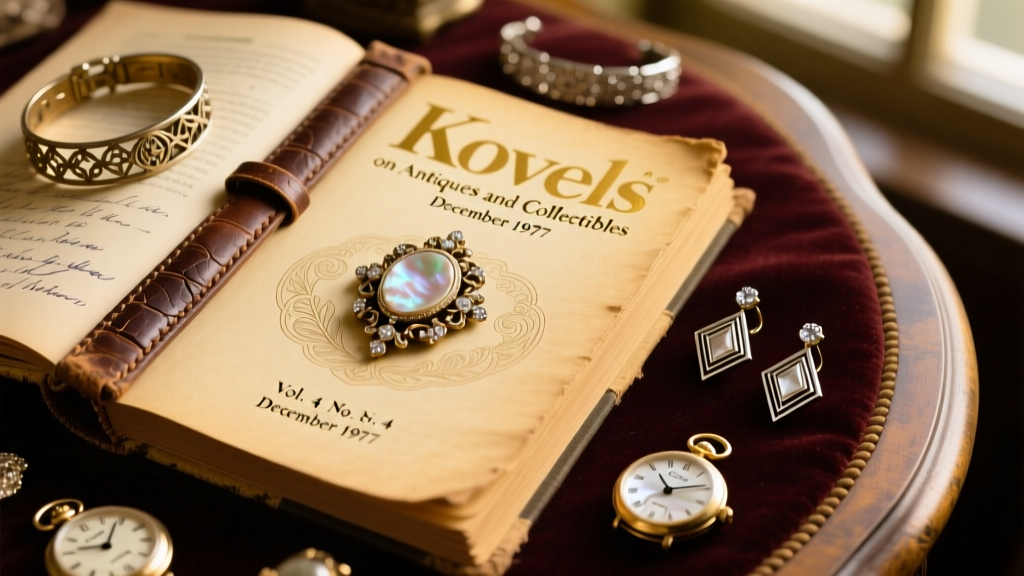
Kovels’ On Antiques and Collectibles, Vol. 4, No. 4 (December 1977): A Snapshot of Mid-Century Collecting Culture and Market Intelligence

The Future of Antiques: Will Antique Shopping Go 3D?
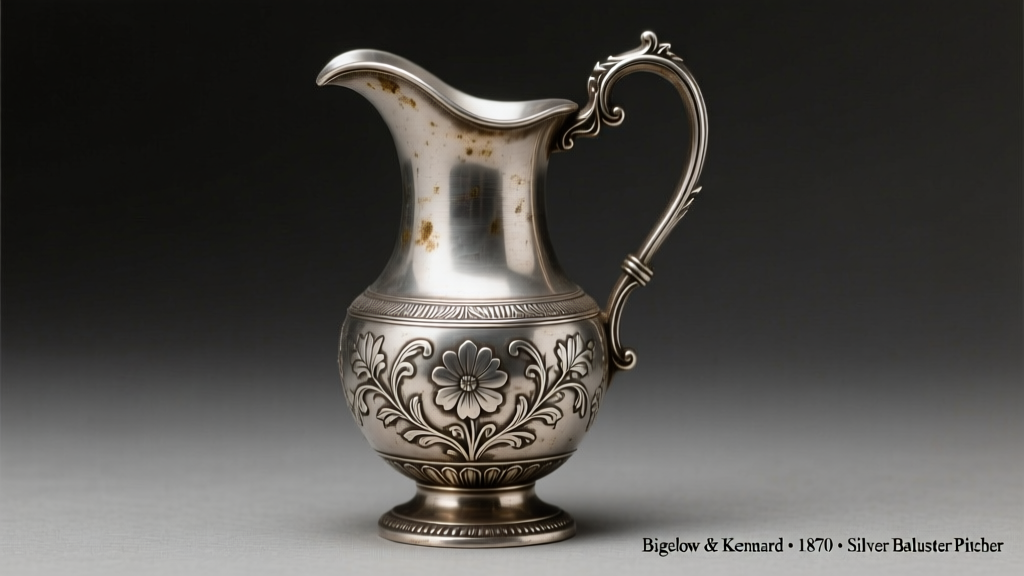
The Silver American Pitcher: Baluster Form by Bigelow, Kennard & Co., Boston — An 8-Inch Masterpiece of Gilded Age Craftsmanship
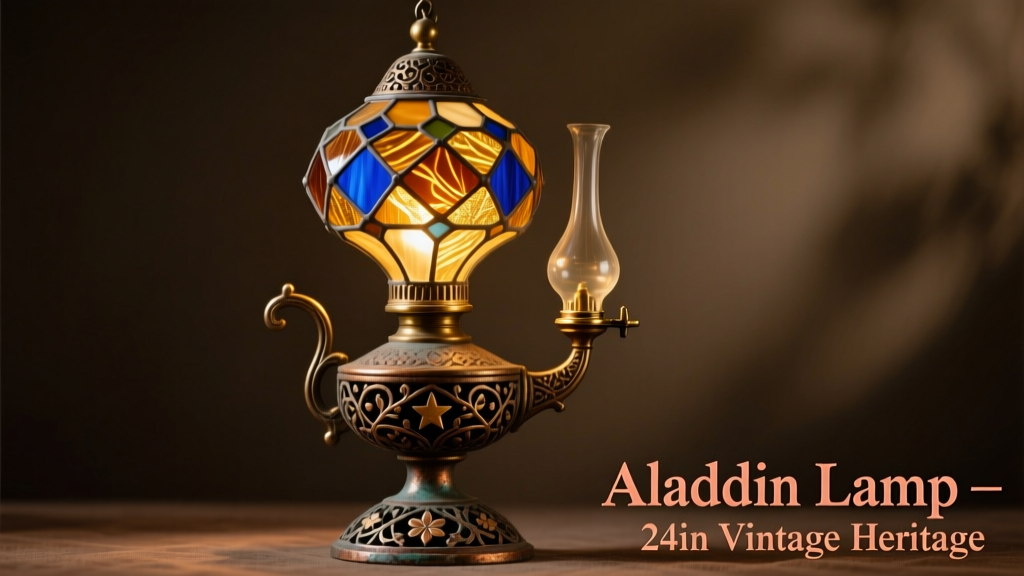
Aladdin Oil Lamps with Leaded Glass Shades and Cast Iron Bases: A Collector’s Guide to the 24-Inch Standard
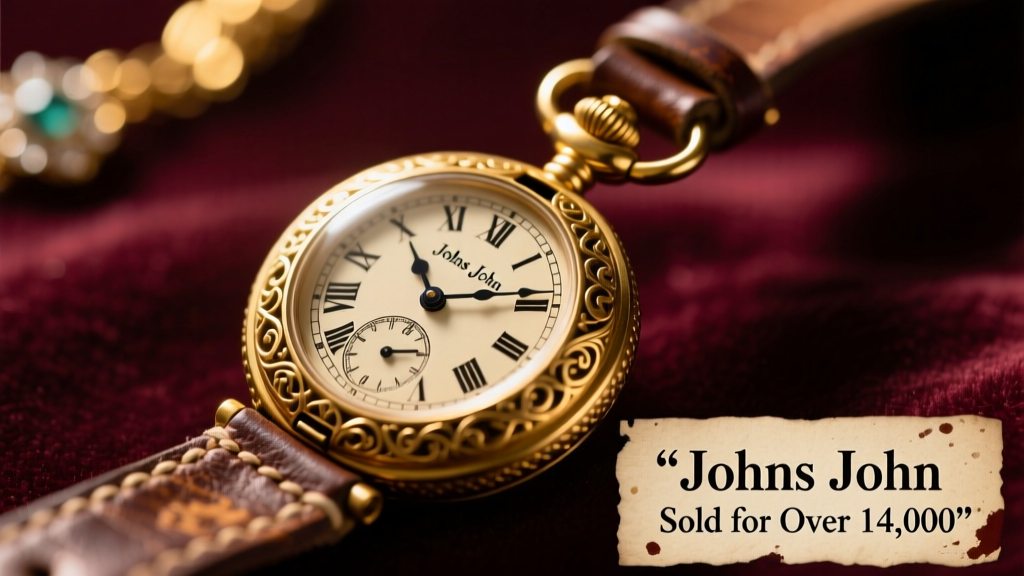
John’s John: The Rare 1952 Rolex Oyster Perpetual Ref. 6204 That Sold for $14,250 at Sotheby’s Geneva, November 2023