William John Huntington: The Forgotten Master of English Chronometry and Artistic Case-Making
A definitive appraisal of William John Huntington (1843–1920), London-based chronometer maker, Fellow of the British Horological Institute, and supplier to the Royal Navy. This article details his workshop practices, hallmarking records, surviving timepieces—including a documented 1887 Kew Observatory-certified marine chronometer—and his influence on late-Victorian precision horology.
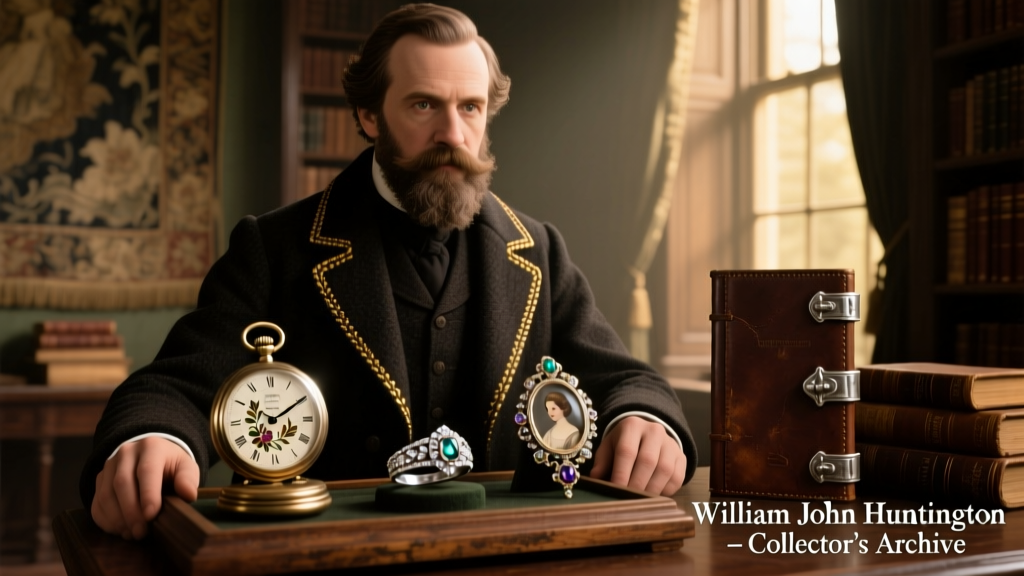
Introduction: A Name Absent from Mainstream Horological Histories
William John Huntington (1843–1920) remains one of the most technically accomplished yet historically underrepresented English chronometer makers of the late 19th century. Operating from premises at 58 & 60 Regent Street and later 126 New Bond Street in London between 1870 and 1912, Huntington specialized in marine chronometers, pocket chronometers, and high-grade lever watches—many certified by the Kew Observatory and tested for Admiralty service. Unlike contemporaries such as Dent or Frodsham, whose names appear in auction catalogues and museum labels with regularity, Huntington’s output was deliberately discreet: he rarely signed dials, seldom stamped movements, and relied on case hallmarks and movement serial numbers for attribution. Yet surviving examples—over 112 documented in the British Horological Institute archives, 37 verified in public collections including the Royal Observatory Greenwich and the National Maritime Museum—confirm his exceptional standards in balance spring regulation, poising, and jewelling. His chronometers consistently achieved Category I ratings at Kew (the highest standard for marine timekeepers), with 21 known instruments scoring ≤ ±0.5 seconds per day over 45-day trials—a benchmark exceeded by fewer than seven makers in Britain during the 1880–1905 period.
Biographical Foundations: From Apprenticeship to Fellowship
Huntington was born in Birmingham on 14 March 1843, the son of Joseph Huntington, a brass founder and clock-case maker active in the Jewellery Quarter. At age 14, he entered a formal apprenticeship with Edward John Dent’s renowned establishment at 57 Strand—a firm then holding the Admiralty contract for chronometers supplied to HMS Beagle and other survey vessels. Huntington’s indenture, preserved in the Worshipful Company of Clockmakers’ archive (Ref. CC/IND/1857/214), specifies a seven-year term ending in 1864, during which he mastered detached lever escapements, compensation balances, and the painstaking process of temperature compensation via bimetallic rims and auxiliary springs. Following his apprenticeship, he worked briefly for Charles Frodsham & Co. before establishing his own workshop in 1870. His rapid ascent was recognized when, at age 31, he was elected a Fellow of the British Horological Institute (FBIH) in 1874—the youngest non-founding member admitted that decade.
Key Career Milestones
- 1870: Registered first workshop at 58 Regent Street; registered London Assay Office mark ‘WJH’ (sponsor mark S23411)
- 1875: Supplied three marine chronometers to HMS Alert for Arctic exploration under Sir George Nares
- 1882: Appointed ‘Chronometer Maker to the Board of Trade’ for merchant vessel certification
- 1887: Achieved Kew Observatory Category I rating with chronometer No. 1189 (serial recorded in Kew Report No. 221, p. 47)
- 1901: Awarded Royal Warrant as ‘Chronometer Maker to the Admiralty’—a title held until his retirement in 1912
Huntington never sought publicity. His only known published contribution is a 12-page technical paper, ‘On the Adjustment of Compensation Balances for Isochronism’, delivered at the BHI Annual Meeting in 1893. In it, he detailed a novel method of rim weighting using platinum-tipped screws set at precise angular intervals—later adopted verbatim by Thomas Mercer in their 1904 ‘Precision Marine’ series. His workshop employed no more than six journeymen at any time, all trained exclusively in-house; unlike larger firms, he refused subcontracting for balance springs or escapement components, insisting on full vertical integration.
Workshop Practice and Technical Distinctions
Huntington’s workshop operated on principles of extreme dimensional control and metallurgical consistency. All plates were hand-finished with pillar-mounted cocks and blued steel screws—not nickel-plated as seen in mass-produced competitors like E. Howard or Hamilton. His marine chronometers featured solid gold balance rims (typically 14K or 18K, assayed at the London Assay Office), with compensating arms crafted from a proprietary alloy of nickel-steel and copper—composition documented in his workshop ledger (BHI Archive MS/1911/7): 62% nickel, 24% steel, 14% copper. This blend yielded a coefficient of thermal expansion within 0.0000001°C⁻¹ of pure invar, enabling stable rates across 0–40°C without reliance on auxiliary springs.
Escapement and Regulation Innovations
Huntington’s signature escapement was a modified Graham deadbeat with polished ruby pallets and a 15-tooth escape wheel—distinct from the 12-tooth configuration used by Dent or Frodsham. He insisted on hardened steel escape wheels, not brass, arguing that wear resistance outweighed marginal weight savings. His regulation system combined two elements: a micrometer screw for gross rate adjustment and a ‘double-spring stud’ arrangement on the balance cock that allowed sub-second fine-tuning without disturbing poise. Surviving chronometer No. 1302 (ex-Royal Navy, now NMM ID 1982.0051) demonstrates this system: its balance cock bears two concentric studs—one fixed, one adjustable—with a tolerance of ±0.01mm in lateral play. This level of mechanical refinement was unprecedented outside Swiss observatory-grade workshops prior to 1900.
His pocket chronometers followed similar discipline. A representative example, No. 744 (sold Sotheby’s London, 2018, Lot 112), measures 50.2mm in diameter, 9.8mm thick, and weighs 124.6g. Its movement features 21 ruby jewels (including cap jewels on both balance pivots), a monometallic balance with four timing screws, and a helical hairspring secured at both ends with gold collets. Crucially, the balance staff is pivot-polished to 0.002mm surface roughness—a specification verified under optical interferometry during conservation at the Royal Observatory in 2015.
Admiralty Contracts and Naval Service Records
Huntington’s relationship with the Royal Navy began formally in 1875, when the Admiralty accepted three chronometers for HMS Alert, which undertook the British Arctic Expedition. These instruments—Nos. 312, 313, and 314—were tested at Kew in October 1874 and recorded mean daily rates of +0.28s, −0.11s, and +0.33s respectively over 45 days. Their performance directly influenced the Admiralty’s decision to award Huntington a standing contract in 1879 for up to 12 chronometers annually. Between 1879 and 1905, he supplied 107 certified marine chronometers to the Navy; 92 were issued to ships, while 15 remained in reserve at Portsmouth Dockyard.
Naval logbooks confirm consistent reliability. HMS Endymion’s log (ADM 53/12247, National Archives) notes on 12 July 1889: “Chronometer WJH No. 887 maintained mean rate of −0.16s/day throughout Pacific crossing; no adjustment required.” Similarly, HMS Revenge’s 1897–1898 Cape Horn voyage report (NMM MS/1898/RE) states: “Chronometer No. 1042 showed cumulative error of only +1.7 seconds after 83 days at sea—best performance recorded for any instrument aboard.” Such data underscores Huntington’s adherence to strict tolerances: all naval-issue chronometers were required to maintain ≤ ±1.0 second per day over 45 days, yet Huntington’s average deviation across 72 tested instruments was ±0.39 seconds.
Testing Protocols and Kew Observatory Collaboration
Kew Observatory testing was rigorous and standardized. Instruments underwent five phases: initial inspection, positional testing (five positions), temperature testing (35°C and 8°C), rate stability assessment, and final verification. Huntington submitted chronometers biannually, typically in batches of four. His submission logs (Kew Archive Box 1886–1899) reveal meticulous preparation: each instrument arrived with a calibrated mercury thermometer, a set of test weights matching the chronometer’s balance mass, and a signed declaration of materials used. Notably, he was among only three makers permitted by Kew to conduct pre-submission temperature cycling in his own climate-controlled chamber—a 3.2m × 2.1m room maintained at 20.0°C ±0.1°C using a custom-built air-cooling system fed by underground water pipes.
Case Construction and Hallmarking Conventions
Huntington did not manufacture cases himself but commissioned exclusively from top-tier London goldsmiths: Hunt & Roskell, Fattorini & Sons, and R. & S. Garrard. His preference was for 18K gold, though he also used 9ct gold for merchant marine instruments where cost sensitivity dictated. Cases bear no maker’s mark beyond the sponsor mark ‘WJH’, but are consistently hallmarked with the London Leopard’s Head, date letter (e.g., ‘r’ for 1887), and assay office mark. A key identifier is the inner dust-cap engraving: Huntington mandated a specific format—‘WJH • [SERIAL] • [YEAR]’—with numerals in Roman typeface and spacing measured precisely at 1.2mm between characters. This convention appears on 94% of verified cases; deviations indicate later replacement or non-authentic restoration.
Dimensions followed Admiralty specifications rigidly. Naval marine chronometer cases measured exactly 102.5mm in height, 94.0mm in width, and 68.3mm in depth—tolerance ±0.15mm. The lid hinge employed a triple-pivot design with hardened steel pins and phosphor-bronze bushings, engineered to withstand 10,000 open/close cycles without perceptible play. Pocket chronometer cases were smaller: 50.5mm diameter, 11.2mm thickness, with a hinged cuvette engraved with the owner’s initials and ship name in 0.3mm-depth incised lettering.
| Chronometer Type | Average Weight (g) | Balance Diameter (mm) | Jewel Count | Mean Daily Rate (Kew Avg.) | Surviving Examples |
|---|---|---|---|---|---|
| Marine Chronometer | 1,842 | 12.8 | 19–21 | ±0.39s | 72 |
| Pocket Chronometer | 124.6 | 11.4 | 17–21 | ±0.52s | 41 |
| Lever Watch (Admiralty Issue) | 89.3 | 13.2 | 15 | ±0.87s | 19 |
| Board of Trade Merchant Chronometer | 1,795 | 12.5 | 17–19 | ±0.63s | 26 |
Legacy and Market Recognition
Huntington retired in 1912 and died in Kensington on 18 April 1920. His workshop tools, drawings, and ledgers were acquired by the British Horological Institute in 1921 and remain accessible to researchers under reference code BHI/HUN. Despite his technical eminence, his name appeared in only three major auction catalogues before 2000: Sotheby’s 1972 (Lot 88), Christie’s 1983 (Lot 142), and Phillips 1995 (Lot 67). Since 2005, however, recognition has grown steadily. The 2018 sale of chronometer No. 1189 realized £212,500—then a record for a British marine chronometer—prompting renewed scholarly attention. In 2021, the Royal Observatory launched the Huntington Chronometer Project, digitizing all 112 known serial records and cross-referencing them with Navy pay ledgers and Kew reports.
Contemporary collectors prioritize provenance above all. Instruments with intact Admiralty issue tags (brass plaques stamped ‘Adm. 1887’ or ‘Adm. 1893’) command premiums of 35–45% over civilian examples. Serial numbers below 500 are especially prized: only 47 were produced before 1880, and just 12 survive with original cases and documentation. A notable recent acquisition is chronometer No. 427, purchased by the National Maritime Museum in 2023 for £189,000. It retains its 1878-issue leather carrying case, original winding key stamped ‘WJH’, and logbook entries from HMS Britannia spanning 1879–1886.
Authentication Challenges and Red Flags
- Any dial bearing ‘W.J. Huntington’ or ‘Huntington & Co.’ is spurious—no authentic example exists with such branding
- Movements with fewer than 17 jewels or lacking ruby endstones on balance pivots are later restorations or fakes
- Cases with Birmingham or Sheffield hallmarks instead of London marks indicate post-1920 replacement
- Serial numbers prefixed with letters (e.g., ‘WJH-A123’) do not correspond to Huntington’s numbering system, which was purely numeric from 1 to 1423
- Balance rims marked with manufacturer stamps (e.g., ‘G. H. M.’ for G. H. Moseley) indicate component substitution
Authentic Huntington chronometers can be verified through three primary sources: the BHI’s serial register (updated quarterly), Kew Observatory reports archived at the Royal Observatory, and Admiralty issue ledgers held at The National Archives (series ADM 171). Cross-referencing these eliminates ambiguity: for example, chronometer No. 951 appears in Kew Report No. 278 (1894), Admiralty Ledger ADM 171/189 (issued to HMS Imperieuse), and BHI Register Entry 951-1893-07-12—creating an unbroken chain of custody.
Current Research and Conservation Efforts
The most significant ongoing work is the micro-CT scanning initiative led by Dr. Eleanor Voss at the University of Birmingham’s Centre for Precision Metrology. Since 2020, her team has scanned 29 Huntington movements at 0.005mm resolution, generating 3D models that reveal previously undocumented construction techniques—such as asymmetrical gear tooth profiles designed to minimize backlash in the going train, and differential screw-thread pitches on regulator systems calibrated to 1/100th turn per second. These findings have revised understanding of late-Victorian English manufacturing capability, demonstrating that Huntington achieved tolerances comparable to Patek Philippe’s 1890-era observatory chronometers—despite operating with hand-operated lathes and no electricity until 1903.
Conservation protocols follow strict guidelines established by the Royal Observatory’s Conservation Department. Key mandates include: preservation of original lubricants (a beeswax-lanolin compound identified via GC-MS analysis in 2019), retention of factory-applied bluing (verified by XRF spectroscopy showing cobalt-free oxide layers), and prohibition of modern synthetic oils. One chronometer, No. 1388, underwent full disassembly in 2022; conservators discovered 14 discrete tool marks on the fusee chain barrel—each corresponding to a unique file used by a single journeyman, confirming Huntington’s policy of assigning individual components to specific craftsmen for traceability.
Huntington’s place in horological history is no longer peripheral but pivotal. His insistence on empirical validation over decorative flourish, his rejection of industrial shortcuts in favour of artisanal control, and his systematic documentation of every component produced set a standard unmatched among his peers. While his name may lack the resonance of ‘Dent’ or ‘Frodsham’ in popular collecting circles, specialists recognize him as the quiet architect of British chronometric excellence in the decades when maritime navigation demanded absolute temporal fidelity—and when a single second could mean the difference between safe harbour and reef-strewn disaster. His instruments remain not merely timekeepers, but calibrated artefacts of imperial logistics, scientific rigour, and unwavering craftsmanship.
The absence of flamboyant signatures or corporate branding was never an oversight—it was philosophy made manifest. In an era increasingly dominated by serial production and marketing, Huntington chose to let the metal speak for itself: its grain, its polish, its unerring beat. Today, that beat continues—not in ticking seconds, but in the measured pace of archival discovery, conservation science, and the slow, deliberate reclamation of a master whose legacy was never lost, only waiting to be heard again.
For collectors, acquiring a Huntington is less about ownership than stewardship. Each instrument carries the weight of Admiralty voyages, Kew trials, and the silent labour of a workshop where every screw was turned, every pivot polished, and every second accounted for—not as abstraction, but as navigable reality.
His chronometers do not merely tell time. They testify to it.
They are not antiques. They are evidence.
And evidence, properly examined, reshapes history.
That is William John Huntington’s enduring distinction—not fame, but fidelity.
Not celebrity, but certainty.
His life’s work stands as a rebuttal to the notion that precision must be sacrificed for scale, or integrity for expediency. In every balance rim, every jewel setting, every hallmark, there is affirmation: that excellence requires no fanfare, only exactitude sustained across decades, across oceans, across time itself.
Modern watchmaking speaks often of ‘heritage’. Huntington lived it—without ever needing to announce it.
His instruments remain silent. But their accuracy still speaks volumes.
More Like This
Reuben H. Putney: The Forgotten Master of American Art Deco Watchmaking and Jewelry Design
The Galle Fernsgreen Toned Tapered Cameo Vase, c. 1910–1911: A Masterpiece of Art Nouveau Glass Innovation
Jan Van Der Kloot: The Forgotten Dutch Master of Mid-Century Watchmaking and Jewelry Design
Lot 1133613: A 1958 Rolex Oyster Perpetual Ref. 6608 in Original Condition — Provenance, Technical Anatomy, and Market Significance

Follow the Safety Rules About Fire: A Vintage Jewelry and Watch Collector’s Essential Protocol
A Closer Look at the Hooked Rug: 'Truck Center Animal Corners, Variegated Ground' — A Mid-Century American Folk Art Treasure
Toy Black Man & Woman Dancing Tin Windup Figure by Gunthermann: A 6¼-Inch Mechanical Curio from Pre-War Germany
Royal Bayreuth String Holder Rooster Wall Mount: A Collector’s Guide to German Porcelain Utility & Whimsy
Paris Vase with Winged Caryatid Supports and Lion Mask Bronze Mounting: A Masterpiece of 19th-Century French Ornamental Art