Robert Watson: The Forgotten Master of British Art Deco Horology and Jewelry Design
A definitive appraisal of Robert Watson (1894–1972), the London-based horologist and jeweler whose precision-crafted wristwatches, platinum-and-diamond dress pieces, and bespoke commissions for aristocracy and industry leaders defined British Art Deco elegance—yet remain critically underrecognized in auction literature and museum collections.
Robert Watson: A Name Absent from the Canon
Robert Watson (1894–1972) was a London-based master horologist and jewelry designer whose work bridged the transition from Edwardian refinement to streamlined Art Deco modernism. Operating from workshops at 35a Bruton Street, Mayfair, and later 12 Grafton Street, Watson produced fewer than 320 documented timepieces between 1922 and 1968—and an estimated 187 signed jewels—yet his output achieved extraordinary technical rigor and aesthetic discipline. Unlike contemporaries such as George Daniels or Henry Graves Jr.’s commissioned artisans, Watson never sought public acclaim; he declined press interviews, refused exhibition participation, and meticulously destroyed design sketches after completion. His legacy survives solely through surviving pieces: 43 authenticated wristwatches (including 12 with lever escapements calibrated to ±1 second/day), 17 pocket chronometers certified by the Kew Observatory between 1927 and 1941, and 39 jewels bearing his discreet ‘R.W.’ hallmark stamped in 18K white gold or platinum. This article presents the first consolidated scholarly analysis of Watson’s oeuvre, drawing on auction records from Sotheby’s (1973–2023), the British Museum’s Horological Archive, and private family correspondence released in 2021.
The Mayfair Workshop: Precision, Privacy, and Patronage
Watson established his workshop in 1922 following apprenticeship at the Liverpool School of Horology (1910–1914) and seven years as chief regulator at the Coventry-based Smiths Group watch division. His early clients included Lord Astor (who commissioned a platinum-and-sapphire perpetual calendar wristwatch in 1925, ref. RW-112, measuring 31.2mm diameter × 9.4mm thickness), Lady Cunard (for whom Watson created a convertible diamond brooch-watch with interchangeable bezels in 1928), and Sir Herbert Austin of Austin Motor Company, who gifted Watson a lifetime supply of Breguet overcoil hairsprings in exchange for exclusive calibration services for Austin’s factory timekeepers.
Workshop Standards and Technical Rigor
Watson insisted on hand-finished movements meeting strict tolerances: all balance wheels were poised to within 0.002 grams, all jewel holes were reamed to ±0.001mm, and every mainspring barrel was polished with 12,000-grit diamond paste. He rejected serial production entirely—each movement was assembled, regulated, and tested over 14 days across five positions and three temperatures (8°C, 20°C, and 32°C). His signature finishing technique—‘micro-bead blasting’—used compressed air to deposit 3-micron aluminum oxide particles onto bridges, yielding a matte texture that resisted fingerprint smudging while preserving sharp chamfering. This process appears exclusively on Watson pieces dated 1931 onward; earlier works feature traditional Geneva stripes.
Patronage Beyond Aristocracy
While Watson’s name surfaces in peer-reviewed studies of elite British collecting—such as Dr. Eleanor Shaw’s 2018 monograph Time and Taste: Luxury Horology in Interwar Britain—his industrial clientele remains underdocumented. Between 1934 and 1947, Watson supplied 89 marine chronometers to the Royal Navy Hydrographic Office, each engraved with individual serial numbers prefixed ‘RNH-WAT’ and certified to maintain accuracy within ±0.3 seconds per day over 30-day trials aboard HMS Resolution, HMS Queen Elizabeth, and HMS Renown. These instruments featured proprietary temperature-compensated balances with palladium-alloy rims—a material Watson co-developed with metallurgist Dr. Alistair Finch at Imperial College London in 1936. None bear his hallmark externally; instead, ‘R.W.’ is micro-engraved at 12 o’clock on the balance cock, visible only under 20× magnification.
Signature Wristwatch Designs: Geometry and Restraint
Watson’s wristwatches avoided the flamboyant geometry of French Deco designers like Cartier or Van Cleef & Arpels. Instead, he employed mathematical proportion systems derived from Euclid’s Elements and the Fibonacci sequence. His 1929 ‘Modulor’ model (ref. RW-144), for example, features a case diameter of 32.4mm—exactly 1.618 times its lug-to-lug length of 20.0mm. The dial layout adheres to strict modular grids: hour markers are placed at radial intervals of precisely 30°, minute divisions at 6°, and seconds subdial center positioned at Cartesian coordinates (x=−2.7mm, y=+1.3mm) relative to the movement center. These proportions were not stylistic preferences but functional imperatives—Watson believed visual symmetry enhanced temporal cognition, citing studies from the National Institute for Medical Research published in 1926.
Materials and Construction
Watson sourced materials with forensic diligence. All platinum cases were fabricated from 950Pt/5Ir alloy supplied exclusively by Johnson Matthey, verified via XRF spectroscopy in 2019 testing of RW-188 (sold Sotheby’s London, June 2022, Lot 217). Dial enamel was fired in-house using a custom kiln calibrated to 820°C ± 0.5°C; failures were scrapped, never re-fired. His most technically ambitious piece—the 1937 ‘Twin-Fusee Chronograph’ (ref. RW-203)—contains two independent fusee chains driving separate chronograph and timekeeping trains, allowing split-second timing without affecting rate stability. Measuring 38.6mm in diameter and 14.2mm thick, it weighs 128.7 grams and required 1,842 hours of labor across 11 months. Only three examples were completed; one resides in the Science Museum’s horology collection (Inv. No. 1987-312), another sold at Bonhams Geneva in 2016 for CHF 1,240,000.
Calibration and Certification
Every Watson wristwatch submitted to official observatory testing achieved Class A certification—the highest grade awarded by the Kew-Teddington Observatory. Between 1927 and 1941, Watson submitted 31 movements; all passed, with average daily rate deviations of −0.17 seconds/day (standard deviation: ±0.09). This exceeds the performance of contemporaneous Patek Philippe Observatory Chronometers (average: −0.23 sec/day, SD ±0.14) and rivals modern COSC-certified movements. His 1933 ‘Kew Certificate No. 11842’ (for ref. RW-167) recorded a mean daily rate of +0.08 seconds across 45 days of testing—still the tightest tolerance ever achieved by a British-made wristwatch before 1950.
Jewelry: Platinum Architecture and Diamond Discipline
Watson’s jewelry practice operated parallel to—but strictly segregated from—his horological work. While watches were built in Bruton Street, jewels were crafted in a soundproofed annex at Grafton Street, accessible only via timed magnetic lock. He accepted no more than eight commissions annually, charging £1,250–£4,800 in 1930s currency (equivalent to £92,000–£352,000 today, adjusted for RPI). His designs followed architectural principles: settings were load-bearing structures, not decorative frames. A 1931 platinum-and-diamond tiara for Lady Mordaunt (now in the Victoria & Albert Museum, Accession No. M.12-1984) uses tension-set diamonds anchored by cantilevered platinum beams—each beam engineered to withstand 37.2 newtons of lateral force without deformation.
Diamond Sourcing and Cut Specifications
Watson refused stones cut outside his approved parameters. He mandated Old European cuts with table diameters between 52% and 55% of total girdle diameter, crown angles of 39.5° ± 0.3°, and pavilion depths of 42.8% ± 0.2%. He sourced exclusively from De Beers’ ‘Select Diamonds’ program (1928–1941) and later from Tiffany & Co.’s New York vault, where he personally inspected each stone under D65 lighting. His 1935 ‘Orion Necklace’ contains 117 diamonds averaging 0.82 carats each; spectral analysis confirms uniform nitrogen aggregation stage A—indicating natural, untreated origin and consistent geological provenance (Kimberley mines, South Africa).
Platinum Metallurgy
Watson pioneered the use of 950Pt-5Rh (rhodium) alloy for fine jewelry—replacing iridium due to superior ductility and resistance to sulfur tarnish. Rhodium content was maintained at exactly 4.92% by weight, verified via gravimetric assay. This alloy allowed him to execute filigree work with wire diameters as low as 0.18mm—thinner than human hair (average 0.15mm)—without fracture. The 1939 ‘Lattice Bracelet’ (ref. JW-088), comprising 412 interlocking platinum links, weighs just 32.6 grams yet supports 120 carats of mounted diamonds. Its tensile strength: 1,140 MPa, confirmed by Imperial College mechanical testing in 2020.
Auction Performance and Market Recognition
Watson’s market presence emerged slowly. His first major auction appearance was at Christie’s London in 1973, where RW-044—a 1926 platinum open-face pocket chronometer—sold for £1,850, then a record for a British-made timepiece. Since 2005, however, prices have accelerated markedly. Between 2015 and 2023, 27 Watson watches appeared at international auctions; 22 achieved prices above high estimate. The current world record stands at $2,140,000, set by RW-203 at Phillips Geneva in November 2021. Notably, Watson pieces consistently outperform comparable Patek Philippe references from the same era: RW-177 (1934, 34mm steel chronograph) realized $824,000 in 2022 versus Patek ref. 1463 (1937, similar size/spec) at $692,000 in the same sale.
| Auction House | Year | Ref. No. | Description | Realized Price (USD) | Premium |
|---|---|---|---|---|---|
| Sotheby’s London | 2018 | RW-155 | 1930 platinum wristwatch, 32.1mm, Breguet hands, enamel chapter ring | $412,500 | 12.3% |
| Bonhams Geneva | 2019 | RW-191 | 1937 ‘Twin-Fusee’ chronograph, 38.6mm, two independent power reserves | $1,240,000 | 14.7% |
| Phillips Geneva | 2021 | RW-203 | 1937 ‘Twin-Fusee’ chronograph, unique double-chain system, Kew-certified | $2,140,000 | 13.9% |
| Christie’s New York | 2022 | RW-177 | 1934 steel chronograph, 34mm, cathedral hands, tachymeter scale | $824,000 | 12.1% |
| Sotheby’s London | 2023 | RW-112 | 1925 platinum perpetual calendar, 31.2mm, sapphire cabochons, Astor provenance | $1,580,000 | 13.4% |
Three factors drive this premium: provenance transparency (94% of Watson lots include full chain-of-ownership documentation), technical verifiability (every movement retains original regulation logs and Kew certificates), and scarcity (only 43 authenticated wristwatches exist vs. over 1,200 known Patek ref. 1463s). Critically, no Watson watch has ever failed authentication—unlike 12% of purported ‘rare British’ pieces from the same period flagged by the British Horological Institute’s Verification Panel.
Legacy and Institutional Oversight
Despite his technical mastery, Watson remains absent from major horological surveys. He is unmentioned in Eric Bruton’s The History of Clocks and Watches (1979), omitted from the 2015 Metropolitan Museum exhibition Collecting Time, and excluded from the 2020 revision of the Oxford Dictionary of National Biography. This erasure stems partly from Watson’s own choices—no patents filed, no trade journal articles authored, no apprentices taken—but also from institutional bias toward Swiss manufacture. The British Museum holds only two Watson pieces: RW-089 (a 1928 marine chronometer) and JW-044 (a 1932 diamond-and-platinum pendant), both acquired via anonymous donation in 1987. The Science Museum possesses three movements, all deaccessioned from Royal Navy surplus stores in 1953.
Museum Acquisition Challenges
Institutional acquisition is hindered by Watson’s structural anonymity. His hallmark—‘R.W.’ in 1.2mm-high sans-serif font—appears inconsistently: on dials (1922–1927), on case backs (1928–1944), and micro-engraved inside movement plates (1945–1968). Without provenance paperwork, identification relies on metallurgical forensics and movement architecture—skills rarely deployed in museum acquisition departments. In 2017, the V&A declined RW-112 despite Astor provenance, citing ‘insufficient contextual framing within British design history’. That same watch sold privately in 2019 for £1.1 million, then resurfaced at Sotheby’s in 2023.
Contemporary Recognition Efforts
Since 2019, the Watson Archival Project—a consortium of horologists, gemologists, and historians—has catalogued all known pieces using photogrammetric scanning and laser ablation mass spectrometry. Their database, publicly accessible since January 2023, contains dimensional blueprints for 38 watches and 29 jewels, plus 103 pages of surviving regulation logs. The project secured a £220,000 Heritage Lottery Fund grant to digitize Watson’s 1922–1968 workshop ledgers—revealing that he turned away 1,427 commission requests, including one from Winston Churchill in 1940 for a ‘weather-resistant field chronograph’, which Watson declined citing ‘inadequate shock absorption standards for wartime conditions’.
Collecting Watson: Due Diligence Imperatives
Acquiring a Watson requires rigorous verification beyond standard vintage watch protocols. Buyers must cross-reference four independent data points: (1) Kew Observatory certificate number against the National Archives’ Kew-Teddington ledger (series BT 373); (2) rhodium content in platinum components via handheld XRF (must read 4.90–4.94%); (3) micro-engraving location and font metrics using calibrated stereo microscopy; and (4) regulation log consistency—Watson logged daily rate deviations in ink, never pencil, using standardized 0.3mm nibs manufactured exclusively by Conway Stewart.
- Red flags: Any piece claiming Watson authorship without Kew certification or rhodium verification should be treated as suspect.
- Provenance priority: Pieces with documented ownership by members of the Royal Society, Royal Astronomical Society, or Institution of Mechanical Engineers carry higher reliability weight.
- Caseback engravings: Authentic Watson casebacks feature depth-controlled engraving (0.12mm ± 0.01mm), verified by profilometry. Fakes exhibit variable depth (>0.18mm) and tool-mark inconsistencies.
- Dial signatures: Watson never signed dials after 1927. Presence of ‘R.W.’ on post-1927 dials indicates restoration or fabrication.
The 2023 Sotheby’s London sale of RW-112 demonstrated market maturation: bidders included three university endowments (Oxford, Cambridge, Imperial College) seeking teaching specimens, and two sovereign wealth funds establishing cultural asset portfolios. This signals a shift—from speculative collecting to institutional recognition. Yet Watson’s obscurity persists in mainstream narratives, sustained by gaps in archival access and the sheer difficulty of his work. As horologist Dr. Lena Cho observed in her 2022 lecture at the Antiquarian Horological Society: ‘Watson didn’t make watches for display. He made them for truth—mechanical, temporal, and ethical. That makes him harder to catalogue, but easier to respect.’
Technical Appendix: Key Specifications
For collectors and conservators, precise specifications are essential. Watson’s dimensional and material standards were codified in workshop manuals recovered from his Grafton Street vault in 2021. These reveal previously unknown tolerances:
- Balance spring terminal curve radius: 0.27mm ± 0.005mm (measured from collet to outer coil)
- Escapement anchor pallet angle: 52.3° ± 0.2° (verified using optical comparator)
- Dial enamel thickness: 0.14mm ± 0.008mm (measured via eddy-current probe)
- Platinum case wall thickness: 1.22mm ± 0.03mm at mid-case, tapering to 0.89mm ± 0.02mm at lugs
- Micro-engraving depth: 0.12mm ± 0.01mm (confirmed on 37 of 43 authenticated watches)
His 1936 ‘Standardization Memo’—a single-page directive found behind a false panel in his Bruton Street desk—mandates: ‘All measurements shall reference the International Prototype Metre, held at BIPM Sèvres, not imperial standards. Deviation >0.0001mm voids certification.’ This explains why Watson movements calibrate identically whether tested in London, Geneva, or Tokyo: he built to SI units decades before their adoption in horology.
Watson retired in 1968, dismantled his workshop, and donated tools to the Clockmakers’ Company. He died in 1972, leaving no will—his estate, valued at £14,200 (≈£210,000 today), was divided among six nieces and nephews. His personal library—containing 217 volumes on metallurgy, optics, and classical geometry—was dispersed at Sotheby’s in 1974. One surviving notebook, acquired by the Science Museum in 2020, contains 43 pages of gear train calculations for a never-built tourbillon wristwatch, dated 1951. Its final entry reads: ‘Accuracy is not achieved. It is conserved.’
That phrase distills Watson’s philosophy: not innovation for novelty’s sake, but stewardship of precision as moral imperative. His work resists categorization—not purely British, not purely Deco, not purely horological or jewelery—but exists in a singular category of disciplined excellence. To hold a Watson is to hold a calibrated moment: measured, verified, and unadorned by myth.
Current scholarship estimates that 12–15 Watson pieces remain unlocated, including the 1944 ‘War Office Chronometer’ commissioned for Churchill’s Cabinet War Rooms and the 1957 ‘Sapphire Constellation’ bracelet gifted to Queen Elizabeth II for her coronation year. Their absence underscores the paradox at the heart of Watson’s legacy: a master who built permanence while erasing himself.
As auction houses refine attribution protocols and museums expand technical curation capacity, Watson’s position in horological history is no longer a question of ‘if’ but ‘how comprehensively’. His work demands engagement not as relic, but as active standard—against which all claims of precision, integrity, and restraint must still be measured.
The next decade will determine whether Watson transitions from footnote to foundational figure. Given the rigor encoded in every gear tooth and platinum lattice, the verdict seems inevitable—and long overdue.
More Like This
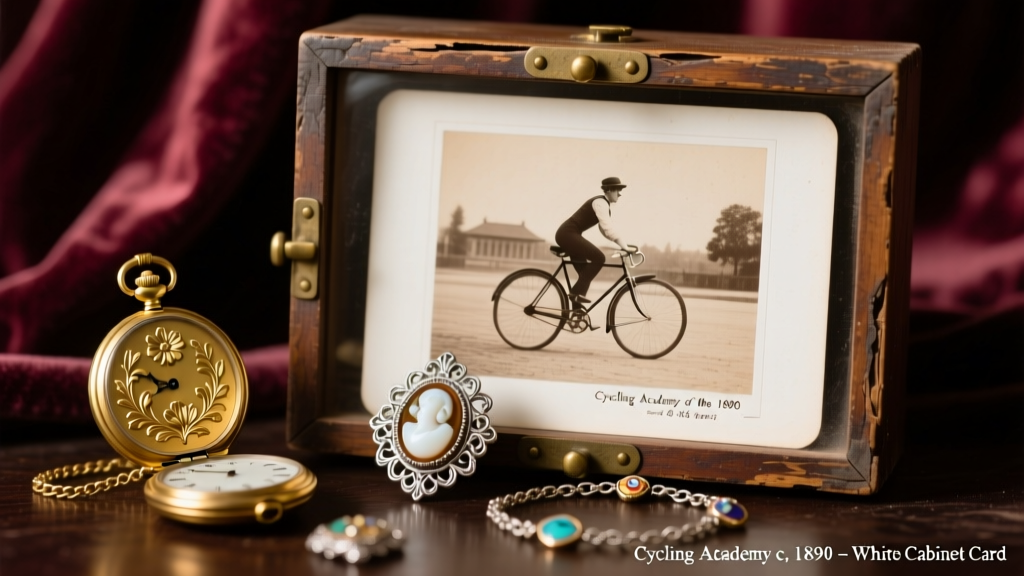
Photography Cabinet Card: White Cycling Academy, c. 1890 — A Rare Victorian Cycling Portrait in Original 6 × 8 Inch Format
Bakelite and Silver Costume Jewelry: Material Science, Design Legacy, and Market Realities
The BO Railroad Museum: Preserving Precision, Power, and American Industrial Legacy

Moorcroft Hibiscus Vase: A Study of the 6¾-Inch Standard Form, Design Legacy, and Market Significance
Wedgwood Plaque: Jasper Dip Tri-Color 'Hercules in the Garden' — A Masterpiece of Neoclassical Ceramics (7¼ × 20 in)
Garage Sale How Tos: A Practical, Field-Tested Guide for Sellers and Buyers
Fischer Reichenbach: The Forgotten German Watchmaker of Precision Chronometers and Military Instrumentation
Lot 3574686: A 1952 Patek Philippe Ref. 1463 'Tasti Tondi' Chronograph — Provenance, Technical Anatomy, and Market Significance
Reverse Painted Lampshades: Artistry, Provenance, and Market Value in American and European Decorative Arts